

Jahan Kosha Cannon
General information
-
Ideal Duration:
30 to 45 minutesPlace Type:
Historical/Military ArtifactEntry Fees:
Official Entry Fees Structure: There are officially no entry fees charged by any government or archaeological body to visit the Jahan Kosha Cannon. It is situated on the public premises of the Kadam Sharif Dargah, and access is generally free. This makes the attraction hig...Official Entry Fees Structure: There are officially no entry fees charged by any government or archaeological body to visit the Jahan Kosha Cannon. It is situated on the public premises of the Kadam Sharif Dargah, and access is generally free. This makes the attraction highly accessible to all tourists, regardless of budget.
Optional/Incidental Costs: While the entry is free, visitors should be prepared for potential, minor, incidental costs. These might include a small donation (voluntary and not mandatory) at the Kadam Sharif Dargah premises if you choose to enter the religious area. Occasionally, local children or unofficial guides might offer information for a small tip, which is completely optional. Also, a minimal fee might be charged for parking vehicles nearby. The overall cost of visiting the cannon is therefore negligible, making it a very economical historical stop.Timing:
Regular Timings: The Jahan Kosha Cannon is essentially an open-air historical exhibit located within the compound of the Kadam Sharif Dargah. Therefore, it is generally accessible from Sunrise (around 6:00 AM in winter, 5:30 AM in summer) to Sunset (around 5:00 PM in winter...Regular Timings: The Jahan Kosha Cannon is essentially an open-air historical exhibit located within the compound of the Kadam Sharif Dargah. Therefore, it is generally accessible from Sunrise (around 6:00 AM in winter, 5:30 AM in summer) to Sunset (around 5:00 PM in winter, 6:30 PM in summer). While there is no official gate to close, visiting outside these daylight hours is strongly discouraged for safety reasons and because the area is not lit. It is open every day of the week, including all public holidays.
Ideal Visit Time: The Ideal Visit Time is during the early morning (8:00 AM to 10:00 AM) or the late afternoon (4:00 PM to 5:30 PM). Visiting during these hours helps avoid the intense heat of the midday sun, especially during the summer months (April to June). The light is also generally softer during these times, which is perfect for photography, bringing out the texture of the old metal. Midday (11:00 AM to 3:00 PM) is the least ideal time due to the heat.Special Events:
Annual Urs Festival at Kadam Sharif Dargah: While the cannon itself does not host a specific event, its location within the Kadam Sharif Dargah means it benefits from the annual Urs festival. This is a significant local religious observance held to commemorate the death ann...Annual Urs Festival at Kadam Sharif Dargah: While the cannon itself does not host a specific event, its location within the Kadam Sharif Dargah means it benefits from the annual Urs festival. This is a significant local religious observance held to commemorate the death anniversary of a revered saint. The atmosphere during the Urs is highly charged and vibrant, with thousands of devotees flocking to the complex. The cannon, during this time, becomes a backdrop to a cultural and religious congregation. The area is decorated, and the local vendors set up stalls, transforming the quiet spot into a bustling fairground. This is a unique opportunity to see the cannon in a context of intense local cultural engagement, a stark contrast to the usual quiet of the place.Best Photo Spots:
The Frontal Close-Up: The most iconic photo spot is directly in front of the muzzle. This angle emphasizes the massive girth and the sheer power of the cannon, allowing the photographer to capture the intimidating bore opening. Placing a person next to the cannon's mouth i...The Frontal Close-Up: The most iconic photo spot is directly in front of the muzzle. This angle emphasizes the massive girth and the sheer power of the cannon, allowing the photographer to capture the intimidating bore opening. Placing a person next to the cannon's mouth is a classic way to show the scale. Ensure the lighting is good to capture the metallic texture.
The Inscription Details: A crucial photo spot involves a tight focus on the detailed Arabic and Persian inscriptions along the barrel. These photos require a good zoom or macro setting to clearly capture the artistry of the calligraphy. This is the only way to photograph the "story" and the craftsmanship of the cannon.
The Wide Shot with the Carriage: Standing a little distance away, perhaps near the entrance of the Dargah compound, allows for a wide shot that includes the entire length of the cannon, its specially constructed carriage, and a bit of the surrounding environment (like the wall or the religious structure). This shot provides a sense of the context and the overall impressive size of the entire setup.
The Low-Angle Perspective: Kneeling down and shooting from a low angle makes the cannon look even more enormous and dominating against the sky. This perspective gives a dramatic and powerful feel to the photograph, often exaggerating the cannon's length and height. Its an excellent way to capture the "Destroyer of the World" essence. (Approx )Photo Gallery
Things To Do
-
Detailed Study of the Inscriptions: Take time to closely examine the beautiful calligraphic inscriptions on the cannon's barrel. While you may not be able to read Persian or Arabic, the intricate design and quality of the carving are remarkable. Read the provided information boards to understand the translation, which details the date of casting, the name of the casters (Janardan Karmakar), and the patron (Shah Jahan). This activity transforms the visit from a simple viewing into a historical and artistic exploration.
Photography and Framing: The sheer size of the Jahan Kosha Cannon offers numerous photographic opportunities. Try different anglesget a low shot to emphasize its massiveness against the sky, or a close-up of the cannon's mouth. The contrast of the dark metal against the surrounding greenery can make for stunni...
Information
-
Why Famous:
Historical Significance: The Jahan Kosha Cannon is famous primarily because of its direct link to the Mughal and Nawabi history of Bengal. Cast in 1637, it predates the height of Murshidabad's glory under Murshid Quli Khan but was a crucial piece in the arsenal of...
Historical Significance: The Jahan Kosha Cannon is famous primarily because of its direct link to the Mughal and Nawabi history of Bengal. Cast in 1637, it predates the height of Murshidabad's glory under Murshid Quli Khan but was a crucial piece in the arsenal of the regional rulers. Its existence provides a tangible connection to the powerful armies that defended and ruled the region centuries ago, giving visitors a real sense of the scale of military might commanded by the rulers.
The "Destroyer of the World" Legend: Its formidable name, Jahan Kosha ('Destroyer of the World'), contributes significantly to its fame. The legend that the first test firing of the cannon caused a nearby wall to crumble has captured the public imagination. This fearsome reputation adds an element of mystery and awe, making it more than just an old piece of metal but a cannon with a legendary power.
Engineering Marvel: The sheer size and the complex casting process involving multiple metals solidify its status as a historical engineering marvel. For a cannon of this size to be cast with such precision in the 17th century is a testament to the metalworking skills of the craftsman, Janardan Karmakar. Its impressive dimensions make it a highly photogenic and memorable historical artifact. -
Architecture:
Material and Casting Technique: The Jahan Kosha Cannon is a remarkable example of metal casting from the 17th century. It is primarily made of a composition of eight metals, often referred to as 'Ashta Dhatu', though the composition is predominantly iron and brass. The cas...Material and Casting Technique: The Jahan Kosha Cannon is a remarkable example of metal casting from the 17th century. It is primarily made of a composition of eight metals, often referred to as 'Ashta Dhatu', though the composition is predominantly iron and brass. The casting process used would have been highly sophisticated for its time, likely involving lost-wax or similar advanced techniques to manage the immense heat and pressure required to pour such a large volume of metal uniformly. The surface of the cannon is generally smooth, but it features intricate, raised calligraphic inscriptions in Arabic and Persian, providing details about its maker and the commissioning authority. The quality of the metal has allowed the cannon to withstand the harsh Indian climate for nearly four centuries with surprisingly little deterioration. Dimension and
Weight: The cannon is truly colossal, contributing to its intimidating title.
Length: Approximately 17. 5 feet (or about 5. 5 meters).
Weight: Estimated to be around 7,000 kilograms (or 7 metric tons).
Girth (Circumference): Around 3 feet (or almost 1 meter) at the muzzle end.
Diameter of the bore: Large enough to hold a human being, with a bore diameter of approximately 6 inches. The carriage on which it rests is not the original one but was constructed later to support its massive weight and display it effectively. The carriage itself is a heavy wooden and metal structure, adding to the overall imposing sight of the artifact. The combination of its size, weight, and the detailed metalwork speaks volumes about the engineering prowess of the Mughal and Nawabi arms manufacturers. (Approx ) -
How To Reach:
By Air: The nearest major airport is Netaji Subhas Chandra Bose International Airport (CCU) in Kolkata, which is approximately 200 KMS away. From the airport, visitors can hire a pre-paid taxi directly to Murshidabad (a drive of about 4-5 hours) or travel to Kolkata's major... -
Near Tourist Places:
1.
Hazarduari Palace & Museum: 6. 5 KMS 2.
Imambara (Nizamat Imambara): 6. 5 KMS 3.
Wasef Manzil: 6. 0 KMS 4.
Katra Mosque: 5. 0 KMS 5.
Motijhil Park & Cemetery: 9. 0 KMS 6.
Cossimbazar Palace of the Roys: 10. 0 KMS 7.
Jafarganj Cemetery: 4. 5 KMS 8.
Khosh Bagh (Nawab Alivardi Khan's Garden/Tomb): 7. 0 KMS (across the river, access requires ferry) 9.
Footi Mosque (Fauti Masjid Ruins): 3. 5 KMS 10.
Nasirpur Palace: 15. 0 KMS
Tourism Tips
-
Health & Safety: Always carry a bottle of water, especially during the summer and shoulder seasons, to stay hydrated. The cannon is an open-air site, so apply sunscreen and wear a hat or cap. Be cautious of the ground surrounding the cannon, as it might be uneven, especial...
Reviews
Jahan Kosha Cannon Tourism:-
Information about New and Updated Locations(575+) of West Bengal Has Been Added :-
Card subtitle
Note:-
Information provided here in good Faith and for reference only.
All information and pictures will be updated soon, please keep visiting.
Near Places

Baranagar Char Bangla Temple
Some quick example text to build on the card title and make up the bulk of the card's content.
Go somewhere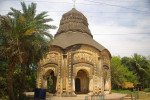
Bhavaniswar Mandir Complex
Some quick example text to build on the card title and make up the bulk of the card's content.
Go somewhere
Bhavaniswar Mandir
Some quick example text to build on the card title and make up the bulk of the card's content.
Go somewhere
Cossimbazar Chhoto Rajbari
Some quick example text to build on the card title and make up the bulk of the card's content.
Go somewhere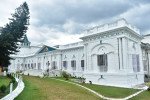
Cossimbazar Rajbari
Some quick example text to build on the card title and make up the bulk of the card's content.
Go somewhere
Dahapara Dham
Some quick example text to build on the card title and make up the bulk of the card's content.
Go somewhere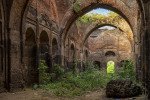
Fauti Masjid Ruins
Some quick example text to build on the card title and make up the bulk of the card's content.
Go somewhere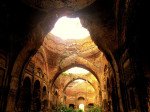
Fauti Mosque
Some quick example text to build on the card title and make up the bulk of the card's content.
Go somewhere
Hazarduari Palace and Museum
Some quick example text to build on the card title and make up the bulk of the card's content.
Go somewhere
House of Jagat Seth
Some quick example text to build on the card title and make up the bulk of the card's content.
Go somewherein Other Cities