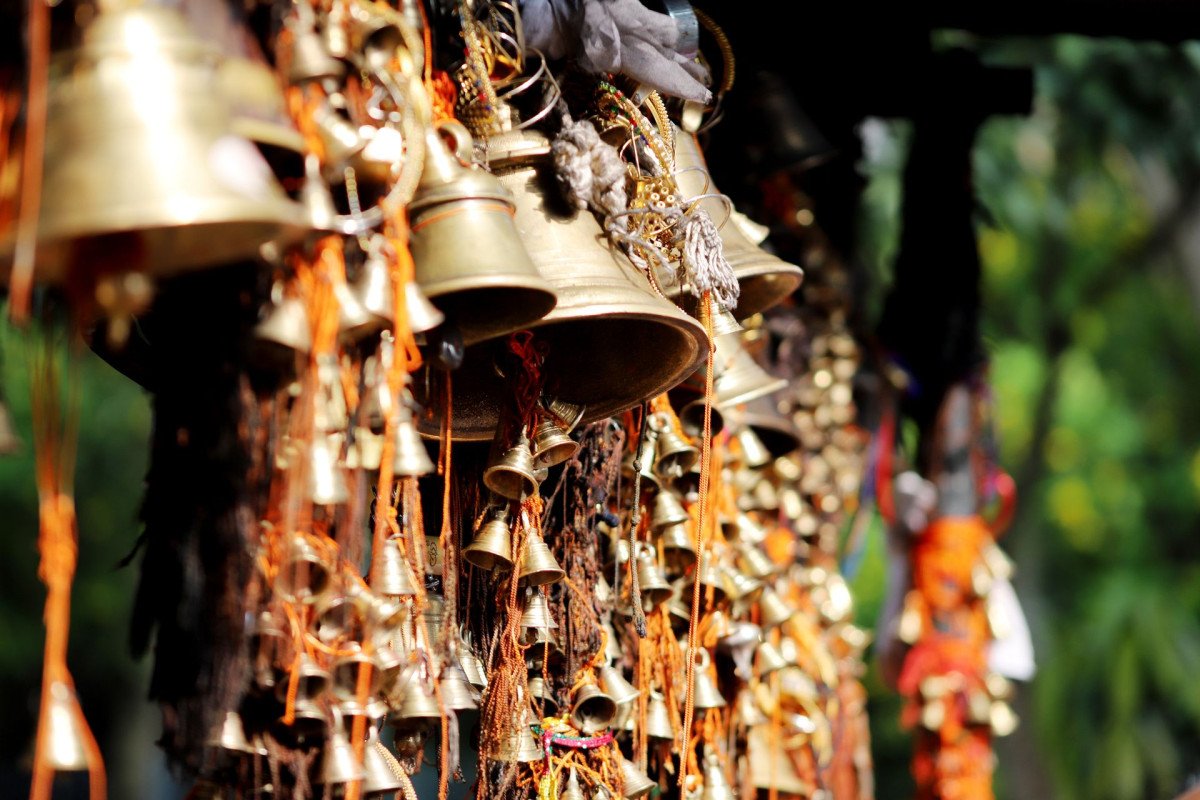
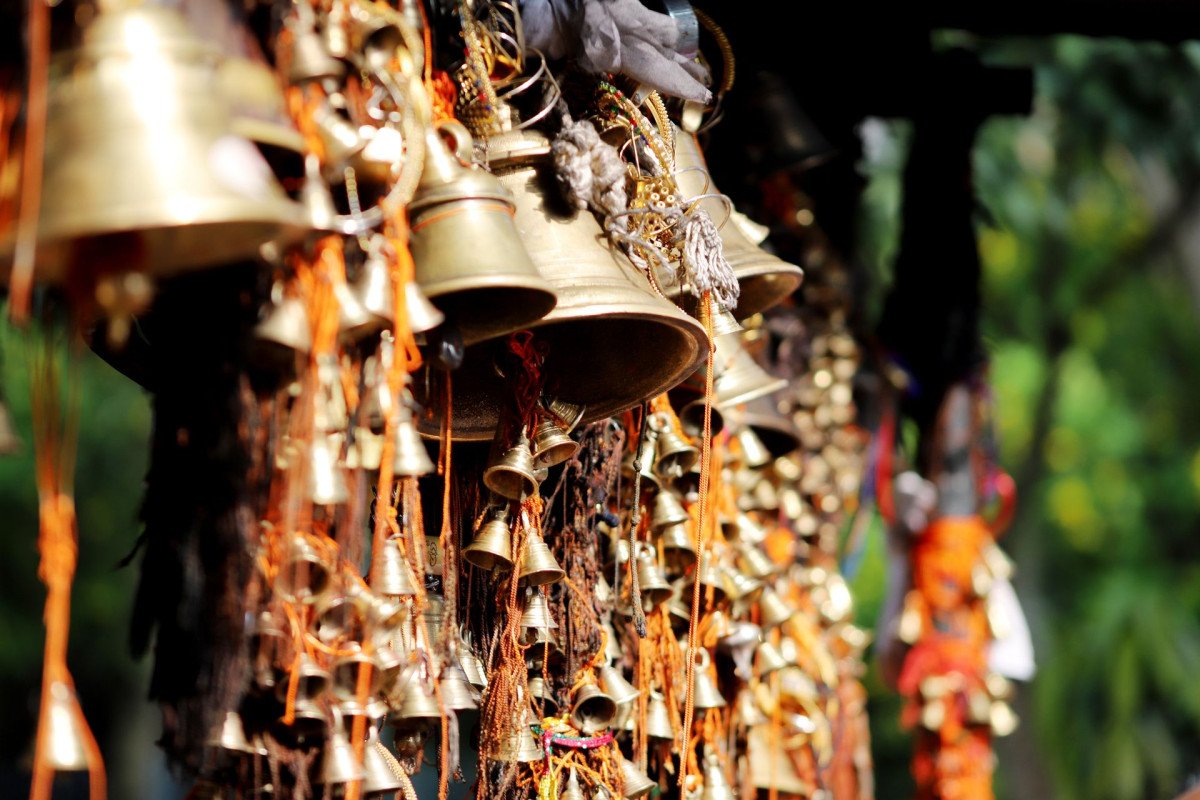
Baba Baidyanath Dham Temple
General information
-
Ideal Duration:
1 to 3 hours (During Shravani Mela, darshan can take 6 to 24 hours or more)Place Type:
Religious (Jyotirlinga and Shakti Peetha), HistoriEntry Fees:
General Entry is Free: The Baba Baidyanath Dham Temple complex has no mandatory entry fee for general darshan (worship/sightseeing). It is a public place of worship, and access is free for all devotees and tourists.
Express/VIP Darshan Tickets...General Entry is Free: The Baba Baidyanath Dham Temple complex has no mandatory entry fee for general darshan (worship/sightseeing). It is a public place of worship, and access is free for all devotees and tourists.
Express/VIP Darshan Tickets: During periods of heavy rush, especially the Shravani Mela and festivals like Maha Shivaratri, the temple trust often offers Special/VIP Darshan tickets for a fee, allowing devotees to bypass the main, extremely long queue. The cost of these tickets can vary significantly, often ranging from Rs. 250 to Rs. 500 or more per person, depending on the demand and management rules. These tickets usually need to be purchased locally on the day of the visit.
Donations and Ritual Charges: While entry is free, pilgrims are expected or encouraged to contribute through donations (Dakshina) to the temple fund or to the priests for performing specific rituals (Puja). There are specific charges for ceremonies like Rudrabhishek or special Aarti, which can range from a few hundred rupees upwards. This is not an 'entry fee' but a charge for a religious service.Timing:
Regular Temple Timings: The temple typically opens very early in the morning, around 4:00 AM, for the morning rituals and darshan. It remains open throughout the day, closing for a short period in the afternoon (e. g. , 1:00 PM to 4:00 PM) for Bhog (offering to the deity) ...Regular Temple Timings: The temple typically opens very early in the morning, around 4:00 AM, for the morning rituals and darshan. It remains open throughout the day, closing for a short period in the afternoon (e. g. , 1:00 PM to 4:00 PM) for Bhog (offering to the deity) and internal cleaning. It reopens in the late afternoon and remains open until the late evening Shayan Aarti (night closure), usually around 9:00 PM or 10:00 PM. The times can be fluid and are subject to change based on the season and the number of devotees.
Ideal Visit Time: The ideal visit time is early morning right after the temple opens (4:00 AM to 6:00 AM) or late in the afternoon (4:00 PM to 6:00 PM) on non-festival days. Visiting during these hours helps in avoiding the peak crowds that gather later in the morning. For a more peaceful, spiritual experience, visit on a weekday during the Winter months (October to March).
Festival Timings: During the Shravani Mela (July-August) and Maha Shivaratri, the temple often remains open almost continuously (sometimes 24 hours) to manage the massive influx of pilgrims. During these times, the queue for darshan is extremely long, and a visit can take many hours.Special Events:
The Shravani Mela (The Great Pilgrimage): The most special and prominent event is the Shravani Mela, which lasts for the entire Hindu month of Shravana (July-August). Millions of Kanwariya pilgrims, wearing saffron clothes and carrying Kanwars (pots of Ganga water), undert...The Shravani Mela (The Great Pilgrimage): The most special and prominent event is the Shravani Mela, which lasts for the entire Hindu month of Shravana (July-August). Millions of Kanwariya pilgrims, wearing saffron clothes and carrying Kanwars (pots of Ganga water), undertake a foot journey from Sultanganj (Bihar) to Deoghar to offer the holy water to the Jyotirlinga. This event transforms the city into a massive, vibrant spiritual camp, characterized by continuous chanting of "Bol Bam" and a massive display of collective faith and devotion. The management of the crowd and the sheer scale of the pilgrimage are extraordinary.
Maha Shivaratri Celebration: The festival of Maha Shivaratri (February or March) is celebrated with great pomp and show. The temple is elaborately decorated, and devotees observe fasts and perform special pujas throughout the night. It marks the marriage of Lord Shiva and Maa Parvati, and the special Shringaar and Aarti on this night are highly sought after.
Gathbandhan Ceremony during Shravan: The daily ritual of tying the sacred red thread (Gathbandhan) between the Baba Baidyanath and Maa Parvati temples during the Shravani Mela is a unique special event. It emphasizes the unity of Shiva-Shakti and is a powerful sight for witnessing the depth of matrimonial reverence in Hinduism.Best Photo Spots:
The Golden Dome and Panchshula: The best spot for capturing the iconic image of the Baba Baidyanath Temple is to focus on the pyramid-shaped Shikhara and the gold-plated dome with the Panchshula (Trident). This can be captured from the temple courtyard. The contrasting co...The Golden Dome and Panchshula: The best spot for capturing the iconic image of the Baba Baidyanath Temple is to focus on the pyramid-shaped Shikhara and the gold-plated dome with the Panchshula (Trident). This can be captured from the temple courtyard. The contrasting colors of the ancient stone and the brilliant gold are highly photogenic, especially at sunrise or sunset.
The Maa Parvati Temple Connection: The sight of the sacred red thread (Gathbandhan) connecting the two main temples (Shiva and Shakti) is a unique photographic opportunity symbolizing divine unity. This is best captured from an angle that clearly shows the threads spanning the space between the structures.
The Shivganga Tank Perspective: The Shivganga pond, located close to the complex, offers a reflective surface for capturing the temple's reflection (if possible) or simply framing the temple structure across the water. The activity of pilgrims taking a dip adds a cultural element to the photograph.
The Crowd and Devotion during Mela: For culture and documentary photography, the flow of Kanwariya pilgrims during the Shravani Mela is unparalleled. Capturing the sea of saffron and the expressions of intense faith, particularly on the main approach road, provides powerful visual narratives. (Ensure respectful photography and avoid capturing faces too close without permission).Photo Gallery
Things To Do
-
Perform the Rudrabhishek and Jalabhishek: The primary activity is offering Jalabhishek (offering water) and Rudrabhishek (a specific ritual offering) to the Jyotirlinga. Devotees bring Ganga water, particularly during the Shravani Mela, to perform this sacred act. Participating in this central ritual is a deeply fulfilling spiritual experience.
Circumambulate the Temple Complex (Pradakshina): Take a leisurely walk around the main temple and the compound housing the 21 other temples. This Pradakshina (clockwise walk) allows you to pay respects to the various deities, including Maa Parvati, Lord Ganesha, and Goddess Kali, completing the full spiritual circuit of the Dham.
Witness the Evening Aarti and Shringaar: The evening Aarti (lamp ceremony) is a beautiful, spiritually uplifting event fille...Perform the Rudrabhishek and Jalabhishek: The primary activity is offering Jalabhishek (offering water) and Rudrabhishek (a specific ritual offering) to the Jyotirlinga. Devotees bring Ganga water, particularly during the Shravani Mela, to perform this sacred act. Participating in this central ritual is a deeply fulfilling spiritual experience.
Circumambulate the Temple Complex (Pradakshina): Take a leisurely walk around the main temple and the compound housing the 21 other temples. This Pradakshina (clockwise walk) allows you to pay respects to the various deities, including Maa Parvati, Lord Ganesha, and Goddess Kali, completing the full spiritual circuit of the Dham.
Witness the Evening Aarti and Shringaar: The evening Aarti (lamp ceremony) is a beautiful, spiritually uplifting event filled with chanting and devotional songs. Similarly, the Shringaar (decoration) of the deity is a sight to behold, offering a peaceful contrast to the rush of the daytime crowds.
Offer the Pinda for Ancestors: Deoghar is also considered a fitting place for performing Pinda Daan (offering rice balls) for the peace of ancestors. This ritual, mentioned in ancient texts, is an important duty for many Hindu pilgrims and can be performed with the help of local priests.
Explore the Local Bazaar: The area surrounding the temple is a bustling market full of religious items, souvenirs, local sweets like Peda, and traditional handicrafts. Spending time exploring the vibrant bazaar is a cultural experience in itself.
Visit the Shiva Ganga Tank: The sacred pond, Shivganga, near the temple, is traditionally where pilgrims take a holy dip before entering the main temple. While often crowded, the ritual dip holds religious significance and is a unique part of the pilgrimage. Capture Architectural Details and Spiritual Moments: Though photography inside the main shrine is restricted, the exterior architecture, the gold Kalashas, the Maa Parvati temple, and the overall atmosphere offer ample opportunities for respectful photography to document the spiritual journey.
Information
-
Why Famous:
One of the Twelve Jyotirlingas: The primary reason for its fame is its inclusion as one of the twelve divine Jyotirlingas of Lord Shiva, which are considered the holiest shrines for Shaivites. Devotees believe that a visit here grants immense spiritual merit and fulfills d...One of the Twelve Jyotirlingas: The primary reason for its fame is its inclusion as one of the twelve divine Jyotirlingas of Lord Shiva, which are considered the holiest shrines for Shaivites. Devotees believe that a visit here grants immense spiritual merit and fulfills desires.
Shiva and Shakti Unification (Shakti Peetha): It is one of the rare places that is both a Jyotirlinga and one of the 51 Shakti Peethas (the site where Sati's heart is believed to have fallen, with the Maa Parvati Temple). The ritual of tying the holy red thread between the two main temples emphasizes the unity of the divine couple, Shiva and Shakti, which is a powerful spiritual concept for Hindus.
The Legend of Ravana and the Lingam: The captivating mythological story of Ravana trying to carry the Jyotirlinga to Lanka but being tricked into setting it down here by Lord Vishnu draws people seeking to understand the deep history and divine intervention associated with the site. The alleged dent mark on the Lingam from Ravana's thumb is a point of great spiritual interest.
Shravani Mela Pilgrimage: The temple is globally famous for the month-long Shravani Mela (July-August), where millions of Kanwariyas (pilgrims) walk long distances, sometimes over 100 KMS, to bring holy water from the Ganges at Sultanganj and offer it to the Jyotirlinga. This mass pilgrimage is one of the largest annual religious congregations in the world. -
Architecture:
Architectural Style and Materials: The temple primarily follows the traditional Nagara style of architecture, which is typical of North Indian temples. It is a stone-built structure with intricate carvings. The present structure is often attributed to Raja Puran Mal of Gi...Architectural Style and Materials: The temple primarily follows the traditional Nagara style of architecture, which is typical of North Indian temples. It is a stone-built structure with intricate carvings. The present structure is often attributed to Raja Puran Mal of Gidhaur in 1596 AD, though the site itself dates back to ancient times. The stone used is predominantly local sandstone, carved by skilled artisans. The structure exhibits a modest yet powerful design, prioritizing spiritual function over extravagant decoration, characteristic of many ancient religious sites. The Shikhara (tower) of the main temple is pyramid-shaped and culminates in a golden dome and Panchshula (five-pronged trident) atop the spire, a distinctive architectural element. The gold dome and the golden pots (Kalashas) are significant features.
Temple Dimensions and Layout: The temple complex is quite extensive, featuring the main Baba Baidyanath Temple at the center, surrounded by 21 smaller temples, making it a sacred enclosure. The main shrine is not exceptionally high (the elevation is noted as about 22 meters or 72 feet), but its presence is imposing. The complex is laid out according to traditional Hindu temple construction principles. The interior houses the Jyotirlinga in the sanctum sanctorum (Garbhagriha). The most architecturally unique element is the sacred red thread (Gathbandhan) that physically connects the main Baba Baidyanath Temple with the adjacent Maa Parvati Temple, symbolizing the sacred union of Shiva and Shakti. This architectural symbolism is a major draw for pilgrims and is rarely seen in other temples. The circumambulation path (Pradakshina) is well-defined, allowing devotees to honor all the subsidiary shrines within the complex. -
How To Reach:
By Air: The nearest operational airport is Deoghar Airport (DGH), which is just about 10-12 KMS from the temple. It has direct connectivity to major cities like Delhi, Kolkata, and Bengaluru. From the airport, one can hire a taxi or pre-booked cab to reach the temple comp...By Air: The nearest operational airport is Deoghar Airport (DGH), which is just about 10-12 KMS from the temple. It has direct connectivity to major cities like Delhi, Kolkata, and Bengaluru. From the airport, one can hire a taxi or pre-booked cab to reach the temple complex in about 30 minutes. Alternatively, a slightly farther option is Birsa Munda Airport, Ranchi (IXR), which is about 250 KMS away, requiring a longer road journey.
By Train: The temple is very well connected by rail.
The three nearest stations are: Baidyanathdham Junction (BDME), which is the closest, about 2 KMS away, and the terminal station for the branch line from Jasidih. Deoghar Junction (DGHR), about 3 KMS away. Jasidih Junction (JSME), the major railway junction, about 7 KMS away, which is well connected to most major Indian cities like New Delhi, Kolkata, Patna, and Mumbai. From any of these stations, local transport is easily available.
By Road: Deoghar is well-connected by National and State Highways. Regular bus services (both public and private) operate from major nearby cities like Ranchi, Patna, Kolkata, Bhagalpur, and Dumka. You can also hire private taxis or drive your own vehicle. The road network is good, though traffic can be congested near the temple area.
By Local Transport: Within Deoghar, the temple is easily accessible. You can use auto-rickshaws, cycle-rickshaws, or local taxis/cabs. Since the temple is in the center of the town, local transport is abundant. For a spiritual walk, the distance from many hotels is walkable. -
Weather and Best Time to Visit:
Weather Seasons: The best time to visit is during the Winter months, from October to March. The weather is pleasant, cool, and comfortable for sightseeing and standing in queues. The peak tourist season is also during this time. Summer (April to June) is extremely hot, m...Weather Seasons: The best time to visit is during the Winter months, from October to March. The weather is pleasant, cool, and comfortable for sightseeing and standing in queues. The peak tourist season is also during this time. Summer (April to June) is extremely hot, making a day-long visit difficult. Monsoon (July to September) is spiritually significant due to the Shravani Mela, but the town is highly crowded, and travel can be challenging due to rain and humidity.
Spiritual Significance: For a purely spiritual experience and to witness the massive devotion, the Hindu month of Shravana (July-August) is the best, despite the crowds and weather. For peaceful darshan and photography, Winter is highly recommended.
Different Parts of the Day: The Ideal Visit Time is the early morning (4:00 AM to 6:00 AM) or the late afternoon (4:00 PM to 6:00 PM) to avoid peak sun and crowds. The late evening Aarti is also a beautiful time to visit. Avoid midday hours (10:00 AM to 3:00 PM) due to heat and maximum crowd density. -
Near Tourist Places:
1.
Maa Parvati Temple: Inside the complex (0 KMS). 2.
Shivganga (Tank): Just outside the temple complex (< 0. 5 KMS). 3.
Naulakha Mandir: Dedicated to Radha-Krishna, famed for its architecture (~1. 5 KMS). 4.
Babu Bangla: (Exact location varies, historically a local landmark, let's assume it's centrally located near the main temple) (~2 KMS). 5.
Deoghar College Park: (Near Deoghar College, a local spot for relaxation) (~3 KMS). 6.
Nandan Pahar: A small hill with a park and temple, offering panoramic views (~3 KMS). 7.
Satsang Ashram: A large spiritual center founded by Shri Shri Thakur Anukulchandra (~4 KMS). 8.
Devasangha Math: A holy Hindu shrine and ashram (~5-6 KMS). 9.
Tapovan Caves and Hills: A sacred site with caves where Sage Valmiki is said to have meditated (~10 KMS). 10.
Trikut Pahar (Trikut Hills): A scenic hill and popular spot for the ropeway (~16 KMS).
Tourism Tips
-
Health & Safety:
Stay Hydrated: Carry bottled water, especially during Summer and the crowded Shravani Mela.
Footwear Safety: You will need to remove your shoes outside the temple complex; be prepared to wa...Health & Safety:
Stay Hydrated: Carry bottled water, especially during Summer and the crowded Shravani Mela.
Footwear Safety: You will need to remove your shoes outside the temple complex; be prepared to walk barefoot.
Secure Belongings: The temple area is heavily crowded; keep your wallet, phone, and valuables securely placed.
Modest Dress: Dress modestly, covering shoulders and legs, as a mark of respect for the religious site.
Packing:
Layered Clothing: Pack light cotton clothes for Summer and Monsoon, and light woolens for Winter.
Essentials: Carry a small bag for essentials. Avoid carrying large backpacks inside the temple complex.
Rain Gear: If visiting during Monsoon (Shravana), carry an umbrella or raincoat.
Accommodation:
Book in Advance: During the Shravani Mela and other major festivals, accommodations are booked months in advance. Secure your hotel or Dharamshala well ahead of time.
Variety of Stays: Deoghar offers a wide range of options, from budget Dharamshalas for pilgrims to mid-range hotels. Choose one close to the temple or Jasidih railway station for easy commuting.
Other Different Topics:
Priest Services: If you wish to perform a special puja, hire a reputable priest. Do not entertain unauthorized touts.
Photography Rules: Photography is strictly prohibited inside the main shrine; respect the rules to avoid confiscation.
Local Delicacy: Try the local sweet, Deoghar Peda, a famous specialty, available in shops near the temple.
Basukinath Visit: Combine your visit with the Basukinath Temple (about 45 KMS away), which is an essential part of the pilgrimage.
Reviews
FAQs
Deoghar Itineray And Cost:-
Baba Baidyanath Dham Temple Tourism:-
Information about New and Updated Locations() of Jharkhand Has Been Added :-
Card subtitle
Note:-
Information provided here in good Faith and for reference only.
All information and pictures will be updated soon, please keep visiting.
Near Places

Arogya Bhawan
Some quick example text to build on the card title and make up the bulk of the card's content.
Go somewhere
Baba Baidyanath Dham Temple
Some quick example text to build on the card title and make up the bulk of the card's content.
Go somewhere
Baba Baidyanath Jyotirlinga Temple
Some quick example text to build on the card title and make up the bulk of the card's content.
Go somewhere
Babu Bangla
Some quick example text to build on the card title and make up the bulk of the card's content.
Go somewhere
Baidyanath Dham
Some quick example text to build on the card title and make up the bulk of the card's content.
Go somewhere
Basukinath Temple
Some quick example text to build on the card title and make up the bulk of the card's content.
Go somewhere
Chopamod
Some quick example text to build on the card title and make up the bulk of the card's content.
Go somewhere
Deoghar College Park
Some quick example text to build on the card title and make up the bulk of the card's content.
Go somewhere
Devasangha Math
Some quick example text to build on the card title and make up the bulk of the card's content.
Go somewhere
Devsangha Ashram
Some quick example text to build on the card title and make up the bulk of the card's content.
Go somewherein Other Cities