Konark Sun Temple
General information
-
Ideal Duration:
2 to 3 hoursPlace Type:
Historical Monument, Religious Site, UNESCO HeritaEntry Fees:
Foreign Visitors Entry Fees: For foreign tourists, the standard entry fee is INR 600 per person. This fee is relatively high compared to domestic rates but is essential for the upkeep of this UNESCO World Heritage Site.
Domestic Visitors Entry ...Foreign Visitors Entry Fees: For foreign tourists, the standard entry fee is INR 600 per person. This fee is relatively high compared to domestic rates but is essential for the upkeep of this UNESCO World Heritage Site.
Domestic Visitors Entry Fees: For citizens of India, SAARC, and BIMSTEC countries, the entry fee is INR 40 per person. The fee is charged by the Archaeological Survey of India (ASI) to maintain the temple complex and the surrounding gardens.
Exemptions and Additional Charges: Children below the age of 15 are generally allowed free entry. Separate charges apply for still cameras (INR 25) and video cameras (INR 200) for professional/commercial use. The ticket can often be purchased online via the ASI website, which is highly recommended to avoid long queues and ensure a smooth entry process, making it a crucial part of the tourist experience. The fees for the separate Light & Sound Show (usually around INR 50 to INR 100 per person) and the ASI Museum (around INR 10 to INR 20 per person) are charged separately from the main temple entry ticket.Timing:
Regular Timings: The temple complex is typically open to the public from Sunrise (around 6:00 AM) to Sunset (around 6:00 PM), seven days a week. The exact timing varies slightly with the season.
Ideal Visit Time:Regular Timings: The temple complex is typically open to the public from Sunrise (around 6:00 AM) to Sunset (around 6:00 PM), seven days a week. The exact timing varies slightly with the season.
Ideal Visit Time:
Early Morning: The best time to visit is immediately after sunrise (around 6:00 AM to 8:00 AM). This offers a peaceful atmosphere, softer light for photography, and cooler temperatures, especially outside of the winter months.
Mid-day is Crowded: Avoid visiting between 10:00 AM and 3:00 PM as it is the most crowded time, and the midday sun can be intense, making exploration physically difficult.
The Light & Sound Show Timing: The show operates in the evening after sunset, usually with two slots (7:00 PM and 8:00 PM), depending on the season and tourist volume, offering a distinct night-time experience of the monument.Special Events:
Konark Dance Festival: This is the most famous annual event, typically held in the open-air Natamandapa or a nearby ground during the first five days of December. It features performances by nationally and internationally acclaimed classical dancers from across India, showc...Konark Dance Festival: This is the most famous annual event, typically held in the open-air Natamandapa or a nearby ground during the first five days of December. It features performances by nationally and internationally acclaimed classical dancers from across India, showcasing forms like Odissi, Kathak, Bharatnatyam, and Manipuri, as a tribute to the Sun God and the temple's legacy as a hall of dance.
Magha Saptami Mela: A major religious festival in the Hindu month of Magha (January/February), it is celebrated near the adjacent Chandrabhaga Beach. Devotees take a holy dip in the sea before worshipping the rising Sun God and visiting the Konark Sun Temple, symbolizing purification and spiritual awakening.
World Heritage Day Celebrations: On April 18th, special events, exhibitions, and lectures are often organized by the ASI to promote awareness and conservation of the temple's universal value and heritage.Best Photo Spots:
The Eastern Gate: The main entrance, facing the rising sun, offers the most iconic perspective of the surviving Jagamohana. Position yourself early in the morning to capture the sun's first rays on the stone chariot.
The Seven Horses: The t...The Eastern Gate: The main entrance, facing the rising sun, offers the most iconic perspective of the surviving Jagamohana. Position yourself early in the morning to capture the sun's first rays on the stone chariot.
The Seven Horses: The three enormous, powerful statues of the horses in front of the eastern staircase are a must-photograph spot, symbolizing the energy and speed of the sun's journey across the sky.
A Wheel Close-Up: Focus your camera on one of the 24 wheels, capturing the intricate carvings on the spokes and the central medallion. The detail in the stone is stunning and makes for powerful close-up photography, especially the geometric patterns and relief sculptures.
The Gajasimha Sculpture: The famed Gajasimha (lion crushing an elephant, which in turn crushes a man) statues at the base of the Jagamohana are popular for capturing the sculptural dynamism and symbolic power of the temple.
Panoramic View from the Lawn: Step back into the well-maintained lawn area to get a full view of the remaining structure, capturing its sheer scale and the entire complex in a single frame.Photo Gallery
Things To Do
-
Exploring the Chariot Wheels: Spend time with a guide to understand how the 24 wheels work as functioning sun dials. Stand in front of them and learn to read the time using the shadow cast by the spokes—it is a hands-on historical and scientific experience.
Photography and Sunrise/Sunset Views: Utilize the changing light conditions. The early morning light (sunrise) dramatically highlights the eastern sculptures and the horses, while the late afternoon light illuminates the western carvings. The golden hue on the stone during sunset is especially popular for photography.
Studying the Sculpture Narratives: Dedicate hours to studying the intricate sculptures on the Jagamohana and Nata Mandira (Dance Hall). Focus on the famous life-size elephants, the mythical Gajasimha (Lion on Elephant) moti...Exploring the Chariot Wheels: Spend time with a guide to understand how the 24 wheels work as functioning sun dials. Stand in front of them and learn to read the time using the shadow cast by the spokes—it is a hands-on historical and scientific experience.
Photography and Sunrise/Sunset Views: Utilize the changing light conditions. The early morning light (sunrise) dramatically highlights the eastern sculptures and the horses, while the late afternoon light illuminates the western carvings. The golden hue on the stone during sunset is especially popular for photography.
Studying the Sculpture Narratives: Dedicate hours to studying the intricate sculptures on the Jagamohana and Nata Mandira (Dance Hall). Focus on the famous life-size elephants, the mythical Gajasimha (Lion on Elephant) motif, the musicians, and the famed erotic figures, interpreting the tales of the 13th century life they narrate.
Attending the Light & Sound Show: In the evening, attend the professionally narrated Light & Sound Show near the temple complex to understand the temple's history, construction, and destruction legends in an engaging audio-visual format.
Visiting the ASI Museum: Directly next to the temple, visit the Archaeological Survey of India (ASI) museum to see the original, well-preserved fallen sculptures and architectural fragments that were recovered from the ruins, offering a close-up view of the artistry.
Shopping for Souvenirs: Explore the market stalls right outside the main gate for local crafts, particularly stone carvings and wooden replicas of the temple wheels and horses.
Meditation and Reflection: Find a quiet spot in the extensive lawns (maintained by ASI) to sit and reflect on the spiritual and artistic grandeur of this historic World Heritage site, away from the immediate crowds.
Information
-
Why Famous:
Architectural Brilliance and Grandeur: The temple's fame rests on its revolutionary design as a gigantic sun chariot, a unique architectural feat in India and the world. The precision of the 24 wheels, which double as sun dials that can accurately tell time, showcases the a...Architectural Brilliance and Grandeur: The temple's fame rests on its revolutionary design as a gigantic sun chariot, a unique architectural feat in India and the world. The precision of the 24 wheels, which double as sun dials that can accurately tell time, showcases the advanced astronomical and engineering knowledge of the 13th-century builders.
The Black Pagoda Legend: The temple was known by European sailors as the "Black Pagoda" to distinguish it from the Puri Jagannath Temple ("White Pagoda"). Its dark, looming structure and the navigational challenge it presented cemented its place in historical and maritime lore, making it famous across oceans.
Sculptural Artistry: The temple is an open-air art gallery, famed for the sheer number, size, and erotic nature of its sculptures. These carvings, which include kama and mithuna scenes alongside depictions of daily life, battles, and animal figures, provide an unparalleled insight into the social history and artistic excellence of the Eastern Ganga period, attracting art historians globally. -
Architecture:
Chariot Design and Dimensions: The temple is conceived as a gigantic chariot, 100 feet (30 m) high, with 12 pairs of massive ornamental wheels, each about 9 feet 9 inches in diameter, and pulled by seven carved horses. The main structure that stands is the Jagamohana (Audie...Chariot Design and Dimensions: The temple is conceived as a gigantic chariot, 100 feet (30 m) high, with 12 pairs of massive ornamental wheels, each about 9 feet 9 inches in diameter, and pulled by seven carved horses. The main structure that stands is the Jagamohana (Audience Hall), approximately 128 feet (39 m) high. The main tower (Vimana), now collapsed, was estimated to be over 200 feet (61 m).
Kalinga Style of Architecture: It represents the pinnacle of Kalinga temple architecture, utilizing three types of stone: Chlorite for door lintels and frames, Laterite for the core and foundation, and Khondalite for the major parts of the structure. The design is a textbook illustration of the Odisha style, following the square and circle Mandala geometry. The detailed carvings include mithuna (erotic) scenes, secular life, celestial musicians, and military parades, showcasing a blend of art, religion, and daily life. The temple's perfect alignment ensures the first rays of the rising sun would strike the image in the main sanctum. -
How To Reach:
By Air: The nearest airport is Biju Patnaik International Airport (Bhubaneswar), approximately 65 km away. It is well-connected to major Indian cities like Delhi, Mumbai, Kolkata, and Chennai. From the airport, one can hire a pre-paid taxi or a private cab, which takes abo...By Air: The nearest airport is Biju Patnaik International Airport (Bhubaneswar), approximately 65 km away. It is well-connected to major Indian cities like Delhi, Mumbai, Kolkata, and Chennai. From the airport, one can hire a pre-paid taxi or a private cab, which takes about 90 minutes to reach Konark via the National Highway NH 316.
By Train: The nearest major railway station is Puri Railway Station (PURI), located about 35 km away. Puri is a terminus for several express and superfast trains from across India. From Puri, one can easily hire a taxi, auto-rickshaw, or take a local bus directly to Konark. Bhubaneswar Railway Station (BBS) is another major rail hub, about 60 km away.
By Road: Konark is excellently connected by the scenic Puri-Konark Marine Drive and by NH 316 from Bhubaneswar. Government-run OSTRC buses and private luxury buses ply regularly from Puri (1 hour) and Bhubaneswar (1. 5 to 2 hours). Hiring a private taxi or self-driving is the most comfortable option.
By Local Transport: Within Konark, the main sites are close together and are best traversed by walking. Cycle-rickshaws, auto-rickshaws, and shared taxis are readily available for transport between the temple, the museum, and Chandrabhaga Beach (3 km). -
Weather and Best Time to Visit:
The Winter Season (October to March): This is the absolute best time to visit Konark. The weather is cool, pleasant, and ideal for extensive outdoor sightseeing and walking around the massive temple complex. Temperatures range from 15°C to 25°C. The famous Konark Dance ...The Winter Season (October to March): This is the absolute best time to visit Konark. The weather is cool, pleasant, and ideal for extensive outdoor sightseeing and walking around the massive temple complex. Temperatures range from 15°C to 25°C. The famous Konark Dance Festival also happens in December.
The Summer Season (April to June): This is the hottest time, with temperatures often soaring above 40°C. Sightseeing is extremely challenging. Avoid midday visits; stick to early mornings or late afternoons only.
The Monsoon Season (July to September): The area receives moderate to heavy rainfall. While the landscape is lush and beautiful, heavy rain can disrupt outdoor exploration. This is the off-peak season, offering quieter visits but with unpredictable weather.
Different Parts of the Day: Morning (6:00 AM to 9:00 AM) is ideal for comfortable walking, photography, and using the wheels as sun dials. Late Afternoon (3:30 PM to 6:00 PM) offers stunning light for golden-hour photography and cooler temperatures. Evening is reserved for the Light & Sound Show. -
Near Tourist Places:
Konark Beach/Chandrabhaga Beach (3 km), Konark Archaeological Museum (0. 5 km), Ramachandi Temple & Beach (8 km), Puri Jagannath Temple (35 km), Raghurajpur Heritage Village (40 km), Baliharachandi Temple (20 km), Pipili (Appliqué work village) (45 km), Marine Drive Road (for Scenic Drive) (0 km), Kuruma Buddhist Site (8 km), Astharanga Beach (12 km).
Tourism Tips
-
Health & Safety:
Hydration and Sun Protection: Carry plenty of water, especially during the hot months, and wear a cap, sunglasses, and high-SPF sunscreen, as the temple complex involves a lot of walking in the open sun. Be wary of unauthori...Health & Safety:
Hydration and Sun Protection: Carry plenty of water, especially during the hot months, and wear a cap, sunglasses, and high-SPF sunscreen, as the temple complex involves a lot of walking in the open sun. Be wary of unauthorized guides. Only hire government-certified guides.
Packing:
Comfortable Footwear and Light Clothing: Wear comfortable walking shoes, as the complex is vast and the stone can be uneven. Light, breathable cotton clothing is best. Given its religious nature, modest dressing is advisable, though not strictly enforced in the ruins.
Accommodation:
Stay in Puri or Konark: For a complete experience, book accommodation in a hotel or resort in Konark itself, but for more options and better connectivity, staying in Puri (35 km) or Bhubaneswar (65 km) and doing a day trip is a popular alternative.
Other Tips:
Digital Payment and Photography: Keep the camera ready as the temple is highly photogenic. Purchase the entry ticket online to save time. Carry some cash for local vendors, but digital payments are becoming increasingly common. Engage a certified guide to truly appreciate the complex historical and mythological narrative embedded in the stones. Remember the temple is a no-fly zone for unauthorized drones.
Reviews
FAQs
Konark Itineray And Cost:-
Konark Sun Temple Tourism:-
Other Places In Konark :-
Other States In India :-
Information about New and Updated Locations() of Odisha Has Been Added :-
Card subtitle
Note:-
Information provided here in good Faith and for reference only.
Near Places

Astaranga Beach
Some quick example text to build on the card title and make up the bulk of the card's content.
Go somewhere
Bada Ganesha Temple
Some quick example text to build on the card title and make up the bulk of the card's content.
Go somewhere
Bali Harena Beach
Some quick example text to build on the card title and make up the bulk of the card's content.
Go somewhere
Balidokan Temple
Some quick example text to build on the card title and make up the bulk of the card's content.
Go somewhere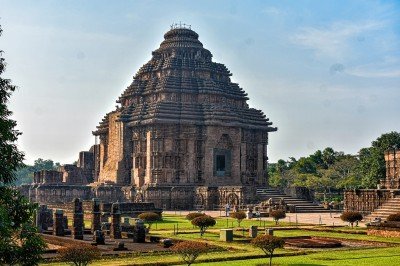
Balukhand-Konark Beach
Some quick example text to build on the card title and make up the bulk of the card's content.
Go somewhere
Bayalish Mouza
Some quick example text to build on the card title and make up the bulk of the card's content.
Go somewhere
Brahmakund
Some quick example text to build on the card title and make up the bulk of the card's content.
Go somewhere
Chandrabhaga Beach
Some quick example text to build on the card title and make up the bulk of the card's content.
Go somewhere
Chandrabhaga Mela Ground
Some quick example text to build on the card title and make up the bulk of the card's content.
Go somewhere
Chilika Lake
Some quick example text to build on the card title and make up the bulk of the card's content.
Go somewhere
Gopinath Temple
Some quick example text to build on the card title and make up the bulk of the card's content.
Go somewhere
Harachandi Temple
Some quick example text to build on the card title and make up the bulk of the card's content.
Go somewhere
Kakatpur Mangala Temple
Some quick example text to build on the card title and make up the bulk of the card's content.
Go somewhere
Konark Archaeological Museum
Some quick example text to build on the card title and make up the bulk of the card's content.
Go somewhere
Konark Beach
Some quick example text to build on the card title and make up the bulk of the card's content.
Go somewhere
Konark Handicrafts Market
Some quick example text to build on the card title and make up the bulk of the card's content.
Go somewherein Other Cities