Lalita Devi Temple
General information
-
Ideal Duration:
30 minutes - 45 minutes (For Darshan and prayer):Place Type:
Pilgrimage Site, Religious Temple, Goddess WorshipEntry Fees:
Temple Entry Fee: There is no entry fee to the Lalita Devi Temple. All visitors and devotees are welcome free of charge.
Puja/Ritual Fees: Hiring a priest for a specialized puja or a detailed recitation of the Lalita Sahasranama will involve...Temple Entry Fee: There is no entry fee to the Lalita Devi Temple. All visitors and devotees are welcome free of charge.
Puja/Ritual Fees: Hiring a priest for a specialized puja or a detailed recitation of the Lalita Sahasranama will involve a negotiated Dakshina (fee) to the priest, typically starting from Rs.150 to Rs.300.
Offering Costs: Purchasing the specific, required items for the Devi's puja (red flowers, red chunri, bangles, coconut) is optional and will cost between Rs.50 to Rs.150, depending on the quality and quantity.
Donation Box: Making a donation to the temple's maintenance fund is completely voluntary and at the devotee's discretion.
Parking Fees: A standard parking fee may be charged for vehicles in the designated lot near the temple's main entrance, but not for the temple entry itself. :Timing:
Regular Timings: 6:00 AM to 12:00 PM and 4:00 PM to 8:30 PM (The temple generally opens early and has a closure period during the midday for bhog and rest).
Ideal Visit Time: Evening Aarti (6:00 PM - 7:00 PM) is the Ideal Time. The atmospher...Regular Timings: 6:00 AM to 12:00 PM and 4:00 PM to 8:30 PM (The temple generally opens early and has a closure period during the midday for bhog and rest).
Ideal Visit Time: Evening Aarti (6:00 PM - 7:00 PM) is the Ideal Time. The atmosphere is charged with the collective devotion of the community, especially women, and the decorated temple is at its most beautiful. The morning aarti is also excellent.
Midday Closure: Avoid the Midday closure period (approximately 12:00 PM to 4:00 PM) to ensure darshan. Plan your visits for the early morning or evening hours.
Seasonal Variation: Navratri time (September/October) is the most vibrant and busiest period for a visit. :Special Events:
Sharad Navratri: The temple's single most important event. All nine days of Navratri (September/October) are celebrated with elaborate pujas, fasting, jagrans (night-long vigils), and a massive crowd of female devotees. The temple is spectacularly decorated.Sharad Navratri: The temple's single most important event. All nine days of Navratri (September/October) are celebrated with elaborate pujas, fasting, jagrans (night-long vigils), and a massive crowd of female devotees. The temple is spectacularly decorated.
Durga Ashtami / Navami: The 8th and 9th days of Navratri see the most intense rituals, including Kanya Puja (worship of young girls) and special aartis, drawing the largest crowds of the year.
Deepawali Festival: The Devi temple is also heavily lit and decorated during Deepawali (October/November), with special prayers for wealth and prosperity offered to the Goddess.
Shukla Paksha Ashtami: The 8th day of the bright fortnight of every Hindu month is considered auspicious for Devi worship, drawing a slightly larger crowd for specific rituals. :Best Photo Spots:
The Brightly Colored Shikhara: Capture a photo of the temple's vibrant shikhara and entrance, focusing on the bright colors and decorative motifs that contrast with the sky, symbolizing the dynamic energy of the Goddess.
The Entrance Arch: Fr...The Brightly Colored Shikhara: Capture a photo of the temple's vibrant shikhara and entrance, focusing on the bright colors and decorative motifs that contrast with the sky, symbolizing the dynamic energy of the Goddess.
The Entrance Arch: Frame the main entrance arch of the temple, capturing the intricate, colorful decorations and the flow of devotees entering the shrine, symbolizing the welcome to the Mother.
Candid Offering Shots: Capture candid, respectful photographs of women devotees making traditional offerings (like chunri and bangles) to the Goddess, focusing on the expression of their devotion.
The Altar of the Goddess: Focus a picture on the adorned altar (if photography is permitted inside the Mandapam), capturing the beauty, jewelry, and intricate dressing of the Lalita Devi idol.
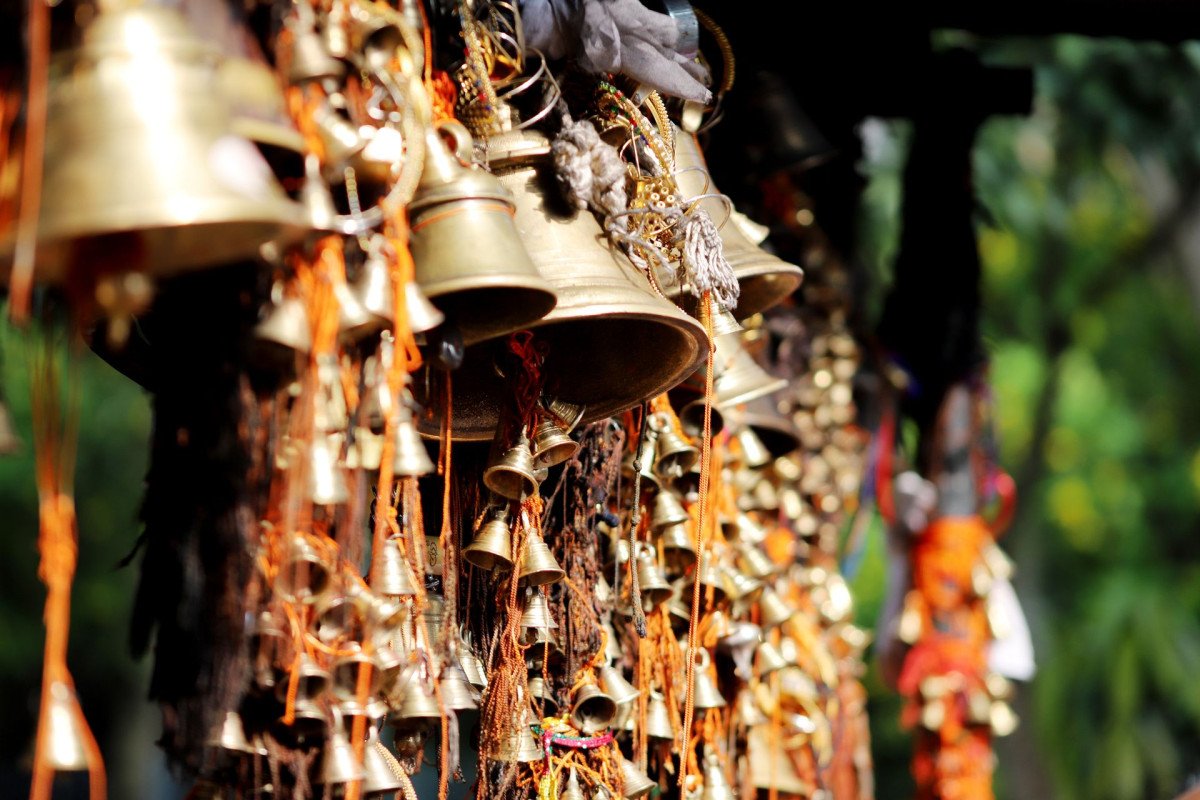
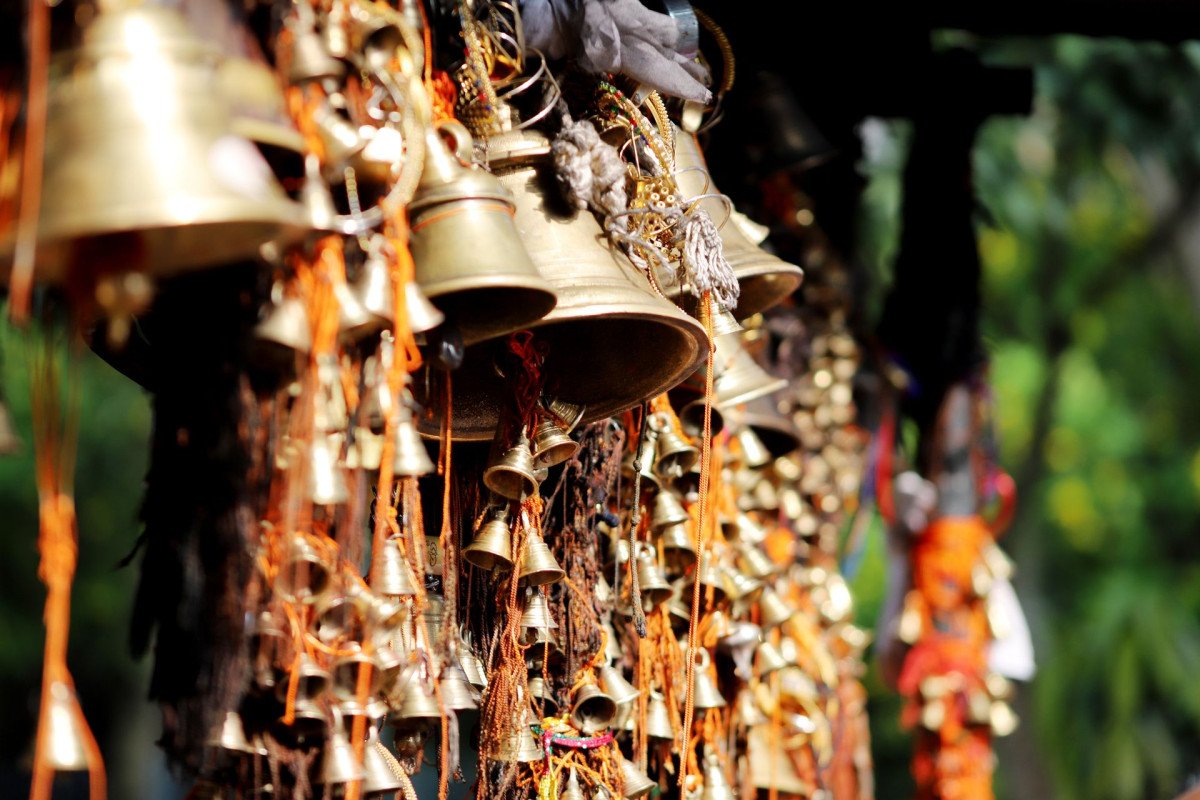
Temple Bells and Ropes: Capture the detail of the rows of temple bells hanging in the Mandapam, focusing on the texture and the movement of the ropes, which are often rung by the devotees for Darshan. :Photo Gallery
Things To Do
-
Perform the Darshan of Lalita Devi: Offer prayers to the main idol of the Goddess, seeking her blessings for strength, courage, prosperity, and the welfare of your family. This is the primary act of the visit.
Offer Traditional Puja Items: Present traditional offerings to the Devi, such as a red chunri (scarf), bangles, coconut, flowers (especially red ones), and incense. These items are easily available outside the temple.
Tie the Sacred Thread: Participate in the local custom of tying a sacred thread (or ribbon) to a designated tree or railing in the temple complex, symbolizing a prayer or wish that you have made to the Goddess.
Attend the Navratri Celebrations: If visiting during Navratri (September/October), ensure you attend the special evening aarti for the ...Perform the Darshan of Lalita Devi: Offer prayers to the main idol of the Goddess, seeking her blessings for strength, courage, prosperity, and the welfare of your family. This is the primary act of the visit.
Offer Traditional Puja Items: Present traditional offerings to the Devi, such as a red chunri (scarf), bangles, coconut, flowers (especially red ones), and incense. These items are easily available outside the temple.
Tie the Sacred Thread: Participate in the local custom of tying a sacred thread (or ribbon) to a designated tree or railing in the temple complex, symbolizing a prayer or wish that you have made to the Goddess.
Attend the Navratri Celebrations: If visiting during Navratri (September/October), ensure you attend the special evening aarti for the most vibrant and powerful devotional experience of the temple.
Circumambulate the Sanctum: Perform a clockwise parikrama around the main Garbhagriha as a mark of respect for the Divine Mother. This is a common ritual in Devi temples.
Contribute to Kanya Bhoj: If possible, make a small donation toward or participate in a Kanya Bhoj (feeding young girls, symbolizing the Devi), which is a major act of charity and worship in Devi temples.
Photography of Temple Art: Focus on the bright, folk-style art, the colorful shikhara, and the intricate decorations of the temple exterior. :
Information
-
Why Famous:
The Divine Feminine Power (Shakti): Its primary fame is its status as a temple of the Divine Mother, Lalita Devi, providing a crucial focus on Shakti worship that balances the predominant Rama worship in Chitrakoot. It's a key spot for devotees of the Goddess.The Divine Feminine Power (Shakti): Its primary fame is its status as a temple of the Divine Mother, Lalita Devi, providing a crucial focus on Shakti worship that balances the predominant Rama worship in Chitrakoot. It's a key spot for devotees of the Goddess.
Wishes for Family Welfare: It is locally famous for its power to grant wishes, especially those related to family harmony, fertility, the welfare of children, and prosperity, drawing a large number of women devotees to its gates.
Center for Navratri: The temple is the main focal point for the nine days of Navratri (September/October), when the celebrations are at their most vibrant, making the temple a major pilgrimage destination during this festival period.
Proximity to Ram Ghat: Its convenient location near the main Ram Ghat area ensures its continuous flow of devotees, as pilgrims often combine the worship of Rama with a visit to the Devi temple.
Local Community Anchor: The temple is famous as a strong anchor for the local Hindu community, often serving as the place for local religious discourses and small cultural gatherings, reinforcing its role beyond just a place of worship. : -
Architecture:
Traditional Temple Structure: The temple is built in a simple, compact, but vibrant North Indian temple style. The architecture focuses on a central Garbhagriha housing the principal idol of the Goddess and a small Mandapam (hall) for devotees to stand.
Read MoreTraditional Temple Structure: The temple is built in a simple, compact, but vibrant North Indian temple style. The architecture focuses on a central Garbhagriha housing the principal idol of the Goddess and a small Mandapam (hall) for devotees to stand.
Bright Decoration: Unlike the often-somber colors of the forest-related Rama temples, the Devi temple is typically painted in bright, auspicious colors like red, yellow, and blue, symbolizing the dynamic and vibrant nature of the Shakti (power) it embodies.
Focus on the Idol: The architecture is specifically designed to frame and enhance the Darshan of the principal idol of Lalita Devi, which is often beautifully adorned with rich clothing, jewelry, and a crown.
Dimension and Layout: The temple complex is usually a single, enclosed structure, often covering an area of approximately 3,000 to 5,000 sq. ft. , suitable for local community gatherings and daily aartis. :How To Reach:
By Air: The Nearest Airport is Prayagraj (Allahabad) Airport (IXD), approximately 130-140 KMS away. One must hire a private taxi. Khajuraho Airport (HJR) is about 175 KMS away. The road journey takes about 3-4 hours.
By Train: The Nearest ...By Air: The Nearest Airport is Prayagraj (Allahabad) Airport (IXD), approximately 130-140 KMS away. One must hire a private taxi. Khajuraho Airport (HJR) is about 175 KMS away. The road journey takes about 3-4 hours.
By Train: The Nearest Railway Station is Chitrakoot Dham Karwi Railway Station (CKTD), which is very close, about 2 KMS away. Auto-rickshaws are easily available outside the station and charge about Rs.50-Rs.80 to the temple near the Ram Ghat area.
By Road: The temple is easily accessible and located in the central pilgrimage area of Chitrakoot, often within walking distance or a short rickshaw ride from Ram Ghat. The road access is good, with all local transport able to reach the vicinity.
By Local Transport: Auto-rickshaws and cycle rickshaws are the most common transport. The location is central, so it's a quick, inexpensive ride from any point in the main town area. :Weather and Best Time to Visit:
Different Types of Seasons: Winter (October to March) is the Best Time to Visit as the cool weather allows for comfortable and extended temple stays. Monsoon (July to September) is also a good time due to the lush greenery and the cooler atmosphere, provided the rain is not...Different Types of Seasons: Winter (October to March) is the Best Time to Visit as the cool weather allows for comfortable and extended temple stays. Monsoon (July to September) is also a good time due to the lush greenery and the cooler atmosphere, provided the rain is not too heavy. Summer (April to June) should be avoided during midday.
Different Parts of the Day: Evening (5:00 PM - 7:00 PM) is the Ideal Time to visit, especially to attend the Aarti ceremony, which is a powerful display of the temple's vibrant feminine spiritual energy. Morning hours are quieter. :Near Tourist Places:
Ram Ghat (0. 5 KMS), Gol Talab (1 KMS), Kamadgiri Temple (2 KMS), Bharat Milap Mandir (2. 5 KMS), Lakshman Pahadi (4 KMS), Hanuman Dhara (6 KMS), Sphatik Shila (8 KMS), Janaki Kund (8. 5 KMS), Gupt Godavari (20 KMS), Sati Anusuya Ashram (22 KMS):Tourism Tips
-
Health & safety: Watch your steps on the temple floor, especially if it's recently been washed. Be respectful of the priests' instructions during the puja. If visiting during Navratri, be prepared for a long, slow-moving queue for darshan.
Pack...Health & safety: Watch your steps on the temple floor, especially if it's recently been washed. Be respectful of the priests' instructions during the puja. If visiting during Navratri, be prepared for a long, slow-moving queue for darshan.
Packing: Wear traditional, modest clothing suitable for a Devi temple (e. g. , saree or salwar kameez for women). Carry a small bag for offerings. Do not carry leather items inside the temple premises if possible.
Accommodation: Staying in the central Ram Ghat or Karwi area provides the best convenience for transport and access to this temple and other major sites. Mid-range hotels and community dharmshalas are abundant.
Other Different Topics heading: Be aware of vendors who might aggressively try to sell puja items; purchase from the temple-approved stalls if possible. Focus on the ritual and the spiritual energy of the Mother Goddess. :
Reviews
FAQs
Chitrakoot Itineray And Cost:-
Lalita Devi Temple Tourism:-
Other Places In Chitrakoot :-
Other States In India :-
Information about New and Updated Locations() of Uttar Pradesh Has Been Added :-
Card subtitle
Note:-
Information provided here in good Faith and for reference only.
Near Places

Balmiki Ashram
Some quick example text to build on the card title and make up the bulk of the card's content.
Go somewhere
Barampur Village Pond
Some quick example text to build on the card title and make up the bulk of the card's content.
Go somewhere
Bharat Koop
Some quick example text to build on the card title and make up the bulk of the card's content.
Go somewhere
Bharat Milap Mandir
Some quick example text to build on the card title and make up the bulk of the card's content.
Go somewhere
Bharat Milap Temple
Some quick example text to build on the card title and make up the bulk of the card's content.
Go somewhere
Chaturmukhi Shiv Temple
Some quick example text to build on the card title and make up the bulk of the card's content.
Go somewhere
Chitrakoot Dham
Some quick example text to build on the card title and make up the bulk of the card's content.
Go somewhere
Dharkundi
Some quick example text to build on the card title and make up the bulk of the card's content.
Go somewhere
Ganesh Bagh
Some quick example text to build on the card title and make up the bulk of the card's content.
Go somewhere
Glass Bridge Chitrakoot
Some quick example text to build on the card title and make up the bulk of the card's content.
Go somewhere
Glass Bridge Chitrakoot / Skywalk
Some quick example text to build on the card title and make up the bulk of the card's content.
Go somewhere
Gol Talab
Some quick example text to build on the card title and make up the bulk of the card's content.
Go somewhere
Gupt Godavari Caves
Some quick example text to build on the card title and make up the bulk of the card's content.
Go somewhere
Gupt Godavari
Some quick example text to build on the card title and make up the bulk of the card's content.
Go somewhere
Hanuman Dhara
Some quick example text to build on the card title and make up the bulk of the card's content.
Go somewhere
Kala Ram Mandir
Some quick example text to build on the card title and make up the bulk of the card's content.
Go somewherein Other Cities