Ngaloi Waterfalls
General information
-
Ideal Duration:
1-3 HoursPlace Type:
Natural Attraction: Waterfall & Picnic SpotEntry Fees:
Current Status of Access Fees: As of the most recent information, the Ngaloi Waterfalls generally has No Entry Fees for visitors. The site is considered a natural public space, maintained primarily by the local community of Ngaloimoul and the District Administration. This ...Current Status of Access Fees: As of the most recent information, the Ngaloi Waterfalls generally has No Entry Fees for visitors. The site is considered a natural public space, maintained primarily by the local community of Ngaloimoul and the District Administration. This no-fee policy significantly contributes to its high popularity among locals for spontaneous day trips and family outings, removing any financial barrier to entry.
Parking and Community Contribution: While there are no formal, government-regulated entry fees, visitors using private vehicles or hired taxis may encounter a small, nominal fee (typically Rs. INR 20-50 per vehicle) collected by the local youth or village council for vehicle parking and for the upkeep of the path and surrounding grounds. This voluntary/minimal contribution is crucial for garbage disposal and maintaining cleanliness, a common practice for natural spots overseen by tribal communities in the region.
Photography and Guide Fees: There are No Specific Fees for personal photography or videography using handheld devices. For professional film shoots or commercial projects, it is mandatory and advisable to contact the Churachandpur District Administration or the village council beforehand to obtain permission, which may involve a usage fee depending on the project's scale. Hiring a local guide, especially for trekking to the 'Hidden Gems' areas, is highly recommended; their fee is separate and negotiated directly, typically ranging from INR 500-1000 for a half-day trip.Timing:
Regular Timings: The site is generally accessible from Sunrise to Sunset every day, typically from 6:00 AM to 5:00 PM. However, since there are no gates or official closing staff, the timing is a safety recommendation: it is highly discouraged to remain at the falls after d...Regular Timings: The site is generally accessible from Sunrise to Sunset every day, typically from 6:00 AM to 5:00 PM. However, since there are no gates or official closing staff, the timing is a safety recommendation: it is highly discouraged to remain at the falls after dusk due to the forest and the remote location.
Ideal Visit Time: The ideal time for a visit is in the Mid-Morning (Rs. 9:00 AM to 11:30 AM) when the sun's angle is perfect for illuminating the cascade and the forest is at its freshest, and again in the Late Afternoon (Rs. 3:00 PM to 4:30 PM) when the light is softer and conducive to peaceful relaxation before the closing.
The Best Seasonal Timing: The period from October to March is considered the most pleasant for visiting. The weather is cool and dry, the paths are less slippery than during the monsoon, and the waterfall still has a healthy flow from the preceding rains. The peak flow is during the monsoon (June to September), but heavy rain can make trekking and access difficult and potentially unsafe.
Operational Days: Ngaloi Waterfalls is open All Seven Days of the Week. It tends to be most crowded on Sundays and public holidays when local families flock for picnics, making Weekdays the best choice for those seeking solitude.Special Events:
Local Harvest Festivals: While there are no regular, large-scale public festivals at the falls, the village of Ngaloimoul and other nearby villages regularly celebrate Chavang Kut (Autumn Festival) in November and the New Year festivities. These events often involve local c...Local Harvest Festivals: While there are no regular, large-scale public festivals at the falls, the village of Ngaloimoul and other nearby villages regularly celebrate Chavang Kut (Autumn Festival) in November and the New Year festivities. These events often involve local community gatherings where traditional songs and dances are performed, and the waterfall area becomes a secondary site for group picnics and celebratory trips the day before or after the main festival.
Community Clean-Up Drives: The falls often serve as the focal point for special environmental events, particularly community-led clean-up and conservation drives organized by local youth bodies and environmental NGOs. These events, typically held in the Summer or just before the peak tourist season, are an important display of local stewardship.
Local Sporting Competitions: Sometimes, the open grounds near the falls serve as a starting or ending point for local hiking, trekking, or trail running competitions, organized by the youth of Churachandpur, turning the natural site into a vibrant sporting arena for a day.
Traditional Water Rites: Specific families or clans may occasionally perform traditional water-blessing rites or ancestor veneration ceremonies near the serene pools, especially during culturally significant times of the year like the beginning of the planting season in April or May.Best Photo Spots:
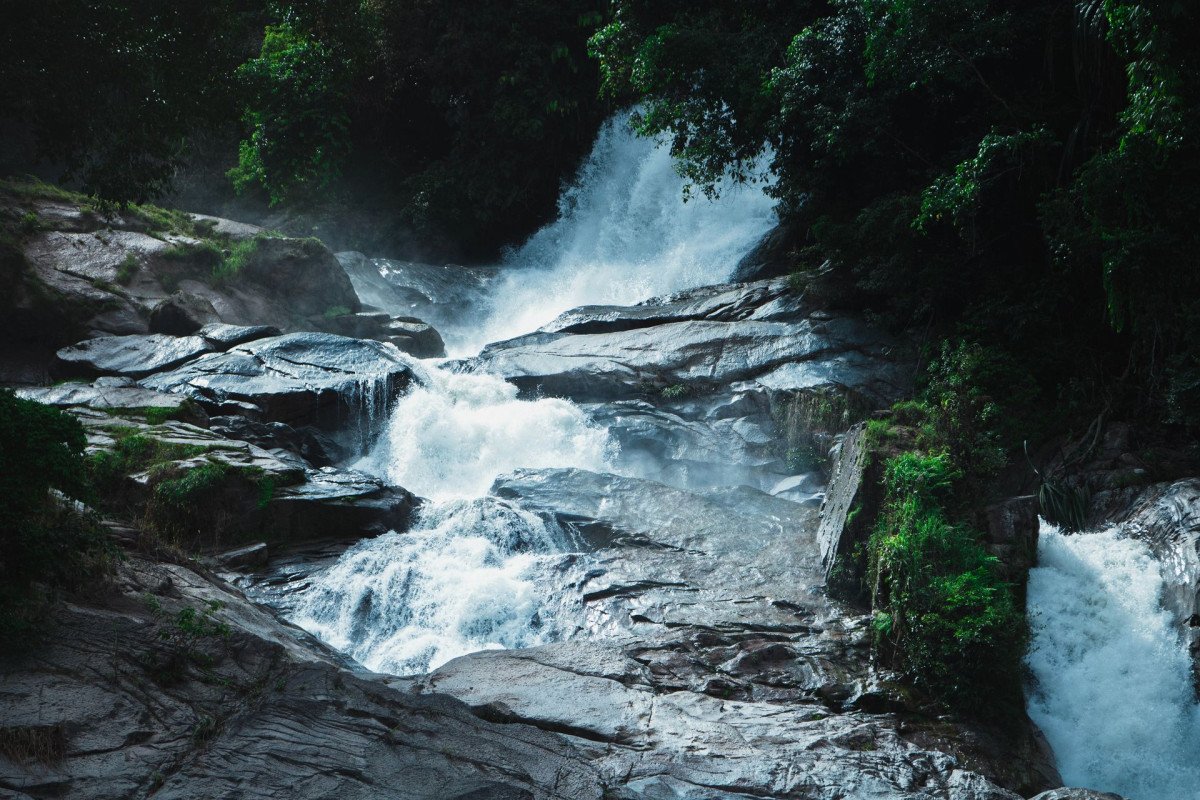
The Multi-Tier Cascade Viewpoint: The single best photo spot is from a flat rock a short distance from the plunge pool, which captures the entire height of the multi-tiered waterfall, the foamy white water, and the vast, dark rock face. Mid-morning light (Rs. 10:00 AM to 12:0...The Multi-Tier Cascade Viewpoint: The single best photo spot is from a flat rock a short distance from the plunge pool, which captures the entire height of the multi-tiered waterfall, the foamy white water, and the vast, dark rock face. Mid-morning light (Rs. 10:00 AM to 12:00 PM) is best as it minimizes shadows while keeping the forest vibrant.
The Green Canopy Frame: A secluded spot along the approach trail, where the dense, towering forest trees form a natural archway or frame around the distant, visible cascade. This spot is perfect for landscape shots that emphasize the sheer scale and lushness of the Manipur forest, making the falls appear as a tiny, rewarding prize at the end of the green tunnel.
The Water-Worn Stones: Close-up shots of the smooth, water-eroded stones and pebbles at the edge of the plunge pool, often covered in vibrant green moss or small, unique ferns. These macro-level photos capture the fine textures and quiet details of the falls' immediate environment, providing an abstract, artistic perspective on the natural 'architecture' of the area.
The Sunset Over the Valley (Approach): A spot on the main road slightly elevated above the village, where you can capture the sunset casting a warm, golden glow over the Ngaloimoul valley and the distant hills, with the falls' stream snaking through the landscape. This spot is ideal for wide-angle, panoramic shots, especially in the late afternoon (Rs. 4:30 PM).
The Tranquil Pool Reflection: During calm periods, the water in the deeper parts of the plunge pool offers a perfect, still-water reflection of the cascading water and the overhanging forest, creating a mirrored, symmetrical photograph. This is particularly effective right after dawn.Photo Gallery
Things To Do
-
Trekking and Hiking Adventures: The primary activity is the short, invigorating trek from the main road down to the waterfall base. While the path is relatively easy, it involves uneven terrain, providing a moderate adventure experience. For those seeking a greater challenge, follow the less-marked trails mentioned in the hidden gems section that lead into the deeper forest, but it is highly recommended to hire a local guide for safety and ecological knowledge. Pamzal Reserved Forest trails are also accessible nearby for longer hikes.
Photography and Videography: Capture the cascading white foam against the dark volcanic rocks, especially during the post-monsoon months of September and October. The natural light filtering through the dense canopy in the mid-morning is ideal for capturing dramatic, contrasting shots. Focus on...Trekking and Hiking Adventures: The primary activity is the short, invigorating trek from the main road down to the waterfall base. While the path is relatively easy, it involves uneven terrain, providing a moderate adventure experience. For those seeking a greater challenge, follow the less-marked trails mentioned in the hidden gems section that lead into the deeper forest, but it is highly recommended to hire a local guide for safety and ecological knowledge. Pamzal Reserved Forest trails are also accessible nearby for longer hikes.
Photography and Videography: Capture the cascading white foam against the dark volcanic rocks, especially during the post-monsoon months of September and October. The natural light filtering through the dense canopy in the mid-morning is ideal for capturing dramatic, contrasting shots. Focus on long-exposure photography to achieve a smooth, silky effect on the water. Document the surrounding flora, including unique orchids and vibrant ferns that thrive in the perpetually moist environment. Capture candid moments of local families enjoying a picnic by the stream.
Nature Immersion and Meditation: Spend time simply sitting by the plunge pool, allowing the rhythmic sound of the gushing water to act as a natural white noise for meditation or deep relaxation. The clean, unpolluted mountain air is rejuvenating. Engage in forest bathing—a mindful experience of soaking in the atmosphere of the forest. Bring a good book and enjoy reading in the cool shade provided by the tall trees that line the stream.
Picnicking and Family Fun: The flat rock areas and clearings around the falls are perfect for a family picnic. Remember to carry all your own trash back, maintaining the pristine condition of the site. Simple games, water play (with caution), and shared meals in this natural setting are essential parts of the Ngaloi experience.
Bird Watching and Wildlife Spotting: The surrounding forest is a habitat for various endemic bird species. Carry a pair of binoculars and a bird guide. Early mornings are the best time to spot birds and possibly glimpses of small mammals, contributing to a truly immersive nature experience. Focus on identifying the calls of various hill birds.
Interacting with Local Culture: The falls are located near Ngaloimoul village. Take the time to respectfully interact with local villagers, who are the custodians of the area. You can learn about their traditions, their relationship with the forest, and possibly purchase local crafts or fresh produce, providing a genuine cultural exchange.
Stargazing and Night Photography (with caution): On clear nights, the remote location offers minimal light pollution, making it an excellent spot for stargazing and astrophotography.
Note: Only undertake this with a reliable local guide and ensure prior permission/safety arrangements, as the area is remote.
Educational Botany Tour: Learn from local guides about the specific botanical diversity, focusing on the endemic and medicinal plants of the Manipur hills, turning a simple visit into an educational tour.
Information
-
Why Famous:
Scenic Gateway to Nature: Ngaloi Waterfalls is famous for its breathtaking natural beauty and its role as an easily accessible local leisure spot. It is the closest major waterfall to the town of Churachandpur, making it the first choice for tourists and residents seeking a...Scenic Gateway to Nature: Ngaloi Waterfalls is famous for its breathtaking natural beauty and its role as an easily accessible local leisure spot. It is the closest major waterfall to the town of Churachandpur, making it the first choice for tourists and residents seeking an escape. Its popularity stems from the serene atmosphere, where the gushing sound of water provides a natural, calming backdrop, perfect for mental relaxation and meditation. The accessibility by local transport adds to its fame, allowing spontaneous day trips without extensive planning.
Photography and Ecology: The location is a magnet for photographers, drawn by the stark contrast between the white water, the dark rocks, and the lush, evergreen forest. It showcases the rich biodiversity of the Manipur hills, serving as a reminder of the region's pristine ecology. It’s also famous as a traditional picnic and family spot, where generations of locals have celebrated holidays and important communal events, embedding it deeply into the local culture and identity of Lamka (Churachandpur). The village's traditional charm near the falls further enhances the cultural fame of the site.
Cultural Significance: Though lacking a specific historical myth, the waterfall is culturally significant as a community gathering point and a symbol of natural purity and abundance in the Ngaloimoul area. -
Architecture:
Natural Stone Formation: The 'architecture' here is entirely geological, carved by millennia of water erosion on the layered sedimentary and metamorphic rocks typical of the Manipur hills. The fall consists of multiple tiers or steps, naturally formed as the water encounter...Natural Stone Formation: The 'architecture' here is entirely geological, carved by millennia of water erosion on the layered sedimentary and metamorphic rocks typical of the Manipur hills. The fall consists of multiple tiers or steps, naturally formed as the water encounters varying rock hardness. The cascading effect is not a sheer drop but a series of slides and plunges over dark, rugged stones, contrasting beautifully with the white, foamy water.
Approximate Dimension: While exact figures are not consistently documented for this natural structure, the vertical drop is estimated to be around 15 to 20 meters, spanning a width of approximately 5 to 7 meters during the peak flow in the monsoon season. The collecting pool at the base is naturally shallow, roughly 10-15 meters in diameter, suitable for wading rather than deep swimming. The surrounding forest canopy forms a natural 'roof' over the stream, creating a cool, shaded environment. This natural architecture showcases the powerful yet subtle hand of nature.
Erosion Patterns: The unique layering of the rocks, visible on the vertical face of the waterfall, demonstrates distinct erosion patterns, which create small ledges and crevices where ferns and mosses thrive, adding a vibrant green layer to the dark stone.
The Plunge Pool Design: The plunge pool acts as a natural catchment basin, its smooth, water-worn stones contrasting with the jagged cliffs above. This natural 'design' is what makes it a perfect, albeit rustic, picnic spot. -
How To Reach:
By Air: The nearest major airport is Imphal Tulihal International Airport (IMF), located approximately 70-80 KMS from Churachandpur. After landing at Imphal, you can hire a pre-booked taxi or take a shared cab to Churachandpur (Lamka), which takes about 3-4 hours, depending...By Air: The nearest major airport is Imphal Tulihal International Airport (IMF), located approximately 70-80 KMS from Churachandpur. After landing at Imphal, you can hire a pre-booked taxi or take a shared cab to Churachandpur (Lamka), which takes about 3-4 hours, depending on road conditions. This is the fastest method for long-distance travelers. From the Churachandpur town center (Lamka), the falls are about a 9-10 KMS drive.
By Train: The nearest major functional railway station is Dimapur Railway Station (DMV) in Nagaland, approximately 250 KMS away. From Dimapur, travelers must hire a taxi or take a bus to Imphal, and then connect to Churachandpur. Alternatively, the Jiribam Railway Station in Manipur is closer (Rs. 225 KMS from Imphal) but connectivity to Churachandpur may be less frequent or reliable, requiring travel via Imphal. Due to the mountainous terrain, train travel is less direct.
By Road: Churachandpur (Lamka) is well-connected to Imphal (the state capital) via National Highway NH-2, a journey of about 3 to 4 hours. From Imphal, regular bus services (both state-run and private) and shared/reserved taxis operate to the Churachandpur town center. From the town center, the Ngaloi Waterfalls are located around 9-10 KMS away on the Tipaimukh Road, easily reached by a hired local taxi, auto-rickshaw, or shared local transport. The final 1 KM to the falls may require a short walk depending on the vehicle type and road access point.
By Local Transport: Within Churachandpur (Lamka), the most common modes are shared local taxis (often Maruti Gypsy or similar small vehicles) and auto-rickshaws. From the Lamka main market area, you can hire an auto or a taxi directly to Ngaloimuol village, the nearest settlement. It's best to negotiate a round-trip fare, including waiting time, as return transport can be scarce from the village itself. -
Weather and Best Time to Visit:
Peak Season:
October to March: This period offers the most pleasant weather, with cool, dry, and comfortable days, perfect for trekking, hiking, and picnicking. The waterfalls still have a good flow from the receding monsoon, and the surroun...Peak Season:
October to March: This period offers the most pleasant weather, with cool, dry, and comfortable days, perfect for trekking, hiking, and picnicking. The waterfalls still have a good flow from the receding monsoon, and the surrounding greenery remains lush. The temperatures are mild, ranging from 10°C to 25°C, ideal for prolonged outdoor activity.
Monsoon Season:
June to September: The falls are at their most spectacular and voluminous during the heavy rains, presenting a truly magnificent sight of raw power. However, the paths become extremely slippery, and the water flow can be dangerous. Landslides and road blockages are possible, making travel less predictable. Only dedicated nature enthusiasts should visit during this time, with extreme caution.
Summer Season:
April to May: The weather begins to warm up, and the water flow decreases significantly, sometimes reducing the falls to a trickle. The heat can make the trek tiring, though it is still a refreshing escape from the town's heat. Early morning visits are highly recommended during this period.
Best Part of the Day:
Early Morning: Visiting between 8:00 AM and 10:00 AM is highly recommended. The air is crisp, the light is soft for photography, and the site is usually peaceful before the day-trippers arrive. It also allows for a full day of exploration or a timely return to the main town.
Best Part of the Day:
Late Afternoon: A tranquil time, especially around 3:00 PM to 4:30 PM, when the sun starts to dip, casting long shadows. It’s an excellent time for quiet contemplation, but be sure to leave before sunset for safety. -
Near Tourist Places:
Khuga Dam (Rs. 15 KMS), Tuibuong Tribal Museum (Rs. 11 KMS), Tonglon Cave (Rs. 42 KMS), Mata Dam (Rs. 30 KMS), Lamka Town Center (Rs. 9 KMS), Suangdoh Village (Rs. 35 KMS), Singngat (Rs. 60 KMS), Phubala (Loktak Lake viewpoint) (Rs. 65 KMS), Keibul Lamjao National Park (Rs. 85 KMS), Sadu Chiru Waterfalls (Rs. 100 KMS)
Tourism Tips
-
Health & safety: Carry Adequate Drinking Water and some light snacks, as only small local shops are near the falls and may not always be open. Wear sturdy, non-slip footwear (trekking shoes are best), as the rocks and paths near the water are perpetually wet and extremely s...Health & safety: Carry Adequate Drinking Water and some light snacks, as only small local shops are near the falls and may not always be open. Wear sturdy, non-slip footwear (trekking shoes are best), as the rocks and paths near the water are perpetually wet and extremely slippery. Do not attempt to climb or trek directly on the main waterfall rock face. Do not swim in the plunge pool during the monsoon when currents are strong or water level is high. Keep a basic First-Aid Kit for minor cuts.
Packing Essentials: Carry light rain gear, regardless of the season, as the mountain weather can change quickly. A hat, sunglasses, and high-SPF sunscreen are necessary for sun protection. Bring insect repellent, especially during the humid months. Pack a dedicated waterproof bag for electronics and valuables, and a separate trash bag to carry all waste back to the main town. A camera with extra battery is a must for the scenic views.
Accommodation: Accommodation options are limited near the falls. The best strategy is to stay in the main town of Churachandpur (Lamka), which offers a range of hotels and guesthouses (e. g. , Green Hills Hotel, Hotel Elegant). Book accommodation in advance, especially during the peak tourist season (October-March).
Other Tips (Respect & Local Interaction): Respect the local culture and dress modestly, particularly when passing through Ngaloimoul village. Always ask for permission before photographing local people. Support the local economy by buying snacks or small items from the village shops. Engage a local guide for deeper exploration or to learn about the flora and fauna; their knowledge is invaluable. Always inform your hotel or a local contact of your plans and expected return time.
Reviews
FAQs
Churachandpur Itineray And Cost:-
Ngaloi Waterfalls Tourism:-
Other Places In Churachandpur :-
Other States In India :-
Information about New and Updated Locations() of Manipur Has Been Added :-
Card subtitle
Note:-
Information provided here in good Faith and for reference only.
Near Places

Kholmun Play Ground
Some quick example text to build on the card title and make up the bulk of the card's content.
Go somewhere
Khuga Dam
Some quick example text to build on the card title and make up the bulk of the card's content.
Go somewhere
Lam Ngaihte Fishing Spot
Some quick example text to build on the card title and make up the bulk of the card's content.
Go somewhere
Lamka
Some quick example text to build on the card title and make up the bulk of the card's content.
Go somewhere
Lamka PT Sports Complex
Some quick example text to build on the card title and make up the bulk of the card's content.
Go somewhere
Lamka Public Ground
Some quick example text to build on the card title and make up the bulk of the card's content.
Go somewhere
Lunjang Water Fall
Some quick example text to build on the card title and make up the bulk of the card's content.
Go somewhere
Mata Dam
Some quick example text to build on the card title and make up the bulk of the card's content.
Go somewhere
New Lamka Bazar
Some quick example text to build on the card title and make up the bulk of the card's content.
Go somewhere
New Lamka
Some quick example text to build on the card title and make up the bulk of the card's content.
Go somewhere
Ngaloi Falls
Some quick example text to build on the card title and make up the bulk of the card's content.
Go somewhere
Ngaloi Waterfalls
Some quick example text to build on the card title and make up the bulk of the card's content.
Go somewhere
Pamzal Lui Tuikia
Some quick example text to build on the card title and make up the bulk of the card's content.
Go somewhere
Pamzal Reserved Forest
Some quick example text to build on the card title and make up the bulk of the card's content.
Go somewhere
Pipeline Waterfall
Some quick example text to build on the card title and make up the bulk of the card's content.
Go somewhere
Sajik Tampak
Some quick example text to build on the card title and make up the bulk of the card's content.
Go somewherein Other Cities