
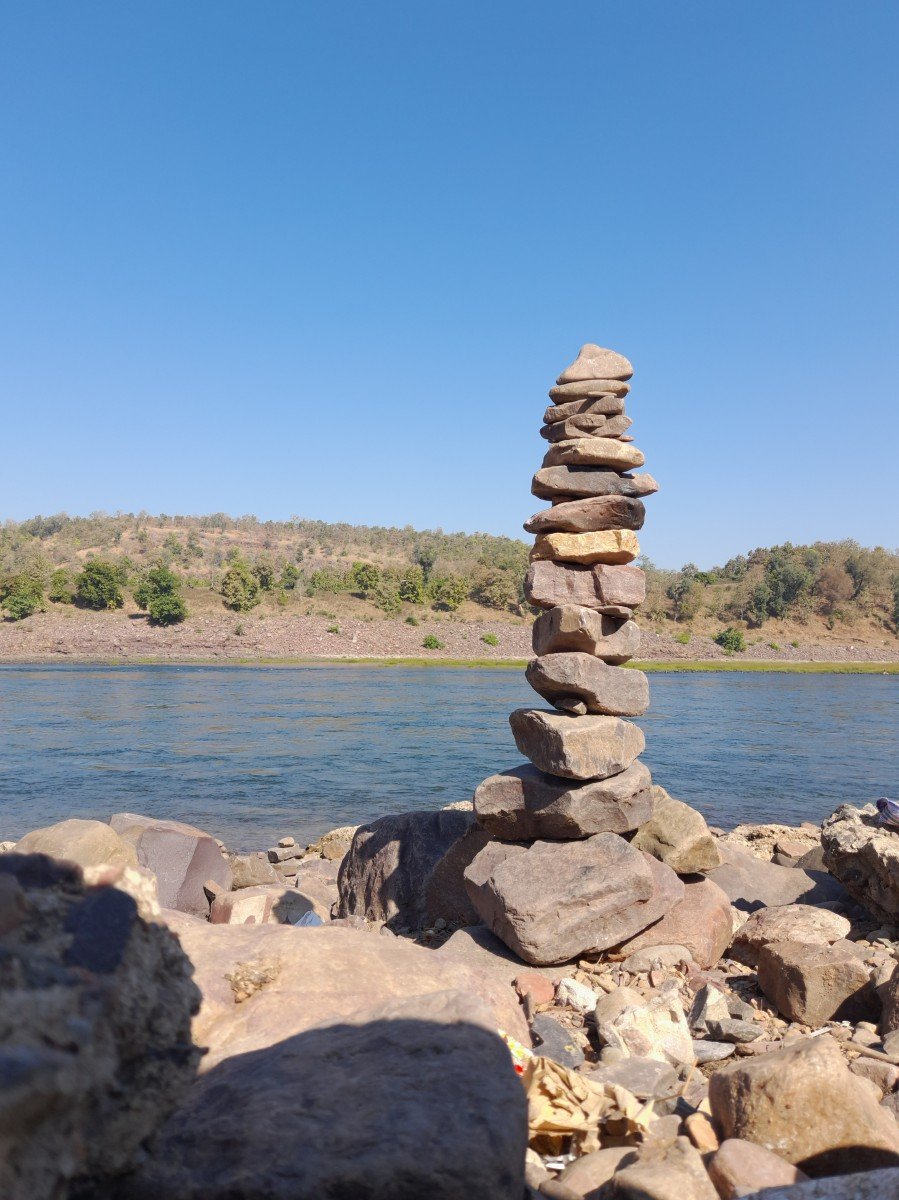
Pandava Cave
General information
-
Ideal Duration:
30 Minutes to 1 Hour:Place Type:
Historical, Philosophical, Spiritual:Entry Fees:
No Mandatory Entry Fee: There is no mandatory entry fee to enter the Pandava Cave (Govinda Bhagavatpada Cave). Access is generally free of cost for all visitors and pilgrims.
Voluntary Donations: While entry is free, a small, voluntary dona...No Mandatory Entry Fee: There is no mandatory entry fee to enter the Pandava Cave (Govinda Bhagavatpada Cave). Access is generally free of cost for all visitors and pilgrims.
Voluntary Donations: While entry is free, a small, voluntary donation (dakshina) to the attendant priest or the trust managing the cave and the surrounding area is often appreciated, helping with maintenance and ritual costs.
Camera/Photography Fee: There are typically no separate fees for carrying a camera or for photography, but visitors must be mindful and respectful of the sanctity of the cave and may be asked to refrain from flash or intrusive photography.
Footwear and Locker Charges: Small charges may apply for keeping footwear or personal belongings at nearby stands before entering the holy area, as is common at Indian temples. This cost is minimal, usually between 5-20 Indian Rupees.
Total Cost: The visit remains exceptionally budget-friendly, making the focus solely on the spiritual and historical experience without financial burden. The tradition of free entry reinforces its role as a spiritual centre open to all seekers of knowledge and truth, regardless of wealth. Any fees encountered are for services, not for site access. :Timing:
Regular Timings: The cave is generally accessible from 6:00 AM to 8:00 PM daily, allowing for visits throughout the day, though exact opening and closing can vary slightly with the season and local priestly discretion.
Ideal Visit Time: The ...Regular Timings: The cave is generally accessible from 6:00 AM to 8:00 PM daily, allowing for visits throughout the day, though exact opening and closing can vary slightly with the season and local priestly discretion.
Ideal Visit Time: The early morning (6:00 AM to 9:00 AM) is the most ideal time, offering a cool, quiet, and highly peaceful environment perfect for meditation and absorbing the spiritual energy before the crowds of the main temple gather.
Late Afternoon Peace: Visiting in the late afternoon (4:00 PM to 6:00 PM) is also excellent, offering soft light and a cooler temperature after the day's heat, providing a serene transition into the evening aarti time.
Avoid Midday: The peak heat hours of 11:00 AM to 3:00 PM should be avoided, especially during the summer months (March to June), as the climb and external stone path can become very hot and uncomfortable.
Aarti Timings: There are no specific aartis within the small cave itself, but the energy of the main temple's morning and evening aartis pervades the whole island, making the periods just before these aartis very spiritually potent. :Special Events:
Guru Poornima Celebration: The full moon day dedicated to gurus is celebrated with great reverence, featuring special pujas, discourses on Adi Shankara's teachings, and gathering of sadhus and students of Advaita Vedanta.
Shankara Jayanti: T...Guru Poornima Celebration: The full moon day dedicated to gurus is celebrated with great reverence, featuring special pujas, discourses on Adi Shankara's teachings, and gathering of sadhus and students of Advaita Vedanta.
Shankara Jayanti: The birth anniversary of Adi Shankaracharya (usually in April or May) is marked by philosophical discussions, recitation of his works, and special worship ceremonies focused on the master-disciple tradition.
Maha Shivaratri: While the main temple is the focus, the cave also participates in the energy of Maha Shivaratri, with devotees performing late-night vigil and private, solemn worship, symbolizing the search for ultimate truth. These events emphasize the philosophical and intellectual weight of the place, rather than large public spectacles. They are often low-key but intensely spiritual, involving learned priests and dedicated followers. Discourses and chanting sessions are common, where the sacred texts of Advaita are discussed, honoring the very tradition established at this spot. :Best Photo Spots:
The Cave Entrance Frame: The moss-covered, humble entrance set against the ancient stone is a perfect shot, symbolizing the austerity and antiquity of the site. Use a wide-angle lens to capture the surrounding rock texture.
The Narmada River Vi...The Cave Entrance Frame: The moss-covered, humble entrance set against the ancient stone is a perfect shot, symbolizing the austerity and antiquity of the site. Use a wide-angle lens to capture the surrounding rock texture.
The Narmada River Viewpoint: The natural opening near the cave provides a framed view of the river, especially beautiful during the sunrise or sunset, capturing the spiritual setting of the tapasya sthal.
The Footpath Leading Up: Capture the steps and path leading to the cave, which signifies the pilgrim's journey and the effort required to reach the guru's place. This provides a sense of scale and devotion.
Interior Shrine Close-up: A respectful, subtle close-up of the small Shivalingam or the shrine (if photography is permitted) can capture the intense spiritual focus within the small space.
The Ancient Lingam Marker: Look for any ancient markers or faint rock carvings around the cave that hint at its history. Photographing these details provides a deeper historical context. Always seek permission for photography inside the cave to maintain the sacred sanctity of the site. The light filtering into the cave entrance creates a dramatic contrast, excellent for black and white photography, highlighting the profound antiquity of the place. :Photo Gallery
Things To Do
-
Engage in Deep Meditation: The primary activity is to sit quietly inside the cave, leveraging its serene and historically meditative atmosphere to focus the mind and practice mindfulness, away from the temple's hustle.
Study Adi Shankara's Works: Carry a small book of Shankara's philosophy (like the Vivekachudamani or a commentary on the Upanishads) and read a passage while inside or nearby, connecting the text to its spiritual birthplace.
Circumambulate the Island (Parikrama): Begin or end your parikrama (circumambulation) of the Mandhata Island here, recognizing its significance as a philosophical and spiritual anchor of the entire Omkareshwar circuit. The full circuit is a major pilgrimage activity and takes a few hours.
Perform a Humble Offering: Offer a sim...Engage in Deep Meditation: The primary activity is to sit quietly inside the cave, leveraging its serene and historically meditative atmosphere to focus the mind and practice mindfulness, away from the temple's hustle.
Study Adi Shankara's Works: Carry a small book of Shankara's philosophy (like the Vivekachudamani or a commentary on the Upanishads) and read a passage while inside or nearby, connecting the text to its spiritual birthplace.
Circumambulate the Island (Parikrama): Begin or end your parikrama (circumambulation) of the Mandhata Island here, recognizing its significance as a philosophical and spiritual anchor of the entire Omkareshwar circuit. The full circuit is a major pilgrimage activity and takes a few hours.
Perform a Humble Offering: Offer a simple, non-material tribute like flowers or water to the small shrine within, seeking blessings from the guru-shishya lineage for clarity and wisdom.
Observe the Narmada River: The cave offers a unique perspective on the sacred Narmada River flowing nearby. Spend time observing the river's flow, which symbolizes the flow of life and consciousness.
Capture the Historical Essence: Take modest, respectful photographs of the cave's exterior and surroundings to remember its ancient, austere architecture and historical context.
Converse with Local Sadhus: If an opportunity arises, engage respectfully with the resident sadhus or priests to learn more about the cave's unwritten history and the deeper spiritual meaning of Advaita Vedanta. This provides authentic, local insight. This collective set of activities transforms a simple visit into a profound spiritual journey and an active intellectual engagement with a key part of Indian heritage. :
Information
-
Why Famous:
The Sacred Meeting: It is famous as the divine location where Adi Shankaracharya received initiation from Govinda Bhagavatpada, establishing the foundational lineage for the Advaita Vedanta school.
Philosophical Hub: The moment represents a ...The Sacred Meeting: It is famous as the divine location where Adi Shankaracharya received initiation from Govinda Bhagavatpada, establishing the foundational lineage for the Advaita Vedanta school.
Philosophical Hub: The moment represents a turning point in Hindu history, solidifying the efforts to revive and consolidate Hindu thought across India. The cave is a physical link to this intellectual and spiritual tradition.
The Guru's Abode: Devotees revere it as the tapasya sthal (place of penance) of Govinda Bhagavatpada, making it a source of potent spiritual energy. The entire Mandhata Island is holy, but this spot holds unique historical weight for the Shaivite and Advaita traditions, drawing pilgrims who follow the teachings of Shankara. The cave is an essential stop on the Omkareshwar Parikrama, the circumambulation of the island, which is an extremely important ritual for pilgrims. Its fame is less about physical beauty and more about the historical weight of the profound wisdom imparted here, transforming a small cave into a massive spiritual landmark, recognized across the world by scholars of Indian philosophy and religion, as the birthplace of a reformed Hinduism. It serves as a reminder of the power of deep meditation and the eternal importance of the guru-disciple bond. : -
Architecture:
Architectural Simplicity: The cave is not a grand temple but a humble, rock-cut natural formation adapted for meditation, reflecting the austere life of a sannyasi. Its architecture is primarily rock-hewn and functional.
Internal Dimensions:Architectural Simplicity: The cave is not a grand temple but a humble, rock-cut natural formation adapted for meditation, reflecting the austere life of a sannyasi. Its architecture is primarily rock-hewn and functional.
Internal Dimensions: The main hall, or mandap, is a simple, rectangular space, providing just enough room for a small congregation or meditation. The precise dimensions are unrecorded but its small size reinforces the narrative of a hermit's dwelling. It typically contains a small Shivalingam or a shrine to Adi Shankara and his guru, marking the sacred meeting spot. The cool, dark interior helps to focus the mind, a natural air-conditioned space perfect for long periods of penance and study. The style is utilitarian, characteristic of early monastic shelters, with minimal carvings compared to the temples nearby. The external path involves climbing steps, symbolizing the arduous path to spiritual knowledge. The stone is local basalt/sandstone, carved to create a stable roof and entrance. The entrance is low, requiring visitors to bow, an act of humility and respect before entering the sacred space. The true architecture lies in its use of the natural island rock formation, not in constructed grandeur. : -
How To Reach:
By Air: The nearest major airport is Devi Ahilya Bai Holkar Airport (IDR) in Indore, located approximately 77 KMS away. From the airport, one can hire a pre-paid taxi directly to Omkareshwar or take an airport shuttle to the Indore bus stand and then an inter-city bus. The...By Air: The nearest major airport is Devi Ahilya Bai Holkar Airport (IDR) in Indore, located approximately 77 KMS away. From the airport, one can hire a pre-paid taxi directly to Omkareshwar or take an airport shuttle to the Indore bus stand and then an inter-city bus. The taxi ride takes about 2 to 3 hours depending on traffic.
By Train: The closest railway station is Omkareshwar Road (OM), which is about 12 KMS from the main town, but it has limited connectivity. The better-connected major railway station is Khandwa Junction (KNW), about 70 KMS away, which is on the main central railway line. From Khandwa, hire a taxi or take a local bus to Omkareshwar. Indore Junction (INDB) is also a major railhead and a viable option.
By Road: Omkareshwar is well-connected by state and national highways. Regular public and private bus services run from major cities like Indore (approx. 77 KMS), Khandwa (approx. 70 KMS), and Ujjain (approx. 137 KMS). The journey by road is scenic.
By Local Transport: Once in Omkareshwar, the cave is on Mandhata Island. You must first reach the island by crossing the Narmada River, either by a boat ride or by walking across the footbridge (Jhula Pul). From the main temple complex on the island, the cave is reached by descending a small flight of steps, easily accessible by foot. : -
Weather and Best Time to Visit:
Winter Season (October to March): This is the Best Time to Visit. The weather is pleasantly cool and comfortable for walking, circumambulating the island, and sitting for long periods of contemplation inside the cave. November and February are particularly ideal.
<...Winter Season (October to March): This is the Best Time to Visit. The weather is pleasantly cool and comfortable for walking, circumambulating the island, and sitting for long periods of contemplation inside the cave. November and February are particularly ideal.
Summer Season (April to June): The weather is extremely hot and dry, with temperatures often soaring above 40°C. Visit only during the early morning hours (before 9 AM) or late evening to avoid the intense heat, which can make the stone paths uncomfortable.
Monsoon Season (July to September): This season brings refreshing greenery, and the Narmada River is in its full glory. However, heavy rains can make the stone steps leading to the cave slippery and the path difficult. If visiting, be cautious and carry rain gear.
Different Parts of the Day: Early Morning is highly recommended for the best light, coolness, and spiritual quietude. Avoid the midday heat. The environment is most conducive to reflection during the morning hours. : -
Near Tourist Places:
Omkareshwar Jyotirlinga Temple (0.
5 KMS): Mamleshwar Temple (1.
5 KMS): Siddhanath Temple (0.
5 KMS): Gauri Somnath Temple (1.
5 KMS):
Fanase Ghat (2 KMS):
Ahilya Ghat (2 KMS):
Kedareshwar Temple (1 KMS):
Triveni Sangam Temple (3 KMS):
Kajal Rani Cave (9 KMS):
Sailani Island (7 KMS):
Tourism Tips
-
Health & Safety: Carry a first-aid kit with basic pain relievers and antiseptic. The steps can be uneven, so wear sturdy, comfortable walking shoes. The area is generally safe, but be mindful of monkeys; do not feed them.
Packing: Pack mo...Health & Safety: Carry a first-aid kit with basic pain relievers and antiseptic. The steps can be uneven, so wear sturdy, comfortable walking shoes. The area is generally safe, but be mindful of monkeys; do not feed them.
Packing: Pack modest attire that covers shoulders and knees, as is appropriate for a sacred site. Carry a water bottle, a hat/cap, and sunglasses, especially if visiting outside of winter. A small notepad for reflections is also a good idea.
Accommodation: Lodging is available in Omkareshwar town, ranging from basic dharamshalas (for a truly spiritual experience) to budget-friendly guesthouses. It's advisable to book in advance during major festivals like Maha Shivaratri.
Other Topics: Respect the sanctity of the place by maintaining silence inside the cave. Ask permission before taking close-up photos of priests or devotees. The cave is part of the larger Omkareshwar Parikrama, so plan your time to potentially complete the full circuit on the island. :
Reviews
FAQs
Omkareshwar Itineray And Cost:-
Other Places In Omkareshwar :-
Other States In India :-
Information about New and Updated Locations() of Madhya Pradesh Has Been Added :-
Card subtitle
Note:-
Information provided here in good Faith and for reference only.
Near Places
24 Avatars Group of Temples
Some quick example text to build on the card title and make up the bulk of the card's content.
Go somewhere
Abhay Ghat
Some quick example text to build on the card title and make up the bulk of the card's content.
Go somewhere
Adi Shankaracharya Statue Site
Some quick example text to build on the card title and make up the bulk of the card's content.
Go somewhere
Ahilya Ghat
Some quick example text to build on the card title and make up the bulk of the card's content.
Go somewhere
Bapeshwar Temple
Some quick example text to build on the card title and make up the bulk of the card's content.
Go somewhere
Bhagwatpada Mandapam
Some quick example text to build on the card title and make up the bulk of the card's content.
Go somewhere
Brahmapuri
Some quick example text to build on the card title and make up the bulk of the card's content.
Go somewhere
Fanase Ghat
Some quick example text to build on the card title and make up the bulk of the card's content.
Go somewhere
Gauri Somnath Temple
Some quick example text to build on the card title and make up the bulk of the card's content.
Go somewhere
Gomukh Ghat
Some quick example text to build on the card title and make up the bulk of the card's content.
Go somewhere
Katar Baba Aasram
Some quick example text to build on the card title and make up the bulk of the card's content.
Go somewhere
Kedareshwar Temple
Some quick example text to build on the card title and make up the bulk of the card's content.
Go somewhere
Kotitirtha Ghat
Some quick example text to build on the card title and make up the bulk of the card's content.
Go somewhere
Mamleshwar Temple
Some quick example text to build on the card title and make up the bulk of the card's content.
Go somewhere
Mandhata Palace Ruins
Some quick example text to build on the card title and make up the bulk of the card's content.
Go somewhere
Narmada Kaveri Sangam
Some quick example text to build on the card title and make up the bulk of the card's content.
Go somewherein Other Cities