

Shree Rup Narayan Mandir
General information
-
Ideal Duration:
1 HourPlace Type:
Temple, Heritage, ArchitectureEntry Fees:
No Entry Fee: Entry to the temple complex is free of charge as it is a place of public worship.
Donations: Devotees can make voluntary donations at the designated donation boxes for the maintenance of the temple.No Entry Fee: Entry to the temple complex is free of charge as it is a place of public worship.
Donations: Devotees can make voluntary donations at the designated donation boxes for the maintenance of the temple.
Guide Services: A local guide might be hired for a small fee to explain the history of the idol and the architecture in detail.
Parking Fees: Nominal parking charges may apply for vehicles in the nearby village parking areas.Timing:
Regular Timings: The temple is generally open from 7:00 AM to 8:30 PM. Hours may be flexible based on the priest's schedule.
Ideal Visit Time: Morning (7:00 AM to 10:00 AM) for a peaceful worship experience or Evening (5:00 PM to 7:00 PM) t...Regular Timings: The temple is generally open from 7:00 AM to 8:30 PM. Hours may be flexible based on the priest's schedule.
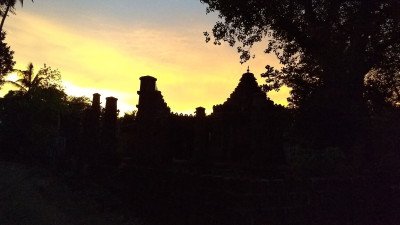
Ideal Visit Time: Morning (7:00 AM to 10:00 AM) for a peaceful worship experience or Evening (5:00 PM to 7:00 PM) to enjoy the view during sunset and potentially see the illumination rituals.
Crowd Management: It is least crowded on regular weekdays. Visit during major festivals to see the cultural fervor, but expect large crowds.Special Events:
Ram Navami: This is the major festival celebrating the birth of Lord Rama (an avatar of Vishnu), observed with great pomp, bhajans, and a community feast (Maha Prasad).
Kartik Pournima: Celebrated grandly in the Hindu month of Kartik, involv...Ram Navami: This is the major festival celebrating the birth of Lord Rama (an avatar of Vishnu), observed with great pomp, bhajans, and a community feast (Maha Prasad).
Kartik Pournima: Celebrated grandly in the Hindu month of Kartik, involving the illumination of the Deepstambha with hundreds of oil lamps, creating a spectacular sight.
Janmashtami: The birth of Lord Krishna (another avatar of Vishnu) is celebrated with special pujas and rituals.Best Photo Spots:
The Deepstambha (Lamp Pillar): The tall, intricately carved laterite pillar at the entrance, especially if illuminated, is the most iconic photo spot.
The Idol of Rupnarayan: While indoor photography might be restricted, a respectful shot of...The Deepstambha (Lamp Pillar): The tall, intricately carved laterite pillar at the entrance, especially if illuminated, is the most iconic photo spot.
The Idol of Rupnarayan: While indoor photography might be restricted, a respectful shot of the entrance framing the inner sanctum is often possible, capturing the idol's majesty.
The Stepwell and Ruins: The moss-covered stone walls of the Pushkarini and the ruins of the older temple structure offer a rustic, historical, and highly textural photo backdrop. Red Stone vs.
Green: A shot capturing the contrast between the pink laterite of the temple and the surrounding green coconut and betel nut groves.Photo Gallery
Things To Do
-
Worship and Darshan: Spend time in the sabhamandap to peacefully observe the intricate idol of Lord Rupnarayan and perform darshan (viewing) for blessings.
Architecture Study: Carefully examine the laterite stone construction and the carvings on the Deepstambha and the temple walls, noting the mix of Konkani and possible Southern Indian influences.
Water Collection and Stepwell: Visit the ancient stepwell and appreciate its design, which was once a primary source of water for the temple and the community.
Photography of the Complex: The red stone structure against the green palm trees and the blue sky is a fantastic subject. Focus on the main idol's carvings, the Deepstambha, and the stepwell.
Festival Visit: Try to visit during...Worship and Darshan: Spend time in the sabhamandap to peacefully observe the intricate idol of Lord Rupnarayan and perform darshan (viewing) for blessings.
Architecture Study: Carefully examine the laterite stone construction and the carvings on the Deepstambha and the temple walls, noting the mix of Konkani and possible Southern Indian influences.
Water Collection and Stepwell: Visit the ancient stepwell and appreciate its design, which was once a primary source of water for the temple and the community.
Photography of the Complex: The red stone structure against the green palm trees and the blue sky is a fantastic subject. Focus on the main idol's carvings, the Deepstambha, and the stepwell.
Festival Visit: Try to visit during the grand celebrations of Ram Navami or Kartik Pournima to experience the temple's cultural vibrancy.
Local Food: Enjoy traditional Konkani meals at the nearby eateries in the village center.
History Hunt: Seek out local sources or guidebooks for the full history of the Shilahara dynasty and the Portuguese encounter.
Information
-
Why Famous:
Exquisite Vishnu Idol: Its fame rests almost entirely on the incredibly detailed and rare idol of Lord Rupnarayan (Vishnu), which is said to display 24 forms and is a unique piece of artwork.
Shilahara Heritage: It is one of the few survivin...Exquisite Vishnu Idol: Its fame rests almost entirely on the incredibly detailed and rare idol of Lord Rupnarayan (Vishnu), which is said to display 24 forms and is a unique piece of artwork.
Shilahara Heritage: It is one of the few surviving and well-maintained structures from the ancient Shilahara dynasty in the Konkan belt, attracting historians and archaeologists.
Bullet-Hit Idol Legend: A captivating local legend states that the idol was once almost stolen by Portuguese invaders, and during the struggle, a bullet got embedded in the Chakra (disc weapon) of the idol, a piece of heritage preserved to this day. -
Architecture:
Architectural Style: The original temple was built in the local laterite stone style. The current, restored structure, which dates back to a major restoration in 1960, is built using pink/red laterite stone (Chira), giving it a distinctive Konkani-Rajasthani aesthetic.
...Architectural Style: The original temple was built in the local laterite stone style. The current, restored structure, which dates back to a major restoration in 1960, is built using pink/red laterite stone (Chira), giving it a distinctive Konkani-Rajasthani aesthetic.
Design Elements: The temple stands on a raised stone platform and features a porch, an open sabhamandap (assembly hall), and the garbhagriha (sanctum). The idol itself shows a strong Southern Indian influence in its motifs (lotus petals, tiger-face crest) and craftsmanship, suggesting import of the stone from the Madumalai region.
Dimension: The idol is approximately 1. 5 meters (5 feet) tall. The temple is modest in its spread but tall, featuring the classic tiered roof structure and the towering Deepstambha (estimated 15-20 feet tall) at the entrance. -
How To Reach:
By Air: Fly to Pune (PNQ) (approx. 180 KMS) or Mumbai (BOM) (approx. 190 KMS). From the airport, a private taxi is the fastest way to reach Diveagar village. The temple is in the village center, easily reachable on foot or by local auto.
By ...By Air: Fly to Pune (PNQ) (approx. 180 KMS) or Mumbai (BOM) (approx. 190 KMS). From the airport, a private taxi is the fastest way to reach Diveagar village. The temple is in the village center, easily reachable on foot or by local auto.
By Train: Nearest major station is Mangaon (MAO) (approx. 30 KMS). From Mangaon, take a State Transport (S. T. ) bus or a shared taxi to the Diveagar bus stand. The temple is a very short walk from the stand.
By Road: Diveagar is accessible via NH 66 to Mangaon or Kolad, then taking the coastal road towards Shrivardhan. The temple is located centrally in the village, near the famed Suvarna Ganesh Temple.
By Local Transport: It is best reached on foot or via a short auto-rickshaw ride from any part of the Diveagar village. -
Weather and Best Time to Visit:
Different Types of Seasons: Winter (October to February) is the most comfortable due to the cool weather. Monsoon (June to September) makes the surroundings lush, but laterite structures can be slippery. Summer (March to May) is hot; limit visits to the early morning or l...Different Types of Seasons: Winter (October to February) is the most comfortable due to the cool weather. Monsoon (June to September) makes the surroundings lush, but laterite structures can be slippery. Summer (March to May) is hot; limit visits to the early morning or late evening.
Different Parts of the Day: Morning Darshan offers a serene, spiritual start to the day. Late Afternoon is also pleasant for viewing the architecture, while midday heat should be avoided. -
Near Tourist Places:
Shree Suvarna Ganesh Temple (0. 5 KMS), Diveagar Beach (1 KMS), Sadda Adda Point (2-3 KMS), Uttareshwar Temple (1. 5 KMS), Kondivili Beach (10 KMS), Bagmandala Jetty (15 KMS), Kusumeshwar Temple Devkhol (7. 5 KMS), Harihareshwar Temple (23 KMS), Phansad Wildlife Sanctuary (35 KMS), Murud-Janjira Fort (50 KMS).
Tourism Tips
-
Health & safety: Be careful around the ancient stepwell and the ruins, as they may have uneven footing. Follow the priest's instructions inside the sanctum.
Packing: Dress respectfully in modest clothing. Carry a reusable water bottle. Ca...Health & safety: Be careful around the ancient stepwell and the ruins, as they may have uneven footing. Follow the priest's instructions inside the sanctum.
Packing: Dress respectfully in modest clothing. Carry a reusable water bottle. Camera is essential for capturing the architecture.
Accommodation: Numerous homestays and hotels are located within 1-2 KMS in the main Diveagar village area. Check for options that offer traditional Konkani meals.
Other Tips: The Suvarna Ganesh Temple is very close by, so plan to visit both temples in a single outing to save time. Support local vendors selling flowers and prasad.
Reviews
FAQs
Diveagar Itineray And Cost:-
Shree Rup Narayan Mandir Tourism:-
Other Places In Diveagar :-
Other States In India :-
Information about New and Updated Locations() of Maharashtra Has Been Added :-
Card subtitle
Note:-
Information provided here in good Faith and for reference only.
Near Places
Adhgaon Beach
Some quick example text to build on the card title and make up the bulk of the card's content.
Go somewhere
Aravi Beach
Some quick example text to build on the card title and make up the bulk of the card's content.
Go somewhere
Bagmandla
Some quick example text to build on the card title and make up the bulk of the card's content.
Go somewhere
Bankot Fort
Some quick example text to build on the card title and make up the bulk of the card's content.
Go somewhere
Borli Dam
Some quick example text to build on the card title and make up the bulk of the card's content.
Go somewhere
Borli Panchatan
Some quick example text to build on the card title and make up the bulk of the card's content.
Go somewhere
Dighi Port
Some quick example text to build on the card title and make up the bulk of the card's content.
Go somewhere
Diveagar Beach
Some quick example text to build on the card title and make up the bulk of the card's content.
Go somewhere
Ganesh Gully
Some quick example text to build on the card title and make up the bulk of the card's content.
Go somewhere
Harihareshwar Beach
Some quick example text to build on the card title and make up the bulk of the card's content.
Go somewhere
Harihareshwar Temple Complex
Some quick example text to build on the card title and make up the bulk of the card's content.
Go somewhere
Kalbhairav – Yogeshwari Temple
Some quick example text to build on the card title and make up the bulk of the card's content.
Go somewhere
Karle Dam
Some quick example text to build on the card title and make up the bulk of the card's content.
Go somewhere
Khokari Tombs
Some quick example text to build on the card title and make up the bulk of the card's content.
Go somewhere
Kondivili Beach
Some quick example text to build on the card title and make up the bulk of the card's content.
Go somewhere
Kusumeshwar Temple Devkhol
Some quick example text to build on the card title and make up the bulk of the card's content.
Go somewherein Other Cities