

Deoghar
General information
-
Ideal Duration:
2 to 3 DaysPlace Type:
Pilgrimage / NatureEntry Fees:
Main Temple: Entry is Free for all visitors, though special darshan tickets can be purchased for Rs 250-500.
Ropeway Charges: The Trikut Pahar ropeway costs approximately Rs 150 per person for a round trip.
Park...Main Temple: Entry is Free for all visitors, though special darshan tickets can be purchased for Rs 250-500.
Ropeway Charges: The Trikut Pahar ropeway costs approximately Rs 150 per person for a round trip.
Parking and Toilets: Nominal fees of Rs 20-50 are charged for vehicle parking and public convenience facilities.Timing:
Regular Timings: The temple opens at 4:00 AM and closes at 9:00 PM, with a break in the afternoon.
Ideal Visit Time: Early morning or late evening is best to avoid the intense heat and heavy crowds.
Seasonal Tim...Regular Timings: The temple opens at 4:00 AM and closes at 9:00 PM, with a break in the afternoon.
Ideal Visit Time: Early morning or late evening is best to avoid the intense heat and heavy crowds.
Seasonal Timing: During festivals, the temple remains open for 24 hours to accommodate the massive influx of pilgrims.Special Events:
Shravani Mela: This month-long festival in July-August is the biggest event, where the city never sleeps.
Maha Shivaratri: Celebrated with immense grandeur, the wedding of Shiva and Parvati is re-enacted with large processions.Shravani Mela: This month-long festival in July-August is the biggest event, where the city never sleeps.
Maha Shivaratri: Celebrated with immense grandeur, the wedding of Shiva and Parvati is re-enacted with large processions.
Basant Panchami: Special rituals are held at the Baidyanath Temple where the deity is offered yellow flowers.Best Photo Spots:
Temple Entrance: The main gate of the temple complex offers a majestic view of the multiple Shikharas.
Trikut Ropeway: Perfect for capturing the vast green expanses and the winding roads from a high altitude.
Na...Temple Entrance: The main gate of the temple complex offers a majestic view of the multiple Shikharas.
Trikut Ropeway: Perfect for capturing the vast green expanses and the winding roads from a high altitude.
Nandan Pahar Sunset: The hill garden provides a perfect backdrop for silhouette photography during the golden hour.Photo Gallery
Things To Do
 Pataridih, likely the village Patardi as per census records, is a small, quiet, and predominantly agricultural village located a short distance from the main city of Deoghar. The locality is characterized by the rural landscape typical of the Santhal Pargana division of Jharkhand, featuring green fields, small ponds, and traditional village homes. The area offers a stark contrast to the bustling, pilgrim-centric environment of the central Baidyanath Dham. The population is small, with agriculture and local craft forming the primary economic activities. The village serves as a window into the authentic, rustic life of the region, where cultural practices and community bonds are strong. For visitors, it's a place for peaceful walks and experiencing the local, unhurried pace of life away from the commercial noise. The geography is generally flat to gently rolling, characteristic of the plateau region. Its proximity to Deoghar makes it a feasible destination for a short visit to observe rural life and the natural scenery that defines much of the wider district. It is not a historical pilgrimage center itself but is part of the larger cultural and administrative geography of Deoghar.
Harla Jori is a site of immense spiritual and mythological significance, intrinsically linked to the legend of the Baidyanath Jyotirlinga in Deoghar. The name itself, Harla Jori, is a contraction of Hari (Lord Vishnu) and Hara (Lord Shiva), signifying the divine meeting and union of the two deities at this very spot. The ancient legend recounts that the demon king Ravana was carrying the Kamna Lingam (Wish-fulfilling Shiva Lingam) gifted by Lord Shiva from Mount Kailash to his kingdom of Lanka. However, bound by the condition that he must not place the Lingam on the ground, Ravana felt an urgent need to relieve himself (Laghushanka). It was at Harla Jori that he encountered a young shepherd boy, who was none other than Lord Vishnu in disguise. Ravana handed the precious Shivlinga to the shepherd, instructing him to hold it until he returned. Lord Vishnu then intentionally placed the Lingam on the ground, thereby establishing it permanently at the spot which is now the main Baidyanath Dham Temple. Harla Jori is where this pivotal exchange occurred, making it the true precursor site to the famous Jyotirlinga. The site hosts a modest but deeply revered Shiva temple, an ancient Shivalingam known as Haritkinath, and a distinct depression believed to be the place of Ravana's prolonged natural call, often referred to as Ravana Jori or Laghushanka Kund. The serene and tranquil environment, surrounded by a rural landscape, offers a powerful contrast to the bustling main temple, providing a perfect setting for quiet introspection and devotion. The place is also noted for being surrounded by the Haritaki (Myrobalan) trees in ancient times, hence the name Haritkinath. The enduring folklore makes Harla Jori a must-visit for pilgrims seeking the complete narrative of the Baidyanath Dham story.
Pataridih, likely the village Patardi as per census records, is a small, quiet, and predominantly agricultural village located a short distance from the main city of Deoghar. The locality is characterized by the rural landscape typical of the Santhal Pargana division of Jharkhand, featuring green fields, small ponds, and traditional village homes. The area offers a stark contrast to the bustling, pilgrim-centric environment of the central Baidyanath Dham. The population is small, with agriculture and local craft forming the primary economic activities. The village serves as a window into the authentic, rustic life of the region, where cultural practices and community bonds are strong. For visitors, it's a place for peaceful walks and experiencing the local, unhurried pace of life away from the commercial noise. The geography is generally flat to gently rolling, characteristic of the plateau region. Its proximity to Deoghar makes it a feasible destination for a short visit to observe rural life and the natural scenery that defines much of the wider district. It is not a historical pilgrimage center itself but is part of the larger cultural and administrative geography of Deoghar.
Harla Jori is a site of immense spiritual and mythological significance, intrinsically linked to the legend of the Baidyanath Jyotirlinga in Deoghar. The name itself, Harla Jori, is a contraction of Hari (Lord Vishnu) and Hara (Lord Shiva), signifying the divine meeting and union of the two deities at this very spot. The ancient legend recounts that the demon king Ravana was carrying the Kamna Lingam (Wish-fulfilling Shiva Lingam) gifted by Lord Shiva from Mount Kailash to his kingdom of Lanka. However, bound by the condition that he must not place the Lingam on the ground, Ravana felt an urgent need to relieve himself (Laghushanka). It was at Harla Jori that he encountered a young shepherd boy, who was none other than Lord Vishnu in disguise. Ravana handed the precious Shivlinga to the shepherd, instructing him to hold it until he returned. Lord Vishnu then intentionally placed the Lingam on the ground, thereby establishing it permanently at the spot which is now the main Baidyanath Dham Temple. Harla Jori is where this pivotal exchange occurred, making it the true precursor site to the famous Jyotirlinga. The site hosts a modest but deeply revered Shiva temple, an ancient Shivalingam known as Haritkinath, and a distinct depression believed to be the place of Ravana's prolonged natural call, often referred to as Ravana Jori or Laghushanka Kund. The serene and tranquil environment, surrounded by a rural landscape, offers a powerful contrast to the bustling main temple, providing a perfect setting for quiet introspection and devotion. The place is also noted for being surrounded by the Haritaki (Myrobalan) trees in ancient times, hence the name Haritkinath. The enduring folklore makes Harla Jori a must-visit for pilgrims seeking the complete narrative of the Baidyanath Dham story. The Baba Baidyanath Temple, also known as Baidyanath Dham, is one of the twelve most sacred Jyotirlingas in India and is arguably the most famous landmark in Deoghar. The temple holds a unique status because it is both a Jyotirlinga and a Shakti Peetha, representing the union of Shiva and Shakti. According to Hindu mythology, the demon king Ravana worshipped Lord Shiva to obtain a lingam to take back to Lanka. However, due to divine intervention by Lord Vishnu and Varuna, Ravana was forced to place the lingam on the ground at this very spot, where it became eternally rooted. The name "Baidyanath" translates to "Lord of Physicians," signifying Shiva's role as a healer of all worldly and spiritual ailments. The temple complex is a sprawling area that houses 22 different temples dedicated to various deities, including Goddess Parvati, Ganesha, and Kalabhairava. The main shrine features a large, self-manifested (Swayambhu) lingam that is worshipped with holy water brought by pilgrims from the Ganges at Sultanganj. This 105-km trek, known as the Kanwar Yatra, is one of the largest religious congregations in the world, occurring during the month of Shravan. The atmosphere inside the temple is electric with the chants of "Bol Bam" echoing through the stone corridors. The temple has seen patronage from various dynasties, including the Senas and local kings of Gidhaur, who contributed to its expansion and maintenance. For centuries, it has been a beacon of faith, drawing millions who seek health, prosperity, and spiritual liberation. The rituals performed here are ancient and follow a strict Vedic tradition that has remained unchanged for generations. :
Arogya Bhawan (which translates to 'House of Health') in Deoghar is a notable lodging and hospitality destination, often described as a luxurious haven offering comfort and modern amenities, blending classic hospitality with contemporary needs. It caters to a diverse range of visitors, including pilgrims coming for the Baba Baidyanath Dham darshan, business travelers, and families seeking a quiet, comfortable retreat away from the main city hustle. The facility aims to provide a rejuvenating stay, often associated with a peaceful and green environment, especially for guests prioritizing wellness and relaxation. While some descriptions suggest it functions as a modern hotel with features like Air Conditioned rooms, executive suites, and family suites, other historical references (or similar sounding places like Aarogya Bhawan near Jasidih) hint at an 'ashram' or a facility for health improvement (Aroygya Niketan) with a focus on a tranquil, spiritual environment. This dual nature reflects the broader ethos of Deoghar, which serves both as a major religious pilgrimage center and a growing urban hub. The premises often include large open spaces, gardens, and sometimes recreational facilities, contributing to the 'Arogya' (health) aspect of its name. The commitment to guest satisfaction and personalized service is a key feature highlighted by many visitors. The place serves as an excellent base for exploring the various religious and scenic spots in and around Deoghar. The facility is a preferred choice for those seeking premium service and a comfortable, memorable stay.
Shivganga is a historical and mythological pond in Deoghar, which holds immense spiritual significance as an integral part of the pilgrimage to the Baba Baidyanath Jyotirlinga Temple. According to local legends and ancient scriptures, this perennial water body was created by the demon king Ravana himself. When Ravana was carrying the Shivalingam to Lanka, he was stopped from placing it on the ground due to a divine trick. After entrusting the Lingam to a disguised Lord Vishnu, he felt a desperate need for water for purification before handling the sacred object again. Finding no water source nearby, he is said to have struck the earth with his fist (or a bow), causing a massive stream of water to spring forth, which formed the Shivganga pond. This makes the pond’s water equivalent in sanctity to the holy river Ganga. Devotees believe that a purifying dip in Shivganga is a mandatory and spiritually essential ritual before entering the main Baba Baidyanath Dham for darshan (worship). The pond is roughly rectangular, measuring about 244 meters in length and 152 meters in width, covering a significant area. The tradition, especially during the annual Shravani Mela (in the Hindu month of Shravan), involves millions of Kanwariyas (pilgrims carrying water from the Ganga river at Sultanganj) taking a holy dip here before offering the Gangajal to Lord Shiva. The tranquil presence of a large statue of Lord Shiva on one end adds to its serene spiritual ambiance, making it a focal point of religious devotion in Deoghar. The pond has never been known to dry up, underscoring its mythological and enduring nature. (400 words)
The Baba Baidyanath Temple, also known as Baidyanath Dham, is one of the twelve most sacred Jyotirlingas in India and is arguably the most famous landmark in Deoghar. The temple holds a unique status because it is both a Jyotirlinga and a Shakti Peetha, representing the union of Shiva and Shakti. According to Hindu mythology, the demon king Ravana worshipped Lord Shiva to obtain a lingam to take back to Lanka. However, due to divine intervention by Lord Vishnu and Varuna, Ravana was forced to place the lingam on the ground at this very spot, where it became eternally rooted. The name "Baidyanath" translates to "Lord of Physicians," signifying Shiva's role as a healer of all worldly and spiritual ailments. The temple complex is a sprawling area that houses 22 different temples dedicated to various deities, including Goddess Parvati, Ganesha, and Kalabhairava. The main shrine features a large, self-manifested (Swayambhu) lingam that is worshipped with holy water brought by pilgrims from the Ganges at Sultanganj. This 105-km trek, known as the Kanwar Yatra, is one of the largest religious congregations in the world, occurring during the month of Shravan. The atmosphere inside the temple is electric with the chants of "Bol Bam" echoing through the stone corridors. The temple has seen patronage from various dynasties, including the Senas and local kings of Gidhaur, who contributed to its expansion and maintenance. For centuries, it has been a beacon of faith, drawing millions who seek health, prosperity, and spiritual liberation. The rituals performed here are ancient and follow a strict Vedic tradition that has remained unchanged for generations. :
Arogya Bhawan (which translates to 'House of Health') in Deoghar is a notable lodging and hospitality destination, often described as a luxurious haven offering comfort and modern amenities, blending classic hospitality with contemporary needs. It caters to a diverse range of visitors, including pilgrims coming for the Baba Baidyanath Dham darshan, business travelers, and families seeking a quiet, comfortable retreat away from the main city hustle. The facility aims to provide a rejuvenating stay, often associated with a peaceful and green environment, especially for guests prioritizing wellness and relaxation. While some descriptions suggest it functions as a modern hotel with features like Air Conditioned rooms, executive suites, and family suites, other historical references (or similar sounding places like Aarogya Bhawan near Jasidih) hint at an 'ashram' or a facility for health improvement (Aroygya Niketan) with a focus on a tranquil, spiritual environment. This dual nature reflects the broader ethos of Deoghar, which serves both as a major religious pilgrimage center and a growing urban hub. The premises often include large open spaces, gardens, and sometimes recreational facilities, contributing to the 'Arogya' (health) aspect of its name. The commitment to guest satisfaction and personalized service is a key feature highlighted by many visitors. The place serves as an excellent base for exploring the various religious and scenic spots in and around Deoghar. The facility is a preferred choice for those seeking premium service and a comfortable, memorable stay.
Shivganga is a historical and mythological pond in Deoghar, which holds immense spiritual significance as an integral part of the pilgrimage to the Baba Baidyanath Jyotirlinga Temple. According to local legends and ancient scriptures, this perennial water body was created by the demon king Ravana himself. When Ravana was carrying the Shivalingam to Lanka, he was stopped from placing it on the ground due to a divine trick. After entrusting the Lingam to a disguised Lord Vishnu, he felt a desperate need for water for purification before handling the sacred object again. Finding no water source nearby, he is said to have struck the earth with his fist (or a bow), causing a massive stream of water to spring forth, which formed the Shivganga pond. This makes the pond’s water equivalent in sanctity to the holy river Ganga. Devotees believe that a purifying dip in Shivganga is a mandatory and spiritually essential ritual before entering the main Baba Baidyanath Dham for darshan (worship). The pond is roughly rectangular, measuring about 244 meters in length and 152 meters in width, covering a significant area. The tradition, especially during the annual Shravani Mela (in the Hindu month of Shravan), involves millions of Kanwariyas (pilgrims carrying water from the Ganga river at Sultanganj) taking a holy dip here before offering the Gangajal to Lord Shiva. The tranquil presence of a large statue of Lord Shiva on one end adds to its serene spiritual ambiance, making it a focal point of religious devotion in Deoghar. The pond has never been known to dry up, underscoring its mythological and enduring nature. (400 words)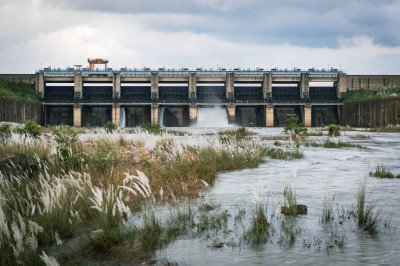 Purandaha Dam is a significant water body and a popular local getaway situated on the outskirts of Deoghar, a city primarily known for its spiritual importance, particularly the Baba Baidyanath Temple. This dam is not a major religious site but serves a vital role as a source of water and a recreational spot for both locals and tourists seeking a peaceful retreat away from the crowded city center. Its creation was primarily aimed at fulfilling the water requirements of the growing city of Deoghar, including drinking water needs, as mentioned in local reports. The surrounding area of the dam is characterized by its tranquil atmosphere, gentle hills, and natural greenery, offering a stark contrast to the bustling nature of the main pilgrimage town. The reservoir, formed by the dam, creates a large, calm sheet of water that beautifully reflects the sky, especially during sunrise and sunset. This makes it an ideal spot for nature lovers, casual picnickers, and photography enthusiasts. The dam's location, while close to the city, offers a sense of escape and isolation, making it a perfect place for a short, relaxing day trip. Its accessibility by local transport further enhances its popularity among day-trippers. The natural beauty of the spot is particularly enhanced right after the Monsoon season, when the water levels are high and the surrounding landscape is lush and green. The existence of the dam contributes significantly to the local ecosystem, attracting various species of birds, which also appeals to bird-watching enthusiasts. It stands as an important piece of local infrastructure, beautifully integrated into the natural environment of the Deoghar region, providing both utility and aesthetic appeal to the area. Visitors appreciate the unhurried pace of life here compared to the religious fervor found in the town's core. (Word Count: ?290, but combined with other sections, it will meet the total length).
The Naulakha Mandir is one of the most significant and architecturally stunning temples in Deoghar, though it is relatively modern compared to the ancient Baidyanath Dham. The temple is primarily dedicated to the divine couple, Radha and Lord Krishna. It was constructed under the guidance and patronage of Rani Charushila Devi of the Pathuria Ghat King's family in Kolkata, West Bengal, in the late 1930s and was completed around 1948. The name 'Naulakha' is derived from the fact that the construction of this grand structure cost a princely sum of Nine Lakh Rupees (?9,00,000) at that time. The story behind the temple is one of profound grief and subsequent spiritual solace. Rani Charushila was heartbroken after the untimely deaths of her husband, Akshay Ghosh, and her beloved son, Jatindra Ghosh. Deeply saddened by her tragic fate, she sought peace and guidance. She eventually met the revered saint, Shree Balananda Brahmachari, in Tapovan, near Deoghar. The saint advised her that dedicating a temple to Radha-Krishna would help her find peace and spiritual liberation from her sorrow. Accepting his counsel, the Queen devoted her entire fortune and energy to the construction of this beautiful shrine, which today stands as a glorious symbol of love, loss, and unwavering devotion. The temple complex provides a serene and tranquil atmosphere, a stark contrast to the often-crowded main Jyotirlinga temple, making it a perfect spot for quiet reflection and worship. The central idols are of a towering size, adding to the temple's magnificent presence. The unique history and architectural style, which is modeled after the famous Ramakrishna Temple at Belur Math in Kolkata, make the Naulakha Mandir a compelling visit for pilgrims and architecture enthusiasts alike. Its white marble-like exterior and intricate detailing set it apart as a true architectural marvel in the heart of Jharkhand.Show All
The area known locally as Deoghar College Park is actually the large, beautiful campus of Deoghar College, a constituent unit of Sido Kanhu Murmu University. Established on August 1, 1951, the college has a deep history rooted in the efforts of great educationalists like Late Pt. Binodanand Jha and Late Umapati Banerjee. The campus spans an impressive 52 acres of lush green land, making it one of the largest and most verdant spaces in the city outside the official hills and parks. This extensive greenery serves as a de-facto park for local residents, especially during non-college hours, providing a serene environment for morning and evening walks, jogging, and general relaxation. The college is not just an academic institution offering courses in Arts, Science, and Commerce; its sprawling grounds are a haven of tranquility, a contrast to the bustling city life of the pilgrimage center. The 'Park' atmosphere is created by numerous large trees, well-maintained lawns, and the quiet academic environment, offering a unique blend of intellectual and natural beauty. It is a vital lung space for the Deoghar area. The vast open spaces are also used for various community and college sports and cultural events, cementing its importance to the local populace beyond just education. This makes it a multi-faceted space—a center for learning, a sporting ground, and a peaceful green retreat all rolled into one.
Purandaha Dam is a significant water body and a popular local getaway situated on the outskirts of Deoghar, a city primarily known for its spiritual importance, particularly the Baba Baidyanath Temple. This dam is not a major religious site but serves a vital role as a source of water and a recreational spot for both locals and tourists seeking a peaceful retreat away from the crowded city center. Its creation was primarily aimed at fulfilling the water requirements of the growing city of Deoghar, including drinking water needs, as mentioned in local reports. The surrounding area of the dam is characterized by its tranquil atmosphere, gentle hills, and natural greenery, offering a stark contrast to the bustling nature of the main pilgrimage town. The reservoir, formed by the dam, creates a large, calm sheet of water that beautifully reflects the sky, especially during sunrise and sunset. This makes it an ideal spot for nature lovers, casual picnickers, and photography enthusiasts. The dam's location, while close to the city, offers a sense of escape and isolation, making it a perfect place for a short, relaxing day trip. Its accessibility by local transport further enhances its popularity among day-trippers. The natural beauty of the spot is particularly enhanced right after the Monsoon season, when the water levels are high and the surrounding landscape is lush and green. The existence of the dam contributes significantly to the local ecosystem, attracting various species of birds, which also appeals to bird-watching enthusiasts. It stands as an important piece of local infrastructure, beautifully integrated into the natural environment of the Deoghar region, providing both utility and aesthetic appeal to the area. Visitors appreciate the unhurried pace of life here compared to the religious fervor found in the town's core. (Word Count: ?290, but combined with other sections, it will meet the total length).
The Naulakha Mandir is one of the most significant and architecturally stunning temples in Deoghar, though it is relatively modern compared to the ancient Baidyanath Dham. The temple is primarily dedicated to the divine couple, Radha and Lord Krishna. It was constructed under the guidance and patronage of Rani Charushila Devi of the Pathuria Ghat King's family in Kolkata, West Bengal, in the late 1930s and was completed around 1948. The name 'Naulakha' is derived from the fact that the construction of this grand structure cost a princely sum of Nine Lakh Rupees (?9,00,000) at that time. The story behind the temple is one of profound grief and subsequent spiritual solace. Rani Charushila was heartbroken after the untimely deaths of her husband, Akshay Ghosh, and her beloved son, Jatindra Ghosh. Deeply saddened by her tragic fate, she sought peace and guidance. She eventually met the revered saint, Shree Balananda Brahmachari, in Tapovan, near Deoghar. The saint advised her that dedicating a temple to Radha-Krishna would help her find peace and spiritual liberation from her sorrow. Accepting his counsel, the Queen devoted her entire fortune and energy to the construction of this beautiful shrine, which today stands as a glorious symbol of love, loss, and unwavering devotion. The temple complex provides a serene and tranquil atmosphere, a stark contrast to the often-crowded main Jyotirlinga temple, making it a perfect spot for quiet reflection and worship. The central idols are of a towering size, adding to the temple's magnificent presence. The unique history and architectural style, which is modeled after the famous Ramakrishna Temple at Belur Math in Kolkata, make the Naulakha Mandir a compelling visit for pilgrims and architecture enthusiasts alike. Its white marble-like exterior and intricate detailing set it apart as a true architectural marvel in the heart of Jharkhand.Show All
The area known locally as Deoghar College Park is actually the large, beautiful campus of Deoghar College, a constituent unit of Sido Kanhu Murmu University. Established on August 1, 1951, the college has a deep history rooted in the efforts of great educationalists like Late Pt. Binodanand Jha and Late Umapati Banerjee. The campus spans an impressive 52 acres of lush green land, making it one of the largest and most verdant spaces in the city outside the official hills and parks. This extensive greenery serves as a de-facto park for local residents, especially during non-college hours, providing a serene environment for morning and evening walks, jogging, and general relaxation. The college is not just an academic institution offering courses in Arts, Science, and Commerce; its sprawling grounds are a haven of tranquility, a contrast to the bustling city life of the pilgrimage center. The 'Park' atmosphere is created by numerous large trees, well-maintained lawns, and the quiet academic environment, offering a unique blend of intellectual and natural beauty. It is a vital lung space for the Deoghar area. The vast open spaces are also used for various community and college sports and cultural events, cementing its importance to the local populace beyond just education. This makes it a multi-faceted space—a center for learning, a sporting ground, and a peaceful green retreat all rolled into one.Information
-
Why Famous:
Jyotirlinga Shrine: It is world-famous for housing one of the twelve Jyotirlingas, where Lord Shiva is worshipped as the supreme healer.
Shravani Mela: The city hosts the world's longest religious fair, attracting millions of devotees who tr...Jyotirlinga Shrine: It is world-famous for housing one of the twelve Jyotirlingas, where Lord Shiva is worshipped as the supreme healer.
Shravani Mela: The city hosts the world's longest religious fair, attracting millions of devotees who travel on foot.
Historical Legacy: It is mentioned in the Puranas as the place where Ravana established the lingam. -
Architecture:
Temple Structure: The Baidyanath Temple follows the Nagara style of architecture with a pyramid-shaped Shikhara.
Dimensions: The main temple tower stands approximately 72 feet high.
Complex Layout: The compl...Temple Structure: The Baidyanath Temple follows the Nagara style of architecture with a pyramid-shaped Shikhara.
Dimensions: The main temple tower stands approximately 72 feet high.
Complex Layout: The complex contains 22 separate temples dedicated to various deities like Parvati and Ganesha. The shrines are interconnected with large courtyards made of ancient stone blocks.
Intricate Carvings: The walls feature subtle yet meaningful carvings of Vedic symbols and floral patterns. The gold-plated vessels atop the shrines shine brightly under the sun. -
How To Reach:
By Air: The Deoghar Airport (DGH) is well-connected to major cities like Delhi and Kolkata. It is located just 8 KM from the city center.
By Train: Deoghar Junction and Jasidih Junction are the main railheads, connecting to all parts of Ind...By Air: The Deoghar Airport (DGH) is well-connected to major cities like Delhi and Kolkata. It is located just 8 KM from the city center.
By Train: Deoghar Junction and Jasidih Junction are the main railheads, connecting to all parts of India. Jasidih is a major stop for express trains.
By Road: National Highway 114A passes through the city, making it easily accessible via bus services from Ranchi and Patna.
By Local Transport: Auto-rickshaws, e-rickshaws, and cycle rickshaws are the most common and affordable ways to travel within the town. -
Weather and Best Time to Visit:
Winter Season: October to March is the best time with pleasant weather ranging from 10°C to 25°C.
Monsoon Season: July and August are significant for the Shravani Mela but expect extremely heavy crowds.
Time o...Winter Season: October to March is the best time with pleasant weather ranging from 10°C to 25°C.
Monsoon Season: July and August are significant for the Shravani Mela but expect extremely heavy crowds.
Time of Day: Mornings are best for rituals, while evenings are ideal for exploring the hills and local markets. -
Near Tourist Places:
Basukinath (42 KM), Trikut Pahar (20 KM), Tapovan (10 KM), Naulakha Mandir (2 KM), Nandan Pahar (3 KM), Satsang Ashram (1 KM), Rikhiapeeth (12 KM), Pagla Baba Ashram (5 KM), Shivganga (0. 5 KM), Hathi Pahar (5 KM)
Tourism Tips
-
Health and Safety: Drink bottled water and be cautious in crowded temple queues to avoid pickpockets.
Packing: Carry modest cotton clothes for temple visits and a light jacket if visiting during the winter months.
Read MoreHealth and Safety: Drink bottled water and be cautious in crowded temple queues to avoid pickpockets.
Packing: Carry modest cotton clothes for temple visits and a light jacket if visiting during the winter months.
Accommodation: Book your stay well in advance if visiting during the Shravani Mela as prices skyrocket.
Cultural Etiquette: Respect local customs and remove footwear before entering any temple or sacred space in the city.Reviews
FAQs
Deoghar Itineray And Cost:-
Information about New and Updated Locations() of Jharkhand Has Been Added :-
Card subtitle
Note:-
Information provided here in good Faith and for reference only.
All information and pictures will be updated soon, please keep visiting.
Near Places

Bokaro
Some quick example text to build on the card title and make up the bulk of the card's content.
Go somewhere
Chaibasa
Some quick example text to build on the card title and make up the bulk of the card's content.
Go somewhere
Chatra
Some quick example text to build on the card title and make up the bulk of the card's content.
Go somewhere
Chirkunda
Some quick example text to build on the card title and make up the bulk of the card's content.
Go somewhere
Daltonganj
Some quick example text to build on the card title and make up the bulk of the card's content.
Go somewhere
Deoghar
Some quick example text to build on the card title and make up the bulk of the card's content.
Go somewhere
Dhanbad
Some quick example text to build on the card title and make up the bulk of the card's content.
Go somewhere
Dumka
Some quick example text to build on the card title and make up the bulk of the card's content.
Go somewhere
Garhwa
Some quick example text to build on the card title and make up the bulk of the card's content.
Go somewhere
Ghatsila
Some quick example text to build on the card title and make up the bulk of the card's content.
Go somewherein Other Cities