
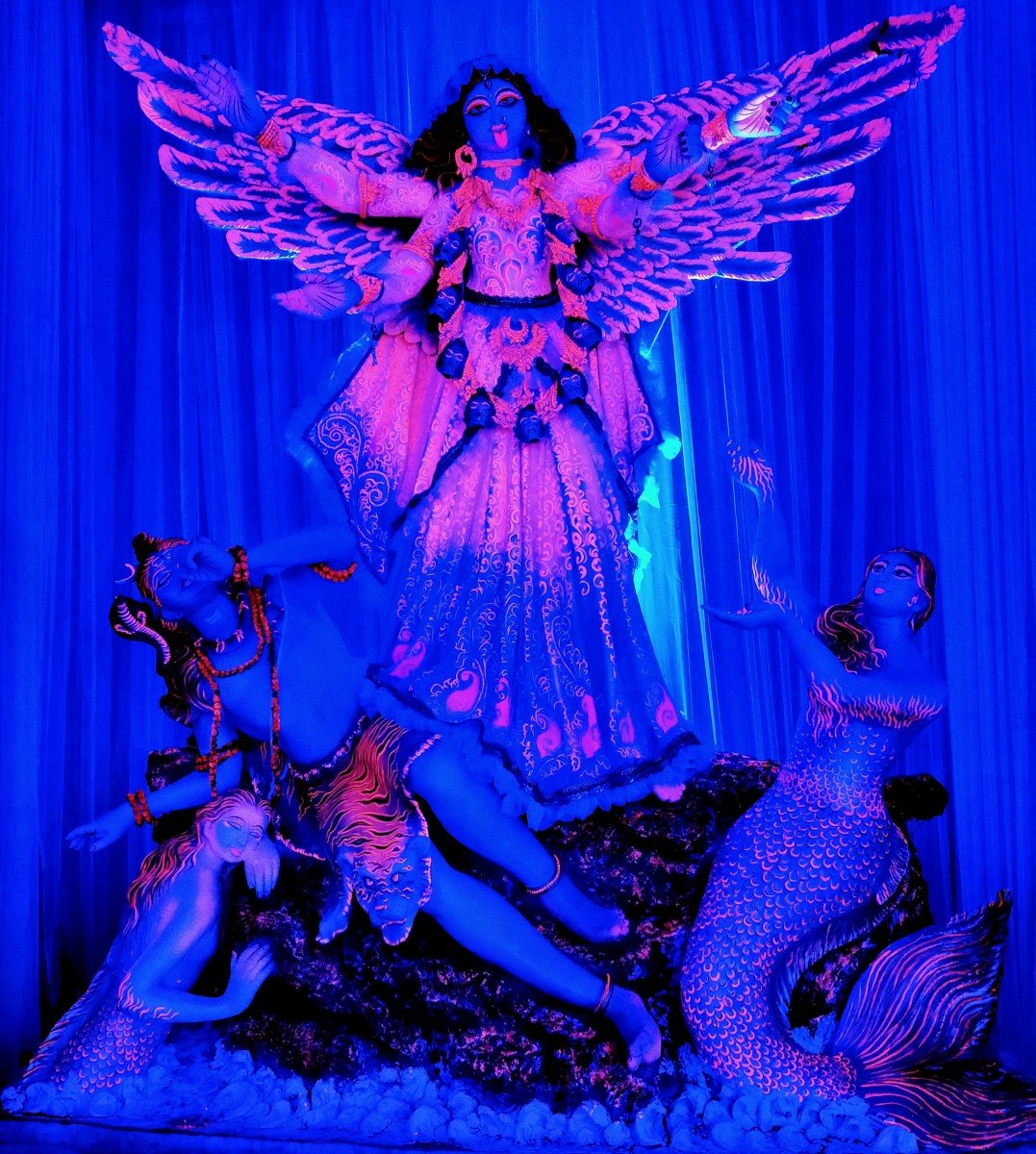
Kali Murti
General information
-
Ideal Duration:
1 to 1. 5 HoursPlace Type:
Temple, Religious Site, Tantric Worship CenterEntry Fees:
No Mandatory Entry Fee: Similar to most major Hindu temples in India, there is No Entry Fee to enter the Kali Murti Temple complex and seek darshan.
Offering and Parking Costs: Devotees are expected to purchase simple puja items (like flower...No Mandatory Entry Fee: Similar to most major Hindu temples in India, there is No Entry Fee to enter the Kali Murti Temple complex and seek darshan.
Offering and Parking Costs: Devotees are expected to purchase simple puja items (like flowers, sweets, coconut) from the vendors outside to make offerings, which is a nominal expense. Parking is usually available in the nearby streets or designated areas for a small, nominal fee. All other donations for the temple's upkeep are purely voluntary and not compulsory. (~)Timing:
Regular Timings: The temple generally opens very early, around 06:00 AM, and remains open till the afternoon closure (around 1:00 PM), reopening in the evening (around 4:00 PM) and closing at 09:00 PM or later, depending on the evening aarti.
Id...Regular Timings: The temple generally opens very early, around 06:00 AM, and remains open till the afternoon closure (around 1:00 PM), reopening in the evening (around 4:00 PM) and closing at 09:00 PM or later, depending on the evening aarti.
Ideal Visit Time: The best time is during the Early Morning (7:00 AM to 8:00 AM) for a serene darshan before the crowds, or the Evening (6:00 PM to 8:00 PM) to witness the dynamic evening aarti when the idol is beautifully illuminated. Avoid the afternoon closure time. (~)Special Events:
Sharad and Chaitra Navratri: The temple's biggest celebrations occur during the two main Navratri festivals in March/April and September/October. Elaborate yagnas, special night-time pujas, community bhandaras, and the decoration of the idol draw the largest crowds.Sharad and Chaitra Navratri: The temple's biggest celebrations occur during the two main Navratri festivals in March/April and September/October. Elaborate yagnas, special night-time pujas, community bhandaras, and the decoration of the idol draw the largest crowds.
Kali Puja on Diwali Night: The temple observes Kali Puja with great zeal, especially on the night of Diwali (Deepawali), featuring special midnight pujas that attract a large number of devotees seeking the Mother Goddess's protection from darkness and misfortune. (~)Best Photo Spots:
The Deity in Full Adornment: The best photo opportunity is the brightly lit and lavishly decorated Maa Kali Murti, capturing the fierce yet motherly expression, especially during festivals. (Permission must be strictly obtained and respected).
...The Deity in Full Adornment: The best photo opportunity is the brightly lit and lavishly decorated Maa Kali Murti, capturing the fierce yet motherly expression, especially during festivals. (Permission must be strictly obtained and respected).
The Festival Decorations: During Navratri, the temple exterior, the entrance archways, and the surrounding market area are stunningly decorated with lights and flowers, offering excellent, vibrant photo opportunities.
Candid Devotion: Capturing the sincere devotion of the local populace, such as offerings or prayers in the courtyard, provides powerful, culturally rich photo subjects. (~)Photo Gallery
Things To Do
-
Seek Darshan and Offer Puja: Visit the main sanctum to seek the blessings of Maa Kali. Participate in the ritualistic offerings of flowers, incense, and vermillion, observing the local style of worship that is often intense and fervent.
Observe the Aarti and Rituals: Attend the morning or evening aarti to fully absorb the temple's energetic devotional atmosphere. The chanting and traditional musical instruments used create a powerful spiritual experience unique to Kali worship.
Visit During Amavasya or Navratri: Plan a visit on a Saturday or during the auspicious new moon day (Amavasya) to witness special rituals and a larger gathering of devotees, which highlights the community's deep-rooted faith. During the nine days of Navratri, the entire atmosphere is highly charged and decorated.Seek Darshan and Offer Puja: Visit the main sanctum to seek the blessings of Maa Kali. Participate in the ritualistic offerings of flowers, incense, and vermillion, observing the local style of worship that is often intense and fervent.
Observe the Aarti and Rituals: Attend the morning or evening aarti to fully absorb the temple's energetic devotional atmosphere. The chanting and traditional musical instruments used create a powerful spiritual experience unique to Kali worship.
Visit During Amavasya or Navratri: Plan a visit on a Saturday or during the auspicious new moon day (Amavasya) to witness special rituals and a larger gathering of devotees, which highlights the community's deep-rooted faith. During the nine days of Navratri, the entire atmosphere is highly charged and decorated.
Meditate in the Courtyard: Find a quiet spot in the temple courtyard or near the simple Mandapa for a few moments of silent reflection or meditation, focusing on the powerful energy of the Goddess.
Study the Idol's Iconography: Take time to understand the symbolic elements of the Kali Murti—her garland of skulls, the protruding tongue, her weapons, and her standing posture—as each element is richly symbolic of overcoming ego and time. This is a deep cultural study.
Explore Local Vendors: Outside the temple, engage with the local vendors selling puja items, flowers, and sweets. This interaction provides insight into the local market economy centered around the temple.
Respectful Photography: While inside the temple, keep your camera discreet. Photography of the outside temple structure or the decorations during festivals is possible, but always seek permission before photographing the main idol or any rituals. (~)
Information
-
Why Famous:
Center for Tantric Practice: The temple is famed beyond the local community for its association with Tantric worship, attracting practitioners and tantriks who believe the idol's orientation (sometimes facing north) and the charged atmosphere are highly conducive to their sp...Center for Tantric Practice: The temple is famed beyond the local community for its association with Tantric worship, attracting practitioners and tantriks who believe the idol's orientation (sometimes facing north) and the charged atmosphere are highly conducive to their spiritual practices.
Devotion to the Fierce Mother: It is a key spiritual center for the worship of Maa Kali, attracting a large number of devotees, particularly women, who seek the protection and blessings of the Mother Goddess, especially on auspicious days like Amavasya (New Moon).
Significance During Navratri: The temple witnesses its largest congregations and most elaborate rituals during the festivals of Chaitra and Sharad Navratri, especially on Maha Ashtami and Maha Navami, making it a highly vibrant cultural and religious hub during these nine days. (~) -
Architecture:
Regional Temple Style and Structure: The architecture of the Kali Murti Temple is typical of regional temples, often featuring a simpler, robust construction with a focus on the sanctum sanctorum (Garbhagriha) housing the deity. Unlike the grand white marble of ISKCON, this...Regional Temple Style and Structure: The architecture of the Kali Murti Temple is typical of regional temples, often featuring a simpler, robust construction with a focus on the sanctum sanctorum (Garbhagriha) housing the deity. Unlike the grand white marble of ISKCON, this temple is usually built with painted brick and concrete, reflecting a more local, grounded, and functional aesthetic rather than large-scale architectural extravagance.
The Deity and Dimensions: The central feature is the Murti (idol) of Maa Kali, which is the focus of all worship. The idol itself is often large, richly decorated, and fearsome, embodying the destructive yet protective aspect of the goddess. The main structure is modest in scale compared to major pilgrimage centers, consisting of a small Garbhagriha and a simple Mandapa (hall) for devotees to gather. The temple complex is usually a single building with a small courtyard for rituals and offerings. Accessibility features, such as ramps or wheelchair access, are sometimes incorporated into the modern renovations of the temple, ensuring that all devotees can pay their respects to the Mother Goddess. (~) -
How To Reach:
By Air: Swami Vivekananda Airport (RPR) is approximately 15 KM away. Hire a taxi or auto-rickshaw to the Gudhiyari area.
By Train: Raipur Junction Railway Station is relatively close, about 6 KM away. Take an auto-rickshaw or taxi directly...By Air: Swami Vivekananda Airport (RPR) is approximately 15 KM away. Hire a taxi or auto-rickshaw to the Gudhiyari area.
By Train: Raipur Junction Railway Station is relatively close, about 6 KM away. Take an auto-rickshaw or taxi directly to Janta Colony/Gudhiyari. The proximity to the station makes local transport a quick option (around 20 minutes).
By Road: The temple is located in a residential but accessible area of Raipur. It is well-connected by city buses and local transport routes. Drivers usually know the Janta Colony Kali Mandir location.
By Local Transport: Auto-rickshaws and app-based taxis are the most reliable way to reach the temple from the city center. Be prepared for slightly narrower, busier roads in the immediate vicinity of the temple, typical of an old residential area. (~) -
Weather and Best Time to Visit:
Different Types of Seasons: Winter (October to March) is the preferred time for visiting, as the cool weather makes waiting and attending the aarti comfortable. Monsoon (July to September) is also highly significant for Hindu festivals, but the atmosphere can be humid. Sum...Different Types of Seasons: Winter (October to March) is the preferred time for visiting, as the cool weather makes waiting and attending the aarti comfortable. Monsoon (July to September) is also highly significant for Hindu festivals, but the atmosphere can be humid. Summer (April to June) is intensely hot, and should be avoided during midday.
Different Parts of the Day: Early Morning (7:00 AM to 8:30 AM) is the most peaceful time for a deep spiritual visit. Evening (6:30 PM to 8:00 PM) is the most vibrant time to witness the aarti and the largest crowd of devotees. (~) -
Near Tourist Places:
Mahant Ghasidas Memorial Museum (5 KM), Swami Vivekananda Sarovar (6 KM), City Centre Mall (9 KM), Gandhi Udyan Park (7 KM), Dudhadhari Math and Temple (6 KM), ISKCON Raipur (14 KM), Shadani Darbar (10 KM), Banjari Mata Mandir (5 KM), Chhattisgarh Science Centre (10 KM), Purkhauti Muktangan (28 KM). (~10 places)
Tourism Tips
-
Health & Safety: Be mindful of the large crowds during festivals like Navratri. Keep personal belongings secure in the crowded hall. The area is generally safe, but traffic near the temple can be congested.
Packing: Dress modestly, in trad...Health & Safety: Be mindful of the large crowds during festivals like Navratri. Keep personal belongings secure in the crowded hall. The area is generally safe, but traffic near the temple can be congested.
Packing: Dress modestly, in traditional Indian attire if possible, as a mark of respect for the fierce Goddess. Avoid short clothes. Carry a small bag for puja offerings and water.
Accommodation: Find lodging in the more central areas of Raipur, such as Station Road or Jail Road, and commute to the temple. These areas offer more diverse and accessible options.
Other Different Topics Heading:
Offerings: Only use the puja items purchased for the purpose; do not carry unauthorized items into the sanctum.
Respectful Behavior: Show respect for local and Tantric customs, maintain silence, and follow the instructions of the temple priests.
Photography: Be extremely cautious about photography, especially of the deity and any ongoing ritual. (~)
Reviews
FAQs
Raipur Itineray And Cost:-
Other Places In Raipur :-
Other States In India :-
Information about New and Updated Locations() of Chhattisgarh Has Been Added :-
Card subtitle
Note:-
Information provided here in good Faith and for reference only.
Near Places

Achanakmar Wildlife Sanctuary
Some quick example text to build on the card title and make up the bulk of the card's content.
Go somewhere
Banjari Mata Mandir
Some quick example text to build on the card title and make up the bulk of the card's content.
Go somewhere
Chhattisgarh Science Centre
Some quick example text to build on the card title and make up the bulk of the card's content.
Go somewhere
Dudhadhari Math and Temple
Some quick example text to build on the card title and make up the bulk of the card's content.
Go somewhere
Dudhadhari Monastery and Temple
Some quick example text to build on the card title and make up the bulk of the card's content.
Go somewhere
Energy Park
Some quick example text to build on the card title and make up the bulk of the card's content.
Go somewhere
Gandhi Udyan Park
Some quick example text to build on the card title and make up the bulk of the card's content.
Go somewhere
Ghatarani Waterfall
Some quick example text to build on the card title and make up the bulk of the card's content.
Go somewhere
Hajra Waterfall
Some quick example text to build on the card title and make up the bulk of the card's content.
Go somewhere
ISKCON Raipur
Some quick example text to build on the card title and make up the bulk of the card's content.
Go somewhere
Jatmai Temple
Some quick example text to build on the card title and make up the bulk of the card's content.
Go somewhere
Kali Murti
Some quick example text to build on the card title and make up the bulk of the card's content.
Go somewhere
Kankali Talab
Some quick example text to build on the card title and make up the bulk of the card's content.
Go somewhere
Kevalya Dham Jain Temple
Some quick example text to build on the card title and make up the bulk of the card's content.
Go somewhere
Mahadev Ghat
Some quick example text to build on the card title and make up the bulk of the card's content.
Go somewhere
Mahamaya Temple Raipur
Some quick example text to build on the card title and make up the bulk of the card's content.
Go somewherein Other Cities