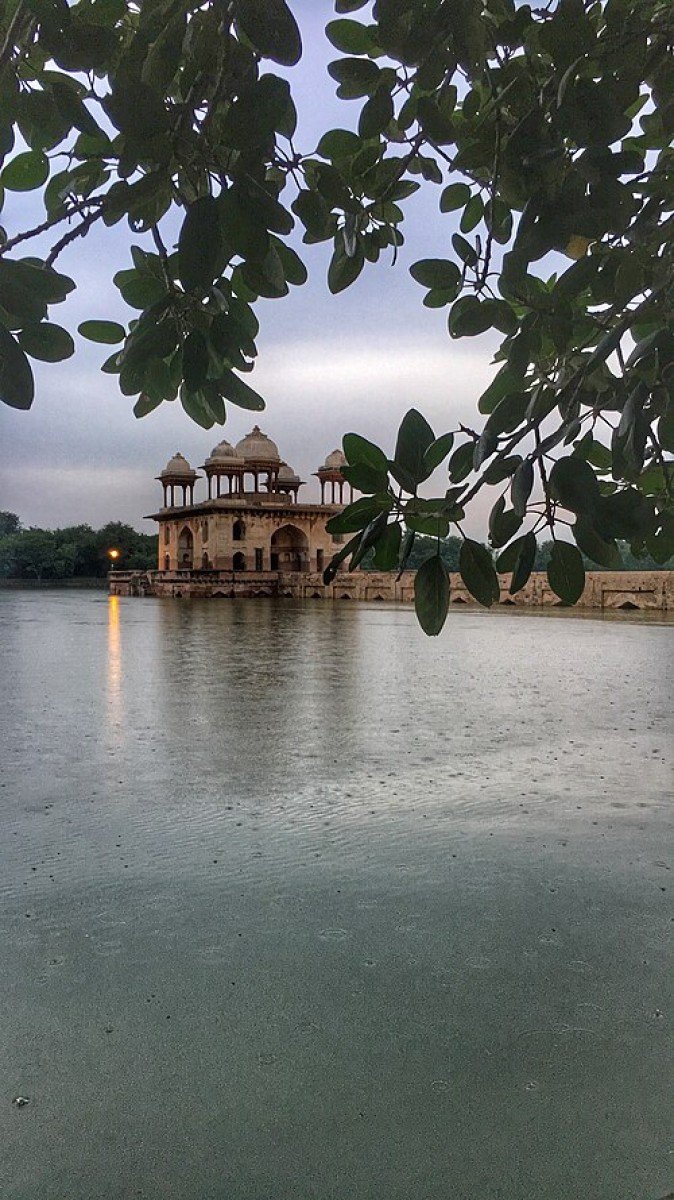

Modawala Mandir
The Discovery and Founding Legend: The Modawala Mandir is a revered Hindu temple dedicated to Lord Shiva, situated on the Narnaul-Rewari Road. Its history is steeped in a local legend that dates its founding to a miraculous discovery. It is believed that the site was originally an agricultural field (khet). The temple came into being when a local farmer, while ploughing his land, accidentally struck a Shivling (a symbolic representation of Lord Shiva). Following this incident, the farmer reportedly heard a divine voice in his sleep, instructing him to build a temple at the spot for the well-being and benefit of the people. This divine instruction led to the construction of the present-day temple complex. A Center for Community Worship: Today, it stands as a significant religious center in the region, unique because it attracts every member of the Hindu community for the worship of Lord Shiva and other important Hindu deities within the single complex. The community holds a firm belief that all sincere desires are fulfilled by Lord Shiva if worshipped here with a pure heart. The temple is not merely a place of prayer but a hub for cultural and social activities, symbolizing faith and community unity. Its ongoing maintenance and community support reflect its continuing importance as a spiritual landmark in Narnaul. This sacred place embodies the deep-rooted religious traditions of Haryana. Significance and Offerings: Devotees often visit to perform Abhishek (ritual bathing of the Shivling) and offer Bel Patra and milk, seeking blessings for prosperity and health. The temple complex has evolved over time, yet its spiritual core, centered around the spontaneously manifested Shivling, remains a powerful draw. This historical and sacred narrative ensures the temple's enduring status. (Word Count: ~405):
General information
-
Ideal Duration:
1 to 2 Hours:Place Type:
Religious Pilgrimage and Cultural Heritage:Entry Fees:
Worship and Donation-Based Entry: Modawala Mandir is an active place of worship, and thus, there is no formal entry fee for visitors or devotees. Access is free and open to all. The concept of an "entry fee" is replaced by the tradition of voluntary Dakshina (donation).Worship and Donation-Based Entry: Modawala Mandir is an active place of worship, and thus, there is no formal entry fee for visitors or devotees. Access is free and open to all. The concept of an "entry fee" is replaced by the tradition of voluntary Dakshina (donation).
Voluntary Donations for Temple Maintenance: Visitors are welcome to offer voluntary donations in the dedicated Hundi (donation box) for the temple's maintenance, upkeep, and charitable activities. These donations, typically starting from a token amount like Rs.10 or Rs.20 onwards, are entirely optional and based on the devotee's will.
Specific Ritual Fees: Some specialized rituals, like a custom Abhishek or a special Puja performed on the devotee's behalf by the priest, may involve a small fee for the materials (samagri) and a Dakshina for the priest, but general entry remains free. The average voluntary donation is usually between Rs.50 and Rs.100. No ticket window exists for this temple.
:Timing:
Regular Temple Timings: The temple is generally open daily from 5:00 AM to 1:00 PM and then reopens from 3:00 PM to 9:00 PM. These timings accommodate morning prayers, the afternoon rest, and evening Aarti. The gates are usually closed during the early afternoon.
<...Regular Temple Timings: The temple is generally open daily from 5:00 AM to 1:00 PM and then reopens from 3:00 PM to 9:00 PM. These timings accommodate morning prayers, the afternoon rest, and evening Aarti. The gates are usually closed during the early afternoon.
Ideal Visit Time: The ideal visit time is during the early morning hours, around 6:00 AM to 8:00 AM, when the first Aarti is performed and the atmosphere is the most peaceful and spiritually charged. Visiting on a Monday (Lord Shiva's day) is considered highly auspicious but also busier.
Off-Peak Hours for Tranquility: For those seeking silence and a less crowded experience, the late afternoon around 3:00 PM to 5:00 PM (after the reopening) is the best time. Avoid the peak festival days like Maha Shivratri if you prefer a quiet, contemplative visit. The general visit duration is about 1 hour.
:Special Events:
The Grand Raksha Bandhan Mela: The most significant special event is the annual grand fair, or Mela, organized on the festival of Raksha Bandhan (typically in August). This event draws thousands of visitors, transforming the area into a vibrant religious and commercial hub....The Grand Raksha Bandhan Mela: The most significant special event is the annual grand fair, or Mela, organized on the festival of Raksha Bandhan (typically in August). This event draws thousands of visitors, transforming the area into a vibrant religious and commercial hub. The Mela includes stalls selling religious artifacts, local handicrafts, and sweet treats, alongside special prayers and Aarti ceremonies.
Maha Shivratri Celebrations: The festival of Maha Shivratri (February/March) is celebrated with extreme fervor. The temple remains open all night, with devotees observing fasts and performing continuous Rudrabhishek. The atmosphere is charged with spiritual energy, featuring processions, Bhajans, and cultural performances dedicated to Lord Shiva. These two events are the highlights of the temple's annual calendar.
:Best Photo Spots:
The Shikhara against the Morning Sky: The best spot for photography is capturing the temple's main spire (Shikhara) from a slight distance in the early morning light. The soft golden light provides a beautiful, serene backdrop to the architecture, emphasizing its religious ...The Shikhara against the Morning Sky: The best spot for photography is capturing the temple's main spire (Shikhara) from a slight distance in the early morning light. The soft golden light provides a beautiful, serene backdrop to the architecture, emphasizing its religious significance.
The Entrance Gateway and Nameplate: The temple's main entrance, often adorned with traditional designs and the temple's prominent nameplate, makes for a great introductory photo. Capturing the archway or entrance while devotees are walking in adds a sense of scale and devotion.
Candid Shots of Devotees: Discreetly capturing the expressions of devotion during Aarti or while performing Abhishek (from an appropriate distance, respecting privacy) offers powerful human interest shots, showcasing the faith of the people of Narnaul.
View from the Narnaul-Rewari Road: A slightly distant shot from the main road can frame the entire complex, often showing the busy street life contrasted with the tranquil presence of the temple.
:Photo Gallery
Things To Do
-
Participation in Aarti and Rituals: The best way to experience the temple is by participating in the daily Aarti (prayer ceremony) held in the morning and evening. This allows you to observe and join the local customs and rituals, which are performed with great devotion. Joining the collective chanting of hymns or Bhajans provides an immersive cultural experience.
Performing Abhishek on the Shivling: Devotees can perform Abhishek, the ritual bathing of the Shivling with milk, water, curd, honey, and ghee. This act is central to the worship of Lord Shiva and is a peaceful, meditative practice. Bringing a small offering of Bel Patra (wood apple leaves) is also a customary and important part of the ritual.
Quiet Contemplation and Meditation: Find a quiet corner in the main Mandapa or the outer c...Participation in Aarti and Rituals: The best way to experience the temple is by participating in the daily Aarti (prayer ceremony) held in the morning and evening. This allows you to observe and join the local customs and rituals, which are performed with great devotion. Joining the collective chanting of hymns or Bhajans provides an immersive cultural experience.
Performing Abhishek on the Shivling: Devotees can perform Abhishek, the ritual bathing of the Shivling with milk, water, curd, honey, and ghee. This act is central to the worship of Lord Shiva and is a peaceful, meditative practice. Bringing a small offering of Bel Patra (wood apple leaves) is also a customary and important part of the ritual.
Quiet Contemplation and Meditation: Find a quiet corner in the main Mandapa or the outer courtyard for personal reflection. The temple’s calm atmosphere, especially outside of peak festival hours, is ideal for meditation and seeking spiritual peace. Observing the local devotees and their dedication can be a profound cultural learning experience.
Exploring the Temple Complex and Other Deities: Take time to explore the entire temple complex. As it houses other Hindu deities besides Lord Shiva, paying respects at these subsidiary shrines (often dedicated to Goddess Parvati and Lord Ganesha) offers a complete view of the local pantheon and religious practices. The complex architecture, though modern, has spaces for contemplation and gathering.
Attending Cultural and Community Gatherings: Inquire about any local Satsangs (religious discourses) or community gatherings being held. The temple is a social nexus, and these events provide a unique glimpse into the cultural life of Narnaul residents.
Taking Part in Seva (Voluntary Service): If visiting for an extended period or if comfortable, engaging in simple voluntary service like sweeping the courtyard, helping with Langar (community meal), or managing footwear at the entrance is highly valued and a deeply rewarding spiritual practice. This connects you directly with the community spirit of the temple.
Photography (Exterior Focus): While photography inside the sanctum is often discouraged, capturing the exterior architecture, the vibrant atmosphere of the devotees, and the simple elegance of the Shikhara can yield beautiful cultural photos. Always ask for permission before taking close-up photos of rituals or people. Remember to maintain silence and respect the sanctity of the place at all times. The temple environment is rich with sensory details—the scent of incense, the sound of bells, and the sight of offerings.
:
Information
-
Why Famous:
A Hub of Community Faith: The temple's primary fame rests on its origin story—the miraculous discovery of the Shivling during farming, which locals consider a divine sign. This has cemented its reputation as a Swayambhu (self-manifested) site, attracting widespread devoti...A Hub of Community Faith: The temple's primary fame rests on its origin story—the miraculous discovery of the Shivling during farming, which locals consider a divine sign. This has cemented its reputation as a Swayambhu (self-manifested) site, attracting widespread devotion. It is known as the only temple in this immediate area where all sections of the Hindu community come together, fostering incredible unity, a fact that makes it a powerful symbol of communal harmony in Narnaul.
Festival Attraction: A major aspect of its fame is the grand fair, or Mela, held here annually on the occasion of Raksha Bandhan and, importantly, during Maha Shivratri in the February/March timeframe. These festivals draw thousands of pilgrims from across Haryana and neighboring states, elevating the temple’s profile beyond a local shrine. Its accessible location near the New Bus Stand also contributes to its popularity, making it a convenient stop for both locals and travelers. The strong local belief in the fulfillment of wishes is a continuous source of its recognition.
: -
Architecture:
Structural Design and Materials: The Modawala Mandir showcases a typical North Indian temple architecture style, specifically the Nagara style, though on a modest, modern scale compared to ancient structures. The main sanctuary, or Garbhagriha, which houses the revered Shiv...Structural Design and Materials: The Modawala Mandir showcases a typical North Indian temple architecture style, specifically the Nagara style, though on a modest, modern scale compared to ancient structures. The main sanctuary, or Garbhagriha, which houses the revered Shivling, is topped by a simple yet elegant spire, or Shikhara. The construction primarily utilizes contemporary building materials, including marble, finished brickwork, and reinforced concrete, reflecting its more recent reconstruction and expansion phases, although the site itself is ancient.
The Sanctum Sanctorum and Ornamentation: The layout is functional, designed to accommodate a large influx of devotees, especially during festival times. The complex includes a main prayer hall (Mandapa) leading to the Garbhagriha. The exterior walls are usually painted or clad with polished stone and often feature modern murals or framed images of various Hindu deities like Lord Ganesha, Goddess Parvati, and Lord Krishna. The entire complex is elevated slightly, indicating the sanctity of the main shrine area.
Dimension (General Layout): The main temple courtyard is often rectangular, with the main shrine being a smaller, square structure, approximately 15m×15m for the inner complex, though the size can vary based on modern extensions. The dome or Shikhara typically rises to a height of about 10-15 meters. The focus is more on the spiritual atmosphere than grand ancient scale.
: -
How To Reach:
By Air: The nearest major airport is Indira Gandhi International Airport (DEL) in New Delhi, located approximately 130-140 KMS away. From DEL, one can hire a pre-booked taxi or use the airport shuttle service to reach Narnaul. The drive takes about 3-4 hours depending on t...By Air: The nearest major airport is Indira Gandhi International Airport (DEL) in New Delhi, located approximately 130-140 KMS away. From DEL, one can hire a pre-booked taxi or use the airport shuttle service to reach Narnaul. The drive takes about 3-4 hours depending on traffic.
By Train: The most convenient option is the railway. The nearest and most active railway station is Narnaul Railway Station (NNL). It is well-connected to major cities like Delhi, Jaipur, and Rewari. From the railway station, the temple is only about 1. 7 KMS away, easily reachable by an auto-rickshaw or e-rickshaw in less than 10 minutes. Look for direct trains like the Sikar-Delhi Express or trains via Rewari Junction.
By Road: Narnaul is well-connected by National and State Highways. It is located on National Highway 11 (NH 11). The Narnaul Bus Stand (New Bus Stand) is the nearest major road transport hub, located less than 1 KM from the temple. Regular bus services (Haryana Roadways) run from Delhi, Jaipur, Chandigarh, and all major cities in Haryana. Private taxis can be hired from Delhi or Jaipur for a comfortable road journey.
By Local Transport: Within Narnaul, the temple is easily accessible. Auto-rickshaws, e-rickshaws, and cycle rickshaws are available from any part of the city. Since it's located on the main Narnaul-Rewari Road near the bus stand, it is a prominent landmark, and local transport is readily available and affordable.
: -
Weather and Best Time to Visit:
By Season: The best time to visit Modawala Mandir is during the Winter months, from October to March. The weather is pleasantly cool, ranging from 5°C to 25°C, which is ideal for sightseeing and comfortable participation in outdoor rituals and the Mela. Avoid the intense...By Season: The best time to visit Modawala Mandir is during the Winter months, from October to March. The weather is pleasantly cool, ranging from 5°C to 25°C, which is ideal for sightseeing and comfortable participation in outdoor rituals and the Mela. Avoid the intense heat of the Summer months (April to June), where temperatures can soar above 45°C. The Monsoon season (July to September) is also a good time, as the occasional rain showers bring down the temperature, and the greenery is lush, though travel may be slightly tricky.
By Time of Day: The absolute best time is the Early Morning (6:00 AM - 8:00 AM) for the peaceful morning Aarti. Alternatively, the Late Afternoon (4:00 PM - 6:00 PM) offers cooler temperatures and a moderate crowd. Evening visits are also popular for the night Aarti, but it can be more crowded. Avoid the scorching midday hours from 11:00 AM to 3:00 PM.
: -
Near Tourist Places:
Dhosi Hill (8 KMS), Jal Mahal (3 KMS), Chor Gumbad (3 KMS), Birbal Ka Chhatta (2 KMS), Tomb of Ibrahim Khan Sur (2 KMS), Tripolia Gateway (2 KMS), Tomb of Pir Turkman (2 KMS), Tomb of Shah Wilayat (2 KMS), Shah Quli Khan's Tomb (3 KMS), Tomb of Mirja Ali Jan (3 KMS):
Tourism Tips
-
Health & Safety: Always carry a small bottle of drinking water, especially if visiting during Summer or Monsoon. Wear appropriate, modest clothing, as it is a religious site (shoulders and knees covered). Be mindful of your belongings in crowded areas, especially during th...Health & Safety: Always carry a small bottle of drinking water, especially if visiting during Summer or Monsoon. Wear appropriate, modest clothing, as it is a religious site (shoulders and knees covered). Be mindful of your belongings in crowded areas, especially during the Raksha Bandhan Mela. Footwear must be removed at the designated area, so wear comfortable, easy-to-remove shoes.
Packing Essentials: Carry a camera for exterior shots, and a small shawl or stole (especially for women) for respectful entry into the inner sanctum. A small pouch for voluntary cash offerings is useful. Carry a basic first-aid kit, particularly if traveling with elders or children. Sunscreen and a hat are essential for day visits outside of Winter.
Accommodation: Narnaul offers decent budget and mid-range accommodation options near the bus stand and railway station. Consider staying at the Haryana Tourism-run Darka Lodge or one of the private hotels in the city center for convenience. Booking in advance, particularly around major festivals like Maha Shivratri, is highly recommended.
Cultural Respect and Etiquette: Remember to always speak quietly within the temple premises and maintain silence near the Garbhagriha. Do not touch the idol or the sacred offerings unless instructed by the priest. Ask for permission before taking photographs of individuals or rituals. Only use the local currency (Indian Rupees) for donations and purchases. Be respectful of local customs.
:
Reviews
FAQs
Narnaul Itineray And Cost:-
Other Places In Narnaul :-
Other States In India :-
Information about New and Updated Locations() of Haryana Has Been Added :-
Card subtitle
Note:-
Information provided here in good Faith and for reference only.
Near Places

Dhosi Hill
Some quick example text to build on the card title and make up the bulk of the card's content.
Go somewhere
Khalde Wale Hanumanji
Some quick example text to build on the card title and make up the bulk of the card's content.
Go somewhere
Rai Bal Mukund Dass Ka Chhatta
Some quick example text to build on the card title and make up the bulk of the card's content.
Go somewhere
Tomb of Ibrahim Khan Sur
Some quick example text to build on the card title and make up the bulk of the card's content.
Go somewhere
Tomb of Pir Turkman
Some quick example text to build on the card title and make up the bulk of the card's content.
Go somewhere
Tomb of Shah Wilayat
Some quick example text to build on the card title and make up the bulk of the card's content.
Go somewhere
Tripolia Gateway
Some quick example text to build on the card title and make up the bulk of the card's content.
Go somewherein Other Cities