Navghan Kuwo
General information
-
Ideal Duration:
30 minutes to 1 Hour (As part of the Uparkot Fort tour)Place Type:
Historical Monument, Ancient Engineering, StepwellEntry Fees:
Entry Fee: Visiting the Navghan Kuwo itself is generally Free.
Uparkot Fort
Entry Fee: Because the well is located inside the Uparkot Fort, visitors must pay the fort's entry fee to access the premises.
<...Entry Fee: Visiting the Navghan Kuwo itself is generally Free.
Uparkot Fort
Entry Fee: Because the well is located inside the Uparkot Fort, visitors must pay the fort's entry fee to access the premises.
This fee is nominal: Rs.Rs.5 to Rs.25 for Indian citizens; Rs.Rs.100 to Rs.300 for foreign nationals.
Photography Fee: There is No separate fee for still photography for personal use. Fees are only applicable for commercial videography or large-scale professional equipment.
Guided Tour Fees: Hiring a knowledgeable local guide is a separate, negotiable charge (typically Rs.Rs.200 to Rs.500). This is highly recommended to understand the well's military and engineering significance, which is not obvious from simply looking at it.
Parking Fee: A small parking fee (Rs.Rs.20 to Rs.50) applies to vehicles parked at the designated lot outside the main fort entrance.Timing:
Regular Timings:
Well/Fort Timings: The Uparkot Fort and the Navghan Kuwo within it are typically Open from 8:00 AM to 6:00 PM daily. Visitors should aim to enter at least an hour before closing.
Accessibility:<...Regular Timings:
Well/Fort Timings: The Uparkot Fort and the Navghan Kuwo within it are typically Open from 8:00 AM to 6:00 PM daily. Visitors should aim to enter at least an hour before closing.
Accessibility: The ability to descend the well is dependent on the conditions of the steps; they may be closed for maintenance or if they are deemed too slippery due to rain or water runoff, so check with the guard.
Ideal Visit Time: Early Morning (8:00 AM - 10:00 AM) The Ideal Time of Day. The light is beautiful for interior photography of the shaft, the temperatures are cool, and the crowds are minimal, allowing for a peaceful, slow descent. Late Afternoon (4:00 PM - 6:00 PM) A good time for a visit, as the heat subsides, but ensure you leave enough time to complete the descent and ascent before the fort closes.
Avoid Midday: The peak sun hours between 11:00 AM and 3:00 PM are extremely hot for the open fort, though the interior of the well remains cool.Special Events:
No Specific Special Events: The Navghan Kuwo is a historical water structure and does not host any recurring religious or cultural festivals. It maintains an atmosphere of historical contemplation.
Integrated Events with Uparkot Fort:No Specific Special Events: The Navghan Kuwo is a historical water structure and does not host any recurring religious or cultural festivals. It maintains an atmosphere of historical contemplation.
Integrated Events with Uparkot Fort:
Fort Illumination Evenings: On specific occasions for heritage week or city festivals, the Uparkot Fort complex may be illuminated. Although the well itself is not internally lit for tourists, the lighting of the surrounding fort walls creates a dramatic backdrop.
Heritage Walks: The local tourism department frequently uses the Kuwo as a major stop on guided heritage walks, particularly during the cooler Winter months, with the focus on its history as a strategic water source. These walks often include lectures or dramatic retellings of the sieges the fort withstood.Best Photo Spots:
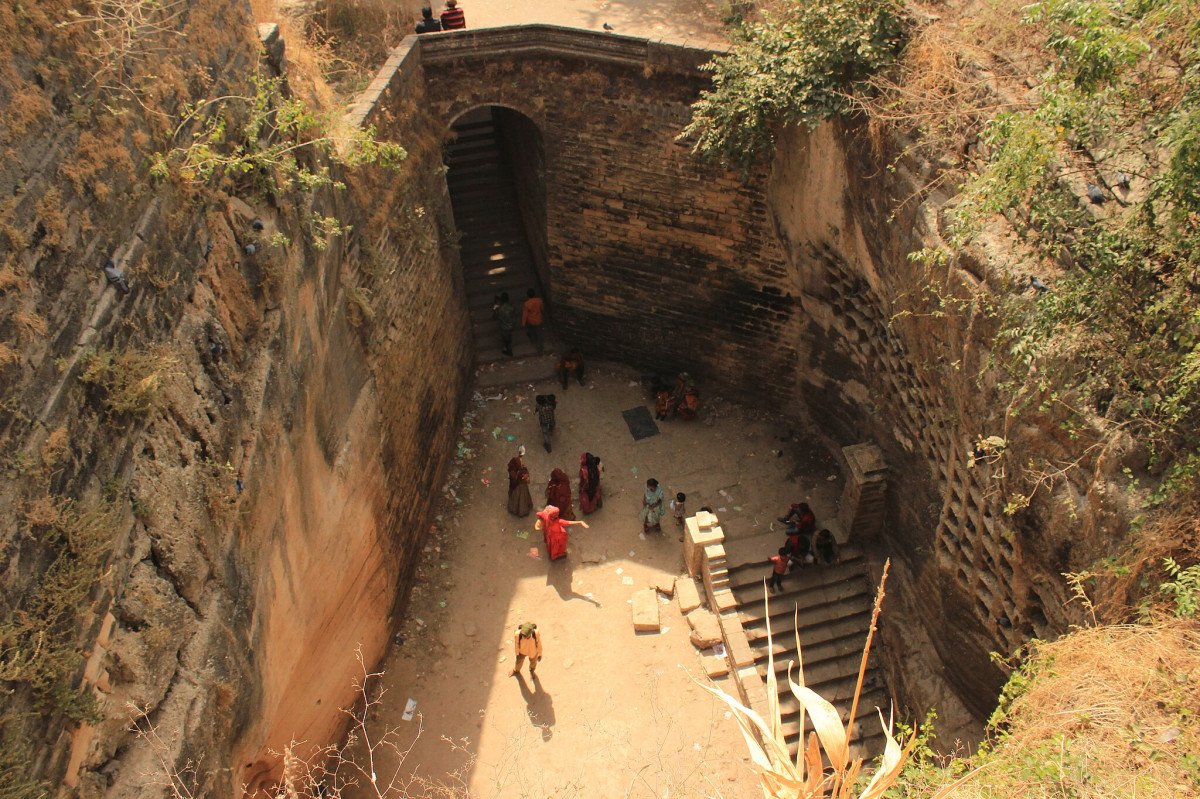
Looking Down the Spiral: The absolute best photo spot is from the very top of the well, looking directly down the spiral shaft. This angle dramatically captures the immense depth of the well and the geometric pattern of the winding staircase, emphasizing the engineering fea...Looking Down the Spiral: The absolute best photo spot is from the very top of the well, looking directly down the spiral shaft. This angle dramatically captures the immense depth of the well and the geometric pattern of the winding staircase, emphasizing the engineering feat.
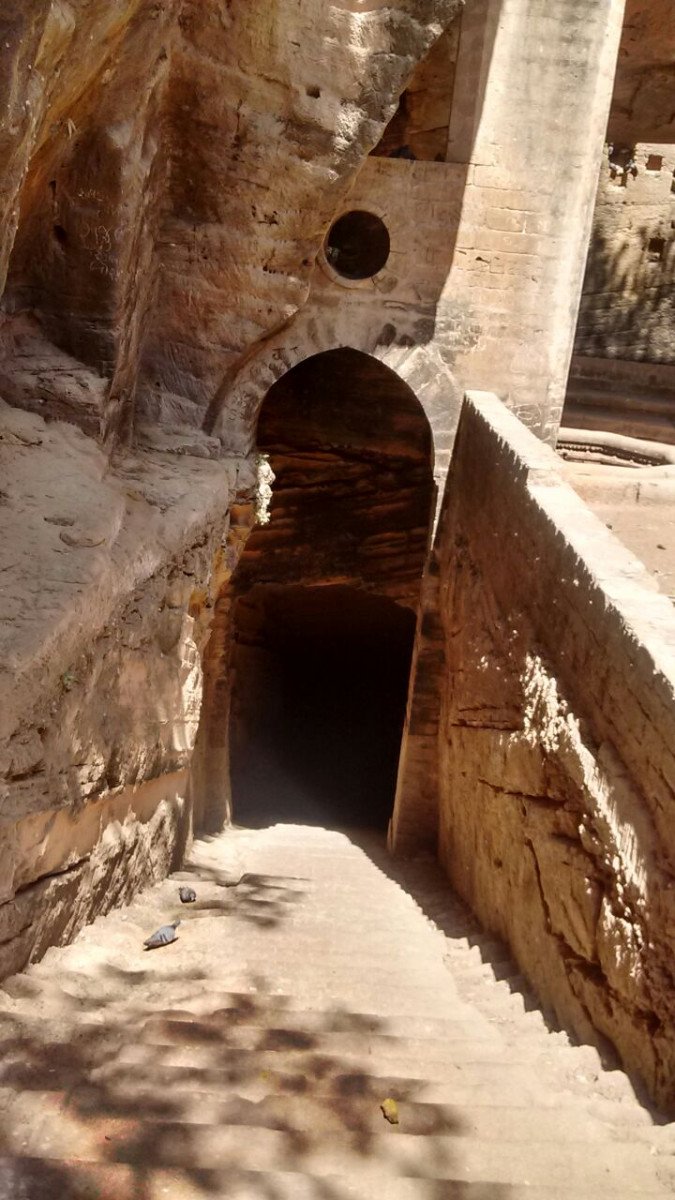
Framing the Steps: Use the stone-carved steps as leading lines, capturing a person (for scale) descending them to give a sense of the well's scale and the dark, cool atmosphere of the descent.
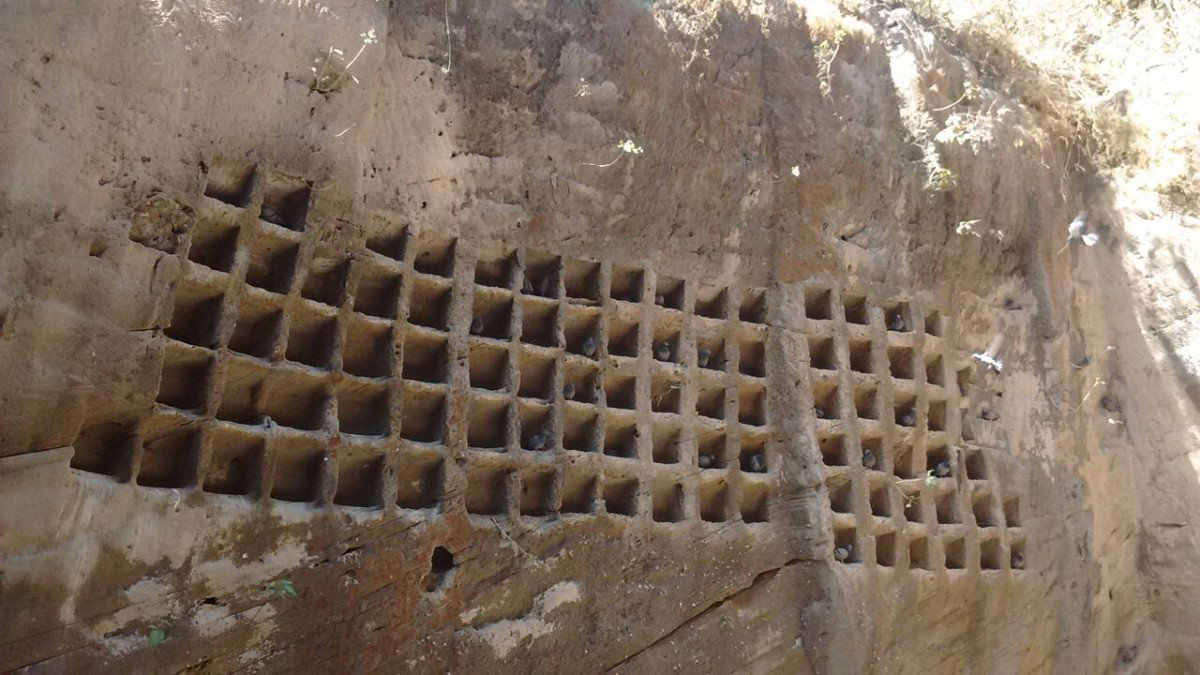
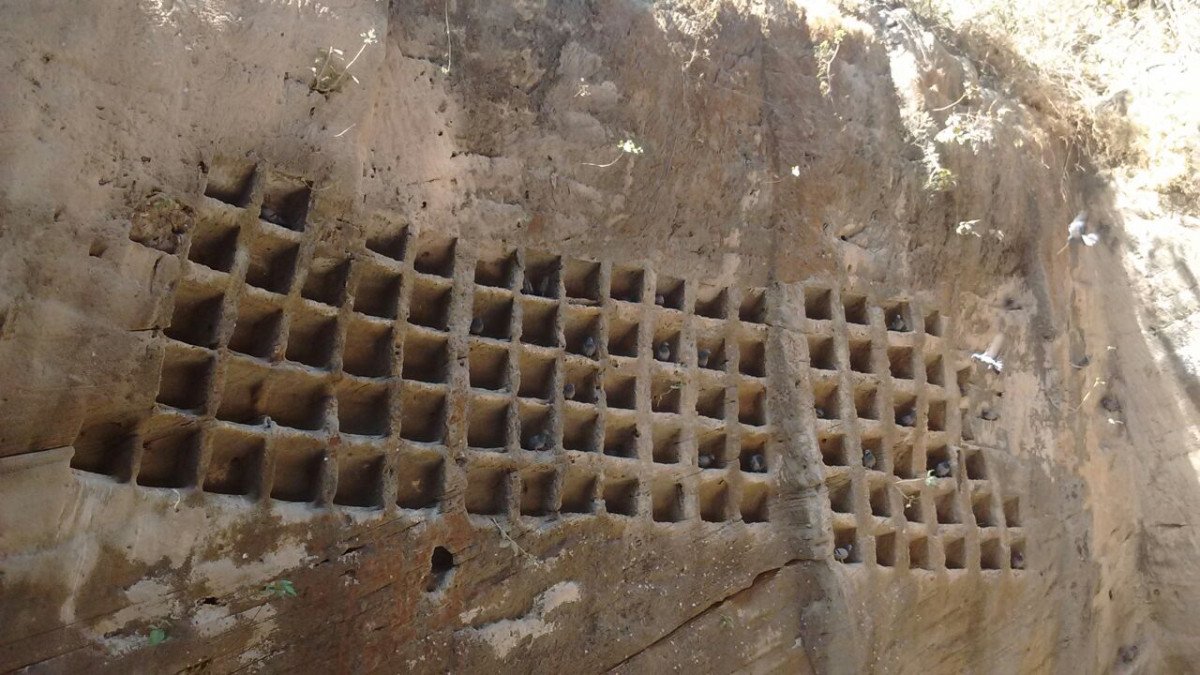
The Rock Texture Close-up: Focus on close-up shots of the rock walls inside the well, capturing the texture and the centuries-old tool marks that are visible, especially at the level just above the water line.
The Exit to the Fort: Capture the view looking up from the first landing as the light of the fort complex and the sky filters down, symbolizing the well's function as a hidden lifeline below the visible fort.Photo Gallery

Things To Do
-
Descend the Spiral Staircase:
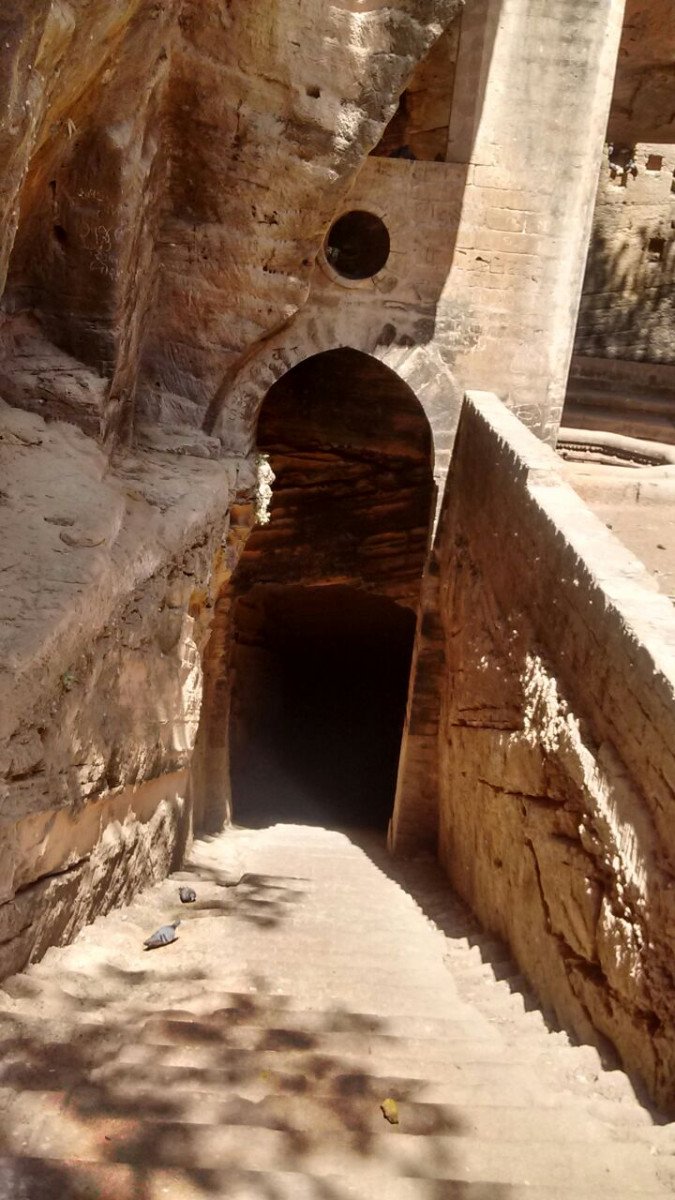
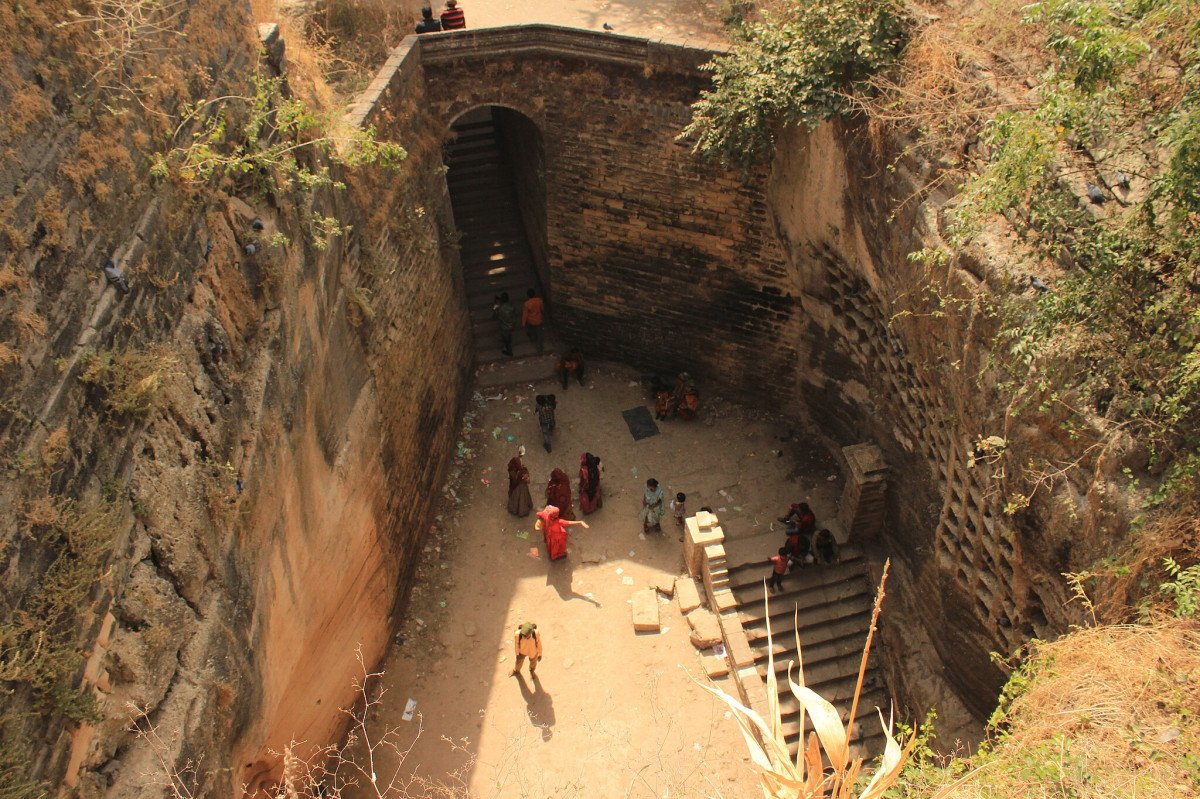
Explore the Rock-Cut Structure: Carefully descend the spiral steps to appreciate the scale and the engineering feat of carving the structure out of solid rock.
Feel the Cooling Effect: Pause on the steps to feel the dramatic drop in temperature and the rising cool, moist air as you get closer to the water level.
Observe the Tool Marks: Look closely at the carved rock walls for the historical tool and chisel marks left by the original stonemasons.
Photography:
Capture the Spiral: The winding staircase is the most photogenic feature. Take photos looking up from the mid-level or looking down from the top to emphasize the helix structure.
Fra...
Information
-
Why Famous:
A Masterpiece of Rock-Cut Engineering: The Navghan Kuwo is famous for its unique construction method—carved directly out of solid rock rather than built with stone masonry. This rare technique showcases the advanced hydrological and stonemasonry skills of the 11th-century...A Masterpiece of Rock-Cut Engineering: The Navghan Kuwo is famous for its unique construction method—carved directly out of solid rock rather than built with stone masonry. This rare technique showcases the advanced hydrological and stonemasonry skills of the 11th-century Chudasama dynasty.
Lifeline of the Uparkot Fort: Its fame is inextricably linked to the military history of the fort. As a secure, deep, perennial water source, the well was the single most critical factor that allowed the fort to survive numerous lengthy sieges, giving it a celebrated place in the annals of Junagadh's military history and a legendary status.
The Distinctive Spiral Design: The well's architecture is famous for its narrow, winding, spiraling staircase that encircles the water shaft, a feature that distinguishes it from the more common Vav (stepwell) types and adds to its visual and historical uniqueness.
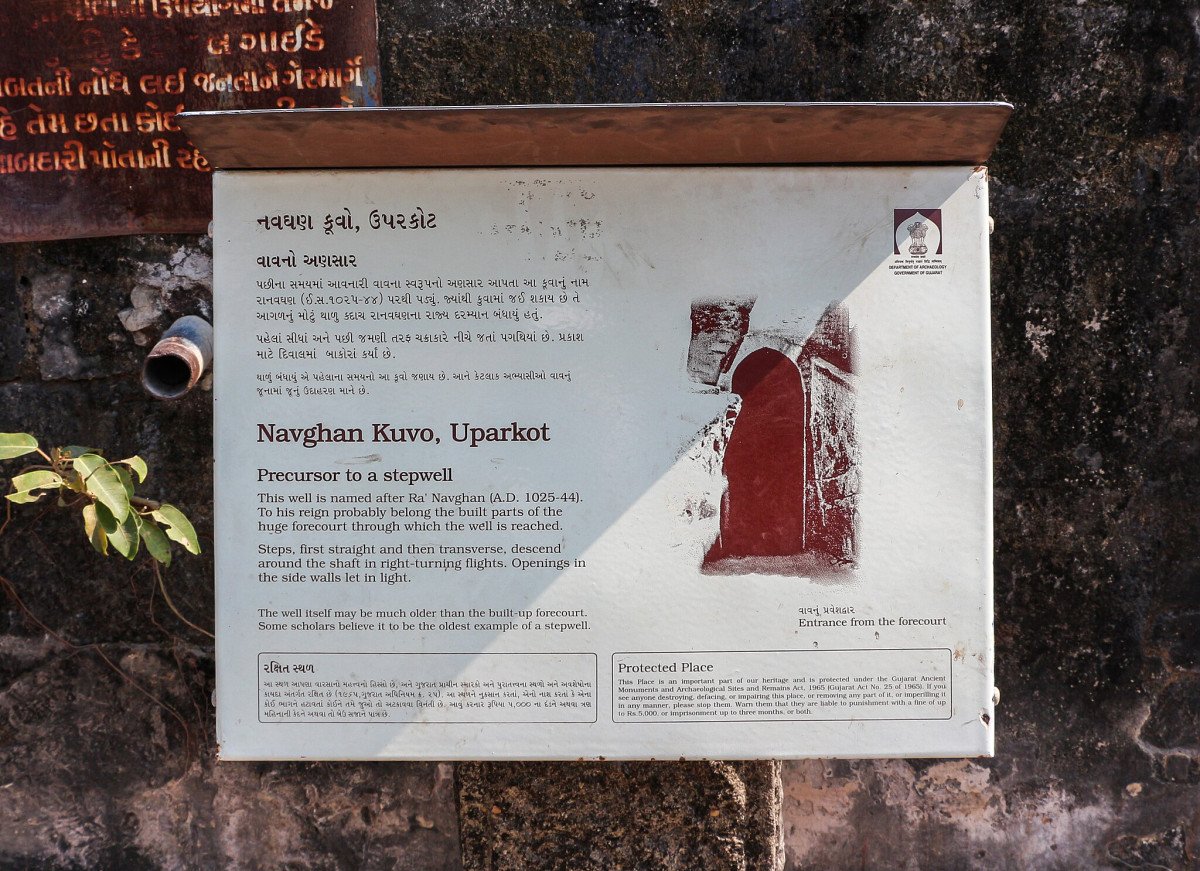
One of Junagadh's Oldest Structures: Dating back to the 11th century, it is one of the oldest, well-preserved examples of ancient Indian engineering in Gujarat. Its age and continuous water supply for a millennium make it a celebrated symbol of endurance and practical genius. -
Architecture:
Rock-Cut Construction: The fundamental architectural feature is the rock-cut nature of the structure. The well shaft and the primary sections of the spiral staircase are carved directly out of the massive, single rock formation of the Uparkot plateau. This eliminates the n...Rock-Cut Construction: The fundamental architectural feature is the rock-cut nature of the structure. The well shaft and the primary sections of the spiral staircase are carved directly out of the massive, single rock formation of the Uparkot plateau. This eliminates the need for complex load-bearing masonry, making the well structurally sound and incredibly enduring.
The Spiral Staircase:
Dimension of Depth and Stairs: The well descends to an impressive depth of approximately Rs.52 meters (170 feet). The stairs are narrow, winding in a helix around the main water shaft. This spiral design is rare in Gujarat stepwells, which typically employ linear or L-shaped staircases with intermediate landings (Mandapas).
Diameter: The well shaft has an approximate diameter of Rs.4-5 meters. The winding staircase hugs this central shaft.
Minimal Decoration: Unlike the highly decorative stepwells of Gujarat (e. g. , Rani Ki Vav or Adalaj Vav), the Navghan Kuwo is primarily functional and austere. Decoration is minimal, focusing on the simple, smooth curves of the rock-cut walls and the pragmatic structure of the stone-carved steps. The architectural beauty lies in its sheer engineering efficiency and the bold carving into the solid earth.
Water Access: At the base, there is a large, square or circular water platform. Small niches or shelves are carved into the rock face to hold lamps, which would have illuminated the dark descent for the water carriers. The architecture is a direct expression of its purpose: a strategic, hidden water lifeline. -
How To Reach:
By Air:
Nearest Airport: Rajkot Airport (RAJ) is Rs.103 KMS away. Taxis and public transport connect Rajkot to Junagadh. Keshod Airport (IXK) at Rs.40 KMS is an alternative with limited connectivity.
By Train: ... -
Near Tourist Places:
Adi Kadi Vav (Rs.0. 1 KMS) Other stepwell inside Uparkot Fort. Buddhist Caves (Rs.0. 2 KMS) Inside Uparkot Fort. Jama Masjid (Rs.0. 2 KMS) Fortress-like mosque inside fort. Mahabat Maqbara (Rs.1. 5 KMS) Iconic mausoleum. Darbar Hall Museum (Rs.2 KMS) Royal artifacts. Ashoka's Rock Edicts (Rs.3. 5 KMS) Historical inscription. Narsinh Mehta Lake (Rs.3 KMS) City lake and park. Junagadh Junction Railway Station (Rs.3 KMS) Main transport hub. Girnar Hill (Taleti) (Rs.5 KMS) Pilgrimage base. Sakkarbaug Zoo (Rs.5 KMS) Wildlife park.
Tourism Tips
-
Health & Safety:
Slippery Steps: Be extremely careful when descending the steps, as they are worn, steep, and can be very slippery, especially near the bottom and during the rainy season. Hold onto the side walls.
Read More
Reviews
Information about New and Updated Locations(862+) of Gujarat Has Been Added :-
Card subtitle
Bhujia FortBhujodi Handicraft VillageChhatardi Great Rann of KutchHiralaxmi Memorial Craft ParkKalo Dungar Lakhpat FortMandvi BeachMata No Madh TempleNarayan Sarovar Wildlife SanctuaryNirona VillageVande Mataram MemorialVijay Vilas PalaceKuber Bhandari TempleMaharaja Fateh Singh MuseumMaharaja Sayajirao University Makarpura PalaceMandvi GateMore PlacesNote:-
Information provided here in good Faith and for reference only.
All information and pictures will be updated soon, please keep visiting.
Near Places

Ayurvedic College and Hospital
Some quick example text to build on the card title and make up the bulk of the card's content.
Go somewhere
Bhavnath Mahadev Temple
Some quick example text to build on the card title and make up the bulk of the card's content.
Go somewhere
Buddhist Caves
Some quick example text to build on the card title and make up the bulk of the card's content.
Go somewhere
Darbar Hall Museum
Some quick example text to build on the card title and make up the bulk of the card's content.
Go somewhere
Dataar Hills (Datar Tekri)
Some quick example text to build on the card title and make up the bulk of the card's content.
Go somewhere
Dattatreya Temple
Some quick example text to build on the card title and make up the bulk of the card's content.
Go somewhere
Durbar Hall Museum (Junagadh Museum)
Some quick example text to build on the card title and make up the bulk of the card's content.
Go somewhere
Gayatri Temple (Gayatri Mandir)
Some quick example text to build on the card title and make up the bulk of the card's content.
Go somewhere
Girnar Hill
Some quick example text to build on the card title and make up the bulk of the card's content.
Go somewhere
Girnar Hills
Some quick example text to build on the card title and make up the bulk of the card's content.
Go somewherein Other Cities