Chaurasi Khambon ki Chhatri
General information
-
Ideal Duration:
30 minutes to 1 hourPlace Type:
Cenotaph (Memorial Pavilion), Historical Monument,Entry Fees:
Current Standard Pricing: The Chaurasi Khambon ki Chhatri typically has an entry fee for all visitors. This fee is often collected as part of a combo ticket that includes Raniji ki Baori and the Bundi Palace/Taragarh Fort. When bought separately, the fee is generally modes...Current Standard Pricing: The Chaurasi Khambon ki Chhatri typically has an entry fee for all visitors. This fee is often collected as part of a combo ticket that includes Raniji ki Baori and the Bundi Palace/Taragarh Fort. When bought separately, the fee is generally modest, around INR 50 for Indian Nationals and potentially higher for Foreign Nationals (e. g. , INR 100 to 200).
Photography Charges: Like other ASI sites, a small fee for a Still Camera or Video Camera may be applicable. It is important to ask at the ticket counter to ensure compliance. The fees are crucial for the monument's ongoing conservation.
Combo Ticket Advantage: If planning to visit the other main sites, purchasing the combo ticket is highly recommended as it covers the entry of this cenotaph, offering convenience and savings. Check the latest price and validity details at the ticket counter upon arrival.Timing:
Regular Timings: The monument is generally open to the public every day. The standard opening hours are from 9:00 AM to 5:00 PM.
Ideal Visit Time: Early Morning (9:00 AM - 11:00 AM) Ideal. The sun's angle at this time casts long, soft sha...Regular Timings: The monument is generally open to the public every day. The standard opening hours are from 9:00 AM to 5:00 PM.
Ideal Visit Time: Early Morning (9:00 AM - 11:00 AM) Ideal. The sun's angle at this time casts long, soft shadows among the pillars, beautifully highlighting the carvings and the three-dimensional depth of the structure. The weather is cool, perfect for a peaceful exploration. Late Afternoon (3:00 PM - 5:00 PM) Excellent for photography as the setting sun's warm light makes the sandstone glow, creating a gentle atmosphere.
Mid-Day: The light is too harsh and flat, and the temperature will be high, making it the least recommended time.Special Events:
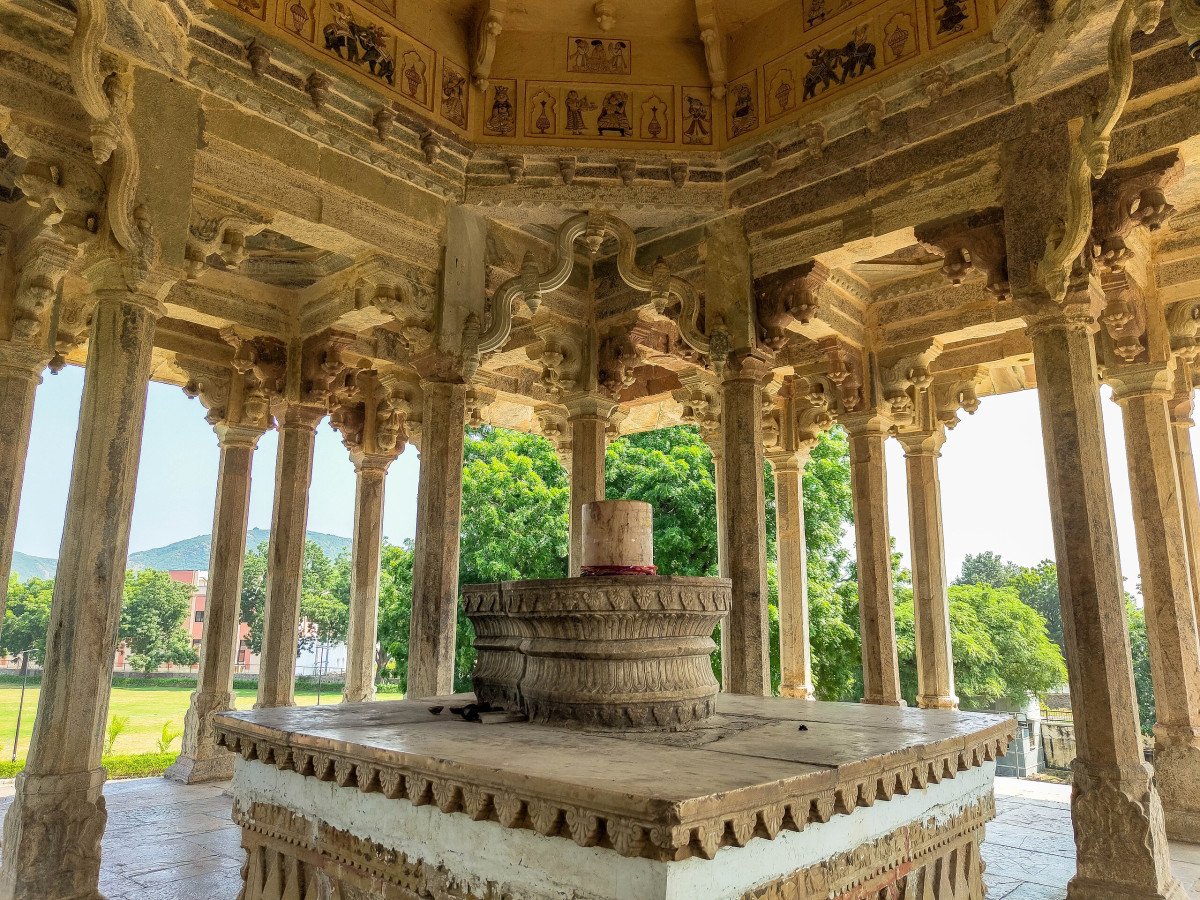
Shivaratri Observance: As the Chaurasi Khambon ki Chhatri features a prominent Shiva Lingam at its center, the most significant special event observed here is Maha Shivaratri, typically held in the Hindu month of Phalguna (usually February or March).
Read MoreShivaratri Observance: As the Chaurasi Khambon ki Chhatri features a prominent Shiva Lingam at its center, the most significant special event observed here is Maha Shivaratri, typically held in the Hindu month of Phalguna (usually February or March).
The Nature of the Event: During Shivaratri, the cenotaph transforms from a historical monument into an active place of worship. Local devotees gather to perform special pujas (worship rituals) and offer milk, water, and Bel leaves to the Shiva Lingam. The monument is often decorated with lights and flowers, and the atmosphere becomes spiritual and festive. The event provides a unique opportunity to witness the monument's continued religious relevance and the local cultural traditions associated with the worship of Lord Shiva. The crowds are local, and the event is non-commercialized, offering an authentic cultural experience.Best Photo Spots:
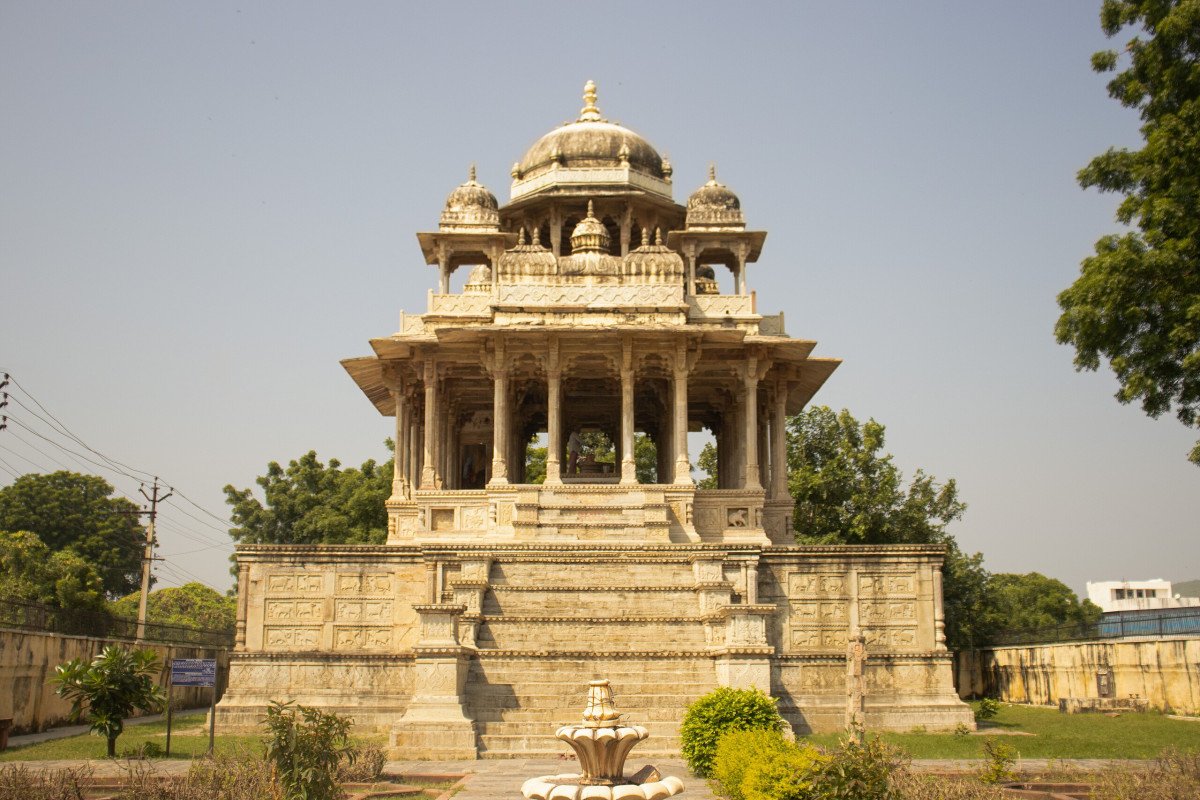
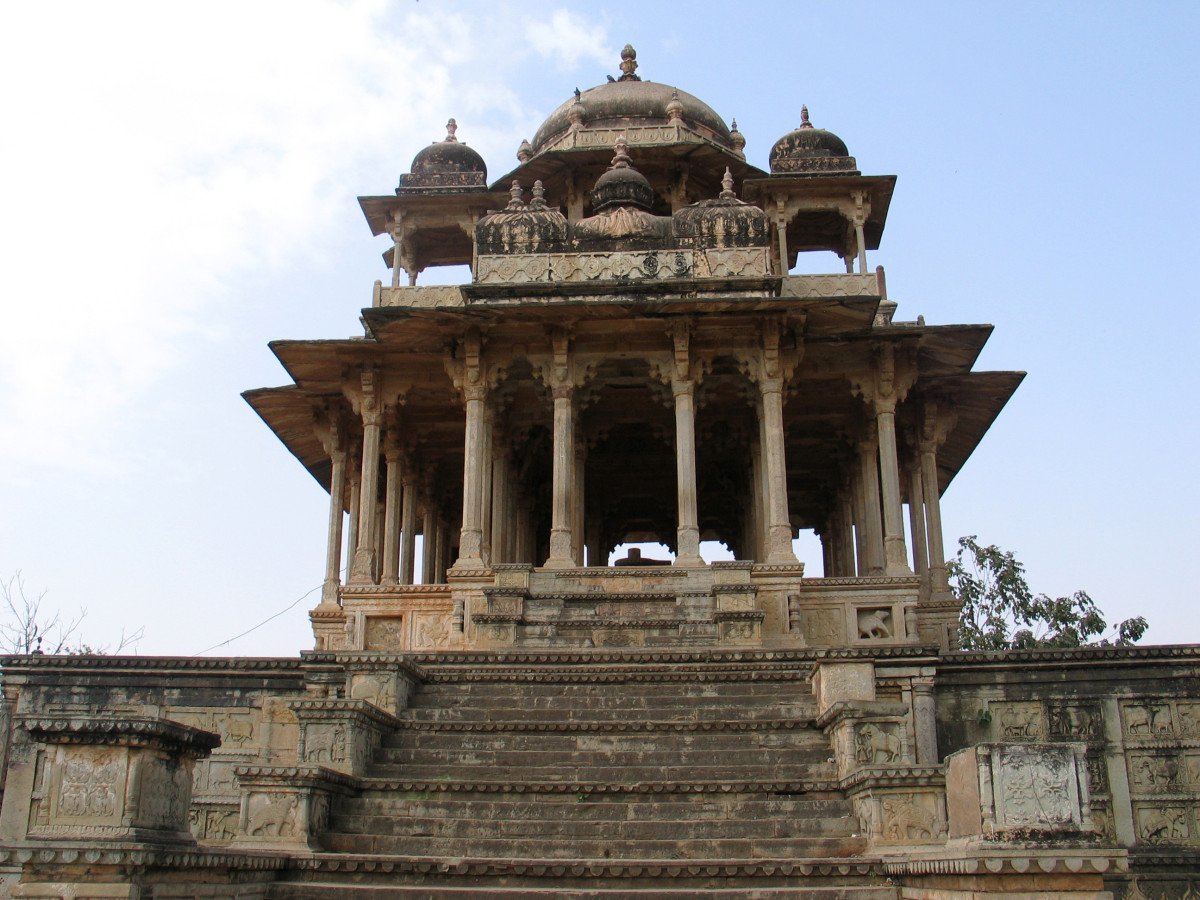
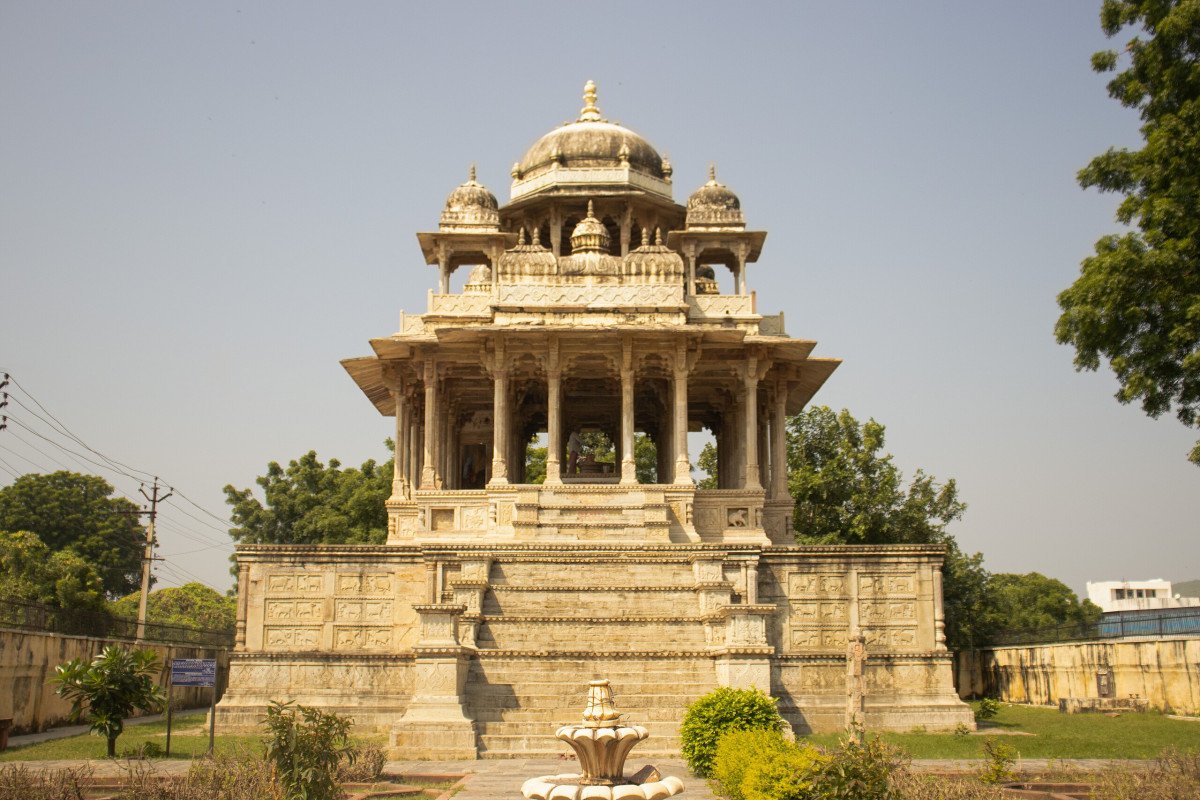
The Full Frontal View from the Garden: Stand a short distance away in the garden to capture the entire cenotaph. This allows a photographer to include the full scale, the central dome, and the density of the 84 pillars in one symmetrical frame. The surrounding greenery pro...The Full Frontal View from the Garden: Stand a short distance away in the garden to capture the entire cenotaph. This allows a photographer to include the full scale, the central dome, and the density of the 84 pillars in one symmetrical frame. The surrounding greenery provides a contrasting background.
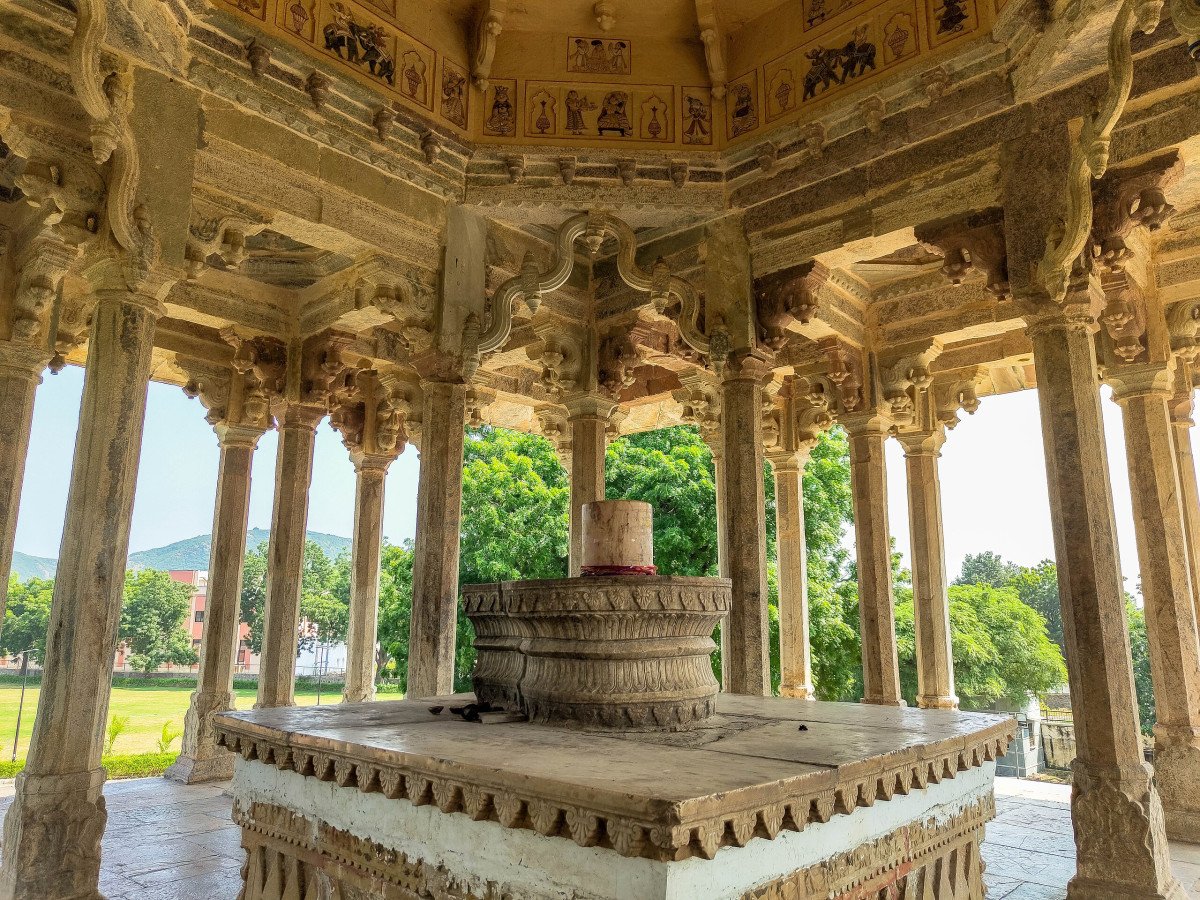
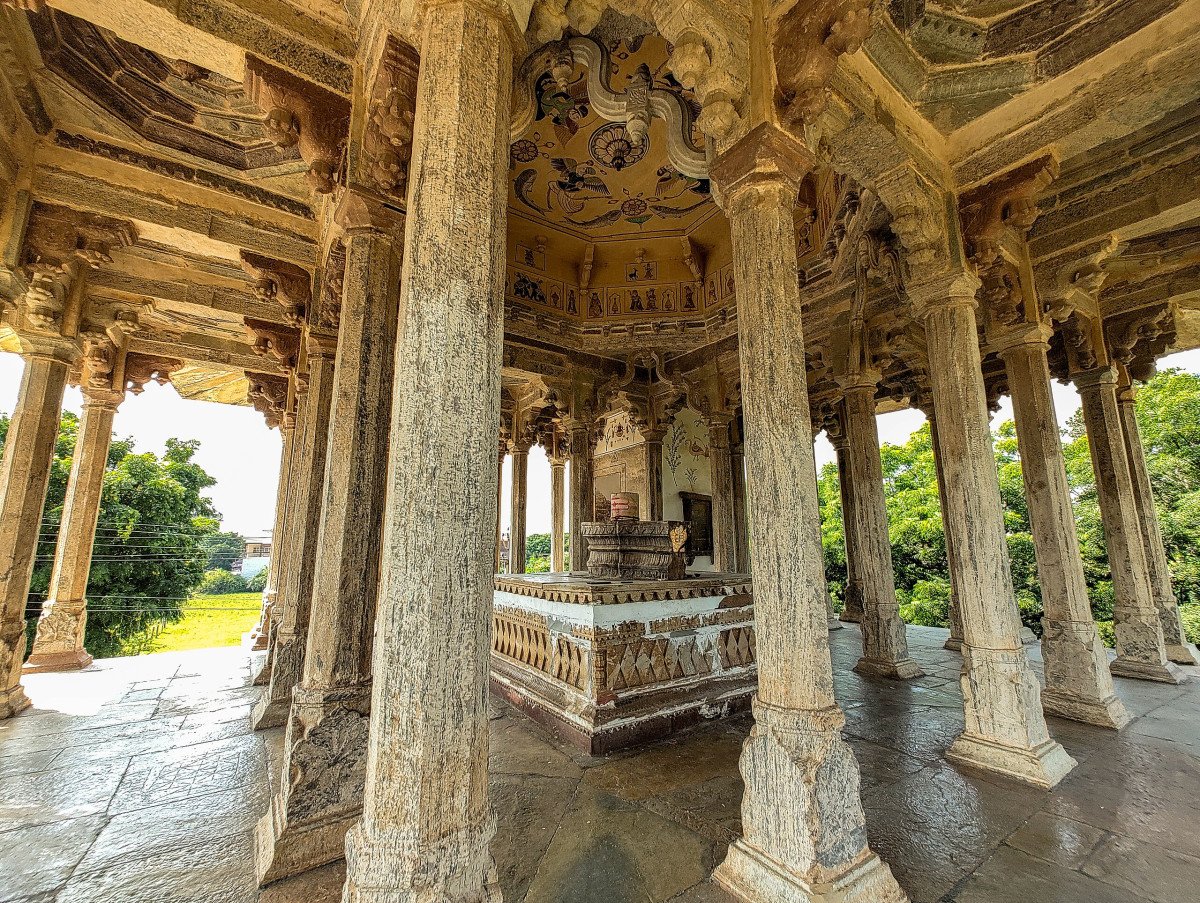
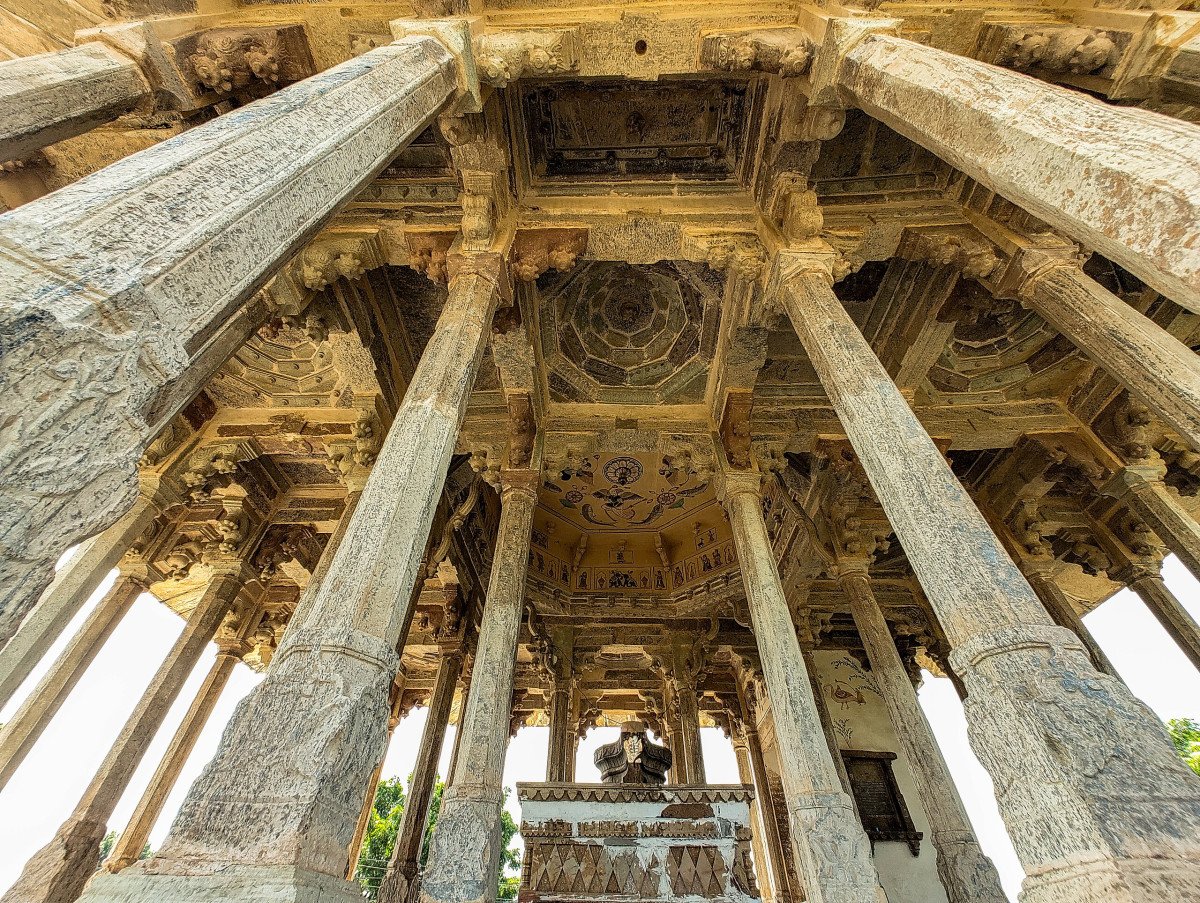
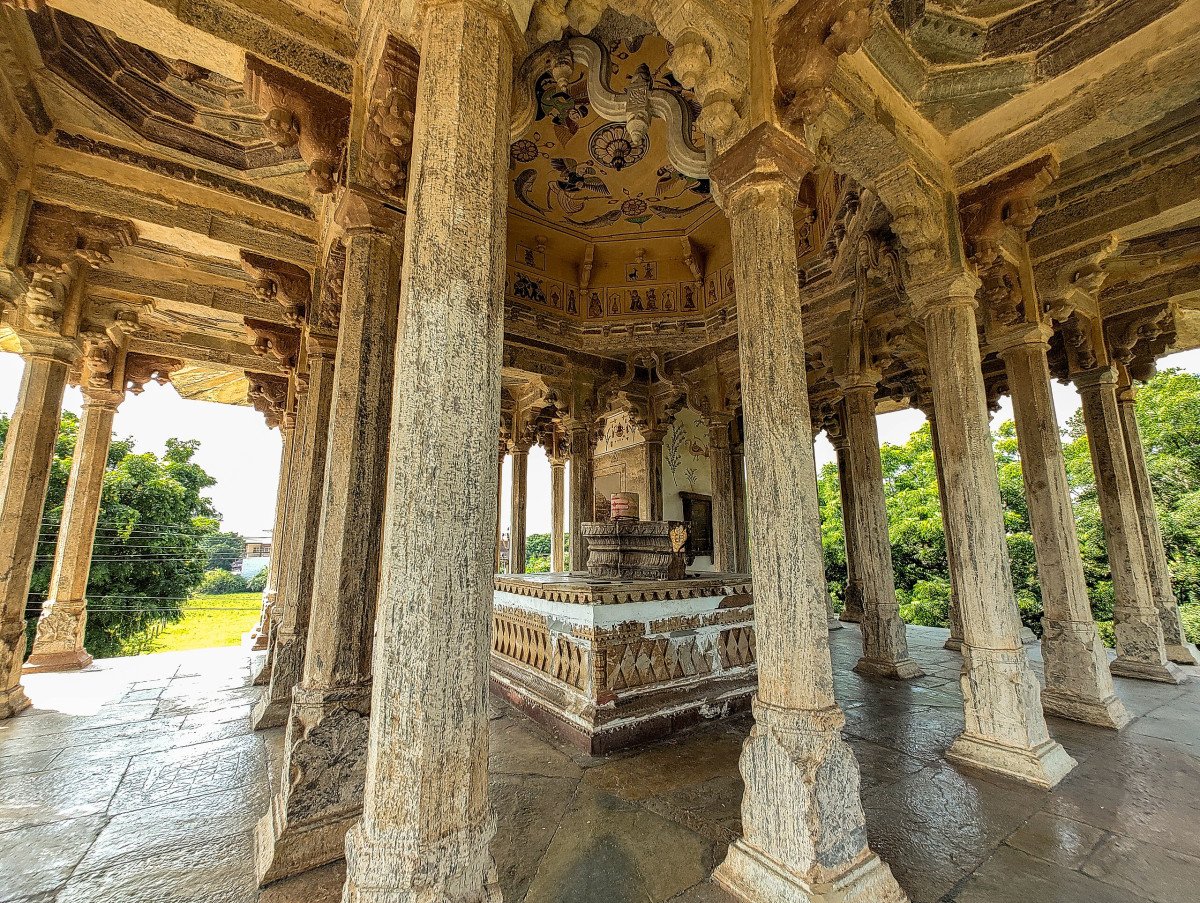
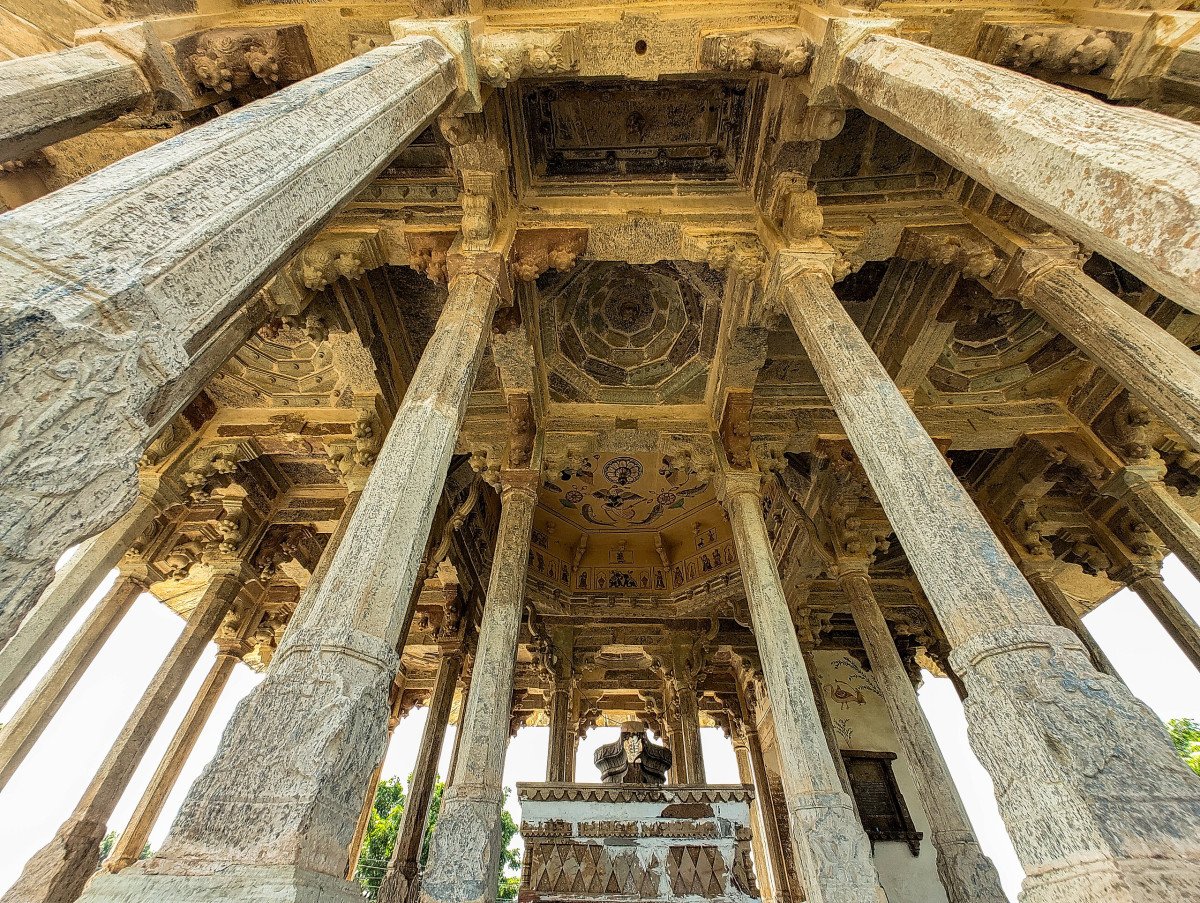
The Pillar Aisle: Position yourself at the entrance to one of the central aisles of pillars and use the columns to create a stunning, repetitive visual tunnel effect. This shot emphasizes the rhythmic, architectural geometry of the monument.
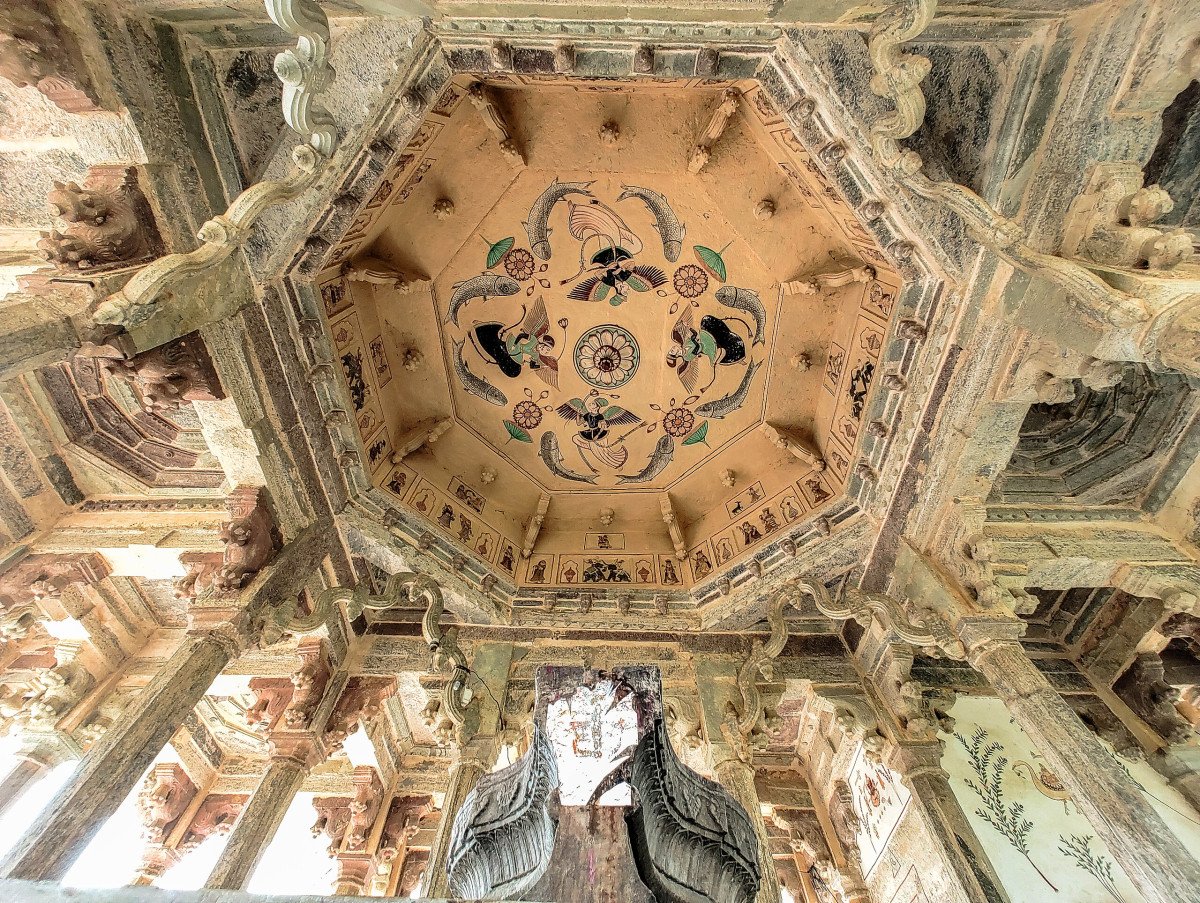
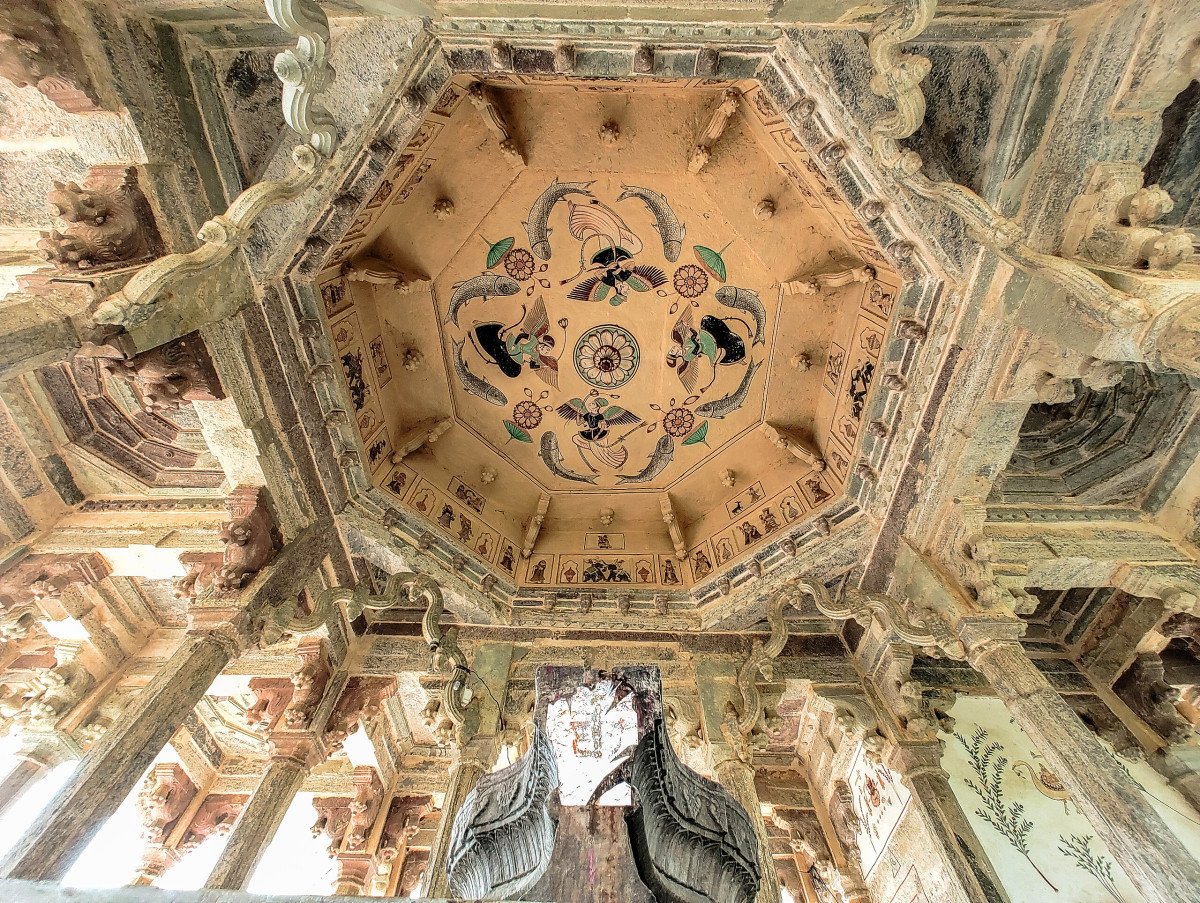
The Carvings Detail: Use a zoom lens or a close-up setting to capture the minute, intricate relief carvings on the pillars and the ceiling of the upper story. Focus on the expressions of the deities or the dynamism of the animal figures to highlight the craftsmanship.
The Central Shrine: A photo of the Shiva Lingam framed by the surrounding pillars and the light filtering in from the open sides can create a very atmospheric, contemplative image, capturing the spiritual essence of the place.Photo Gallery
Things To Do
-
Count and Appreciate the Pillars: The most essential activity is to appreciate the structural and symbolic significance of the 84 pillars. Walk around the perimeter and through the center to feel the density and rhythmic placement of the columns. Try to count them (though the count of 84 is historically confirmed, it's a fun exercise!) and appreciate the architectural complexity.
Examine the Intricate Relief Carvings: Spend time on a detailed examination of the relief carvings on the pillars and the lower walls. Look for specific mythological scenes, the detailed carvings of animals like the elephants and peacocks, and the subtle depictions of dancers and musicians. The monument is an open-air sculpture gallery; take a photo of your favorite detailed carving.
Visit the Upper Story: Locate ...
Information
-
Why Famous:
The Architectural Feat of 84 Pillars: The number 84 is the key to its fame. The monument is unique because of its exact and symbolically significant 84-pillar construction. The number 84 holds deep importance in Hindu and Jain cosmology, representing the cycle of ...
The Architectural Feat of 84 Pillars: The number 84 is the key to its fame. The monument is unique because of its exact and symbolically significant 84-pillar construction. The number 84 holds deep importance in Hindu and Jain cosmology, representing the cycle of 8. 4 million birth-death cycles (Chaurasi Lakh Yoni). The monument is famous as an architectural and engineering marvel where the intricate design is based on this sacred number, creating a perfect example of harmony between structure and spiritual symbolism.
A Monument of Devotion and Loyalty: Its fame is amplified by the poignant historical context of its construction. Maharao Raja Anirudh Singh built this grand structure not for a king or queen, but for his foster brother, Deva. This act is a celebrated example of extraordinary loyalty, love, and respect that transcended royal rank and blood relations in the Rajput culture, making the site emotionally resonant.
Exquisite Carvings and Artistry: The level of sculptural detail on the pillars, ceilings, and walls contributes significantly to its reputation. The monument is a repository of Rajput art from the 17th century, showcasing scenes from Hindu mythology and court life with great finesse, rivaling the carvings found in larger temples. -
Architecture:
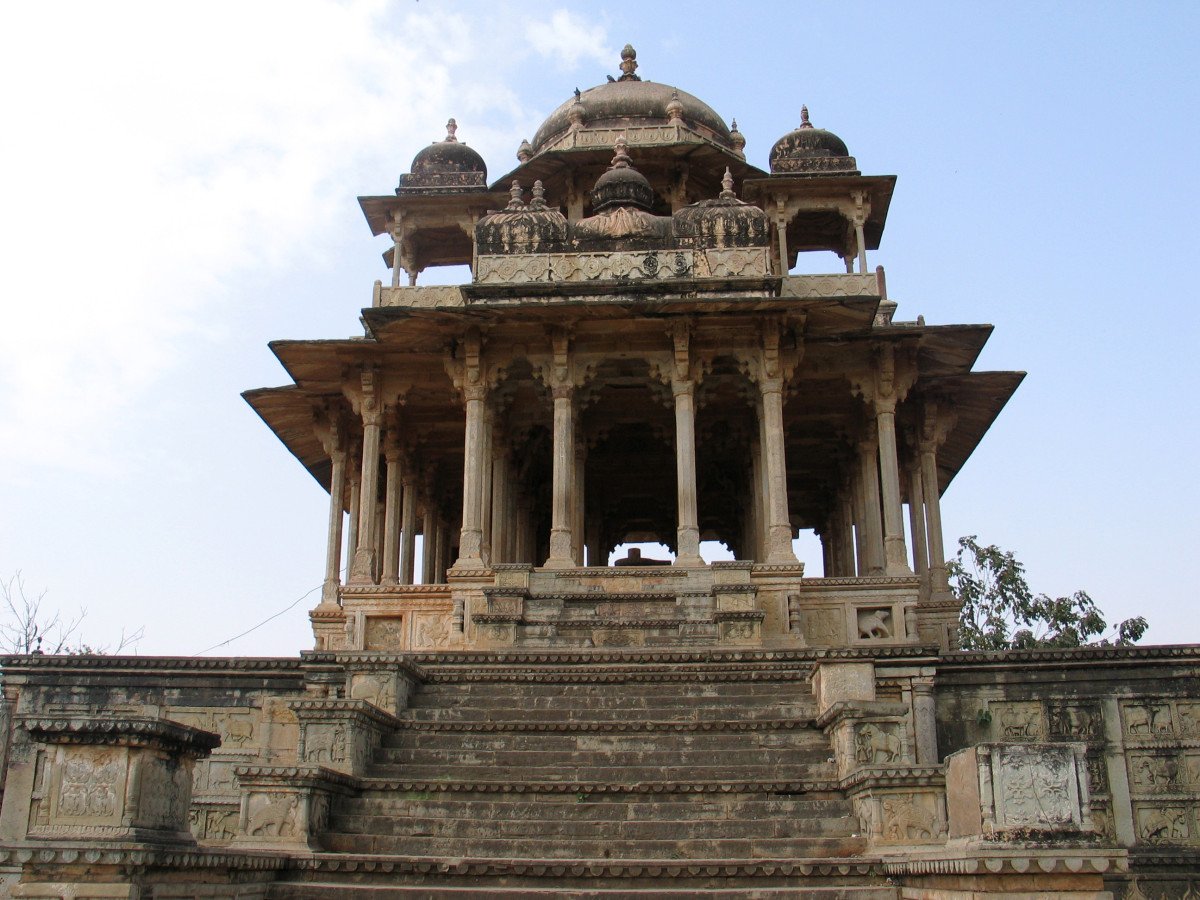
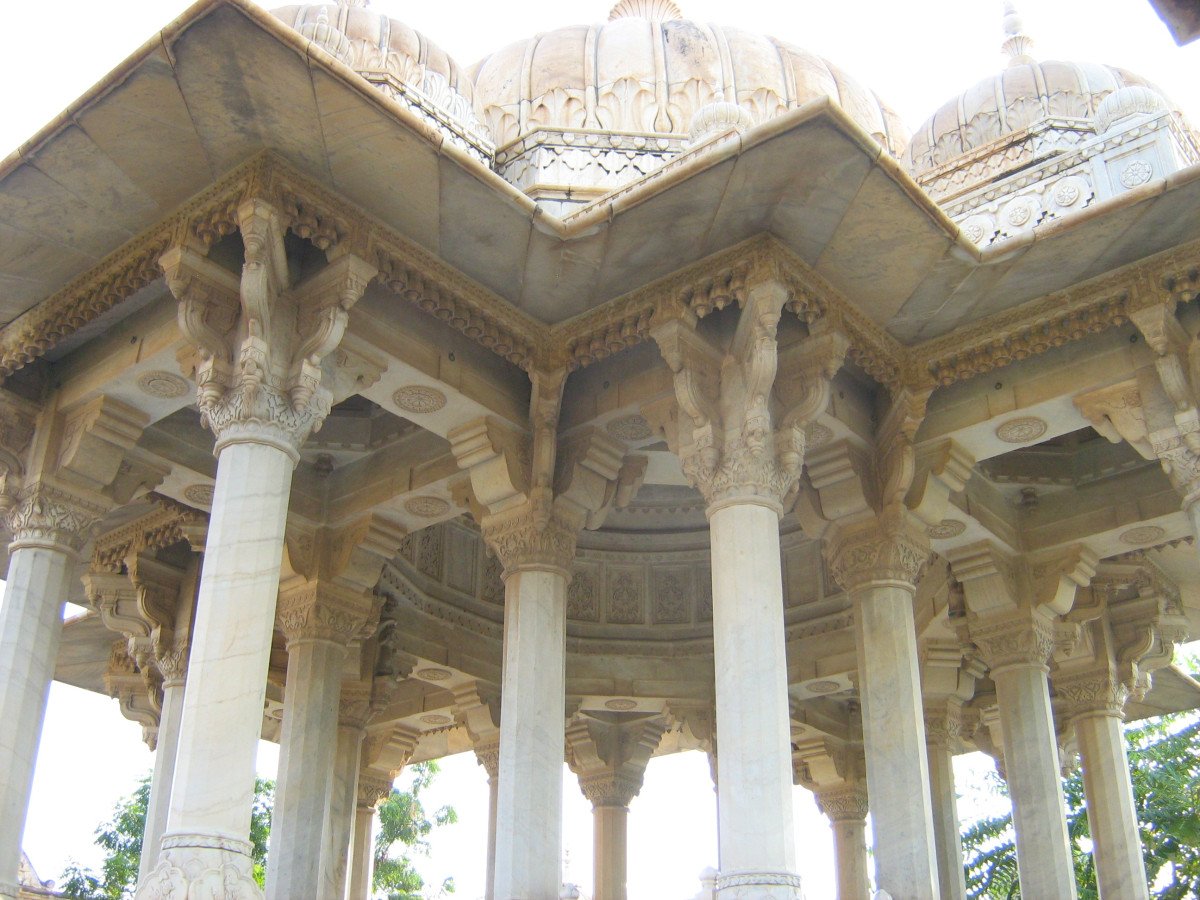
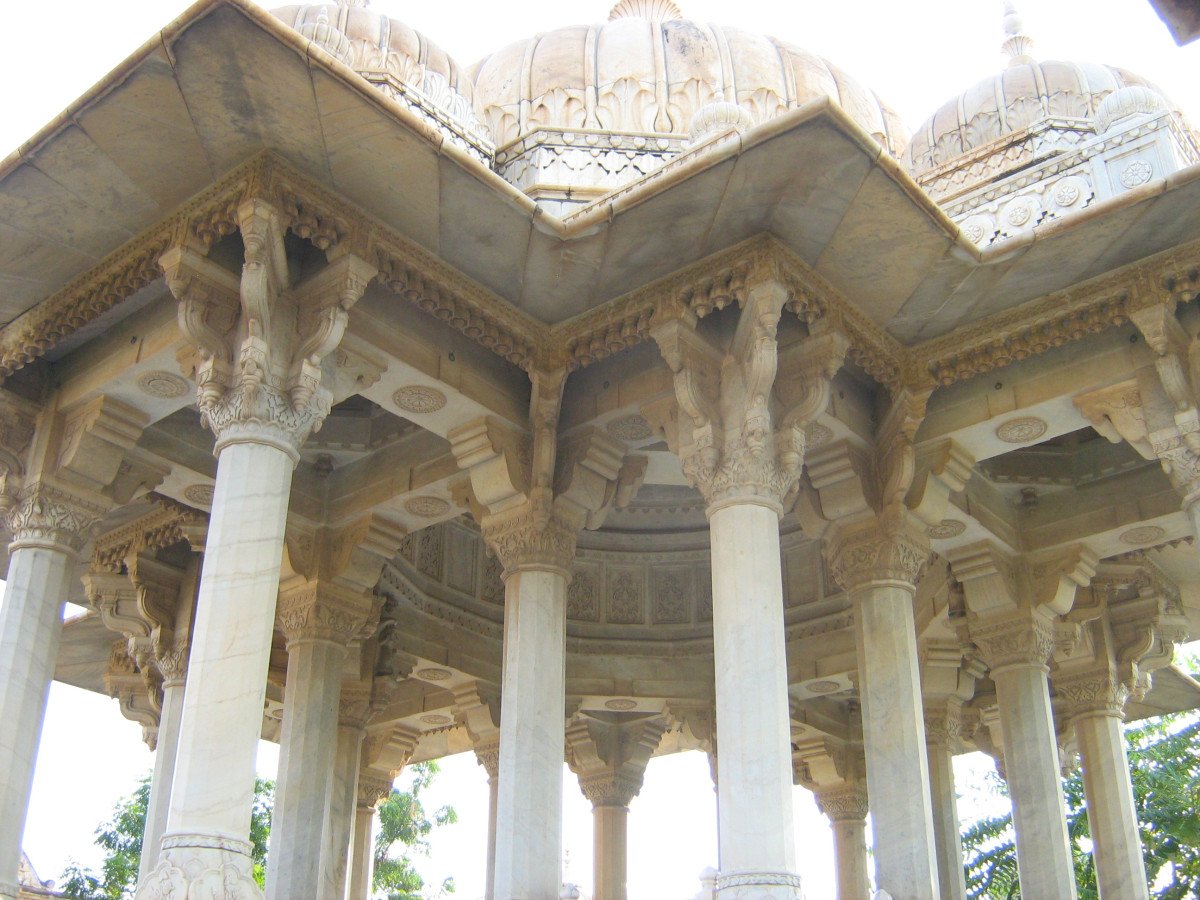
The 84 Pillars and Structural Harmony: The central architectural element is the precise count of 84 pillars. These pillars are arranged in a multi-tiered layout, supporting the two-story structure and the large central dome. The pillars are not all uniform in size; their ...The 84 Pillars and Structural Harmony: The central architectural element is the precise count of 84 pillars. These pillars are arranged in a multi-tiered layout, supporting the two-story structure and the large central dome. The pillars are not all uniform in size; their variation and placement create a sense of symmetry and rhythm. The structural genius lies in distributing the weight of the heavy stone roof and dome across this network of columns, creating an open, airy, yet incredibly stable pavilion.
Detailed Stonework and Mythology: The entire structure is made of sandstone, and the pillars and surrounding walls are heavily adorned with intricate relief carvings.
These carvings depict a wide range of subjects:
Mythological Scenes: Including stories from Hindu epics and Puranas, such as the life of Lord Krishna.
Fauna: Detailed carvings of elephants, horses, and various animals.
Deities: Sculptures of Hindu gods and goddesses.
Figurines: Depictions of dancers, musicians, and courtly life. The dome's interior ceiling is also finely carved, adding to the monument's aesthetic richness.
Memorial and Religious Function (Dimension): The cenotaph is essentially a memorial pavilion, open on all sides, allowing light and air to pass through freely. The ground level features a large Shiva Lingam, confirming its dual role as a memorial and a temple dedicated to Lord Shiva. The overall footprint is a large square, with the central pavilion standing as the focal point. While specific dimensions vary, the entire structure is grand enough to house the 84 pillars without feeling crowded. The surrounding garden setting is an intentional architectural feature, creating a serene, respectful ambiance. -
How To Reach:
By Air: The nearest major airport is Jaipur International Airport (JAI), about 210 KMS away. The limited-service Kota Airport (KTU) is closer, about 35 KMS away. From either, the rest of the journey to Bundi is by road.
By Train: The ceno... -
Near Tourist Places:
1.
Raniji ki Baori (Queen's Stepwell): 3 KMS 2.
Sukh Mahal (Summer Palace): 7 KMS 3.
Bundi Palace/Taragarh Fort: 5 KMS 4.
Dhabhai Kund (Stepwell): 4 KMS 5.
Kshar Bagh (Royal Cenotaphs): 7 KMS 6.
Sadar Bazaar (Main Market): 5 KMS 7.
Sardar Pura Market: 2 KMS 8.
Nawal Sagar Lake: 5 KMS 9.
Jait Sagar Lake: 7 KMS 10.
Kota City: 30 KMS
Tourism Tips
-
Health & Safety:
Walkways: The monument is on flat ground, but be mindful of uneven stone flooring around the pillars.
Stay Hydrated: Carry water, as there are limited facilities on-site.
Read More
Reviews
Chaurasi Khambon ki Chhatri Tourism:-
Information about New and Updated Locations(675+) of Rajasthan Has Been Added :-
Card subtitle
Note:-
Information provided here in good Faith and for reference only.
All information and pictures will be updated soon, please keep visiting.
Near Places
Chaurasi Khambon ki Chhatri
Some quick example text to build on the card title and make up the bulk of the card's content.
Go somewhere
Raniji Ki Baori
Some quick example text to build on the card title and make up the bulk of the card's content.
Go somewhere
Taragarh Fort and Bundi Palace
Some quick example text to build on the card title and make up the bulk of the card's content.
Go somewhere
84 Pillared Cenotaph
Some quick example text to build on the card title and make up the bulk of the card's content.
Go somewhere
Anarkali Ki Bawadi
Some quick example text to build on the card title and make up the bulk of the card's content.
Go somewhere
Badal Mahal
Some quick example text to build on the card title and make up the bulk of the card's content.
Go somewhere
Bhoraji-ka-Kund
Some quick example text to build on the card title and make up the bulk of the card's content.
Go somewhere
Bundi Kala Ji Ki Bavdi
Some quick example text to build on the card title and make up the bulk of the card's content.
Go somewhere
Bundi View Point
Some quick example text to build on the card title and make up the bulk of the card's content.
Go somewhere
Chhattra Mahal
Some quick example text to build on the card title and make up the bulk of the card's content.
Go somewherein Other Cities