
84 Pillared Cenotaph
General information
-
Ideal Duration:
1 hour (Time to explore the structure and admire the carvings).Place Type:
Historical Monument, Cenotaph, Architecture, TemplEntry Fees:
Standard Entry Fee and Combo Ticket: The 84 Pillared Cenotaph typically has a very small, nominal entry fee for Indian citizens and a slightly higher fee for foreign tourists. This fee is managed by the State Archaeology Department or a local trust. Fee Structure Example...Standard Entry Fee and Combo Ticket: The 84 Pillared Cenotaph typically has a very small, nominal entry fee for Indian citizens and a slightly higher fee for foreign tourists. This fee is managed by the State Archaeology Department or a local trust. Fee Structure Example (as per past data, check local signboards for current rates): Indian Tourists may pay around Rs.50 per person. Foreign Tourists may pay a higher fee.
Combo Ticket Advantage: The entry is often included in a composite ticket that covers several key Bundi attractions, such as Raniji Ki Baori and Sukh Mahal. If you plan to visit these other sites, purchasing the combo ticket is cost-effective and highly recommended.
Cost of Photography and Videography: For simple personal photography using a camera or smartphone, the entry fee usually covers the right to take pictures.
Commercial Use: Similar to other historical sites, professional or commercial videography may require a separate, substantial fee and prior government permission.
Still Camera Fee: Sometimes, a small extra fee (e. g. , Rs.20-50) may be levied for carrying a camera, though this practice is becoming less common.
Revenue for Maintenance: The entry fees, though small, are crucial for the maintenance and preservation of this ancient structure. Visitors should consider the fee as a contribution to the upkeep of a significant piece of Indian heritage.Timing:
Regular Timings - Fixed Hours: The 84 Pillared Cenotaph operates under regular, fixed timings for visitors, usually from the late morning until the late afternoon.
Standard Operating Hours: Generally 9:30 AM to 5:00 PM daily. It is essent...Regular Timings - Fixed Hours: The 84 Pillared Cenotaph operates under regular, fixed timings for visitors, usually from the late morning until the late afternoon.
Standard Operating Hours: Generally 9:30 AM to 5:00 PM daily. It is essential to check the timing before your visit, as they are strictly enforced. Arrive at least 45 minutes before closing time to ensure a proper visit.
Ideal Visit Time - Morning Calm: The Ideal Time to visit is during the early opening hours, between 9:30 AM and 11:00 AM.
Benefits: You avoid the peak mid-day heat of Rajasthan, and the monument is generally less crowded. The soft morning light is perfect for appreciating the intricate carvings on the pillars without harsh shadows.
Photography Advantage: The diffused morning light entering the pillared hall allows for subtle shadow play and highlights the depth of the carvings.
Afternoon Visit Considerations: A visit in the late afternoon (around 3:30 PM to 5:00 PM) is also pleasant as the temperature begins to drop. However, you must manage your time carefully to complete the exploration before the 5:00 PM closing time.Special Events:
Shivratri Celebrations: As the monument houses a Shivling, the festival of Maha Shivratri (the great night of Shiva, usually in February or March) is the most important annual special event. On this day, the cenotaph transforms into a bustling local temple. Devotees gather...Shivratri Celebrations: As the monument houses a Shivling, the festival of Maha Shivratri (the great night of Shiva, usually in February or March) is the most important annual special event. On this day, the cenotaph transforms into a bustling local temple. Devotees gather for special pujas, aartis, and religious processions. The entire cenotaph is beautifully decorated with lights and flowers, offering a vibrant, spiritual atmosphere that contrasts with its usual quietude. The observance provides a powerful experience of local religious fervor centered around the patron deity.
Local Fairs (Melas): Occasionally, due to its spacious surrounding area, the Cenotaph's grounds host small, local fairs (melas) or cultural gatherings, often tied to regional agricultural or harvest festivals. These events are not fixed tourist calendar items but offer a spontaneous opportunity to witness rural Rajasthani culture, traditional music, local craftsmanship, and street food. These are true hidden cultural gems, providing a window into the everyday life of the communities near Devpura.Best Photo Spots:
The Wide-Angle Pillar Array: The most classic photograph is a wide-angle shot taken from the entrance of the ground floor. This viewpoint captures the overwhelming symmetry and density of the 84 pillars, creating a mesmerizing, almost endless perspective of stone columns re...The Wide-Angle Pillar Array: The most classic photograph is a wide-angle shot taken from the entrance of the ground floor. This viewpoint captures the overwhelming symmetry and density of the 84 pillars, creating a mesmerizing, almost endless perspective of stone columns receding into the distance.
Best Time: Mid-morning or mid-afternoon, when the light is high enough to illuminate the carvings inside the pavilion.
Composition Tip: Use the pillars as natural leading lines to draw the viewer's eye into the depth of the structure.
The Base Carving Macro Shots: Focusing on the platform's exterior carvings provides excellent close-up photo opportunities. These shots capture the detailed artistry often missed in the grandeur of the overall structure. Look for the lively and dynamic depictions of elephants and dancers.
Best Time: Any time of the day with good, diffused natural light (e. g. , partly cloudy sky) to minimize harsh shadows on the fine details.
Composition Tip: Use a macro lens or the macro function on a phone/camera to focus tightly on the intricate details, making the background soft (bokeh effect).
The Two-Tier Elevation Shot: Capture the full two-storey height and the contrasting dome structure by standing slightly back from the main platform. This view showcases the engineering marvel of how the 84 pillars support the entire weight.
Best Time: Late afternoon, as the setting sun casts warm light on the facade, defining the shadows and architectural lines of the two tiers and the domes.
Composition Tip: Include the steps leading up to the platform to give a sense of scale and elevation.Photo Gallery

Things To Do
-
Counting and Examining the 84 Pillars: The most engaging activity is attempting to count all 84 pillars. It is a playful local tradition and a fun challenge for visitors. Take the time to not just count, but to closely examine the unique carvings on each pillar. Each one is a small, individual masterpiece, depicting different figures, scenes, and motifs. Look for repeating patterns and unique elements, which can take a considerable amount of time to fully appreciate.
Detailed Sculpture and Carving Photography: The cenotaph is an absolute paradise for macro and detail photography. Focus your lens on the intricate carvings on the pillars, the platform base, and the ceiling.
Subjects: Capture the dancing figurines, the depiction of elephants and deer, and mythological scenes.
Information
-
Why Famous:
The Enigmatic Number 84:
The cenotaph's primary fame stems from its name: the 84 Pillared Cenotaph. The number 84 is not random; it is highly symbolic in Hinduism, representing the 84 lakh (8. 4 million) cycles of birth and rebirth. The challenge of counting the...The Enigmatic Number 84:
The cenotaph's primary fame stems from its name: the 84 Pillared Cenotaph. The number 84 is not random; it is highly symbolic in Hinduism, representing the 84 lakh (8. 4 million) cycles of birth and rebirth. The challenge of counting the pillars and the deeper spiritual meaning behind this specific number draw curiosity and visitors from around the world. The architectural feat of having 84 intricately carved pillars support a two-story structure is a testament to the engineering and artistic excellence of the time.
A Tribute to Foster Brotherhood: The unique historical context of the cenotaph significantly contributes to its fame. It was built by a powerful ruler, Rao Raja Anirudh Singh, in memory of his foster brother, Deva Gujjar. This act of dedication to a non-royal kinsman showcases the deep familial bonds and high regard for loyalty and service in the Rajput court, making it a rare and moving monument of personal tribute rather than just royal lineage.
Artistic and Sculptural Excellence: The monument is an exquisite showcase of Rajput sculptural art. Every pillar and the base platform are adorned with detailed carvings depicting stories of gods, goddesses, mythical animals, and courtly life. These carvings are invaluable historical records, providing insight into the fashion, mythology, and social life of 17th-century Bundi. -
Architecture:
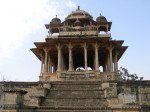
The Chhatri Style and Rajput Craftsmanship: The monument is a quintessential example of the Chhatri (Cenotaph) style of architecture, prominent in Rajasthan. It is a two-storeyed structure built on a high podium, or jagati, which elevates the pavilion and gives it a command...The Chhatri Style and Rajput Craftsmanship: The monument is a quintessential example of the Chhatri (Cenotaph) style of architecture, prominent in Rajasthan. It is a two-storeyed structure built on a high podium, or jagati, which elevates the pavilion and gives it a commanding presence. The style blends memorial architecture with a temple-like structure, as evidenced by the Shivling housed inside. The material used is primarily local sandstone. The craftsmanship is highly detailed, featuring elaborate carvings of elephants, dancing figures, deities, and mythological scenes on the pillars and the base platform. The architecture beautifully narrates the culture and beliefs of the 17th-century Rajput era.
Pillar Count and Dome Structure (Dimensions): The most famous architectural feature is the precise count of 84 Pillars supporting the structure. On the ground level, there is a complex arrangement of pillars forming the main hall. The first floor features a central, large, peeled-orange-shaped dome supported by 16 pillars, surrounded by four smaller domes at the corners, each resting on a set of smaller pillars.
Structure Height: The cenotaph stands as tall as a three-storey building on its elevated platform.
Pillars: 84 in total. The arrangement and spacing are geometrically precise to bear the weight of the two-tier structure.
Dome: The main dome is large and hemispherical, resting on the upper floor, with four smaller, corner domes, a classic representation of Rajput royal funeral architecture. -
How To Reach:
By Air: The primary access airport is Jaipur International Airport (JAI), which is approximately 210 km away. Alternatively, travelers can fly into the limited-service Kota Airport (KTU), which is closer at about 35-40 km. From Jaipur Airport, you can hire a private taxi ... -
Near Tourist Places:
S. No. Other Place Name Distance from 84 Pillared Cenotaph
: 1 Dhabhai Kund Approx. 3. 5 km 2 Raniji Ki Baori (Queen's Stepwell) Approx. 4 km 3 Nawal Sagar Lake Approx. 5 km 4 Bundi Palace (Garh Palace) Approx. 5. 5 km 5 Taragarh Fort Approx. 6. 5 km 6 Sukh Mahal (Summer Palace) Approx. 7 km 7 Jait Sagar Lake Approx. 7. 5 km 8 Chitrashala Approx. 5. 6 km 9 Bhoraji ka Kund (Stepwell) Approx. 3 km 10 Sadar Bazaar (Main Market) Approx. 4. 8 km
Tourism Tips
-
Health & Safety:
Footwear: Wear comfortable, slip-resistant shoes. You may be asked to remove your shoes before stepping onto the main platform as a sign of respect, especially since it contains a Shivling.
St...
Reviews
84 Pillared Cenotaph Tourism:-
Information about New and Updated Locations(675+) of Rajasthan Has Been Added :-
Card subtitle
Note:-
Information provided here in good Faith and for reference only.
All information and pictures will be updated soon, please keep visiting.
Near Places
Chaurasi Khambon ki Chhatri
Some quick example text to build on the card title and make up the bulk of the card's content.
Go somewhere
Raniji Ki Baori
Some quick example text to build on the card title and make up the bulk of the card's content.
Go somewhere
Taragarh Fort and Bundi Palace
Some quick example text to build on the card title and make up the bulk of the card's content.
Go somewhere
84 Pillared Cenotaph
Some quick example text to build on the card title and make up the bulk of the card's content.
Go somewhere
Anarkali Ki Bawadi
Some quick example text to build on the card title and make up the bulk of the card's content.
Go somewhere
Badal Mahal
Some quick example text to build on the card title and make up the bulk of the card's content.
Go somewhere
Bhoraji-ka-Kund
Some quick example text to build on the card title and make up the bulk of the card's content.
Go somewhere
Bundi Kala Ji Ki Bavdi
Some quick example text to build on the card title and make up the bulk of the card's content.
Go somewhere
Bundi View Point
Some quick example text to build on the card title and make up the bulk of the card's content.
Go somewhere
Chhattra Mahal
Some quick example text to build on the card title and make up the bulk of the card's content.
Go somewherein Other Cities