Adyanpara Waterfalls
General information
-
Ideal Duration:
3-4 hoursPlace Type:
Waterfalls/Ecotourism/Nature/TrekkingEntry Fees:
Ecotourism Admission Fee: A nominal entry fee is charged, as the site is managed by the local Ecotourism Board. This fee is typically around ext{Rs.}30 to ext{Rs.}50 per person (as of late 2024), which is utilized entirely for the maintenance of pathways, safety measures,...Ecotourism Admission Fee: A nominal entry fee is charged, as the site is managed by the local Ecotourism Board. This fee is typically around ext{Rs.}30 to ext{Rs.}50 per person (as of late 2024), which is utilized entirely for the maintenance of pathways, safety measures, and environmental protection initiatives in the area.
Parking Fees: There is a separate, small charge for parking vehicles (cars, two-wheelers) near the entrance area.
Camera Fees: Generally, no specific camera fees are charged for non-commercial photography, but professional videography may require a permit from the Forest Department.Timing:
Regular Operating Hours: The falls area is typically open from 9:00 AM to 5:00 PM daily. Access is strictly controlled, and visitors are generally not allowed to stay after sunset for safety reasons due to the rugged terrain and wildlife.
Water...Regular Operating Hours: The falls area is typically open from 9:00 AM to 5:00 PM daily. Access is strictly controlled, and visitors are generally not allowed to stay after sunset for safety reasons due to the rugged terrain and wildlife.
Water Flow Restrictions: Access to the falls may be temporarily restricted or even closed during periods of extremely heavy rainfall (peak monsoon), as the water volume can become dangerously high. Checking the local weather report is advisable during the monsoon season.
Ideal Visit Time: The morning (9:00 AM to 12:00 PM) is the best time to visit to avoid the afternoon crowds and the intense sun. For the best water volume, plan your trip between July and November.Special Events:
Monsoon Tourism Inauguration: Every year, around the onset of the Monsoon season (typically in June), the local Ecotourism Promotion Council often organizes a small event to kickstart the "Waterfall Tourism Season," including local cultural performances or awareness programs...Monsoon Tourism Inauguration: Every year, around the onset of the Monsoon season (typically in June), the local Ecotourism Promotion Council often organizes a small event to kickstart the "Waterfall Tourism Season," including local cultural performances or awareness programs to highlight the environmental significance of the region.
Nature Camps and Treks: The Forest Department occasionally organizes structured nature camps and guided treks into the deeper forest regions of Kurumbalangode near Adyanpara, especially during the non-monsoon periods (November to February). These guided tours focus on wildlife, medicinal plants, and forest ecology.Best Photo Spots:
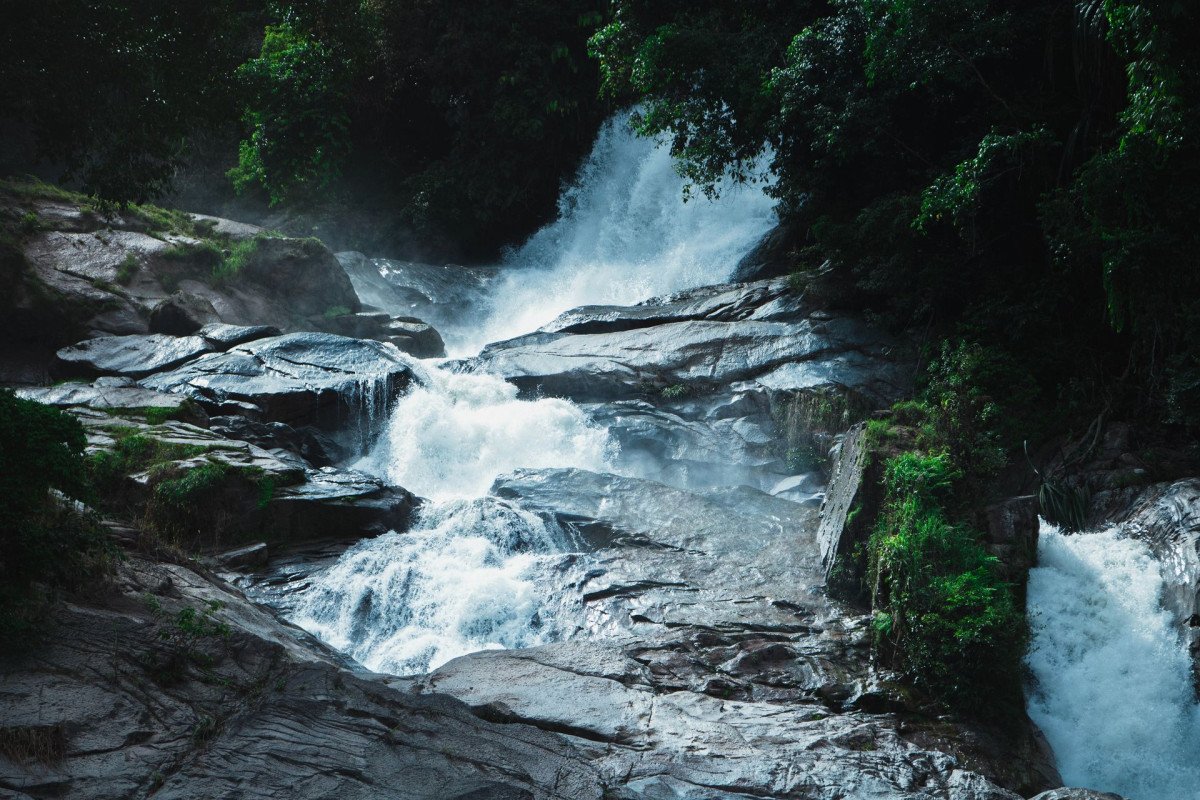
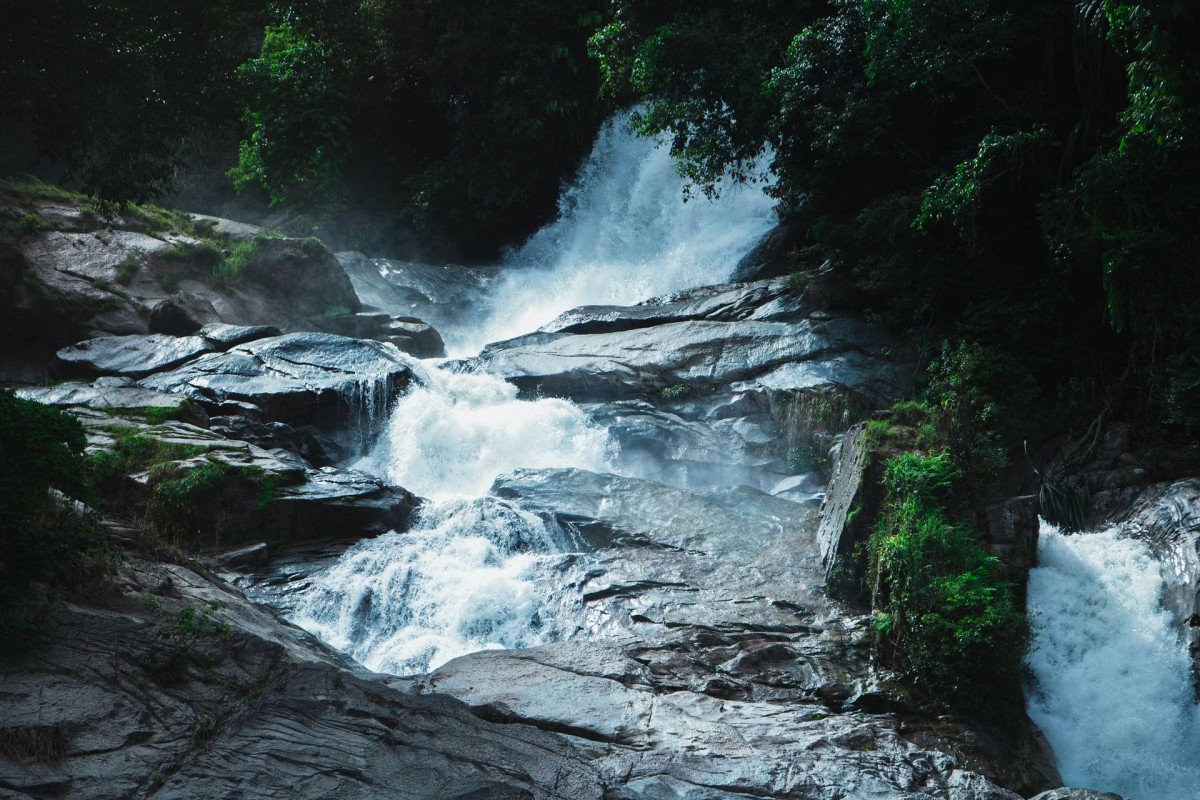
The Main Cascade Viewpoint: The large, flat rock area just opposite the final pool is the perfect spot to capture the entire tiered waterfall in a single frame, especially when the flow is heavy.
Close-up of Water Flow: Capture the detail of...The Main Cascade Viewpoint: The large, flat rock area just opposite the final pool is the perfect spot to capture the entire tiered waterfall in a single frame, especially when the flow is heavy.
Close-up of Water Flow: Capture the detail of the water as it froths and cascades over the smooth, dark rock layers, emphasizing the contrast between the white water and the green mossy stones.
The Footpath through the Forest: The winding, shaded path leading to the falls, surrounded by the lush green canopy, is ideal for portrait and nature detail photography, creating a frame that emphasizes the tropical location.
The Ecotourism Signboard: The simple wooden or stone signboard at the entrance, usually featuring a local map and the name Adyanpara Waterfalls, is a good spot for a standard tourist arrival photo.Photo Gallery
Things To Do
-
Waterfall Viewing and Photography: Spend time at the designated viewing points to appreciate the beauty of the cascade. This is the main activity and should be timed for the post-monsoon season for the best visual experience. The numerous rock layers offer excellent angles for creative photography.
Bathing in the Natural Pool: Enjoy a refreshing bath in the large, designated pool at the base of the falls. The water is cool and clean. Visitors must use caution and only enter areas marked as safe by the local authorities.
Short Nature Trekking: Engage in a short, supervised trek along the marked paths that wind through the dense forest surrounding the falls. These trails are excellent for observing the tropical foliage, medicinal plants, and the rich insect and birdlife of the area.
<...Waterfall Viewing and Photography: Spend time at the designated viewing points to appreciate the beauty of the cascade. This is the main activity and should be timed for the post-monsoon season for the best visual experience. The numerous rock layers offer excellent angles for creative photography.
Bathing in the Natural Pool: Enjoy a refreshing bath in the large, designated pool at the base of the falls. The water is cool and clean. Visitors must use caution and only enter areas marked as safe by the local authorities.
Short Nature Trekking: Engage in a short, supervised trek along the marked paths that wind through the dense forest surrounding the falls. These trails are excellent for observing the tropical foliage, medicinal plants, and the rich insect and birdlife of the area.
Bird Watching: Dedicate an hour to quiet observation in the forested area. Carry binoculars to spot endemic birds of the Western Ghats, capitalizing on the pristine ecological conditions of the Kurumbalangode forest.
Picnicking: The shaded areas and flat rocks near the base of the falls are perfect spots for a light picnic lunch, provided visitors ensure they take all waste back with them to maintain the site's cleanliness.
Information
-
Why Famous:
Monsoon Spectacle: Adyanpara is famous for being one of Malappuram's most beautiful and accessible monsoon waterfalls. The sheer volume and force of the water during the rains create a dramatic, unforgettable natural spectacle.
Pristine Ecotour...Monsoon Spectacle: Adyanpara is famous for being one of Malappuram's most beautiful and accessible monsoon waterfalls. The sheer volume and force of the water during the rains create a dramatic, unforgettable natural spectacle.
Pristine Ecotourism Site: The falls are renowned for the pristine, unpolluted nature of the surrounding forests and the clear water, thanks to the careful management by the local Ecotourism Board, making it a reliable destination for nature lovers.
Multi-Tiered Cascade: Unlike a single-drop waterfall, Adyanpara's multi-tiered structure allows for diverse viewing points and creates a dynamic, photographic display of water flowing and gathering in several natural pools.
Proximity to Nilambur: Its location near the forested, nature-rich belt of Nilambur adds to its fame as a key attraction in the region's ecotourism circuit. -
Architecture:
The "architecture" of Adyanpara is entirely natural and geological, shaped by centuries of water erosion acting on the underlying rock strata of the Western Ghats. The cascade is built on hard, crystalline rocks, possibly gneiss or granite, which have been polished smooth by the relentless flow of ...The "architecture" of Adyanpara is entirely natural and geological, shaped by centuries of water erosion acting on the underlying rock strata of the Western Ghats. The cascade is built on hard, crystalline rocks, possibly gneiss or granite, which have been polished smooth by the relentless flow of water. The falls feature multiple distinct layers and natural water slides created by the differing hardness of the rock. Human-made architecture is minimal, focusing on safety and access. The ecotourism project has implemented laterite stone walkways and steps leading to the main viewing and bathing areas, blending local materials with the environment. Simple, rustic bamboo or metal safety railings have been strategically placed on slippery slopes to prevent accidents while preserving the natural, rugged feel of the site. A small entrance gate and ticket counter, built with local wood and stone, mark the start of the trail. -
How To Reach:
By Air (Nearest Airport:
Calicut International Airport - CCJ): CCJ Airport is approximately 36 KMs from the Nilambur area. From the airport, hire a taxi to Nilambur Town and then proceed to Kurumbalangode/Adyanpara. The total journey time i...By Air (Nearest Airport:
Calicut International Airport - CCJ): CCJ Airport is approximately 36 KMs from the Nilambur area. From the airport, hire a taxi to Nilambur Town and then proceed to Kurumbalangode/Adyanpara. The total journey time is around 1. 5 hours.
By Train (Nearest Station:
Nilambur Road Railway Station - NIL): The Nilambur Road Railway Station (NIL) is the most accessible railhead, located only about 15 KMs away. From NIL, frequent local bus services or auto-rickshaws are available to transport visitors to the village of Kurumbalangode, from where the final stretch to the falls is usually a short walk or auto ride.
By Road (Bus Connectivity): Take a bus to Nilambur Town (from Malappuram or Kozhikode). From Nilambur, there are local bus services that run to the nearby village of Kurumbalangode. Taxis and private vehicles can easily reach the designated parking area near the falls using the well-maintained road network. -
Weather and Best Time to Visit:
Best Season:
Post-Monsoon (September to November): This brief window is the absolute best time. The heavy rains have stopped, the trails are drying out, and the waterfalls are still roaring with the maximum volume of water, creating the most...Best Season:
Post-Monsoon (September to November): This brief window is the absolute best time. The heavy rains have stopped, the trails are drying out, and the waterfalls are still roaring with the maximum volume of water, creating the most spectacular visual display. The forest is also at its lushest and cleanest.
Secondary
Best Season:
Winter (December to February): The flow will be reduced compared to the monsoon, but the weather is excellent for trekking and nature walks. The air is cool and dry, making the entire experience comfortable.
Time to Avoid: The intense peak of Summer (March to May) when the water flow can be reduced to a trickle, diminishing the visual impact of the cascade significantly. -
Near Tourist Places:
Nilambur Teak Museum (Educational/Forestry): 25 KMs
Conolly's Plot (Oldest Teak Plantation): 28 KMs Nedumkayam Rainforest (Ecotourism/Forest Rest House): 30 KMs
Kottakkunnu (Hilltop Park/History): 45 KMs
Aruvacode Pottery Village (Traditional Craft): 20 KMs
Kottakkal Arya Vaidya Sala (Ayurvedic Center): 50 KMs
Wayanad District Border (Hill Station): 30 KMs
Chaliyar River Boating (River Cruise): 18 KMs
Karimpuzha Wildlife Sanctuary (Core Forest Area): 55 KMs Silent Valley National Park (Biosphere Reserve - nearest access): 80 KMs (longer trip)
Manjeri Town (Commercial Center): 35 KMs
Tirunavaya Navamukunda Temple (Historical Temple): 65 KMs
Tourism Tips
-
Safety First at Waterfalls: Always follow the instructions of the ecotourism staff. Do not attempt to climb wet, mossy rocks or venture into deep, unmarked pools, especially during the monsoon when the current is strong. The rocks near the falls are notoriously slippery. ...Safety First at Waterfalls: Always follow the instructions of the ecotourism staff. Do not attempt to climb wet, mossy rocks or venture into deep, unmarked pools, especially during the monsoon when the current is strong. The rocks near the falls are notoriously slippery.
Respect the Ecotourism Rules: Since it is a protected ecotourism zone, do not litter or leave any plastic behind. Avoid plucking flowers or disturbing the local flora and fauna. Carry all waste back to the designated disposal points.
Footwear is Key: Wear sturdy, comfortable shoes with good grip for walking on the rugged and sometimes wet paths. Avoid open sandals or flip-flops.
Local Food and Amenities: There are minimal food and drink options right at the falls. It is advisable to eat a proper meal in Nilambur Town before or after your visit and carry only light snacks and water with you to the falls area.
Reviews
FAQs
Malappuram Itineray And Cost:-
Adyanpara Waterfalls Tourism:-
Information about New and Updated Locations() of Kerala Has Been Added :-
Card subtitle
Note:-
Information provided here in good Faith and for reference only.
All information and pictures will be updated soon, please keep visiting.
Near Places
Adyanpara Waterfalls
Some quick example text to build on the card title and make up the bulk of the card's content.
Go somewhere
Alathiyoor Hanuman Temple
Some quick example text to build on the card title and make up the bulk of the card's content.
Go somewhere
Arimbra Hills
Some quick example text to build on the card title and make up the bulk of the card's content.
Go somewhere
Biyyam Kayal
Some quick example text to build on the card title and make up the bulk of the card's content.
Go somewhere
Chaliyar River and Banks
Some quick example text to build on the card title and make up the bulk of the card's content.
Go somewhere
Conolly's Plot
Some quick example text to build on the card title and make up the bulk of the card's content.
Go somewhere
Kadalundi Bird Sanctuary
Some quick example text to build on the card title and make up the bulk of the card's content.
Go somewhere
Kakkadampoyil Waterfall
Some quick example text to build on the card title and make up the bulk of the card's content.
Go somewhere
Keraladeshapuram Temple
Some quick example text to build on the card title and make up the bulk of the card's content.
Go somewhere
Keralmkundu Waterfalls
Some quick example text to build on the card title and make up the bulk of the card's content.
Go somewherein Other Cities