
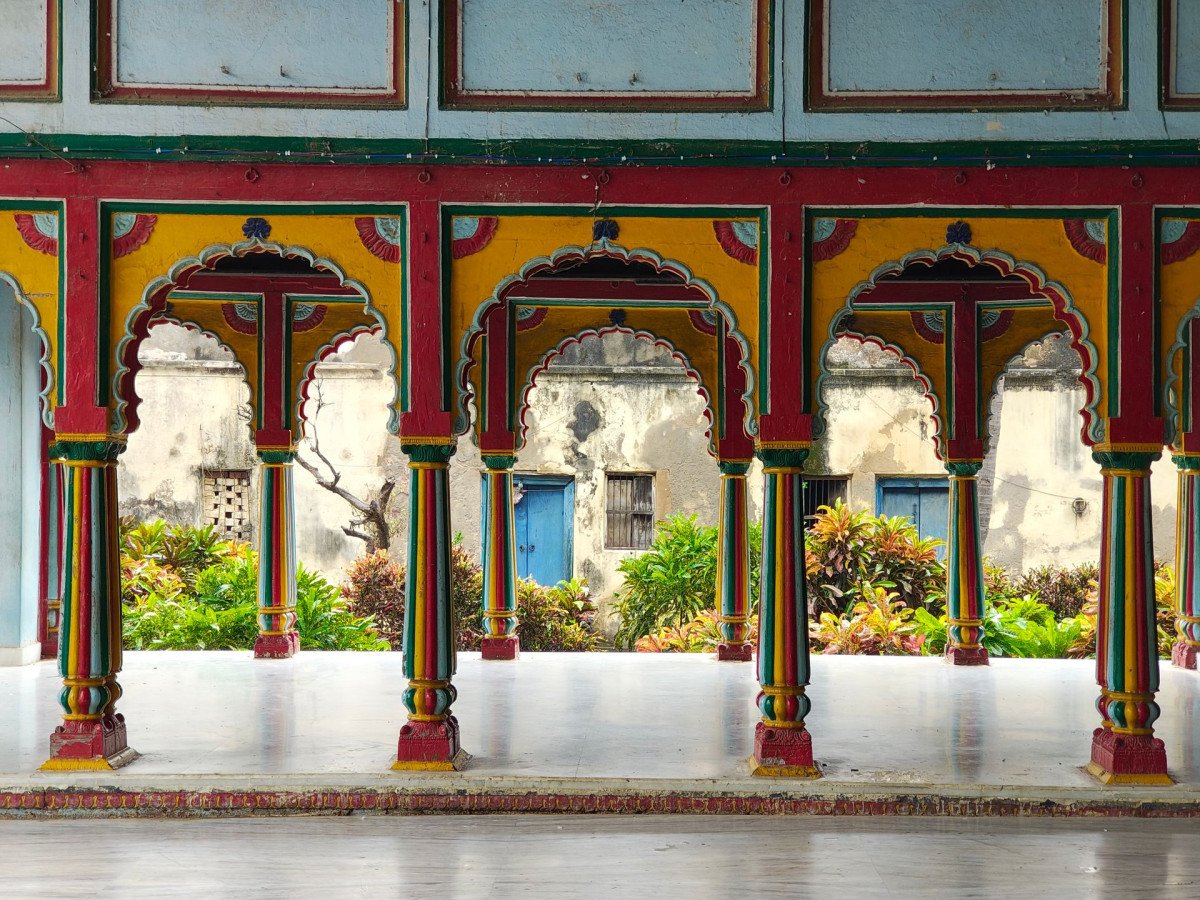
Amarpur Rajbari Ruins
General information
-
Ideal Duration:
1 to 2 HoursPlace Type:
Historical Ruins & Heritage SiteEntry Fees:
No Entry Fee: The ruins are currently open to the public without any charge.
Donations: Visitors are encouraged to support local heritage conservation efforts if they meet any authorized volunteers. ...No Entry Fee: The ruins are currently open to the public without any charge.
Donations: Visitors are encouraged to support local heritage conservation efforts if they meet any authorized volunteers.Timing:
Daylight Hours: Recommended visit between 07:00 AM to 05:00 PM.
Ideal Visit Time: Late Afternoon (03:00 PM to 04:30 PM) is the best time as the low sun creates long shadows that highlight the textures of the ruins. Avoid visiting after dar...Daylight Hours: Recommended visit between 07:00 AM to 05:00 PM.
Ideal Visit Time: Late Afternoon (03:00 PM to 04:30 PM) is the best time as the low sun creates long shadows that highlight the textures of the ruins. Avoid visiting after dark as the area is not well-lit.Special Events:
Heritage Awareness Day: Occasionally, local students and historians organize walks here to highlight the need for conservation.
Local Festivals: During major town festivals, the area around the ruins is often decorated with lights. ...Heritage Awareness Day: Occasionally, local students and historians organize walks here to highlight the need for conservation.
Local Festivals: During major town festivals, the area around the ruins is often decorated with lights.Best Photo Spots:
The Arched Doorway: A surviving arch framed by tree roots is the most iconic shot here.
Top-Down Foundation View: Captures the geometric layout of the palace.
Sunlight through Cracks: Catch the light beams ...The Arched Doorway: A surviving arch framed by tree roots is the most iconic shot here.
Top-Down Foundation View: Captures the geometric layout of the palace.
Sunlight through Cracks: Catch the light beams hitting the interior walls during the late afternoon.Photo Gallery
Things To Do
-
Historical Exploration: Walk through the ruins and try to identify the different sections of the palace.
Heritage Photography: The interplay of light, shadows, and tree roots against the old bricks makes for stunning artistic photos.
Sketching: The complex structures are a favorite for artists who enjoy drawing historical architecture.
Learning History: Read about King Amar Manikya before visiting to better appreciate the significance of the site.
Nature Observation: The ruins are home to various mosses, ferns, and small reptiles; it's a mini-ecosystem in itself.
Picnicking: The grassy areas near the ruins are quiet spots for a quick snack.
Meditation: The anci...Historical Exploration: Walk through the ruins and try to identify the different sections of the palace.
Heritage Photography: The interplay of light, shadows, and tree roots against the old bricks makes for stunning artistic photos.
Sketching: The complex structures are a favorite for artists who enjoy drawing historical architecture.
Learning History: Read about King Amar Manikya before visiting to better appreciate the significance of the site.
Nature Observation: The ruins are home to various mosses, ferns, and small reptiles; it's a mini-ecosystem in itself.
Picnicking: The grassy areas near the ruins are quiet spots for a quick snack.
Meditation: The ancient energy of the place is perfect for a quiet moment.
Guided Walks: If you find a local elder, they might share oral histories passed down through generations.
Bird Watching: Many birds nest in the high walls and old trees surrounding the ruins.
Exploring Nearby Temples: Combine your visit with the nearby Mangal Chandi shrine.
Information
-
Why Famous:
Royal Legacy: It is famous as the original seat of power for King Amar Manikya, who is a legendary figure in Tripura's history.
Archaeological Interest: It is one of the few places where visitors can see the actual ruins of a medieval Tripu...Royal Legacy: It is famous as the original seat of power for King Amar Manikya, who is a legendary figure in Tripura's history.
Archaeological Interest: It is one of the few places where visitors can see the actual ruins of a medieval Tripuri palace that hasn't been heavily restored, providing an authentic "lost city" vibe. -
Architecture:
Late Medieval Tripuri Style: The architecture of the Rajbari was characterized by the use of burnt bricks and lime-surkhi mortar.
Dimensions: The main palace complex originally covered several acres. Surviving wall sections stand up to 15 ...Late Medieval Tripuri Style: The architecture of the Rajbari was characterized by the use of burnt bricks and lime-surkhi mortar.
Dimensions: The main palace complex originally covered several acres. Surviving wall sections stand up to 15 feet high and are 2 to 3 feet thick, indicating a very sturdy construction. The ruins show evidence of arched doorways and vaulted ceilings, which were a blend of Mughal influence and local tribal aesthetics. The foundation blocks suggest that the palace had multiple levels and a central courtyard system for natural ventilation and light. -
How To Reach:
By Air: Fly to Agartala and travel by road for 2 hours (75 KMS).
By Train: Use Udaipur railway station as the nearest railhead (25 KMS).
By Road: Located a short distance from the Amarpur main market.
<...By Air: Fly to Agartala and travel by road for 2 hours (75 KMS).
By Train: Use Udaipur railway station as the nearest railhead (25 KMS).
By Road: Located a short distance from the Amarpur main market.
By Local Transport: An auto-rickshaw from the Amarpur bus stand will take you there in 5 minutes. -
Weather and Best Time to Visit:
Winter (November to February): Ideal for walking through the site without getting exhausted by heat.
Dry Season: Better for exploring as the ground is not muddy.
Time of Day: Morning for clarity and Late Af...Winter (November to February): Ideal for walking through the site without getting exhausted by heat.
Dry Season: Better for exploring as the ground is not muddy.
Time of Day: Morning for clarity and Late Afternoon for atmosphere. -
Near Tourist Places:
1. Amar Sagar (1 KMS), 2. Dighi (0. 8 KMS), 3. Chobimura (11 KMS), 4. Fatik Sagar (2. 5 KMS), 5. Udaipur (26 KMS), 6. Matabari (29 KMS), 7. Dumboor Lake (31 KMS), 8. Tirthamukh (36 KMS), 9. Neermahal (51 KMS), 10. Agartala (76 KMS)
Tourism Tips
-
Health & Safety: Watch your step as the ground is uneven and there may be loose bricks.
Packing: Wear sturdy shoes and bring a flashlight if you want to look into darker corners.
Accommodation: Stay at the ...Health & Safety: Watch your step as the ground is uneven and there may be loose bricks.
Packing: Wear sturdy shoes and bring a flashlight if you want to look into darker corners.
Accommodation: Stay at the Government Circuit House or nearby lodges.
Cash & Connectivity: Carry cash for local transport. Network is fine, but data speeds might be slow near the ruins.
Reviews
FAQs
Amarpur Itineray And Cost:-
Amarpur Rajbari Ruins Tourism:-
Information about New and Updated Locations() of Tripura Has Been Added :-
Card subtitle
Note:-
Information provided here in good Faith and for reference only.
All information and pictures will be updated soon, please keep visiting.
Near Places

Amar Sagar Lake
Some quick example text to build on the card title and make up the bulk of the card's content.
Go somewhere
Amarpur
Some quick example text to build on the card title and make up the bulk of the card's content.
Go somewhere
Amarpur Dighi
Some quick example text to build on the card title and make up the bulk of the card's content.
Go somewhere
Amarpur Rajbari Ruins
Some quick example text to build on the card title and make up the bulk of the card's content.
Go somewhere
Amarpur Town View
Some quick example text to build on the card title and make up the bulk of the card's content.
Go somewhere
Amarsagar Lake
Some quick example text to build on the card title and make up the bulk of the card's content.
Go somewhere
Amra Kali Temple
Some quick example text to build on the card title and make up the bulk of the card's content.
Go somewhere
Chabimura Cave & Rock Carvings
Some quick example text to build on the card title and make up the bulk of the card's content.
Go somewhere
Chabimura Cave/Rock Carvings
Some quick example text to build on the card title and make up the bulk of the card's content.
Go somewhere
Chabimura Riverfront Site
Some quick example text to build on the card title and make up the bulk of the card's content.
Go somewherein Other Cities