...

Regional Science Centre, Guwahati

Guwahati, Assam, India
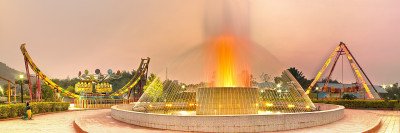
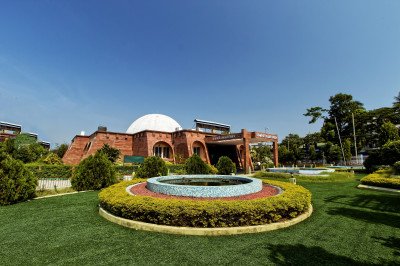
The Regional Science Centre (RSC) in Guwahati is a vital unit of the National Council of Science Museums (NCSM), under the Ministry of Culture, Government of India. Established in 1994, it was the first of its kind in the entire North-East region, with the primary goal of popularizing science and te chnology among the masses, especially the student community. It acts as an informal learning institution where science is not just read about but actively experienced. The centre is spread over a sizable area and is thoughtfully divided into several engaging sections, including interactive indoor galleries, an extensive outdoor Science Park, a Digital Planetarium, a Prehistoric Park, and a 3D Science Theatre. The design philosophy of the RSC is "Learning by Doing," which means most exhibits are interactive, encouraging visitors of all ages to touch, experiment, and discover scientific principles firsthand. The galleries cover a wide array of subjects like physics, optics, electricity, mathematics, and local themes related to the geography of Assam and the North-East. It regularly conducts various educational and outreach programs such as science shows, workshops, hobby camps, and sky observation programs, making it a continuous hub of scientific engagement. This place serves as an essential resource for teachers, students, and general visitors who wish to cultivate a scientific temper and explore the wonders of the universe in a fun and stimulating environment. The centre is well-maintained and provides a clean, safe, and enriching experience, making it a highly recommended spot for families and students visiting Guwahati. The presence of a vast green Science Park with large exhibits also makes it a great spot for a relaxed, educational outing. It is a place where complex scientific concepts are simplified into exciting, tangible experiences, thereby successfully bridging the gap between formal classroom teaching and real-world scientific phenomena.

General information

  • ...

    Ideal Duration:

    3 to 4 hours
  • ...

    Place Type:

    Science Museum, Education Centre, Planetarium, Fam
  • ...

    Entry Fees:

    General Admission Structure: The entry fee for the Regional Science Centre is generally quite affordable, as it is a government-run institution focused on public education. The fees are structured with multiple tiers to be more accessible, especially for student groups.
    General Admission Structure: The entry fee for the Regional Science Centre is generally quite affordable, as it is a government-run institution focused on public education. The fees are structured with multiple tiers to be more accessible, especially for student groups.

    General Visitor: The basic entry ticket for an individual is approximately Rs.45/- per head.

    Group Visitors: For large groups (typically 25 or more people), a discounted rate of around Rs.40/- per head is usually available.

    Organised School Groups: Significant discounts are provided for educational tours, with Organised Private School groups paying about Rs.30/- per head and Organised Government School groups paying even less, around Rs.25/- per head.

    Special Categories: There is generally a lower rate for BPL (Below Poverty Line) cardholders and often free entry for children below 5 years of age and physically challenged persons.

    Additional Charges for Special Shows: Importantly, the entry fee grants access to the main galleries and the Outdoor Science Park, but special attractions require separate, low-cost tickets:

    3D Film Show: This show typically costs around Rs.50/- for a General Visitor, with discounted rates for school groups. Science on a Sphere (SOS) / Digital Planetarium Show: The ticket for this immersive show is generally around Rs.50/- for a General Visitor, also with discounted rates for school groups.

    Super Cold Show / Science Show: These live demonstrations may have a nominal charge, often around Rs.25/- per head.

    Total Visit Cost: A general visitor who wishes to see all the main attractions (Entry + 3D Show + SOS Show) would spend approximately Rs.145/- (45 + 50 + 50) per person. It is advisable to purchase a combined ticket or all the necessary show tickets at the main counter upon arrival, as they may have limited seating and specific show times. Visitors should carry cash as sometimes digital payment options may be limited or slow. The low fees are part of the centre's mis
  • ...

    Timing:

    Regular Timings (Open Daily): The Regional Science Centre operates seven days a week to accommodate maximum visitors.

    Opening Time: 9:

    30 AM Closing Time: 6:00 PM (The main gate and exhibits close) Ticke...
    Regular Timings (Open Daily): The Regional Science Centre operates seven days a week to accommodate maximum visitors.

    Opening Time: 9:

    30 AM Closing Time: 6:00 PM (The main gate and exhibits close) Ticket Counter: The ticket counter typically closes about 30 minutes before the closing time, at 5:30 PM.

    Exceptions: The centre remains closed only on two major national festivals: Holi and Diwali.

    Ideal Visit Time (Crowd Management): The ideal time to visit depends on your preference for crowds and the type of experience you want.

    Best for a Peaceful Visit (Weekdays): Visiting on a Weekday (Monday to Friday, excluding public holidays) is highly recommended for a quieter and more relaxed experience. You will have more time to interact with the exhibits without waiting in long queues.

    Peak Time (Weekends and Holidays): Weekends (Saturday and Sunday) and school holidays see a significant rush of families and school groups. While the atmosphere is lively, the wait times for popular shows (like the 3D Theatre or Planetarium) will be much longer, and the indoor galleries can feel crowded.

    Morning Time is Best: Arriving right at the opening time, 9:30 AM, is the most strategic move. You can cover the indoor galleries and pre-book tickets for the first shows, avoiding the afternoon rush that typically builds up after 11:00 AM.

    Specific Show Timings: The special shows have fixed schedules that must be adhered to.

    3D Film Show: Shows are generally scheduled every hour or half-hour, for example, 11:30 AM, 12:30 PM, 2:30 PM, 3:30 PM, and 4:30 PM.

    Science on a Sphere/Planetarium: These often have 2-3 shows throughout the day, such as 12:00 PM and 3:00 PM.

    Super Cold Show/Science Demonstration: Typically scheduled for mid-day and late afternoon, e. g. , 11:00 AM and 4:00 PM.

    Pro Tip: Check the latest show timings posted at the entrance or on their website right after entry and plan your visit around your preferred shows.
  • ...

    Special Events:

    Hobby Camps and Workshops: The Regional Science Centre regularly organizes specialized Hobby Camps and workshops, particularly during school vacation periods like the Summer or Winter breaks.

    Focus on Skill Development: These camps are int...
    Hobby Camps and Workshops: The Regional Science Centre regularly organizes specialized Hobby Camps and workshops, particularly during school vacation periods like the Summer or Winter breaks.

    Focus on Skill Development: These camps are intensive, multi-day programs focused on specific scientific areas like robotics, rocketry, basic electronics, or nature studies. They are designed to provide in-depth, practical knowledge and skill development beyond the general exhibits.

    Targeted Audience: They are primarily aimed at school students (e. g. , Class VI to XII) and are highly effective in cultivating a deep interest in science. The enrolment for these camps is usually limited and announced on the centre's official website.

    Sky Observation Programmes: The centre often conducts Sky Observation Programmes, particularly when significant astronomical events are occurring, such as a prominent meteor shower, a close planetary alignment, or an eclipse, or simply on selected evenings.

    Telescope Use: These evening events allow the public to view celestial bodies like the Moon, planets, and far-off stars using the centre's telescope (often a 6-inch Refractive Telescope).

    Expert Guidance: Scientists and educators from the centre are present to guide the viewing, explain the celestial phenomena, and answer public queries, making it a unique and educational nighttime experience for all ages. National Science Day/Week Celebrations (February 28th): Being a unit of the National Council of Science Museums, the RSC celebrates National Science Day on February 28th every year with great enthusiasm.

    Special Programs and Contests: The celebration includes special lectures, science model competitions for students, interactive quizzes, and demonstrations, often focusing on a national theme.

    Increased Footfall: These periods see a significant increase in activities and visitors, making it a vibrant time to visit for a deep dive into science.
  • ...

    Best Photo Spots:

    The MIG-21 Fighter Jet at the Entrance: A major photo attraction is the real, decommissioned MIG-21 fighter jet mounted near the entrance or in the front lawn.

    Aviation and Military Backdrop: This impressive machine, donated by the Indian ...
    The MIG-21 Fighter Jet at the Entrance: A major photo attraction is the real, decommissioned MIG-21 fighter jet mounted near the entrance or in the front lawn.

    Aviation and Military Backdrop: This impressive machine, donated by the Indian Air Force, offers a powerful, historic, and dramatic backdrop for photographs. Posing in front of the jet provides a thrilling aviation-themed picture.

    Entrance Landmark: It also serves as the perfect photo to mark the start of your visit, instantly recognizable as the Regional Science Centre.

    Life-Sized Dinosaurs in the Prehistoric Park: The realistic, massive Dinosaur Models are arguably the most popular photo opportunity.

    Jungle Setting: The prehistoric park setting, with its trees and landscaping, offers a fun, wild backdrop, making it look like you've stepped into a lost world.

    Scale and Perspective: Get creative with photos by standing right next to the massive legs of a dinosaur or taking a picture with its huge jaws in the background to emphasize the scale.

    Whispering Dishes in the Outdoor Science Park: This exhibit isn't just a science tool but a great spot for fun, candid photography.

    The Act of Discovery: Capture candid shots of people leaning in to whisper or listening intently at the parabolic dishes. These pictures convey the spirit of learning and interaction that defines the centre.

    Architectural Elements: The large, smooth curves of the white dishes create a clean, modern, and visually striking geometric shape, offering an interesting photographic element against the green grass.

    Interactive Exhibits and Illusions: Inside the galleries, several interactive exhibits double as excellent photo spots.

    The Infinity Well: A well-like structure with mirrors that creates the illusion of infinite depth, providing a surreal and eye-catching photo.

    Distortion Mirrors: The fun-house-style mirrors that make you look tall, short, wide, or skinny are perfect for funny, lighthearted photos with friends and family.

    The Central Dome Structure: The dome of the Planetarium or the geometric patterns of the main building often serve as good architectural backdrops for group photos.

Photo Gallery

...
Darjeeling
Queen of Hills • Tea Gardens

Things To Do

  • ...
    Explore the Interactive Science Galleries (Physics, Optics, etc.

    ): The heart of the RSC is its indoor galleries, offering a world of hands-on discovery. Visitors can spend a significant amount of time here experimenting with over 60 different interactive exhibits.

    Play with Optics and Illusions: Engage with exhibits on light, lenses, and mirrors, where you can see distorted reflections, understand total internal reflection, or even see your own head placed on a platter (a popular illusion).

    Discover Mechanical Principles: Test your strength with pulley systems, learn about momentum through collision balls, or understand gear mechanisms.

    Engage with Electricity and Magnetism: Try generating electricity by cycling, or learn about electromagnetism th...
    Explore the Interactive Science Galleries (Physics, Optics, etc.

    ): The heart of the RSC is its indoor galleries, offering a world of hands-on discovery. Visitors can spend a significant amount of time here experimenting with over 60 different interactive exhibits.

    Play with Optics and Illusions: Engage with exhibits on light, lenses, and mirrors, where you can see distorted reflections, understand total internal reflection, or even see your own head placed on a platter (a popular illusion).

    Discover Mechanical Principles: Test your strength with pulley systems, learn about momentum through collision balls, or understand gear mechanisms.

    Engage with Electricity and Magnetism: Try generating electricity by cycling, or learn about electromagnetism through hands-on experiments.

    Mathematical Fun: Solve puzzles, explore geometric shapes, or test probability with interactive mathematical exhibits.

    Journey Through the Prehistoric Park: Walk along the landscaped paths of the Prehistoric Park and encounter realistic, life-sized models of various dinosaurs from different periods.

    Dinosaur Photo Opportunities: Pose next to giant creatures like the Tyrannosaurus Rex or a long-necked Brachiosaurus. The sheer size of these models makes for fantastic and memorable photographs.

    Learn About Paleontology: Read the detailed information boards next to each model to learn about the dinosaur's diet, habitat, and the era it lived in, transforming the walk into an outdoor lesson in paleontology and evolution. Watch an Immersive Show at the 3D Science Theatre: Step into the specialized theatre to watch short, educational films in spectacular 3D.

    Experience Visual Science: The movies cover diverse topics, from the underwater world and space to human anatomy and natural disasters, with the stereoscopic technology making the visuals pop out and create an immersive learning experience.

    Check Show Timings: Ensure you check the daily schedule upon entry, as show timings are fixed and seats are limited.

    Witness the Wonders in the Digital Planetarium: Attend a show in the Planetarium to take a mesmerizing trip across the cosmos.

    Explore the Night Sky: Learn about constellations, planets, galaxies, and major space missions projected onto the inner dome.

    A Treat for Astronomy Lovers: This is a must-visit for anyone interested in astronomy and space science, offering a high-quality visual experience of the universe beyond Earth. Participate in a Live Science Demonstration (Science Shows

    ): The centre regularly hosts live, engaging science shows in its designated theatre.

    The Super Cold Show: Don't miss the demonstration involving Liquid Nitrogen to witness exciting low-temperature experiments.

    Magic and Miracle Show: A show designed to debunk superstitions by explaining "magic tricks" using scientific principles, promoting rational thinking.

    Check the Daily Schedule: These shows are highly popular and educational, so prioritize checking the schedule and show times to secure a spot.

    Spend Time in the Outdoor Science Park: The vast outdoor area is packed with large-scale exhibits that use the environment and gravity for demonstrations.

    Whispering Dishes: Test the principles of sound wave reflection by speaking into a large parabolic dish and having your partner hear you clearly from a significant distance at another dish.

    Pulley and Lever Systems: Try lifting heavy weights with ease using simple machines, visually demonstrating the concepts of mechanical advantage.

    Balance and Gravity Experiments: Engage in exhibits that challenge your sense of balance or demonstrate the center of gravity. Visit the Innovation Hub (for repeat/serious visitors

    ): While not for a casual visit, the Innovation Hub is a space for students to enroll in yearly memberships to work on their own creative science projects. If you are a parent or educator, inquire about their membership programs.

    Relax at the Cafeteria and Picnic Area: The c

Resturants

Show All

Information

  • ...

    Why Famous:

    First of its Kind in the North-East: The centre is particularly famous for being the first major science museum and educational hub established in the entire North-East region of India back in 1994. This distinction makes it a landmark institution dedicated to popularizing ...
    First of its Kind in the North-East: The centre is particularly famous for being the first major science museum and educational hub established in the entire North-East region of India back in 1994. This distinction makes it a landmark institution dedicated to popularizing science and technology in a region with immense educational needs. Its pioneering role has cemented its status as a premier institution for informal science education.

    Interactive "Learning by Doing" Exhibits: The RSC is renowned for its highly interactive exhibits. Unlike traditional museums where visitors only look, here, they are encouraged to touch, operate, and experiment. This "Learning by Doing" philosophy transforms complex scientific principles into fun, hands-on activities. This hands-on approach is a major draw for students and families, making subjects like physics and optics accessible and exciting.

    The Outdoor Science Park and Dinosaur Models: A key attraction that contributes significantly to its fame is the expansive Outdoor Science Park. It features large-scale, functional scientific models and devices set amidst a green, landscaped environment. The inclusion of a dedicated Prehistoric Park with realistic, life-sized dinosaur models makes it instantly popular, especially with children. The sheer scale and realism of the dinosaur models, including a majestic T-Rex or Brachiosaurus, are a unique selling point in Guwahati.
  • ...

    Architecture:

    The architecture of the Regional Science Centre is primarily functional and modern, built to house and facilitate interactive, educational exhibits. The overall structure is composed of several distinct buildings and large open-air spaces, each serving a specific scientific purpose.

    The architecture of the Regional Science Centre is primarily functional and modern, built to house and facilitate interactive, educational exhibits. The overall structure is composed of several distinct buildings and large open-air spaces, each serving a specific scientific purpose.

    Functional and Spacious Design: The main building housing the indoor galleries is designed to be spacious with high ceilings, allowing for a good flow of visitors and the accommodation of large exhibit structures. The structure utilizes a mix of concrete and glass, giving it a modern institutional look. The layout is generally rectangular or square, optimized for easy navigation between different science disciplines. The galleries are strategically placed to lead visitors through a journey of discovery, often starting with fundamental concepts and progressing to more complex ones. The design prioritizes natural light where possible to enhance the viewing of exhibits. Outdoor Science Park and Prehistoric Park (Dimension): A significant architectural and landscape feature is the Outdoor Science Park. This area spans a substantial portion of the centre’s grounds and is designed as a large, green landscape. It is not a single building but a cleverly designed open-air gallery where the structures are the exhibits themselves. These large-scale exhibits, like the musical pipes, parabolic dishes, and pulley systems, are made from durable, weather-resistant materials like metal and concrete. The Prehistoric Park within the complex features life-sized models of dinosaurs, placed within a simulated jungle setting. The path through the park is designed to evoke a sense of 'time travel. ' The models themselves can stand several meters (e. g. , 5 to 10 meters) tall and long, requiring substantial, concealed foundations for stability. The park's dimension is spread across a dedicated area, often covering 1 to 2 acres of the total complex, blending seamlessly with the surrounding environment. Specialized Structures (3D Theatre and Planetarium): The 3D Science Theatre and the Digital Planetarium are housed in specialized sections or separate wings, identifiable by their distinct construction. The Planetarium features a signature dome structure to project celestial shows. This dome-shaped ceiling, crucial for the immersive experience, might have a diameter of approximately 8 to 10 meters and a seating capacity of around 24 to 50 visitors, ensuring a focused and high-quality projection experience. The 3D Theatre is a darkened room with a specialized screen and seating for stereoscopic viewing. This thoughtful, multi-faceted architectural approach ensures that the learning environment is as dynamic and engaging as the exhibits it contains.
  • ...

    How To Reach:

    From Place Name: Guwahati (City Center, e. g.

    , Guwahati Railway Station area) By Air: The nearest airport is Lokpriya Gopinath Bordoloi International Airport (GAU), located approximately 25 KMS from the Regional Science Centre.

    From Place Name: Guwahati (City Center, e. g.

    , Guwahati Railway Station area) By Air: The nearest airport is Lokpriya Gopinath Bordoloi International Airport (GAU), located approximately 25 KMS from the Regional Science Centre.


    Taxi/Cab:
    The most convenient way is to hire a prepaid taxi or use ride-sharing services like Ola or Uber from the airport. The journey takes about 45 minutes to 1 hour, depending on the traffic, and the cost would be approximately Rs.600 to Rs.900.

    Airport Bus: Assam State Transport Corporation (ASTC) buses often run from the airport to key locations in Guwahati, including the ISBT (Inter-State Bus Terminus). From the ISBT or a nearby drop-off point, you can take an auto-rickshaw or local bus to Khanapara.

    By Train: The nearest major railway station is the Guwahati Railway Station (GHY), which is about 11 KMS away.


    Taxi/Cab:
    Taxis and ride-sharing services are readily available right outside the station. The ride to Khanapara/Regional Science Centre will take about 20-30 minutes and cost approximately Rs.250 to Rs.400.

    Auto-Rickshaw: You can hire an auto-rickshaw (a three-wheeler). It is advisable to fix the fare with the driver beforehand, or insist they use the meter. The journey time is similar to a taxi.

    By Road (Inter-City and Private Vehicle): The RSC is located in Khanapara, close to NH 27 (formerly NH 37), making it easily accessible by road.

    Self-Drive/Hired Car: If driving from the city center, follow the road towards Khanapara. The area is well-known, and GPS navigation is reliable. Parking is available at the centre, though charges apply (e. g. , Rs.50/- for a four-wheeler).

    Inter-State Bus Terminus (ISBT): The ISBT is also located relatively close to Khanapara. From the ISBT, you can easily find local transport to the centre. By Local Transport (Bus, Auto-rickshaw, E-rickshaw):

    Local Buses: City buses ply regularly from major points like Paltan Bazar (near the railway station) and Adabari to Khanapara. Look for buses going towards Khanapara, Basistha, or Jayanagar. The bus stop is very close to the centre.

    Shared/Hired Auto-Rickshaw: Shared and hired auto-rickshaws are a popular mode of transport in Guwahati. From the city center, you can easily hire one directly to the RSC gate. For hired autos, confirm the fare before starting the journey. E-rickshaws are also available for shorter distances around the Khanapara area.
  • ...

    Weather and Best Time to Visit:

    By Different Types of Seasons:

    Winter (October to March): This is the Best Time to Visit Guwahati and the Science Centre. The weather is cool, dry, and very pleasant, with temperatures ranging from 10°C to 25°C. This makes exploring the...
    By Different Types of Seasons:

    Winter (October to March): This is the Best Time to Visit Guwahati and the Science Centre. The weather is cool, dry, and very pleasant, with temperatures ranging from 10°C to 25°C. This makes exploring the Outdoor Science Park and the Prehistoric Park comfortable and enjoyable. November to February are particularly ideal months.

    Summer (April to May): Summer is hot but manageable, with temperatures climbing to 30°C-35°C. Since many exhibits are indoors and air-conditioned, you can still have a good visit. However, the outdoor sections can be tiring during the mid-day heat. Visiting in the early morning is advisable.

    Monsoon (June to September): Guwahati receives heavy rainfall during the monsoon season. While the centre remains open, the heavy rain can significantly restrict access to the Outdoor Science Park and make walking between the buildings challenging. The surrounding roads may also experience waterlogging, affecting travel. It's generally advised to avoid the peak monsoon months of July and August if possible.

    By Different Parts of the Day: Early Morning (9:30 AM to 12:00 PM) This is the Ideal Visit Time. The crowds are minimal, especially on weekdays. You can easily get tickets for all the special shows and spend quality, uninterrupted time at the most popular interactive exhibits. The morning light is also best for photography in the outdoor sections. Afternoon (12:00 PM to 3:00 PM) The centre is generally most crowded during this period, particularly with school groups and families who often arrive after lunch. This is the best time to watch the scheduled shows (3D, Planetarium) as they run frequently, but expect queues. Late Afternoon (3:00 PM to 6:00 PM) The crowd starts to thin out after 3:00 PM, allowing for a more relaxed experience in the indoor galleries and the outdoor park as the heat subsides. Arriving around 3:00 PM is perfect if you only have a few hours and want to focus on the indoor exhibits and one or two shows before closing time.
  • ...

    Near Tourist Places:

    Srimanta Sankardev Kalakshetra: (Approx. 5 KMS) - A major cultural institution showcasing the life and culture of Assam and North-East India.

    Assam State Zoo cum Botanical Garden: (Approx. 6 KMS) - The largest zoo in the region, housing a diverse range of animals and plants.

    Basistha Temple and Ashram: (Approx. 7 KMS) - A scenic and historical Shiva temple and ashram, believed to be the hermitage of Sage Vasishtha.

    Guwahati Planetarium: (Approx. 10 KMS) - A separate astronomical centre offering advanced sky observation shows in the heart of the city.

    Navagraha Temple: (Approx. 10 KMS) - The "Temple of Nine Planets" on a hill, known for its astrological significance.

    Assam State Museum: (Approx. 11 KMS) - Located in the city center, showcasing the history, art, and culture of Assam.

    Umananda Temple (Peacock Island): (Approx. 12 KMS) - Situated on the smallest inhabited river island in the Brahmaputra River, accessible by ferry.

    Kamakhya Temple: (Approx. 18 KMS) - The famous Hindu pilgrimage centre and Shakti Peetha on Nilachal Hill.

    Dipor Bil: (Approx. 20 KMS) - A large freshwater lake and bird sanctuary, a Ramsar site, perfect for birdwatching.

    Pobitora Wildlife Sanctuary: (Approx. 55 KMS) - Famous for having the highest density of Great Indian One-Horned Rhinoceros. (Requires a full-day trip)

Tourism Tips

  • ...
    Health & Safety:

    Stay Hydrated: The weather in Guwahati can be humid and warm for most of the year. Carry a water bottle, especially when exploring the large outdoor park, and utilize the centre's drinking water facilities.

    Health & Safety:

    Stay Hydrated: The weather in Guwahati can be humid and warm for most of the year. Carry a water bottle, especially when exploring the large outdoor park, and utilize the centre's drinking water facilities.

    Sun Protection: Use sunscreen, wear a hat, and put on sunglasses if visiting during the daytime, as the outdoor exhibits involve walking in the open sun.

    Supervise Children Closely: Since many exhibits are interactive, ensure that children handle them carefully and do not climb on non-designated areas, particularly in the Prehistoric Park with the large dinosaur models. The centre's staff are helpful, but parental supervision is key.

    Packing Essentials:

    Comfortable Footwear: You will be walking extensively between the indoor halls and the outdoor park, so comfortable walking shoes or sneakers are a must.

    Camera/Phone: The centre, with its unique exhibits and the MIG-21 jet, offers many excellent photo opportunities. Make sure your camera is charged.

    Small Bag: Carry a small bag for essentials like water, snacks, and a light jacket (sometimes needed for the Planetarium or 3D Theatre). Large bags may need to be deposited at a counter.

    Accommodation:

    Stay in Dispur/Khanapara Area: For convenience, consider staying in hotels or guesthouses around the Khanapara or Dispur area, as the centre is located here. This minimizes travel time, especially for early morning visits.

    City Center Options: If you prefer more diverse dining and shopping, staying near the Paltan Bazar or Fancy Bazar areas near the Guwahati Railway Station is better. Travel to the centre from here is easy via taxi or auto.

    Other Different Topics:

    Show Tickets Priority: Purchase your tickets for the special shows (3D Theatre, Planetarium, Super Cold Show) immediately after entry, as they have limited seating and fixed timings, and they can sell out, especially during peak seasons.

    Combined Ticket: Inquire if a combined ticket for entry plus all shows is available to save time and a small amount of money.

    Allow Enough Time: Allocate at least 3 to 4 hours to properly explore the exhibits, watch one or two shows, and take a stroll through the Prehistoric Park and Science Park. Rushing the visit diminishes the learning experience.

    Ask the Demonstrators: The centre staff and demonstrators are knowledgeable. Don't hesitate to ask them questions about the exhibits or the science behind the live shows.

Reviews

FAQs

Guwahati Itineray And Cost:-

Information about New and Updated Locations() of Assam Has Been Added :-
Card subtitle

Note:-

Information provided here in good Faith and for reference only.

All information and pictures will be updated soon, please keep visiting.

Near Places
...
Accoland

Some quick example text to build on the card title and make up the bulk of the card's content.

Go somewhere
...
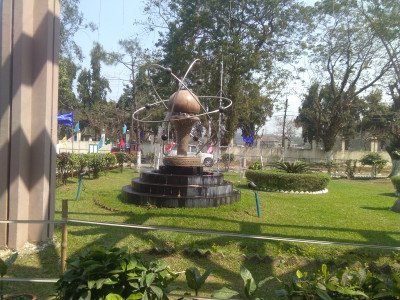
Assam State Museum

Some quick example text to build on the card title and make up the bulk of the card's content.

Go somewhere
...
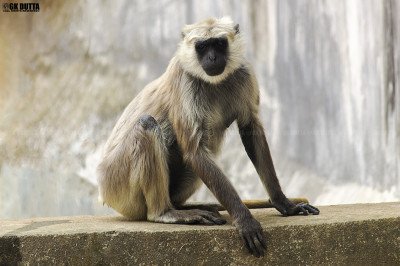
Assam State Zoo cum Botanical Garden

Some quick example text to build on the card title and make up the bulk of the card's content.

Go somewhere
...
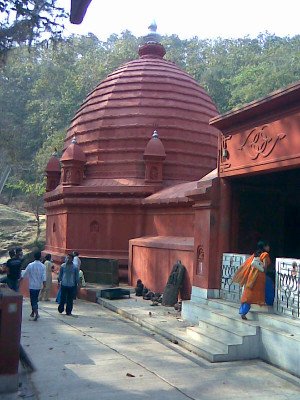
Basistha Temple & Ashram

Some quick example text to build on the card title and make up the bulk of the card's content.

Go somewhere
...
Basistha Temple

Some quick example text to build on the card title and make up the bulk of the card's content.

Go somewhere
...
Bhubaneswari Temple

Some quick example text to build on the card title and make up the bulk of the card's content.

Go somewhere
...
Brahmaputra River Cruise

Some quick example text to build on the card title and make up the bulk of the card's content.

Go somewhere

...
Chandubi Lake

Some quick example text to build on the card title and make up the bulk of the card's content.

Go somewhere
...
Dighali Pukhuri

Some quick example text to build on the card title and make up the bulk of the card's content.

Go somewhere

...
Dipor Bil

Some quick example text to build on the card title and make up the bulk of the card's content.

Go somewhere
in Other Cities