
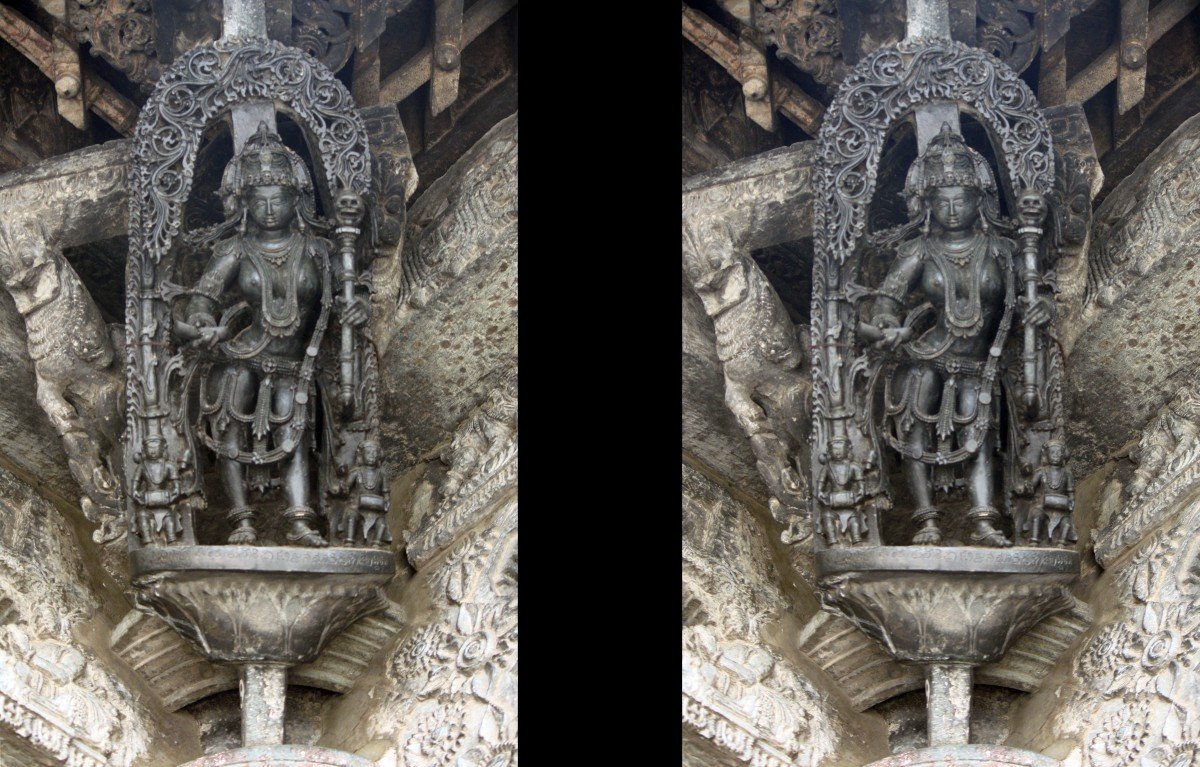
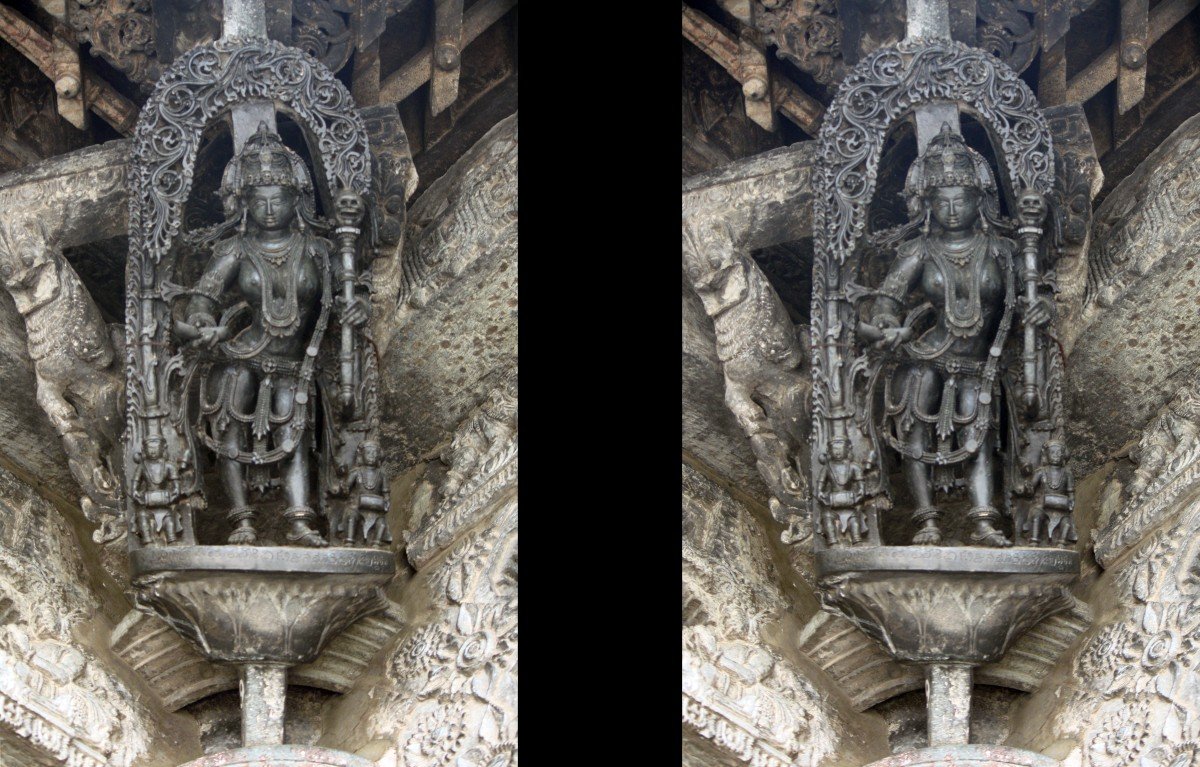
Madanikas
General information
-
Ideal Duration:
1-2 hours (Dedicated time within the Chennakesava Temple to find and appreciate all 42 figures)Place Type:
Master Sculpture / Art History FocusEntry Fees:
Covered by General Temple Ticket: There is no separate entry fee to see the Madanikas themselves. The cost is included in the general entry ticket and camera fee for the Chennakesava Temple complex, as they are integral sculptures on the temple structure.
Read MoreCovered by General Temple Ticket: There is no separate entry fee to see the Madanikas themselves. The cost is included in the general entry ticket and camera fee for the Chennakesava Temple complex, as they are integral sculptures on the temple structure.
Value of Guide Fees: The main cost associated with appreciating the Madanikas is the fee for a good, knowledgeable guide. Investing in a guide is highly recommended, as they can point out the full set of 42 figures, explain their names, and recount the associated folklore, maximizing the value of your temple entry ticket.
Special Access Fees: For researchers or art historians requiring extended, special access to photograph or study the figures up close (e. g. , scaffolding use), a special, high-cost permit from the Archaeological Survey of India (ASI) would be mandatory. However, for a general tourist, only the standard camera fee applies.Timing:
Ideal Viewing Times (Same as Temple): The best time to view the Madanikas is the same as the overall Chennakesava Temple complex: 7:30 AM to 1:00 PM and 3:00 PM to 8:00 PM.
Optimal Lighting for Detail: The Ideal Visit Time for seeing the Mad...Ideal Viewing Times (Same as Temple): The best time to view the Madanikas is the same as the overall Chennakesava Temple complex: 7:30 AM to 1:00 PM and 3:00 PM to 8:00 PM.
Optimal Lighting for Detail: The Ideal Visit Time for seeing the Madanikas is late afternoon, between 4:00 PM and 6:00 PM. At this time, the sun is low, and the angled light casts deep shadows in the high-relief carvings, making the intricate details of the jewelry, hair, and clothing pop out with amazing clarity and depth.
Morning View: The early morning light also works well for the eastern-facing figures, giving them a soft, golden glow. Avoid the bright midday sun (11:00 AM to 3:00 PM), as the light is too harsh and flattens the details of the carvings.
Mahotsava Night View: For the most dramatic aesthetic experience, view the figures during the Hoysala Mahotsava (March/April) when the professional illumination makes them appear incredibly lifelike and dynamic against the dark night sky.Special Events:
Special Illumination during Hoysala Mahotsava: The special event related to the Madanikas is their dramatic illumination during the annual Hoysala Mahotsava (March/April). Special lighting is used to highlight the contours and details of these sculptures, making them appear...Special Illumination during Hoysala Mahotsava: The special event related to the Madanikas is their dramatic illumination during the annual Hoysala Mahotsava (March/April). Special lighting is used to highlight the contours and details of these sculptures, making them appear to come alive as the dancers perform in front of them, creating a spectacular visual dialogue between the stone art and the living art.
Guided Art History Tours: During festivals or when special academic groups visit, the Archaeological Survey of India (ASI) or local heritage bodies sometimes arrange special, detailed art-history-focused tours specifically dedicated to analyzing the Madanikas. These tours, led by experts, are a rare and valuable special event for art enthusiasts.
Documentation and Research Projects: Occasionally, the sculptures become the focus of a documentation project or a photographic exhibition, which is a special event for the art world. This involves high-resolution photography and scholarly analysis, sometimes requiring special access that is not usually available to the public.Best Photo Spots:
The Darpana Sundari Profile: Use a high-quality camera to take a perfect, clear profile or three-quarter shot of the Darpana Sundari (Lady with a Mirror). Focus on the detail of the hand holding the mirror, the jewelry, and the gentle curve of her body to showcase the sculp...The Darpana Sundari Profile: Use a high-quality camera to take a perfect, clear profile or three-quarter shot of the Darpana Sundari (Lady with a Mirror). Focus on the detail of the hand holding the mirror, the jewelry, and the gentle curve of her body to showcase the sculptural perfection.
The Movement of the Dancer: Find a figure like the Mohini or the Dancer and use creative angles to emphasize the sense of movement and dynamic posture the sculptor has achieved, making the stone appear fluid and alive.
The Scorpion Detail (Extreme Macro): For the truly dedicated, use a macro or very high-zoom lens to get a tight, clear shot of the famous, tiny scorpion carving on the leg or thigh of the respective Madanika figure. This is an incredible technical challenge and a great conversational piece.
Base Narrative Frieze: Focus on the small, often unnoticed friezes at the very base of the Madanika pedestals. These miniature narratives—showing a maid, a musician, or a supporting character—provide context and make for a fascinating series of photos.
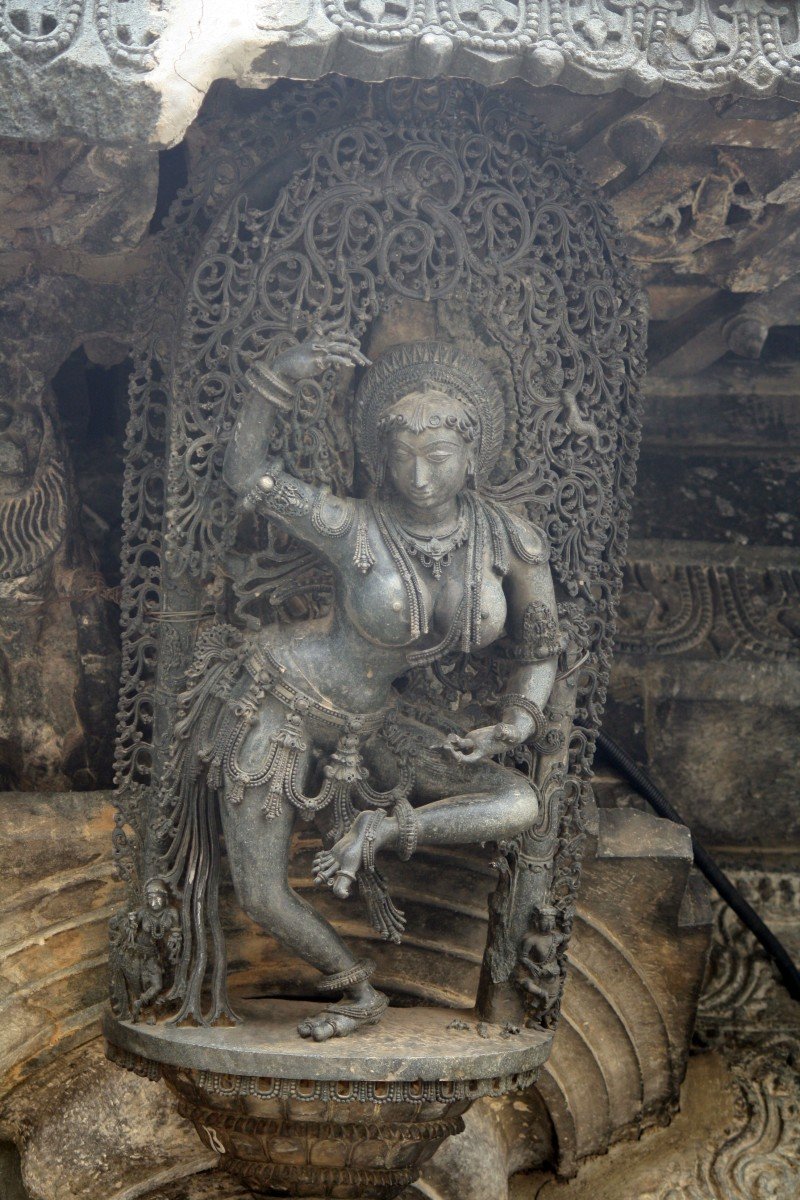
Madanika and Sunlight Interaction: Photograph a specific Madanika in the late afternoon sun. The deep shadows cast by the high-relief carving dramatically bring out the depth, texture, and three-dimensionality of the figure, making it the best time for architectural photography of the sculptures. (Approx )Photo Gallery
Things To Do
-
Find and Document All 42 Figures: The ultimate thing to do is to methodically locate all 42 of the Madanika (bracket figure) sculptures. A knowledgeable guide is essential for this task, as some are less prominent or in darker corners. Carry a checklist or a map (if available) to ensure you have seen them all.
Detailed Photo Shoot of Selected Figures: Dedicate time to photographing the most famous figures, such as Darpana Sundari (Lady with a Mirror), Shuka Bhashini (Lady with a Parrot), Mohini, and the Huntswoman.
Focus on capturing the minute details: the movement in the hands, the expression on the face, the intricate jewelry, and the base narratives.
Compare Inner and Outer Madanikas: Note the difference in the style, placement, and size of the four Madanik...Find and Document All 42 Figures: The ultimate thing to do is to methodically locate all 42 of the Madanika (bracket figure) sculptures. A knowledgeable guide is essential for this task, as some are less prominent or in darker corners. Carry a checklist or a map (if available) to ensure you have seen them all.
Detailed Photo Shoot of Selected Figures: Dedicate time to photographing the most famous figures, such as Darpana Sundari (Lady with a Mirror), Shuka Bhashini (Lady with a Parrot), Mohini, and the Huntswoman.
Focus on capturing the minute details: the movement in the hands, the expression on the face, the intricate jewelry, and the base narratives.
Compare Inner and Outer Madanikas: Note the difference in the style, placement, and size of the four Madanikas inside the Navaranga hall compared to the 38 figures on the exterior. The indoor figures are more polished and structurally integrated with the pillars, while the outdoor ones serve as bracket figures. This comparative study is fascinating for art students.
Artistic Sketching: Bring a sketchbook and spend time sketching one or two of the Madanika figures. Attempting to recreate the posture and the flow of the garment in your sketch is the best way to understand the sculptor's mastery of form, balance, and dynamism.
Study the Hair and Ornaments: Pay close attention to the details of the hairstyles (Keshabandha) and the ornaments (Alankara). The sculptors captured numerous contemporary and stylized jewelry pieces, from intricate necklaces to anklets and ear ornaments, providing an invaluable record of 12th-century fashion.
Decipher the Narratives: For figures that illustrate a story (like the one with a scorpion, or the one with a monkey), use a guide or art book to understand the specific mythological or folk narrative being depicted. The Madanikas are often complex stories in themselves.
Reflect on Feminine Representation: Reflect on the diverse and powerful ways in which the feminine form is celebrated and represented in these sculptures—from the shy maiden to the powerful dancer and the fierce huntress. They embody the strength, beauty, and various roles of women in Indian culture.
Look for the Artist's Touch: Search for the small, subtle signatures of the sculptors (like the initial of Dasoja or Chavana) near the foot or base of the figure. Finding these direct connections to the creator is a deeply satisfying act of discovery.
View at Different Times of Day: Try to view a few of the Madanikas in the early morning sunlight and again in the late afternoon. The changing angle of the sun drastically alters the play of light and shadow, revealing different dimensions and depths in the carvings.
Consult Art History Books: Carry a good art history book or a specialized pamphlet on the Madanikas (often available at the archaeological office) to cross-reference the names and interpretations of the figures with what you are observing on the wall.
Information
-
Why Famous:
The Pinnacle of Hoysala Detail: The Madanikas are famous because they represent the extreme limit of fine detail and technical skill achieved by the Hoysala sculptors. No other site in India showcases such a variety of fully-realized, naturalistic figures carved in high-rel...The Pinnacle of Hoysala Detail: The Madanikas are famous because they represent the extreme limit of fine detail and technical skill achieved by the Hoysala sculptors. No other site in India showcases such a variety of fully-realized, naturalistic figures carved in high-relief. Their complexity is legendary.
Dynamic and Expressive Art: They are famous for their dynamic poses, which break the typical stiffness of temple sculpture. Figures like the Dancer or the Flutist are sculpted mid-action, giving them a palpable sense of movement and life, which is why they are often called "poetry in stone.
" The 42 Unique Figures: The fact that all 42 figures are unique, each depicting a different facet of feminine charm, beauty, or daily activity (from dressing to hunting to dancing), makes the collection famous as an encyclopedia of 12th-century life and art. The story of the Madanikas coming alive through the dance of Queen Shantala is a famous local legend that romanticizes their creation. They are the single most celebrated artistic feature of the entire temple complex. -
Architecture:
Sculptural Integration into Hoysala Structure: The Madanikas are not standalone statues but are architectural features known as bracket figures or Salabhanjikas.
Their placement is highly specific: they connect the exterior walls of the main...Sculptural Integration into Hoysala Structure: The Madanikas are not standalone statues but are architectural features known as bracket figures or Salabhanjikas.
Their placement is highly specific: they connect the exterior walls of the main temple (Vimana) and the outer pillars of the Navaranga to the roof eave, essentially acting as structural and decorative support brackets.
Dimension: Each Madanika is approximately 2 to 3 feet tall and is sculpted in high-relief, often nearly in the round. They are carved from dark, fine-grained chloritic schist (soapstone), which is soft enough to allow for minute detailing but hardens over time to resist erosion.
Dynamic Postures and Details: The architectural significance lies in their dynamic postures. They are sculpted so that they appear to be hanging from a tree branch or engaged in spirited activity, giving an illusion of life and movement to the static structure. Four of the most famous figures are found on the four central pillars of the Navaranga, facing the deity, positioned to be admired by devotees inside the hall. The meticulous carving of ornaments, such as moving bangles and intricate jewelry, and the realistic depiction of activities like wringing water from hair (known as Kesha Shrungara), all showcase the complete mastery of the sculptors over the medium. Their architectural role is to add a human, artistic, and sensual dimension to the divine space. -
How To Reach:
By Air: The journey to view the Madanikas begins with reaching Belur town. The most convenient airports are Mangalore International Airport (IXE) (150-160 KMS) or Bangalore's Kempegowda International Airport (BLR) (220 KMS). From either airport, a taxi or state bus is requ...By Air: The journey to view the Madanikas begins with reaching Belur town. The most convenient airports are Mangalore International Airport (IXE) (150-160 KMS) or Bangalore's Kempegowda International Airport (BLR) (220 KMS). From either airport, a taxi or state bus is required to complete the journey to Belur.
By Train: The nearest railway station, Hassan Junction (HAS) (35 KMS), offers good connectivity from major cities. From Hassan, the journey to Belur can be completed by local bus (most economical) or by hiring a private taxi (most comfortable) within one hour.
By Road: Belur is a significant hub, ensuring excellent road connectivity. Regular and comfortable bus services (KSRTC) run from cities like Bangalore and Mysore. The drive is scenic and well-maintained, making a self-drive or hired cab a viable option.
By Local Transport: The Madanikas are housed within the main Chennakesava Temple, which is centrally located in Belur town. From the main bus stand, it is a very short walk (under 1 KM) to the temple gate. For those with mobility issues or heavy camera gear, a local auto-rickshaw is readily available and inexpensive for a short ride directly to the temple entrance. -
Weather and Best Time to Visit:
Different Types of Seasons: The Best Time to View the Madanikas is during the Winter season, from October to March, when you can spend extended periods examining the outdoor carvings without the heat. This is crucial for their detailed appreciation.
Read MoreDifferent Types of Seasons: The Best Time to View the Madanikas is during the Winter season, from October to March, when you can spend extended periods examining the outdoor carvings without the heat. This is crucial for their detailed appreciation.
Different Parts of the Day: The Ideal Part of the Day is the Late Afternoon (4:00 PM to 6:00 PM). The low, angled sunlight in the late afternoon creates the deepest shadows in the high-relief carvings, making the intricate details of the Madanikas (jewelry, hair, expression) pop out with incredible realism and clarity. The early morning light also works well, providing a softer, gentler illumination.
Midday is Sub-Optimal: The intense, high-angle light around noon flattens the details, making it the least ideal time for artistic appreciation of the three-dimensional figures.
Mahotsava Illumination: Viewing the figures during the night of the Hoysala Mahotsava (March/April) when they are professionally illuminated is an unparalleled aesthetic experience, transforming the stone figures into seemingly living dancers.Near Tourist Places:
Chennakesava Temple Complex, Belur: (Same Location) - The primary location for the sculptures.
Kappe Chennigaraya Temple, Belur: (Adjacent) - For other beautiful sculptural work.
Hoysaleswara Temple, Halebidu: (16 KMS) - Features many similar, but stylistically different, bracket figures.
Belavadi (Veera Narayana Temple): (27 KMS) - For comparing sculptural styles in a quieter setting.
Shankareshvara Temple, Belur: (0. 5 KMS) - For older, simpler Chalukya-style sculptures.
Pathaleshwara Temple, Belur: (1 KM) - Small temple with modest carvings.
Yagachi Dam: (12 KMS) - A break from intense art viewing.
Chikmagalur Town: (25 KMS) - For a change of scenery.
Lakshmi Devi Temple, Doddagaddavalli: (35 KMS) - Study early Hoysala sculptural evolution.
Maharaja Park, Belur: (1 KM) - Rest spot.Tourism Tips
-
Health & safety (Trip Hazard): When moving around the temple to view the Madanikas, be mindful of the irregular stone flooring and the raised Jagati platform. Do not attempt to climb or lean on the carvings, as they are fragile and protected.
P...Health & safety (Trip Hazard): When moving around the temple to view the Madanikas, be mindful of the irregular stone flooring and the raised Jagati platform. Do not attempt to climb or lean on the carvings, as they are fragile and protected.
Packing (Guide and Lens): A good guide is essential to locate all 42 figures and explain their names (e. g. , Vasantha Sundari, Kesha Shrungara). A telephoto or macro lens is necessary for detailed, close-up photography of the intricate jewelry, as touching the sculptures is forbidden.
Accommodation: Staying in Belur is highly recommended to allow for multiple, leisurely visits to the temple at different times of the day (early morning, late afternoon) to appreciate the Madanikas in various lighting conditions.
Other Topics (Lighting and Viewing): The best tip is to view the figures with the sun hitting them at an angle (late afternoon is best). This light-and-shadow effect is critical for appreciating the three-dimensionality and the intricate craftsmanship, which is the whole point of viewing the Madanikas.
Reviews
FAQs
Belur Itineray And Cost:-
Other Places In Belur :-
Other States In India :-
Information about New and Updated Locations() of Karnataka Has Been Added :-
Card subtitle
Note:-
Information provided here in good Faith and for reference only.
Near Places
Archaeological Museum, Halebidu
Some quick example text to build on the card title and make up the bulk of the card's content.
Go somewhere
Belavadi Shri Veera Narayana Temple
Some quick example text to build on the card title and make up the bulk of the card's content.
Go somewhere
Belur Halebidu Temples
Some quick example text to build on the card title and make up the bulk of the card's content.
Go somewhere
Bommadihalli Gadi
Some quick example text to build on the card title and make up the bulk of the card's content.
Go somewhere
Chennakesava Temple
Some quick example text to build on the card title and make up the bulk of the card's content.
Go somewhere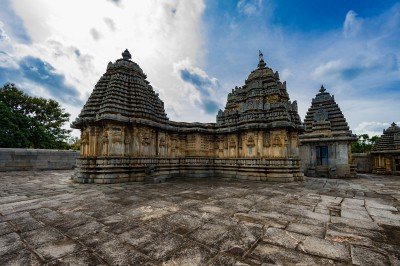
Doddagaddavalli Lakshmi Devi Temple
Some quick example text to build on the card title and make up the bulk of the card's content.
Go somewhere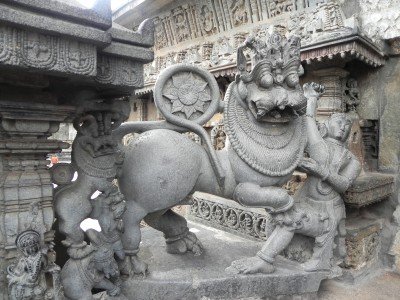
Hoysala Emblem
Some quick example text to build on the card title and make up the bulk of the card's content.
Go somewhere
Hoysala Mahotsava
Some quick example text to build on the card title and make up the bulk of the card's content.
Go somewhere
Hoysaleswara Temple
Some quick example text to build on the card title and make up the bulk of the card's content.
Go somewhere
ISKCON Temple Belur
Some quick example text to build on the card title and make up the bulk of the card's content.
Go somewhere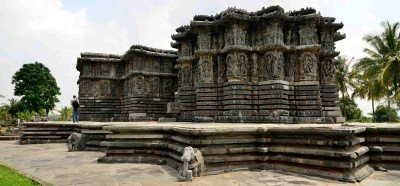
Kedareswara Temple
Some quick example text to build on the card title and make up the bulk of the card's content.
Go somewhere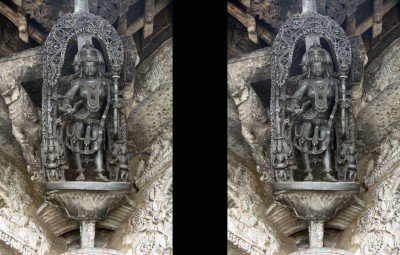
Madanikas
Some quick example text to build on the card title and make up the bulk of the card's content.
Go somewhere
Narasimha Pillar
Some quick example text to build on the card title and make up the bulk of the card's content.
Go somewhere
Paathaaleshwara Temple
Some quick example text to build on the card title and make up the bulk of the card's content.
Go somewhere
Real Govinahalli Village
Some quick example text to build on the card title and make up the bulk of the card's content.
Go somewhere
Shravanabelagola
Some quick example text to build on the card title and make up the bulk of the card's content.
Go somewherein Other Cities