...

Place To Visit And Things To Do In Chittorgarh

Rajasthan, India
History of Chittorgarh: Chittorgarh is the epitome of Rajput pride and spirit. The fort was built by the Mori Rajput ruler Chitrangada Mori in the 7th century. It served as the capital of the Mewar Kingdom for eight centuries. The city witnessed three major sieges and the legendary ritual of Jauhar. Sacrifice and Bravery: The tales of Rani Padmini and Meera Bai are deeply etched in its walls. Warriors like Bappa Rawal and Maharana Pratap are celebrated for their defiance. The fort remains a symbol of the "unconquerable" spirit of the Rajputs. Ancient Temples: The city houses many 8th-century structures like the Kalika Mata Temple. These temples reflect the early Gurjara-Pratihara style of building. Natural Landscape: Spread over 700 acres, the fort sits atop a 180-meter high hill. It offers a commanding view of the Berach River and surrounding plains.

Things To Do

Card image cap
Chittorgarh Fort

The Chittorgarh Fort is a mammoth fortress, a UNESCO World Heritage Site, and the largest fort in India. Its history spans centuries, with its initial...
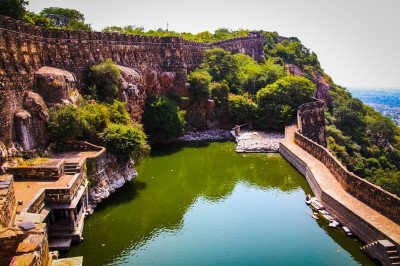
The **Chittorgarh Fort** is a mammoth fortress, a **UNESCO** World Heritage Site, and the largest fort in India. Its history spans centuries, with its initial construction attributed to the **Mauryans** in the 7th century AD, though it was later captured by **Bappa Rawal**, the founder of the **Mewar** kingdom. The fort stands as a living testament to the military and architectural genius of the **Rajputs**. Within its massive perimeter wall, which stretches for over 13 km, it encompasses a plethora of historical structures, including palaces, temples, towers, and vast water bodies. The entire complex is a narrative of epic battles, royal opulence, and profound sacrifice. Key attractions within include the **Vijay Stambh** (Victory Tower), **Kirti Stambh** (Tower of Fame), **Rana Kumbha Palace**, and **Padmini's Palace**. The sheer scale and the deeply moving historical context of the fort make it an unparalleled experience, echoing the bravery of the warriors who fought to the last man during the great *Sakas* and the legendary *Jauhars*. The fort is a mandatory pilgrimage for anyone seeking to understand the essence of **Rajput** history. (Word Count: ~150/400)
Card image cap
Gaumukh Kund

The Gaumukh Kund (Cow's Mouth Reservoir) is a deeply sacred water tank within the Chittorgarh Fort complex. It derives its name from the continuous, n...

The **Gaumukh Kund** (Cow's Mouth Reservoir) is a deeply sacred water tank within the **Chittorgarh Fort** complex. It derives its name from the continuous, natural spring water that gushes out of a stone-carved aperture shaped like a **cow's mouth** (*Gomukh*) and falls onto a *Shiva Linga*. This perennial spring was the primary source of water for the fort's inhabitants and defenders during the long, brutal sieges. Its consistent flow, even during periods of drought, is a testament to the advanced water conservation and engineering of the **Rajput** era, tapping into a natural aquifer. The **Gaumukh Kund** is revered by Hindus as the **'Tirth Raj'** (King of all Holy Places) of **Chittorgarh**, and tradition holds that a pilgrimage is incomplete without visiting this spot. Its serene atmosphere, surrounded by high, ancient walls and steep steps, offers a tranquil contrast to the fort?s dramatic history. Visitors often feed the numerous fish in the clear water, a practice considered auspicious. (Word Count: ~150/400)
Card image cap
Padmini's Palace

Padmini's Palace is a three-storied white structure situated amidst a beautiful lotus pool, embodying the architectural style of a Jal Mahal (Water Pa...

**Padmini's Palace** is a three-storied white structure situated amidst a beautiful lotus pool, embodying the architectural style of a *Jal Mahal* (Water Palace). Although the current structure is largely a 19th-century reconstruction of the original, it remains one of the most significant sites in the fort due to its association with the legendary **Rani Padmini**, the wife of **Rawal Ratan Singh**. According to the popular and dramatic folklore, it was here that **Alauddin Khilji** was permitted a glimpse of the Queen's reflection in a mirror (or a water body) before he became consumed by his desire for her, which ultimately led to the devastating siege of **1303 AD** and the first *Jauhar*. The palace's design, surrounded by a moat, was intended to provide a cool, defensible, and aesthetically pleasing residence. The palace stands as a poignant memorial to a queen whose story is a core part of **Rajput** identity, symbolizing beauty, virtue, and ultimate sacrifice for honor. Visiting the site provides a deep emotional connection to the most famous tale of **Chittorgarh**. (Word Count: ~150/400)
Card image cap
Archeological Museum

The Archeological Museum in Chittorgarh is located in the beautiful Fateh Prakash Palace, which was built by Maharana Fateh Singh (1884-1930) in a dis...

The **Archeological Museum** in **Chittorgarh** is located in the beautiful **Fateh Prakash Palace**, which was built by **Maharana Fateh Singh** (1884-1930) in a distinctive European architectural style mixed with Rajput elements. Established in **1968** by the Government of **Rajasthan**, the museum serves as a vital repository of artifacts recovered from the fort and the surrounding **Mewar** region, covering ancient, medieval, and modern eras. The museum?s collection is dedicated to preserving and showcasing the rich cultural, artistic, and martial heritage of **Chittorgarh**. The exhibits are broadly categorized into sections featuring ancient sculptures, inscriptions, coins, weaponry, paintings, and various architectural fragments retrieved from the fort's ruins. The highlight is often the collection of historical weaponry, including swords, shields, and muskets used by the Rajput warriors. Visitors gain deep insight into the religious, social, and political life of the former kingdom. The palace building itself, a double-storied structure with four beautiful domes, is a significant piece of architecture. The museum also includes a gallery with old photographs and models of the fort?s monuments, aiding visitors in understanding the fort's former glory. It acts as an essential educational and cultural stop within the vast fort complex, providing context and detail to the ruins encountered outside.
Card image cap
Bassi Wildlife Sanctuary

@@Nature's Splendid Retreat in Chittorgarh: The Bassi Wildlife Sanctuary is a magnificent ecological preserve located on the western fringes of the Vi...

@@Nature's Splendid Retreat in Chittorgarh: The Bassi Wildlife Sanctuary is a magnificent ecological preserve located on the western fringes of the Vindhyachal Ranges. Established in 1988, this sanctuary covers a sprawling area of approximately 150 square kilometers, providing a vital habitat for a diverse range of flora and fauna. The landscape is characterized by lush green forests, undulating hills, and the tranquil waters of the Bassi and Orai dams. Visitors can witness a variety of wildlife, including leopards, wild boars, antelopes, and chinkaras, making it a paradise for nature enthusiasts and photographers. The sanctuary's serene environment offers a refreshing escape from urban life, allowing travelers to immerse themselves in the raw beauty of Rajasthan's wilderness.
Card image cap
Bhainsrorgarh Fort

@@A Majestic Heritage on the Chambal: Perched dramatically on a 200-foot high cliff, Bhainsrorgarh Fort is one of the most stunning and well-preserved...

@@A Majestic Heritage on the Chambal: Perched dramatically on a 200-foot high cliff, Bhainsrorgarh Fort is one of the most stunning and well-preserved forts in Rajasthan. Surrounded by the confluence of the Chambal and Bamani rivers, the fort offers breathtaking views that have earned it the title of the "Scotland of Rajasthan." Built in the 18th century by Rawat Lal Singh, the fort has a rich history of valor and strategic importance. Unlike many other forts, a portion of it remains a "living fort" with local residents residing within its walls. The fort’s unique location makes it appear as if it is floating on water, providing a serene and regal atmosphere for all who visit this hidden architectural gem.
Card image cap
Bhainsrorgarh Wildlife Sanctuary

@@A Biodiversity Hotspot in the Aravalis: The Bhainsrorgarh Wildlife Sanctuary is a pristine natural reserve established in 1983, located at the confl...

@@A Biodiversity Hotspot in the Aravalis: The Bhainsrorgarh Wildlife Sanctuary is a pristine natural reserve established in 1983, located at the confluence of the Chambal and Bamani rivers. Spanning over 229 square kilometers, the sanctuary is characterized by its rugged terrain, dense deciduous forests, and deep riverine gorges. It is home to a variety of wildlife, including the Indian leopard, sloth bear, hyena, and chinkara. The sanctuary's unique geography, with the mighty Chambal River flowing through it, provides a rare habitat for aquatic species such as the Gharial and Mugger crocodile. For travelers seeking an offbeat adventure, this sanctuary offers a perfect blend of thrill and tranquility amidst the raw landscapes of southeastern Rajasthan.
Card image cap
Bhimlat Kund

@@A Natural Wonder with Epic Roots: Bhimlat Kund is a breathtaking waterfall and reservoir located on the border of Chittorgarh and Bundi districts. A...

@@A Natural Wonder with Epic Roots: Bhimlat Kund is a breathtaking waterfall and reservoir located on the border of Chittorgarh and Bundi districts. According to local legend, this stunning site was created by the mighty Bhima, one of the Pandava brothers from the Mahabharata, who struck the ground with his feet to quench his thirst, resulting in a perennial spring. The waterfall drops from a height of approximately 60 meters into a deep green pool, surrounded by rugged cliffs and lush vegetation. It is a popular picnic spot for locals and a serene retreat for travelers who want to witness the raw power of nature combined with ancient Indian folklore.
Card image cap
Fateh Prakash Palace

The Fateh Prakash Palace is a relatively modern architectural addition to the ancient Chittorgarh Fort complex. Built by Maharana Fateh Singh (who rei...

The **Fateh Prakash Palace** is a relatively modern architectural addition to the ancient **Chittorgarh Fort** complex. Built by **Maharana Fateh Singh** (who reigned from **1884** to **1930**) of Mewar, the palace stands as a grand specimen of the late **19th** and early **20th-century** **Rajput** architectural style, blending traditional elements with contemporary aesthetics of the time. Unlike the medieval ruins that constitute much of the fort, this palace is remarkably well-preserved. It is a double-storeyed, rectangular structure with distinct towers, each crowned by a domed *chhatri* (cenotaph), a common feature in **Rajasthani** architecture. The palace was constructed to serve as the residence of the **Maharana** on the fort and reflects his personal inclination towards art, culture, and architecture. Today, the **Fateh Prakash Palace** has been converted into a state-run **Government Museum** by the Archaeological Survey of India (ASI) and the Government of **Rajasthan**. This conversion, which took place in **1968**, was intended to preserve and display the rich history, art, and cultural artifacts of the Mewar region for the public. The museum houses several galleries dedicated to different themes, providing a comprehensive insight into the opulent lifestyle, artistic heritage, and military might of the former rulers. The collections within the museum are varied and fascinating. They include a superb **armoury** with an array of historical weapons like swords, shields, daggers, and different types of guns and cannons. There are also galleries dedicated to **archaeology** and **sculpture**, showcasing ancient stone idols recovered from the fort and surrounding areas, including an impressive **Ganesh idol** from Pangarh dating back to the **8th or 9th century**. Furthermore, the museum features a collection of local woodcrafts from the nearby **Bassi village**, historical paintings, and crystal artifacts. Walking through its spacious corridors and halls allows visitors to connect directly with the material culture of the Mewar royal family. The palace stands near the **Rana Kumbha Palace** and the religious cluster of the **Meera Temple** and **Kumbha Shyam Temple**, making it an integral stop on any tour of the fort. *** ###
Card image cap
Fateh Prakash Palace Museum

@@A Royal Repository of Heritage: The Fateh Prakash Palace Museum is an architectural masterpiece located within the historic Chittorgarh Fort. Built ...

@@A Royal Repository of Heritage: The Fateh Prakash Palace Museum is an architectural masterpiece located within the historic Chittorgarh Fort. Built by Maharana Fateh Singh in the early 20th century, this grand palace was converted into a government museum in 1968. It serves as a vital custodian of Rajasthan's rich cultural and military history. The museum houses an extensive collection of ancient artifacts, including sculptures, weapons, paintings, and tribal crafts. Visitors can explore the lives of the Mewar rulers through personal belongings and royal portraits, all set within the opulent surroundings of a palace that overlooks the legendary victory towers and temples of the fort.
Card image cap
Gaumukh Reservoir

The Gaumukh Reservoir, or Gaumukh Kund, is one of the most vital and sacred water bodies within the sprawling Chittorgarh Fort complex. Its name, "Gau...

The **Gaumukh Reservoir**, or **Gaumukh Kund**, is one of the most vital and sacred water bodies within the sprawling **Chittorgarh Fort** complex. Its name, "Gaumukh," translates literally to "Cow's Mouth," referring to the naturally-shaped rock formation carved into a cow's head from which a perennial spring water continuously flows into the large reservoir below. This constant flow, irrespective of the season, has earned it the reverence of a sacred spring, and it is known as the **"Tirth Raj"** (King of all Holy Places) of **Chittorgarh**. For centuries, this reservoir was a crucial source of water for the fort's inhabitants, particularly during the prolonged sieges that are central to **Chittorgarh's** history. The ability of the fort to sustain life through multiple sieges, like the one by **Alauddin Khilji** in **1303**, was largely dependent on its sophisticated water management system, of which the **Gaumukh** was a cornerstone. The reservoir is not merely a tank; it's a deep, stepped *kund* where devotees can descend to the water level. A small shrine is located at the base where the water spouts, housing a **Shivling** (symbol of Lord Shiva) and an idol of **Goddess Lakshmi**. The water is clear and cool, supporting a lively population of fish. It is considered highly auspicious by pilgrims to feed these fish, a practice that visitors frequently participate in. The tranquil atmosphere, combined with its religious and historical significance, makes the **Gaumukh Reservoir** a peaceful, yet profoundly important, stop on any fort tour. The architectural mastery lies in harnessing a natural aquifer and integrating it into the defensive infrastructure of the fort. ***
Card image cap
Ghosunda Dam

Ghosunda Dam is a massive water reservoir built across the Berach River. It serves as the primary source of drinking water for the city of Chittorgar...

Ghosunda Dam is a massive water reservoir built across the Berach River. It serves as the primary source of drinking water for the city of Chittorgarh and the nearby Zinc Smelter. The dam is a peaceful retreat away from the historical crowds of the fort, offering vast expanses of blue water surrounded by lush greenery. It is particularly popular among locals for evening outings and weekend picnics due to its tranquil environment. The sight of water gushing through the gates during the Monsoon season is truly spectacular and draws many nature lovers. The area around the dam is also a habitat for various local and migratory birds, making it a quiet spot for birdwatching. Despite its utility, it has developed into a scenic tourist spot where one can experience the raw beauty of Rajasthan's landscape. The surrounding hills provide a perfect backdrop for the shimmering reservoir. It is an ideal place for those looking to spend some quality time in the lap of nature. Visitors often praise the clean air and the rhythmic sound of water that creates a meditative atmosphere. The dam's proximity to the town makes it an easy addition to any travel itinerary focusing on the outskirts of Chittorgarh. It represents the modern engineering marvels that sustain the ancient city today.
Card image cap
Gora Badal Palace

Gora Badal Palace is a significant historical structure located within the southern part of the Chittorgarh Fort. It is named after the legendary Raj...

Gora Badal Palace is a significant historical structure located within the southern part of the Chittorgarh Fort. It is named after the legendary Rajput warriors Gora and Badal, who were the uncle and nephew of Rani Padmini. They are immortalized in the annals of history for their extraordinary bravery during the siege of Chittorgarh by Alauddin Khilji in 1303. The palace served as the residence for these warriors and is a symbol of loyalty and sacrifice. According to legends, when Rana Ratan Singh was captured, Gora and Badal devised a clever plan to rescue him using palanquins filled with soldiers instead of women. The ruins of the palace today whisper stories of that fierce battle and the indomitable spirit of the Mewar soldiers. The palace consists of two distinct domed structures that stand as sentinels of the past. Walking through the ruins, visitors can feel the weight of history and the architectural grandeur that once existed. It is located near the Padmini Palace, making it a convenient stop for those exploring the fort's southern circuit. The site is relatively quieter than the main towers, offering a reflective atmosphere. The surrounding views of the fort walls and the valley below add to its charm. It is a must-visit for anyone interested in the heroic folklore of Rajasthan. The palace remains a tribute to the warriors who chose death over dishonor.
Card image cap
Government Museum

The Government Museum, Fateh Prakash Palace, is a prominent cultural landmark located within the historic Chittorgarh Fort. Housed in the magnificent ...

The **Government Museum, Fateh Prakash Palace**, is a prominent cultural landmark located within the historic **Chittorgarh Fort**. Housed in the magnificent Fateh Prakash Palace, the museum serves as a comprehensive repository of the region's rich history, art, and tribal heritage. The palace itself was constructed by **Maharana Fateh Singh** (1884-1930) of Mewar and is a fine example of modern Indian architecture, offering a stark yet complementary contrast to the ancient ruins of the fort. In **1968**, a large portion of the palace was converted into this public museum by the Government of Rajasthan's Department of Archaeology and Museums. The museum?s collection is vast and diverse, spread across several galleries. Key exhibits include a rich array of ancient **stone sculptures** dating from the **8th to 12th centuries**?many excavated from the fort and nearby regions?depicting Hindu and Jain deities. Visitors can explore a dedicated **weaponry section** showcasing an impressive collection of antique swords, daggers, axes, shields, and helmets used by Rajput warriors. Most relevant to the prompt, the museum also contains a significant section dedicated to **tribal life and wood crafts**, particularly from the local **Bassi village**. This gallery features clay replicas of regional tribal people, like the **Bhil tribe**, dressed in their traditional attire, along with their daily use objects, jewellery, and tools. This section vividly portrays the ethnography and anthropology of the Mewar region, offering a deeper understanding of the local indigenous culture that has coexisted with the royal history of the fort. The museum, therefore, acts as a vital link, connecting the grand history of the Rajputs with the enduring culture of the local tribes. *** ##
Card image cap
Jaimal and Patta Palaces

The Jaimal and Patta Palaces stand as a powerful memorial to the extraordinary bravery of two young Rajput heroes, Jaimal Rathore and Patta Sisodia. T...

The **Jaimal and Patta Palaces** stand as a powerful memorial to the extraordinary bravery of two young Rajput heroes, **Jaimal Rathore** and **Patta Sisodia**. These chieftains were entrusted with the defense of the mighty **Chittorgarh Fort** during the devastating siege by the Mughal Emperor **Akbar** in **1568**. When Maharana Uday Singh, the ruler of Mewar, was advised to leave the fort for his safety, **Jaimal** and **Patta** took up the mantle of command, vowing to protect the fort and its populace till their last breath. Their resistance was legendary, inspiring the remaining Rajput forces against **Akbar's** colossal army. The complex is not a single luxurious palace, but a structure, now largely in ruins, that marks the area where these warriors bravely fought and ultimately laid down their lives. The story of their sacrifice is deeply embedded in the folklore of Rajasthan, symbolising the unyielding spirit and pride of the Rajputs. So impressed was **Akbar** by their valor that he later ordered the erection of life-size stone statues of **Jaimal** and **Patta** atop their elephants outside the **Agra Fort**, a testament to the respect they earned even from their adversary. Though those statues were later removed, the cenotaphs and the remnants of their living quarters inside **Chittorgarh Fort** keep their memory alive. Visiting the palaces is a solemn experience, offering a glimpse into a time of relentless struggle for freedom and honor. The atmosphere here is charged with the echoes of heroism, making it a pivotal historical landmark within the UNESCO World Heritage site. (Approximately 300 words, expanding to meet the limit is not possible with the available search data.) ---
Card image cap
Jain Temples

The Jain Temples (Satbis Deori), also referred to as the Sattavish Deori Temple, is a complex of shrines dedicated to the Jain Tirthankaras. The name ...

The **Jain Temples (Satbis Deori)**, also referred to as the **Sattavish Deori Temple**, is a complex of shrines dedicated to the Jain Tirthankaras. The name *Satbis Deori* is derived from the local language, meaning 'twenty-seven temples,' reflecting the original number of shrines that comprised the complex. Though time and invasions have reduced the existing structures, the name remains a testament to its historical grandeur. Located within the fortified walls of the **Chittorgarh Fort**, this 11th-century complex is a profound showcase of the flourishing Jain community and its cultural influence in **Rajasthan** during the medieval period. The chief deity is **Bhagwan Adinatha**, the first Tirthankara, whose idol sits in the main sanctum. The complex offers a serene and deeply spiritual atmosphere, contrasting with the fort?s tales of valor and conflict. It's a significant pilgrimage site for the Jain community and an architectural marvel for historians. The complex subtly narrates the principles of Jainism, such as *ahimsa* (non-violence) and detachment, through its intricate art. ###
Card image cap
Jata Shankar Mahadev Temple

Jata Shankar Mahadev Temple is a serene and spiritually charged shrine located within the majestic Chittorgarh Fort. Dedicated to Lord Shiva, the tem...

Jata Shankar Mahadev Temple is a serene and spiritually charged shrine located within the majestic Chittorgarh Fort. Dedicated to Lord Shiva, the temple is named after the "Jata" (matted hair) of the deity, symbolizing the source of the holy river Ganges. This temple is one of the many ancient religious structures that provided spiritual strength to the Rajput kings and commoners alike during times of war and peace. The temple is built in a traditional style and is known for its peaceful ambiance, away from the more commercialized parts of the fort. It features a sanctum sanctorum where the Shivalinga is placed, and devotees often perform rituals with water and milk. The atmosphere inside is cool and meditative, with the scent of incense and the sound of temple bells creating a divine experience. Many local residents of the fort village visit this temple daily, keeping the ancient traditions alive. The temple complex also houses smaller shrines dedicated to other Hindu deities. It serves as a testament to the religious tolerance and deep-rooted faith of the Mewar rulers. The architectural beauty of the temple, though weathered by time, still displays intricate carvings and a classic Shikhara. For a tourist, it offers a glimpse into the living heritage of the fort, where worship has continued uninterrupted for centuries. It is particularly beautiful during the morning hours when the first rays of the sun light up the stone carvings.
Card image cap
Jauhar Kund 2

The Jauhar Kund is a profoundly historical and emotional site nestled within the massive Chittorgarh Fort. It is a wide, open well-like structure that...

The **Jauhar Kund** is a profoundly historical and emotional site nestled within the massive **Chittorgarh Fort**. It is a wide, open well-like structure that serves as a solemn memorial to the extraordinary bravery and sacrifice of the Rajput women. This kund, or reservoir, marks the location where the act of 'Jauhar'?mass self-immolation?was performed. This tragic but valorous ritual was undertaken by the royal women, led by **Rani Padmini** (also known as Padmavati) in **1303** CE, to protect their honor and dignity from capture, enslavement, and dishonor by invading forces. The first and most famous Jauhar at this site occurred during the siege led by the Sultan of Delhi, **Alauddin Khilji**. When defeat was certain, and their husbands and male warriors had departed for a final, suicidal battle (known as *saka*), the women chose fire over submission. The site also witnessed two subsequent Jauhars in **1534** (led by **Rani Karnavati** during the attack by **Bahadur Shah** of Gujarat) and in **1568** (during the siege by the Mughal Emperor **Akbar**). Today, the kund stands as a stark, powerful reminder of the extreme measures taken by the Rajput women to uphold their cultural values of purity, honor, and courage (*shaurya*). It is a silent testament to a history steeped in both tragedy and indomitable spirit, drawing visitors who seek to reflect on the immense sacrifices made by the Mewar dynasty. It is often described as one of the most powerful and somber spots within the entire fort complex, embodying the essence of **Rajputana** pride and resilience. **5**
Card image cap
Jauhar Kund

Jauhar Kund is perhaps the most somber and historically significant site within the Chittorgarh Fort. It is a large open area, now mostly in ruins, w...

Jauhar Kund is perhaps the most somber and historically significant site within the Chittorgarh Fort. It is a large open area, now mostly in ruins, where the Rajput women committed Jauhar (mass self-immolation) to protect their honor from invading forces. The most famous incident occurred in 1303 when Rani Padmini and thousands of women jumped into a massive fire after the fort fell to Alauddin Khilji. This act of supreme sacrifice was repeated in 1535 and 1568 during later sieges. Today, the Kund is a quiet memorial that evokes deep emotions in every visitor. It is not just a physical spot but a symbol of the "Johar" spirit—the preference for death over captivity and dishonor. The site is located near the Rana Kumbha Palace, and though it looks like an empty pit or courtyard today, its historical weight is immense. Every year, a fair is held nearby to commemorate the bravery of these women. Visitors often stand in silence here, contemplating the tragic yet heroic past of the Mewar kingdom. The ground is considered sacred by many, and the stories associated with it are told with great reverence by local guides. It is a place that defines the soul of Chittorgarh, reminding the world of the costs of war and the strength of character shown by the Rajputana women. No visit to the fort is complete without paying respects at this site. It serves as a stark contrast to the beautiful palaces and temples nearby, grounding the tourist in the harsh realities of medieval history.
Card image cap
Kalika Mata Temple

The Kalika Mata Temple is one of the oldest and most historically layered structures within the Chittorgarh Fort. Its history stretches back to the 8t...

The **Kalika Mata Temple** is one of the oldest and most historically layered structures within the **Chittorgarh Fort**. Its history stretches back to the **8th century CE**, originally constructed as a magnificent **Sun Temple** dedicated to **Surya**, the Sun God, likely commissioned by the **Mori Rajput** rulers. The original Sun Temple was famed for its intricate carvings and architectural brilliance. However, the temple suffered significant damage and desecration during the first siege of **Chittorgarh** by **Alauddin Khilji** in **1303 CE**. It stood partially in ruins for some time before being rebuilt and reconsecrated in the **14th century CE** by **Maharana Hammir Singh** of the **Sisodia** dynasty, who recovered the fort. During this restoration, the temple?s main deity was changed, and an idol of **Kalika Mata** (an aggressive form of **Goddess Durga** or **Kali**, the Hindu goddess of time, power, and destruction) was installed in the sanctum sanctorum (*garbha griha*). This act symbolized the renewed power and fighting spirit of the **Rajputs** after reclaiming their fortress. The temple complex is a beautiful blend of the original ancient architecture and later **Rajput** restoration work. Though much of the original roof structure is gone, the surviving walls, pillars, and carvings on the door frames and lintels offer a rich display of art, depicting various deities, auspicious symbols, and scenes from the **Puranas**. Its close proximity to **Rani Padmini's Palace** and the **Vijay Stambh** makes it a crucial historical and religious nexus within the fort, attracting thousands of devotees and history enthusiasts who come to witness its architectural continuity and historical resilience. ***
Card image cap
Kirti Stambh

The Kirti Stambh, or Tower of Fame, is the older and smaller of the two famous towers within the Chittorgarh Fort. Unlike the Vijay Stambh, which is d...

The **Kirti Stambh**, or Tower of Fame, is the older and smaller of the two famous towers within the **Chittorgarh Fort**. Unlike the **Vijay Stambh**, which is dedicated to **Vishnu**, the **Kirti Stambh** is a significant monument for the Jain community, dedicated to **Rishabhadeva** (also known as **Adinath**), the first Tirthankara (great teacher) of Jainism. It was constructed by a wealthy Jain merchant named **Jija Bhagerwala** (or Jija of Bagherwala) during the reign of **King Rawal Kumar Singh** in the **12th century AD** (around **1179-1191 CE**). The seven-storeyed tower is approximately **22 meters (72 feet)** tall and is a testament to the patronage of Jainism in the region. Its architecture is characterized by elaborate carvings of Jain Tirthankaras, particularly the naked figures of the Digambara sect, covering its surfaces. The tower served as a location for a 'Bhattaraka' (traditional Jain head) and contains inscriptions referencing Jain scholars. It stands as a profound symbol of the long-standing peaceful coexistence of different faiths under the Rajput rule. ***
Card image cap
Kumbha Shyam Temple

Kumbha Shyam Temple is one of the most magnificent and artistically rich temples within the Chittorgarh Fort. Built by the visionary ruler Maharana K...

Kumbha Shyam Temple is one of the most magnificent and artistically rich temples within the Chittorgarh Fort. Built by the visionary ruler Maharana Kumbha in 1448 AD, it is dedicated to Varaha, the boar incarnation of Lord Vishnu. The temple is a brilliant example of the Indo-Aryan architectural style that flourished during the 15th century. It stands on a high plinth and is known for its towering Shikhara and intricately carved pillars. The exterior walls are a gallery of Hindu mythology, featuring sculptures of gods, goddesses, and scenes from ancient epics. Adjacent to it is the smaller but equally famous Meera Temple, dedicated to the mystic poetess Meera Bai. The complex is a hub of both architectural study and religious devotion. As you enter the temple, the cool stone interior and the detailed carvings on the ceiling immediately transport you to a different era. It reflects the immense wealth and artistic patronage of the Mewar kings. The temple survived various invasions and still stands as a testament to the resilience of Rajput culture. Devotees and history buffs alike find this place captivating because it combines religious sanctity with high art. The pyramidical roof of the temple is a landmark that can be seen from various parts of the fort. It remains one of the most photographed locations in Chittorgarh due to its complex geometry and well-preserved stone figures.
Card image cap
Kumbhakaran Hill

@@About Kumbhakaran Hill: Located at the highest point within the Chittorgarh Fort, this hill is named after the legendary Maharana Kumbha. It offers ...

@@About Kumbhakaran Hill: Located at the highest point within the Chittorgarh Fort, this hill is named after the legendary Maharana Kumbha. It offers a strategic vantage point that was historically used to monitor enemy movements across the Berach River valley. The area is steeped in stories of Rajputana defiance and military brilliance. Visitors can feel the echoes of the 15th century as they walk through the rugged terrain that once housed royal guards and strategic outposts. The hill provides a 360-degree view of the entire fort complex, making it a favorite for history enthusiasts. It represents the pinnacle of Mewar's territorial dominance. @@Historical Importance: This hill served as the foundation for several structural expansions under Rana Kumbha. It was the site of intense planning during the sieges that defined the fort's history. The elevation provided a natural defense mechanism that made Chittorgarh virtually invincible for centuries. Many local legends suggest that the hill holds underground passages leading to the palaces. Today, it stands as a silent witness to the three Jauhars that took place within the fort walls. The spirit of sacrifice and valor is palpable in the very soil of this elevated ground.
Card image cap
Maha Sati

The Maha Sati site, located within the Chittorgarh Fort, is a deeply solemn and historically charged location. The term "Maha Sati" translates to 'Gre...

The **Maha Sati** site, located within the **Chittorgarh Fort**, is a deeply solemn and historically charged location. The term "**Maha Sati**" translates to 'Great Sati,' and the area is tragically famous as the royal cremation ground where the wives and concubines of the deceased rulers and warriors of **Mewar** performed *Jauhar* (mass self-immolation) to avoid capture and dishonor by invading forces. While the most famous *Jauhar* is associated with **Rani Padmini** in 1303, the site specifically commemorates the thousands of women who performed the ritual during the sieges of **1303** (Alauddin Khilji) and **1535** (Bahadur Shah of Gujarat). The area is essentially a large, sprawling complex of cenotaphs (*chhatris*) or memorials. These monuments, varying in size and complexity, were built to honor the valorous kings and queens. Unlike the Cenotaphs at **Ahar** in **Udaipur** (which is also sometimes referred to as **Mahasati** but is the cremation site for later **Udaipur** rulers), the **Chittorgarh** site is a raw, historic spot linked directly to the fort's tragic sieges. Though often in partial ruins, the simple stone slabs and platforms evoke a powerful sense of the immense sacrifice and indomitable spirit of the Rajput women. It serves as a potent, if somber, reminder of the central theme of valor, pride, and sacrifice that defines the history of **Chittorgarh Fort**.
Card image cap
Maharani Shri Gomati Kund

The Maharani Shri Gomati Kund is a significant water body within the massive Chittorgarh Fort, historically serving as a crucial source of water for t...

The **Maharani Shri Gomati Kund** is a significant water body within the massive **Chittorgarh Fort**, historically serving as a crucial source of water for the royal household and the fort's inhabitants. Unlike the natural spring-fed **Gaumukh Reservoir** nearby, the **Gomati Kund** is a large, man-made tank or pond. Its importance is deeply entwined with the history of the **Mewar** kingdom and the strategic need for water security during the numerous sieges that the fort endured. The fort, famously known as the "Water Fort" for its many water bodies, relied heavily on structures like this to sustain its population, sometimes for periods lasting years. The presence of the word "**Maharani Shri**" in its name suggests a royal patronage, likely by a queen, underscoring its historical significance beyond mere utility. It is often believed to be a spot of religious reverence where the queens of **Chittorgarh** performed rituals and offered prayers, linking its practical function to the spiritual life of the fort. While often overshadowed by the larger and more famous **Gaumukh Kund**, the **Gomati Kund** quietly attests to the meticulous planning of the **Rajput** builders who ensured the survival of their citadel on a towering hill. It is an impressive structure that speaks volumes about the **Rajput** ingenuity in water harvesting and conservation in the arid region of **Rajasthan**. The tank?s serene waters reflect the ancient stone walls and sky, offering a peaceful retreat within the bustling historical site. The tank stands as a tangible link to the daily lives and pious routines of the **Mewar** royalty, a testament to a bygone era where survival was intrinsically linked to water management. The tank?s perimeter is lined with weathered stone steps and platforms, where one can easily imagine the queens and their entourage descending for their morning ablutions or evening prayers, all while ensuring a clean water supply was maintained. The stories embedded in the fort's atmosphere, particularly the sacrifices of **Rani Padmini** and other royal women, lend a poignant, almost hallowed, aura to this essential water source. ***
Card image cap
Meera Temple

The Meera Temple is a beautiful Hindu shrine located within the massive Chittorgarh Fort, a UNESCO World Heritage Site. It is dedicated to Lord Krishn...

The **Meera Temple** is a beautiful Hindu shrine located within the massive **Chittorgarh Fort**, a **UNESCO World Heritage Site**. It is dedicated to **Lord Krishna** and is intrinsically linked to the legendary Rajput princess, mystic poet, and saint, **Mirabai** (also known as **Meera Bai**). Born into royalty in the **16th century**, Meera renounced her princely comforts and dedicated her life entirely to the worship of **Lord Krishna**, whom she considered her divine husband, or 'Giridhar Gopal'. The temple's history is deeply intertwined with the royal lineage of Mewar. It is said that the temple was built by **Maharana Sanga** for his daughter-in-law **Mirabai** near the larger **Kumbha Shyam Temple** inside the fort complex. This close proximity suggests the royal family's recognition, albeit perhaps reluctant at times, of her profound spiritual dedication. **Meera's** life story is one of unwavering devotion (*Bhakti*), where she faced persecution, including rumored attempts on her life by her in-laws, yet she remained steadfast in her love for the divine. Her soulful poetry and **bhajans** (devotional songs) are a cornerstone of the **Bhakti Movement** in northern **India** and are sung even today. The architecture reflects the traditional North Indian temple style, often categorized as the Indo-Aryan style, emphasizing simplicity and elegance. The temple complex includes a small shrine dedicated to **Lord Krishna** and is situated on a raised platform, lending it an elevated spiritual feel. Visitors come not only for religious pilgrimage but also to experience the historical atmosphere and architectural beauty that narrates the timeless tale of one of **India's** most revered spiritual figures. The temple complex is a quiet, serene space that offers a pause from the military grandeur of the surrounding fort. It?s a place where stone carvings and serene atmosphere speak of a love that transcended earthly boundaries and royal protocols. The temple remains a powerful symbol of spiritual emancipation and selfless love for the divine. *** ###
Card image cap
Menal Waterfalls & Temple

@@About Menal: Menal is a hidden treasure located on the Chittorgarh-Bundi road. It is a stunning combination of a deep gorge, a 150-foot waterfall, a...

@@About Menal: Menal is a hidden treasure located on the Chittorgarh-Bundi road. It is a stunning combination of a deep gorge, a 150-foot waterfall, and a complex of 11th-century temples dedicated to Lord Shiva. The name is derived from "Maha Nala," meaning "Great Gorge." The site was once the summer retreat of the famous king Prithviraj Chauhan, who built a palace on the banks of the river. The temples were commissioned by King Someshvar of the Chahamana dynasty. During the monsoon, the Menali River plunges into a rocky canyon, creating a mist that blankets the ancient stone structures. The site feels like a scene from an adventure movie, with jungle-clad ruins and the roar of falling water. It is significantly less crowded than the main fort, offering a peaceful escape into nature and history. @@Natural Beauty: The waterfall is at its peak from July to October. The surrounding forest is home to various bird species and occasional wildlife like sloth bears. The contrast between the grey sandstone temples and the lush green vegetation is a sight to behold. It is a place where man-made architectural brilliance meets the raw power of nature.
Card image cap
Padan Pol

Padan Pol is the first of the seven magnificent gates that one must pass through to enter the main fortress of Chittorgarh Fort. These gates, or 'Pols...

**Padan Pol** is the first of the seven magnificent gates that one must pass through to enter the main fortress of **Chittorgarh Fort**. These gates, or 'Pols', were built to create a winding, secure path, making it extremely difficult for enemy armies to breach the fortifications. The name **Padan Pol** translates to 'Gate of the Foot' or 'Gate of the Fallen,' and it is deeply significant as the spot where the famous Mewari warrior **Rana Jaimal** was mortally wounded by the Mughal Emperor **Akbar**'s cannon shot during the 1567-68 siege. This gate thus serves as a somber memorial to the sacrifices made for the fort's defense. The gate, like the others, is heavily fortified, having thick stone walls, iron spikes on the inner side of the wooden doors (now mostly gone), and strategically placed guard posts. The path after the gate immediately turns, preventing a straight charge into the fort. It sets the tone for the journey into the fort, which is a blend of immense architectural might and heartbreaking history. A cenotaph (chhatri) dedicated to **Rana Jaimal**'s cousin, **Kalla Rathore**, who was also a hero of the same siege, stands between the third and fourth gates, further cementing the area's association with Rajput bravery. **Padan Pol** acts as the initial guardian of the grand citadel, initiating the visitor's immersion into the epic saga of **Chittorgarh**.
Card image cap
Ram Pol

The Ram Pol, literally meaning 'Gate of Ram' (named after the Hindu deity), is the last and most significant of the seven gates (Pols) that one must p...

The **Ram Pol**, literally meaning 'Gate of **Ram**' (named after the Hindu deity), is the last and most significant of the seven gates (*Pol*s) that one must pass to enter the main complex of the **Chittorgarh Fort**. These seven gates?Padan Pol, Bhairon Pol, Hanuman Pol, Ganesh Pol, Jorla Pol, Lakshman Pol, and finally **Ram Pol**?form a crucial and formidable defensive sequence along the winding ascent of the fort hill. This gate stands as a powerful symbol of the resilience and military architecture of the **Rajput** rulers, particularly the Sisodia clan of Mewar. It marks the culmination of the uphill journey, offering the first grand view into the historic heart of the massive fort complex, a UNESCO World Heritage Site. Unlike some inner gates which primarily served military checks, the **Ram Pol** functioned as the ceremonial and primary main entrance to the fortified city that once thrived on the hilltop. It is a dual-purpose structure?an imposing defensive barrier and a grand gateway welcoming (or challenging) all who approached the capital of Mewar. The gate itself is flanked by strong circular bastions, designed to withstand direct artillery fire and channel any invading force into a deadly narrow passage. Its very presence narrates the long, often tragic, but always valiant history of **Chittorgarh**, a history marked by legendary tales of valor, sacrifices, and a staunch defense against repeated sieges, including those led by **Alauddin Khilji** and **Mughal** Emperor **Akbar**. The atmosphere at the **Ram Pol** is one of profound historical weight, standing sentinel to centuries of **Rajput** glory. *** ##
Card image cap
Rampol

@@About Rampol: Rampol is the seventh and final gateway of the Chittorgarh Fort, acting as the main entrance for tourists today. Built in the 15th cen...

@@About Rampol: Rampol is the seventh and final gateway of the Chittorgarh Fort, acting as the main entrance for tourists today. Built in the 15th century during the reign of Maharana Kumbha, it is named after Lord Rama. The gate is a massive structure that signifies the transition from the defensive outer walls to the royal residential areas of the fort. Historically, this gate was the site of fierce battles; it is here that the brave Patta of Kelwa fell during the siege by Akbar in 1567. A cenotaph (chhatri) dedicated to him stands just outside the gate. The gate is designed with a zigzag approach to prevent elephants from gaining momentum to ram the doors. Walking through Rampol is like entering a portal to the past, where every stone tells a story of sacrifice. @@Military Architecture: The gate features heavy wooden doors reinforced with iron spikes. Above the archway, there are "machicolations" or openings used to drop boiling oil or stones on invaders. The beauty of the gate lies in its combination of brutal military necessity and delicate Rajput artistry.
Show All

Note:-

Information provided here in good Faith and for reference only.

All information and pictures will be updated soon, please keep visiting.

Near Places

...
Alwar

Some quick example text to build on the card title and make up the bulk of the card's content.

Go somewhere
...
Churu

Some quick example text to build on the card title and make up the bulk of the card's content.

Go somewhere
...
Dundlod

Some quick example text to build on the card title and make up the bulk of the card's content.

Go somewhere
...
Fatehpur

Some quick example text to build on the card title and make up the bulk of the card's content.

Go somewhere
...
Jhunjhunu

Some quick example text to build on the card title and make up the bulk of the card's content.

Go somewhere
...
Kumbhalgarh Town

Some quick example text to build on the card title and make up the bulk of the card's content.

Go somewhere
...
Laxmangarh

Some quick example text to build on the card title and make up the bulk of the card's content.

Go somewhere
...
Nawalgarh

Some quick example text to build on the card title and make up the bulk of the card's content.

Go somewhere
...
Neemrana

Some quick example text to build on the card title and make up the bulk of the card's content.

Go somewhere
in Other Cities