...

Place To Visit And Things To Do In Udaipur

Rajasthan, India
Place Details: Royal Foundation: Founded by Maharana Udai Singh II in 1553, Udaipur was the historic capital of the kingdom of Mewar. It is famous for its sophisticated lake system and stunning royal palaces. The city is surrounded by the lush green Aravalli hills, which provided natural protection against invaders. It remains one of the most romantic and beautiful cities in the world today. Lakes and Palaces: The city is built around several artificial lakes, the most famous being Lake Pichola. The white marble palaces reflecting in the blue water create a dream-like atmosphere. The City Palace, a massive complex of courtyards and museums, is the crown jewel of the city. Every window and balcony offers a different view of the water and the surrounding hills. Cultural Vibrancy: Udaipur is a hub for traditional Rajasthani arts, including miniature paintings, puppet shows, and folk dances. The narrow streets of the old city are filled with shops selling silver jewelry and colorful textiles. The Shilpgram festival showcases the rural arts and crafts of western India. The city's culture is a blend of royal heritage and vibrant local life. Modern Appeal: Today, Udaipur is a world-class tourist destination with luxury heritage hotels and fine dining. It is a popular location for high-profile weddings and international film shoots. Despite the modernization, the city has maintained its historical charm and cleanliness. It offers a perfect mix of luxury, history, and natural beauty for every traveler.

Things To Do

Card image cap
City Palace, Udaipur

The City Palace of Udaipur stands as the most iconic landmark of the city, a magnificent complex majestically perched on a hill overlooking Lake Picho...

The **City Palace** of **Udaipur** stands as the most iconic landmark of the city, a magnificent complex majestically perched on a hill overlooking **Lake Pichola**. Its construction began in **1553** by **Maharana Udai Singh II** and was continually expanded over nearly **400 years** by successive Maharanas of the Mewar dynasty, resulting in an extraordinary fusion of architectural styles. This vast palace complex is often described as a city within a city, spreading over a large area and comprising **11** small, interconnected palaces. It is one of the largest palace complexes in **Rajasthan**. The palace's construction was initiated when **Maharana Udai Singh II** shifted his capital from **Chittorgarh** to **Udaipur**, following the advice of a hermit he met at this very spot. The palace complex served as the main seat of the Mewar royalty, from where they ruled and administered their kingdom. The entire structure is a seamless, homogeneous blend despite the centuries of construction. Within its walls, you'll find numerous courtyards, pavilions, terraces, hanging gardens, and grand halls like the **Durbar Hall** and **Mor Chowk** (Peacock Courtyard). It houses a museum, which displays a fascinating collection of artefacts, arms, royal **photographs**, and objects belonging to the Mewar rulers, offering a deep insight into their opulent lifestyle and the region's rich history. The elevated position of the palace offers stunning panoramic views of the city, especially of **Lake Pichola**, the **Lake Palace (Jag Niwas)**, **Jag Mandir**, and the surrounding Aravalli hills, making it a photographer's paradise and a historical treasure. *** ###
Card image cap
Jag Mandir Palace

Jag Mandir Palace, also known as the Lake Garden Palace, is a breathtaking structure situated on an island in the southern part of Lake Pichola. It is...
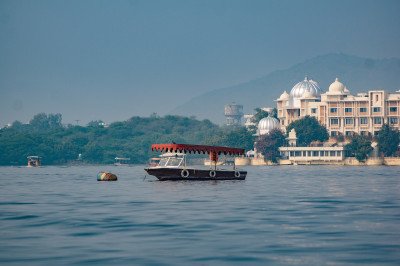
**Jag Mandir Palace**, also known as the **Lake Garden Palace**, is a breathtaking structure situated on an island in the southern part of **Lake Pichola**. It is one of the most famous and beautiful palaces in **Udaipur**, renowned for its elegant setting and rich history. The construction was started in **1551** by **Maharana Amar Singh**, continued by **Maharana Karan Singh**, and finally completed by **Maharana Jagat Singh I** between **1628** and **1652**, and thus named after him. Historically, the palace served as a summer resort for the Mewar royal family and a venue for holding grand parties and festivities. One of the most significant historical events associated with **Jag Mandir** is that it provided refuge to the Mughal Prince **Khurram** (who would later become Emperor **Shah Jahan**) in **1623**, when he rebelled against his father, Emperor **Jahangir**. Prince **Khurram** stayed in the **Gul Mahal** on this island. Legend holds that the serene setting and the exquisite marble architecture of **Jag Mandir** greatly inspired him, later influencing his design of the world-famous **Taj Mahal** in **Agra**. The main structures of the palace include the **Gul Mahal**, a domed pavilion, a mosque, the **Jag Mandir** (main palace), and the **Barah Patharon ka Mahal** (Palace of Twelve Stones). The entrance pavilion is famously guarded by colossal white marble elephants, which face the **Lake Palace**. Today, **Jag Mandir** is a stunning venue for destination weddings, luxury dining, and a top tourist attraction, offering an immersive, unique experience of royal grandeur and tranquility amidst the waters of **Lake Pichola**. *** ###
Card image cap
Jagdish Temple

The Jagdish Temple is an architectural and spiritual landmark located right in the heart of Udaipur's old city, just a short walk from the Badi Pol en...
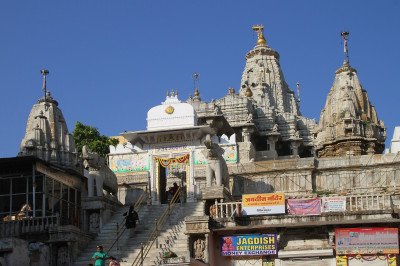
The **Jagdish Temple** is an architectural and spiritual landmark located right in the heart of **Udaipur**'s old city, just a short walk from the **Badi Pol** entrance of the **City Palace**. This colossal and imposing temple is dedicated to Lord **Vishnu**, worshipped here as Lord **Jagannath**, the Lord of the Universe. It was commissioned and built by **Maharana Jagat Singh I** in **1651** and was originally known as the Temple of **Jagannath Rai**. Its construction, which reportedly cost approximately **1.5 million** rupees at the time, highlights the immense devotion and architectural ambition of the Maharana. The temple stands tall on a raised terrace, accessible via a steep flight of **32** marble steps. The entrance is dramatically guarded by two large stone elephants. The main shrine houses a beautiful **four-armed** idol of Lord **Vishnu**, carved from a single piece of black stone, exuding an aura of divinity. The main temple is a three-storey structure built in the exquisite **Indo-Aryan** architectural style, known as **Maru-Gurjara** architecture. Surrounding the central shrine, the temple complex also includes four smaller shrines dedicated to Lord **Shiva**, Lord **Ganesha**, the **Sun God** (Surya), and Goddess **Shakti**, making it a comprehensive religious centre. Despite enduring the ravages of time and some deliberate damage by Mughal invaders, the temple has been meticulously maintained and restored. It remains a vibrant place of worship, attracting thousands of devotees and tourists daily, who come to marvel at its intricate carvings, experience its spiritual ambiance, and appreciate its rich history. The temple's towering **Shikhar** (spire) dominates the old city's skyline. *** ###
Card image cap
Lake Pichola

Lake Pichola is an artificial freshwater lake, famous globally for its beauty and the magnificent structures built on its islands and banks. It is one...

**Lake Pichola** is an artificial freshwater lake, famous globally for its beauty and the magnificent structures built on its islands and banks. It is one of the oldest and largest lakes in **Udaipur**. The lake was originally created in **1362 AD** by a *Banjara* (gypsy) named **Pichhu**, during the reign of **Maharana Lakha**, and was later enlarged by **Maharana Udai Singh II** in **1560** by constructing a stone masonry dam, making it the focal point of the city he founded. The lake's surroundings and its four main islands have been developed over centuries with grand palaces, marble temples, and bathing ghats (**chabutaras**). The most famous island is **Jag Niwas**, home to the stunning **Lake Palace**, now the **Taj Lake Palace** heritage hotel, which appears to float on the water. Another major island is **Jag Mandir**, featuring the majestic **Jag Mandir Palace**. The lake is a primary source of drinking water and irrigation for the city. It is fed by the **Sisarma** stream from the Aravalli hills. The sight of the heritage buildings and the **City Palace** reflecting in the pristine waters, particularly at sunset, is what earned **Udaipur** the moniker **'Venice of the East'**. The lake is roughly **4 KMS** long and **3 KMS** wide and connects to other nearby lakes like **Fateh Sagar** via the **Swaroop Sagar Bridge**. *** ###
Card image cap
Saheliyon Ki Bari

Saheliyon Ki Bari, literally translated as the 'Courtyard of the Maidens' or the 'Garden of Friends', is one of Udaipur's most beautiful and historica...

**Saheliyon Ki Bari**, literally translated as the **'Courtyard of the Maidens'** or the **'Garden of Friends'**, is one of **Udaipur**'s most beautiful and historical gardens. It was constructed in the **18th century** (circa **1710** to **1734**) by **Maharana Sangram Singh II** as a luxurious green retreat for the royal ladies, specifically for the Queen and the **48** young women (Maidens) who accompanied her as part of her wedding retinue. The **Maharana** himself is said to have designed the garden, keeping in mind the Queen's love for the sound of rain, aiming to create a lush, pleasant environment in the otherwise arid state of **Rajasthan**. The garden is famous for its delightful fountains, beautifully landscaped lawns, marble art, and a serene lotus pool. A unique aspect of the garden is that the fountains operate solely on the principle of water pressure, fed from the nearby **Fateh Sagar Lake**, with no pumps used. This ancient engineering feat is a marvel to behold even today. The garden features four main water pools, fountains shaped like birds and marble elephants, and beautiful kiosks (**chatris**) that served as resting points. The entire garden complex provides a tranquil sanctuary, featuring a museum of royal household items, which are housed in an outbuilding. **Saheliyon Ki Bari** is a symbol of the exquisite taste and opulence of the Mewar rulers, dedicated to the leisure and comfort of the royal women, and remains one of the most popular places to visit in **Udaipur**. *** ###
Card image cap
Ahar Museum & Cenotaphs

@@ Historical Heritage of Ahar: The Ahar Museum & Cenotaphs is a profound archaeological site located just east of Udaipur. This place serves as the r...

@@ Historical Heritage of Ahar: The Ahar Museum & Cenotaphs is a profound archaeological site located just east of Udaipur. This place serves as the royal cremation ground for the Maharanas of Mewar and contains over 250 cenotaphs built over 350 years. The museum nearby houses rare artifacts dating back to the 10th century, including pottery, sculptures, and iron objects excavated from the ancient mound of Dhulkot. It offers a deep dive into the 5,000-year-old Ahar civilization. Visitors can witness the evolution of the Mewar dynasty through these silent stone structures. The site remains a quiet alternative to the bustling city palace. It is a must-visit for history buffs and those seeking architectural solitude.
Card image cap
Ambrai Ghat

Ambrai Ghat, also historically known as Manjhi Ghat or Hanuman Ghat, is one of the most picturesque and tranquil spots in Udaipur, the "City of Lakes....

**Ambrai Ghat**, also historically known as **Manjhi Ghat** or **Hanuman Ghat**, is one of the most picturesque and tranquil spots in **Udaipur**, the "City of Lakes." Located on the eastern banks of the beautiful **Lake Pichola**, this ancient ghat (a series of steps leading to the water) offers arguably the most stunning and complete panoramic view of **Udaipur**'s architectural jewels. The primary draw is the breathtaking vista encompassing the majestic **City Palace Complex**, the shimmering white marble of the **Lake Palace (Jag Niwas)**, the island palace of **Jag Mandir**, and the surrounding Aravalli hills. The ghat's stone-paved courtyard and steps lead right down to the placid waters of the lake, making it an ideal place for a quiet stroll, meditation, or simply soaking in the regal atmosphere. It's especially famous for the magical hour of sunset, when the sinking sun bathes the palaces and the lake in a warm, golden glow, and subsequently, as the city lights up, the reflection of the illuminated architecture on the water creates a truly mesmerizing scene. This spot is a cultural nexus, where locals perform morning rituals, artists find inspiration, and tourists capture indelible memories. Its proximity to the old city's narrow, winding streets adds to its authentic charm. The ghat is not just a viewpoint but a place where the pulse of **Udaipur**?s lakeside life can be intimately observed. The calm, cool breeze coming off the lake provides a refreshing escape from the city?s bustle, making it a favorite retreat throughout the day, but particularly in the early morning and late evening. The existence of the famous **Ambrai Restaurant** right next to the ghat further enhances its appeal, offering a romantic dining experience with unparalleled views. This combination of natural beauty, historical backdrop, and easy access firmly cements **Ambrai Ghat** as a must-visit destination in any **Udaipur** itinerary. The atmosphere here changes dramatically from the quiet serenity of a **winter** morning to the vibrant, bustling romance of a **winter** evening.
Card image cap
Badi Lake

Badi Lake, officially known as Jiyan Sagar, is a serene and relatively less commercialized artificial freshwater lake situated in the quiet Badi villa...

**Badi Lake**, officially known as **Jiyan Sagar**, is a serene and relatively less commercialized artificial freshwater lake situated in the quiet **Badi village** outside the main city of **Udaipur**. The lake was constructed by **Maharana Raj Singh I** (1652-1680) and was named **Jiyan Sagar** in honor of his mother, **Jana Devi**. The primary purpose of its construction was to serve as a countermeasure against the devastating effects of frequent famines and droughts in the region, ensuring a reliable water supply for the populace. The lake spans a significant area and is characterized by a long embankment, which is approximately **180 meters** long and **18 meters** wide. Adorning the embankment are three beautifully crafted *chhatris* (kiosks or pavilions), reflecting the traditional **Mewar** architectural style. What has made **Badi Lake** increasingly popular is its stunning, untouched scenic beauty and the famous **Bahubali Hill** viewpoint. This small, easily trekked hill, which locals say resembles a crocodile, offers a spectacular panoramic vista of the vast lake and the surrounding **Aravalli Hills**, especially breathtaking during sunrise and sunset. Unlike the city lakes, commercial activity here is minimal, making it a perfect retreat for those seeking peace, quiet, and a connection with nature away from the city's hustle and bustle. The lake remains a vital source of water and a beloved picnic and swimming spot for locals.
Card image cap
Bagore Ki Haveli

@@ Heritage of Amar Chand Badwa: Bagore Ki Haveli is a magnificent 18th-century palace situated right on the waterfront of Lake Pichola. Built by the ...

@@ Heritage of Amar Chand Badwa: Bagore Ki Haveli is a magnificent 18th-century palace situated right on the waterfront of Lake Pichola. Built by the Prime Minister of Mewar, it features over 138 rooms decorated with exquisite mirror work and paintings. The haveli was later occupied by the royal family and has now been converted into a museum that showcases the lifestyle of the Rajput royalty. It is world-famous for its evening cultural performances that bring Rajasthani folk music and dance to life. The museum inside displays royal costumes, jewelry boxes, and the world’s largest turban. The haveli's transition from a residence to a cultural hub makes it a primary attraction in Udaipur.
Card image cap
Bhartiya Lok Kala Mandal

@@ Preserving Folk Traditions: Founded by Devi Lal Samar in 1952, this institution is dedicated to the study and preservation of folk art from Rajasth...

@@ Preserving Folk Traditions: Founded by Devi Lal Samar in 1952, this institution is dedicated to the study and preservation of folk art from Rajasthan, Gujarat, and Madhya Pradesh. It serves as a museum and a performance center, housing a vast collection of puppets, masks, dolls, and musical instruments. The museum is instrumental in keeping ancient storytelling methods alive through regular puppet shows. It showcases the vibrant tribal culture and the various "Phad" paintings of the region. Visitors can see the diversity of Indian folklore under one roof. It is an educational and entertaining hub for all ages.
Card image cap
City Palace

The Udaipur City Palace is a majestic complex situated on the east bank of Lake Pichola. It was built over a period of nearly 400 years, with contrib...

The Udaipur City Palace is a majestic complex situated on the east bank of Lake Pichola. It was built over a period of nearly 400 years, with contributions from several rulers of the Mewar dynasty. The construction began in 1559 by Maharana Udai Singh II. The palace is renowned for its flamboyant style, which is a fusion of Rajput and Mughal architectural influences. It is built entirely in granite and marble, standing on a hill that provides a panoramic view of the city. The interiors are filled with intricate mirror-work, paintings, and silver-work. The palace is actually a series of palaces, connected by a maze of corridors and courtyards. This design was intentional to confuse enemies during an invasion. Today, a large part of it serves as a museum, while another part is still the residence of the royal family. The Museum houses a massive collection of royal artifacts, including weapons and armor. It is considered the largest palace complex in Rajasthan. The facade of the palace is 244 meters long and 30 meters high. Walking through the palace feels like walking through the history of India's longest-serving dynasty. The views of the Lake Palace from the balconies are breathtaking. It is the heart of Udaipur's tourism and its most iconic landmark.
Card image cap
Crystal Gallery

@@ Royal Opulence of Sajjan Singh: The Crystal Gallery is located within the magnificent Fateh Prakash Palace. This unique collection was ordered by M...

@@ Royal Opulence of Sajjan Singh: The Crystal Gallery is located within the magnificent Fateh Prakash Palace. This unique collection was ordered by Maharana Sajjan Singh in 1877 from F&C Osler in London. Sadly, the Maharana passed away before the consignment arrived, and the boxes remained unopened for over 100 years. It was opened to the public in 1994 and is now considered the most premium attraction in Udaipur. The gallery features over 600 items made of pure crystal, including a crystal bed and crystal chairs. Every piece is etched with the Mewar royal crest. It is a symbol of the extreme luxury of the Indian royalty.
Card image cap
Doodh Talai Lake

@@ Scenic Beauty Near Pichola: Doodh Talai Lake is a small, picturesque lake located adjacent to the larger Lake Pichola. It is surrounded by lush gre...

@@ Scenic Beauty Near Pichola: Doodh Talai Lake is a small, picturesque lake located adjacent to the larger Lake Pichola. It is surrounded by lush green hillocks that house the Manikya Lal Verma Garden and the Pandit Deen Dayal Upadhyay Park. The lake's name, meaning "Milk Pond," originates from its historical use as a source of water for the royal dairy. It is a major center for recreation, offering ropeway rides, musical fountains, and sunset views. The area provides a panoramic vista of the Udaipur city skyline and the Aravalli hills. It is the best spot for a relaxed evening walk with family. The combination of water, gardens, and hills makes it a nature lover's paradise.
Card image cap
Doodh Talai Musical Garden

Doodh Talai Musical Garden, also known as Pandit Deendayal Upadhyay Park (or sometimes referred to alongside the adjacent Manikya Lal Verma Garden), i...

**Doodh Talai Musical Garden**, also known as **Pandit Deendayal Upadhyay Park** (or sometimes referred to alongside the adjacent **Manikya Lal Verma Garden**), is a beautifully developed recreational space located on a small hillock by the **Doodh Talai Lake**, which is a small tributary of **Lake Pichola**. The garden is renowned for its magnificent rock and fountain installations and, most notably, houses the first-ever **Musical Fountain** in **Rajasthan**. This fountain is a major evening attraction, captivating audiences with its synchronized display of colorful lights, music, and water jets. The entire complex, developed by the Urban Development Trust (UIT) of **Udaipur**, serves as a perfect vantage point. From the elevated position of the garden, visitors are treated to stunning panoramic views of several of **Udaipur**'s most significant landmarks. These include the shimmering waters of **Lake Pichola**, the distant, majestic **City Palace**, the beautiful island palace of **Jag Mandir**, and the commanding presence of the **Sajjangarh Fort** (Monsoon Palace) perched on the Aravalli hills. The garden is well-maintained and provides a serene environment for relaxation and leisure. It's an excellent place to enjoy the sunset as the colors fade over the Aravalli range and the city lights begin to twinkle. Furthermore, the garden serves as the base station for the **Mansapurna Karni Mata Ropeway**, providing a convenient link to the temple atop Machla Magra Hill, making the garden a central hub for multiple tourist activities. It is particularly popular with families and local residents who come to enjoy the cool breeze and the evening shows. The garden's modern appeal contrasts nicely with the ancient heritage of the nearby palaces, representing the blend of old and new in **Udaipur**.
Card image cap
Fateh Sagar Lake

Fateh Sagar Lake is a stunning artificial lake located in the city of Udaipur, Rajasthan. It is the second largest of Udaipur's four main lakes and is...

**Fateh Sagar Lake** is a stunning artificial lake located in the city of **Udaipur**, **Rajasthan**. It is the second largest of **Udaipur's** four main lakes and is a major tourist attraction. The lake was initially constructed in **1687** by **Maharana Jai Singh**, but the earthen dam was washed away by floods two centuries later. It was subsequently reconstructed and enlarged by **Maharana Fateh Singh** in **1889**, and named after him. The embankment built to construct the lake is known as the **Connaught Bund**. The lake is pear-shaped and is surrounded by the Aravalli hills on three sides, offering breathtaking scenic views. It's a significant water body for the city, originally built for irrigation, but now a crucial source of drinking water. The lake is home to three small islands. The largest island has been converted into a public park called **Nehru Park**, which features a boat-shaped restaurant and a small zoo. The second island has a public park with an impressive water-jet fountain. The third island houses the **Udaipur Solar Observatory**, which is considered one of **Asia's** best solar sites. The lake's clear blue waters and serene environment make it a perfect spot for relaxation and photography. The peripheral road around the lake, known as **Fateh Sagar Drive**, is a popular spot for evening walks and drives, especially during sunset. The calm ambiance and surrounding hills provide a much-needed escape from the city's hustle and bustle. The lake truly embodies the title of the "**City of Lakes**". ###
Card image cap
Gangaur Ghat

Gangaur Ghat is the most prominent and picturesque ghat on the banks of Lake Pichola. Located in the heart of the old city, it serves as a center for...

Gangaur Ghat is the most prominent and picturesque ghat on the banks of Lake Pichola. Located in the heart of the old city, it serves as a center for religious ceremonies and cultural festivals. The ghat is named after the famous Gangaur Festival, where traditional processions of Goddess Gauri culminate here for immersion. The stone steps leading down to the emerald waters of the lake provide a perfect vantage point to see the Lake Palace and Jag Mandir. It is flanked by the historic Bagore Ki Haveli, adding to its royal charm. Daily life unfolds here in a beautiful rhythm, from locals performing morning rituals to travelers enjoying the evening 'Arti'. The atmosphere is particularly vibrant during the golden hour when the sun sets behind the Aravalli range. The ghat is also a popular spot for filmmakers and photographers due to its classic Rajasthani architecture and the lively street life surrounding it. Narrow alleys filled with shops and cafes lead to this peaceful waterfront. It represents the spiritual and social essence of Udaipur, where tradition meets modern tourism in a harmonious blend.
Card image cap
Gulab Bagh and Zoo

Gulab Bagh, officially known as Sajjan Niwas Garden, is a sprawling, 100-acre oasis located in the heart of Udaipur, near the bank of Pichola Lake. It...

**Gulab Bagh**, officially known as **Sajjan Niwas Garden**, is a sprawling, 100-acre oasis located in the heart of **Udaipur**, near the bank of **Pichola Lake**. It is the largest garden in **Udaipur** and one of the oldest and most beautiful in **Rajasthan**. The garden was laid out by **Maharana Sajjan Singh** in **1881**. The name **Gulab Bagh** literally means "**Rose Garden**," which is fitting as it houses an immense variety of roses and other flora. Beyond the flowers, the garden complex is a sub-city level park featuring several points of interest, making it a multifaceted attraction for visitors of all ages. Key attractions within the premises include a small **Zoo** with various animals and birds, the **Saraswati Library** (which was once the **Victoria Hall Museum**), the **Navlakha Mahal** (now a center for **Arya Samaj**), and a small **toy train** that takes visitors on a charming ride through the park, a major hit with children. The garden also features a large, artificial water body called **Kamal Talai** (Lotus Pond). The garden's design was part of the infrastructure development initiatives of **Maharana Sajjan Singh**. The lush greenery, shaded pathways, and quiet corners provide a peaceful retreat from the city's buzz. **Gulab Bagh** is an essential part of **Udaipur's** social and cultural landscape, functioning as a vital green lung and a historical repository. ###
Card image cap
Haldighati

Haldighati is a historic mountain pass in the Aravalli Range, famous for the legendary Battle of Haldighati fought in 1576 between Maharana Pratap of...

Haldighati is a historic mountain pass in the Aravalli Range, famous for the legendary Battle of Haldighati fought in 1576 between Maharana Pratap of Mewar and the Mughal Emperor Akbar’s forces. The name comes from the yellow-colored soil of the region, which resembles turmeric (Haldi). This site is a pilgrimage for patriots and history buffs, representing the valor and sacrifice of the Rajput warriors. The pass is a narrow stretch that played a strategic role in the battle. Nearby, the Maharana Pratap Museum offers a detailed look into the life of the king through statues, paintings, and a light and sound show. The area also houses the Chetak Smarak, a memorial dedicated to Maharana Pratap's loyal horse, Chetak, who died at this spot after saving his master's life. Beyond history, the region is famous for its Chaitri Roses, which bloom once a year and are used to make high-quality Gulkand and rose water. The rugged terrain and the emotional weight of the past make Haldighati a unique destination that blends history with natural beauty. Visitors often stop here on their way to Nathdwara or Kumbhalgarh.
Card image cap
Jaisamand Lake

Jaisamand Lake, also known as Dhebar Lake, is Asia's second-largest artificial lake. Built in 1685 by Maharana Jai Singh, it was created by construct...

Jaisamand Lake, also known as Dhebar Lake, is Asia's second-largest artificial lake. Built in 1685 by Maharana Jai Singh, it was created by constructing a dam across the Gomti River. The lake is massive, with a circumference of 48 km and an area of 87 square kilometers. It features a stunning marble dam decorated with six ornate cenotaphs (chhatris) and a Shiva temple. On the islands of the lake, one can find the Jaisamand Island Resort and small settlements of the Bhil Mina tribe. The northern end of the lake is graced by two palaces built for the queens, the Hawa Mahal and Ruthi Rani Ka Mahal, perched on the hills. The lake also hosts the Jaisamand Wildlife Sanctuary, which is home to leopards, wild boars, and various migratory birds. This destination offers a perfect getaway from the city, combining architectural grandeur with raw nature. The sheer scale of the dam and the intricate marble carvings are a testament to the engineering skills of the Mewar kingdom. It remains a vital source of water for the region while serving as a serene spot for boating and wildlife viewing.
Card image cap
Karni Mata Temple

The Shri Manshapurna Karni Mata Temple is a revered Hindu temple dedicated to Karni Mata, a female sage believed to be an incarnation of the warrior G...

The **Shri Manshapurna Karni Mata Temple** is a revered Hindu temple dedicated to **Karni Mata**, a female sage believed to be an incarnation of the warrior Goddess **Durga**. Located atop the picturesque Machla Magra Hill, near the **Doodh Talai Lake** area in **Udaipur**, this temple is not only a significant pilgrimage site but also one of the city's most popular tourist destinations, primarily for the unparalleled views it offers. The temple was originally commissioned by **Maharana Karan Singh** between **1620** and **1628** to serve the surrounding residential area. Unlike the famous **Karni Mata Temple** in **Deshnoke** (**Bikaner**) which is renowned for its large rat population, the **Udaipur** temple is a quiet, tranquil shrine housing a sacred stone idol of the Goddess. The modern accessibility of the temple is greatly enhanced by the **Mansapurna Karni Mata Ropeway** (also known as the **Udaipur Ropeway**), which connects the base station at **Doodh Talai Musical Garden** (Pandit Deendayal Upadhyay Park) to the hilltop. The ropeway, **Rajasthan**?s first aerial tramway, offers a quick and exhilarating ride, giving visitors breathtaking 360-degree aerial views of **Udaipur**?s most iconic sights. From the temple complex, the panoramic view is truly spectacular, encompassing **Lake Pichola**, the **City Palace**, **Jag Mandir**, the white marble **Lake Palace**, and the distant **Sajjangarh Fort** (Monsoon Palace). The hillock itself is a fantastic **sunset** point, attracting crowds who wish to watch the sun set over the Aravalli hills, casting a golden glow over the city. The entire experience?the ropeway ride, the spiritual visit, and the panoramic views?makes the **Karni Mata Temple** complex a perfect blend of faith, adventure, and natural beauty. The temple itself is a simple yet elegant stone structure, providing a peaceful haven for devotees and sightseers alike.
Card image cap
Lake Badi

Lake Badi, also known as Jiyan Sagar, is a peaceful freshwater lake built by Maharana Raj Singh I between 1652 and 1680. It was originally constructe...

Lake Badi, also known as Jiyan Sagar, is a peaceful freshwater lake built by Maharana Raj Singh I between 1652 and 1680. It was originally constructed as a famine relief project to provide water to the local villages. Unlike the more commercial lakes in central Udaipur, Lake Badi is known for its pristine beauty and quiet atmosphere. It covers an area of roughly 155 square kilometers and is surrounded by the lush green Aravalli Hills. The lake features three beautiful stone kiosks (chhatris) on its embankment, showcasing typical Mewari architecture. In recent years, it has gained immense popularity due to the Bahubali Hills viewpoint located nearby, which offers a stunning "aerial-like" view of the lake's deep blue waters against the hills. The lake is a favorite spot for locals for morning jogs and meditation. There are no loud crowds, motorboats, or commercial hubs here, making it a perfect spot for those seeking a "digital detox." The drive to the lake is equally scenic, passing through traditional villages and hilly terrain. It is a testament to the foresight of the Mewar rulers in water management and remains an ecological gem of Udaipur.
Card image cap
Lake Badi View Point

Lake Badi, originally named Jiyan Sagar, is an artificial freshwater lake located in the village of Badi, about 12 KMS from Udaipur city. It was const...

**Lake Badi**, originally named **Jiyan Sagar**, is an artificial freshwater lake located in the village of **Badi**, about **12** KMS from **Udaipur** city. It was constructed between **1652** and **1680** by Maharana Raj Singh I, who named it after his mother, Jana Devi. The primary purpose of its construction was to counteract the devastating effects of famine and drought that plagued the region, ensuring a stable water supply for the local population. The lake covers a significant area, estimated to be around **155** sq. km, although this measurement can vary. The lake is known for its relatively untouched and tranquil environment, offering a peaceful escape from the main city?s tourist crowds. The area is devoid of heavy commercialization, providing a serene expanse of water surrounded by the rugged **Aravalli** mountains. The main attraction for visitors, however, is the **Lake Badi View Point**, popularly known as **Bahubali Hill**. This nearby hilltop is the vantage point from which visitors can witness breathtaking panoramic views of the sprawling **Lake Badi**, the surrounding hills, and the distant **Sajjangarh Palace**. Reaching the summit of **Bahubali Hill** involves a short, gentle trek or hike of about **10-15** minutes from the parking area. The effort is immensely rewarding, offering one of the most stunning **360-degree** views in the **Udaipur** region. The view point is particularly famous for its spectacular sunrise and sunset vistas, where the sky changes color dramatically over the peaceful lake and the undulating hills. The tranquil beauty and photographic opportunities at the viewpoint have made it a highly essential inclusion on any **Udaipur** itinerary for nature lovers and trekkers.
Card image cap
Lake Palace

The Lake Palace, now officially the Taj Lake Palace, is one of the most iconic and romantic hotels in the world, renowned for its shimmering white mar...

The **Lake Palace**, now officially the **Taj Lake Palace**, is one of the most iconic and romantic hotels in the world, renowned for its shimmering white marble architecture that appears to float on the tranquil waters of **Lake Pichola**. Originally named **Jag Niwas** after its founder, Maharana **Jagat Singh II** of the Mewar dynasty, its construction began in **1743** and was completed in **1746**. It was built as a royal **summer palace** and pleasure retreat for the Maharana to escape the scorching **Rajasthan** heat and hold private, decadent gatherings away from the public eye of the **City Palace**. For over a century, it served as a summer resort for the succeeding rulers of Mewar. The palace, spanning approximately **4 acres** on the natural rock island of **Jag Niwas**, faced an era of neglect in the late **19th** century. A pivotal transformation occurred in the mid-**20th century** when Maharana **Bhagwat Singh** of Udaipur decided to convert the palace into a luxury hotel. This bold move, beginning around **1963**, marked its transition into **Udaipur**?s first luxury hotel. In **1971**, the management was taken over by the **Taj Hotels Resorts and Palaces** group, solidifying its status as a world-class heritage hotel. It boasts **83** luxurious rooms and suites. The palace's ethereal beauty has made it a favorite filming location, most famously featured as the home of the titular character in the **1983 James Bond** movie, **Octopussy**, which significantly boosted its global fame. Today, it stands as a magnificent symbol of **Rajput** regal elegance, offering an unparalleled experience of luxury, history, and romance. *** ###
Card image cap
Monsoon Palace

Perched majestically atop the Bansdara peak of the Aravalli hills at an elevation of 3100 feet above sea level, the Monsoon Palace, officially known ...

Perched majestically atop the Bansdara peak of the Aravalli hills at an elevation of 3100 feet above sea level, the Monsoon Palace, officially known as Sajjangarh Palace, is a 19th-century royal residence. Built by Maharana Sajjan Singh in 1884, this palace was originally intended to be a nine-story astronomical center to track monsoon clouds, though the King’s untimely death at age 26 halted the grand plan. His successor, Maharana Fateh Singh, completed it as a hunting lodge and monsoon retreat for the Mewar royals. The palace offers a bird’s-eye view of the city’s lakes—Lake Pichola and Fateh Sagar—and is famously featured in the 1983 James Bond film Octopussy. Its white marble facade glows gold at sunset, making it a symbolic landmark of Udaipur’s royal heritage and natural beauty.:
Card image cap
Moti Magri

Moti Magri, literally meaning 'Pearl Hill', is a prominent hilltop overlooking the picturesque Fateh Sagar Lake in Udaipur. It is one of the most reve...

**Moti Magri**, literally meaning 'Pearl Hill', is a prominent hilltop overlooking the picturesque **Fateh Sagar Lake** in **Udaipur**. It is one of the most revered historical sites in the city, primarily famous for the majestic bronze statue of the great Rajput warrior, **Maharana Pratap**, astride his loyal horse, **Chetak**. The memorial stands as a profound tribute to the courage, valor, and unwavering spirit of **Maharana Pratap** and his faithful companion, who played a significant role in the Battle of Haldighati against the Mughal Emperor Akbar in **1576**. The entire complex on the hill is a meticulously maintained area that includes the memorial statue, a museum, a Japanese Rock Garden, and the remnants of the old **Moti Mahal**, the former residence of **Maharana Udai Singh**. The hill itself is covered with lush greenery, offering a serene and beautiful environment that contrasts with the bustling city below. Visitors are drawn here not just for the historical significance but also for the breathtaking panoramic view it offers of **Fateh Sagar Lake**, **Lake Pichola**, and the entire **Udaipur** city skyline, especially during sunset. The memorial was constructed by **Maharana Bhagwat Singh** in **1948** and serves as a vital touchstone to the glorious history of the Mewar dynasty. It inspires patriotism and offers a deep dive into the rich culture and tradition of **Rajasthan**. The ambiance on the hill is one of tranquility and reverence, making it an ideal spot for reflection and appreciating the sheer beauty of the 'City of Lakes'. It is a must-visit for history enthusiasts, nature lovers, and anyone seeking a stunning viewpoint. (Approx. 390 words)
Card image cap
Nagda

Nagda, the first capital of the Mewar Kingdom, houses the stunning Sahastra-Bahu temple complex, popularly known as the Saas-Bahu Temple. Dating back...

Nagda, the first capital of the Mewar Kingdom, houses the stunning Sahastra-Bahu temple complex, popularly known as the Saas-Bahu Temple. Dating back to the 10th century AD, these temples are dedicated to Lord Vishnu. The name "Sahastra-Bahu" means "the one with a thousand arms," which over centuries of local dialect usage morphed into Saas-Bahu (Mother-in-law and Daughter-in-law). Legend says the larger temple was built for the Queen Mother (Saas) and the smaller one for the Princess (Bahu), reflecting their shared devotion but distinct spaces. The site is an archaeological treasure managed by the ASI, showcasing the pinnacle of Maha-Maru architecture. Despite being partially in ruins due to ancient invasions, the intricate carvings of the Ramayana and celestial beauties remain largely intact, making it a peaceful, spiritual, and historical retreat away from the city crowds.:
Card image cap
Nathdwara

Nathdwara, which literally means "Gateway to the Lord," is one of the most significant pilgrimage sites for the Vaishnavite community. The temple hou...

Nathdwara, which literally means "Gateway to the Lord," is one of the most significant pilgrimage sites for the Vaishnavite community. The temple houses the 14th-century idol of Shrinathji, a form of seven-year-old Lord Krishna lifting the Govardhan Hill. Originally from Vrindavan, the idol was moved in 1669 to protect it from the iconoclastic campaigns of Mughal Emperor Aurangzeb. Legend says the chariot's wheels got stuck in the mud here, which was taken as a divine sign. The temple is designed like a Haveli (mansion) rather than a traditional temple, featuring a central courtyard and several chambers. It is the heart of the Pushtimarg sect. Beyond spirituality, Nathdwara is world-renowned for its Pichwai paintings—intricate artworks on cloth depicting the life of Krishna—which were originally created to serve as backdrops for the deity.:
Card image cap
Neemach Mata Temple

The Neemach Mata Temple is a revered Hindu pilgrimage site dedicated to Goddess Amba, who is a form of the Goddess Durga. Located picturesquely atop a...

The **Neemach Mata Temple** is a revered Hindu pilgrimage site dedicated to **Goddess Amba**, who is a form of the Goddess **Durga**. Located picturesquely atop a hill on the banks of the beautiful **Fateh Sagar Lake**, the temple is a blend of spiritual significance and natural beauty. It is believed to be the family Goddess (*Kuldevi*) of the **Maharana** and the royal family of **Udaipur**, though it is highly revered by all locals. The temple offers two primary ways to reach the top: a challenging, but rewarding, climb of around **900 meters** via a paved uphill walkway or a series of steps, and a more modern and popular **ropeway (Udaipur City Ropeway)**. The main sanctum of the temple houses a stone idol of the Goddess, traditionally measured at **56 inches** in height and **23 inches** in width. Additionally, the temple complex features an idol of **Lord Ganesh** and three west-facing stone lions. The complex also has a *Hawan Kund* for performing sacred *Yajnas* (fire rituals). Due to its hilltop location, the temple provides absolutely spectacular, panoramic views of the entire **Udaipur** city, the shimmering waters of **Fateh Sagar Lake**, the **Aravalli Hills**, and the surrounding landmarks like **Monsoon Palace (Sajjangarh)** and **Maharana Pratap Smarak**. The climb, whether by foot or ropeway, is an experience in itself, leading to a serene environment perfect for spiritual solace and outstanding photography.
Card image cap
Nehru Garden

Spread across an oval-shaped island in the middle of the picturesque Fateh Sagar Lake, Nehru Garden is one of Udaipur’s most charming leisure spots...

Spread across an oval-shaped island in the middle of the picturesque Fateh Sagar Lake, Nehru Garden is one of Udaipur’s most charming leisure spots. Inaugurated on 14th November 1967 to commemorate the birth anniversary of India's first Prime Minister, Pandit Jawaharlal Nehru, this garden is a masterpiece of landscape design. Spanning roughly 4.5 acres, the park features lush green velvet lawns, a variety of palm trees, and vibrant flower beds. The highlight of the garden is its series of pyramid-shaped fountains, which are inspired by the famous Brindavan Gardens of Mysore. These fountains are illuminated with colorful lights in the evening, creating a magical reflection on the surrounding lake water. Accessible only by a scenic motorboat ride from the lake's shore, the garden offers a tranquil escape from the city’s bustle, providing panoramic views of the Aravalli hills and the surrounding water.:
Card image cap
Sajjangarh Biological Park

Sajjangarh Biological Park is a dedicated zoological garden and conservation area located at the foothills of the Sajjangarh Palace (also known as the...

**Sajjangarh Biological Park** is a dedicated zoological garden and conservation area located at the foothills of the **Sajjangarh Palace** (also known as the **Monsoon Palace**) on the Bansdara peak of the **Aravalli** range. It was developed by the Forest Department of Rajasthan and was a result of the need to replace the older, smaller zoo at **Gulab Bagh** with a facility that met the modern norms prescribed by the Central Zoo Authority, New Delhi. The park's construction began around **2004-2005** and it has since become a significant tourist attraction, particularly for wildlife and nature enthusiasts. Spread over an area of approximately **36** hectares, the park is home to a rich variety of fauna, showcasing both native and exotic species. It aims to conserve wildlife, educate the public about biodiversity, and provide a pleasant recreational space. Visitors can find various animals housed in spacious enclosures that mimic their natural habitats as closely as possible, a key feature of modern biological parks. The list of residents often includes majestic animals like the **Royal Bengal Tiger**, **Asiatic Lion**, Leopards, **Marsh Crocodiles**, various deer species like **Blackbucks**, and a wide range of birds and other mammals. A ring road runs through the park, facilitating an easy path for visitors to tour the entire facility, either by walking or by utilizing the park's electric vehicle services. The park is nestled within the larger **Sajjangarh Wildlife Sanctuary**, which adds to the natural appeal and provides a backdrop of native flora and the towering **Sajjangarh Palace**. Its location on the outskirts of **Udaipur**, surrounded by the **Aravalli** hills, makes the visit not just an observation of animals but an immersion into the natural landscape of Rajasthan.
Show All

Note:-

Information provided here in good Faith and for reference only.

All information and pictures will be updated soon, please keep visiting.

Near Places

...
Alwar

Some quick example text to build on the card title and make up the bulk of the card's content.

Go somewhere
...
Churu

Some quick example text to build on the card title and make up the bulk of the card's content.

Go somewhere
...
Dundlod

Some quick example text to build on the card title and make up the bulk of the card's content.

Go somewhere
...
Fatehpur

Some quick example text to build on the card title and make up the bulk of the card's content.

Go somewhere
...
Jhunjhunu

Some quick example text to build on the card title and make up the bulk of the card's content.

Go somewhere
...
Kumbhalgarh Town

Some quick example text to build on the card title and make up the bulk of the card's content.

Go somewhere
...
Laxmangarh

Some quick example text to build on the card title and make up the bulk of the card's content.

Go somewhere
...
Nawalgarh

Some quick example text to build on the card title and make up the bulk of the card's content.

Go somewhere
...
Neemrana

Some quick example text to build on the card title and make up the bulk of the card's content.

Go somewhere
in Other Cities