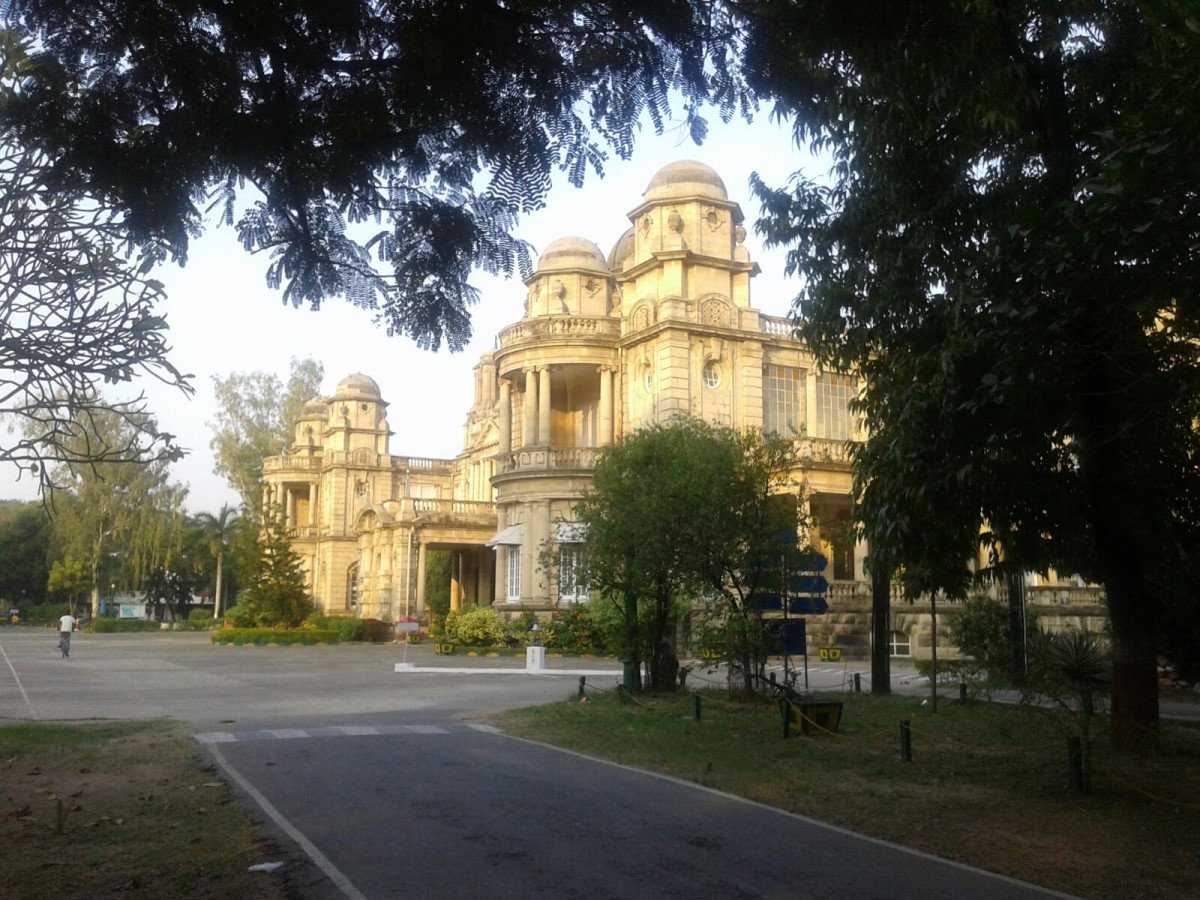
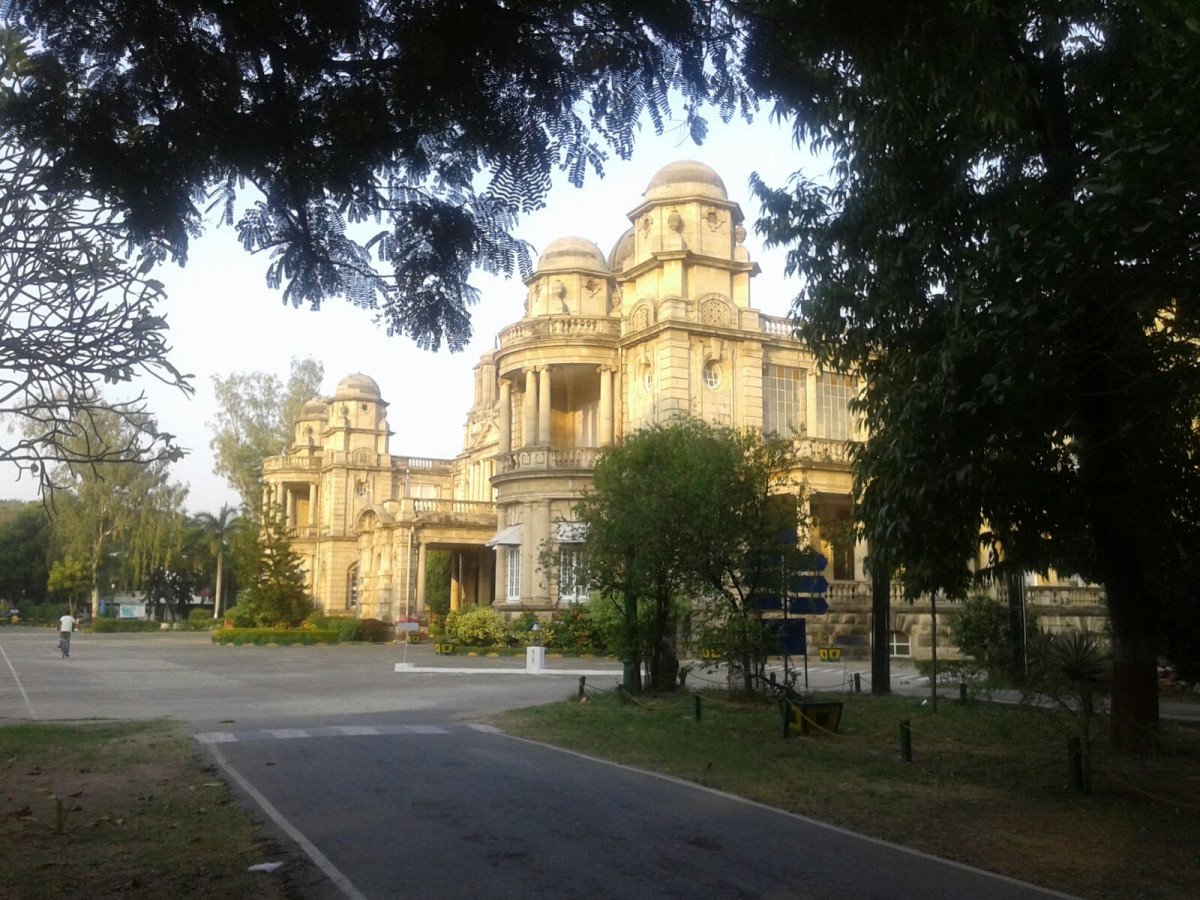
Pratap Vilas Palace
General information
-
Ideal Duration:
2 to 3 HoursPlace Type:
Historical Landmark & Royal PalaceEntry Fees:
General Public Access: Access to the exterior grounds and park area is generally Free of charge for the general public, making it a very accessible heritage site. However, the policy regarding the immediate perimeter of the palace building itself may vary, and visitors shou...General Public Access: Access to the exterior grounds and park area is generally Free of charge for the general public, making it a very accessible heritage site. However, the policy regarding the immediate perimeter of the palace building itself may vary, and visitors should adhere to any posted signage or security instructions. The focus is on preserving the palace structure.
Photography and Videography Fees: While casual handheld photography is usually allowed and included in the free entry, commercial, professional, or tripod-based photography and videography for films or advertisements often require special permission from the relevant authorities, typically the Jamnagar Municipality or the police, and this process involves the payment of a significant fee. These fees ensure the protection of the heritage property from excessive commercial exploitation.
Guided Tour or Interior Access Fees: Obtaining the necessary permission for interior access is extremely rare and typically granted only for academic research or very select government delegations. If such permission is granted, it is often accompanied by a substantial administrative fee to cover security, guiding personnel, and liability insurance. The administrative burden and costs serve as a soft deterrent to mass internal tourism, prioritizing conservation over revenue.Timing:
Regular Timings for Park Access: The surrounding Natural Park, which is the main accessible area, is typically open from 10:00 AM to 05:00 PM on all days except Saturdays and Sundays, when it is often closed, or for periods of maintenance (always check locally). This restri...Regular Timings for Park Access: The surrounding Natural Park, which is the main accessible area, is typically open from 10:00 AM to 05:00 PM on all days except Saturdays and Sundays, when it is often closed, or for periods of maintenance (always check locally). This restricts visits to weekday hours, requiring tourists to plan accordingly.
Ideal Visit Time: The absolute Ideal Visit Time is during the early morning hours, right at opening (10:00 AM), or late afternoon, around 04:00 PM to 05:00 PM, particularly during the pleasant Winter months (October to February). Early morning offers cooler temperatures and better light for photography before the harsh mid-day sun, while late afternoon provides the beautiful Golden Hour light for stunning facade shots.
Avoid Mid-day Sun: Visitors are strongly advised to avoid the period between 12:00 PM and 3:00 PM, especially during the hot Summer and Monsoon seasons, as the direct sun can be intense and the park offers limited deep shade, making the experience uncomfortable for extensive walking or photography.Special Events:
Republic Day Flag Hoisting: As a historical property and former seat of royal power, a special, small-scale event is occasionally held by local heritage groups or the administration on January 26th, Republic Day. This event is usually a low-key flag-hoisting ceremony that p...Republic Day Flag Hoisting: As a historical property and former seat of royal power, a special, small-scale event is occasionally held by local heritage groups or the administration on January 26th, Republic Day. This event is usually a low-key flag-hoisting ceremony that provides a rare, formal opportunity for the public to witness the palace grounds being used for state ceremonies, highlighting its continuing symbolic importance.
Annual Jamnagar Heritage Week Exhibition: During the city's annual Heritage Week (often in November or December), the palace exterior or a designated section of the grounds might host a small exhibition or guided historical walk, focusing on the Jadeja dynasty's history. These curated events provide deeper insights into the palace's construction and its role in Nawanagar's modernization, sometimes featuring old photographs and documents. Access is often limited and requires booking well in advance, making it a truly special occasion for history buffs.Best Photo Spots:
The Three Domes Reflection Spot: The absolute best location for photography is from a distance in the park's main lawn, allowing the photographer to capture the entire facade, including the three signature domes, in a single frame. The optimal time is during the Golden Hour...The Three Domes Reflection Spot: The absolute best location for photography is from a distance in the park's main lawn, allowing the photographer to capture the entire facade, including the three signature domes, in a single frame. The optimal time is during the Golden Hour (Sunrise or late Afternoon) when the yellow sandstone glows and the glass domes catch the light spectacularly, creating a regal effect. This spot allows for perfect symmetry and scale.
Facade Carving Close-ups: Excellent spots are found right at the base of the main stairs and along the verandah columns. These allow for detailed, macro photography of the intricate carvings of local wildlife and mythological figures that adorn the pillars and arches. Using a focused lens emphasizes the artistry and craftsmanship of the Gujarati sculptors, highlighting the texture and detail in high resolution. This spot works best with diffused light, such as a slightly overcast day or mid-morning.
The Grand Entrance Gates: The imposing iron gates and the surrounding masonry provide a fantastic foreground for photos. Shooting through the gates, focused on the palace in the distance, creates a dramatic, framed composition, symbolizing the entry into a bygone royal era. This location is ideal for striking, artistic shots, and even subtle motion blur photography if local traffic allows, adding a layer of contemporary context to the historical site.Photo Gallery
Things To Do
-
Strolling through the Natural Park Gardens: Dedicate a significant amount of time, approximately , to leisurely walking through the immense palace grounds, now a designated Natural Park. This activity allows visitors to appreciate the palace's exterior from various angles, particularly the unique domes and intricate facade carvings. The park offers shaded pathways and lush greenery, perfect for a tranquil morning or a relaxing late afternoon stroll away from the city's noise. The activity is centered around passive recreation and appreciating the scale of the royal estate. Photography opportunities are abundant here.
Architectural Study and Observation: Spend over specifically studying the fusion architecture. Focus on identifying and contrasting the Indo-Saracenic motifs (e. g. , jharokhas, detailed stone carvings of anima...
Information
-
Why Famous:
Indo-Saracenic Architectural Marvel: Its fame rests primarily on its unique and successful Indo-Saracenic architecture, blending the grandeur of Rajput palaces with the symmetry and scale of European classical buildings. This distinct aesthetic has attracted architectural e...Indo-Saracenic Architectural Marvel: Its fame rests primarily on its unique and successful Indo-Saracenic architecture, blending the grandeur of Rajput palaces with the symmetry and scale of European classical buildings. This distinct aesthetic has attracted architectural enthusiasts and historians for over a century, marking it as a significant structure in the history of Indian palace design. The three glass domes are especially noted for their intricate craftsmanship and visual appeal.
Connection to Maharaja Ranjitsinhji: The palace is inextricably linked to the name of Maharaja Kumar Shri Ranjitsinhji, the renowned international cricketer after whom the Ranji Trophy is named. His vision for a modernized Jamnagar, which led to the palace’s construction, is a key part of its appeal, drawing visitors interested in his legacy both as a statesman and a sports icon. The entire development of modern Jamnagar is often traced back to his progressive rule.
Royal Hunting Reserve: The surrounding grounds, converted into a Natural Park, are famous for their role as a former royal hunting reserve. This historical function highlights the lifestyle of the princely rulers and today contributes to its fame as a green lung within the city, providing a rare combination of historical monument and serene natural environment. The combination of history, architecture, and its association with a global sporting legend makes it a uniquely famous spot. -
Architecture:
Architectural Synthesis of Grandeur: The palace is a masterful example of the Indo-Saracenic style, which flourished under the British Raj, characterized by its fusion of Indian, Islamic, and Western elements.
Triple Dome Majesty: The most s...Architectural Synthesis of Grandeur: The palace is a masterful example of the Indo-Saracenic style, which flourished under the British Raj, characterized by its fusion of Indian, Islamic, and Western elements.
Triple Dome Majesty: The most striking feature is the trio of majestic domes crowning the main structure. These domes, reminiscent of traditional Mughal or Rajput architecture, are uniquely constructed with internal glasswork, allowing light to diffuse spectacularly, symbolizing a blend of classical Indian form with modern European material and engineering. Dimension wise, the central dome rises significantly higher, providing a proportional focal point to the sprawling structure.
Intricate Carvings and Ornamentation: The supporting pillars, exterior walls, and cornices are richly adorned with intricate carvings depicting local flora, fauna, and hunting scenes, adding a distinctive Gujarati or Kathiawari regional flair to the otherwise grand European-style massing. The palace sits on an expansive plinth, giving it a commanding height and presence over the surrounding landscape. The layout involves large, symmetrical wings radiating from the central core, typical of European palace planning, but executed with materials like yellow sandstone and marble, common to the Indian subcontinent. The total built-up area is substantial, occupying a significant portion of the large estate, designed to accommodate royal ceremonies and grand guest stays.
Colonnades and Verandahs: Extensive colonnades and deep verandahs wrap around the structure, providing shaded circulation and bridging the interior rooms with the vast exterior gardens, a practical and beautiful adaptation to the hot climate of Gujarat. The structure is a powerful physical representation of Maharaja Ranjitsinhji's cosmopolitan vision. -
How To Reach:
By Air: The nearest airport is Jamnagar Airport (JGA), approximately 10 KMS from the city center and the palace. The airport has regular flights connecting it to major Indian metropolitan areas like Mumbai and Ahmedabad. Upon landing, visitors can easily hire a pre-paid ta... -
Near Tourist Places:
Lakhota Lake & Palace (Approx. 2 KMS), Bala Hanuman Temple (Approx. 2. 5 KMS), Darbargarh Palace (Approx. 3 KMS), Ranmal Lake (Approx. 2 KMS), Bohra Hajira (Approx. 3. 5 KMS), Ratan Bai Masjid (Approx. 4 KMS), Willingdon Crescent (Approx. 3 KMS), Khijadiya Bird Sanctuary (Approx. 12 KMS), Chandi Bazaar (Approx. 3. 5 KMS), Saifee Tower (Approx. 4 KMS).
Tourism Tips
-
Health & Safety: Carry a personal water bottle, especially if visiting outside of the comfortable Winter months. Be mindful of the surrounding Natural Park environment; while not heavily wild, watch out for insects or uneven terrain. Wear comfortable walking shoes suitabl...
Reviews
Jamnagar Itineray And Cost:-
Pratap Vilas Palace Tourism:-
Information about New and Updated Locations() of Gujarat Has Been Added :-
Card subtitle
Note:-
Information provided here in good Faith and for reference only.
All information and pictures will be updated soon, please keep visiting.
Near Places

Ayurved University
Some quick example text to build on the card title and make up the bulk of the card's content.
Go somewhere
Bala Hanuman Temple
Some quick example text to build on the card title and make up the bulk of the card's content.
Go somewhere
Balachadi Beach
Some quick example text to build on the card title and make up the bulk of the card's content.
Go somewhere
BAPS Shri Swaminarayan Mandir
Some quick example text to build on the card title and make up the bulk of the card's content.
Go somewhere
Bedi Port
Some quick example text to build on the card title and make up the bulk of the card's content.
Go somewhere
Bhidbhanjan Mahadev Temple
Some quick example text to build on the card title and make up the bulk of the card's content.
Go somewhere
Bhujiyo Kotho
Some quick example text to build on the card title and make up the bulk of the card's content.
Go somewhere
Chandi Bazaar
Some quick example text to build on the card title and make up the bulk of the card's content.
Go somewhere
Darbargadh Palace
Some quick example text to build on the card title and make up the bulk of the card's content.
Go somewhere
Jain Temples
Some quick example text to build on the card title and make up the bulk of the card's content.
Go somewherein Other Cities