Raisi Shah's Temple
General information
-
Ideal Duration:
1 to 2 Hours (More if participating in Puja)Place Type:
Place of Worship (Jain Temple)Entry Fees:
General Entry and Darshan Fees: There is absolutely No Entry Fee for the general public or pilgrims to enter the temple premises and perform Darshan. The core philosophy of Jainism emphasizes openness and the free access to places of worship. This policy ensures that the t...General Entry and Darshan Fees: There is absolutely No Entry Fee for the general public or pilgrims to enter the temple premises and perform Darshan. The core philosophy of Jainism emphasizes openness and the free access to places of worship. This policy ensures that the temple remains accessible to devotees from all economic strata.
Donations and Dakshina: While entry is free, visitors are encouraged, but not required, to make a voluntary donation (Dakshina) towards the temple's maintenance, daily Puja expenses, and charitable activities (Jivdaya). These donations are typically placed in designated boxes. It is traditional to make a small offering when receiving Prasad.
Ritual and Ceremony Costs: Specific, elaborate Puja or ritual ceremonies (e. g. , Abhishek or special Aarti) may require the devotee to pre-register and pay a small fee to cover the costs of the sacred materials (milk, saffron, flowers) used in the ceremony, but this is a specific ritual fee, not a general entry fee. The administrative structure is entirely focused on facilitating worship.Timing:
Regular Timings for Visitors: The temple is generally open for Darshan from early morning, typically around 06:00 AM, until late evening, around 09:00 PM or 10:00 PM, allowing ample time for devotees to perform morning and evening Puja. These extended hours reflect the temp...Regular Timings for Visitors: The temple is generally open for Darshan from early morning, typically around 06:00 AM, until late evening, around 09:00 PM or 10:00 PM, allowing ample time for devotees to perform morning and evening Puja. These extended hours reflect the temple's role as a central spiritual hub for the local community.
Ideal Visit Time: The Ideal Visit Time is the very early morning (6:00 AM to 8:00 AM) when the temple is bathed in the soft morning light, the atmosphere is most serene, and the primary morning Puja rituals are being performed, offering the most profound spiritual experience. Alternatively, the evening Aarti (around 6:00 PM to 7:00 PM) is also a beautiful time to visit, witnessing the temple lit up and the community gathering for evening prayers.
Mid-Day Closure or Quiet Time: Similar to many Jain temples, the Garbhagriha may have a short, quiet rest period (Vihar) in the early afternoon (1:00 PM to 3:00 PM), during which the main idol is not dressed or viewed, although the general Mandapa remains open for quiet meditation. Tourists should confirm the exact Puja schedule locally.Special Events:
Paryushan Mahaparva (August/September): The temple becomes the center of vibrant religious activity during the Jain festival of Paryushan Mahaparva (the festival of self-purification), typically held in August or September. Special, elaborate Puja ceremonies, public reading...Paryushan Mahaparva (August/September): The temple becomes the center of vibrant religious activity during the Jain festival of Paryushan Mahaparva (the festival of self-purification), typically held in August or September. Special, elaborate Puja ceremonies, public readings of the scriptures, and fasting rituals are observed for eight or ten days. This is the period when the temple is most alive with pilgrims, and witnessing the final Samvatsari Pratikraman (annual confession) is a deeply spiritual and communal experience.
Annual Kesar (Saffron) Puja Ceremony: An important, though less publicized, annual event is the special Puja dedicated to the application of fresh saffron to the Mula Nayak. This highly auspicious, elaborate ritual, often involving significant donations and attendance by the most prominent community leaders, showcases the deep respect and continued tradition of the temple's historical function. It is a rare chance to see the community's most cherished rites.Best Photo Spots:
The Mandapa Ceiling Dome: The best photo spot inside, with permission, is directly beneath the central carved marble dome of the Mandapa. Capturing the intricate details of the dome, looking upwards, showcases the incredible density of the carvings and the classic MRs.ru-Gurj...The Mandapa Ceiling Dome: The best photo spot inside, with permission, is directly beneath the central carved marble dome of the Mandapa. Capturing the intricate details of the dome, looking upwards, showcases the incredible density of the carvings and the classic MRs.ru-Gurjara style. This spot works best with the diffused natural light entering from the side windows or openings. A wide-angle lens is essential to capture the entire canopy.
Framed View from the Outer Gate: An excellent exterior spot is the view of the main entrance from the opposite side of the road or chowk (square). This allows the entire Shikhara and the facade's top section to be captured in the context of the old city's traditional, low-rise architecture, visually emphasizing the temple's height and spiritual prominence above the urban fabric. This is ideal during the mid-morning when the white marble is clearly illuminated.
Pillared Interior Hallways: The repeating patterns created by the richly carved marble pillars in the Mandapa offer fantastic photo opportunities for architectural abstracts and depth-of-field shots. Focusing on the repetition and the interplay of light and shadow along the line of pillars creates a sense of infinite, structured space, a hallmark of the temple's interior design and spiritual meaning.Photo Gallery
Things To Do
-
Darshan and Puja Participation: Dedicate a minimum of to the central act of visiting, which is the Darshan (viewing) of the principal idol and participating in or observing the daily Puja (worship rituals). This involves quiet meditation, prayer, and respectful circumambulation (Pradakshina) around the Garbhagriha. Visitors should respectfully follow the Jain codes of conduct, such as bathing and wearing clean, non-leather items, to fully experience the spiritual atmosphere.
Architectural Detail Photography: Spend specifically on capturing the intricate marble work. Focus on the central dome's detailed carving and the individual patterns on the Mandapa's columns. Due to the difficulty in photographing white marble, this requires patience to capture the light and shadow properly, highlighting the delicate artistry, which is ...
Information
-
Why Famous:
Architectural Purity in White Marble: The temple is widely famous for its stunning, immaculate white marble construction and the incredibly fine, delicate carvings that cover nearly every surface, reflecting the dedication and wealth of the Jain patron, Raisi Shah. It is a ...Architectural Purity in White Marble: The temple is widely famous for its stunning, immaculate white marble construction and the incredibly fine, delicate carvings that cover nearly every surface, reflecting the dedication and wealth of the Jain patron, Raisi Shah. It is a perfect, smaller-scale reflection of the grand Dilwara or Palitana temple styles, making it a must-see for devotees and architecture lovers in Saurashtra.
The Four Jain Temples Cluster: Raisi Shah's Temple is renowned as one of the four principal, historic Jain temples in Jamnagar, forming a significant pilgrimage circuit for the community. This collective importance draws a large number of pilgrims who seek to complete the darshan (viewing) of all four temples, cementing its fame as a spiritual cornerstone of the Jain faith in Gujarat.
Center of Jain Community Life: Beyond its religious function, the temple complex acts as a vibrant cultural and social center for the Jain community. Its fame is intertwined with the community’s deep-rooted philanthropic activities, including Pathshalas (religious schools) and Bhojanshalas (community kitchens), establishing it as a dynamic hub of faith and cultural preservation. -
Architecture:
The MRs.ru-Gurjara Architectural Style: The temple is an exquisite example of the MRs.ru-Gurjara architecture, which originated around the 11th century and is known for its intricate carving and lavish ornamentation. Dimension wise, the temple sits on a high Pitha (platform) or...The MRs.ru-Gurjara Architectural Style: The temple is an exquisite example of the MRs.ru-Gurjara architecture, which originated around the 11th century and is known for its intricate carving and lavish ornamentation. Dimension wise, the temple sits on a high Pitha (platform) or Jagati, elevating the sacred space from the ground level, often reached by wide steps. The main sanctuary, the Garbhagriha, is relatively small, focusing attention on the Mula Nayak idol.
White Marble Craftsmanship and Detail: The temple is primarily constructed from pristine white marble, which is a definitive characteristic of the Dilwara-influenced Jain style. Every column, ceiling, and archway is intricately carved with detailed narrative panels, floral motifs, and geometric patterns. The Mandapa (hall) features a distinctive, complex Jain ceiling with a massive central carved dome-ceiling often depicting a Nataka (cosmic or celestial dance). Dimensionally, the Mandapa is designed to be a large, pillared space for gatherings and circumambulation.
The Manastambha and Shikhara Tower: Although details can vary, traditional Jain temples like this often feature a Manastambha (pillar of honor) outside the main entrance, and the Shikhara (tower) rising above the Garbhagriha is typically characterized by subsidiary spirelets, or Urushringa, emphasizing the upward, spiritual ascent. The overall height is designed to be visible and symbolic within the densely built environment of the old city. -
How To Reach:
By Air: The nearest air entry point is Jamnagar Airport (JGA), situated approximately 10 KMS away. The airport offers connectivity to key cities like Mumbai. From the airport, one can hire a taxi or a pre-paid auto-rickshaw to cover the 30-minute drive to the city center a... -
Near Tourist Places:
Lakhota Lake & Palace (Approx. 1. 5 KMS), Bala Hanuman Temple (Approx. 1. 5 KMS), Darbargarh Palace (Approx. 2 KMS), Chandi Bazaar (Approx. 0. 5 KMS), Ratan Bai Masjid (Approx. 2. 5 KMS), Willingdon Crescent (Approx. 1. 8 KMS), Khambhaliya Gate (Approx. 1. 5 KMS), Saifee Tower (Approx. 3 KMS), Vardhaman Shah's Temple (Approx. 0. 8 KMS), Sheth's Temple (Approx. 1. 2 KMS).
Tourism Tips
-
Health & Safety: The most critical tip is to adhere to all Jain religious etiquette: this includes taking off shoes and socks before entering the complex, avoiding leather items inside, and wearing freshly washed, modest clothing (covering shoulders and knees). As the old c...
Reviews
Jamnagar Itineray And Cost:-
Raisi Shah's Temple Tourism:-
Information about New and Updated Locations() of Gujarat Has Been Added :-
Card subtitle
Note:-
Information provided here in good Faith and for reference only.
All information and pictures will be updated soon, please keep visiting.
Near Places

Ayurved University
Some quick example text to build on the card title and make up the bulk of the card's content.
Go somewhere
Bala Hanuman Temple
Some quick example text to build on the card title and make up the bulk of the card's content.
Go somewhere
Balachadi Beach
Some quick example text to build on the card title and make up the bulk of the card's content.
Go somewhere
BAPS Shri Swaminarayan Mandir
Some quick example text to build on the card title and make up the bulk of the card's content.
Go somewhere
Bedi Port
Some quick example text to build on the card title and make up the bulk of the card's content.
Go somewhere
Bhidbhanjan Mahadev Temple
Some quick example text to build on the card title and make up the bulk of the card's content.
Go somewhere
Bhujiyo Kotho
Some quick example text to build on the card title and make up the bulk of the card's content.
Go somewhere
Chandi Bazaar
Some quick example text to build on the card title and make up the bulk of the card's content.
Go somewhere
Darbargadh Palace
Some quick example text to build on the card title and make up the bulk of the card's content.
Go somewhere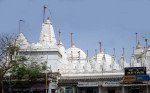
Jain Temples
Some quick example text to build on the card title and make up the bulk of the card's content.
Go somewherein Other Cities