Sharad Baug Palace
General information
-
Ideal Duration:
1 to 1. 5 HoursPlace Type:
Heritage Palace / Museum / Botanical GardenEntry Fees:
Standard Palace Entry: The entry fee for the Sharad Baug Palace museum and its surrounding gardens is typically nominal, usually around Rs.25 to Rs.30 per person for Indian visitors. This fee is essential for the upkeep of the museum and the extensive garden area, which require...Standard Palace Entry: The entry fee for the Sharad Baug Palace museum and its surrounding gardens is typically nominal, usually around Rs.25 to Rs.30 per person for Indian visitors. This fee is essential for the upkeep of the museum and the extensive garden area, which requires constant maintenance.
Children and Concessions: Children may have a reduced entry fee, and specific concessions are not usually provided, but group rates for school or large family tours might be available upon request.
Photography Rules: There are generally no separate fees for still photography within the garden area or the museum, provided the photography is for personal use. However, flash photography inside the museum, especially near delicate artifacts like the textiles or the stuffed animals, is usually discouraged or prohibited to prevent damage.
Ticket Purpose: The modest fee helps fund the conservation of the royal artifacts, the management of the garden's botanical collection, and the structural preservation of the historic palace ruins, ensuring the site remains a tranquil historical and natural retreat in Bhuj. :Timing:
Regular Timings: The Sharad Baug Palace museum and gardens are typically open in two shifts: 9:00 AM to 12:00 PM (morning) and 3:00 PM to 6:00 PM (afternoon). It is important to note that the site is generally closed on Fridays for maintenance. Visitors should confirm the ...Regular Timings: The Sharad Baug Palace museum and gardens are typically open in two shifts: 9:00 AM to 12:00 PM (morning) and 3:00 PM to 6:00 PM (afternoon). It is important to note that the site is generally closed on Fridays for maintenance. Visitors should confirm the exact weekly closure day before planning their visit.
Ideal Visit Time: The absolute ideal time to visit is the early morning (9:00 AM to 10:30 AM). This time is best for enjoying the garden's tranquility, observing the maximum birdlife before the heat sets in, and avoiding the crowds. The garden is fresh and cool at this time.
Seasonal Timing: During the winter season (October to March), the afternoon slot (3:00 PM to 6:00 PM) is also highly recommended, as the low sun enhances the colors of the garden foliage and the light on the palace exterior is soft and flattering for photography.
Midday Closure: The three-hour closure during the midday heat (12:00 PM to 3:00 PM) ensures that visitors avoid the hottest part of the day, making the open hours much more enjoyable and comfortable. :Special Events:
Maharao Madansingh's Commemoration: The most significant event is the private ceremony held by the erstwhile royal family to commemorate the death anniversary of Maharao Madansingh Jadeja, which is observed at the palace. This provides a solemn and rare glimpse into the fam...Maharao Madansingh's Commemoration: The most significant event is the private ceremony held by the erstwhile royal family to commemorate the death anniversary of Maharao Madansingh Jadeja, which is observed at the palace. This provides a solemn and rare glimpse into the family's personal devotion to their last ruler.
Local Art Exhibitions: The open grounds of the Sharad Baug (Garden) sometimes host small-scale art and craft exhibitions, particularly for local Kutchi artisans. These events, usually held in the pleasant winter months (December and January), showcase traditional arts like Ajrakh printing and silverwork, offering a direct interaction with the region's living heritage.
Birding Festivals/Walks: Given the rich avifauna in the garden, local environmental groups occasionally organize bird-watching workshops or nature walks here, especially during the winter migration period, highlighting the garden’s ecological importance and unique avian visitors. :Best Photo Spots:
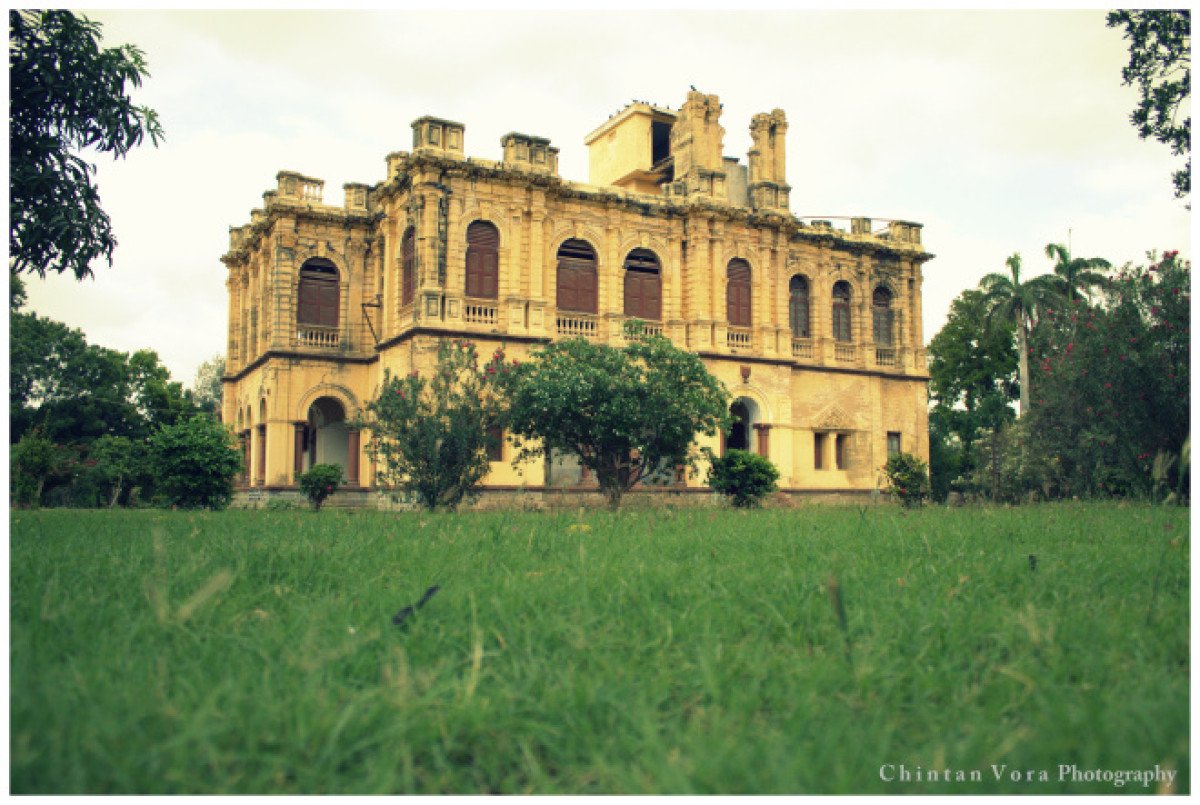
The Ruined Elegance: The main palace structure, with its partially collapsed roof from the 2001 earthquake, is the most visually striking spot. Photograph the elegant, Italianate facade against the broken section, symbolizing a beautiful history juxtaposed with modern trage...The Ruined Elegance: The main palace structure, with its partially collapsed roof from the 2001 earthquake, is the most visually striking spot. Photograph the elegant, Italianate facade against the broken section, symbolizing a beautiful history juxtaposed with modern tragedy and resilience. This is a very poignant photo subject.
The Garden Pathways: The lush, green pathways of the Sharad Baug (Garden), framed by tall trees and exotic plants, offer excellent opportunities for nature and travel photography. Focus on capturing the peaceful atmosphere and the contrast between the green foliage and the yellow stone of the palace in the background.
The Tiger and the Coffin: Inside the museum, the large, stuffed tigers and the unique exhibit of the Maharao’s coffin are essential photo subjects (if photography is permitted). Focus on the taxidermy's lifelike detail or the historical solemnity of the coffin display.
Architectural Detail: Capture close-ups of the subtle Indian and European architectural details, such as the decorative cornices, the ornate windows, or the garden features, to highlight the palace's unique blend of styles.
The Bird-watching Vantage: The quieter spots in the garden, particularly near any existing water sources, are the best photo spots for capturing the local and migratory birdlife that visits the baug. :Photo Gallery
Things To Do
-
Museum Exploration: The primary activity is visiting the museum housed in the former dining hall. Spend time examining the extensive collection of royal memorabilia. Key things to do include viewing the rare coffin of the last Maharao, Madansingh Jadeja, observing the large stuffed tigers, and looking at the collection of photographs, portraits, and hunting trophies that detail the family's history.
Garden Walk: Take a long, leisurely walk through the expansive Sharad Baug (Gardens). The gardens are an oasis of calm. Dedicate time to appreciating the variety of floral and medicinal plants. Look out for the numerous species of birds, as the garden is a known spot for migratory birds. Find a quiet bench for reading or contemplation away from the city noise.
Photography of the Ruins: The main ...
Information
-
Why Famous:
Last Royal Residence: The palace is famously known as the final home of the last Maharao of Kutch, Madansingh Jadeja, making it a place of relatively recent royal history and personal remembrance. The presence of his actual coffin in the museum is a unique and somber attrac...Last Royal Residence: The palace is famously known as the final home of the last Maharao of Kutch, Madansingh Jadeja, making it a place of relatively recent royal history and personal remembrance. The presence of his actual coffin in the museum is a unique and somber attraction that draws visitors.
Indo-Italian Design: Its architectural fame stems from its distinct, less imposing, and more residential blend of Indian and Italian styles, offering a contrast to the heavily carved local structures.
Sharad Baug (Garden) Attraction: The expansive and well-maintained grounds, or Sharad Baug, are celebrated for their tranquility and biodiversity, acting as a green oasis in the city. The gardens attract a variety of local and migratory birds, making it a famous spot for bird-watchers and nature lovers, providing a peaceful escape from the city noise. : -
Architecture:
Indo-Italianate Style: The Sharad Baug Palace is a charming example of the fusion of Indian and Italian architectural styles popular in the late 19th century. The structure, though now partially ruined, was initially a stately, two or three-story building. The use of yello...Indo-Italianate Style: The Sharad Baug Palace is a charming example of the fusion of Indian and Italian architectural styles popular in the late 19th century. The structure, though now partially ruined, was initially a stately, two or three-story building. The use of yellow-hued local stone is prominent.
Dimensions: While the exact palace dimensions vary, the entire compound, including the gardens, is spread over a considerable area, creating a serene, secluded environment.
Interior and Landscaping: The interiors, particularly the preserved elements in the museum, feature strong European influences, including Italian furnishings, period pieces, and tapestries. The palace is low-rise and airy, built to maximize the surrounding greenery. The Sharad Baug (Garden) itself is an essential architectural and design feature, meticulously planned with pathways, diverse plantings, and a sense of ordered tranquility that complements the building's relaxed, villa-like appearance, differentiating it from the more fortified, imposing nature of Aina or Prag Mahal. : -
How To Reach:
By Air: Bhuj Airport (BHJ) is the nearest airport, located approximately 7 to 9 KMS from Sharad Baug Palace. Upon landing, hire a taxi or auto-rickshaw from the pre-paid counter or use a ride-share service. The ride to the palace takes about 25 to 35 minutes, depending on ... -
Near Tourist Places:
1. Kutch Museum (< 1 KM) Premier Bhuj museum with artifacts. 2. Hamirsar Lake (Approx. 1.
5 KMS): Lake in the heart of Bhuj. 3. Prag Mahal (Approx.
2 KMS): Gothic-style palace. 4. Aina Mahal (Approx.
2 KMS): Palace of Mirrors. 5. Ramkund Stepwell (Approx. 2.
5 KMS): Ancient stepwell. 6. Chhatedi Bhuj (Approx.
3 KMS): Royal cenotaphs. 7. Bhujia Hill/Fort (Approx.
4 KMS): Historic fort and viewpoint. 8. Smritivan Memorial (Approx. 4.
5 KMS): Earthquake memorial and museum. 9. Swaminarayan Temple (New) (Approx.
5 KMS): Modern marble temple. 10. Hira Laxmi Memorial (Approx. 5.
5 KMS): Museum dedicated to local crafts. 11. Tapkeshwari Temple (Approx. 7.
5 KMS): Cave temple.
Tourism Tips
-
Health & safety:
Mosquito Repellent: During the monsoon and post-monsoon periods, use mosquito repellent, especially in the evening, as the garden's lush environment can attract insects.
Walking Paths: The ga...
Reviews
Sharad Baug Palace Tourism:-
Information about New and Updated Locations(862+) of Gujarat Has Been Added :-
Card subtitle
Note:-
Information provided here in good Faith and for reference only.
All information and pictures will be updated soon, please keep visiting.
Near Places
Aina Mahal
Some quick example text to build on the card title and make up the bulk of the card's content.
Go somewhere
Bhartiya Sanskruti Darshan Museum
Some quick example text to build on the card title and make up the bulk of the card's content.
Go somewhere
Bhujia Fort
Some quick example text to build on the card title and make up the bulk of the card's content.
Go somewhere
Bhujia Hill & Fort
Some quick example text to build on the card title and make up the bulk of the card's content.
Go somewhere
Bhujodi Handicraft Village
Some quick example text to build on the card title and make up the bulk of the card's content.
Go somewhere
Chhatardi
Some quick example text to build on the card title and make up the bulk of the card's content.
Go somewhere
Chhatedi
Some quick example text to build on the card title and make up the bulk of the card's content.
Go somewhere
Darbar Gadh
Some quick example text to build on the card title and make up the bulk of the card's content.
Go somewhere
Great Rann of Kutch
Some quick example text to build on the card title and make up the bulk of the card's content.
Go somewhere
Hamirsar Lake
Some quick example text to build on the card title and make up the bulk of the card's content.
Go somewherein Other Cities