Adina Mosque
General information
-
Ideal Duration:
2 to 3 hoursPlace Type:
Religious, History, Architecture, ArchaeologyEntry Fees:
The ASI and Monument Fees: Similar to the Gour ruins, Adina Mosque is maintained by the Archaeological Survey of India. For Indian citizens, the entry fee is nominal, typically around 25 (Rupees) per person. This fee is essential for accessing the main grounds and the int...The ASI and Monument Fees: Similar to the Gour ruins, Adina Mosque is maintained by the Archaeological Survey of India. For Indian citizens, the entry fee is nominal, typically around 25 (Rupees) per person. This fee is essential for accessing the main grounds and the interior of the preserved structures.
Entry for International Tourists: International visitors are usually charged a higher entry fee, typically around 300 (Rupees). It is important to note that these fees are levied per person and are subject to periodic revision by the government for site maintenance and development.
Photography and Video Charges: Standard still photography using a handheld camera or mobile phone is usually included in the entry ticket and is free. However, if you plan to use a professional camera setup (tripods, multiple lenses, flash equipment) or wish to film video footage for commercial or documentary purposes, you may need to obtain a special permit from the ASI and pay additional charges, which can range from 500 to several thousand rupees depending on the scope of work. Always check with the site office first.
Parking and Local Guide Costs: There is usually a small charge for parking two-wheelers or four-wheelers in the designated areas near the site. Additionally, while local guides are not mandatory, their services are available for a fee, generally negotiable between 500 to 800 (Rupees) for a detailed guided tour of the mosque and surrounding Pandua ruins.Timing:
Regular Timings:
Daily Access: The monument is generally open every day, including public holidays, from 9:00 {AM} to 5:00 {PM} or 6:00 {PM}. It is important to adhere strictly to the closing time, as the site is vast an...Regular Timings:
Daily Access: The monument is generally open every day, including public holidays, from 9:00 {AM} to 5:00 {PM} or 6:00 {PM}. It is important to adhere strictly to the closing time, as the site is vast and the surrounding area becomes quiet after dark.
Ideal Visit Time:
Tranquil Mornings: The absolute best time to visit Adina Mosque is immediately at opening time, around 9:00 {AM}. The stillness of the morning, coupled with the dramatic ruins, creates a magnificent atmosphere. The courtyard is less crowded, allowing you to appreciate the scale and tranquility. The softer morning light is perfect for capturing the details of the brickwork and the vault.
Seasonal Preference: The ideal time of year is the winter, from November to February, when the temperature is cool and the humidity is low, making walking around the huge open-air complex comfortable. Avoid the heat and high humidity of the monsoon and summer months.
Different Parts of the Day:
Golden Hours: To maximize comfort and photography opportunities, visit during the 'golden hours': either immediately upon opening (around 9:00 {AM}) or in the late afternoon (around 4:00 {PM}). The low angle of the sun during these times highlights the textures of the brick and stone and casts dramatic shadows across the vast courtyard. Avoiding the 11:00 {AM} to 3:00 {PM} window is crucial, regardless of the time of year.Special Events:
Annual Religious Gatherings (Eid): While Adina Mosque is a protected monument and no longer functions as a major daily prayer center, it sees a significant influx of visitors, including local worshippers, during major Islamic festivals, most notably Eid-ul-Fitr and Eid-ul-Ad...Annual Religious Gatherings (Eid): While Adina Mosque is a protected monument and no longer functions as a major daily prayer center, it sees a significant influx of visitors, including local worshippers, during major Islamic festivals, most notably Eid-ul-Fitr and Eid-ul-Adha. The vast courtyard, which was designed to accommodate the entire population of Pandua, fills up with people offering prayers and celebrating.
The Cultural Impact and Local Fairs: The area surrounding Pandua sometimes hosts smaller, local village fairs (mela) which coincide with regional harvest festivals or local pirs' (saints') anniversaries. These events provide a vibrant contrast to the silent ruins of the mosque. They offer a unique opportunity to witness traditional Bengali folk music, local crafts, and the community spirit of the Malda district, connecting the ancient site to the living culture that thrives around it. Visitors should inquire locally about the dates, as these are not nationally publicized events.Best Photo Spots:
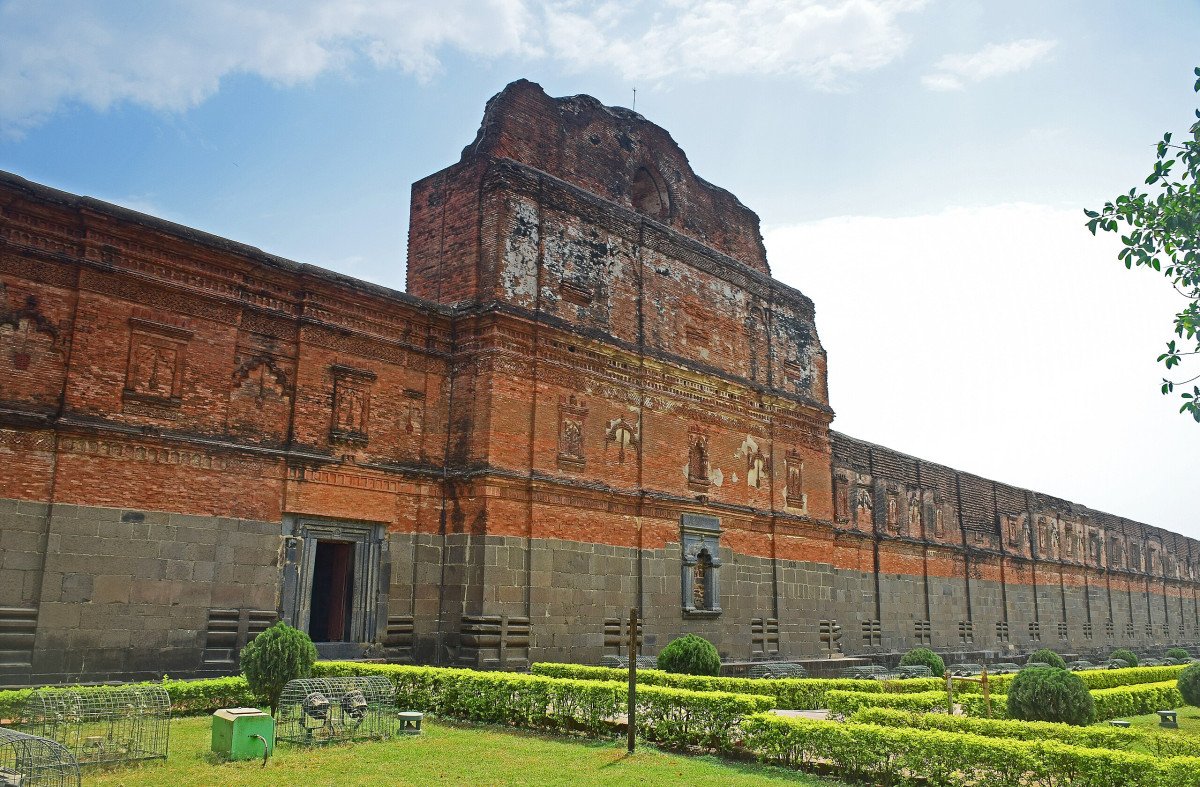
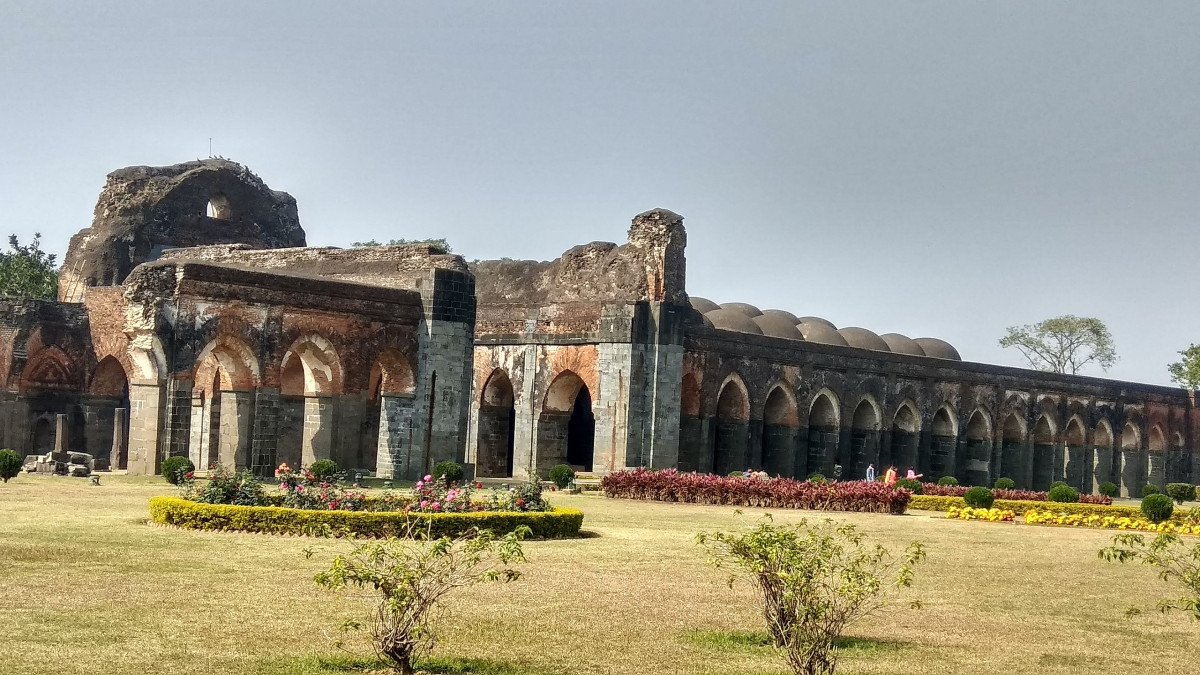
The Arch of the Main Entrance: The remnants of the main arched entrance facing the courtyard are the most photogenic feature. The sheer width of the opening and the surviving sections of the wall create a powerful frame, emphasizing the original grand scale of the mosque. ...The Arch of the Main Entrance: The remnants of the main arched entrance facing the courtyard are the most photogenic feature. The sheer width of the opening and the surviving sections of the wall create a powerful frame, emphasizing the original grand scale of the mosque. Shoot from the courtyard floor level to capture the towering nature of the structure, using the broken lines of the remaining brickwork to add drama and depth to the composition.
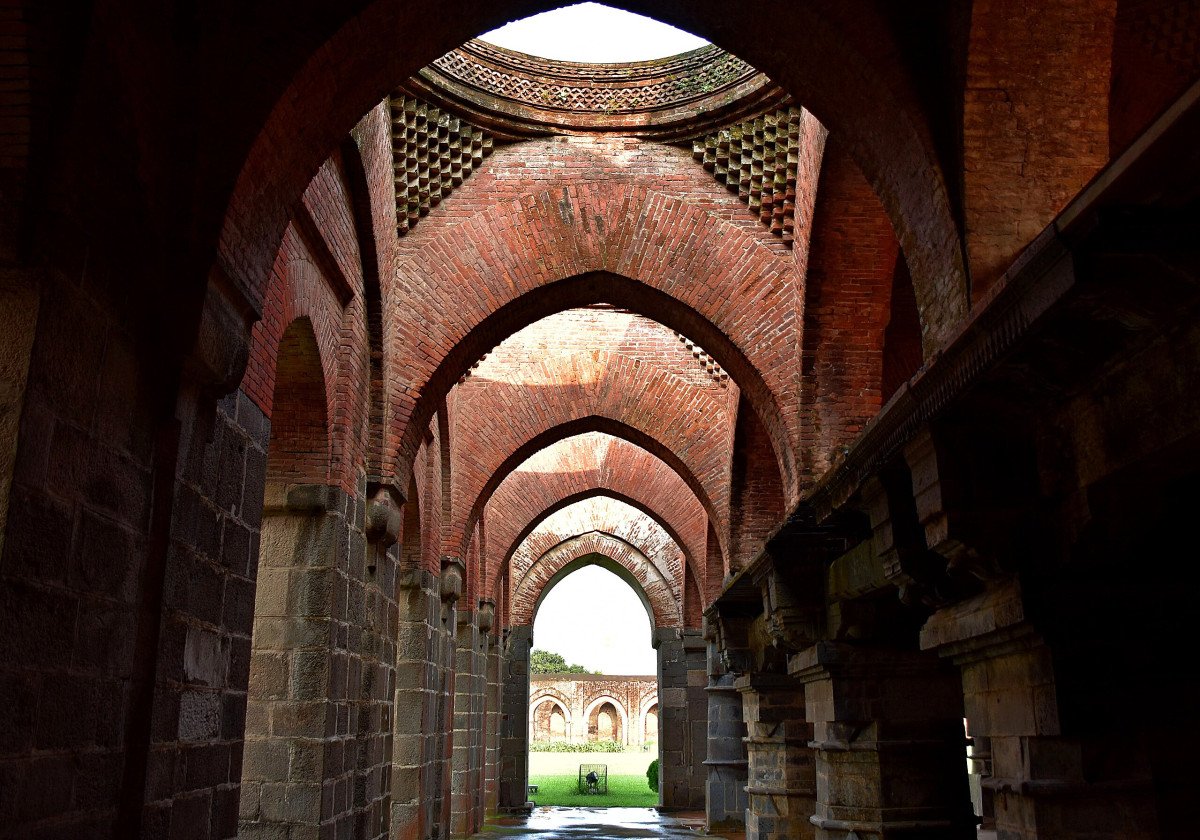
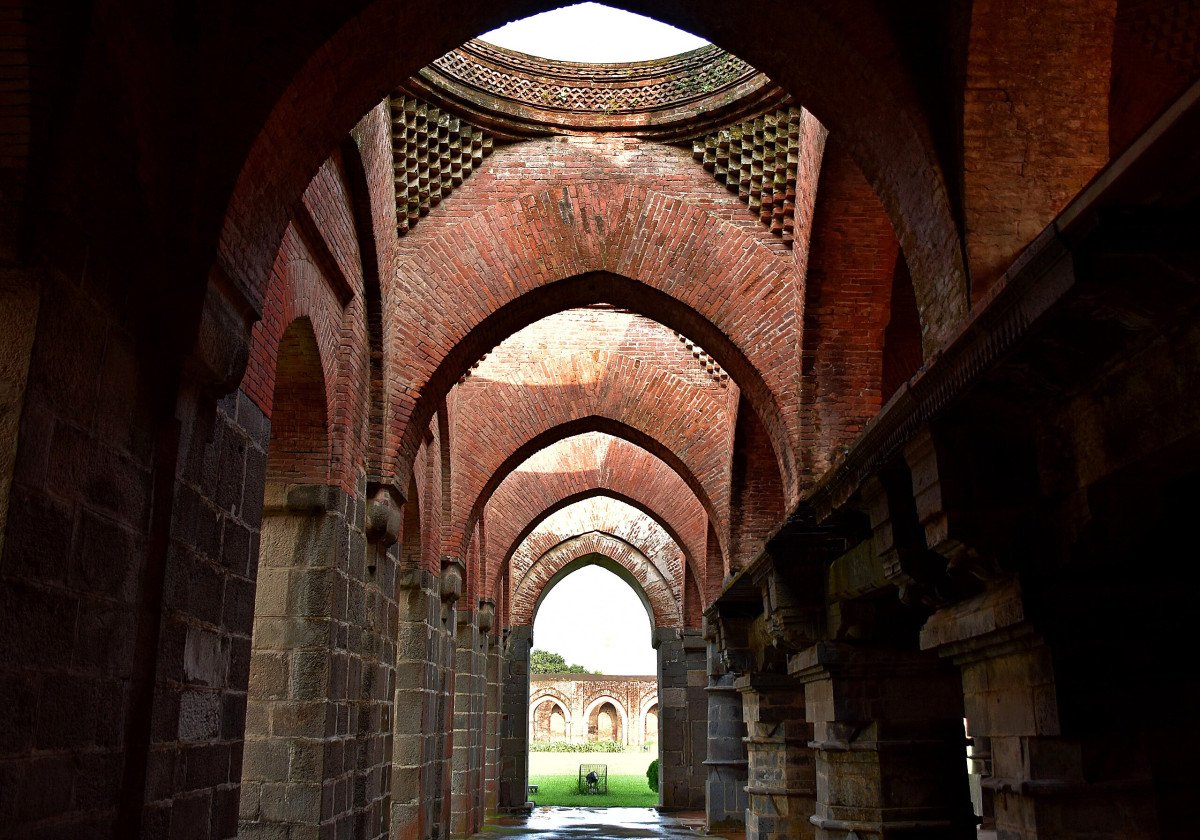
The Ribbed Barrel Vault Ruin: The partially surviving monumental ribbed barrel vault over the central nave is a unique architectural element in India. Capture this from within the main prayer hall, focusing on its massive curvature and the transition where the vaulting meets the perpendicular walls. The juxtaposition of the intact curves against the jagged, earthquake-damaged brickwork makes for a compelling study in light and ruin.
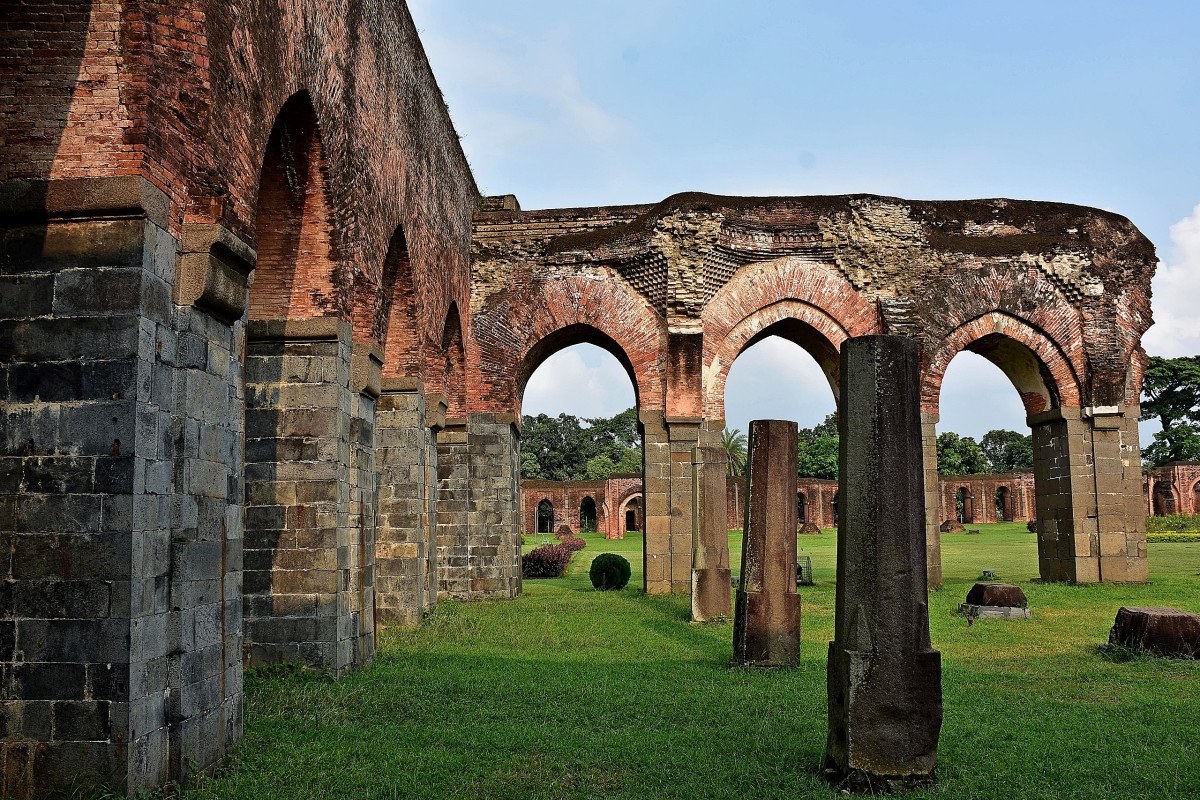
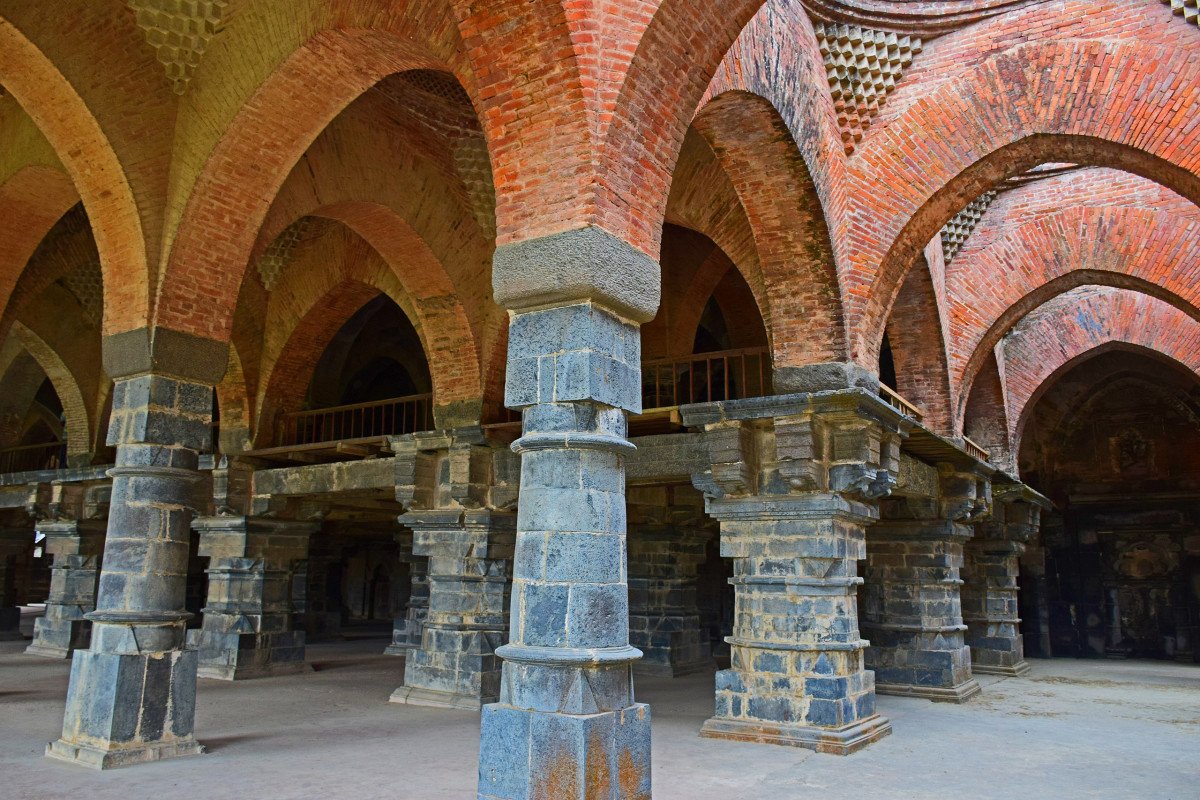
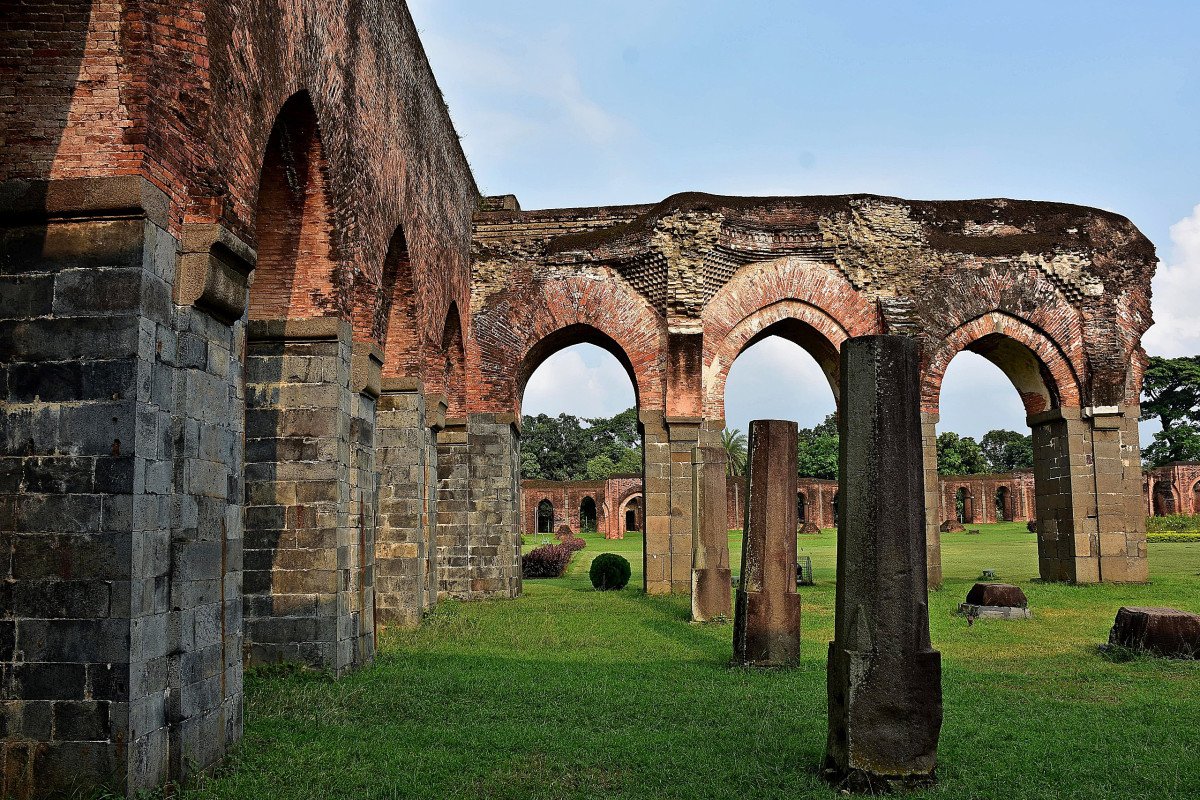
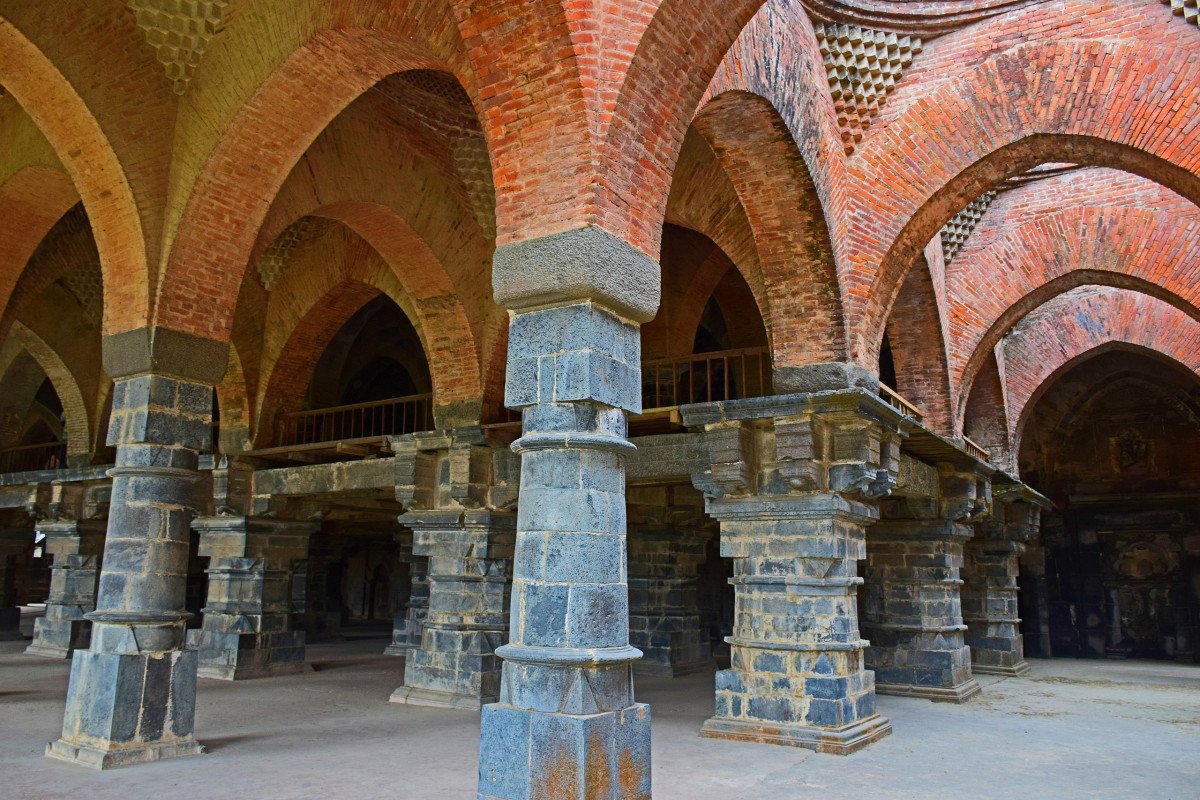
Pillar and Arch Repetition: Walk along the southern or northern cloister where the triple aisles once stood. Here, the repeated rows of pillars and arches, though mostly broken, create a stunning, rhythmic backdrop. Use a telephoto lens to compress the perspective, showing the endless depth of the hypostyle structure. This conveys the massive capacity of the mosque and its striking resemblance to classical Persian and Arab mosque designs.Photo Gallery
Things To Do
-
Architectural Study and Documentation: Spend time walking through the surviving aisles of the hypostyle hall. Try to visualize the original structure with hundreds of domes overhead. Focus specifically on the unique transition points where the triple-aisled cloisters meet the main five-aisled sanctuary. Document the distinct barrel vault structure (or its ruins) and compare it mentally to other famous mosques across India. This is a deep dive for architecture students and serious history enthusiasts.
Photography of Scale and Decay: The Adina Mosque is a spectacular subject for documenting historical decay and monumental scale. Use a wide-angle lens to capture the sheer breadth of the courtyard and the western wall. Focus on the rhythmic repetition of the surviving arches, which create powerful leading lines. Capture the c...
Hotels
● Continental Lodge
Address: Singatala, Malda, West Bengal
Distance: 17.8 KM
Details: Introduction: A classic, well-loved budget lodge. Facilities: Known for a great local restaurant, good service, and clean rooms. This lodge is a stapl...
● Golden Park Hotel & Resort
Address: Aradpur, Malda, West Bengal
Distance: 12.8 KM
Details: Introduction: A 3-star luxury resort near the historic mosque. Facilities: Includes a swimming pool, fine dining, spacious rooms, and beautiful ground...
● Hotel Gitanjali
Address: North Pirojpur, Malda, West Bengal
Distance: 17.0 KM
Details: Introduction: A budget-friendly hotel providing essential amenities. Facilities: Features clean and comfortable rooms, basic dining, and efficient ser...
● Hotel Mango Leaf
Address: Sarbamangala Pally, Malda, West Bengal
Distance: 15.8 KM
Details: Introduction: A popular choice for mid-range stays. Facilities: Features a good restaurant, prompt 24-hour service, and clean, air-conditioned rooms. ...
● Hotel Papilio
Address: Sarbamangala Pally, Malda, West Bengal
Distance: 16.0 KM
Details: Introduction: A highly-rated mid-range property. Facilities: Includes a diverse restaurant, comfortable rooms, and helpful staff. Its reliable quality...
● Hotel Roy Residency
Address: Malda Town, Malda, West Bengal
Distance: 18.0 KM
Details: Introduction: A simple, budget-friendly accommodation. Facilities: Features comfortable, basic rooms and essential services. Its location is convenien...
● Hotel Sanjiban
Address: Malda Town, Malda, West Bengal
Distance: 17.5 KM
Details: Introduction: A reliable budget hotel near the railway station. Facilities: Offers basic amenities, cozy rooms, and 24-hour service. Its location make...
● Hotel Silver Arcade
Address: Ward Number 24, Malda, West Bengal
Distance: 15.0 KM
Details: Introduction: A premier hotel reflecting luxury and comfort. Facilities: Includes a high-end restaurant, room service, a bar/lounge, and refined rooms...
● Hotel The Grand Embassy
Address: Sarbamangala Pally, Malda, West Bengal
Distance: 14.5 KM
Details: Introduction: A luxury hotel offering premium amenities. Facilities: Features a pool, Jacuzzi, suite rooms, and gourmet dining. Its proximity to major...
● Silk Inn
Address: Malda Town, Malda, West Bengal
Distance: 15.5 KM
Details: Introduction: A quality mid-range hotel. Facilities: Offers a well-regarded restaurant, cozy bar, and comfortable rooms for travelers. Its strategic l...
Show AllInformation
-
Why Famous:
The Grandeur of Sikandar Shah: Adina Mosque is famously known as a symbol of the immense wealth and imperial ambition of the Bengal Sultanate, particularly under Sultan Sikandar Shah. Its construction in the late 14th century was a clear declaration of independence and powe...The Grandeur of Sikandar Shah: Adina Mosque is famously known as a symbol of the immense wealth and imperial ambition of the Bengal Sultanate, particularly under Sultan Sikandar Shah. Its construction in the late 14th century was a clear declaration of independence and power, demonstrating that the Bengali rulers could commission a religious structure larger than any built by the rival Delhi Sultanate at that time. It was intended to be the central Jami Mosque (Friday Mosque) of the Sultanate capital, Pandua.
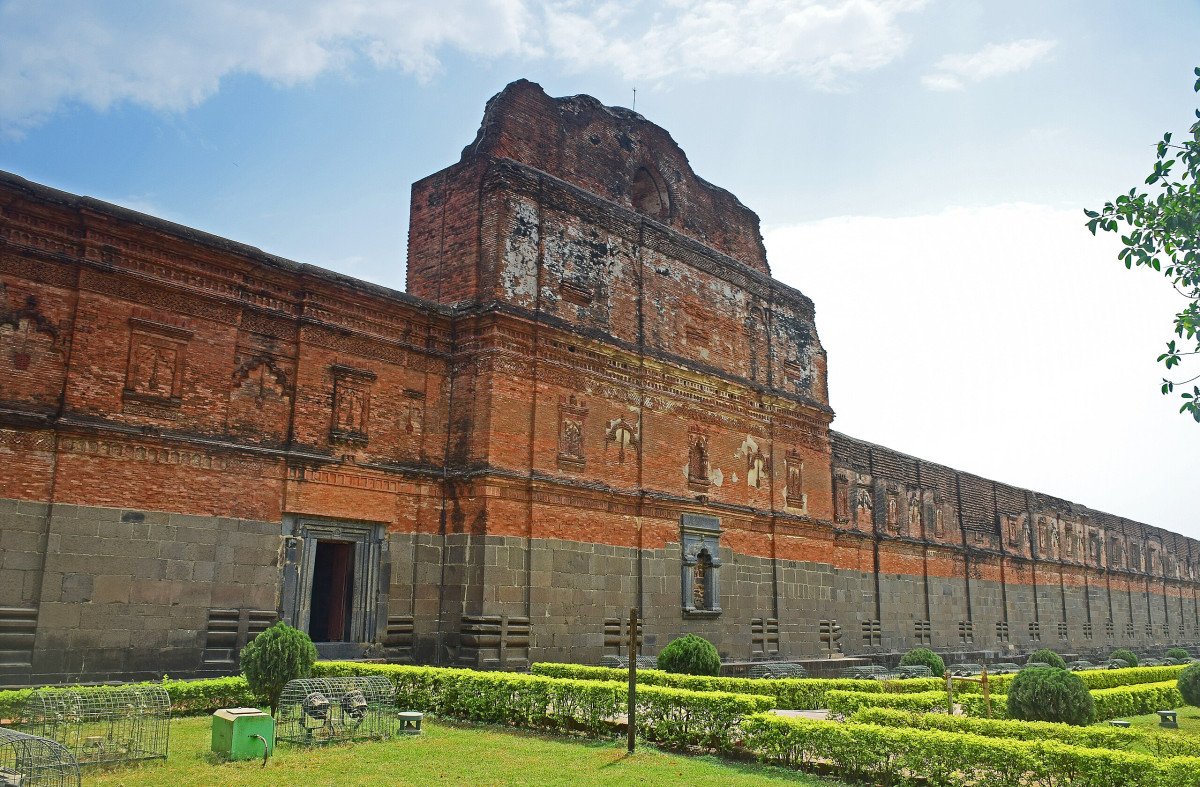
Architectural Fusion and Innovation: The mosque is famous for its unique blend of architectural traditions. It combines the classical hypostyle plan of the Middle East (like the Great Mosque of Damascus) with innovative Bengali features, such as the use of brick and terracotta decoration and the massive Sasanian-inspired barrel vault. This fusion makes it a crucial monument for studying the birth of Indo-Islamic architecture in Eastern India, illustrating how local artisans adapted foreign concepts using indigenous materials.
Historical and Cultural Debates: The site is also famous because its construction materials included stone from pre-existing structures, leading to the preservation of non-Islamic (Hindu and Buddhist) carvings on the external walls and reused pillars. This historical reality sparks discussions among historians and tourists about the sourcing of construction materials and the cultural landscape of medieval Bengal, adding a layer of complex fame beyond just its size and decay. -
Architecture:
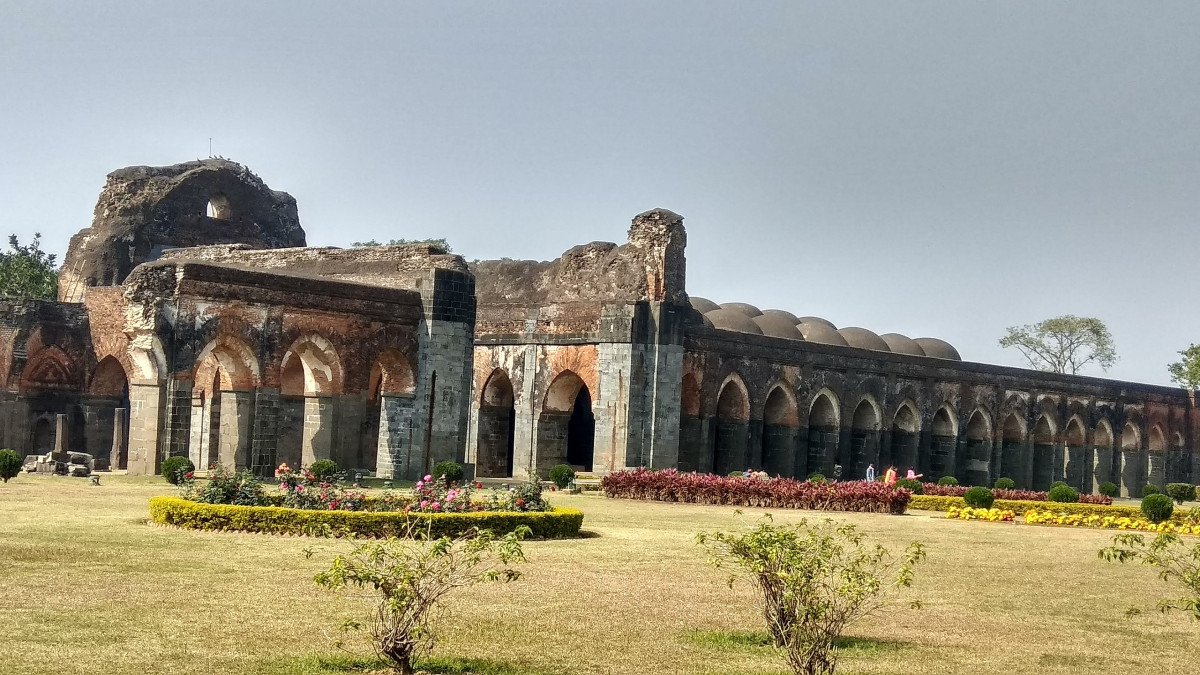
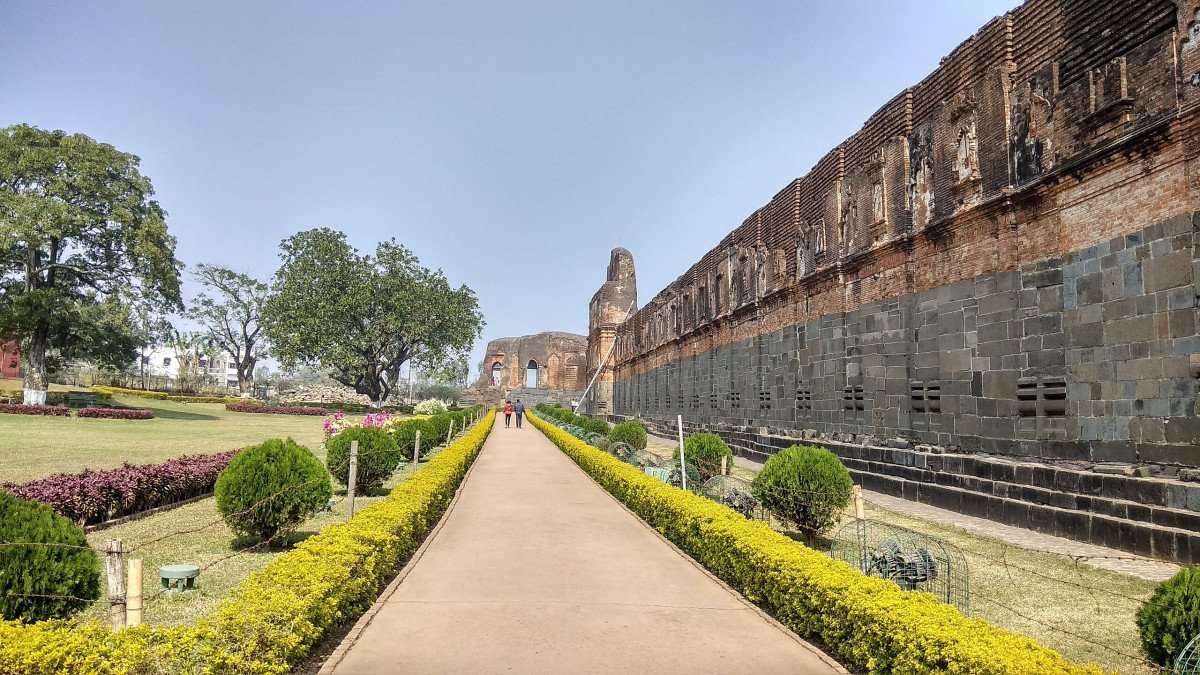
The Hypostyle Design and Scale: The architecture of Adina Mosque is defined by its massive scale and hypostyle (many-pillared) structure, covering an area of approximately 172 meters (North to South) by 97 meters (East to West). This vastness was achieved through a desi...The Hypostyle Design and Scale: The architecture of Adina Mosque is defined by its massive scale and hypostyle (many-pillared) structure, covering an area of approximately 172 meters (North to South) by 97 meters (East to West). This vastness was achieved through a design that featured a central open courtyard surrounded by cloisters and a massive prayer hall. The prayer hall, or sanctuary, on the western side, was five aisles deep, while the cloisters on the north, south, and east had triple aisles. This layout required an incredible number of pillars (around 260) to support the numerous domed bays.
The Barrel Vault and Indigenous Elements: A unique feature that distinguishes Adina Mosque from contemporary Indian mosques is the colossal, partially surviving, ribbed barrel vault that covers the central nave of the main prayer hall. This vaulted roof, an engineering marvel for its time in the region, directly references Persianate imperial architecture. However, the mosque also incorporates local materials (baked brick and stone rubble) and indigenous Bengali artistic traditions, such as the extensive use of intricate terracotta ornamentation, geometric patterns, and calligraphic inscriptions on the mihrabs (prayer niches).
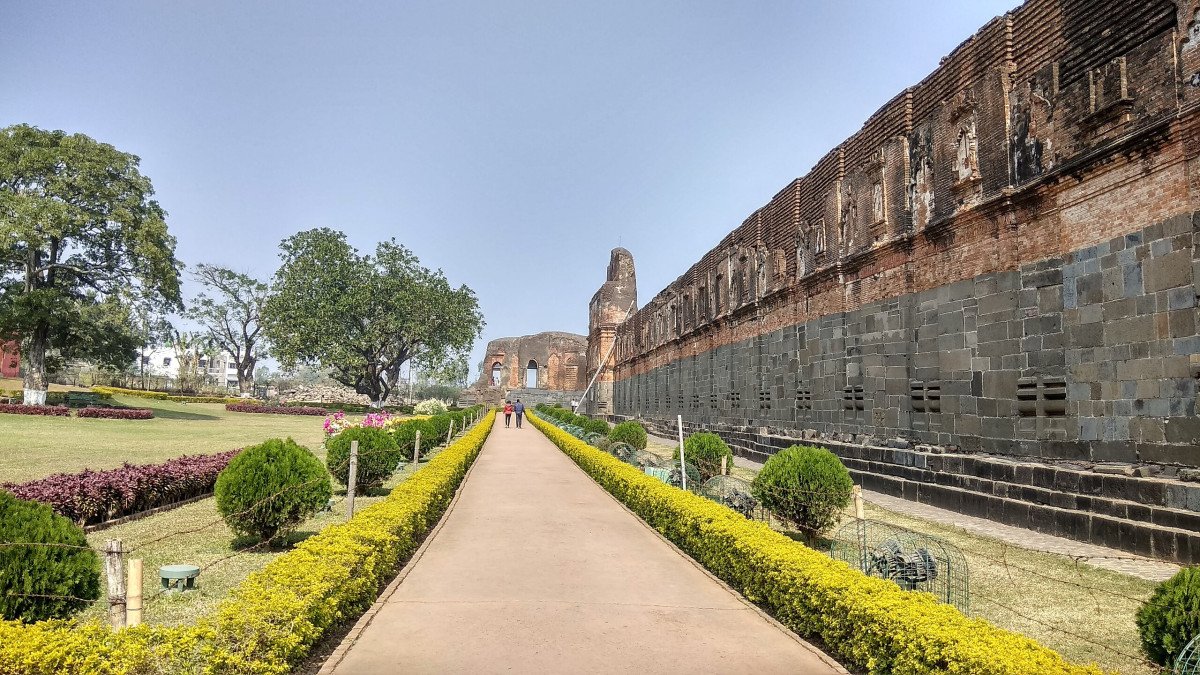
Dimensions and Construction Materials: The entire mosque complex was enclosed by thick brick walls. The main prayer hall's western wall contained the Badshah-ka-Takht (Sultan's gallery), an elevated platform for the ruler and his officials. The structure used rubble masonry covered with brick, stone, and lime mortar. The vast number of domed bays, estimated at over 387, highlights the ambitious scope of the Sultan's vision, cementing its status as the largest mosque ever built in the Bengal Sultanate period. -
How To Reach:
By Air:
Travel Via Bagdogra (IXB): The closest major airport is Bagdogra Airport (IXB) near Siliguri, approximately 230 {KMS} away. From Bagdogra, one must travel by road or train to Malda Town. A more viable option, though farther, ... -
Near Tourist Places:
1. Suggested list structure:
Eklakhi Mausoleum: 1 {KMS} (Pandua) 2.
Adina Deer Park: 2 {KMS} (Pandua) 3.
Qutb Shahi Mosque: 3 {KMS} (Pandua) 4.
Hazar Duari (Old Palatial Structure): 4 {KMS} (Pandua area) 5.
Gour Ruins: 16 {KMS} 6.
Malda Museum: 20 {KMS} (Malda City) 7.
Jauhra Kali Temple: 21 {KMS} (Malda City) 8.
Firoz Minar (Gour): 18 {KMS} 9.
Jagjibanpur Archaeological Site: 15 {KMS} 10.
Baisgazi Wall (Gour): 19 {KMS}
'Nearby Attractions and Distance: 1.
Eklakhi Mausoleum: 1 {km} (Pandua)' (adjusting the unit to 'km' for consistency and readability). " type="suggestion">
Tourism Tips
-
Health & Safety:
Watch Your Step: The Adina Mosque is largely in ruins, meaning the ground is uneven, and there are many loose stones, debris, and low walls. Watch your footing constantly to prevent falls. If traveling with children, superv...
Reviews
Information about New and Updated Locations() of West Bengal Has Been Added :-
Card subtitle
Note:-
Information provided here in good Faith and for reference only.
All information and pictures will be updated soon, please keep visiting.
Near Places
Adina Deer Park
Some quick example text to build on the card title and make up the bulk of the card's content.
Go somewhere
Adina Eco Tourism Park
Some quick example text to build on the card title and make up the bulk of the card's content.
Go somewhere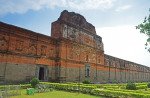
Adina Mosque
Some quick example text to build on the card title and make up the bulk of the card's content.
Go somewhere
Baishgazi Wall
Some quick example text to build on the card title and make up the bulk of the card's content.
Go somewhere
Ballal Bati
Some quick example text to build on the card title and make up the bulk of the card's content.
Go somewhere
Baroduari Mosque
Some quick example text to build on the card title and make up the bulk of the card's content.
Go somewhere
Chika Mosque
Some quick example text to build on the card title and make up the bulk of the card's content.
Go somewhere
Dakhil Darwaza
Some quick example text to build on the card title and make up the bulk of the card's content.
Go somewhere
Eklakhi Mausoleum
Some quick example text to build on the card title and make up the bulk of the card's content.
Go somewhere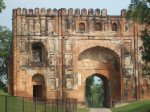
Gour
Some quick example text to build on the card title and make up the bulk of the card's content.
Go somewherein Other Cities