


Chika Mosque
General information
-
Ideal Duration:
30 minutes to 1 hour:Place Type:
History, Archaeology, Religious Heritage, ArchitecEntry Fees:
Integrated ASI Fee Structure: The Chika Mosque is part of the overall Gour archaeological complex, which is maintained by the Archaeological Survey of India (ASI). Therefore, it does not have a separate entry fee. Instead, the general admission ticket purchased at the main...Integrated ASI Fee Structure: The Chika Mosque is part of the overall Gour archaeological complex, which is maintained by the Archaeological Survey of India (ASI). Therefore, it does not have a separate entry fee. Instead, the general admission ticket purchased at the main ticket counter (usually near the Dakhil Darwaza or Baro Sona Masjid complexes) covers access to all major protected monuments within Gour, including this mosque.
Nominal Charges for Indians: For Indian citizens, the general admission fee for the Gour complex is nominal, generally around 25 {Rupees} per person. This single ticket allows exploration of all the major ruins, making the visit highly affordable. It is crucial to retain the ticket as spot checks may occur while moving between the widely scattered monuments within the archaeological zone.
International Tourist Fee: Foreign tourists typically pay a higher, standard fee set by the ASI, usually around 300 {Rupees} per person for the entire Gour circuit. This differential pricing is used to fund the conservation and maintenance of the historical sites. Students with valid international ID may sometimes avail themselves of a concession, though this must be checked at the ticket counter.
Auxiliary Costs: Beyond the ticket, visitors must budget for local transport (like hiring a Toto) to move between the scattered monuments, as the Chika Mosque is several kilometers from the other main sites. Hiring a local guide to explain the mosque's unique history and architecture might cost between 500 to 1000 {Rupees} for the half-day tour of Gour.Timing:
Regular Timings:
Open Access: As part of the Gour complex, the Chika Mosque is an open-air historical site that is generally accessible to the public from 9:00 {AM} to 5:00 {PM} daily. Unlike the Malda Museum, these open ruins ...Regular Timings:
Open Access: As part of the Gour complex, the Chika Mosque is an open-air historical site that is generally accessible to the public from 9:00 {AM} to 5:00 {PM} daily. Unlike the Malda Museum, these open ruins are typically accessible seven days a week, including most holidays. Visitors must ensure they leave the complex before the closing time, as the ruins become quiet and less safe after sunset.
Ideal Visit Time:
Afternoon Light and Tranquility: The absolute best time to visit the Chika Mosque is in the late afternoon, specifically between 3:00 {PM} and 5:00 {PM}. During this period, the intense midday heat has subsided, making walking comfortable. More importantly, the low-angle sun casts dramatic shadows that highlight the textures of the brickwork and the unique stone lintel, which is excellent for photography. Furthermore, the mosque is generally less crowded than the main complexes during this late slot.
Avoiding Peak Heat: The hours between 11:30 {AM} and 2:30 {PM} are the least ideal, especially during the summer months (March to June), due to intense sun and heat. If you visit during this time, ensure you are well-hydrated and have proper head cover, but it is highly recommended to plan a break during these peak hours.Special Events:
The Local Annual Mela (Fair) in Gour: While the Chika Mosque itself does not host a major festival, the entire Gour complex, particularly the nearby area of Ramkeli, becomes the center of a major annual spiritual gathering: the Ramkeli Mela or Utsav. This festival is held e...The Local Annual Mela (Fair) in Gour: While the Chika Mosque itself does not host a major festival, the entire Gour complex, particularly the nearby area of Ramkeli, becomes the center of a major annual spiritual gathering: the Ramkeli Mela or Utsav. This festival is held every year in the Bengali month of Asharh (usually mid-June) to commemorate the visit of the great Vaishnava saint, Chaitanya Mahaprabhu.
A Cultural and Religious Contrast: Visiting the Chika Mosque and the other silent ruins during this time offers a unique contrast. The atmosphere around Ramkeli is vibrant, filled with thousands of pilgrims, devotional songs (Kirtans), and various cultural performances, injecting life into the ancient landscape. While the mosque area remains quiet, the surrounding festivity provides a rich cultural backdrop to the historical ruins. This contrast between the ancient political capital and the enduring devotional heart of Bengal is a remarkable experience for visitors.Best Photo Spots:
The Main Stone Lintel and Arch: The primary photo spot is the main entrance archway. Focus on the central stone lintel which shows the reused Hindu carvings. Frame the shot to capture the texture of the stone contrasting with the brick arch above. A slightly low-angle pho...The Main Stone Lintel and Arch: The primary photo spot is the main entrance archway. Focus on the central stone lintel which shows the reused Hindu carvings. Frame the shot to capture the texture of the stone contrasting with the brick arch above. A slightly low-angle photograph taken directly facing the doorway emphasizes the imposing weight of the stone and the layered history it represents, telling the story of architectural recycling.
The Exterior Corner: The corners of the Chika Mosque offer excellent textural photography opportunities. Capture the decaying brickwork and the subtle, rhythmic patterns of the remaining terracotta fragments (if any). The play of light and shadow across the weathered, ancient brick surface creates a powerful sense of age and decay, which is highly appealing for historical photography.
Interior Mihrab Niches: Move inside the roofless structure and focus on the mihrab niches on the western wall. These remaining sections, often decorated with high-quality stone carvings, are excellent for detailed, close-up shots. Use the open roof as natural backlighting to highlight the intricate geometric and floral patterns of the stone art, emphasizing the meticulous craftsmanship of the builders within the sanctuary area.Photo Gallery
Things To Do
-
Architectural Forensic Study of Material Reuse: Dedicate your visit to an in-depth, almost forensic, study of the mosque s construction materials. Specifically, spend time examining the lower walls and the main entrance to distinguish between the baked red brick, the smooth-cut black basalt stone, and the terracotta work. Compare the texture and quality of the reused stone especially the lintel with the brickwork. This focused exercise in architectural observation will clarify the complex building techniques and the economic strategies employed by the Sultanate builders in Gour.
Detailed Examination of the Entrance Lintel: Use a camera with good zoom capabilities to capture the details of the stone carvings on the lintel above the doorway. Though the figures are defaced, spend time trying to discern the original forms and pa...
Information
-
Why Famous:
The Mystery of Material Reuse and Syncretism: The Chika Mosque is famous primarily due to its striking display of reused architectural materials. The prominent placement of a stone lintel over the main entrance which visibly bears defaced carvings of non-Islamic figures hig...The Mystery of Material Reuse and Syncretism: The Chika Mosque is famous primarily due to its striking display of reused architectural materials. The prominent placement of a stone lintel over the main entrance which visibly bears defaced carvings of non-Islamic figures highlights the practice of recycling stone from older structures. This visual evidence of material sourcing has made the mosque a focal point in the debate concerning the cultural and political atmosphere of the Bengal Sultanate period, symbolizing the complex intermingling of traditions and architectural efficiency in the region.
The Enigma of the 'Chika' Name: Its unusual, colloquial name, "Chika Mosque" (Bat Mosque), has contributed significantly to its fame among local folklore and tourists. This informal designation, stemming from its long period of abandonment where it was inhabited only by bats, adds a layer of mystery and intrigue. While the official historical name is lost, the popular name ensures its recognition and draws visitors eager to see the site behind the eerie nickname, thereby distinguishing it from the hundreds of other small ruins in the Gour area. -
Architecture:
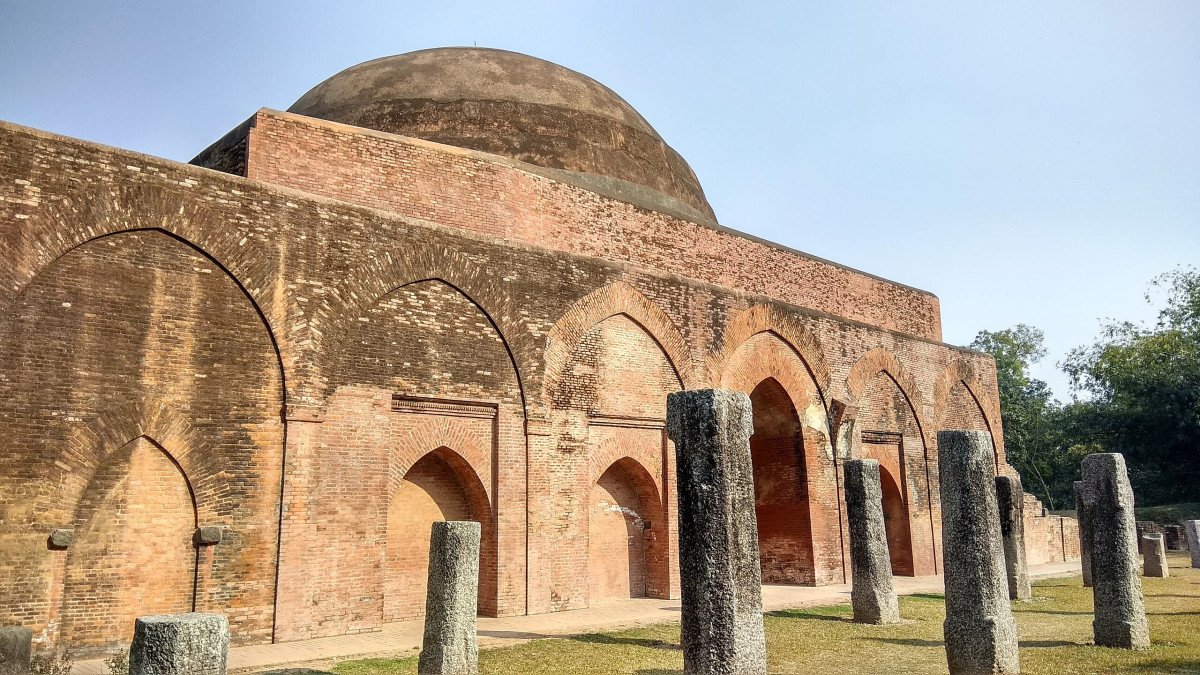
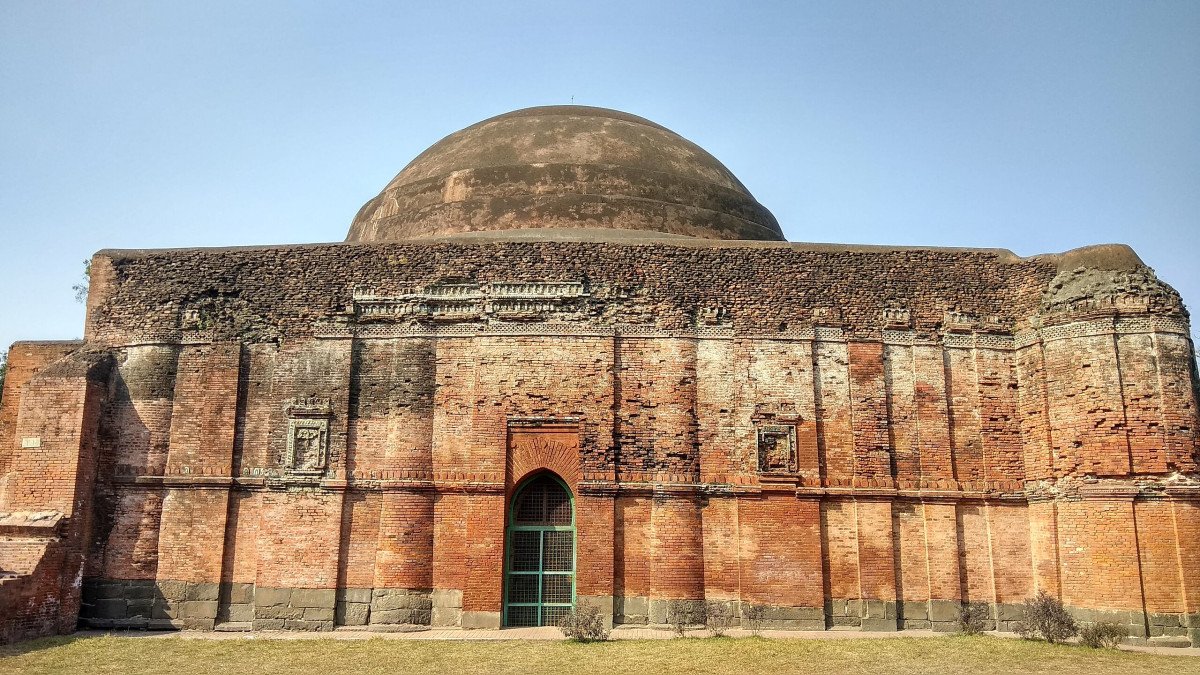
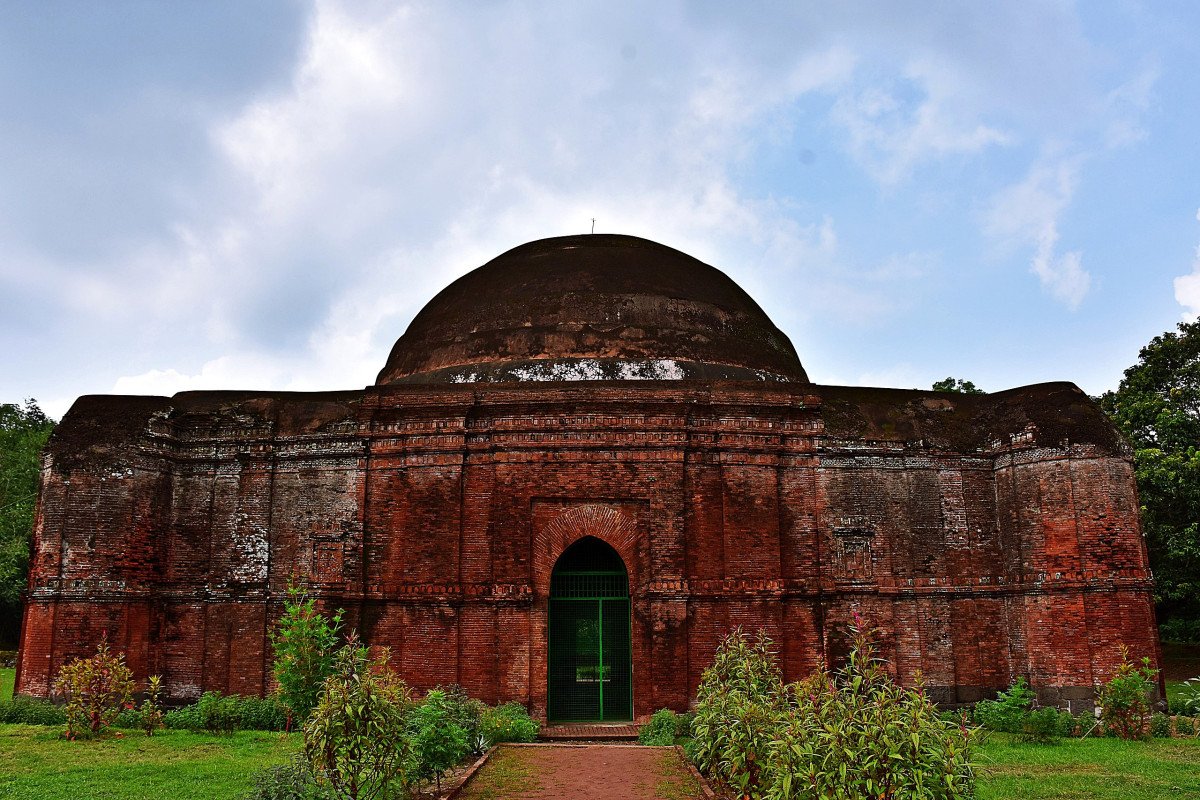
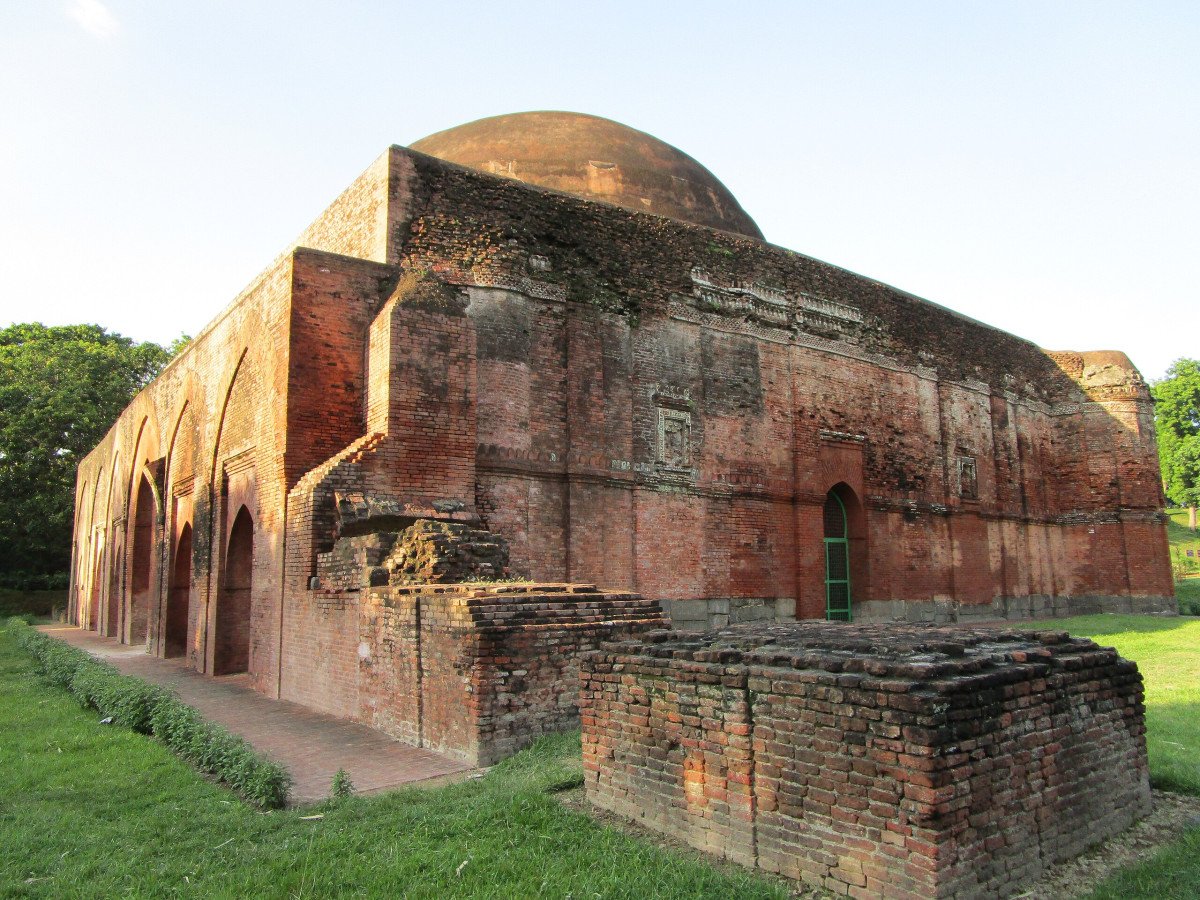
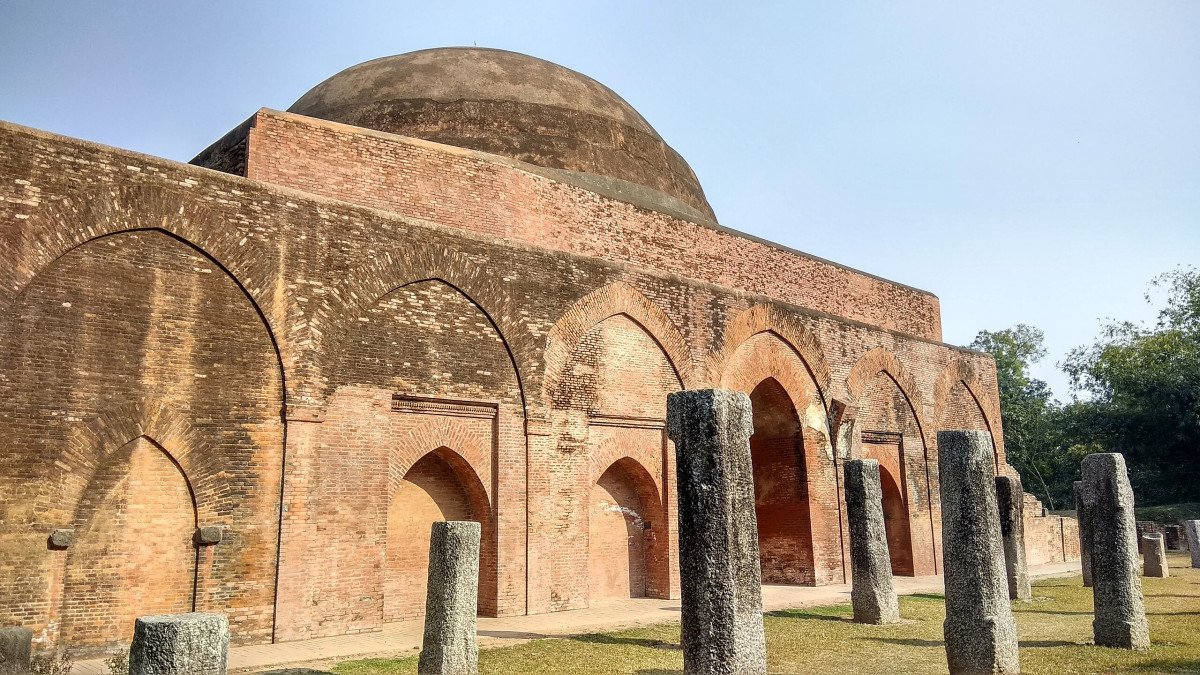
The architecture of the Chika Mosque is a classic example of the smaller, single-domed mosques that dotted the capital of Gour. It features the characteristic Bengal Sultanate style, which primarily employs baked red brick. However, the most distinctive architectural feature of this mosque is its ...The architecture of the Chika Mosque is a classic example of the smaller, single-domed mosques that dotted the capital of Gour. It features the characteristic Bengal Sultanate style, which primarily employs baked red brick. However, the most distinctive architectural feature of this mosque is its extensive use of reused black basalt stone for the lower fa ade and the main doorway.
Reused Stone Elements: The most prominent architectural detail is the central doorway, which utilizes a massive stone lintel and jambs. These stone pieces are clearly sourced from earlier Hindu or Buddhist temples, displaying intricate, albeit deliberately mutilated, carvings of human figures and animals. This practice of material reuse is significant, demonstrating a local architectural adaptation where builders incorporated readily available, high-quality stone from demolished structures into their new brick constructions, leading to a unique architectural fusion.
Dimensions and Basic Structure: The mosque is a small, rectangular structure, generally measuring around 12 {meters} by 7 {meters}. It consists of a single prayer chamber. Originally, the roof was covered by a single dome, which has now collapsed, leaving the walls exposed. The walls are comparatively thick, constructed of brick and faced with stone up to a certain height. The surviving mihrab niches on the western wall are beautifully carved, showcasing the Sultanate-era preference for fine stone carving within the prayer hall, complementing the general brick fabric of the building. -
How To Reach:
By Air:
Via Bagdogra or Kolkata: The most convenient air access is via Bagdogra Airport (IXB) near Siliguri, approximately 230 {KMS} away. From there, a private taxi or bus is required for the 5 to 6 hour journey to Malda City. T... -
Near Tourist Places:
1.
Dakhil Darwaza (Gour): 1 {KMS} 2.
Firoz Minar (Gour): 1. 5 {KMS} 3.
Ramkeli Temple (Gour): 2 {KMS} 4.
Kadam Rasul Mosque (Gour): 2 {KMS} 5.
Baroduari Mosque (Baro Sona Masjid): 3 {KMS} 6.
Malda Museum (Malda City): 12 {KMS} 7.
Baisgazi Wall (Gour): 1 {KMS} 8.
Eklakhi Mausoleum (Pandua): 18 {KMS} 9.
Adina Mosque (Pandua): 20 {KMS} 10.
Gumti Darwaza (Gour): 2. 5 {KMS}
Tourism Tips
-
Health & Safety:
Watch for Uneven Ground: Since the Chika Mosque is a ruin, the ground around it is uneven, dusty, and may contain loose debris.
MANDATORY: Wear sturdy, closed-toe walking shoes to prevent tri...
Reviews
Information about New and Updated Locations() of West Bengal Has Been Added :-
Card subtitle
Note:-
Information provided here in good Faith and for reference only.
All information and pictures will be updated soon, please keep visiting.
Near Places
Adina Deer Park
Some quick example text to build on the card title and make up the bulk of the card's content.
Go somewhere
Adina Eco Tourism Park
Some quick example text to build on the card title and make up the bulk of the card's content.
Go somewhere
Adina Mosque
Some quick example text to build on the card title and make up the bulk of the card's content.
Go somewhere
Baishgazi Wall
Some quick example text to build on the card title and make up the bulk of the card's content.
Go somewhere
Ballal Bati
Some quick example text to build on the card title and make up the bulk of the card's content.
Go somewhere
Baroduari Mosque
Some quick example text to build on the card title and make up the bulk of the card's content.
Go somewhere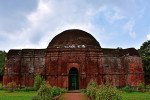
Chika Mosque
Some quick example text to build on the card title and make up the bulk of the card's content.
Go somewhere
Dakhil Darwaza
Some quick example text to build on the card title and make up the bulk of the card's content.
Go somewhere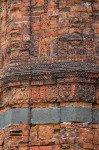
Eklakhi Mausoleum
Some quick example text to build on the card title and make up the bulk of the card's content.
Go somewhere
Gour
Some quick example text to build on the card title and make up the bulk of the card's content.
Go somewherein Other Cities