...

FAQs On Adina Mosque

Malda , West Bengal, India
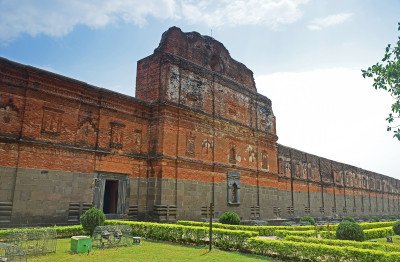
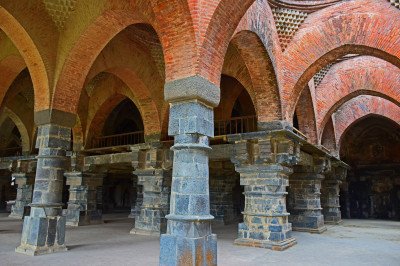
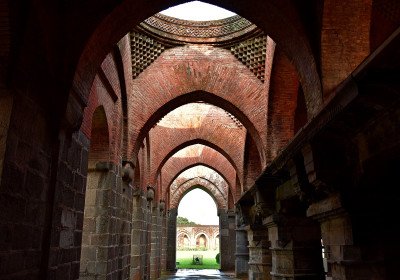
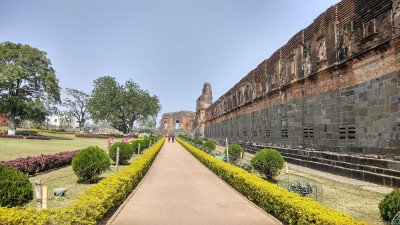
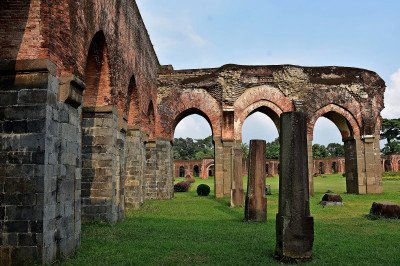
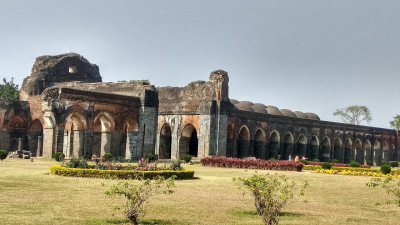
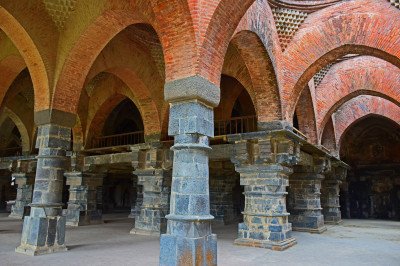
The Adina Mosque, located in the ancient capital of Pandua (P?ndu?), is an imposing ruin and one of the most important architectural landmarks in the entire subcontinent. Commissioned around $1373 ext{ AD}$ by Sultan Sikandar Shah, the second ruler of the Ilyas Shahi dynasty, it was conceived as a monumental structure to proclaim the imperial power of the Bengal Sultanate, especially after their successful resistance against the Delhi Sultanate. At the time of its completion, it was the largest mosque in the whole of India. The mosque s design is strongly reminiscent of the Great Mosque of Damascus, featuring a vast rectangular hypostyle hall and an enormous open courtyard. It originally boasted hundreds of domes (estimates suggest over 387 bays) supported by a complex network of pillars. While massive earthquakes in the 19th and 20th centuries severely damaged the structure, reducing much of it to ruins, the sheer scale of the western wall (Qibla wall) and the central nave's monumental ribbed barrel vault a feature borrowed from pre-Islamic Sasanian Persia and a first in Bengal still inspires awe. Inside the complex, Sultan Sikandar Shah is also buried in a tomb chamber attached to the main prayer hall, facing Mecca. The complex is historically significant not just for its size but for its reuse of materials, as some sections display carvings of non-Islamic motifs, reflecting the utilization of stone from earlier structures in the region.

Ans:- Adina Mosque, located in Pandua, is one of the most significant monuments in West Bengal and stands as a testament to the glorious era of the Bengal Sultanate. Built during the 14th century by Sultan Sikandar Shah, it was once the largest mosque in the Indian subcontinent. The architecture reflects a unique blend of Islamic, Hindu, and Buddhist influences, which is quite rare. Its historical importance lies in its massive scale, intricate stone carvings, and the representation of the socio-cultural harmony and the architectural evolution that flourished during the medieval period in the Bengal region.

Ans:- The Adina Mosque showcases a distinctive architectural style that blends traditional Islamic design with local Bengal aesthetics. It features an expansive central courtyard surrounded by cloisters supported by pillars. The mosque is notable for its use of recycled materials from earlier Hindu and Buddhist structures, which is evident in the intricate carvings on the pillars and lintels. The arched entrances and the massive prayer hall demonstrate the grandeur of medieval masonry. This synthesis of different architectural traditions makes it a unique study for historians and art enthusiasts interested in the evolution of regional religious architecture.

Ans:- No, the Adina Mosque is no longer used for daily prayers. It is currently maintained as a protected archaeological site by the Archaeological Survey of India (ASI). While it holds immense historical and cultural value, the structure is in a partially ruined state, making it unsuitable for regular religious services. However, it remains a site of significant interest for tourists, students, and historians who visit to appreciate its structural beauty and learn about its historical role. Visitors are expected to treat the site with the respect due to a significant heritage monument while exploring its ruins.

Ans:- While there are no formal, permanent government-led tour guides stationed constantly at the site, local tourist guides are often available around the entrance of the Adina Mosque. Hiring a local guide can be very beneficial, as they possess in-depth knowledge about the history of the Sultanate, the architectural details of the carvings, and the legends associated with the mosque. Engaging a guide helps tourists better understand the nuances of the ruins and ensures that they don't miss out on important historical sections that might otherwise be overlooked during a self-guided tour of the vast complex.

Ans:- The best time to visit Adina Mosque is during the winter season, specifically from October to March. During these months, the weather in Malda is cool and comfortable, making it ideal for walking through the extensive ruins and spending time exploring the intricate details of the courtyard and prayer hall. Summer and the monsoon season can be quite challenging due to intense heat or heavy rainfall, which might hinder the outdoor exploration experience. Visiting during the clear, sunny days of winter ensures a pleasant atmosphere and perfect lighting for photography and a relaxed historical tour.

Ans:- As a protected monument under the Archaeological Survey of India, visitors must adhere to specific rules at Adina Mosque. Entry is usually allowed during daylight hours, and there is a nominal fee for visitors. It is prohibited to climb on the ruins, deface any carvings, or disturb the structure in any way. Visitors should follow designated paths to prevent damage to the site. Smoking, littering, and creating loud disturbances are strictly forbidden. Adhering to these regulations is crucial to ensure that this historical masterpiece is preserved for future generations to study and appreciate.

Ans:- Yes, Adina Mosque is well-connected and accessible by public transport. It is located near Pandua, which is easily reachable from Malda town by local buses, taxis, or hired auto-rickshaws. Many tourists choose to hire a cab for the entire day to visit multiple landmarks, including the mosque and the nearby deer park, which offers a convenient and flexible travel experience. The roads leading to the monument are generally in fair condition, allowing for a smooth journey. It is advisable to coordinate with your hotel or local transport services in Malda to get the best travel options.

Ans:- Various local legends and myths are associated with the Adina Mosque, often surrounding its construction and the historical figures involved. Stories about how the mosque was built using materials from ancient temples are quite popular among the locals. While some of these narratives are based on historical observations, others have been passed down through generations as oral history. Engaging with local guides or residents can provide fascinating insights into these stories. These myths add an extra layer of mystique to the site, making the exploration of the ruins feel more like a journey through time and folklore.

Ans:- Yes, photography is allowed inside the Adina Mosque, and it is a popular spot for photography enthusiasts due to its impressive scale, high arches, and the play of light and shadow through the pillars. Capturing the intricate stone carvings and the grand layout is encouraged for personal use. However, visitors should be respectful and avoid using professional filming equipment without prior authorization from the Archaeological Survey of India. Always ensure that your photography does not disturb other visitors or damage any part of the historical structure, as it is a protected heritage site requiring care and conservation.

Ans:- The Adina Mosque is currently in a state of partial ruin, with significant portions of the roof and walls collapsed over the centuries due to natural calamities like earthquakes and the passage of time. However, the Archaeological Survey of India (ASI) has taken steps to preserve and maintain the remaining structures. Major portions of the main prayer hall, the cloisters, and the central courtyard are well-preserved, allowing visitors to visualize the original grandeur of the mosque. The ASI continues to conduct maintenance work to prevent further degradation, ensuring that the historical integrity of the monument remains intact for future tourists.

Ans:- A visit to Adina Mosque typically takes about one to two hours. This duration is sufficient to walk through the expansive courtyard, explore the prayer hall, appreciate the detailed stone carvings on the pillars, and read the informational plaques provided by the Archaeological Survey of India. If you are an architecture or history buff, you might want to spend more time observing the specific motifs and structural details. Since the site is quite spread out, wearing comfortable shoes is recommended. Many visitors combine this with a visit to the nearby deer park to make it a half-day trip.

Ans:- There are generally no formal cloakroom or secure luggage storage facilities available specifically at the entrance of the Adina Mosque. Tourists are advised to carry only essential items with them. If you are traveling with significant luggage, it is recommended to keep it in your car or at your hotel in Malda town. Traveling light will make it easier to walk around the vast and uneven terrain of the ruins. Always keep your valuables with you and be mindful of your belongings while moving through the historical site to avoid any loss or inconvenience during your visit.

Ans:- The Adina Mosque site is not entirely wheelchair friendly due to its nature as a historical ruin. The pathways include uneven ground, scattered stones, and some steps that may be difficult to navigate for individuals with limited mobility or wheelchair users. While some parts of the outer courtyard are accessible, maneuvering through the inner prayer hall and cloisters can be challenging. It is advised that visitors with mobility issues travel with companions who can assist them. Prior planning and careful movement are necessary to ensure a safe and comfortable experience when visiting these ancient and naturally weathered historical structures.

Ans:- Before visiting Adina Mosque, it is important to remember that it is a protected heritage site and a place of historical significance. Respect the rules set by the Archaeological Survey of India, do not litter, and maintain silence to preserve the tranquil atmosphere. Carry water and light snacks, but ensure you dispose of waste properly outside the premises. Since it is an open-air site, wear a hat and sunscreen for protection. Checking the weather forecast and planning your arrival in the morning will help you avoid the heat of the day and ensure a much more enjoyable experience.

Ans:- It is called the Adina Mosque because it was originally built and commissioned by Sultan Sikandar Shah specifically as a grand place of congregational prayer in the 14th century. The architectural layout, including the qibla wall, mihrabs, and the massive prayer hall, is explicitly designed to serve the needs of Islamic worship as practiced during that era. While it no longer functions as a religious center today, the name reflects its historical origin and purpose. It remains a historic monument that serves as a living record of the religious architecture and cultural traditions of the medieval Bengal Sultanate period.
Information about New and Updated Locations() of West Bengal Has Been Added :-
Card subtitle

Note:-

Information provided here in good Faith and for reference only.

All information and pictures will be updated soon, please keep visiting.

Near Places
...
Adina Deer Park

Some quick example text to build on the card title and make up the bulk of the card's content.

Go somewhere

...
Adina Eco Tourism Park

Some quick example text to build on the card title and make up the bulk of the card's content.

Go somewhere
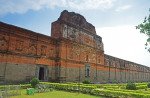
...
Adina Mosque

Some quick example text to build on the card title and make up the bulk of the card's content.

Go somewhere

...
Baishgazi Wall

Some quick example text to build on the card title and make up the bulk of the card's content.

Go somewhere
...
Ballal Bati

Some quick example text to build on the card title and make up the bulk of the card's content.

Go somewhere
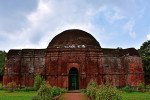
...
Baroduari Mosque

Some quick example text to build on the card title and make up the bulk of the card's content.

Go somewhere
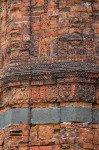
...
Chika Mosque

Some quick example text to build on the card title and make up the bulk of the card's content.

Go somewhere
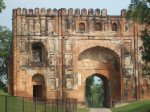
...
Dakhil Darwaza

Some quick example text to build on the card title and make up the bulk of the card's content.

Go somewhere
...
Eklakhi Mausoleum

Some quick example text to build on the card title and make up the bulk of the card's content.

Go somewhere
...
Gour

Some quick example text to build on the card title and make up the bulk of the card's content.

Go somewhere
in Other Cities