Aghar Darwaja
General information
-
Ideal Duration:
30 Minutes - 1 HourPlace Type:
Historic City Gate, Architectural LandmarkEntry Fees:
No General Entry Fee: There is no entry fee as it is a public, open-access monument and a functional city gate integrated into the main road network. This makes it freely accessible 24 hours a day for all citizens and tourists, ensuring its role as a permanent part of the c...No General Entry Fee: There is no entry fee as it is a public, open-access monument and a functional city gate integrated into the main road network. This makes it freely accessible 24 hours a day for all citizens and tourists, ensuring its role as a permanent part of the city's living history.
Parking Fees: There might be a small fee (around Rs.10 to Rs.20) for parking two-wheelers or four-wheelers in the designated parking areas nearby, which is collected by local authorities for area maintenance.
Photography Permits: Standard photography with handheld devices is free. However, a special permit from the local municipality or the Archaeological Survey of India (ASI) might be required for any kind of commercial photography, drone usage, or large-scale filming, which involves a fee and a formal application process. This ensures the protection of the monument from commercial exploitation. :Timing:
Regular Timings: Open 24 hours a day, 7 days a week, as it is a functional part of the city's road network. This continuous accessibility makes it easy to visit at any time.
Ideal Visit Time: Early morning (6:00 AM to 8:00 AM) or late eveni...Regular Timings: Open 24 hours a day, 7 days a week, as it is a functional part of the city's road network. This continuous accessibility makes it easy to visit at any time.
Ideal Visit Time: Early morning (6:00 AM to 8:00 AM) or late evening (8:00 PM to 10:00 PM) are ideal times. The early morning offers a quiet atmosphere and soft light for photography, while the evening is cooler and the gate is usually beautifully illuminated.
Mid-day Rush: The area experiences high traffic and heat during the mid-day hours (10:00 AM to 5:00 PM), which is best avoided for a peaceful exploration. :Special Events:
Local Navratri Celebrations: During the nine nights of Navratri in September or October, the open ground near the gate often becomes a vibrant space for local Garba and Dandiya Raas, celebrating the festival with traditional music and dance. This event highlights the fusion...Local Navratri Celebrations: During the nine nights of Navratri in September or October, the open ground near the gate often becomes a vibrant space for local Garba and Dandiya Raas, celebrating the festival with traditional music and dance. This event highlights the fusion of historical backdrop with living culture.
Republic Day/Independence Day Flag Hoisting: As a historical landmark, the gate is often a site for local flag-hoisting ceremonies on January 26 and August 15, serving as a patriotic symbol and a place for community gathering to honor the nation and its heritage.
Small Scale Urs Events: Occasionally, smaller religious processions or local Urs (celebrations of a saint's anniversary) originating from the nearby areas may pass through or gather near the gate, offering a glimpse into local religious traditions. :Best Photo Spots:
View from Station Road (Frontal Shot): A frontal photograph taken from Station Road captures the impressive arch and flanking bastions, framing the busy street life passing through the historical portal.
Low-Angle Perspective: A low-angle sh...View from Station Road (Frontal Shot): A frontal photograph taken from Station Road captures the impressive arch and flanking bastions, framing the busy street life passing through the historical portal.
Low-Angle Perspective: A low-angle shot emphasizes the height and solidity of the gate, highlighting its defensive and imposing structure against the sky, creating a sense of historical awe.
The Close-up Texture Shot: Focus on the weathered stone and masonry for a close-up image that captures the age and texture of the historical material, revealing the fine details of the craftsmanship.
Night Illumination Shot: A photograph taken at night, focusing on the gate's external lighting, presents the structure in a dramatic and solitary light, contrasting with the dark background of the old city. :Photo Gallery
Things To Do
-
Patan Fort Walk: Start a historical walking tour of the old city from the gate, imagining the original city walls and the defensive layout of Anhilpur Patan.
Local Market Exploration: The area around the gate is a bustling hub. Spend time exploring the local street markets and vendors that operate near the historic structure, offering a vibrant contrast between ancient and modern life.
Photography of Urban Heritage: Capture the architectural landmark amidst the dynamic urban environment, focusing on the contrast between the old stone structure and the passing modern traffic and nearby buildings.
Experiencing Local Commute: Observe the flow of local transport (auto-rickshaws, cycle-rickshaws, and pedestrians) passing through the ancient archway, illustrating the ...Patan Fort Walk: Start a historical walking tour of the old city from the gate, imagining the original city walls and the defensive layout of Anhilpur Patan.
Local Market Exploration: The area around the gate is a bustling hub. Spend time exploring the local street markets and vendors that operate near the historic structure, offering a vibrant contrast between ancient and modern life.
Photography of Urban Heritage: Capture the architectural landmark amidst the dynamic urban environment, focusing on the contrast between the old stone structure and the passing modern traffic and nearby buildings.
Experiencing Local Commute: Observe the flow of local transport (auto-rickshaws, cycle-rickshaws, and pedestrians) passing through the ancient archway, illustrating the gateway's continued utility in the city’s life.
Local Food Stalls: Sample the local street food (like fafda, jalebi, or regional snacks) from the vendors set up near the gate. This is an authentic way to experience the local culture and flavors of Patan.
Historical Research: For scholars, the gate provides a physical point of reference for studying the defense strategies and urban planning of medieval Gujarat.
Evening Visit: Visit the gate after sunset when it is usually illuminated, offering a different, more dramatic, and visually appealing photographic perspective on the centuries-old structure. :
Information
-
Why Famous:
Symbol of Patan's Past: It is famous as one of the few surviving historical city gates that once encircled the medieval capital of Gujarat, making it a tangible link to Anhilpur Patan’s powerful history as a trade and political center.
Gateway...Symbol of Patan's Past: It is famous as one of the few surviving historical city gates that once encircled the medieval capital of Gujarat, making it a tangible link to Anhilpur Patan’s powerful history as a trade and political center.
Gateway to the Old City: It serves as a symbolic entrance to the older, more culturally rich parts of Patan, guiding visitors from the modern railway station area into the historical core.
Blend of Dynastic History: The gate is a silent witness to centuries of Gujarat's history, from the Chaulukya dynasty's peak to the subsequent rule of the Sultanates and Mughals. This historical continuity is what draws heritage lovers.
Local Identity: For the residents of Patan, the Darwaja is a major city landmark and a crucial element of their local identity and daily life, constantly integrating history with the present-day urban landscape. : -
Architecture:
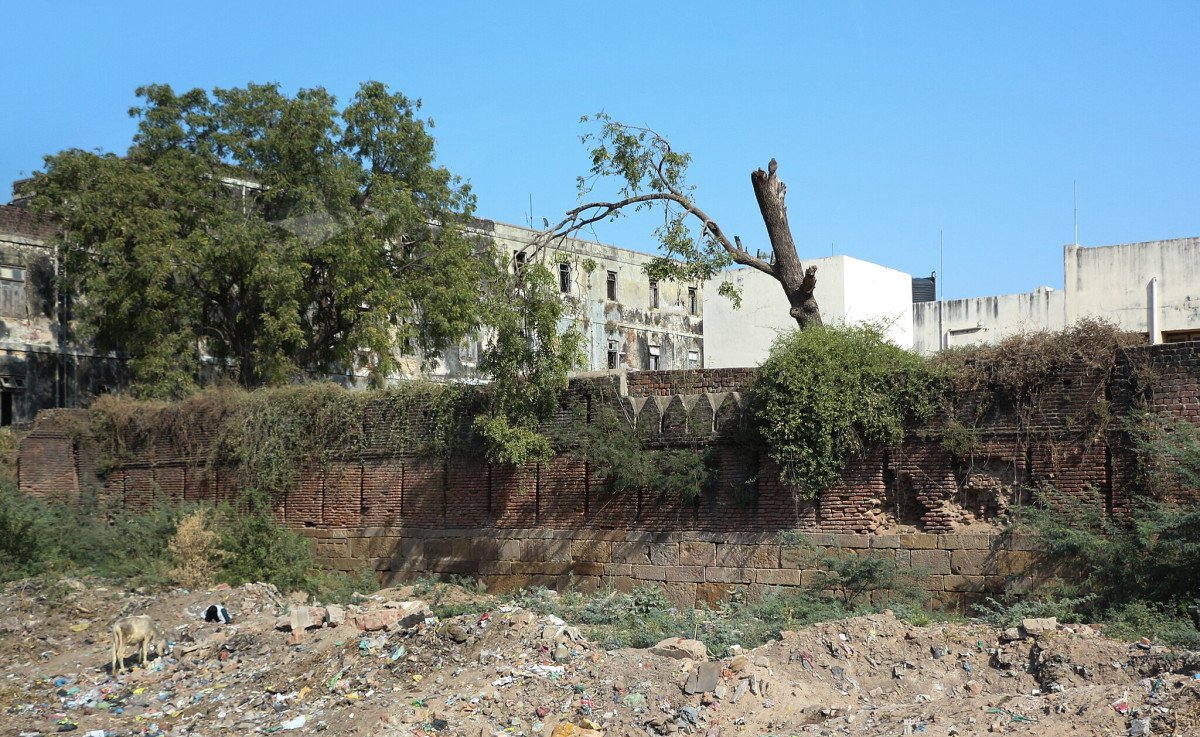
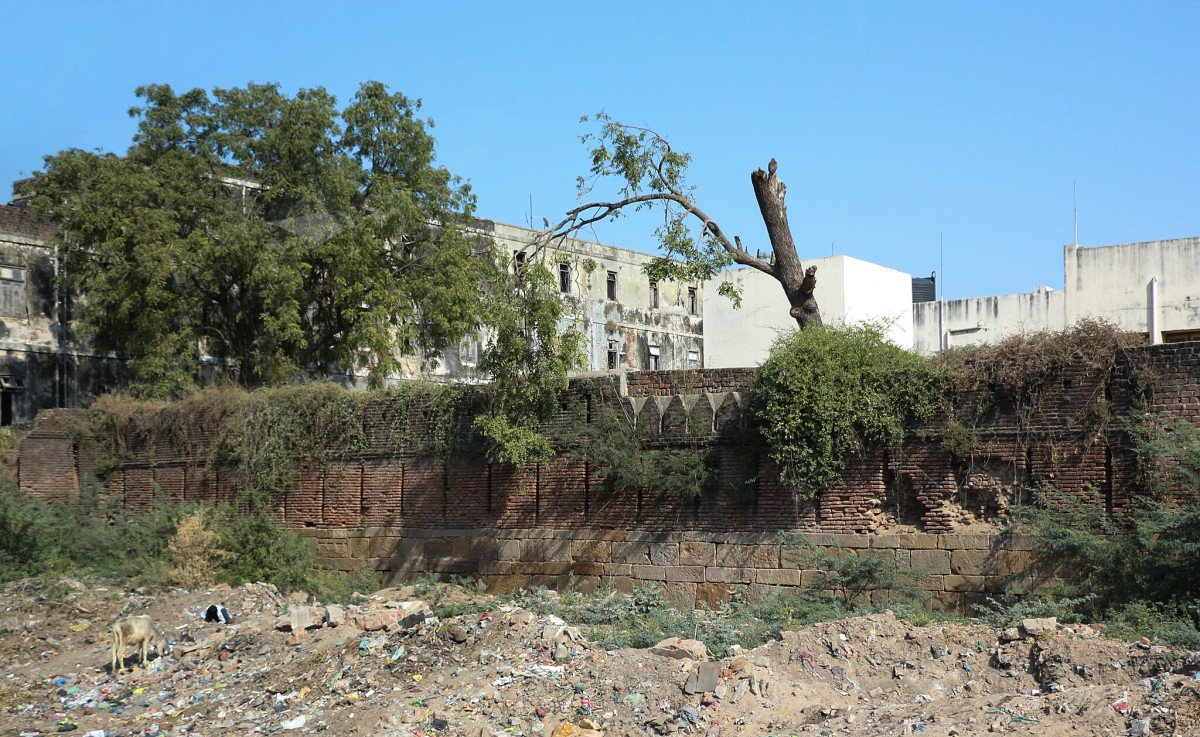
Construction Material and Form: The gate is constructed primarily of locally sourced sandstone and large stone masonry blocks, providing it with a solid, imposing look. The design is a relatively simple arched doorway flanked by two robust bastions or watchtowers, typical o...Construction Material and Form: The gate is constructed primarily of locally sourced sandstone and large stone masonry blocks, providing it with a solid, imposing look. The design is a relatively simple arched doorway flanked by two robust bastions or watchtowers, typical of military architecture.
Dimensions: The gate structure is not massive but substantial enough to have served its defensive purpose. It features a central arched opening, approximately 15 to 20 feet high and 10 to 12 feet wide, allowing for the passage of carts and foot traffic. The flanking towers are roughly 25 feet high. The overall structure’s dimensions are designed for defensive strength rather than decorative ornamentation. The thickness of the walls (estimated at 6-8 feet) is a significant architectural feature, highlighting its role as a fortification.
Architectural Style: The architecture is a functional mix of indigenous Solanki design principles with later structural reinforcement typical of the Sultanate period, characterized by minimal ornamentation compared to the stepwells and temples, focusing instead on structural integrity and strategic placement. The use of simple stone corbelling for the upper structures is visible. : -
How To Reach:
By Air: The nearest major airport is Ahmedabad (AMD, 125 KMS). From the airport, hire a pre-paid taxi or take a bus to Patan Bus Station, which is close to the gate.
By Train: Patan Railway Station (PTN) is the nearest station, located very...By Air: The nearest major airport is Ahmedabad (AMD, 125 KMS). From the airport, hire a pre-paid taxi or take a bus to Patan Bus Station, which is close to the gate.
By Train: Patan Railway Station (PTN) is the nearest station, located very close to the gate (less than 1 KM). It is easily walkable or a very short auto-rickshaw ride away, making train travel the most convenient option.
By Road: The gate is located on Station Road, a major city artery. Public buses and private cars can easily reach the vicinity. Bus connectivity from Mehsana, Ahmedabad, and other nearby towns is excellent, with buses stopping at the main Patan Bus Station.
By Local Transport: Auto-rickshaws and local taxis are readily available throughout Patan to take you directly to the Darwaja. Due to its central location, it is a well-known point of interest for all local transport providers. : -
Weather and Best Time to Visit:
Different Types of Seasons: Winter (October to March) is the best time for comfortable viewing and walking tours. Summer (April to June) is very hot; visit only in the early morning or late evening to avoid the heat. Monsoon (July to September) offers pleasant weather but...Different Types of Seasons: Winter (October to March) is the best time for comfortable viewing and walking tours. Summer (April to June) is very hot; visit only in the early morning or late evening to avoid the heat. Monsoon (July to September) offers pleasant weather but may have occasional heavy rain, which can temporarily disrupt traffic and make the ground around the gate muddy.
Different Parts of the Day: Sunrise is the best time for capturing the gate without heavy traffic. The late evening, after the main rush, is ideal for a historical reflection and to see the gate lit up. : -
Near Tourist Places:
Patan Railway Station (500 Meters), Patan Bus Stand (1 KM), Khan Sarovar (1 KM), Bagvada Darwaja (2 KMS), Patan Fort (1 KM), Patan City Museum (3 KMS), Rani ki Vav (2 KMS), Sahastralinga Talav (2. 5 KMS), Panchasara Jain Derasar (2. 5 KMS), Hemchandracharya Jain Gnan Mandir (1. 5 KMS). :
Tourism Tips
-
Health & safety: Be mindful of heavy traffic, as the gate is a major road junction. Watch out for uneven pavement.
Packing: Carry a small shoulder bag, as you are in a crowded, high-traffic area. Have change ready for local transport and s...Health & safety: Be mindful of heavy traffic, as the gate is a major road junction. Watch out for uneven pavement.
Packing: Carry a small shoulder bag, as you are in a crowded, high-traffic area. Have change ready for local transport and small purchases.
Accommodation: Stay in the central city area of Patan to have easy access to the historical core, which offers numerous budget and mid-range hotels.
Other Different Topics heading: Combine your visit with the Patan Fort ruins and Khan Sarovar as they are historically linked. Speak with local shopkeepers nearby to hear interesting anecdotes and local history about the gate, as they are a repository of local knowledge. :
Reviews
FAQs
Patan Itineray And Cost:-
Other Places In Patan :-
Other States In India :-
Information about New and Updated Locations() of Gujarat Has Been Added :-
Card subtitle
Note:-
Information provided here in good Faith and for reference only.
Near Places
Aghar Darwaja
Some quick example text to build on the card title and make up the bulk of the card's content.
Go somewhere
Bagvada Darwaja
Some quick example text to build on the card title and make up the bulk of the card's content.
Go somewhere
Bindu Sarovar
Some quick example text to build on the card title and make up the bulk of the card's content.
Go somewhere
Hemchandracharya Jain Gnan Mandir
Some quick example text to build on the card title and make up the bulk of the card's content.
Go somewhere
Khan Sarovar
Some quick example text to build on the card title and make up the bulk of the card's content.
Go somewhere
Kund of Bahubali
Some quick example text to build on the card title and make up the bulk of the card's content.
Go somewhere
Panchasara Jain Temple
Some quick example text to build on the card title and make up the bulk of the card's content.
Go somewhere
Panchasara Parshwanath Jain Derasar
Some quick example text to build on the card title and make up the bulk of the card's content.
Go somewhere
Patan City Museum
Some quick example text to build on the card title and make up the bulk of the card's content.
Go somewhere
Patan Fort
Some quick example text to build on the card title and make up the bulk of the card's content.
Go somewhere
Patan Patola Heritage Museum
Some quick example text to build on the card title and make up the bulk of the card's content.
Go somewhere
Rani ki Vav
Some quick example text to build on the card title and make up the bulk of the card's content.
Go somewhere
Regional Science Centre/Museum Patan
Some quick example text to build on the card title and make up the bulk of the card's content.
Go somewhere
Rudra Mahalaya
Some quick example text to build on the card title and make up the bulk of the card's content.
Go somewhere
Sadarambapa Statue
Some quick example text to build on the card title and make up the bulk of the card's content.
Go somewhere
Sahasralinga Talav
Some quick example text to build on the card title and make up the bulk of the card's content.
Go somewherein Other Cities