Athirappilly Waterfalls
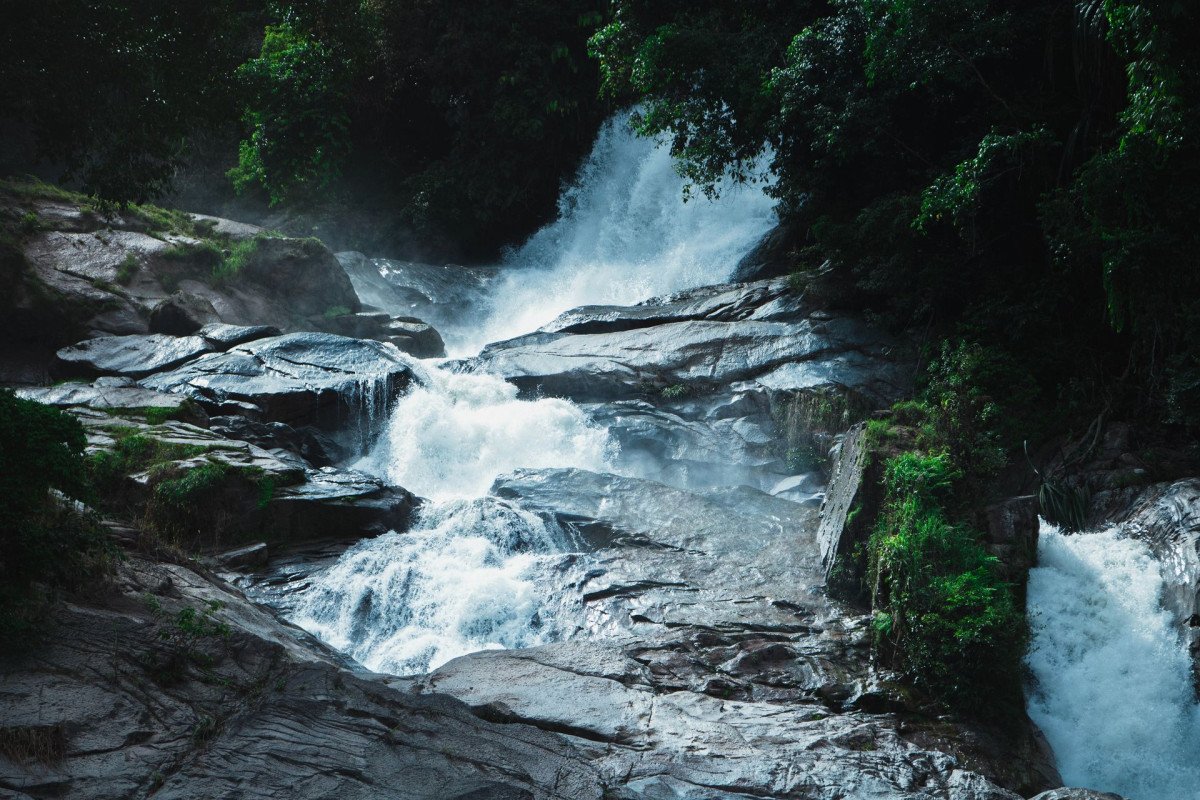
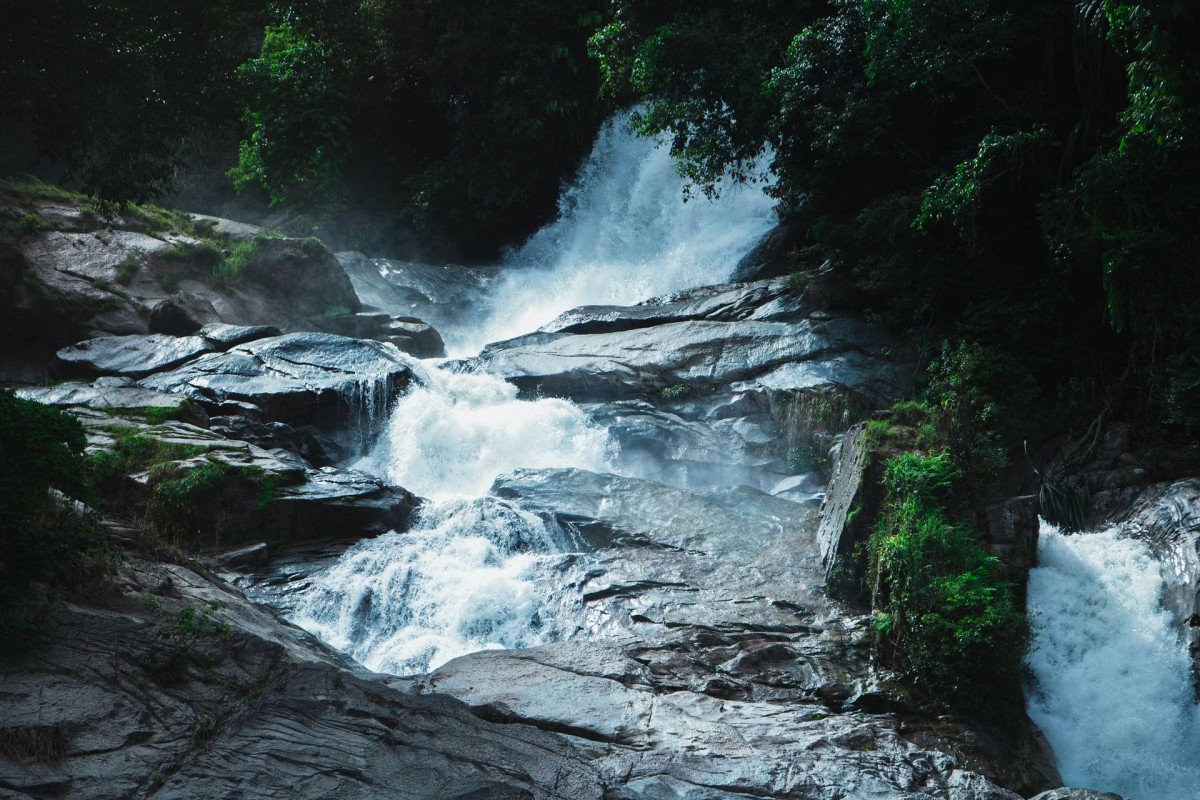
The Athirappilly Waterfalls are Kerala's largest waterfall, renowned for their incredible width and the sheer volume of water cascading down during the peak season. The water originates high up in the Sholayar forests and gathers momentum as the Chalakudy River before making its dramatic descent. Vi sitors can experience the falls from two main viewpoints: the top and the bottom. The upper view offers a breathtaking panoramic sight of the river spreading out before its plunge, while the view from the base, reached via a steep, approximately 15-20 minute trek through the dense tropical forest, provides an overwhelming sense of the falls' power. The misty spray rising from the bottom envelops the viewing area, creating a perpetually cool and refreshing atmosphere. This natural spectacle is more than just a waterfall; it is an important ecological zone. The surrounding forests are part of the protected Vazhachal Forest Division, serving as a critical habitat for diverse flora and fauna, including rare and endemic species. The falls have featured prominently in many famous Indian movies, further cementing their status as a major tourist and cinematic landmark. The journey to the falls itself is scenic, winding through thick vegetation and small tea and spice plantations. It is important to note that access to the water is highly restricted and guarded due to the strong currents and slippery rocks, prioritizing safety above all else. The beauty changes dramatically with the seasons, from a roaring giant during the monsoon to a more serene, braided flow during the summer months of February and March.:
General information
-
Ideal Duration:
3 - 4 hours:Place Type:
Waterfall, Nature Tourism, Forest Trekking:Entry Fees:
Entry Fee Structure for Indian Nationals: The entry fee for Indian adults to the Athirappilly Waterfalls area, which is managed by the Forest Department, is generally around INR 50 per person. This single ticket usually grants access to both the Athirappilly Waterfalls and ...Entry Fee Structure for Indian Nationals: The entry fee for Indian adults to the Athirappilly Waterfalls area, which is managed by the Forest Department, is generally around INR 50 per person. This single ticket usually grants access to both the Athirappilly Waterfalls and the nearby Vazhachal Falls on the same day. Children, usually those aged 5 to 12 years, often have a reduced ticket price, sometimes around INR 15 or INR 20. It is crucial for visitors to retain their tickets as they are checked at both waterfall sites.
Fees for Foreign Tourists and Students: Foreign tourists are subject to a higher entry fee, which can range from INR 200 to INR 250 per person. Students, particularly those on educational tours with proper identification or pre-approved institutional letters, may be eligible for highly concessional rates, sometimes as low as INR 10 to INR 15. It is always recommended to carry valid student identification for such discounts.
Vehicle and Camera Charges: In addition to the per-person entry fee, there are charges for vehicles and professional photography equipment. Two and three-wheelers typically have a parking charge of around INR 10, while light motor vehicles (cars) may be charged around INR 30 to INR 50. A standard camera (still photography) fee is generally around INR 60, and video cameras or professional-grade camcorders often attract a significantly higher charge, sometimes up to INR 300. These fees are put in place to maintain the protected forest area and its facilities. :Timing:
Regular Operating Hours (Gate Timings): The Athirappilly Waterfalls are managed by the Forest Department and have strict entry and exit timings. The regular operational hours are typically from 8:30 AM to 5:30 PM every day of the week. Visitors must adhere to these timings...Regular Operating Hours (Gate Timings): The Athirappilly Waterfalls are managed by the Forest Department and have strict entry and exit timings. The regular operational hours are typically from 8:30 AM to 5:30 PM every day of the week. Visitors must adhere to these timings, as entry is strictly closed after the last entry time to ensure the safety of tourists in the dense forest area, where wildlife activity increases after dusk. It is highly advised to reach the ticket counter well before the closing time.
The Golden Hour (Ideal Morning Visit Time): The ideal time to visit the falls is immediately after the gates open, around 8:30 AM to 9:00 AM. This period, often called the golden hour, offers several advantages. The weather is cool and pleasant, the crowd is minimal, allowing for peaceful viewing and better photography opportunities, and the chances of spotting wildlife, particularly birds, are highest. The morning sunlight hitting the falls also creates a beautiful, shimmering effect on the cascading water.
Avoiding Peak Crowds (Weekday Visits): If your goal is a tranquil, relaxed experience, the ideal days to visit are weekdays (Monday to Thursday). Weekends, public holidays, and the entire festive month of Onam see a massive influx of local tourists from Kochi and Thrissur, making the area crowded and the trek congested. Visiting on a weekday ensures a more serene engagement with nature. For the best natural spectacle, the period immediately after the heavy monsoon, such as October and November, is perfect, offering full flow without continuous rain. :Special Events:
Seasonal Monsoon Splendor and Peak Flow: The most significant annual "event" at Athirappilly is the peak flow of the waterfalls during the monsoon season, typically from late June through August. This natural spectacle transforms the falls from a wide, but manageable, flow ...Seasonal Monsoon Splendor and Peak Flow: The most significant annual "event" at Athirappilly is the peak flow of the waterfalls during the monsoon season, typically from late June through August. This natural spectacle transforms the falls from a wide, but manageable, flow into a roaring, thundering wall of white water. The visual and auditory experience during this time is unparalleled, drawing the largest number of tourists who come specifically to witness its full, untamed power. While it is not a structured festival, the change in the waterfall's character is treated as a major event by local tourism.
Athirappilly Tourism Week Observance: Though not fixed on a single date, the local tourism promotion council often organizes nature awareness camps and guided nature walks during certain periods, particularly after the peak monsoon, around October or November. These events aim to educate visitors about the ecological significance of the Sholayar forests, the Chalakudy River, and the importance of conserving the Hornbill habitat. These weeks usually involve special guided trekking tours and presentations by forest officials, which offer a unique, specialized experience beyond the general viewing of the falls.
Local Tribal Festivals (Kadar Community): The Kadar tribe, a local indigenous community closely associated with the Vazhachal forest, often has their own unique seasonal festivals and rituals. While these are primarily for the community and not widely advertised for general tourists, sometimes small cultural programs or displays of their forest produce and crafts are organized near the entrance of the tourist area. Attending or observing these small cultural interactions provides a deep and special insight into the heritage of the land. :Best Photo Spots:
The Top Falls Plateau View: This is the main viewing area right at the top of the falls. It offers a spectacular wide-angle view of the Chalakudy River just before it plunges. This spot is perfect for capturing the river's fast-moving flow, the lush tropical forest lining ...The Top Falls Plateau View: This is the main viewing area right at the top of the falls. It offers a spectacular wide-angle view of the Chalakudy River just before it plunges. This spot is perfect for capturing the river's fast-moving flow, the lush tropical forest lining the banks, and the dramatic drop-off point. It’s an ideal location for selfies and group photos, as the background is immediately recognizable. The best time to photograph here is early morning, around 9:00 AM, when the sun is still soft and the mist is starting to rise, adding a dreamy layer to the landscape.
The Base of the Falls (Mist Zone): The second best spot requires completing the challenging trek down. From the base, the falls look immense and tower above the viewer. This spot is excellent for capturing the vertical scale and the sheer power of the water. Due to the high-water spray, this is where you can capture the "milky effect" of the water with longer exposures (if your camera allows), or simply stunning, dramatic shots emphasizing the human scale against the natural giant. Be sure to protect your camera gear from the intense moisture here.
The Main Entrance Road Curve: Before reaching the main entry gate, there is a specific curve on the main Athirappilly road that offers a beautiful, slightly distant, high-angle view of the falls through a natural clearing in the trees. Many people miss this as they rush to the entrance. It provides a unique perspective, capturing the entire setting—the road, the valley, the forest, and the waterfall—in a single, picturesque frame. This spot is best utilized in the late afternoon, around 4:00 PM, as the light falls beautifully over the cascading water.
The Vazhachal Forest Corridor View: While strictly not the main falls, the scenic road leading to Vazhachal Falls (about 5 KMS ahead) offers several elevated points. From these viewpoints, you can often capture the Athirappilly Waterfalls in the far distance, providing context for the immense forest landscape of the Sholayar region. These photographs emphasize the wild, untamed nature of the destination, framing the falls within the dense jungle canopy. :Photo Gallery
Things To Do
-
The Trek to the Base of the Falls: One of the essential activities at Athirappilly is the downward trek to the bottom of the waterfalls. This is a moderately challenging, roughly one-kilometer trail that takes about 20 minutes one way. The path is well-marked but consists of steep, uneven steps, rocks, and mud patches, especially during the monsoon. It is an experience that allows visitors to witness the massive falls from a ground-up perspective, emphasizing their immense height and power. The surrounding tropical forest on the way down is rich with unique sounds and sights, adding to the adventure. Proper footwear is crucial for safety on this trek.
Photography and Vlogging: Athirappilly Waterfalls is a paradise for photographers. There are several key areas for capturing stunning images. The top area provides wide, lan...The Trek to the Base of the Falls: One of the essential activities at Athirappilly is the downward trek to the bottom of the waterfalls. This is a moderately challenging, roughly one-kilometer trail that takes about 20 minutes one way. The path is well-marked but consists of steep, uneven steps, rocks, and mud patches, especially during the monsoon. It is an experience that allows visitors to witness the massive falls from a ground-up perspective, emphasizing their immense height and power. The surrounding tropical forest on the way down is rich with unique sounds and sights, adding to the adventure. Proper footwear is crucial for safety on this trek.
Photography and Vlogging: Athirappilly Waterfalls is a paradise for photographers. There are several key areas for capturing stunning images. The top area provides wide, landscape shots of the Chalakudy River flowing and the forest canopy. The base is perfect for capturing the waterfall's massive scale and the rising mist, creating dramatic, soft-focus effects. Specific spots along the descent offer unique framed views through the trees. For vloggers and cinematographers, the changing light throughout the day offers varied shooting conditions, from the soft, early-morning glow to the harsh contrast of midday. Remember that using drones is strictly prohibited due to the falls being located in a protected forest area.
Bird Watching in the Vazhachal Forest: The forest surrounding Athirappilly is part of the Vazhachal Forest Division, a globally significant bird area. Dedicated birdwatching is a major activity here. The primary target for birders is the Great Indian Hornbill, along with the Malabar Pied Hornbill and other rare species. The best time for birdwatching is early morning, right when the gates open. Carrying binoculars and a detailed field guide is recommended. While the immediate falls area can be noisy, the quieter buffer zones and connecting paths to Vazhachal Falls are ideal for spotting avian life.
River View Relaxation and Picnics: The areas at the top of the falls, before the prohibited zone, offer peaceful spots along the riverbanks. Many families choose to relax here, enjoying the sound of the flowing water and the cool breeze. Though swimming near the falls is prohibited, there are designated, safer zones farther upstream. This is a great place to sit down, enjoy packed snacks (ensure you carry all trash back), and simply unwind amidst nature. The atmosphere is generally calm and rejuvenating, providing a perfect contrast to the energetic rush of the falls below.
Exploring the Local Flora and Fauna: Beyond birds, the Athirappilly region is home to several species of mammals, reptiles, and endemic plants. Engaging with a local forest guide can enhance this activity greatly, as they can point out specific medicinal plants, unique trees, and tell you about the local wildlife, such as elephants, sambar deer, and various primates, which are occasionally sighted, especially during the non-monsoon months of November and December. The focus is on respectful, non-intrusive observation, maintaining distance from all wildlife.
Visiting the Local Tourist Shops: Near the entrance, there are several small shops run by local community members and tribes. Visiting these shops is a simple but meaningful activity that supports the local economy. They often sell locally sourced honey, forest produce, spices, and simple souvenirs related to the waterfalls. It offers a glimpse into the local lifestyle and traditions of the people living around the forest buffer zone. Enjoying the Scenic Drive (Athirappilly - Valparai Route): While the falls are the destination, the road leading through the forest from Athirappilly towards Vazhachal and further on to Valparai is an attraction in itself. Taking a slow drive along this route allows visitors to soak in the dense forest views, the winding river, and the dramatic landscape changes. This road is one of the most beau
Information
-
Why Famous:
The Niagara of India Title: The primary reason for its fame is the sheer scale and resemblance to larger world-famous waterfalls, earning it the moniker "The Niagara of India. " While not as tall, its impressive width and powerful, multi-tiered flow, especially during the pe...The Niagara of India Title: The primary reason for its fame is the sheer scale and resemblance to larger world-famous waterfalls, earning it the moniker "The Niagara of India. " While not as tall, its impressive width and powerful, multi-tiered flow, especially during the peak monsoon season, create a magnificent and breathtaking sight that draws tourists from all over India and the world. This dramatic visual impact is what truly sets it apart from many other waterfalls in the region.
Cinematic Appeal and Hornbill Habitat: Athirappilly is a favorite location for Indian cinema, particularly in South Indian movies. Its majestic presence has been the backdrop for numerous romantic songs and action sequences, increasing its visibility and desirability as a destination. Furthermore, the surrounding forest is globally recognized as the only location in the Western Ghats where all four species of the endangered Hornbill (Great, Malabar Pied, Malabar Grey, and Indian Grey) are found. This unique ecological significance attracts dedicated wildlife researchers and birdwatchers.
Accessibility and Natural Beauty: Despite being located deep within the forest, the falls are relatively accessible, being a comfortable drive from major cities like Kochi and Thrissur. The ease of reaching such a powerful and unspoiled natural wonder adds greatly to its popularity. It combines the thrill of a forest trek with the reward of an immense waterfall, making it a complete nature experience. : -
Architecture:
Natural Formation and Geological Structure: Athirappilly Waterfalls does not have man-made architecture in the traditional sense, but its natural architecture, or structure, is immensely impressive. The fall is approximately 80 feet (24 meters) high and spreads out to about...Natural Formation and Geological Structure: Athirappilly Waterfalls does not have man-made architecture in the traditional sense, but its natural architecture, or structure, is immensely impressive. The fall is approximately 80 feet (24 meters) high and spreads out to about 330 feet (100 meters) wide across the cliff face, particularly during high flow periods in July and August. It consists of several parallel cascades, which gives it a tiered appearance resembling the famous Niagara Falls comparison. The geological structure is mainly composed of igneous and metamorphic rocks, carved by the relentless erosive power of the Chalakudy River over millennia. The river channel above the falls features flat, rocky areas that provide the main access path and top-viewing platform.
Viewing Platforms and Safety Barriers: The Kerala Forest Department has developed essential infrastructure to allow safe public viewing. This includes well-laid pathways and steps, especially the challenging, often slippery, descent to the base of the falls. At the top, solid, but non-intrusive, iron and concrete barriers are installed to prevent accidents near the dangerous edge. At the base, cleared areas provide stable ground for viewing, while natural rock formations act as informal seating. These man-made additions are minimal, designed to harmonize with the forest environment and maintain a low profile so that the focus remains entirely on the natural spectacle. The main entrance area includes administrative buildings for ticket sales and a small checkpost, constructed primarily using local, simple materials. : -
How To Reach:
By Air (Nearest Airport and Connectivity): The nearest major airport to Athirappilly Waterfalls is the Cochin International Airport (COK), located in Nedumbassery, near Kochi. The distance from the airport to the falls is approximately 55 KMS. This airport is well-connecte...By Air (Nearest Airport and Connectivity): The nearest major airport to Athirappilly Waterfalls is the Cochin International Airport (COK), located in Nedumbassery, near Kochi. The distance from the airport to the falls is approximately 55 KMS. This airport is well-connected to all major cities in India and several international destinations. Upon arrival at COK, visitors have multiple options. The most convenient is hiring a pre-paid taxi or a private cab directly to Athirappilly. Alternatively, one can take a bus or taxi from the airport to Chalakudy town, which is the main transit hub for the region, and then proceed to the falls. The drive from the airport takes about 1. 5 to 2 hours. By Train (Nearest Railway Station and Trunk Line Access): The closest major railway station is Chalakudy Railway Station (CKI), situated approximately 30 KMS from Athirappilly. Chalakudy lies on the busy Shoranur-Cochin Harbour section of the Southern Railway, making it easily accessible from all parts of India, including cities like Chennai, Mumbai, Delhi, and Bangalore. From Chalakudy station, one can hire a taxi or an auto-rickshaw for the final leg of the journey. Another important nearby station is Thrissur Railway Station (TCR), about 60 KMS away, which is a major railway junction with better connectivity, though the road journey from there is slightly longer.
By Road (National Highways and Scenic Drive): Athirappilly is best reached by road due to the beautiful drive. It is well-connected via the state highway that branches off from the main National Highway 544 (NH 544). If driving from Kochi or Ernakulam, you would typically travel north on the highway until reaching Chalakudy and then take the scenic route that leads directly into the forest area towards Athirappilly and Vazhachal. The entire road journey is pleasant, characterized by rubber, pineapple, and spice plantations, and dense tropical forests. State-run and private buses regularly ply this route, connecting Chalakudy bus stand directly to the falls area. By Local Transport (Bus Services and Auto-Rickshaws): From the town of Chalakudy, which acts as the base for most travelers, there is a frequent and affordable local bus service operated by KSRTC (Kerala State Road Transport Corporation) that runs towards the falls and sometimes up to Vazhachal. Auto-rickshaws are available in Chalakudy but may be expensive for the round trip to the falls. Taxis, though more costly, are the most comfortable and reliable option, especially for groups or families, and allow for flexible stopping at scenic points along the way, such as Charpa Falls. : -
Weather and Best Time to Visit:
The Monsoon Season (June to September): The monsoon is when the falls are in their absolute peak form, earning the "Niagara of India" title. The water flow is massive, and the forest is at its most vibrant green. However, heavy, continuous rains can make the trekking path ...The Monsoon Season (June to September): The monsoon is when the falls are in their absolute peak form, earning the "Niagara of India" title. The water flow is massive, and the forest is at its most vibrant green. However, heavy, continuous rains can make the trekking path to the base very slippery and dangerous, and visibility can sometimes be reduced. This period is best for visitors who prioritize the majestic, powerful sight of the water and don't mind the rain.
The Post-Monsoon Season (October to February): This is widely considered the best time for a complete visit. The weather is cool, the falls maintain a healthy, spectacular flow from the monsoon surplus, and the risk of heavy rainfall is greatly reduced. October and November are particularly beautiful as the mist clears but the volume of water remains high. The post-monsoon months are perfect for trekking, photography, and enjoying the forest trails.
The Summer Season (March to May): The summer months bring higher temperatures and reduced water flow, but the falls never truly dry up. The flow is less furious and more braided, offering a different kind of gentle beauty. The forest canopy provides shade, making the trek down still manageable. This period is the best for wildlife enthusiasts, as animals tend to come closer to the river, and birdwatching is often easier due to better visibility.
Best Part of the Day (Early Morning): As mentioned, the absolute best time is the early morning, right after the gates open, generally between 8:30 AM and 11:00 AM. This period is characterized by the lowest temperatures, minimal crowds, and the best lighting conditions for photography. It also provides the quietest environment, which is crucial for maximizing the chance of bird and wildlife sightings along the main trails. Visiting in the late afternoon, between 3:00 PM and 5:00 PM, is the second-best option for enjoying the golden light on the waterfalls before the park closes. : -
Near Tourist Places:
Vazhachal Falls: 5 KMS (Upstream, same entry ticket)
Charpa Falls: 3 KMS (Roadside waterfall)
Thumboormuzhi Dam & Butterfly Garden: 17 KMS (Family spot with hanging bridge)
Peringalkuthu Dam View Point: 13 KMS (Reservoir view, often requires permission)
Sholayar Dam: 55 KMS (Large dam, long but scenic drive)
Dream World Water Theme Park: 30 KMS (Family entertainment near Chalakudy)
Silver Storm Water Theme Park: 28 KMS (Another family water park option)
Chalakudy Town: 30 KMS (Main town for supplies and transport)
Kodanad Elephant Training Centre: 41 KMS (To see elephants being bathed and trained)
Malayattoor Church: 50 KMS (Important Christian pilgrimage site)
Ezhattumukham Nature Village: 18 KMS (Reached via the Thumboormuzhi Hanging Bridge)
Chimmini Wildlife Sanctuary: 47 KMS (For serious trekking and wildlife spotting):
Tourism Tips
-
Health and Safety Guidelines: Safety is paramount as the falls are located in a protected forest area with inherent risks. Do not attempt to swim or bathe in the river, especially near the falls or in areas marked as prohibited; the currents are extremely strong and decept...Health and Safety Guidelines: Safety is paramount as the falls are located in a protected forest area with inherent risks. Do not attempt to swim or bathe in the river, especially near the falls or in areas marked as prohibited; the currents are extremely strong and deceptive. The path to the base of the falls is steep and potentially slippery; wear sturdy, non-slip footwear and take your time. Stay strictly within the fenced and marked areas. Always carry a basic first-aid kit, insect repellent, and stay hydrated by drinking bottled water. Be mindful of wildlife, particularly snakes and leeches, especially during the monsoon season.
Essential Packing List: Given the forest location and the inevitable mist, packing the right gear is crucial. Essential items include comfortable, sturdy walking shoes or hiking sandals (avoid flip-flops), light cotton or synthetic clothing that dries quickly, a light rain jacket or poncho (especially if visiting during June to October), a cap or hat, and sunglasses. For photographers, a waterproof bag or rain cover for camera equipment is necessary due to the continuous spray near the base. Carry necessary medications and, importantly, a reusable water bottle to minimize plastic waste. Accommodation Options (Near Chalakudy and Athirappilly): While some resorts offer a stunning, direct view of the falls, accommodation inside the immediate forest zone is limited and often expensive. The best strategy is to stay in the nearby town of Chalakudy (about 30 KMS away), which offers a wider range of budget and mid-range hotels, or the area just outside the forest check-post, where several beautiful resorts and homestays are located. Booking accommodation well in advance is highly recommended, particularly if traveling during the peak season (October to January).
Respecting the Environment and Rules: Athirappilly is an ecological hotspot, so responsible tourism is mandatory. Do not litter under any circumstances; carry all waste (including plastic bottles and food wrappers) back with you and dispose of it properly outside the forest area. Do not feed or disturb any wildlife, including monkeys. Avoid making loud noises, which can disturb the sensitive ecosystem. Smoking and consuming alcohol within the forest premises are strictly prohibited. Always listen to the instructions provided by the forest guards and guides, as they are there to protect both you and the environment. :
Reviews
FAQs
Athirappilly Itineray And Cost:-
Athirappilly Waterfalls Tourism:-
Information about New and Updated Locations() of Kerala Has Been Added :-
Card subtitle
Note:-
Information provided here in good Faith and for reference only.
All information and pictures will be updated soon, please keep visiting.
Near Places
Athirappilly Waterfalls
Some quick example text to build on the card title and make up the bulk of the card's content.
Go somewhere
Charpa Falls
Some quick example text to build on the card title and make up the bulk of the card's content.
Go somewhere
Thumboormuzhi Dam & Butterfly Garden
Some quick example text to build on the card title and make up the bulk of the card's content.
Go somewhere
Vazhachal Falls
Some quick example text to build on the card title and make up the bulk of the card's content.
Go somewhere
Vazhachal Waterfalls
Some quick example text to build on the card title and make up the bulk of the card's content.
Go somewherein Other Cities