
...

FAQs On Baishgazi Wall

Malda, West Bengal, India
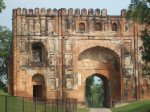
The Baishgazi Wall is a monumental relic of the medieval capital of Bengal, standing as a silent witness to the military and architectural prowess of the Sultanate era. Built primarily to protect the royal palace complex known as Haveli Khas, this massive wall derived its name from its incredible h eight of 22 Bengali yards or Gaz, which translates to approximately 42 feet. Historians generally attribute its construction to Sultan Ruknuddin Barbak Shah around 1455 AD, during a period when Gour was a flourishing center of power and culture in South Asia. The wall once encircled the royal enclosure from three sides, acting as a formidable defense against both human invaders and the shifting waters of the nearby Ganges river. Stretching across several kilometers, the ruins today offer a glimpse into the massive scale of the ancient city. The surrounding area is densely populated with Mango orchards, adding a serene green backdrop to the weathered red bricks. Despite centuries of neglect and the impact of the tropical climate, parts of the wall remain standing, showcasing the durability of the local brick-making techniques of the 15th century. Walking along the base of the wall, visitors can feel the sheer scale of the fortification that once guarded the Sultans of Bengal. The site is a treasure trove for history buffs and those interested in military architecture, providing a tangible connection to the time when Gour rivaled the greatest cities of the world. The atmosphere here is deeply nostalgic, filled with the whispers of a forgotten empire and the rustic charm of rural Bengal.

Ans:- The Baishgazi Wall, located in Malda, is a significant historical structure that dates back to the era of the Bengal Sultanate. The name 'Baishgazi' translates to 'twenty-two yards,' referring to the height of the wall, which was constructed as a protective fortification. It stands as a silent witness to the ancient capital of Bengal, Gaur. Its historical importance lies in its demonstration of the defensive architectural strategies employed by the rulers of that time, serving as a landmark that defines the boundary and grandeur of the ancient city's fortifications that once protected the royal palaces and inhabitants.

Ans:- The name 'Baishgazi' has a direct linguistic origin in Bengali, where 'baish' means twenty-two and 'gaj' refers to a yard, a traditional unit of measurement. Thus, the name signifies a wall that is approximately twenty-two yards high. Although much of the structure has eroded over the centuries, the name persists as a testament to its original towering stature. It highlights the scale of construction undertaken by the ancient rulers to fortify their city, and today, it serves as a historical marker for tourists trying to understand the defensive engineering capabilities and the architectural pride of the historic capital of Gaur.

Ans:- No, tourists are strictly prohibited from climbing or accessing the top of the Baishgazi Wall. The structure is an ancient, delicate archaeological site that has been weathered by time and natural elements. Allowing climbing would not only be dangerous for visitors due to the unstable nature of the old brickwork but would also lead to the rapid deterioration and damage of the protected monument. Visitors are encouraged to observe the wall from the ground level, where they can appreciate its massive scale and historical importance without compromising their personal safety or the physical integrity of this ancient heritage wall.

Ans:- Yes, the Baishgazi Wall is recognized and protected as a significant historical site. It falls under the preservation efforts of the Archaeological Survey of India (ASI), which works to maintain the stability of the remaining sections of the wall. Being a protected site means that any unauthorized modification, defacement, or damage to the structure is a punishable offense. The efforts made by the ASI ensure that this relic of the medieval city of Gaur remains standing for future generations, allowing scholars and history enthusiasts to study the defensive techniques used in the ancient capital of Bengal.

Ans:- The area surrounding the Baishgazi Wall is generally safe for tourists during daylight hours. As it is a public historical site, it is frequently visited by tourists and locals alike. However, because it is located in a somewhat secluded, historically dense area of Malda, it is always wise to visit in groups and during the morning or afternoon. It is not recommended to explore the vicinity of the ruins after dark due to limited lighting and the lack of facilities. Visitors should stay alert and stick to the well-trodden paths that have been established for sightseeing in the Gaur region.

Ans:- A visit to the Baishgazi Wall usually does not take very long, typically ranging from 30 to 45 minutes. Since the site is a single, albeit long and massive, fortification structure, visitors usually spend their time reading the informational placards and taking photographs of the wall. Many tourists include this as a brief stop while touring the larger ruins of the city of Gaur. Because it is close to other historical attractions, you can comfortably see the wall and proceed to other nearby sites like the Firoz Minar or the Kadam Rasul Mosque as part of a larger historical tour of Malda.

Ans:- The Baishgazi Wall is an open-air monument, and in many instances, there is no specific entry fee to view it from the road or the surrounding park-like area. However, as it is part of the broader Gaur archaeological zone, some nearby protected sites might have a collective ticket or entry requirements. It is always a good idea to keep some change or a small amount of money handy if there happens to be a government-managed gate nearby. Most of the time, it is freely visible to the public, allowing travelers to stop and admire the structure while driving through the historical ruins.

Ans:- While it is technically possible to visit the Baishgazi Wall during the monsoon season, it is generally not recommended. The heavy rains in the Malda region can make the surrounding paths muddy and slippery, and the vegetation around the ruins can become quite dense, making exploration uncomfortable. Furthermore, excessive moisture can be detrimental to the exposed, ancient brickwork of the wall. If you must visit during the monsoon, be prepared for unpredictable weather and ensure you have appropriate footwear and rain gear. The best experience, however, remains during the cooler and drier winter months when the structure is clearly visible and accessible.

Ans:- When visiting the Baishgazi Wall, it is recommended to carry the basics for an outdoor historical tour. This includes a bottle of drinking water, comfortable walking shoes to handle potentially uneven ground, and a camera to document the structure. Since it is an open-air site without dedicated facilities like cafes or toilets, ensure you have these sorted out before reaching the location. Additionally, bringing a small bag to carry your personal items is helpful. If you are visiting in the warmer months, wearing a hat and sunglasses is essential, as there is limited shade near the wall itself.

Ans:- There are no official, permanent guides stationed specifically at the Baishgazi Wall. However, if you are hiring a local tour guide in Malda to cover the major ruins of Gaur, they will definitely include this site in the itinerary and provide historical context. Relying on a hired guide is highly recommended, as they can explain the defensive significance of the wall and how it relates to the rest of the ancient city fortifications. If you are visiting independently, you can read the historical information boards maintained by the Archaeological Survey of India near the site for a brief overview.

Ans:- The Baishgazi Wall is situated within the historic ruins of Gaur, which is a bit of a drive from Malda town. The most convenient way to reach it is by hiring a car or a local auto-rickshaw for the day, as public bus services to the interior ruins can be infrequent and less flexible. By booking a private vehicle, you can comfortably move between this wall and other important landmarks like the Dakhil Darwaza and the Bara Sona Mosque. The roads leading into the Gaur area are scenic and offer a good look at the rural landscape of West Bengal.

Ans:- There are very few, if any, formal food stalls or restaurants located directly next to the Baishgazi Wall, as it is situated in a protected, mostly rural archaeological zone. You might find a small vendor selling tea or basic packaged snacks, but do not rely on this for a full meal. It is strongly advised to carry your own food and water if you plan to spend time exploring the various ruins of Gaur. Malda town, which is a short drive away, offers a better selection of restaurants where you can enjoy a meal after your historical site-seeing trip is concluded.

Ans:- Yes, the Baishgazi Wall is a fantastic spot for history and travel photography. The sheer scale of the wall, with its ancient, weathered brickwork, creates a dramatic backdrop that looks particularly impressive during the golden hour (early morning or late afternoon). Its historical significance and the surrounding greenery provide a wonderful setting for capturing the essence of the medieval Bengal Sultanate. Visitors are encouraged to take photos for personal use, but they should be mindful not to disturb the structure or trespass onto restricted parts of the site. A wide-angle lens is often helpful to capture the full length of the remaining wall.

Ans:- The Baishgazi Wall is distinct from other ruins in Gaur because it is a defensive fortification rather than a mosque or a tomb. While sites like the Bara Sona Mosque or the Dakhil Darwaza are famous for their intricate architecture and religious importance, the Baishgazi Wall stands out for its sheer functional design and its demonstration of the military strategy of the time. It gives visitors a better understanding of how the capital city of Gaur was protected. Comparing it with the ornate mosques allows tourists to appreciate the diverse nature of the architectural projects that were undertaken by the medieval Bengal Sultans.

Ans:- There are no dedicated public restrooms located immediately at the Baishgazi Wall site itself, as it is a remote, protected archaeological monument. Visitors are advised to use restroom facilities available in Malda town or at the larger, more developed tourist entry points within the Gaur area before heading out to the more isolated ruins. Planning ahead is crucial for a comfortable trip. If you are hiring a private taxi or auto-rickshaw for the day, your driver will be familiar with the area and can often guide you to the nearest available public or restaurant facilities along the route when needed.
Information about New and Updated Locations() of West Bengal Has Been Added :-
Card subtitle

Note:-

Information provided here in good Faith and for reference only.

All information and pictures will be updated soon, please keep visiting.

Near Places
...
Adina Deer Park

Some quick example text to build on the card title and make up the bulk of the card's content.

Go somewhere

...
Adina Eco Tourism Park

Some quick example text to build on the card title and make up the bulk of the card's content.

Go somewhere
...
Adina Mosque

Some quick example text to build on the card title and make up the bulk of the card's content.

Go somewhere

...
Baishgazi Wall

Some quick example text to build on the card title and make up the bulk of the card's content.

Go somewhere
...
Ballal Bati

Some quick example text to build on the card title and make up the bulk of the card's content.

Go somewhere
...
Baroduari Mosque

Some quick example text to build on the card title and make up the bulk of the card's content.

Go somewhere
...
Chika Mosque

Some quick example text to build on the card title and make up the bulk of the card's content.

Go somewhere
...
Dakhil Darwaza

Some quick example text to build on the card title and make up the bulk of the card's content.

Go somewhere
...
Eklakhi Mausoleum

Some quick example text to build on the card title and make up the bulk of the card's content.

Go somewhere
...
Gour

Some quick example text to build on the card title and make up the bulk of the card's content.

Go somewhere
in Other Cities