...

FAQs On Baroduari Mosque

Malda , West Bengal, India
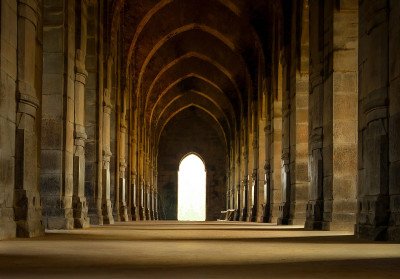
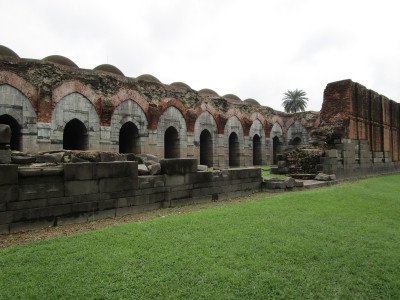
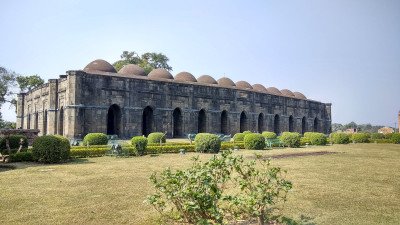
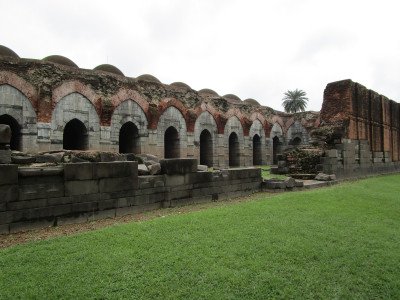
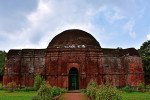
The Baroduari Mosque, also famously known as the Baro Sona Masjid (Great Golden Mosque), is the largest and most magnificent surviving monument in the ancient capital of Gour. Situated approximately $14 ext{ KMS}$ from modern Malda City, this colossal mosque was commissioned by Sultan Nasiruddin Nu srat Shah and completed in $1526 ext{ AD}$. The name Baroduari translates to "twelve doors" or "twelve entrances," referring to the twelve arched openings on its eastern fa ade, while Baro Sona (Great Gold) suggests that the domes or some parts of the interior were once covered in gold plating, though no gold remains today. The sheer scale of the mosque measuring about $51.2 ext{ meters}$ by $23.2 ext{ meters}$ is immediately awe-inspiring. It was designed as a massive congregational mosque (Jami Masjid), capable of accommodating thousands of worshippers, reflecting the height of the Bengal Sultanate's imperial power just before the arrival of the Mughals. The structure is built entirely of red baked brick and was originally covered by a staggering 44 domes (four rows of eleven domes each). Although the roof and all the domes have collapsed due to time and earthquakes, the massive, thick walls, adorned with intricate brick carvings and terracotta work, still stand tall. The colossal central arch and the remaining octagonal corner turrets give a strong sense of its former grandeur. Visiting the Baroduari Mosque allows one to walk into a vast, roofless hall, visualizing the space where one of the largest congregations in medieval Bengal once gathered. The mosque is a perfect example of the fully developed regional architectural style, showcasing the Bengali preference for curved cornice lines and decorative brickwork. Its size and prominence make it the centerpiece of the Gour ruins, an essential stop for anyone interested in South Asian history and architecture.

Ans:- The Baroduari Mosque, also known as the Boro Sona Mosque, is the largest and most magnificent monument in the ancient capital of Gour. Its construction was initiated by Sultan Alauddin Husain Shah and completed by his son, Nasiruddin Nusrat Shah, in 1526 CE. The mosque served as the royal place of worship for the Sultans of Bengal. Its grandeur and size are a testament to the power and prosperity of the Bengal Sultanate during the 16th century, representing the zenith of Indo-Arabic architectural design in the region.

Ans:- The name "Baroduari" translates literally to "Twelve Doors," yet the structure actually features eleven doorways along its eastern facade. This discrepancy is a common subject of curiosity among visitors. The name likely arose from a popular miscount or perhaps as a symbolic reference to the architecture of that time. Despite the mismatch between the name and the physical reality, the mosque remains widely recognized by this name, and it is a highlight of the Gour ruins, known for its massive, imposing presence and beautiful stonework.

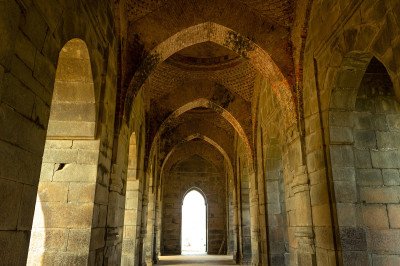
Ans:- The Baroduari Mosque is a colossal rectangular structure, measuring approximately 50.4 meters in length and 22.8 meters in width. Standing about 12 meters high, it dominates the landscape of the surrounding ruins. Its scale is unparalleled among the monuments in Gour, making it a must-visit for anyone interested in medieval architecture. The interior is divided by stone pillars that support numerous domes, creating a vast and serene prayer space that exemplifies the architectural ambition and aesthetic sophistication of the Husain Shahi dynasty in medieval Bengal.

Ans:- The mosque is a primary example of the Indo-Arabic architectural style, characterized by its heavy use of stone and brick, ornamental carvings, and large-scale construction. It features intricate stone detailing on the walls and doorways, showcasing the blend of local craftsmanship with Islamic artistic influences. The design reflects the transition toward a more refined Sultanate style, with elaborate floral motifs and geometric patterns. Its layout, which includes a large central prayer hall, demonstrates the functional yet aesthetic priorities of the rulers who commissioned this monumental building during their reign.

Ans:- While the Baroduari Mosque is a historical monument and a tourist site rather than a fully functioning modern-day mosque, it remains a site of immense cultural and religious significance. Occasionally, during specific festivals or local observations, the area around the monument may see increased activity from the local community. However, it is primarily preserved by the Archaeological Survey of India (ASI) as an ancient ruin. Visitors are allowed to enter and explore the structure, though they are expected to maintain the decorum appropriate for a site of historical and religious heritage.

Ans:- The Baroduari Mosque stands out as the largest in the Gour complex, far exceeding others in both scale and ornamental detail. Unlike the smaller, more compact mosques like the Chika or Lottan Masjid, the Baroduari offers a sense of vast, royal scale. Its use of stone throughout the facade and its impressive length make it the centerpiece of the Gour ruin circuit. It provides a striking contrast to the brick-heavy architecture seen in other parts of the site, highlighting the wealth and the ability of the Sultanate to procure and craft high-quality stone.

Ans:- The primary attractions are the massive entrance gates, the intricate stone carvings around the doorways, and the impressive, cavernous prayer hall. Visitors often spend time capturing the play of light and shadow through the pillars, which makes for stunning photography. The sheer size of the building provides a sense of awe, allowing tourists to appreciate the engineering skills of the 16th century. It is considered the most iconic structure in the Gour ruins, and a visit to Malda is incomplete without standing before this grand monument to admire its history.

Ans:- Generally, there is no formal entry fee to visit the Baroduari Mosque. Like most monuments in the Gour archaeological area, it is open to the public free of charge. However, it is always wise to check for any updated guidelines or ticket requirements at the entrance or through the official tourism website of Malda before planning your visit. As it is a popular historical site, it is best to visit during early hours to avoid crowds and have more space and quiet to appreciate the intricate details of the stone carvings.

Ans:- To reach the Baroduari Mosque, you should arrive at the Malda Town Railway Station and then hire a local vehicle, such as a taxi or an auto-rickshaw. The mosque is located about 12 to 15 kilometers south of Malda city center, within the heart of the Gour ruins. The road journey is smooth and passes through the scenic, rural landscape of the district. It is recommended to hire a vehicle for the entire day, as this allows you to travel comfortably between the different monuments scattered throughout the ancient city of Gour.

Ans:- Because the interior of the Baroduari Mosque can be quite dark due to its size and minimal light entry, it is advisable to bring a camera with a good low-light sensor or a wide-aperture lens. A tripod can also be very helpful for capturing long-exposure shots of the interior pillars and arches. Remember that this is a heritage site, so be respectful while taking photos. Avoid climbing on the walls or pillars, and ensure that your photography does not obstruct other visitors or cause any damage to the ancient stone structures.

Ans:- Yes, the Baroduari Mosque is a very popular spot for groups, families, and students on educational trips. The area surrounding the mosque is generally open and spacious, allowing for easy movement. It is a fantastic place for a day out, especially if you combine it with visits to the other nearby monuments in the Gour complex. It is recommended to bring along drinking water and light refreshments, as there are limited facilities directly at the site. A local guide can make the visit much more engaging for families.

Ans:- The best time to visit the Baroduari Mosque is during the winter season, between October and February. The weather is cool and pleasant, making it perfect for wandering around the large, open complex of Gour. Summers in Malda can be extremely hot, which can make exploring the extensive grounds quite exhausting. Additionally, visiting in the winter allows you to enjoy the clear skies and comfortable temperatures, which significantly enhance the experience of visiting historical sites and capturing beautiful, crisp photographs of the ancient architecture.

Ans:- The Baroduari Mosque is centrally located within the Gour ruins, close to many other key historical sites. You can easily walk or take a short drive to the Dakhil Darwaza, Firoz Minar, and the Kadam Rasul Mosque. Many tourists structure their day to visit these sites sequentially, as they are all part of the same historical circuit. Because these sites are spread out, having a dedicated vehicle or a hired rickshaw is highly recommended to ensure you can see all the important landmarks without rushing or walking long distances.

Ans:- Yes, you can find local guides at the entrances of the major monuments in Gour, including the Baroduari Mosque. These guides are often very knowledgeable about the history, architectural nuances, and local legends associated with the site. Hiring a guide is highly recommended, especially for those visiting for the first time, as they can explain the historical context of the Husain Shahi dynasty and point out specific architectural details that you might otherwise miss. Be sure to agree on the fee before starting the tour.

Ans:- The stone carvings on the Baroduari Mosque are a hallmark of the craftsmanship of the era, showcasing intricate floral designs, geometric patterns, and calligraphic art. These carvings reflect the synthesis of different cultural influences that were present in Bengal at the time. The use of stone, which had to be brought to the site, highlights the immense resources available to the Sultans. These decorative elements not only serve to beautify the structure but also provide historians with valuable information about the aesthetic tastes and artistic techniques of the late 15th and 16th centuries.
Information about New and Updated Locations() of West Bengal Has Been Added :-
Card subtitle

Note:-

Information provided here in good Faith and for reference only.

All information and pictures will be updated soon, please keep visiting.

Near Places
...
Adina Deer Park

Some quick example text to build on the card title and make up the bulk of the card's content.

Go somewhere
...
Adina Eco Tourism Park

Some quick example text to build on the card title and make up the bulk of the card's content.

Go somewhere
...
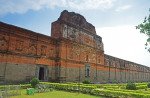
Adina Mosque

Some quick example text to build on the card title and make up the bulk of the card's content.

Go somewhere

...
Baishgazi Wall

Some quick example text to build on the card title and make up the bulk of the card's content.

Go somewhere
...
Ballal Bati

Some quick example text to build on the card title and make up the bulk of the card's content.

Go somewhere
...
Baroduari Mosque

Some quick example text to build on the card title and make up the bulk of the card's content.

Go somewhere
...
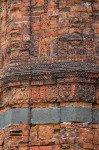
Chika Mosque

Some quick example text to build on the card title and make up the bulk of the card's content.

Go somewhere
...
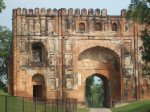
Dakhil Darwaza

Some quick example text to build on the card title and make up the bulk of the card's content.

Go somewhere
...
Eklakhi Mausoleum

Some quick example text to build on the card title and make up the bulk of the card's content.

Go somewhere
...
Gour

Some quick example text to build on the card title and make up the bulk of the card's content.

Go somewhere
in Other Cities