...

FAQs On Bhutia Busty Monastery

Darjeeling, West Bengal, India
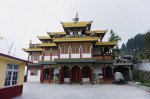
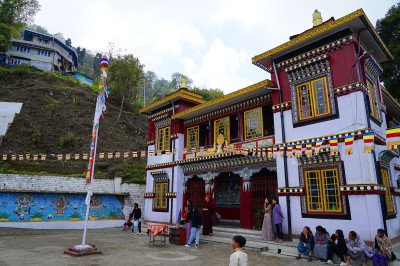
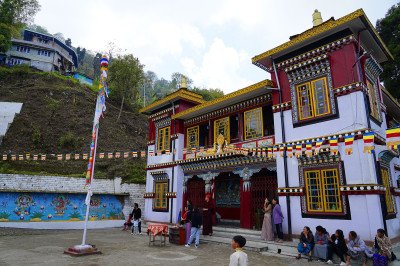
A Legacy of Resilience: The Bhutia Busty Monastery, also known as Karmaa Dorjee Chyoling, is the oldest monastery in Darjeeling, though its journey has been marked by numerous relocations and reconstructions. Originally built in 1761 by Lama Dorje Rinzing, it first stood atop Observatory Hill, where the Mahakal Temple now resides. However, in 1815, it was destroyed during a Gorkha invasion. It was later rebuilt in 1861 and eventually moved to its present location in the Bhutia Busty area in 1879. Tragedy struck again in 1934 when a massive earthquake leveled the structure, but it was rebuilt with the generous patronage of the Chogyal (King) of Sikkim. Today, the monastery stands as a proud representative of the Nyingma sect, the oldest of the four major schools of Tibetan Buddhism. Its historical depth is palpable in the air, mixed with the scent of butter lamps and incense. The monastery is famous for its extensive library, which contains rare Buddhist texts, including one of the original copies of the Tibetan Book of the Dead. For the local Bhutia and Tibetan communities, this is not just a place of worship but a sanctuary of their ancestral identity. The monastery is tucked away from the main road, requiring a steep downhill walk that filters out the casual tourist, leaving a space of profound quiet. Inside, the walls are covered with frescoes depicting the life of Buddha and various deities. The central shrine houses a serene statue of Lord Buddha, flanked by images of the Dalai Lama and other high lamas. It is a place where the ancient rituals of Tibet are preserved with unwavering devotion.

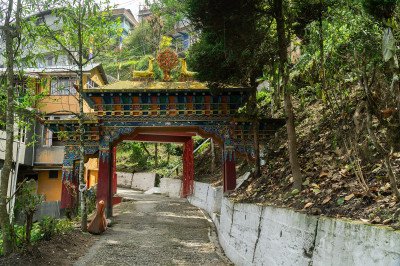
Ans:- Generally, photography is strictly prohibited inside the main prayer hall to maintain its sanctity. The resident monks believe that cameras can be distracting during worship and may damage the ancient murals with flash. However, you are usually welcome to take photographs of the beautiful exterior, the traditional entrance gate, and the surrounding scenery. Always ask for permission first out of respect.

Ans:- Interestingly, the Bhutia Busty Monastery was originally located on Observatory Hill, the site where the Mahakal Temple stands today. It was founded there in 1761 by Lama Dorje Rinzing. However, due to various historical conflicts and invasions, it was eventually moved to its present location in the late 19th century to provide a more stable environment for the monks.

Ans:- Like most Tibetan monasteries, Bhutia Busty has several prayer wheels (Mani wheels). There is a large, hollow cylindrical drum that visitors can rotate clockwise. It is filled with thousands of written prayers or mantras. It is believed that spinning the wheel has the same meritorious effect as reciting the prayers orally, bringing peace and blessings to the person spinning it.

Ans:- One of the most famous treasures of the Bhutia Busty Monastery is an original copy of the "Tibetan Book of the Dead" (Bardo Thodol). This sacred text is a guide for the soul during the interval between death and rebirth. Having such a rare and historically significant manuscript makes this monastery an important destination for scholars and spiritual practitioners from around the world.

Ans:- The interior of the monastery features stunning wall murals that are unique because they were created using powdered stones instead of traditional liquid paints. Different colored stones were ground into fine powder and applied to create intricate religious scenes and depictions of deities. This traditional technique results in vibrant colors that remain remarkably durable and beautiful over many decades.

Ans:- The monastery has a history of misfortune. It was first ravaged during the Gorkha invasion in 1815. After being relocated and rebuilt in 1879, it was again completely destroyed by a devastating earthquake in 1934. The current structure we see today was built with the generous patronage and help of the Late Chogyal (Dharmaraja) of Sikkim, showing the deep ties between the two regions.

Ans:- The monastery is located about 1.5 kilometers downhill from the Chowrasta Mall. You can reach it by walking down a winding road that offers great views, though the return walk is quite steep. For those who prefer not to walk, you can hire a taxi from the town center. The path is well-marked and passes through a vibrant local neighborhood.

Ans:- The monastery is typically open to visitors during daylight hours, usually from 7:00 AM to 6:00 PM. However, the best times to visit are during the prayer sessions, which occur early in the morning (around 4:30 AM to 6:00 AM) and in the evening (around 5:00 PM to 6:30 PM). These sessions offer a deeply immersive spiritual experience through chanting and rituals.

Ans:- The monastery takes its name from the locality where it is situated—Bhutia Busty. "Bhutia" refers to the ethnic group of Tibetan origin, and "Busty" means a settlement or colony. Therefore, it is the monastery of the Bhutia settlement. It is one of the most traditional parts of Darjeeling, maintaining a strong cultural connection to its Tibetan and Sikkimese roots.

Ans:- This monastery belongs to the Nyingma sect (also known as the Red Hat sect) of Tibetan Buddhism. It was originally a branch of the Phodang Monastery in Sikkim. The Nyingma school is the oldest of the four major schools of Tibetan Buddhism, and the monastery reflects these ancient traditions in its rituals, teachings, and architectural style.

Ans:- Visitors should maintain silence and avoid making loud noises. It is mandatory to remove your shoes before entering the prayer hall. If you see monks praying, do not walk in front of them or disturb their meditation. Walking clockwise around the monastery building or prayer wheels is the traditional and respectful way to navigate the sacred space according to Buddhist customs.

Ans:- Yes, it is generally very safe to walk to the monastery during the day. The route passes through residential areas and is used by locals every day. However, because the path is downhill and somewhat isolated from the main tourist bustle, it is best to visit during daylight hours. The walk back up to the Mall can be physically demanding, so pace yourself.
Information about New and Updated Locations(575+) of West Bengal Has Been Added :-
Card subtitle

Note:-

Information provided here in good Faith and for reference only.

All information and pictures will be updated soon, please keep visiting.

Near Places
...
Aloobari Monastery

Some quick example text to build on the card title and make up the bulk of the card's content.

Go somewhere
...
Badamtam Tea Estate

Some quick example text to build on the card title and make up the bulk of the card's content.

Go somewhere
...
Batasia Loop

Some quick example text to build on the card title and make up the bulk of the card's content.

Go somewhere
...
Bengal Natural History Museum

Some quick example text to build on the card title and make up the bulk of the card's content.

Go somewhere
...
Bhutia Busty Monastery

Some quick example text to build on the card title and make up the bulk of the card's content.

Go somewhere

...
Bijanbari

Some quick example text to build on the card title and make up the bulk of the card's content.

Go somewhere
...
Chauk Bazaar

Some quick example text to build on the card title and make up the bulk of the card's content.

Go somewhere
...
Chota Mangwa

Some quick example text to build on the card title and make up the bulk of the card's content.

Go somewhere
...
Chowrasta & The Mall

Some quick example text to build on the card title and make up the bulk of the card's content.

Go somewhere
...
Dali Monastery

Some quick example text to build on the card title and make up the bulk of the card's content.

Go somewhere
in Other Cities