
...

FAQs On Dakhil Darwaza

Malda, West Bengal, India
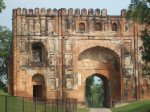
Dakhil Darwaza, also known as the Salami Darwaza (Salutation Gate), is perhaps the most imposing and architecturally significant gateway in all of Bengal. Built in 1425 AD by Sultan Nasiruddin Mahmud Shah, it served as the main ceremonial entrance to the citadel of Gour. The gate earned the name Sa lami Darwaza because cannons were traditionally fired from here as a royal salute to arriving monarchs. This massive structure is a masterpiece of terracotta and brickwork, representing the zenith of the Indo-Islamic style unique to the Bengal Sultanate. The gateway is so large that it feels more like a fortress than a simple door. It features a central high archway flanked by massive circular towers that rise five stories high. The walls are decorated with intricate terracotta motifs including floral patterns, geometric designs, and the "hanging lamp" motif which is characteristic of Gour's architecture. Historically, this gate was the threshold between the common city and the royal palace grounds. It witnessed the grand processions of the Sultans and the entry of foreign ambassadors. Today, the gate stands in a relatively well-preserved state, surrounded by manicured lawns maintained by the ASI. The sheer scale of the gate—over 21 meters high—makes it one of the most photographed monuments in Malda. As you walk through the long, tunneled entrance, the change in temperature and the echo of your footsteps transport you back to the 15th century. It is not just a gate; it is a symbol of the strength, aesthetic sense, and the imperial glory of medieval Bengal.

Ans:- Dakhil Darwaza is a monumental city gate situated in the historic ruins of Gour, located in the Malda district of West Bengal, India. Serving as the primary grand entrance to the ancient citadel of Gour, this structures stands as an architectural marvel from the Sultanate era of Bengal. Visitors can easily access this site by traveling approximately 19 kilometers from the main Malda Town station using local auto-rickshaws, rented cars, or standard public buses that frequently ply along this popular historical tourist corridor.

Ans:- This magnificent gateway was constructed in the year 1425 under the glorious reign of Sultan Jalaluddin Muhammad Shah, who was a prominent ruler of the Bengal Sultanate. The structural architecture reflects the distinct pre-Mughal Islamic architectural style that thrived during the fifteenth century in Bengal. Some historical narratives also attribute parts of its completion or modifications to Barbak Shah, making it a pivotal monument showcasing the evolution of brick-built fortification strategies during that early medieval Indian era.

Ans:- Dakhil Darwaza is primarily constructed using finely baked red terracotta bricks and a highly durable indigenous mortar mixture, which has allowed it to withstand centuries of weathering. The architectural style is predominantly Indo-Islamic Bengal Sultanate, beautifully characterized by its massive structural dimensions, artistic terracotta relief work, decorative terracotta plaques, prominent central archways, and circular corner bastions. The intricate terracotta designs display exquisite motifs of lamps, rosettes, and hanging chains that emphasize the highly sophisticated craftsmanship available in ancient Bengal.

Ans:- The grand monument is popularly known as the Salami Darwaza because it historically served as the primary ceremonial gateway where royal gun salutes were fired to welcome visiting dignitaries, kings, and foreign ambassadors. Whenever the Sultan or high-profile state guests entered the inner citadel, army guards would line up along the massive walls and fire cannon shots as a traditional mark of profound respect and royal greeting, establishing its status as a highly strategic military and ceremonial outpost.

Ans:- The gateway boasts highly impressive physical dimensions, stretching to a width of approximately 22 meters and soaring to a majestic height of about 10.3 meters. It features an expansive central vaulted passage through which large royal processions and war elephants could comfortably pass during ancient times. The gate is flanked by tall, robust circular guard towers or bastions on the corners, which provided strategic vantage points for soldiers defending the inner core of the capital city against external invasions.

Ans:- Currently, Dakhil Darwaza is maintained as a public protected monument by the Archaeological Survey of India (ASI), and entry to the general site remains completely free for all national and international tourists. The site is open to the public every single day of the week from sunrise to sunset, roughly between 6:00 AM and 6:00 PM. Visitors are highly recommended to explore the site during the early morning hours or late afternoons to avoid the intense afternoon heat.

Ans:- Dakhil Darwaza held immense historical and geopolitical significance as it was the ultimate defensive gateway protecting the royal palace compound inside the walled capital city of Gour. It symbolized the power, architectural prowess, and economic prosperity of the independent Bengal Sultanate during the medieval period. By controlling access through this highly fortified chokepoint, the Sultans could monitor all trade, administrative movement, and safeguard the royal family from sudden military ambushes by rival empires.

Ans:- While officially certified, full-time multi-lingual tourist guides are not permanently stationed at the Dakhil Darwaza site itself, visitors can easily hire registered local guides from Malda Town or the nearby tourism office. These local guides possess deep knowledge regarding the folklore, architectural nuances, and complete chronology of the Bengal Sultans. Additionally, the Archaeological Survey of India has installed highly informative bilingual information plaques in English and Bengali right near the main entrance structure.

Ans:- Yes, professional and amateur photography is completely permitted within the Dakhil Darwaza complex without any extra charges, making it a paradise for heritage photography enthusiasts. However, if you plan to utilize commercial video equipment, drones, or heavy professional cinematography tripods for commercial filmmaking, you must obtain a formal prior written permission and pay the specified regulatory fees to the Archaeological Survey of India circles office located in Kolkata or Malda.

Ans:- Dakhil Darwaza is situated within the dense archaeological zone of Gour, meaning several world-renowned monuments are located just a few minutes away. Tourists can easily club their visit with nearby historical wonders such as the enigmatic Firoz Minar, the sprawling Bara Sona Mosque, the beautiful Kadam Rasul Mosque, the Lukochori Darwaza, and the remnants of the ancient Royal Palace wall. All these unique structures lie within a convenient five-kilometer radius of the Dakhil Darwaza gate.

Ans:- The absolute best time of the year to plan a comprehensive trip to Dakhil Darwaza is during the pleasant winter season, spanning from November to February. During these months, the weather in Malda remains delightfully cool, comfortable, and dry, which is absolutely perfect for walking around extensive open-air archaeological ruins. Summers can be extremely hot and humid, with temperatures easily soaring past 40 degrees Celsius, making extensive outdoor sightseeing quite exhausting for travelers.

Ans:- Visiting Dakhil Darwaza is highly safe for solo travelers, including solo female tourists, as the entire local community is exceptionally hospitable, cooperative, and respectful towards visitors. The tourist spot is regularly monitored by local police patrols and basic security personnel deployed by the Archaeological Survey of India. However, because the area is somewhat isolated and surrounded by dense vegetation, it is wise to finish sightseeing and return to Malda Town before darkness sets in.

Ans:- There are no luxury hotels or major multi-cuisine restaurants immediately adjacent to the Dakhil Darwaza monument due to archaeological conservation laws protecting the zone. However, visitors can find small local kiosks selling packaged snacks, refreshing coconut water, and mineral water right outside the complex. For proper accommodation and dining, tourists prefer to stay in Malda Town, which offers a wide range of budget hotels, luxury stays, and government tourist lodges.

Ans:- Dakhil Darwaza faces several ongoing conservation challenges including natural brick erosion due to heavy monsoon downpours, occasional vegetative growth within ancient brick crevices, and rising dampness affecting the foundation structure. The Archaeological Survey of India actively combats these threats by conducting periodical chemical treatments, replacing highly damaged ancient bricks with matching handmade terracotta bricks, and implementing proper water drainage systems around the monument to prevent waterlogging during the intense rainy seasons.

Ans:- Tourists visiting Dakhil Darwaza are strictly required to adhere to strict heritage conservation guidelines, which include prohibiting any form of littering, graffiti, or defacing of ancient brickwork. Climbing onto the fragile upper structures or restricted arches is strictly illegal and punishable by law to ensure public safety and structural preservation. Visitors are strongly requested to maintain cleanliness, dump garbage in designated bins, and respect the silent, historical sanctity of this ancient monument.
Information about New and Updated Locations() of West Bengal Has Been Added :-
Card subtitle

Note:-

Information provided here in good Faith and for reference only.

All information and pictures will be updated soon, please keep visiting.

Near Places
...
Adina Deer Park

Some quick example text to build on the card title and make up the bulk of the card's content.

Go somewhere
...
Adina Eco Tourism Park

Some quick example text to build on the card title and make up the bulk of the card's content.

Go somewhere
...
Adina Mosque

Some quick example text to build on the card title and make up the bulk of the card's content.

Go somewhere

...
Baishgazi Wall

Some quick example text to build on the card title and make up the bulk of the card's content.

Go somewhere
...
Ballal Bati

Some quick example text to build on the card title and make up the bulk of the card's content.

Go somewhere
...
Baroduari Mosque

Some quick example text to build on the card title and make up the bulk of the card's content.

Go somewhere
...
Chika Mosque

Some quick example text to build on the card title and make up the bulk of the card's content.

Go somewhere
...
Dakhil Darwaza

Some quick example text to build on the card title and make up the bulk of the card's content.

Go somewhere
...
Eklakhi Mausoleum

Some quick example text to build on the card title and make up the bulk of the card's content.

Go somewhere
...
Gour

Some quick example text to build on the card title and make up the bulk of the card's content.

Go somewhere
in Other Cities