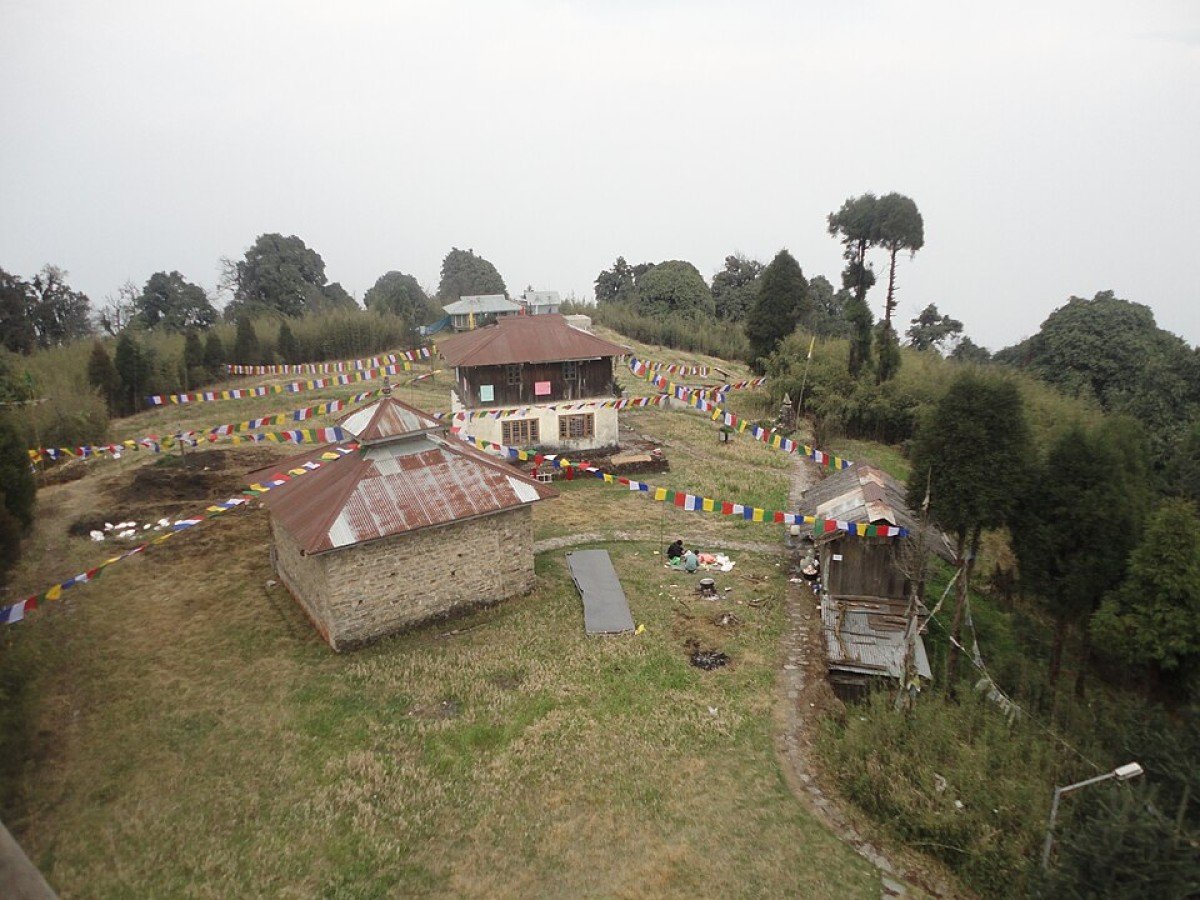

Tendong Hill
General information
-
Ideal Duration:
5-6 hours (Including the 3-4 hour return trek from Damthang):Place Type:
Pilgrimage, Trekking, Scenic Viewpoint, Wildlife SEntry Fees:
Trekking Access: The entry to the hill and the trekking route is generally Free of charge for all visitors. The site is managed by the Forest Department/Local Community as a sacred and protected area.
Guide Fees: The only fee visitors might...Trekking Access: The entry to the hill and the trekking route is generally Free of charge for all visitors. The site is managed by the Forest Department/Local Community as a sacred and protected area.
Guide Fees: The only fee visitors might incur is for hiring a local, experienced guide from Damthang or Namchi, which is highly recommended due to the dense forest and multiple trails where one could easily get lost. The cost varies based on negotiation and season.
Conservation Contribution: Visitors are highly encouraged to make a voluntary contribution at the monastery or a designated community collection point to support the local conservation efforts of the sacred forest and the upkeep of the monastery and watchtower.
Fees Purpose: The fact that entry is free underscores its status as a sacred pilgrimage site. Any fees are used to maintain the trekking path, support the small monastery, and protect the fragile ecosystem of the surrounding forest. :Timing:
Regular Timings: 8:00 AM to 4:00 PM (Typically). Access is limited to daylight hours due to the location within a dense forest and the need to complete the long trek before dark. The gate at Damthang may be locked after a certain time.
Ideal V...Regular Timings: 8:00 AM to 4:00 PM (Typically). Access is limited to daylight hours due to the location within a dense forest and the need to complete the long trek before dark. The gate at Damthang may be locked after a certain time.
Ideal Visit Time: Early Morning (8:00 AM start for the trek). Starting the trek early is essential to reach the summit before the afternoon clouds roll in and to have the best chance of clear mountain views. The morning light is also ideal for photography.
Seasonal Timing: If planning to see the rhododendron blooms, visit in Spring (March-May). If planning for the clearest, sharpest views, visit in Autumn (September-November).
Trek Duration: Allow a minimum of 2. 5 to 4 hours for the uphill trek, at least 1 hour at the summit for viewing/rest, and 1. 5 to 2 hours for the descent. The entire trip from Damthang to Damthang will take 5-7 hours. :Special Events:
Tendong Lho Rum Faat Festival: This is the most significant special event, held annually by the Lepcha community in the month of August (Monsoon). It is a day of ritual prayer and offerings to the hill, commemorating the legend of the great flood and the salvation it provid...Tendong Lho Rum Faat Festival: This is the most significant special event, held annually by the Lepcha community in the month of August (Monsoon). It is a day of ritual prayer and offerings to the hill, commemorating the legend of the great flood and the salvation it provided, and is a unique cultural spectacle.
Local Monastery Rituals: The resident monks at the summit's Tendong Gumpa observe the standard Buddhist calendar of rituals and holy days. These simple, high-altitude observances offer a rare glimpse into a hermit-like spiritual tradition.
New Year's Day Trek: Like Tarey Bhir, many locals undertake the trek on January 1st for a traditional mountain-top start to the year, leading to a small, celebratory atmosphere at the summit on that day. :Best Photo Spots:
The Kanchenjunga Frame: The definitive shot is the clear view of the majestic Kanchenjunga and its surrounding peaks, often framed by the dense, moss-covered trees near the summit or from the observation tower.
The Watch Tower Structure: Cap...The Kanchenjunga Frame: The definitive shot is the clear view of the majestic Kanchenjunga and its surrounding peaks, often framed by the dense, moss-covered trees near the summit or from the observation tower.
The Watch Tower Structure: Capturing the distinctive, three-storied pagoda-like watchtower against the backdrop of the massive Himalayan ranges, often with fluttering prayer flags adding color and movement.
The Forest Trail Mystique: The trail, particularly the sections winding through the dense, fog-covered rhododendron and magnolia forest, offers excellent opportunities for mood and nature photography, capturing the raw, untouched beauty of the wildlife sanctuary.
View of the Plains: The unique vista from the summit that shows not only the mountains but also the distant, hazy plains of West Bengal provides a stunning contrast and a unique geographical photo subject only found at high-altitude viewpoints. :Photo Gallery
Things To Do
-
Undertake the Trek: The primary activity is the moderate-level 6-KM trek (one-way) starting from Damthang. The hike takes 2. 5 to 4 hours uphill and is the only way to the summit. It requires good physical preparation.
Ascend the Watch Tower: Climb the three-storied Observation Tower at the summit to fully utilize the 360-degree viewing platform for the spectacular panoramic views.
Panoramic View Photography: Use the clear morning hours to capture the majestic Kanchenjunga, the other ranges (Singalila, Chola), and the distant plains. This is the ultimate landscape photography point.
Birdwatching and Wildlife Spotting: Walk quietly and keep an eye out for the diverse birdlife (over 90 species) and rare mammals like the Red Panda and Barking Deer in the surround...Undertake the Trek: The primary activity is the moderate-level 6-KM trek (one-way) starting from Damthang. The hike takes 2. 5 to 4 hours uphill and is the only way to the summit. It requires good physical preparation.
Ascend the Watch Tower: Climb the three-storied Observation Tower at the summit to fully utilize the 360-degree viewing platform for the spectacular panoramic views.
Panoramic View Photography: Use the clear morning hours to capture the majestic Kanchenjunga, the other ranges (Singalila, Chola), and the distant plains. This is the ultimate landscape photography point.
Birdwatching and Wildlife Spotting: Walk quietly and keep an eye out for the diverse birdlife (over 90 species) and rare mammals like the Red Panda and Barking Deer in the surrounding protected forest of the Maenam Wildlife Sanctuary buffer zone.
Visit the Tendong Gumpa: Pay respects at the small, sacred Buddhist Monastery at the hilltop. Take time for quiet meditation and reflection in this deeply spiritual and peaceful environment.
Attend the Lho Rum Faat Festival: If visiting in August, make an effort to observe the annual Lepcha festival of Tendong Lho Rum Faat near the hill, a unique cultural experience.
Forest Bathing/Nature Therapy: Simply sit within the dense forest on the trail and practice mindfulness. The rich flora, silence, and fresh mountain air make it an ideal spot for nature therapy.
Responsible Trekking: Follow the designated trails strictly to protect the sanctuary's environment, taking only pictures and leaving only footprints. :
Information
-
Why Famous:
The Lepcha Legend of the Deluge: Its most significant fame stems from the ancient Lepcha folklore that the hill rose to save the community from a massive, world-submerging flood, earning it the name 'Upraised Horn' (Tendong). This makes it a profound cultural and religious ...The Lepcha Legend of the Deluge: Its most significant fame stems from the ancient Lepcha folklore that the hill rose to save the community from a massive, world-submerging flood, earning it the name 'Upraised Horn' (Tendong). This makes it a profound cultural and religious site.
The 360-Degree Panoramic View: The hilltop is famous for offering arguably the most comprehensive 360-degree panoramic view in Sikkim. From the observation tower, visitors can see the Singalila range (West), the Chola range (East), parts of Gangtok town, Nathu La, Darjeeling, and the Kanchenjunga range.
Buddhist Meditation Retreat: For centuries, Buddhist Lamas have used the pristine, silent grandeur of Tendong Hill for deep meditation and spiritual retreat, making it a revered spiritual sanctuary for the Bhutia and Nepali Buddhist communities as well.
Biodiversity and Eco-Trek: The challenging but rewarding trek through the dense, protected forest is famous for its rich biodiversity, including rare orchids, medicinal plants, and sightings of protected wildlife like the Red Panda and Himalayan Bears, attracting eco-tourists. : -
Architecture:
Natural and Buddhist Structures: The primary architecture is the natural hill itself, a massive, sacred landmass. Man-made structures are minimal and functional, adhering to the spiritual and natural sanctity of the location.
The Watch Tower Di...Natural and Buddhist Structures: The primary architecture is the natural hill itself, a massive, sacred landmass. Man-made structures are minimal and functional, adhering to the spiritual and natural sanctity of the location.
The Watch Tower Dimension: At the summit stands a distinctive three-storied Watch Tower (or Observation Tower). This pagoda-like structure, while not traditional temple architecture, is the main vantage point. Its height (estimated 30-40 feet) is designed to elevate visitors above the tree line to provide the spectacular 360-degree view.
The Monastery and Stupa: The summit also features a small, simple Buddhist Monastery (Tendong Gumpa) and sometimes a small Stupa or Chorten, characteristic of high-altitude mountain shrines. The monastery follows a simple, traditional style, used primarily by monks for meditation and retreat.
The Trekking Path: The trekking route itself (approx. 6 KMS one way) is a significant architectural element, a designated footpath that weaves through the protected forest, marked by prayer flags near the summit. The path is often paved at the start, transitioning to a natural jungle trail. : -
How To Reach:
By Air: The nearest airport is Bagdogra Airport (IXB) (West Bengal, approx. 125 KMS). The nearest in-state airport is Pakyong Airport (PYG). From there, hire a private taxi or take a shared cab to Damthang Village (the trek starting point), which is about 11 KMS from Namc...By Air: The nearest airport is Bagdogra Airport (IXB) (West Bengal, approx. 125 KMS). The nearest in-state airport is Pakyong Airport (PYG). From there, hire a private taxi or take a shared cab to Damthang Village (the trek starting point), which is about 11 KMS from Namchi.
By Train: The nearest major railway station is New Jalpaiguri (NJP) (West Bengal, approx. 120 KMS). From NJP, take a taxi directly to Namchi and then hire a local taxi or shared jeep to Damthang (approx. 45 minutes to 1 hour drive).
By Road: The trekking base, Damthang Village, is about 11 KMS from Namchi and 13 KMS from Ravangla. It is easily accessible by road from both towns. The final 6 KMS to the summit is strictly a trek along a well-defined but forested path.
By Local Transport: Shared jeeps run from Namchi and Ravangla to Damthang Bazar. From the Bazar, you will need to walk a short distance to the official start of the trek route. Hiring a reserved taxi for the entire return trip to Damthang is the most convenient option. : -
Weather and Best Time to Visit:
Autumn (September to November): Best Time to Visit for both the trek and the views. The weather is dry, the trail is firm, and the air is clearest, providing exceptional views of the Kanchenjunga and other Himalayan ranges.
Spring (March to May...Autumn (September to November): Best Time to Visit for both the trek and the views. The weather is dry, the trail is firm, and the air is clearest, providing exceptional views of the Kanchenjunga and other Himalayan ranges.
Spring (March to May): A good time for the trek. The temperatures are moderate, and this period is famous for the blooming of the Rhododendrons and Orchids along the trail, making the forest walk beautiful.
Winter (December to February): The weather is very cold, but the views are crystal clear. The trail can be challenging due to cold wind and frost but is accessible with warm gear.
Monsoon (June to August): Not Recommended. The trail becomes very slippery, leech-infested, and dangerous due to heavy rain, and the spectacular views are often completely obscured by mist and clouds.
Different Parts of the Day: The Morning hours are non-negotiable for a successful visit to the summit. Start the trek no later than 9:00 AM to ensure you are off the hill before the mid-afternoon clouds and evening dusk. : -
Near Tourist Places:
Temi Tea Garden (10 KMS), Buddha Park (Tathagata Tsal, Ravangla) (13 KMS), Maenam Wildlife Sanctuary (Trek Entry) (15 KMS), Ralang Monastery (20 KMS), Kewzing Village (18 KMS), Borong Hot Springs (35 KMS), Samdruptse Hill (18 KMS), Char Dham (Solophok) (11 KMS), Sai Mandir (Assangthang) (14 KMS), Rock Garden (15 KMS):
Tourism Tips
-
Health & Safety: The trek is of moderate difficulty. Carry a sturdy hiking stick and wear proper ankle-support trekking boots. Carry enough water and high-energy snacks, as there are no vendors on the trail. Be prepared for a change in weather and carry a waterproof outer...Health & Safety: The trek is of moderate difficulty. Carry a sturdy hiking stick and wear proper ankle-support trekking boots. Carry enough water and high-energy snacks, as there are no vendors on the trail. Be prepared for a change in weather and carry a waterproof outer layer.
Packing Essentials: Pack binoculars for birdwatching and viewing the distant plains. Carry a power bank as phone battery drains quickly in the cold. Dress in layers as the temperature changes significantly during the trek.
Accommodation Options: Stay in Namchi or Ravangla. Damthang Village also offers a few simple homestays for a pre-trek overnight stay.
Environmental Ethics: The hill is part of a protected area. Do not litter, and do not pluck any plants or flowers. Stay strictly on the marked path to protect the fragile forest and avoid getting lost.
Local Guide: Strongly consider hiring a local guide in Damthang if you are not an experienced mountain hiker. :
Reviews
FAQs
Namchi Itineray And Cost:-
Other Places In Namchi :-
Other States In India :-
Information about New and Updated Locations() of Sikkim Has Been Added :-
Card subtitle
Note:-
Information provided here in good Faith and for reference only.
Near Places

Baichung Statue
Some quick example text to build on the card title and make up the bulk of the card's content.
Go somewhere
Bhaichung Stadium
Some quick example text to build on the card title and make up the bulk of the card's content.
Go somewhere
Bon Monastery
Some quick example text to build on the card title and make up the bulk of the card's content.
Go somewhere
Kitam Bird Sanctuary
Some quick example text to build on the card title and make up the bulk of the card's content.
Go somewhere
Maenam Wildlife Sanctuary
Some quick example text to build on the card title and make up the bulk of the card's content.
Go somewhere
Namchi Central Park
Some quick example text to build on the card title and make up the bulk of the card's content.
Go somewhere
Namchi Ropeway
Some quick example text to build on the card title and make up the bulk of the card's content.
Go somewhere
Ngadak Monastery
Some quick example text to build on the card title and make up the bulk of the card's content.
Go somewhere
Rock Garden
Some quick example text to build on the card title and make up the bulk of the card's content.
Go somewhere
Sai Mandir
Some quick example text to build on the card title and make up the bulk of the card's content.
Go somewhere
Samdruptse Hill
Some quick example text to build on the card title and make up the bulk of the card's content.
Go somewhere
Serdup Choling Monastery
Some quick example text to build on the card title and make up the bulk of the card's content.
Go somewhere
Sharchog Bey Phug
Some quick example text to build on the card title and make up the bulk of the card's content.
Go somewhere
Siddheshwar Dham
Some quick example text to build on the card title and make up the bulk of the card's content.
Go somewhere
Tarey Bhir
Some quick example text to build on the card title and make up the bulk of the card's content.
Go somewhere
Temi Tea Garden
Some quick example text to build on the card title and make up the bulk of the card's content.
Go somewherein Other Cities