Tilinga Mandir
General information
-
Ideal Duration:
1 to 2 hoursPlace Type:
Religious, Temple, Pilgrimage SiteEntry Fees:
General Entry: The Tilinga Mandir is a religious institution and there is no general entry fee for pilgrims or tourists to visit the temple complex. This follows the tradition of most Hindu temples in India, where spiritual access is open to all without a compulsory charge....General Entry: The Tilinga Mandir is a religious institution and there is no general entry fee for pilgrims or tourists to visit the temple complex. This follows the tradition of most Hindu temples in India, where spiritual access is open to all without a compulsory charge. This lack of an entry fee makes the temple accessible to people of all economic backgrounds, further enhancing its appeal as a place of mass pilgrimage. The focus is purely on faith and devotion, rather than commercial transaction for entry. The temple relies on voluntary donations from devotees for its maintenance and upkeep. Cost of Offerings (Bells, Trishuls, etc.
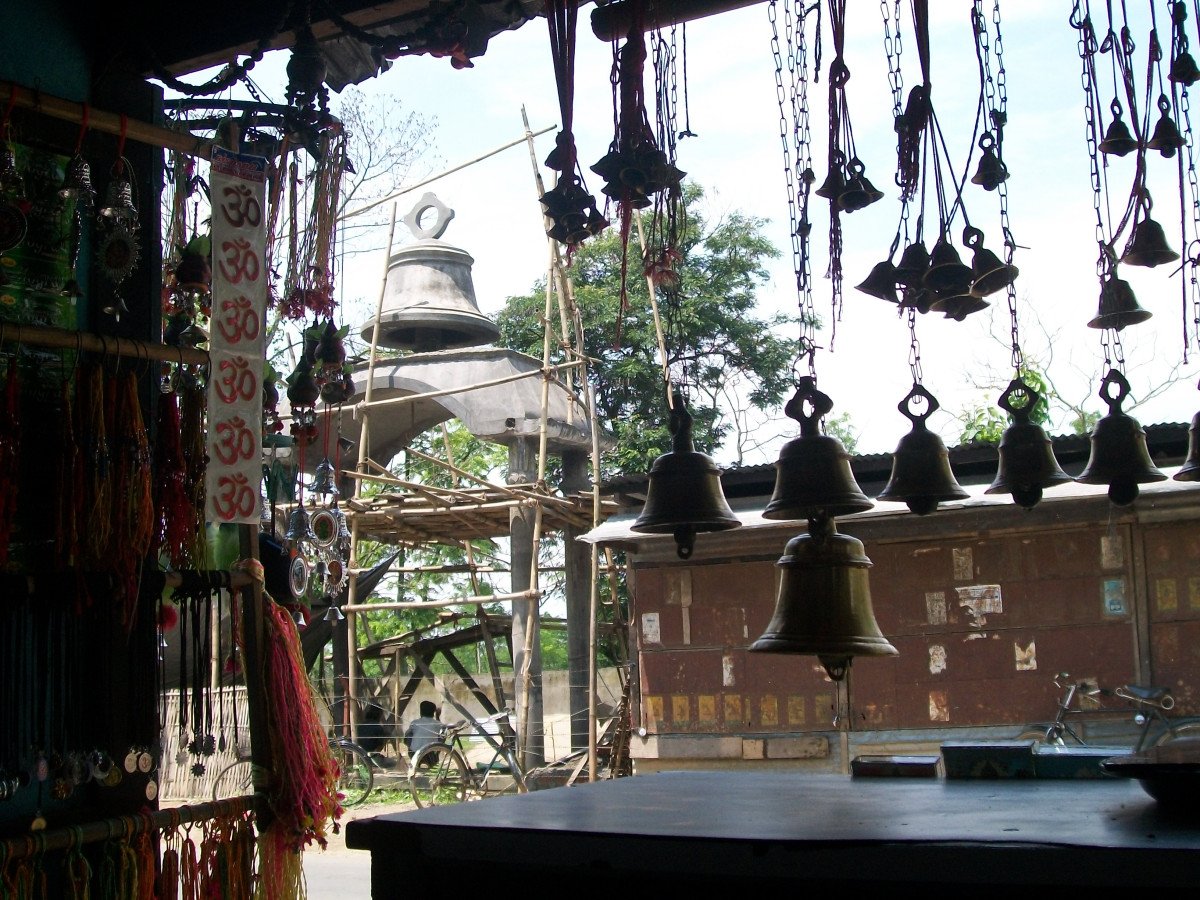
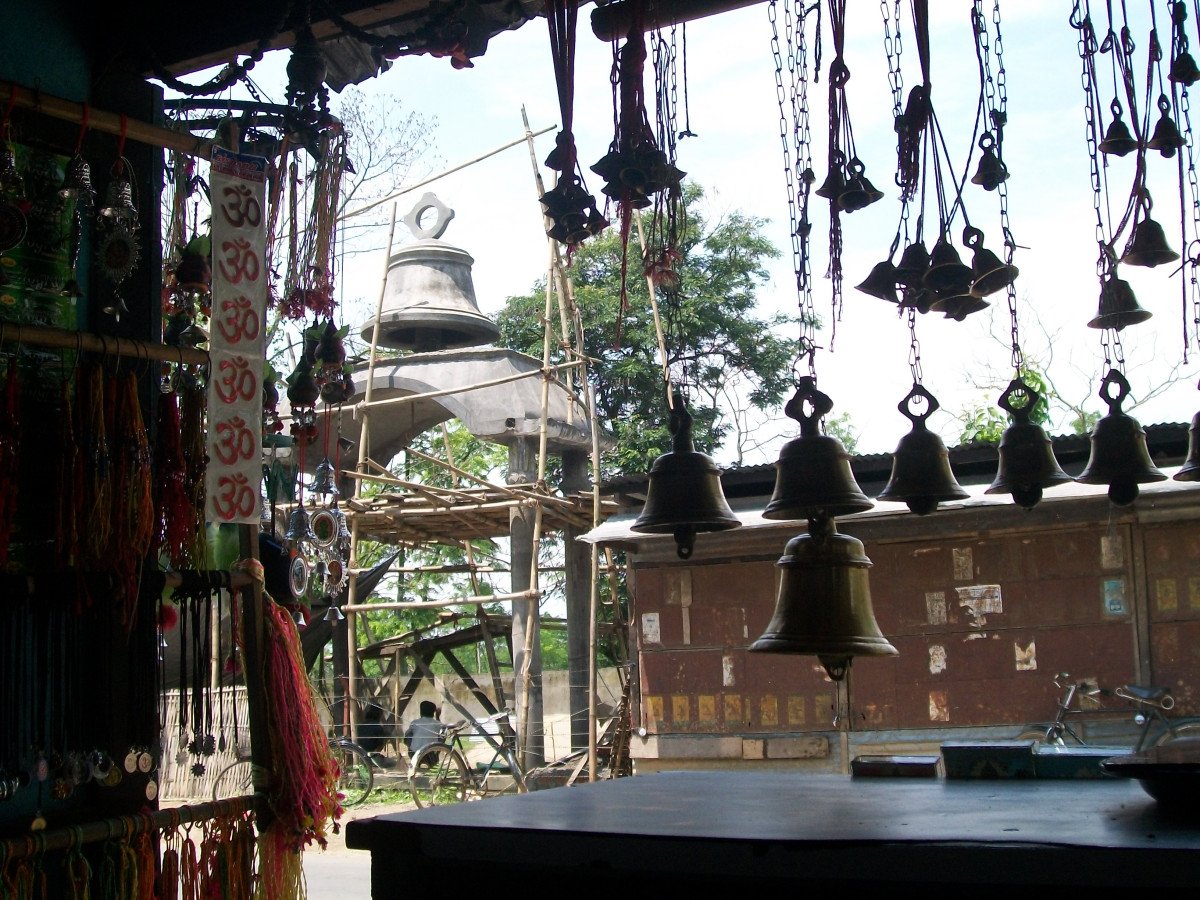
): Although there is no entry fee, visitors who wish to participate in the central ritual of the temple must incur a cost for the religious items. The key offering is the bell (tilinga), which must be purchased, typically from the shops located just outside or near the temple premises. The price of the bells varies significantly based on their size, the type of metal (brass, copper, or aluminum), and weight, ranging from small, inexpensive pieces to large, costly gongs. Similarly, the trishuls (tridents) and other puja materials like flowers, incense, and prasad must be purchased if the devotee wishes to offer them. The cost of these offerings is essentially the voluntary expenditure associated with the spiritual act.
Donations and Dakshina: While not a fee, visitors often make a monetary donation, known as dakshina or bhet in local parlance, into the temple's donation boxes or directly to the priests. This is an entirely optional act of charity and is used for the temple's general fund, maintenance, and community services. There is no fixed amount for these donations; the amount is entirely at the discretion and capacity of the devotee. Visitors should be mindful of touts and only donate at designated and secure temple donation points.Timing:
Regular Darshan Timings: The Tilinga Mandir is generally open for darshan (holy viewing) and worship throughout the day, catering to the large number of daily pilgrims. The typical operating hours are from 6:00 AM in the morning to 8:00 PM in the evening, seven days a week....Regular Darshan Timings: The Tilinga Mandir is generally open for darshan (holy viewing) and worship throughout the day, catering to the large number of daily pilgrims. The typical operating hours are from 6:00 AM in the morning to 8:00 PM in the evening, seven days a week. These extended hours allow both early morning devotees and those visiting in the late evening to offer their prayers. However, it's always advisable to verify the exact closing time with local sources, as it might slightly vary depending on the season or local administrative decisions.
Ideal Visit Time - Morning Serenity: The early morning, specifically between 6:00 AM and 9:00 AM, is considered the most ideal visit time. During this period, the temple is less crowded, allowing for a peaceful and meditative experience. The soft morning light is perfect for photography, and the breeze gently swaying the bells creates the most atmospheric chime symphony. Moreover, the temperatures are cooler, making it a comfortable time for walking around the complex and the surrounding tea gardens before the heat of the day sets in.
Ideal Visit Time - Auspicious Days: For those seeking the most vibrant and communal religious experience, the Ideal Visit Time shifts to any Monday or the festival of Maha Shivaratri. While these times are extremely crowded, they offer a spectacular view of the depth of devotion, the rituals, and the sheer volume of pilgrims. If visiting on these peak days, plan to arrive either very early (before 6:00 AM) or late in the day to navigate the crowds more easily.Special Events:
Maha Shivaratri Festival: The most significant and special event at the Tilinga Mandir is the annual celebration of Maha Shivaratri, the 'Great Night of Shiva,' which typically falls in the late February or early March months. This festival marks the convergence of a tremen...Maha Shivaratri Festival: The most significant and special event at the Tilinga Mandir is the annual celebration of Maha Shivaratri, the 'Great Night of Shiva,' which typically falls in the late February or early March months. This festival marks the convergence of a tremendous number of devotees, turning the temple complex into a sea of pilgrims. Special pujas (worship ceremonies) and aartis (lamp ceremonies) are performed throughout the night. The atmosphere is highly charged with spiritual fervor, the sounds of chanting and the continuous ringing of the thousands of bells creating an unparalleled devotional experience. The large crowds also attract a local mela (fair) in the vicinity, adding a festive, cultural dimension to the religious observation. Visiting during this time offers the most intense and visually rich experience of the temple's religious life.
The Auspicious Mondays: While not a single annual event, every Monday holds special significance as it is the day traditionally dedicated to the worship of Lord Shiva. On any given Monday, the temple experiences a surge in visitors compared to other weekdays. Devotees come to offer milk, bilva leaves, and flowers to the Shiva Lingam and to make or fulfill their vows. The elevated crowd levels and constant flow of people participating in rituals turn an ordinary day into a minor special event each week. This regular observance highlights the deep-seated Hindu belief in the worship of Lord Shiva and provides a recurring opportunity for travelers to witness a more active and vibrant prayer environment.Best Photo Spots:
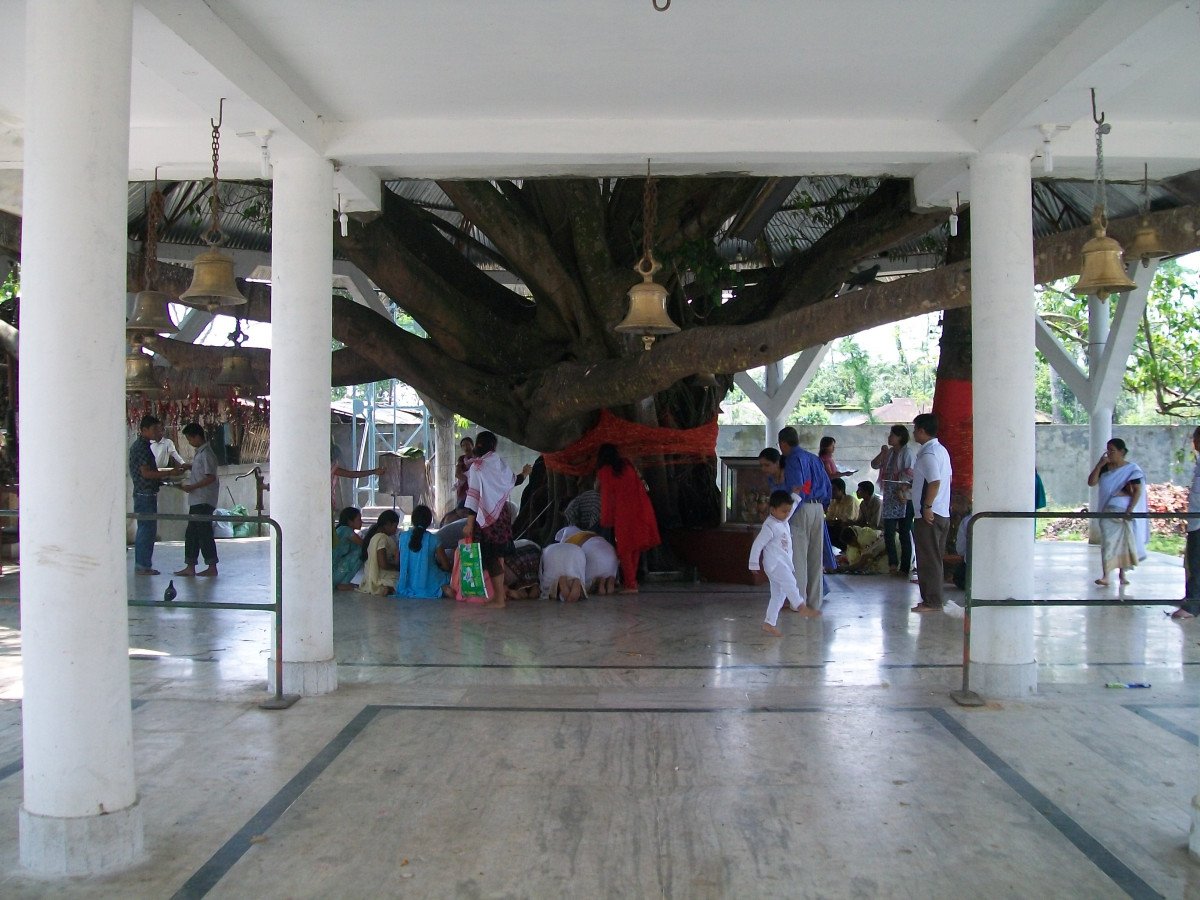
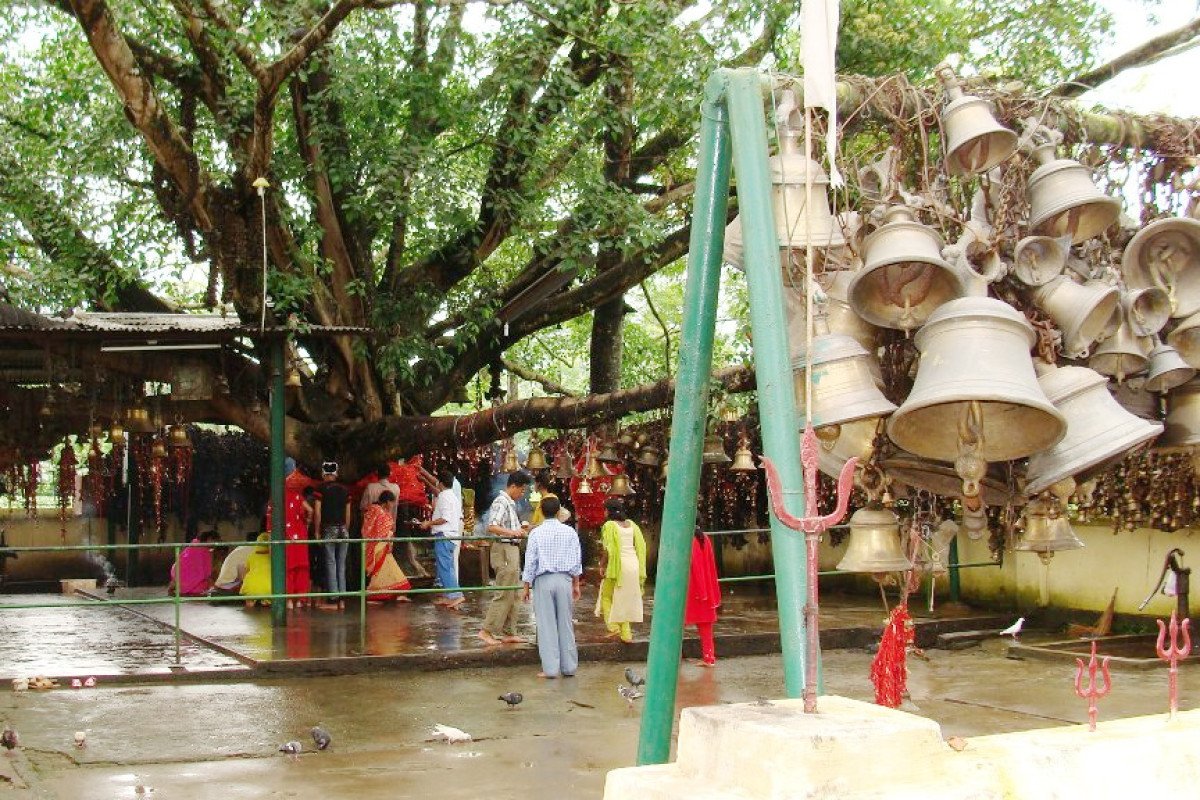
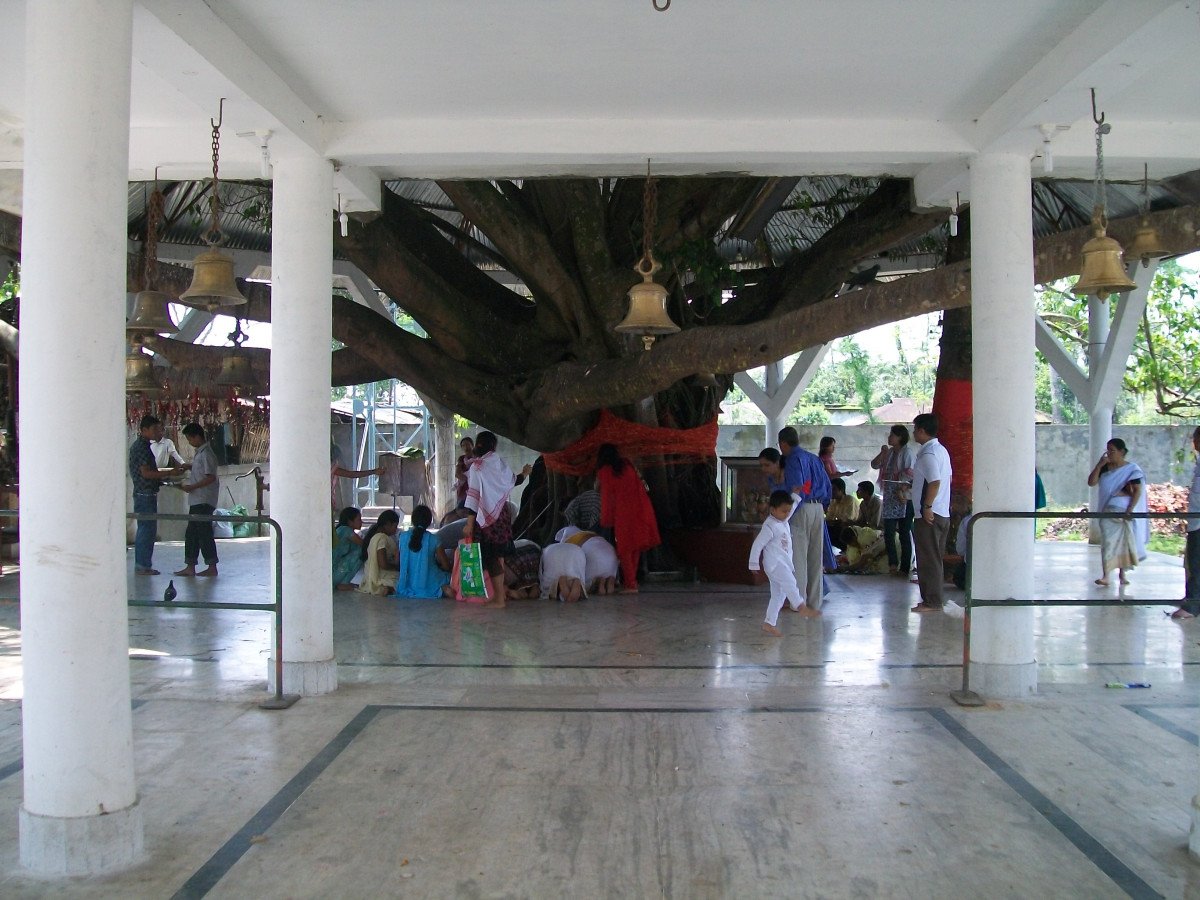
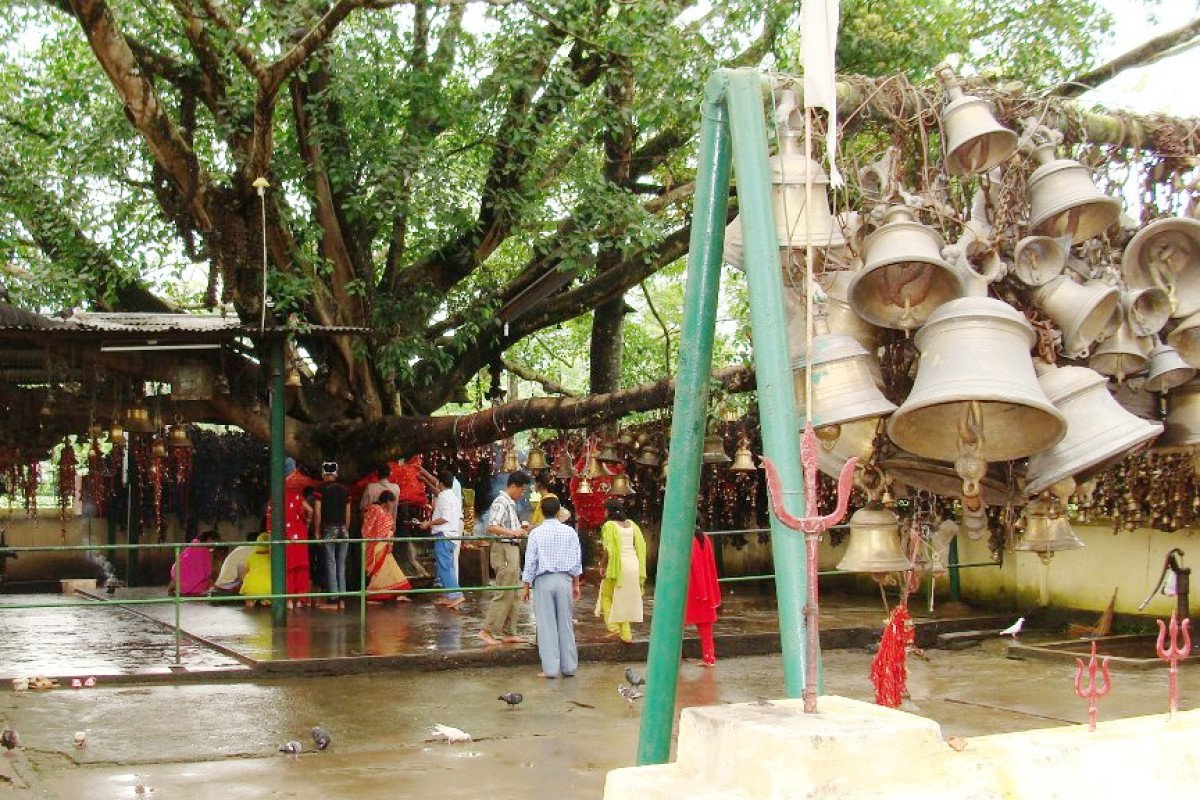
The Bell-Draped Peepal Tree: The most iconic and best photo spot is the large, ancient Peepal (Banyan) tree itself. Its huge, sprawling branches are completely covered with hundreds of thousands of bells, creating an almost surreal, dense metallic foliage.The Bell-Draped Peepal Tree: The most iconic and best photo spot is the large, ancient Peepal (Banyan) tree itself. Its huge, sprawling branches are completely covered with hundreds of thousands of bells, creating an almost surreal, dense metallic foliage.
Best Shots: Frame the entire tree from a slight distance to capture the scale, or zoom in to focus on the intricate clusters of bells of different colors and ages, especially where the bells are tied with red and yellow threads. The texture of the old bark contrasted with the smooth, shiny metal of new bells offers a visually rich photograph.
The Trishul Collection Area: Locate the area where the devotees have speared their offerings of tridents (trishuls) into the ground. This creates a powerful, abstract sculptural arrangement.
Best Shots: Use a low angle to capture the tridents pointing towards the sky, symbolizing the fierce power and protection of Lord Shiva. This spot often presents a more somber and reflective mood compared to the bells, offering a contrast in your photo collection. Capturing the shadows cast by the tridents in the early morning or late afternoon light can also create dramatic effects.
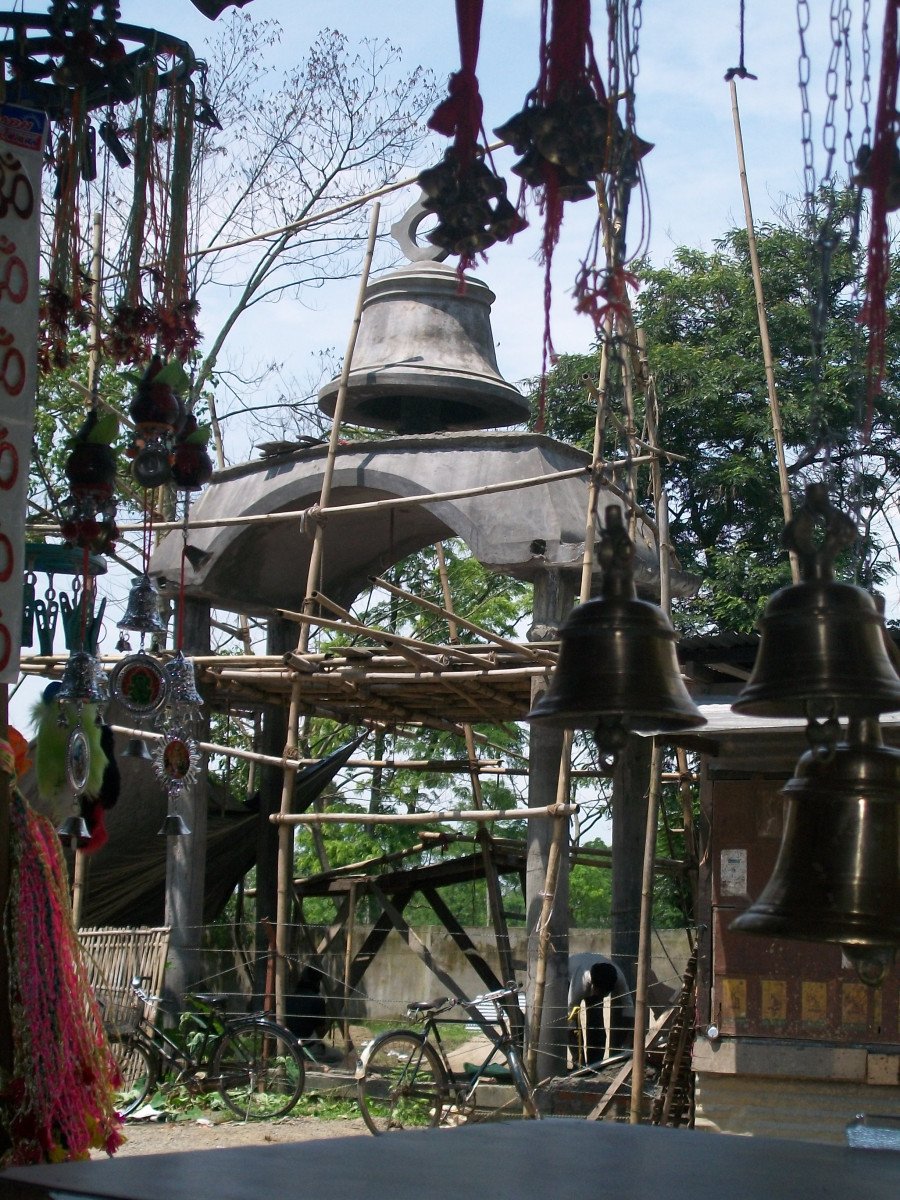
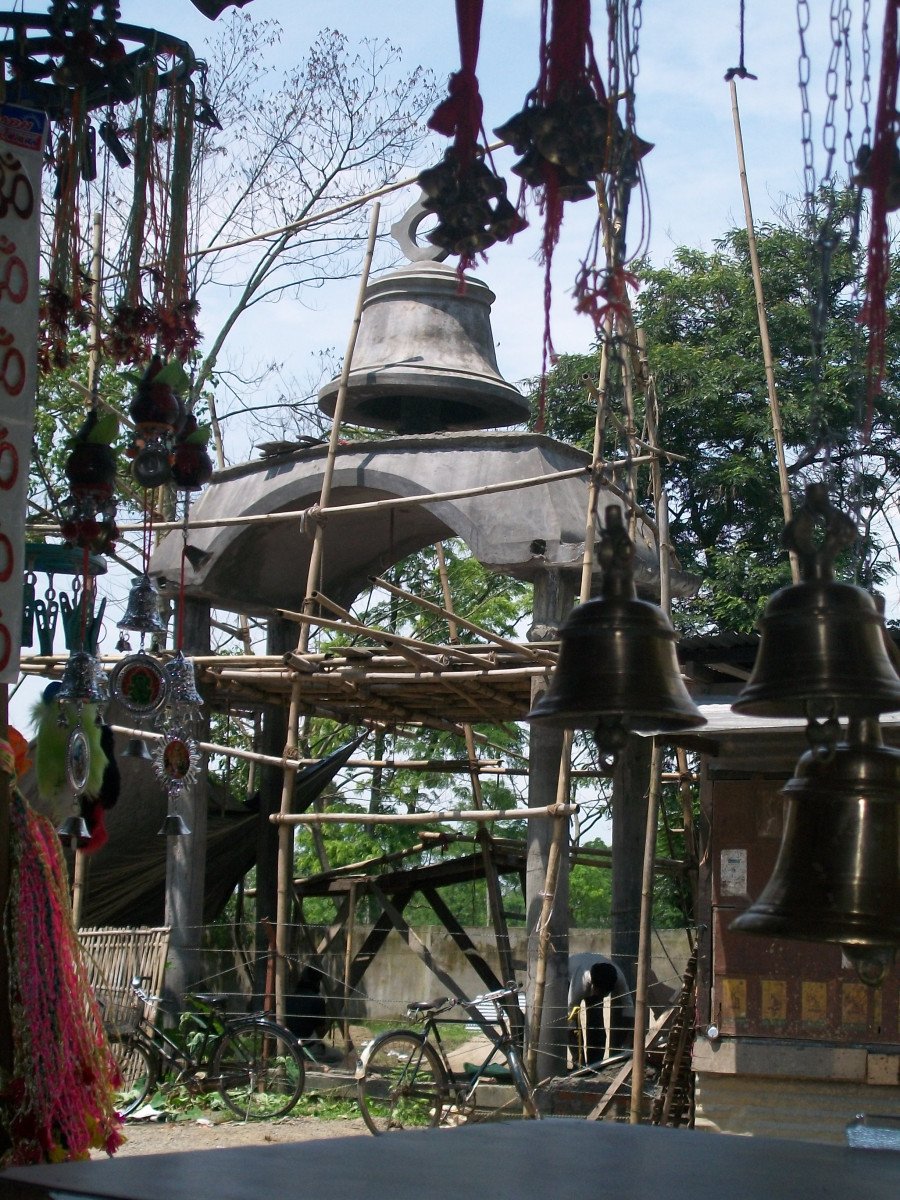
The Three Bell-Shaped Domes: The relatively modern main temple building is topped with three decreasing-sized, bell-shaped domes. This distinct architectural feature, although secondary to the bells on the tree, is an important visual anchor.
Best Shots: Photograph the domes from an angle that includes the sky, emphasizing their unique shape and the vibrant saffron color of the temple. Including a section of the bell-covered tree in the foreground can help place the structure in context.
Framing Devotees in Prayer: Capturing the human element adds a powerful narrative to your photographs. Focus on devotees in the act of tying a bell, offering flowers, or meditating near the Shiva Lingam.
Best Shots: Use a tight focus on the hands tying a bell or a profile shot of a devotee in contemplation. Always seek permission or maintain a respectful distance to capture candid moments without disrupting their worship. The sincerity on the faces of the pilgrims can make for very emotive and compelling photography.
The Temple Gates and Signage: The entrance gate or the main signboard often features the temple's name in bold lettering and a typical architectural style. This provides an essential establishing shot for your photo series.
Best Shots: Capture the name board with the bell-draped tree visible in the background, serving as a clear location marker and a summary of the temple's identity.
Early Morning Light Shots: Visiting immediately after the temple opens provides the best lighting. The soft, golden light of the early sun hitting the metallic bells makes them glimmer and shine. This is also the time when the crowd is minimal, allowing for cleaner, unobstructed shots of the complex.Photo Gallery
Things To Do
-
Offer Prayers and Bells (The Primary Ritual): The main activity at Tilinga Mandir is participating in the unique ritual of offering prayers to Lord Shiva. Devotees first pray for their wishes and then, upon the wish being granted, return to tie a bell (tilinga) to the Peepal tree or the surrounding railings. If you are visiting for the first time, you can still offer prayers to the Shiva Lingam. Bells of varying sizes can be purchased from small shops near the temple complex, allowing you to partake in the custom. This act of tying the bell is a deeply personal and symbolic experience, connecting you to the centuries-old tradition of faith and gratitude. Many people also offer trishuls (tridents) or pigeons, making the act of offering a diverse spiritual engagement.
Experience the Chime Symphony: Simply stand still and liste...Offer Prayers and Bells (The Primary Ritual): The main activity at Tilinga Mandir is participating in the unique ritual of offering prayers to Lord Shiva. Devotees first pray for their wishes and then, upon the wish being granted, return to tie a bell (tilinga) to the Peepal tree or the surrounding railings. If you are visiting for the first time, you can still offer prayers to the Shiva Lingam. Bells of varying sizes can be purchased from small shops near the temple complex, allowing you to partake in the custom. This act of tying the bell is a deeply personal and symbolic experience, connecting you to the centuries-old tradition of faith and gratitude. Many people also offer trishuls (tridents) or pigeons, making the act of offering a diverse spiritual engagement.
Experience the Chime Symphony: Simply stand still and listen. The thousands of bells, made of different metals like bronze, brass, and aluminum, create a mesmerizing and continuous symphony of chimes as the breeze sweeps through the complex. This unique auditory experience is as much a part of the visit as the visual spectacle. The sound is not chaotic but a layered, ambient resonance—a powerful sonic representation of collective faith. Taking a few moments for quiet contemplation, surrounded by the constant ringing, can be a profoundly meditative experience, especially on a less crowded day.
Photography and Visual Documentation: The temple is a paradise for photography enthusiasts. The sheer density of bells, hanging in artistic clusters from the ancient Peepal tree and metal structures, offers countless unique photographic opportunities. You can capture close-ups of the rusted and new bells, the vibrant saffron-painted walls, and the quiet devotion of pilgrims. The contrast of the organic tree with the metallic offerings is particularly striking. Sunrise and Sunset Photography are ideal for capturing the bells with a dramatic backdrop. Remember to be respectful of the praying devotees when taking pictures.
Explore the Local Tea Gardens: Bordubi, where the temple is located, is surrounded by lush, sprawling tea gardens, characteristic of Upper Assam. While you cannot trespass into private garden areas, taking a stroll or driving along the roads adjacent to these gardens offers a beautiful scenic experience. The vast green expanse provides a soothing contrast to the metallic soundscape of the temple. You can often see workers engaged in plucking tea leaves, offering a glimpse into the region's primary industry. This is a perfect way to experience the tranquil rural charm of Tinsukia district.
Shop for Souvenirs and Religious Items: Near the temple entrance, you'll find small, local shops selling various religious paraphernalia. The most popular item, naturally, is the bell itself, available in many sizes and materials, which you can buy to offer at the temple or keep as a unique souvenir of your visit. These shops also sell flowers, prasad (offerings), incense, and other mementos, allowing you to support the local community.
Visit on Auspicious Days: If possible, plan your visit on a Monday, which is considered the day of Lord Shiva, or during the festival of Maha Shivaratri. On these days, the temple buzzes with an immense number of devotees, offering a vibrant, intense, and deeply spiritual experience. While more crowded, it allows you to witness the depth of faith and the elaborate rituals performed by the pilgrims. This immersive cultural experience is highly rewarding, though it requires patience for the crowds.
Combine with Nearby Tourist Spots: A visit to the Tilinga Mandir can be combined with other attractions in and around Tinsukia (see the list below). Planning a trip that includes natural wonders like the Dibru Saikhowa National Park or a historic town like Digboi allows you to make the most of your travel to this remote part of Assam, blending spiritual travel with nature and history.
Enjoy Local Assamese Cuisine: Though facilities near the temple are
Information
-
Why Famous:
The Wish-Fulfilling Bell Tradition: The primary reason for the temple's fame is the unique tradition of tying a bell to the premises after a wish made to Lord Shiva has been fulfilled. The Assamese word 'tilinga' means bell, giving the temple its name, Tilinga Mandir. This...The Wish-Fulfilling Bell Tradition: The primary reason for the temple's fame is the unique tradition of tying a bell to the premises after a wish made to Lord Shiva has been fulfilled. The Assamese word 'tilinga' means bell, giving the temple its name, Tilinga Mandir. This ritual acts as a public testimony of faith and divine grace. The collective faith of countless devotees, each bell representing an answered prayer, has drawn pilgrims from across India and even abroad, making it an extraordinary example of votive offering. The sheer volume of bells, hanging from the Peepal tree and metal bars, is a captivating sight, symbolizing a massive, shared spiritual history.
Discovery of the Shiva Lingam: The temple's origin story adds a mystical layer to its fame. It is believed to have been established in 1965 after a Shiva Lingam—the iconic representation of Lord Shiva—mysteriously emerged from the ground near an old Peepal tree. This naturally occurring, or Swayambhu, Lingam is considered immensely sacred, reinforcing the belief in the site's potent divine power. The ancient belief in the sanctity of the Peepal tree as a Kalpavriksha, or wish-fulfilling divine tree, further compounds the temple's reputation as a powerful place of worship.
Recognized Collection of Bells: The Tilinga Mandir holds a record in the Limca Book of World Records for housing the largest collection of bells of all types. This record-breaking collection, ranging from tiny trinkets to colossal brass gongs, is a major attraction. The constant, ambient sound of the bells creates a powerful and spiritual atmosphere, which is a key part of the temple's identity and its draw for both religious visitors and cultural tourists seeking a unique experience. -
Architecture:
Unconventional Temple Design: The architecture of the Tilinga Mandir is unique, not conforming strictly to typical grand temple designs. It's more of an organically grown spiritual complex. The original structure was a simple wall built around the spontaneously emerged Shi...Unconventional Temple Design: The architecture of the Tilinga Mandir is unique, not conforming strictly to typical grand temple designs. It's more of an organically grown spiritual complex. The original structure was a simple wall built around the spontaneously emerged Shiva Lingam and the Peepal tree. Over time, devotees contributed to the construction. The central shrine dedicated to Lord Shiva is a modest structure, primarily a sanctuary for the naturally formed Lingam. The complex does not feature many ornate statues or elaborate idols, focusing instead on the sacred Shiva Lingam beneath the divine Peepal tree. The atmosphere is less about intricate carvings and more about profound faith, which is visibly manifested in the offerings.
Dominance of Bells and Tridents: The defining architectural feature is, without a doubt, the countless bells and trishuls. While specific detailed architectural blueprints and dimensions are not widely publicized, the complex is dominated by the visual element of bells. The main temple structure is noted to have three bell-shaped domes, lined up in decreasing size from left to right. The immense Peepal tree, which serves as a natural canopy and a sacred post for thousands of bells, is the most visually striking component. The overall Area of the temple complex is significant, accommodating the massive flow of pilgrims, and the surrounding walls are often plastered and painted a vibrant saffron. The metallic chimes from the bells, swaying in the breeze, form a continuous, mesmerizing 'symphony of faith,' which can be considered the core of its architectural experience. The temple's modest main structure contrasts sharply with the riot of metal offerings, creating a visually and acoustically powerful space. -
How To Reach:
From Place Name (Value "Tinsukia"): The Tilinga Mandir is situated at Bordubi, which is approximately 7 km from the main town of Tinsukia.
By Air: The nearest major airport is Mohanbari Airport (DIB) in Dibrugarh, which is approximately 70 k...From Place Name (Value "Tinsukia"): The Tilinga Mandir is situated at Bordubi, which is approximately 7 km from the main town of Tinsukia.
By Air: The nearest major airport is Mohanbari Airport (DIB) in Dibrugarh, which is approximately 70 km from Tinsukia town. This airport has regular flight connectivity to major Indian cities like Delhi, Kolkata, and Guwahati. From the airport, you can hire a pre-paid taxi or a private cab directly to Tinsukia town, which takes about 1. 5 to 2 hours. Once you reach Tinsukia, you can easily hire local transport to the temple. Alternatively, you may hire a cab directly from Mohanbari Airport to the temple in Bordubi, which might take around 2 to 2. 5 hours.
By Train: The nearest railway station is Tinsukia Junction Railway Station (TSK), which is a major railway hub in Assam and is well-connected to various parts of the country by several express and passenger trains. It is located approximately 8 km from the Tilinga Mandir. From the station, the temple is easily accessible. You can hire an auto-rickshaw (often called a 'Tuk-Tuk' in local parlance) or a local taxi directly to the temple.
By Road: Tinsukia is well-connected by road through the National Highway network. You can reach Tinsukia by bus from major cities in Assam and neighboring states like Guwahati, Dibrugarh, Jorhat, and Itanagar. The Tilinga Mandir in Bordubi lies just off the main road connecting Tinsukia to other nearby towns and tea gardens. Driving from Tinsukia city center to the temple in a private vehicle or rented taxi is the most convenient option and takes about 15-20 minutes.
By Local Transport: The most common local transport options from Tinsukia town to the Tilinga Mandir are:
Auto-Rickshaws: These are readily available near the Tinsukia Railway Station and the main bus stands. You can hire an auto-rickshaw for a dedicated trip (negotiate the fare beforehand) or, sometimes, on a shared basis.
Local Buses: Buses connecting Tinsukia to Bordubi or other nearby localities often stop near the temple complex. This is the most economical way to travel, though it might take longer due to multiple stops.
Taxis/Cabs: Private cabs or app-based taxis (if available) can be hired for a more comfortable and direct journey from Tinsukia to the temple. -
Weather and Best Time to Visit:
The Pleasant Winter Season (October to March): The Best Time to Visit the Tilinga Mandir is undoubtedly during the winter season, which spans from October to March. During these months, the weather in Upper Assam is at its most pleasant, characterized by cool, dry, and mode...The Pleasant Winter Season (October to March): The Best Time to Visit the Tilinga Mandir is undoubtedly during the winter season, which spans from October to March. During these months, the weather in Upper Assam is at its most pleasant, characterized by cool, dry, and moderate temperatures. The daytime temperature is comfortable, typically ranging from 10°C to 25°C. This weather is ideal for sightseeing, walking around the temple complex, and exploring the surrounding tea gardens without the discomfort of humidity or heavy rainfall. The major festival of Maha Shivaratri also often falls within this window, offering a spiritually intense experience.
The Monsoon Season (June to September): The monsoon season is generally not the ideal time to visit. Assam receives very heavy rainfall during this period, leading to high humidity and frequent travel disruptions. While the surrounding tea gardens appear lush and green, the constant rain can make walking around the open temple complex challenging and less enjoyable.
The Summer Season (April to May): The summer months are characterized by high temperatures and increasing humidity. While the heat is bearable compared to some other parts of India, it can make midday visits uncomfortable. If visiting in summer, it's highly recommended to restrict your visit to the early morning or late afternoon.
Ideal Time by Part of the Day - The Morning Visit: As detailed in the timings section, the early morning (6:00 AM to 9:00 AM) is the best part of the day to visit year-round. The air is fresh, the crowds are thin, and the light is perfect for photography. The spiritual tranquility of the temple is most pronounced before the day's bustle begins. Ideal Time by Part of the Day - The Late Afternoon Visit: The late afternoon (4:00 PM to 6:00 PM) is the second-best time. The heat subsides, and the setting sun casts a beautiful, warm glow on the metallic bells, creating stunning photo opportunities. It offers a slightly different, equally peaceful atmosphere compared to the morning. -
Near Tourist Places:
1.
Bherjan-Borjan-Padumoni Wildlife Sanctuary: Approx. 4 km (Wildlife)2.
Na-Pukhuri (Nine Ponds): Approx. 1 km (Historical/Lake)3.
Dibru Saikhowa National Park: Approx. 20 km (Wildlife/Ecotourism)4.
Doomdooma: Approx. 22 km (Town, known for Tea Gardens)5.
Digboi: Approx. 26 km (Oil City, Golf Course, War Cemetery)6.
Dehing Patkai Wildlife Sanctuary: Approx. 26 km (Rainforest/Wildlife)7.
Lekhapani: Approx. 50 km (Start of the Historic Stilwell Road)8.
RuKmini Island: Approx. 20 km (On the Brahmaputra River)9.
Margherita: Approx. 40 km (Coal Town, famous for Plywood factories and Tea Gardens)10.
Sadiya: Approx. 49 km (Historic and Scenic River Town)
Tourism Tips
-
Health & Safety:
Hydration and Sun Protection: Even during pleasant weather, carry a water bottle to stay hydrated. In summers, use sunscreen and a hat, as the temple complex is largely open.
Footwear: You w...Health & Safety:
Hydration and Sun Protection: Even during pleasant weather, carry a water bottle to stay hydrated. In summers, use sunscreen and a hat, as the temple complex is largely open.
Footwear: You will be required to remove your footwear before entering the main temple premises. Wear slip-on shoes or sandals for ease.
Insect Repellent: Given the temple's location near tea gardens and natural areas, especially during monsoons, carrying a basic insect repellent, particularly for mosquitoes, is advisable.
Respect and Quiet: Maintain a respectful demeanor inside the temple complex. Avoid loud conversations and do not disrupt the prayers of the devotees.
Watch Your Step: Be cautious while walking, as the sheer number of bells and tridents may occasionally be speared or piled near pathways.
Packing:
Modest Clothing: As a religious site, dress modestly. While there is no strict dress code, clothes that cover the shoulders and knees are recommended for both men and women as a sign of respect.
Camera/Phone: Don't forget your camera to capture the unique spectacle of the bells. Carry extra batteries or a power bank.
Bells for Offering: While you can buy them at the site, you might consider carrying a small bell in advance if you want to be fully prepared for the ritual.
Accommodation:
Stay in Tinsukia: The best accommodation options are available in the main Tinsukia town, about 7 km away. You can find a range of hotels, from budget-friendly guesthouses to more comfortable lodgings. Book in advance, especially if traveling during the peak season (November to March) or a major festival like Maha Shivaratri.
Consider Dibrugarh: For more premium accommodation options, the city of Dibrugarh is about a 1. 5 to 2-hour drive away and can serve as a base for exploring Upper Assam.
Other Different Topics:
Local Transport Negotiation: When hiring an auto-rickshaw or a local taxi from Tinsukia, always negotiate the fare beforehand, or insist on a meter if available, to avoid being overcharged.
Respectful Photography: While photography is generally allowed, be mindful and respectful of the devotees and do not photograph anyone without their consent.
Learn a Few Assamese Words: Learning simple phrases like "Dhuniyade" (thank you) or "Kimaan" (how much) can enhance your interaction with the local people.
Try Local Tea: Given the region's fame for tea, make sure to sample the strong, aromatic local brew from one of the small stalls outside the temple.
Reviews
FAQs
Tinsukia Itineray And Cost:-
Information about New and Updated Locations() of Assam Has Been Added :-
Card subtitle
Note:-
Information provided here in good Faith and for reference only.
Near Places

Bherjan-Borajan-Padumoni Wildlife Sanctuary
Some quick example text to build on the card title and make up the bulk of the card's content.
Go somewhere
Chauldhuwa Pukhuri
Some quick example text to build on the card title and make up the bulk of the card's content.
Go somewhere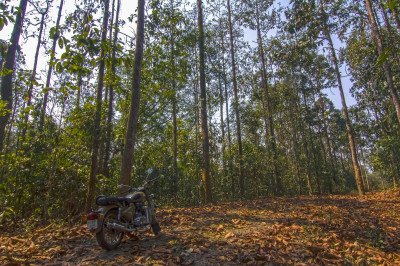
Dehing Patkai National Park
Some quick example text to build on the card title and make up the bulk of the card's content.
Go somewhere
Dibru-Saikhowa National Park
Some quick example text to build on the card title and make up the bulk of the card's content.
Go somewhere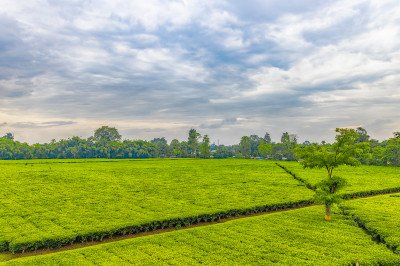
Doomdooma
Some quick example text to build on the card title and make up the bulk of the card's content.
Go somewhere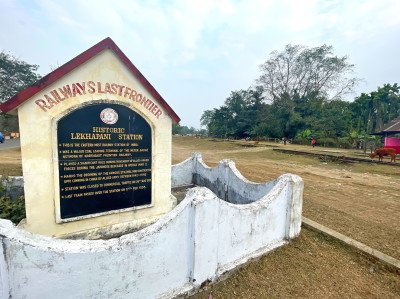
Historic Lekhapani Station Tomb
Some quick example text to build on the card title and make up the bulk of the card's content.
Go somewhere
Ledo
Some quick example text to build on the card title and make up the bulk of the card's content.
Go somewhere
Maguri Motapung Beel
Some quick example text to build on the card title and make up the bulk of the card's content.
Go somewhere
Margherita Sunset Point
Some quick example text to build on the card title and make up the bulk of the card's content.
Go somewhere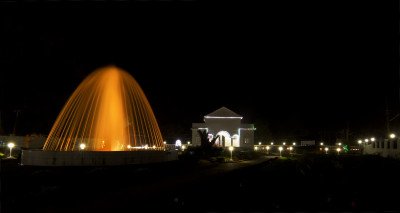
Margherita
Some quick example text to build on the card title and make up the bulk of the card's content.
Go somewhere
Na-Pukhuri
Some quick example text to build on the card title and make up the bulk of the card's content.
Go somewhere
Paklongkam Waterfalls
Some quick example text to build on the card title and make up the bulk of the card's content.
Go somewhere
Rukmini Island
Some quick example text to build on the card title and make up the bulk of the card's content.
Go somewhere
Sadiya
Some quick example text to build on the card title and make up the bulk of the card's content.
Go somewhere
Shiv Dham
Some quick example text to build on the card title and make up the bulk of the card's content.
Go somewhere
Shiv Dham Tinsukia
Some quick example text to build on the card title and make up the bulk of the card's content.
Go somewherein Other Cities