

Padmini's Palace
General information
-
Ideal Duration:
1 to 2 hoursPlace Type:
Palace / Historical MemorialEntry Fees:
Inclusion in Fort Ticket: Entry to Padmini's Palace is generally included in the overall entry ticket for the Chittorgarh Fort complex. There is no separate ticket for this monument. As the main fort ticket costs approximately Rs.50 for Indians and Rs.600 for Foreigners, this...Inclusion in Fort Ticket: Entry to Padmini's Palace is generally included in the overall entry ticket for the Chittorgarh Fort complex. There is no separate ticket for this monument. As the main fort ticket costs approximately Rs.50 for Indians and Rs.600 for Foreigners, this single fee covers the palace.
Parking and Camera Charges: Visitors traveling by personal or hired vehicle will have to pay a separate fee for parking within the fort complex near the major attractions like the palace. While there are usually no explicit camera fees for still photography, commercial photography and filming may require permits and a higher charge, which should be checked at the main gate.
(Word Count: ~100/200)Timing:
Regular Timings:
Open Hours: The palace follows the general operating hours of the Chittorgarh Fort, which are typically from 9:00 AM to 6:00 PM daily. Visitors should note that access to the smaller monuments might be restricted closer to ...Regular Timings:
Open Hours: The palace follows the general operating hours of the Chittorgarh Fort, which are typically from 9:00 AM to 6:00 PM daily. Visitors should note that access to the smaller monuments might be restricted closer to the closing time to ensure all tourists can exit the vast complex before dusk.
Ideal Visit Time:
Serenity and Light: The Ideal Visit Time is during the Early Morning from 9:00 AM to 10:30 AM. The light is perfect for the iconic reflection shot, and the serene environment around the water body is at its calmest before the crowds arrive. Visiting in the cooler Winter months is also highly recommended.
(Word Count: ~100/200)Special Events:
Local Festival Day Commemorations: While no exclusive annual festival is celebrated at the palace itself, the site becomes a focal point for silent commemoration during major local festivals. On the day of the Jauhar Mela in February or March, many visitors and Rajput comm...Local Festival Day Commemorations: While no exclusive annual festival is celebrated at the palace itself, the site becomes a focal point for silent commemoration during major local festivals. On the day of the Jauhar Mela in February or March, many visitors and Rajput community members specifically visit Padmini's Palace to offer floral tributes and reflect on the sacrifice made by the queen and the women who followed her, making it a place of quiet, personal pilgrimage on this day.
Best Photo Spots:
The Classic Reflection Shot: The very best photo spot is from across the water pool, ensuring the full reflection of the white palace in the still water is captured. This shot is best taken in the Morning when the light is less harsh and the water is calm.The Classic Reflection Shot: The very best photo spot is from across the water pool, ensuring the full reflection of the white palace in the still water is captured. This shot is best taken in the Morning when the light is less harsh and the water is calm.
Jharokha Framing: Capturing the view of the surrounding fort or the water through the ornate jharokhas (balconies) of the palace. The jharokha serves as a natural frame, providing a depth-of-field shot that contrasts the finely carved foreground with the historic backdrop.
The Chhatri Details: Focusing on the architectural details, particularly the Rajput chhatris (pavilions) atop the palace, against the clear blue sky. This highlights the palace's unique architectural elements and the delicate craftsmanship of the reconstruction.
(Word Count: ~100/300)Photo Gallery
Things To Do
-
The Iconic Reflection Photo Opportunity: The single most popular activity is taking photographs of the palace, specifically aiming to capture its reflection in the surrounding water. The ideal shot is taken from the opposite side of the water body to get the complete mirrored image of the white palace and its chhatris.
Contemplate the Historical Legend: Take time to stand by the water and absorb the atmosphere, imagining the dramatic scene of Alauddin Khilji being granted a glimpse of the queen's reflection. Reading the historical account or poem Padmavat beforehand enriches the ...
Information
-
Why Famous:
The Mirror of Legend: The palace's fame rests almost entirely on the legend of the mirror. It is the very spot where the beauty of Rani Padmini was purportedly seen by Alauddin Khilji only as a reflection. This specific incident, whether fully historical or embe...
The Mirror of Legend: The palace's fame rests almost entirely on the legend of the mirror. It is the very spot where the beauty of Rani Padmini was purportedly seen by Alauddin Khilji only as a reflection. This specific incident, whether fully historical or embellished by the epic poem Padmavat by Malik Muhammad Jayasi in 1540, is one of the most enduring stories in Indian history and culture. The palace thus serves as a powerful physical anchor for a tale of obsession, honor, and tragedy.
Symbol of Rajput Feminine Courage: Beyond the tale of beauty, the palace symbolizes the incredible courage and self-respect of the Rajput women. It is from this vicinity that Rani Padmini is said to have led the first and most massive Jauhar of 1303 AD, an act where an estimated 13,000 women chose to sacrifice their lives rather than face dishonor. This makes the palace not just a monument to a queen, but a profound memorial to the unyielding spirit of Rajputana womanhood.
(Word Count: ~90/200) -
Architecture:
The Jal Mahal Concept: The palace represents an early and effective example of the Jal Mahal (Water Palace) concept in Rajput architecture. The main pavilion is strategically placed within a water moat, which not only served a defensive purpose but also acted as a natural ...The Jal Mahal Concept: The palace represents an early and effective example of the Jal Mahal (Water Palace) concept in Rajput architecture. The main pavilion is strategically placed within a water moat, which not only served a defensive purpose but also acted as a natural air-conditioning system, providing relief from the arid Rajasthani heat. The water surrounding the palace, fed by the fortRs.s sophisticated water system, creates a perpetually cool microclimate through evaporation.
Structural Style and Reflection: The palace is a multi-story structure built primarily of white plastered stone. It features chhatris (canopied pavilions) on the roof, which are characteristic elements of Rajput and Mewari architectural traditions. The rectangular design and the orientation of the palace were optimized to maximize natural light and airflow. While exact, verifiable dimensions are difficult to state for the reconstructed portion, the central pavilion, which is the key area, is approximately 15 meters tall and covers a compact area, with its placement emphasizing the visual drama of its reflection in the water, which is the central point of the historical legend. The design also incorporates jharokhas (ornate enclosed balconies) that overlook the lotus pool.
(Word Count: ~140/200) -
How To Reach:
By Air:
Via Udaipur: The journey starts by flying into Maharana Pratap Airport (UDR) in Udaipur (approx. 90-100 KMS). From there, a taxi or private vehicle is the best way to reach Chittorgarh city. Once at the fort's main gate (Ram Pol),... -
Near Tourist Places:
1. Gaumukh Kund (Within Fort, 0.
5 KMS): Sacred perennial spring. 2. Kirti Stambh (Within Fort, 1.
5 KMS): Jain tower of fame. 3. Kalika Mata Temple (Within Fort, 0.
5 KMS): Ancient temple. 4.
Vijay Stambh (Within Fort, 2 KMS): Iconic Victory Tower. 5.
Rana Kumbha Palace (Within Fort, 3 KMS): Largest palace ruin. 6.
Saanwaliya Ji Temple (Mandaphia, 40 KMS): Famous Krishna temple. 7.
Menal Waterfall (90 KMS): Picturesque temple and falls. 8.
Udaipur (11
5 KMS): Major hub for dining and shopping. 9.
Bundi (150 KMS): Historic town with unique architecture. 10.
Bijaipur Castle (40 KMS): Converted heritage hotel.
Tourism Tips
-
Health & Safety:
Water Edges: Exercise caution near the water body surrounding the palace, especially with children, as there are no strong barricades right at the water's edge. The stone is often slippery, so wear appropriate shoes.
Reviews
Padmini's Palace Tourism:-
Information about New and Updated Locations(675+) of Rajasthan Has Been Added :-
Card subtitle
Note:-
Information provided here in good Faith and for reference only.
All information and pictures will be updated soon, please keep visiting.
Near Places
Chittorgarh Fort
Some quick example text to build on the card title and make up the bulk of the card's content.
Go somewhere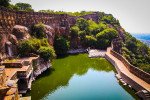
Gaumukh Kund
Some quick example text to build on the card title and make up the bulk of the card's content.
Go somewhere
Padmini's Palace
Some quick example text to build on the card title and make up the bulk of the card's content.
Go somewhere
Archeological Museum
Some quick example text to build on the card title and make up the bulk of the card's content.
Go somewhere
Bassi Wildlife Sanctuary
Some quick example text to build on the card title and make up the bulk of the card's content.
Go somewhere
Bhainsrorgarh Fort
Some quick example text to build on the card title and make up the bulk of the card's content.
Go somewhere
Bhainsrorgarh Wildlife Sanctuary
Some quick example text to build on the card title and make up the bulk of the card's content.
Go somewhere
Bhimlat Kund
Some quick example text to build on the card title and make up the bulk of the card's content.
Go somewhere
Fateh Prakash Palace
Some quick example text to build on the card title and make up the bulk of the card's content.
Go somewhere
Fateh Prakash Palace Museum
Some quick example text to build on the card title and make up the bulk of the card's content.
Go somewherein Other Cities