Chilapata Forest
General information
-
Ideal Duration:
3 - 4 Hours (Includes travel time from Cooch Behar and the mandatory 1. 5-hour Jungle Safari).Place Type:
Wildlife, Nature, Archaeology, AdventureEntry Fees:
Core Entry and Permit Fees (Mandatory): Visiting Chilapata requires mandatory fees levied by the Forest Department of West Bengal. The main expenses include the Forest Entry Permit Fee (per head/per vehicle), and the compulsory charge for the Guided Jeep Safari (per vehicle...Core Entry and Permit Fees (Mandatory): Visiting Chilapata requires mandatory fees levied by the Forest Department of West Bengal. The main expenses include the Forest Entry Permit Fee (per head/per vehicle), and the compulsory charge for the Guided Jeep Safari (per vehicle). These fees are not fixed 'entry fees' but are crucial to securing the mandatory permission to enter the protected area. These fees directly contribute to forest conservation and the livelihoods of local communities.
Local Service Charges (Guide and Vehicle): In addition to the official permit, visitors must hire a registered Forest Guide (mandatory for safety and tracking), for which a separate fee is charged. The cost of hiring the jeep vehicle itself is also a significant expense, as private cars are usually not permitted beyond the range office. All charges are collected at the range office. It is important to note that these fees are subject to change based on the government's conservation policies.
Camera and Videography Fees (Optional): Often, a small additional fee is charged for carrying still cameras, and a substantially higher fee for professional-grade video cameras, as per the rules of the wildlife sanctuary. Visitors should enquire about these potential charges at the booking counter to avoid issues inside the park.Timing:
Regular Safari Timings (Slot-Based): Entry into Chilapata Forest is strictly managed through pre-defined safari slots. A typical day has four slots, which vary slightly by season. Summer timings (approx. March to November) are usually mathbf{5:30 {AM}-7:00 {AM}...Regular Safari Timings (Slot-Based): Entry into Chilapata Forest is strictly managed through pre-defined safari slots. A typical day has four slots, which vary slightly by season. Summer timings (approx. March to November) are usually mathbf{5:30 {AM}-7:00 {AM}}, mathbf{7:30 {AM}-9:00 {AM}}, mathbf{2:00 {PM}-3:30 {PM}}, and mathbf{4:00 {PM}-5:30 {PM}}. Winter timings start slightly later. Safaris last approximately 1. 5 hours. There is no general 'open time' for the forest; one must enter only during a booked slot.
Ideal Visit Time (The Morning Safari for Wildlife): The Early Morning Safari Slot (the first one of the day, mathbf{5:30 {AM}} or mathbf{6:00 {AM}}) is considered the Ideal Visit Time for wildlife sightings. Animals are most active and likely to be seen near the roads or water bodies just after dawn. The light is also softer and more beautiful for photography. The second-best time is the late afternoon slot, as animals prepare for their nocturnal activities. The midday slots are often too hot and quiet.Special Events:
The Annual Forest Closure Period (Conservation): The most notable 'event' in Chilapata is the forest closure period, typically during the peak monsoon months (mid-June to mid-September). While this is not a 'celebration', it is a crucial, planned special period. This closu...The Annual Forest Closure Period (Conservation): The most notable 'event' in Chilapata is the forest closure period, typically during the peak monsoon months (mid-June to mid-September). While this is not a 'celebration', it is a crucial, planned special period. This closure is essential for the conservation of the forest and its wildlife, as it allows the animals to breed undisturbed and the forest paths, which become treacherous due to heavy rain, to regenerate. Travelers must be aware of this, as safaris and entry are generally restricted during this time, making it a special period of rest and regeneration for the ecosystem.
Wildlife Week Celebrations: In the nearby forest towns like Alipurduar or the forest range offices, the Wildlife Week (first week of October) is celebrated with local events, awareness camps, and sometimes special guided tours focusing on conservation. These events are designed to educate locals and tourists about the importance of protecting the elephant corridor and the rhino population, linking the tourism experience directly to the region's conservation efforts.Best Photo Spots:
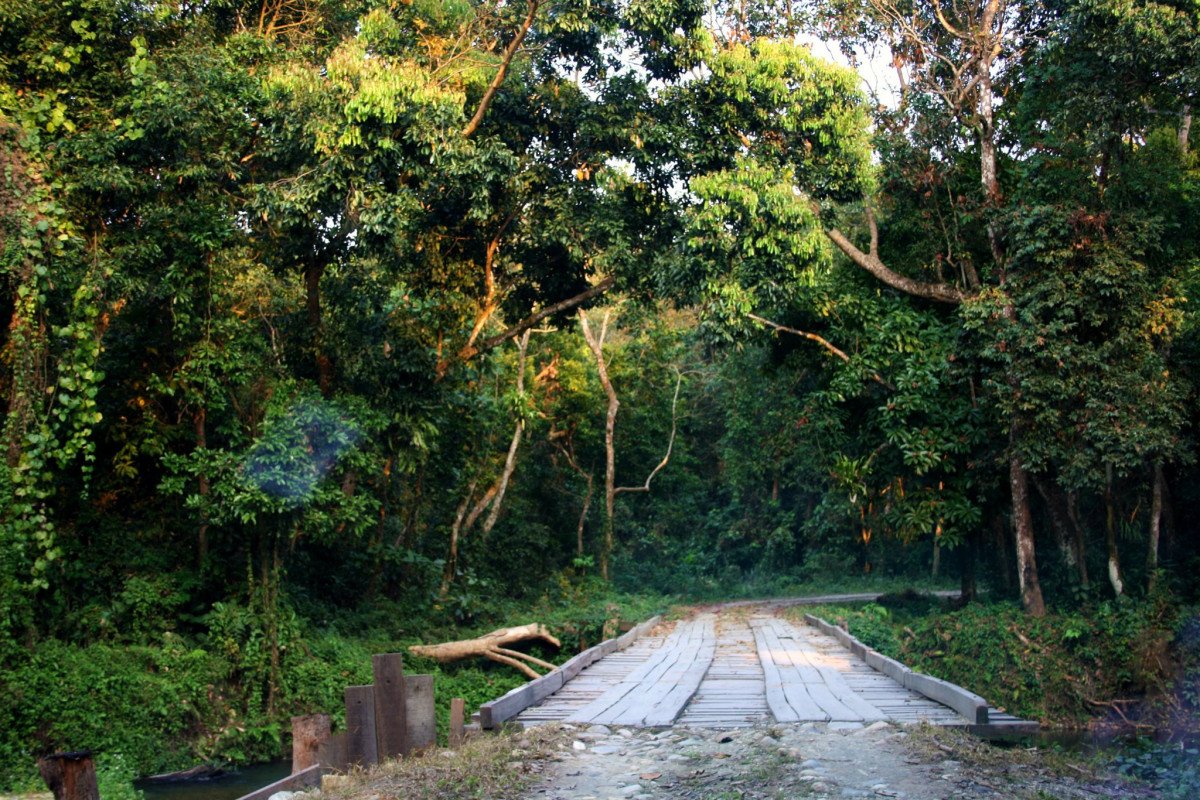
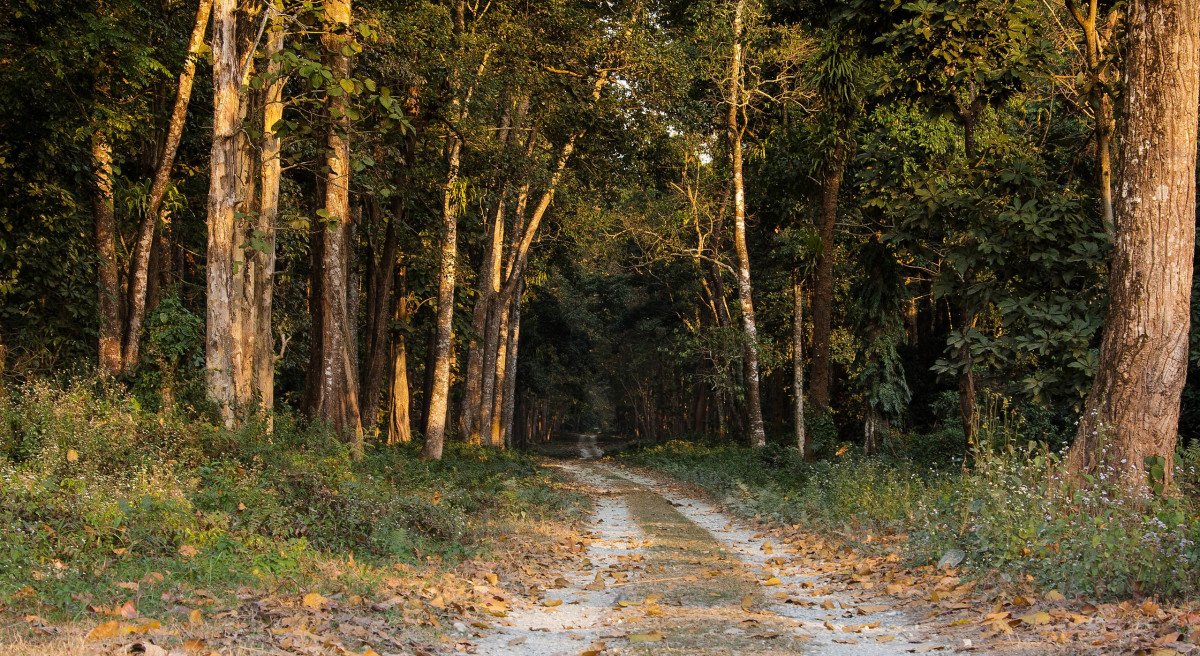
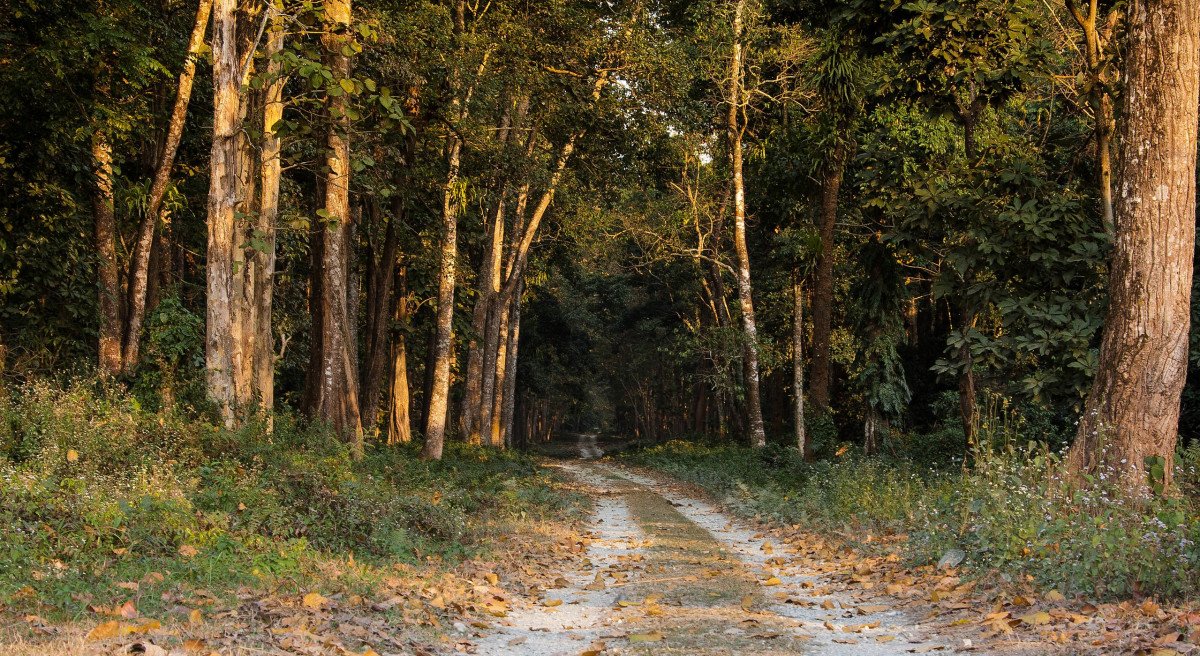
The Jungle Road at Sunrise: The drive through the dense forest, especially in the early morning slot (5:30 AM or 6:00 AM), offers spectacular photographic opportunities. Capture the misty, ethereal quality of the jungle roads, with shafts of sunlight cutting through the den...The Jungle Road at Sunrise: The drive through the dense forest, especially in the early morning slot (5:30 AM or 6:00 AM), offers spectacular photographic opportunities. Capture the misty, ethereal quality of the jungle roads, with shafts of sunlight cutting through the dense canopy. Focus on the silhouettes of the tall Sal trees against the soft, diffused morning light. This shot captures the true 'deep forest' feeling of Chilapata.
Nalraja Garh:
History Overgrown: Photograph the ruins of the Nalraja Garh, focusing on how the jungle has reclaimed the ancient architecture. Use the thick vines, roots, and trees surrounding the brick and stone structures as natural framing elements. The contrast between the rigid, man-made fortress and the wild, aggressive nature of the forest makes for a compelling, evocative photograph that tells the story of the site.
Wildlife and Water Bodies: The edges of the small water bodies and nullahs (streams) within the forest are excellent photo spots. Animals frequently visit these spots, particularly in the morning, for a drink. The reflection of the trees and potential wildlife in the calm water offers a symmetrical and serene shot. Use a telephoto lens and maintain silence for the best and most respectful wildlife photography.
The Watchtower Perspective: The watchtowers offer a vantage point for broad landscape and canopy shots. Photograph the unbroken, undulating green canopy of the forest, capturing the vastness of the protected area. If lucky, frame a shot of a herd of Elephants or a lone Rhino in the distant clearing, using the forest as a natural, wild backdrop.Photo Gallery
Things To Do
-
The Guided Jeep Safari (Wildlife Spotting): The main attraction is the mandatory guided Jeep Safari. This is a thrilling, 1. 5-hour experience that takes visitors deep into the core areas of the forest. The primary objective is wildlife sighting. Sit quietly and look out for the One-Horned Rhinoceros, which often grazes near the water bodies, herds of Asiatic Elephants, and the majestic Bison (Gaur). Keep an eye out for diverse deer species and monkeys. Follow the forest guides instructions strictly for safety and maximizing sighting opportunities.
Exploring the Nalraja Garh Ruins: The jeep safari will include a stop at the ruins of the Nalraja Garh fort. Spend time walking around the remaining brick and stone structures. Imagine the 5th-century life of the fort's inhabitants and its importance during the Gupta period. ...
Information
-
Why Famous:
The Vital Elephant Corridor: Chilapata Forest is globally famous for being one of the most critical elephant corridors in Eastern India. It is the natural migratory path and biological bridge between the wildlife populations of Jaldapara and Buxa forests. This geographical...The Vital Elephant Corridor: Chilapata Forest is globally famous for being one of the most critical elephant corridors in Eastern India. It is the natural migratory path and biological bridge between the wildlife populations of Jaldapara and Buxa forests. This geographical and ecological role means it has a high concentration of wildlife, particularly large mammals like the Asiatic Elephant and the Indian One-Horned Rhinoceros. The forest's untouched quality and high density of wildlife sightings during the safari make it a premier destination for wildlife photographers and conservationists.
Nalraja Garh:
The Golden Age Ruins: The presence of the Nalraja Garh ruins is a unique reason for its fame, distinguishing it from purely wildlife sanctuaries. The fort, dating back to the Gupta Empire, links the dense jungle to Indias 'Golden Age' of history. The mystery and historical weight of the ancient fort, hidden deep within the contemporary wilderness, attract archaeologists and history buffs. The combination of deep history and raw nature is what gives Chilapata its distinct and well-deserved reputation. -
Architecture:
Nalraja Garh:
Gupta Period Fortification: The architecture observed in Chilapata is the ruined fortification of Nalraja Garh, which is an extremely rare example of Gupta-period military and civil construction in the Dooars region. The forts ...Nalraja Garh:
Gupta Period Fortification: The architecture observed in Chilapata is the ruined fortification of Nalraja Garh, which is an extremely rare example of Gupta-period military and civil construction in the Dooars region. The forts design was fundamentally rectangular, a standard plan for ancient military garrisons. It was constructed primarily with large, tile-shaped bricks and stone slabs, showcasing the robust building techniques of the 5th Century AD. The surviving portions indicate that the fort was protected by a surrounding moat, which served as the primary defensive barrier.
Moat and Aqueduct Dimensions: Archaeological surveys have revealed that the fortified complex covers an area of about 1. 295 square kilometers. The fortification was protected by a moat, and notably, the fort includes the ruins of an mathbf{ ext{'L'}}-shaped aqueducta sophisticated water management system for its timemeasuring approximately 113. 80 meters in length and 49. 4 meters in width. The surviving structures include a ruined fort gate and parts of the walls, featuring niches that were likely used for defense or draining. This architecture is a testament to the advanced engineering of the time. -
How To Reach:
By Air (Bagdogra Airport - IXB): The nearest airport is Bagdogra (IXB), located about 150 KMS from the forest's entrance. From Bagdogra, travelers should hire a private taxi or pre-booked tourist vehicle for a direct transfer. The journey will take approximately 4 hours, p... -
Near Tourist Places:
Jaldapara National Park (Madarihat Gate):
15 KMS Buxa Tiger Reserve:
60 KMS Jayanti (Buxa):
70 KMS Rajabhatkhawa:
55 KMS Cooch Behar Rajbari:
40 KMS Mahananda Wildlife Sanctuary:
140 KMS Hollong Eco Lodge:
20 KMS Gorumara National Park:
110 KMS Hasimara Town:
15 KMS New Alipurduar Town: 35 KMS
Tourism Tips
-
Health & Safety (Safari Protocols): Strictly adhere to the rules of the Forest Department and the guide's instructions during the safari. Never alight from the jeep until explicitly told to do so. Maintain absolute silence to avoid disturbing the animals. Carry insect rep...
Reviews
Cooch Behar Itineray And Cost:-
Chilapata Forest Tourism:-
Information about New and Updated Locations() of West Bengal Has Been Added :-
Card subtitle
Note:-
Information provided here in good Faith and for reference only.
All information and pictures will be updated soon, please keep visiting.
Near Places

Bairagidighi
Some quick example text to build on the card title and make up the bulk of the card's content.
Go somewhere
Baneswar Shiva Temple
Some quick example text to build on the card title and make up the bulk of the card's content.
Go somewhere
Baneswar Siva Temple
Some quick example text to build on the card title and make up the bulk of the card's content.
Go somewhere
Baradebi Bari
Some quick example text to build on the card title and make up the bulk of the card's content.
Go somewhere
Bhetaguri
Some quick example text to build on the card title and make up the bulk of the card's content.
Go somewhere
Chakchaka Rajbari
Some quick example text to build on the card title and make up the bulk of the card's content.
Go somewhere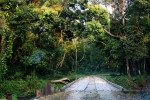
Chilapata Forest
Some quick example text to build on the card title and make up the bulk of the card's content.
Go somewhere
Cooch Behar Palace
Some quick example text to build on the card title and make up the bulk of the card's content.
Go somewhere
Cooch Behar Rajbari Park
Some quick example text to build on the card title and make up the bulk of the card's content.
Go somewhere
Dangar Ayee Temple
Some quick example text to build on the card title and make up the bulk of the card's content.
Go somewherein Other Cities