
...

FAQs On Tibetan Refugee Self-Help Centre

Darjeeling, West Bengal, India
History of Resilience: The Tibetan Refugee Self-Help Centre (TRSHC) was established on October 2, 1959, following the dramatic escape of the 14th Dalai Lama and thousands of Tibetans from their homeland. This site, known as "Hermitage," holds deep spiritual significance as it was also the place of e xile for the 13th Dalai Lama in the early 20th century. The center was started by a committee led by Mrs. Zhu Dan, the wife of Gyalo Thondup (the Dalai Lama's brother), with just four workers. Its primary mission was to provide a means of self-reliance for refugees through the production of traditional handicrafts. Over the decades, it has grown into a bustling community where the elderly are cared for and the youth are educated in their ancestral skills. Visitors can witness the entire process of carpet weaving—from the carding and spinning of wool to the intricate knotting on large wooden looms. The center also produces exquisite wood carvings, leather goods, and hand-painted thangkas. The earnings from these sales go directly toward the welfare of the community members, including their health and education. Walking through the center is a somber yet inspiring experience, as the photo gallery documents the arduous journey of the refugees across the Himalayas. It serves as a living museum of Tibetan culture and a testament to the human spirit's ability to survive and thrive despite displacement. The peaceful atmosphere, coupled with the rhythmic sound of looms and the sight of elders spinning prayer wheels, makes it one of the most culturally significant spots in Darjeeling.

Ans:- A typical visit takes about 1 to 1.5 hours. This allows enough time to walk through the different workshop sections, spend time in the photographic gallery to understand the history, visit the small onsite temple, and browse the retail showroom for souvenirs and gifts.

Ans:- Apart from carpets, you can find exquisitely carved wooden items, leather jackets, woolen shawls, traditional Tibetan boots, thangka paintings, and various curios. Each item is handmade with great attention to detail, reflecting the rich artistic traditions of Tibet that the community strives to keep alive.

Ans:- Entry to the Tibetan Refugee Self-Help Centre is free for all visitors. The centre relies on the sale of its handcrafted goods and donations to support its charitable activities, so visitors are encouraged to browse the retail outlet and support the community through purchases.

Ans:- Established on October 2, 1959, the centre was created to provide a home and livelihood for Tibetan refugees who followed the Dalai Lama into exile. It started with just four workers and has grown into a major rehabilitation hub that preserves Tibetan culture while providing self-sufficiency to hundreds.

Ans:- It is located at a place called "Hillside" on Lebong Cart Road in Darjeeling. The approach involves a narrow, winding road that goes uphill. Most local taxis know the location well, and it is a standard stop on many North Darjeeling sightseeing itineraries.

Ans:- No, the prices in the showroom are fixed. The revenue generated from sales goes directly toward the welfare of the refugees, the maintenance of the old age home, and the education of the children. The items are of high quality, and the fixed prices ensure fair wages for the artisans.

Ans:- The centre is a year-round attraction, but the spring (March to May) and autumn (October to November) months offer the most pleasant weather for walking around the complex. During the winter, you can see the artisans working on heavy woolen items, which is quite interesting.

Ans:- The centre is generally open from Monday to Saturday, between 9:00 AM and 4:30 PM. It is important to note that the centre remains closed on Sundays and during certain major Tibetan festivals, so it is best to plan your visit during the working week.

Ans:- The centre is located on a hilltop, and while vehicles can reach the gate, the internal paths can be a bit steep or uneven in some areas. Visitors with significant mobility issues may find some of the workshop areas a bit challenging to navigate without assistance.

Ans:- Visitors are welcome to walk through the workshops and watch the artisans, but it is important to be respectful. You should ask for permission before taking close-up photos of individuals. Since it is a place of work and residence, maintaining a quiet and polite demeanor is appreciated.

Ans:- Visitors can explore various workshops where artisans produce traditional Tibetan handicrafts. You can witness the intricate process of carpet weaving, wood carving, leather work, and painting. The complex also houses a small monastery, an orphanage, an old age home, and a fascinating photographic exhibition hall.

Ans:- Yes, the centre is a comprehensive self-help community. It operates a 20-bed hospital that serves both the refugees and the local Darjeeling community. It also manages a crèche and a school for children, ensuring that the younger generation receives education while preserving their cultural heritage.

Ans:- Yes, the centre is world-famous for its hand-knotted wool carpets. These carpets are made using traditional Tibetan methods and vegetable dyes. Because they are produced on-site by skilled refugees, they are considered highly authentic. There is a retail outlet where these and other handicrafts are sold.
Information about New and Updated Locations() of West Bengal Has Been Added :-
Card subtitle

Note:-

Information provided here in good Faith and for reference only.

Near Places
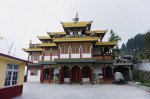
...
Aloobari Monastery

Some quick example text to build on the card title and make up the bulk of the card's content.

Go somewhere
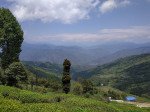
...
Badamtam Tea Estate

Some quick example text to build on the card title and make up the bulk of the card's content.

Go somewhere
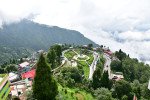
...
Batasia Loop

Some quick example text to build on the card title and make up the bulk of the card's content.

Go somewhere
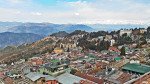
...
Bengal Natural History Museum

Some quick example text to build on the card title and make up the bulk of the card's content.

Go somewhere
...
Bhutia Busty Monastery

Some quick example text to build on the card title and make up the bulk of the card's content.

Go somewhere

...
Bijanbari

Some quick example text to build on the card title and make up the bulk of the card's content.

Go somewhere
...
Chauk Bazaar

Some quick example text to build on the card title and make up the bulk of the card's content.

Go somewhere
...
Chota Mangwa

Some quick example text to build on the card title and make up the bulk of the card's content.

Go somewhere
...
Chowrasta & The Mall

Some quick example text to build on the card title and make up the bulk of the card's content.

Go somewhere
...
Dali Monastery

Some quick example text to build on the card title and make up the bulk of the card's content.

Go somewhere
...
Darjeeling Clock Tower

Some quick example text to build on the card title and make up the bulk of the card's content.

Go somewhere
...
Darjeeling Himalayan Railway

Some quick example text to build on the card title and make up the bulk of the card's content.

Go somewhere
...
Darjeeling Ropeway

Some quick example text to build on the card title and make up the bulk of the card's content.

Go somewhere
...
Dawaipani

Some quick example text to build on the card title and make up the bulk of the card's content.

Go somewhere
...
Dhirdham Temple

Some quick example text to build on the card title and make up the bulk of the card's content.

Go somewhere
...
Ghoom Monastery

Some quick example text to build on the card title and make up the bulk of the card's content.

Go somewhere
in Other Cities