

Gaumukh Reservoir
General information
-
Ideal Duration:
mathbf{45} minutes to mathbf{1} hourPlace Type:
Reservoir / Sacred Site / Historical WaterbodyEntry Fees:
No Separate Fee for Gaumukh: The Gaumukh Reservoir is part of the Chittorgarh Fort complex, a UNESCO World Heritage Site. There is no separate entry fee for this spot. Access is granted with the main Chittorgarh Fort ticket.
Indian Citizens ...No Separate Fee for Gaumukh: The Gaumukh Reservoir is part of the Chittorgarh Fort complex, a UNESCO World Heritage Site. There is no separate entry fee for this spot. Access is granted with the main Chittorgarh Fort ticket.
Indian Citizens (Fort Entry): Approximately INR 50.
Foreign Tourists (Fort Entry): Approximately INR 600.
Mandatory Local Expenditure: While there is no official entry fee, a small, highly recommended local expenditure is involved:
Fish Food: Visitors are strongly encouraged to purchase fish food (puffed rice/flour balls) from small vendors near the site. The cost is negligible (e. g. , INR 10-20), and it contributes to the local economy while allowing participation in the ritual.
Cost of Guide Services: A guide hired for the fort tour will automatically cover the Gaumukh Reservoir. The cost for a certified guide is usually around INR 500 to INR 1500 for a half-day tour of the entire fort. The historical and religious explanations provided by a guide significantly enhance the visit.Timing:
Regular Timings: The Gaumukh Reservoir is accessible throughout the official opening hours of the Chittorgarh Fort, which are generally from 9:30 AM to 6:30 PM daily. Since it's an open-air site, these timings mainly govern the official access to the fort and the presence ...Regular Timings: The Gaumukh Reservoir is accessible throughout the official opening hours of the Chittorgarh Fort, which are generally from 9:30 AM to 6:30 PM daily. Since it's an open-air site, these timings mainly govern the official access to the fort and the presence of vendors and guides.
Ideal Visit Time (Time of Day): The ideal time to visit the Gaumukh Reservoir is during the Mid-Morning or Late Afternoon. Mid-Morning (10:00 AM to 12:00 PM) This allows enough time for the sun to be high enough to light the kund beautifully, bringing out the clarity of the water and the color of the stones. ItRs.s also before the peak heat of the day sets in. Late Afternoon (4:00 PM to 5:30 PM) The light is softer, and the surrounding fort walls cast long, dramatic shadows. This time offers a serene atmosphere perfect for reflection and photography. Avoid the intense sun between 12:00 PM and 3:00 PM, especially in the Summer months.
Ideal Visit Season (Time of Year): As with the entire fort, the Winter season (October to March) is the most comfortable for exploring. However, the Monsoon season (July to September) offers a special appeal for the Gaumukh. During the Monsoon, the continuous flow of water is most impressive, and the overall volume of water in the kund is at its peak, making the site look most vibrant and powerful, highlighting its role as the fortRs.s lifeline.Special Events:
Dipping Rituals on Auspicious Days: The Gaumukh Reservoir becomes a central site for special dipping and worship rituals during key Hindu auspicious months or days. For instance, on the full moon days (Purnima) or during the holy Month of Shravan (July - August), many loca...Dipping Rituals on Auspicious Days: The Gaumukh Reservoir becomes a central site for special dipping and worship rituals during key Hindu auspicious months or days. For instance, on the full moon days (Purnima) or during the holy Month of Shravan (July - August), many local devotees and pilgrims visit to take a purifying dip in the sacred waters, following the belief that the water has the purity of the Ganges River. This is a time of heightened religious activity, with special pujas (worship ceremonies) performed at the small shrines near the spout.
Annual Water Festival (Local): While not a large-scale event, the local community sometimes organizes an annual celebration dedicated to the fort's water bodies, often right after the Monsoon season (around September - October), when the reservoirs are full. The Gaumukh is a highlight of this celebration, involving the decoration of the spout, special aarti (lamp ceremony), and the collective feeding of the fish. These local events offer a genuine glimpse into the cultural life and reverence the people of Chittorgarh hold for this vital water source.Best Photo Spots:
The Iconic Gaumukh Spout: The immediate area around the cow-shaped spout is the absolute best photo spot. Capture the continuous stream of water as it falls into the kund. Use a slow shutter speed (if you have a tripod) to achieve a silky, blurred water effect, or a fast ...The Iconic Gaumukh Spout: The immediate area around the cow-shaped spout is the absolute best photo spot. Capture the continuous stream of water as it falls into the kund. Use a slow shutter speed (if you have a tripod) to achieve a silky, blurred water effect, or a fast shutter speed to freeze the droplets. Include the small shrines in the frame to capture the religious significance.
Steps and Water Levels: Descend a few steps and shoot upwards, capturing the geometric pattern of the stone steps leading down to the water. This adds a sense of scale and architectural depth. The contrast between the rough-hewn steps and the smooth, dark water creates a visually interesting shot. This area is especially beautiful when the kund is full and the steps are partially submerged.
Panoramic View from Above: Before descending, take a panoramic shot from the edge of the reservoir, capturing the entire expanse of the kund and the surrounding greenery and fort walls. This highlights the strategic location and the sheer size of the water body within the arid fort landscape. Golden Hour light from this spot is superb.
Action Shot of Fish Feeding: Capture the vibrant activity of fish feeding. Focus on the moment a handful of puffed rice hits the water, showing the sudden swirl of fish. This is a great opportunity for candid, lively travel photography that captures a unique local interaction.Photo Gallery
Things To Do
-
Perform the Holy Dip and Rituals: For Hindu pilgrims, the most important thing to do is to descend the steps and take a holy dip or sprinkle the sacred water on their heads, completing their pilgrimage (Tirth Raj belief). Offer prayers at the small shrine at the base of the kund, dedicated to Lord Shiva and Goddess Lakshmi, near the water spouts. The atmosphere is quiet and devotional, requiring respectful behavior. Observe and Participate in
Fish Feeding: A distinct and enjoyable activity is feeding the large population of fish in the clear reservoir water.
Acquire Food: Purchase the attak (puffed rice or flour balls) from small vendors near the site.
The Act: Gently toss the food into the water and watch the swirl of fish. This is a highly photogenic an...
Information
-
Why Famous:
The Sacred Tirth Raj: The Gaumukh Reservoir is famously regarded as the "Tirth Raj" of Chittorgarh. The continuous flow of water from the cow-mouth spout is believed to be a stream of the holy Ganges (Ganga) River, making the site sacred for Hindu pilgrims. It is...
The Sacred Tirth Raj: The Gaumukh Reservoir is famously regarded as the "Tirth Raj" of Chittorgarh. The continuous flow of water from the cow-mouth spout is believed to be a stream of the holy Ganges (Ganga) River, making the site sacred for Hindu pilgrims. It is believed that a visit here completes a pilgrimage to all other holy places in India. This profound religious significance draws a large number of devotees, making it a famous spiritual landmark within the military fort.
Lifeline During Sieges: Historically, the reservoirRs.s fame stems from its role as an indispensable water source during the multiple, devastating sieges the Chittorgarh Fort faced. Its perennial water supply was the key to the fort's legendary self-sufficiency and resilience. It symbolizes the strategic genius of the Rajput rulers in water management and their ability to withstand prolonged attacks, making it a monument of logistical and military history as much as a religious one. -
Architecture:
Natural Aquifer Harnessing: The core architectural genius of the Gaumukh Reservoir is its ability to tap into and manage a natural aquifer or perennial spring, a crucial resource on the hilltop location of the fort. The water is channelled through a carefully carved spout,...Natural Aquifer Harnessing: The core architectural genius of the Gaumukh Reservoir is its ability to tap into and manage a natural aquifer or perennial spring, a crucial resource on the hilltop location of the fort. The water is channelled through a carefully carved spout, the Gaumukh (cow's mouth), into the stepped kund (tank). This stone carving is a piece of art in itself, giving the reservoir its iconic name and sacred character. The engineering ensured that water flowed continuously, making it a reliable source for the fort's population.
Stepped Kund Design and Dimensions: The reservoir is constructed as a deep, stepped tank, which is a common feature in traditional Indian water architecture like kunds and baoris (stepwells). The steps (or ghats) allow easy access to the water level, regardless of how much water is in the tank, a practical element for water collection and for the ritualistic bathing associated with a sacred site. The tank is roughly rectangular, descending deep into the rock. While official dimensions (depth and surface area) are variable depending on water level, the reservoir's capacity is part of the overall fort's water storage capability, which historically could store over mathbf{4} billion liters across all water bodies, sufficient to sustain thousands of people for years. The stone walls are simple but robust, reflecting a focus on utility and permanence. -
How To Reach:
By Air: The primary access point is Maharana Pratap Airport (UDR) in Udaipur, approximately 90-100 KMS from Chittorgarh. The airport is served by domestic flights from major Indian cities. From Udaipur, the most convenient way to reach Chittorgarh is by hiring a pre-booke... -
Near Tourist Places:
Serial No. Near Place Name Distance (in KMS) from Gaumukh Reservoir Place Category
:
:
:
: 1 Kalika Mata Temple mathbf{0. 8} KMS (Within Fort) Temple / Historical Site 2 Rani Padmini's Palace mathbf{0. 8} KMS (Within Fort) Palace / Historical Landmark 3 Meera Temple mathbf{1. 0} KMS (Within Fort) Temple / Historical Site 4 Vijay Stambh (Victory Tower) mathbf{0. 7} KMS (Within Fort) Monument / Tower 5 Rana Kumbha Palace mathbf{1. 5} KMS (Within Fort) Palace / Historical Landmark 6 Fateh Prakash Palace Museum mathbf{1. 2} KMS (Within Fort) Museum / Palace 7 Tulja Bhawani Temple mathbf{0. 5} KMS (Within Fort) Temple / Religious Site 8 Kirti Stambh (Tower of Fame) mathbf{1. 3} KMS (Within Fort) Monument / Tower 9 Jaimal and Patta Palaces mathbf{2. 0} KMS (Within Fort) Ruins / Historical Site 10 Gambhiri River mathbf{7} KMS (Near Fort Base) Natural Waterbody 11 Bassi Wildlife Sanctuary mathbf{35} KMS (Outside Fort) Wildlife / Nature Reserve 12 Sanwaliya Ji Temple mathbf{40} KMS (Outside Fort) Major Temple / Pilgrimage Site
Tourism Tips
-
Health and Safety:
Navigating the Steps: Be careful when descending the steps into the kund, especially in the Monsoon season or if they are wet. They can be slippery.
Water Quality: While the water is fr...
Reviews
Gaumukh Reservoir Tourism:-
Information about New and Updated Locations(675+) of Rajasthan Has Been Added :-
Card subtitle
Note:-
Information provided here in good Faith and for reference only.
All information and pictures will be updated soon, please keep visiting.
Near Places
Chittorgarh Fort
Some quick example text to build on the card title and make up the bulk of the card's content.
Go somewhere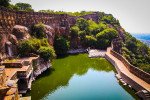
Gaumukh Kund
Some quick example text to build on the card title and make up the bulk of the card's content.
Go somewhere
Padmini's Palace
Some quick example text to build on the card title and make up the bulk of the card's content.
Go somewhere
Archeological Museum
Some quick example text to build on the card title and make up the bulk of the card's content.
Go somewhere
Bassi Wildlife Sanctuary
Some quick example text to build on the card title and make up the bulk of the card's content.
Go somewhere
Bhainsrorgarh Fort
Some quick example text to build on the card title and make up the bulk of the card's content.
Go somewhere
Bhainsrorgarh Wildlife Sanctuary
Some quick example text to build on the card title and make up the bulk of the card's content.
Go somewhere
Bhimlat Kund
Some quick example text to build on the card title and make up the bulk of the card's content.
Go somewhere
Fateh Prakash Palace
Some quick example text to build on the card title and make up the bulk of the card's content.
Go somewhere
Fateh Prakash Palace Museum
Some quick example text to build on the card title and make up the bulk of the card's content.
Go somewherein Other Cities