

Joshimath
General information
-
Ideal Duration:
2 to 4 DaysPlace Type:
Pilgrimage / Hill StationEntry Fees:
Temple Entry: There is no entry fee for the temples or the Shankaracharya Math. Devotees can offer voluntary donations for the maintenance of these ancient spiritual sites.
Ropeway Fees: The ride to Auli costs around 700-1000 INR for a roun...Temple Entry: There is no entry fee for the temples or the Shankaracharya Math. Devotees can offer voluntary donations for the maintenance of these ancient spiritual sites.
Ropeway Fees: The ride to Auli costs around 700-1000 INR for a round trip. It is a premium experience but highly recommended for the views it offers of the high peaks.Timing:
Regular Timings: Temples are open from 6:00 AM to 8:00 PM with a break in the afternoon. The ropeway operates usually from 9:00 AM to 5:00 PM depending on weather conditions.
Ideal Visit Time: Early mornings are perfect for clear mountain v...Regular Timings: Temples are open from 6:00 AM to 8:00 PM with a break in the afternoon. The ropeway operates usually from 9:00 AM to 5:00 PM depending on weather conditions.
Ideal Visit Time: Early mornings are perfect for clear mountain views before the clouds roll in. The winter afternoons are ideal for taking the ropeway to see the snow-clad slopes.Special Events:
Badri Kedar Utsav: A festival that celebrates the cultural heritage of the two major shrines. It features folk dances, local music, and traditional Garhwali food stalls for visitors.
Navratri Celebrations: The Narsingh Temple is beautifully...Badri Kedar Utsav: A festival that celebrates the cultural heritage of the two major shrines. It features folk dances, local music, and traditional Garhwali food stalls for visitors.
Navratri Celebrations: The Narsingh Temple is beautifully decorated during the nine nights of the goddess. Special prayers and local fairs are organized, attracting villagers from surrounding valleys.Best Photo Spots:
Auli Ropeway View: The best angle to capture the vastness of the Garhwal Himalayas. The cable car suspended over the green valleys provides a unique perspective for wide-angle shots.
Narsingh Temple Courtyard: Capture the intricate stone ca...Auli Ropeway View: The best angle to capture the vastness of the Garhwal Himalayas. The cable car suspended over the green valleys provides a unique perspective for wide-angle shots.
Narsingh Temple Courtyard: Capture the intricate stone carvings and the ancient architecture against the mountain backdrop. The contrast of the dark stone and blue sky is stunning.
Kalpavriksha Tree: A great spot for close-up nature photography and capturing the spiritual vibe. The ancient trunk and spreading branches are symbolic of the town's long history.Photo Gallery
Things To Do
 Auli is a world-famous Himalayan ski resort and a stunning meadow, locally called a 'Bugyal', nestled in the Garhwal Himalayas. Situated at an average altitude of about 2,800 meters above sea level, it offers one of the most magnificent panoramic views of the mighty Himalayan peaks, including Nanda Devi, Mana Parbat, Kamet, and Trishul. The slopes of Auli are flanked by dense forests of deodar and oak, which naturally cut the wind speed, making the area an ideal and safer location for winter sports like skiing. The history of Auli is tied to ancient Hindu texts and legends. It is believed that Adi Guru Shankaracharya visited the region in the 8th century AD, establishing the sacred Jyotirmath (modern Joshimath) nearby. For centuries, the slopes were used by the semi-nomadic Bhotiya tribes for herding their livestock before it was developed by the government as a training ground for the Indo-Tibetan Border Police (ITBP) and later as a major tourist destination. The creation of Asia's longest ropeway and an artificial lake has cemented its status as a year-round tourist hub, attracting adventurers in winter and nature lovers in summer and autumn. The pleasant weather, combined with the breathtaking natural beauty, makes Auli a must-visit destination for anyone traveling through Uttarakhand. Its transformation from a simple pasture to an international-grade ski destination is a testament to its unique geography and climate, offering both thrilling adventure and tranquil solitude. (~400 words)
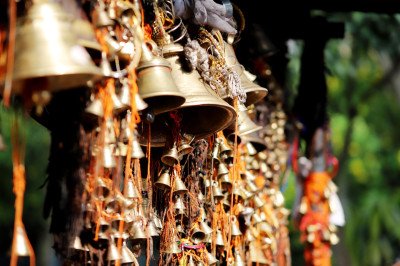 @@Pandukeshwar Temple Details: Pandukeshwar Temple is a highly revered site located on the way to Badrinath. It is situated at an altitude of 1,829 meters. The village is named after King Pandu, the father of the Pandavas, who is said to have performed penance here to cleanse himself of a curse. There are two main temples in the complex: the Yogadhyan Badri and the Lord Vasudev Temple. Yogadhyan Badri is one of the Sapta Badri temples and is the winter seat of the Badrinath deity. When the main Badrinath Temple closes in winter, the "Utsav Murti" is brought here for worship. The Lord Vasudev Temple is believed to have been built by the Pandavas themselves. The site is spiritually charged and holds a peaceful vibe compared to the crowded pilgrim centers. The Alaknanda river flows nearby, adding to the sanctity of the place. It is a must-visit for those interested in the Mahabharata and ancient Indian history. The temple priests are knowledgeable about the local legends and the history of the Katyuri kings who once ruled this region. Visiting Pandukeshwar provides a deep sense of connection to India's epic past.
@@Symbolic and Geographical Significance: The Pithoragarh Gate is a local archway, or Dwar, often signifying the road or the boundary leading out of Joshimath towards the town of Pithoragarh, which lies further east across the Kumaon region, connecting the Garhwal and Kumaon administrative and cultural divisions of Uttarakhand. In the context of Joshimath, it is more of a landmark, a physical identifier of a major road or market entry/exit point, rather than an ancient historical monument. Such local archways are common in Himalayan towns, often built by local governance or military/border forces (given Joshimath's Cantonment status) to mark a transition point or a major route. It serves a functional purpose, often bearing signage and directions, and acts as a minor ceremonial entry point to the town for traffic coming from or going towards the east. The gate is a simple, modern-era structure, reflecting the functional architecture of road signage rather than intricate religious symbolism. Its primary significance is in its name, which immediately places it on the geographical axis connecting Joshimath to the major areas in the eastern Himalayas, including the ancient trade routes and current military/administrative zones. It symbolizes connectivity, marking the start of a journey eastward. For locals, it's a vital reference point for directions and meeting, but for tourists, its significance is mainly as a photo-op landmark that denotes a geographical and cultural boundary, leading to new adventures and different Himalayan landscapes beyond the Garhwal region.:
Ghangaria is a small settlement and a vital base camp situated at an altitude of approximately 3,050 meters (10,000 feet) in the Garhwal Himalayas. It serves as the overnight stop for trekkers heading to both the Valley of Flowers National Park (a UNESCO World Heritage Site) and the holy Sikh pilgrimage site of Gurudwara Hemkund Sahib. The village itself is nestled at the confluence of the Pushpawati River and a stream from Hemkund. Because it is accessible only by a 13 km trek from Govindghat (which is a 22 km drive from Joshimath), it operates primarily during the trekking season (May to October). The village is dominated by guest houses, a few restaurants, and a Gurudwara, all catering to the thousands of pilgrims and nature lovers who pass through annually. It is known for its cool, crisp mountain air and its location amidst pine and rhododendron forests, offering stunning views of the surrounding peaks. The atmosphere is a vibrant mix of spiritual devotion and trekking adventure.
@@Pandukeshwar Temple Details: Pandukeshwar Temple is a highly revered site located on the way to Badrinath. It is situated at an altitude of 1,829 meters. The village is named after King Pandu, the father of the Pandavas, who is said to have performed penance here to cleanse himself of a curse. There are two main temples in the complex: the Yogadhyan Badri and the Lord Vasudev Temple. Yogadhyan Badri is one of the Sapta Badri temples and is the winter seat of the Badrinath deity. When the main Badrinath Temple closes in winter, the "Utsav Murti" is brought here for worship. The Lord Vasudev Temple is believed to have been built by the Pandavas themselves. The site is spiritually charged and holds a peaceful vibe compared to the crowded pilgrim centers. The Alaknanda river flows nearby, adding to the sanctity of the place. It is a must-visit for those interested in the Mahabharata and ancient Indian history. The temple priests are knowledgeable about the local legends and the history of the Katyuri kings who once ruled this region. Visiting Pandukeshwar provides a deep sense of connection to India's epic past.
@@Symbolic and Geographical Significance: The Pithoragarh Gate is a local archway, or Dwar, often signifying the road or the boundary leading out of Joshimath towards the town of Pithoragarh, which lies further east across the Kumaon region, connecting the Garhwal and Kumaon administrative and cultural divisions of Uttarakhand. In the context of Joshimath, it is more of a landmark, a physical identifier of a major road or market entry/exit point, rather than an ancient historical monument. Such local archways are common in Himalayan towns, often built by local governance or military/border forces (given Joshimath's Cantonment status) to mark a transition point or a major route. It serves a functional purpose, often bearing signage and directions, and acts as a minor ceremonial entry point to the town for traffic coming from or going towards the east. The gate is a simple, modern-era structure, reflecting the functional architecture of road signage rather than intricate religious symbolism. Its primary significance is in its name, which immediately places it on the geographical axis connecting Joshimath to the major areas in the eastern Himalayas, including the ancient trade routes and current military/administrative zones. It symbolizes connectivity, marking the start of a journey eastward. For locals, it's a vital reference point for directions and meeting, but for tourists, its significance is mainly as a photo-op landmark that denotes a geographical and cultural boundary, leading to new adventures and different Himalayan landscapes beyond the Garhwal region.:
Ghangaria is a small settlement and a vital base camp situated at an altitude of approximately 3,050 meters (10,000 feet) in the Garhwal Himalayas. It serves as the overnight stop for trekkers heading to both the Valley of Flowers National Park (a UNESCO World Heritage Site) and the holy Sikh pilgrimage site of Gurudwara Hemkund Sahib. The village itself is nestled at the confluence of the Pushpawati River and a stream from Hemkund. Because it is accessible only by a 13 km trek from Govindghat (which is a 22 km drive from Joshimath), it operates primarily during the trekking season (May to October). The village is dominated by guest houses, a few restaurants, and a Gurudwara, all catering to the thousands of pilgrims and nature lovers who pass through annually. It is known for its cool, crisp mountain air and its location amidst pine and rhododendron forests, offering stunning views of the surrounding peaks. The atmosphere is a vibrant mix of spiritual devotion and trekking adventure.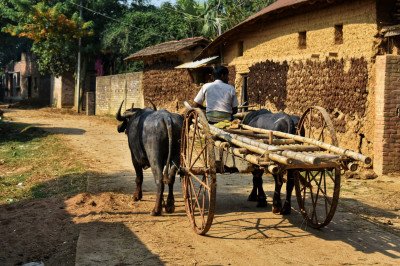 Dhak Village is a quaint Himalayan hamlet that serves as the primary trailhead for the famous Kuari Pass and Pangarchulla Peak treks. Nestled on a sunny slope, the village offers panoramic views of the Dhauliganga River valley and the surrounding snow-capped peaks. It is a traditional Garhwali settlement where agriculture and animal husbandry remain the core of daily life. The village is known for its terraced fields which turn golden during the harvest season. For trekkers, Dhak is the point where civilization ends and the wild Himalayan trails begin. The locals are exceptionally hospitable, often welcoming travelers with a warm cup of mountain tea. The village layout is a labyrinth of narrow stone paths, lined with houses that exhibit traditional woodwork. Unlike the more touristy hubs, Dhak maintains a quiet, authentic atmosphere that gives a glimpse into the resilient lifestyle of mountain people. The village is also an excellent spot for acclimatization before heading to higher altitudes. One can observe the traditional methods of farming and see how water is diverted from mountain streams into the fields. The surrounding forests are rich in oak and pine, providing a serene backdrop for nature walks. In recent years, Dhak has seen a rise in eco-tourism, with small homestays opening up to provide a more immersive experience than the hotels in Joshimath. It is a place where the sound of temple bells and the bleating of sheep replace the noise of the city.
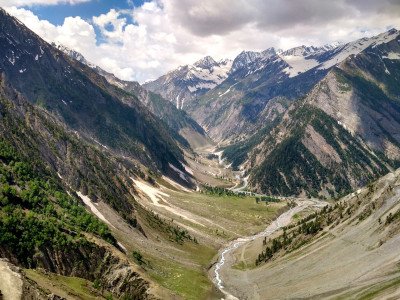 @@Unique Ecosystem and Floral Diversity: The Valley of Flowers National Park is an internationally renowned UNESCO World Heritage Site, famous for its spectacular meadows of endemic alpine flowers. Situated high in the West Himalaya, the gentle landscape is home to over 500 species of flowering plants, which burst into a vibrant, colorful carpet from July to September. The valley is a critical transition zone between the Zanskar and Great Himalaya ranges, supporting a rich biodiversity. It was discovered by mountaineer Frank S. Smythe in 1931, but it was known to locals and Indian yogis for centuries. The ecosystem is pristine and strictly protected, allowing rare and endangered fauna such as the Asiatic Black Bear, Snow Leopard, Brown Bear, Himalayan Musk Deer, and the Blue Sheep to thrive. The sheer density and variety of flowers, including the elusive Blue Poppy, Cobra Lily, and various species of Orchids, make it a botanist's paradise and a spiritual retreat for all visitors. The valley is cradled by the Pushpawati river and is a vital part of the Nanda Devi Biosphere Reserve. The incredible transformation of the valley from a snow-covered landscape to a vibrant mosaic of colors is a natural spectacle that has cemented its place on the global tourism map, attracting nature lovers, photographers, and botanists from all corners of the world.:
Joshimath Town refers specifically to the main urban and commercial center of the municipality, serving as the critical administrative headquarters and a bustling market area in the Chamoli district. Located strategically at the intersection of routes leading to the sacred shrines of Badrinath and Hemkund Sahib, and the scenic ski resort of Auli, the town is a constant hub of activity. The area is characterized by a dense concentration of hotels, restaurants, shops, banks, and government offices, all built on the steep Himalayan slopes. While historically important due to its spiritual institutions (Jyotirmath), the town's modern identity is defined by its role as a vital transport and logistical base for the surrounding high-altitude destinations. The town offers spectacular views of the surrounding peaks and is the starting point for the famous Auli Ropeway. Its vibrant, somewhat crowded atmosphere contrasts with the peaceful spiritual sites nearby, offering a necessary stop for supplies and accommodation. Recent geological instability has also brought a focus on the town's fragility and the need for sustainable mountain development.Show All
The Badrinath Temple (Winter Idol) refers not to the main temple in Badrinath (which closes in winter), but to the revered deity, Lord Badri Vishal (Lord Vishnu), who is ceremonially brought down and housed in the Narsingh Temple (or Narasimha Temple) in Joshimath for the six harsh winter months. The Narsingh Temple itself is an ancient and highly sacred Hindu shrine, one of the four Mathas established by Adi Guru Shankaracharya in the 8th century AD, which collectively give Joshimath its spiritual name, Jyotirmath. This temple is dedicated to Lord Narasimha, the fourth incarnation of Lord Vishnu, depicted in a half-man, half-lion form. The ritualistic transfer of the idol of Lord Badri Vishal (Uddhav and Kuber deities are also moved) is a centuries-old tradition that allows pilgrims to continue their worship even when the main temple becomes inaccessible due to heavy snowfall. The main idol in the Narsingh Temple is of Lord Narasimha, which, according to a local prophecy from the Sanath Samhita, has a right arm that is slowly withering away. It is believed that when this arm finally falls off, the mountains of Jay and Vijay near Badrinath will collapse, blocking the path to the original shrine, and the worship of Lord Badrinath will then permanently shift to Bhavishya Badri. (~400 words)
@@Unique Ecosystem and Floral Diversity: The Valley of Flowers National Park is an internationally renowned UNESCO World Heritage Site, famous for its spectacular meadows of endemic alpine flowers. Situated high in the West Himalaya, the gentle landscape is home to over 500 species of flowering plants, which burst into a vibrant, colorful carpet from July to September. The valley is a critical transition zone between the Zanskar and Great Himalaya ranges, supporting a rich biodiversity. It was discovered by mountaineer Frank S. Smythe in 1931, but it was known to locals and Indian yogis for centuries. The ecosystem is pristine and strictly protected, allowing rare and endangered fauna such as the Asiatic Black Bear, Snow Leopard, Brown Bear, Himalayan Musk Deer, and the Blue Sheep to thrive. The sheer density and variety of flowers, including the elusive Blue Poppy, Cobra Lily, and various species of Orchids, make it a botanist's paradise and a spiritual retreat for all visitors. The valley is cradled by the Pushpawati river and is a vital part of the Nanda Devi Biosphere Reserve. The incredible transformation of the valley from a snow-covered landscape to a vibrant mosaic of colors is a natural spectacle that has cemented its place on the global tourism map, attracting nature lovers, photographers, and botanists from all corners of the world.:
Joshimath Town refers specifically to the main urban and commercial center of the municipality, serving as the critical administrative headquarters and a bustling market area in the Chamoli district. Located strategically at the intersection of routes leading to the sacred shrines of Badrinath and Hemkund Sahib, and the scenic ski resort of Auli, the town is a constant hub of activity. The area is characterized by a dense concentration of hotels, restaurants, shops, banks, and government offices, all built on the steep Himalayan slopes. While historically important due to its spiritual institutions (Jyotirmath), the town's modern identity is defined by its role as a vital transport and logistical base for the surrounding high-altitude destinations. The town offers spectacular views of the surrounding peaks and is the starting point for the famous Auli Ropeway. Its vibrant, somewhat crowded atmosphere contrasts with the peaceful spiritual sites nearby, offering a necessary stop for supplies and accommodation. Recent geological instability has also brought a focus on the town's fragility and the need for sustainable mountain development.Show All
The Badrinath Temple (Winter Idol) refers not to the main temple in Badrinath (which closes in winter), but to the revered deity, Lord Badri Vishal (Lord Vishnu), who is ceremonially brought down and housed in the Narsingh Temple (or Narasimha Temple) in Joshimath for the six harsh winter months. The Narsingh Temple itself is an ancient and highly sacred Hindu shrine, one of the four Mathas established by Adi Guru Shankaracharya in the 8th century AD, which collectively give Joshimath its spiritual name, Jyotirmath. This temple is dedicated to Lord Narasimha, the fourth incarnation of Lord Vishnu, depicted in a half-man, half-lion form. The ritualistic transfer of the idol of Lord Badri Vishal (Uddhav and Kuber deities are also moved) is a centuries-old tradition that allows pilgrims to continue their worship even when the main temple becomes inaccessible due to heavy snowfall. The main idol in the Narsingh Temple is of Lord Narasimha, which, according to a local prophecy from the Sanath Samhita, has a right arm that is slowly withering away. It is believed that when this arm finally falls off, the mountains of Jay and Vijay near Badrinath will collapse, blocking the path to the original shrine, and the worship of Lord Badrinath will then permanently shift to Bhavishya Badri. (~400 words)Information
-
Why Famous:
Adi Shankaracharya Math: Famous for being one of the four seats of spiritual power in India. It preserves the ancient tradition of Sanatana Dharma through its lineage of monks and scholars.
Winter Abode: When Badrinath temple closes in wint...Adi Shankaracharya Math: Famous for being one of the four seats of spiritual power in India. It preserves the ancient tradition of Sanatana Dharma through its lineage of monks and scholars.
Winter Abode: When Badrinath temple closes in winter due to snow, the deity is brought here. This makes Joshimath a year-round center for devotees who cannot reach the higher altitudes. -
Architecture:
Narsingh Temple: This temple is built in the traditional hill architecture style with a slanted roof to shed snow. It houses a striking idol of Lord Narasimha carved from a single piece of black stone.
Monastic Design: The Shankaracharya Ma...Narsingh Temple: This temple is built in the traditional hill architecture style with a slanted roof to shed snow. It houses a striking idol of Lord Narasimha carved from a single piece of black stone.
Monastic Design: The Shankaracharya Math features simple yet elegant stone structures and prayer halls. It follows the Vedic layout with open courtyards for theological discussions and meditation sessions.
Dimensions: The math complex covers a large area including the ancient Kalpavriksha tree which is over 1200 years old. The temples are compact but spiritually dense with narrow entryways. -
How To Reach:
By Air: The closest airport is Jolly Grant in Dehradun, approximately 270 KM away. You will need to hire a private taxi or take a long bus journey through the mountains.
By Train: The nearest railhead is Rishikesh or Haridwar, about 250 KM ...By Air: The closest airport is Jolly Grant in Dehradun, approximately 270 KM away. You will need to hire a private taxi or take a long bus journey through the mountains.
By Train: The nearest railhead is Rishikesh or Haridwar, about 250 KM away. From the station, shared taxis and state transport buses run regularly to the hill station.
By Road: It is well-connected by NH-58 which connects Delhi to Badrinath. The drive is scenic but requires an experienced driver due to the winding mountain roads.
By Local Transport: Shared jeeps are the lifeline for traveling between nearby villages. For getting around the town, walking is the best option as most spots are close together. -
Weather and Best Time to Visit:
Seasons: April to June is perfect for pleasant weather and trekking. December to February is the best time for snow lovers and skiing enthusiasts visiting Auli.
Parts of Day: Sunset is particularly beautiful as the peaks glow in a vibrant o...Seasons: April to June is perfect for pleasant weather and trekking. December to February is the best time for snow lovers and skiing enthusiasts visiting Auli.
Parts of Day: Sunset is particularly beautiful as the peaks glow in a vibrant orange light. Mornings are crisp and clear, making it the best time for long-distance peak spotting. -
Near Tourist Places:
Auli (10 KM), Badrinath (45 KM), Govindghat (20 KM), Valley of Flowers (35 KM), Hemkund Sahib (38 KM), Vishnuprayag (14 KM), Mana Village (48 KM), Tapovan (14 KM), Pipalkoti (35 KM), Chamoli (50 KM).
Tourism Tips
-
Health & Safety: Be aware of high altitude sickness and stay hydrated throughout your stay. The town is in a landslide-prone zone, so check weather reports during the monsoon season.
Packing: Heavy woolens are a must even in summer evenings...Health & Safety: Be aware of high altitude sickness and stay hydrated throughout your stay. The town is in a landslide-prone zone, so check weather reports during the monsoon season.
Packing: Heavy woolens are a must even in summer evenings; thermal wear is essential for winters. Carry good quality trekking boots if you plan to explore the nearby trails.
Accommodation: There are government guest houses and private hotels offering basic to mid-range comfort. It is advisable to book in advance during the peak pilgrimage or skiing seasons.
Other: Carry enough cash as ATMs may run out of money or be out of service due to connectivity. Respect local customs and maintain the sanctity of the religious sites you visit.
Reviews
FAQs
Joshimath Itineray And Cost:-
Other Places In Uttarakhand :-
Other States In India :-
Information about New and Updated Locations() of Uttarakhand Has Been Added :-
Card subtitle
Note:-
Information provided here in good Faith and for reference only.
Near Places
Chakrata
Some quick example text to build on the card title and make up the bulk of the card's content.
Go somewhere
Chamba
Some quick example text to build on the card title and make up the bulk of the card's content.
Go somewhere
Chamoli
Some quick example text to build on the card title and make up the bulk of the card's content.
Go somewhere
Champawat
Some quick example text to build on the card title and make up the bulk of the card's content.
Go somewhere
Chopta
Some quick example text to build on the card title and make up the bulk of the card's content.
Go somewhere
Corbett
Some quick example text to build on the card title and make up the bulk of the card's content.
Go somewhere
Dehradun
Some quick example text to build on the card title and make up the bulk of the card's content.
Go somewhere
Dhanaulti
Some quick example text to build on the card title and make up the bulk of the card's content.
Go somewhere
Gwaldam
Some quick example text to build on the card title and make up the bulk of the card's content.
Go somewhere
Haldwani
Some quick example text to build on the card title and make up the bulk of the card's content.
Go somewhere
Haridwar
Some quick example text to build on the card title and make up the bulk of the card's content.
Go somewhere
Joshimath
Some quick example text to build on the card title and make up the bulk of the card's content.
Go somewhere
Kanatal
Some quick example text to build on the card title and make up the bulk of the card's content.
Go somewhere
Kashipur
Some quick example text to build on the card title and make up the bulk of the card's content.
Go somewhere
Kausani
Some quick example text to build on the card title and make up the bulk of the card's content.
Go somewhere
Kedarnath
Some quick example text to build on the card title and make up the bulk of the card's content.
Go somewherein Other Cities