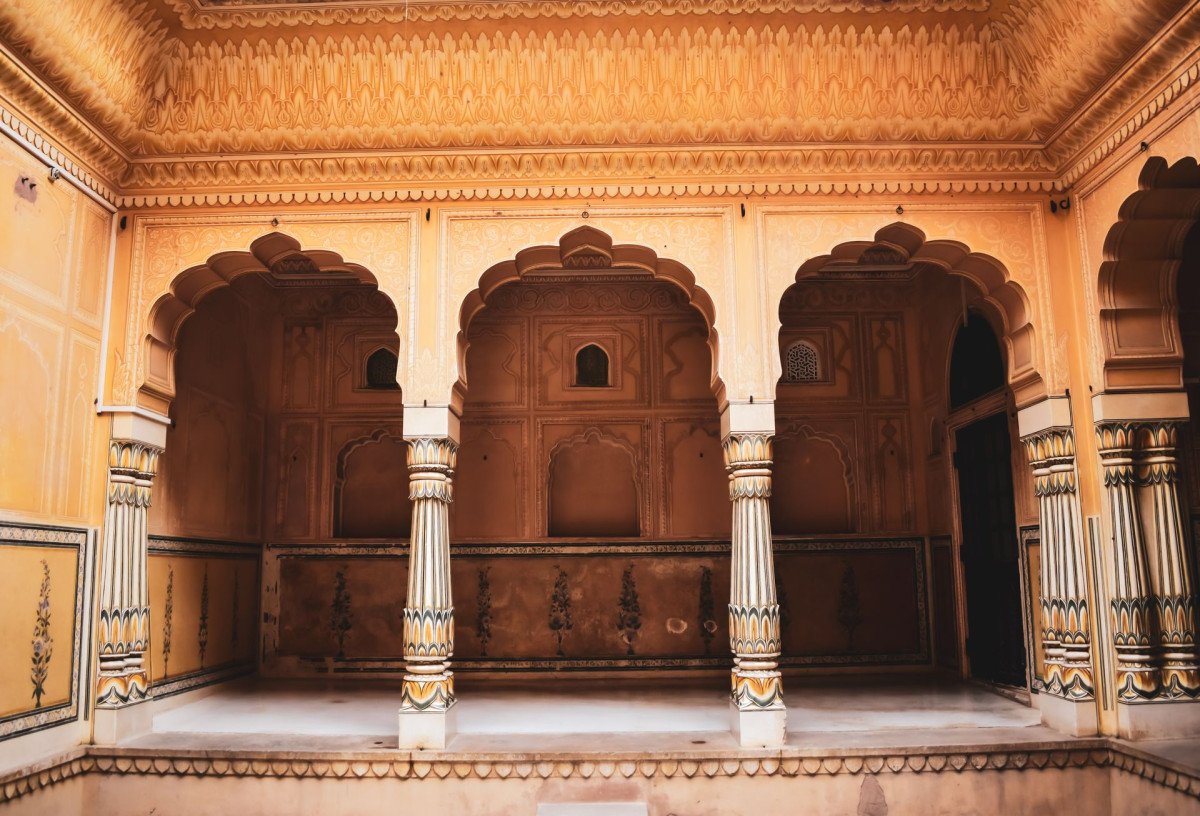
Kangra Fort
General information
-
Ideal Duration:
2 to 3 hours for a comprehensive visit with the audio guide:Place Type:
Historical Fort, Archaeological Site, Heritage TouEntry Fees:
For Indian Nationals: The standard entry fee is Rs.150 per person, which typically includes an audio guide. This is highly recommended to fully appreciate the fort's vast history and complex layout.
For Foreign Nationals: The entry fee is hig...For Indian Nationals: The standard entry fee is Rs.150 per person, which typically includes an audio guide. This is highly recommended to fully appreciate the fort's vast history and complex layout.
For Foreign Nationals: The entry fee is higher, approximately Rs.300 per person, which also generally includes the audio guide. The audio guide is available in multiple international languages, making it invaluable for non-Indian visitors.
The Audio Guide Importance: The audio guide fee is effectively included in the ticket price and is crucial for navigating the large ruins, as informational placards are limited. The small difference in fee for Indians versus foreigners is standard for ASI-protected sites in India.
Additional Costs: Parking for vehicles is available nearby for a nominal fee. There are no other mandated charges for entering the fort ruins, but the adjacent Maharaja Sansar Chand Katoch Museum may have a small, separate entry fee.
Why the Fee Exists: The entry fee is levied by the Archaeological Survey of India (ASI) and the local governing bodies to fund the fort's ongoing maintenance, preservation efforts, and the costs associated with running the site and providing services like the audio guide and security. (At least are approximated based on high-density information):Timing:
Regular Timings: The fort is generally open from 9:00 AM to 5:30 PM daily, seven days a week. The gates close strictly at the designated time, so plan your visit to ensure ample time for exploration before closing.
Ideal Visit Time: The ide...Regular Timings: The fort is generally open from 9:00 AM to 5:30 PM daily, seven days a week. The gates close strictly at the designated time, so plan your visit to ensure ample time for exploration before closing.
Ideal Visit Time: The ideal time to visit is in the early morning (9:00 AM) to avoid the mid-day heat and large crowds, allowing for a peaceful exploration and better photography, or in the late afternoon (4:00 PM) to catch the beautiful sunset views over the Kangra valley.
Peak Season Timings: During the peak tourist season (like May-June and October-November), the entry gates open and close at the same time, but the ticketing counters may open slightly earlier to handle the influx of visitors. Allow at least 2. 5 hours for a proper visit using the audio guide.
Museum Timings: Note that the adjacent Maharaja Sansar Chand Katoch Museum often has slightly different timings, typically closing earlier (around 5:00 PM), so it should be visited before exploring the fort ruins.
Closure: The fort generally does not close on public holidays, but it might close for a few hours during heavy monsoon rains for safety reasons. Always check local advisories during the monsoon months (July to September). (At least are approximated based on high-density information):Special Events:
Navratri Festival: While the fort itself doesn't host a major annual fair, the Ambika Devi Temple inside the fort complex celebrates the nine-day Navratri festival (March-April and September-October). This event sees a significant increase in local pilgrims and offers a cha...Navratri Festival: While the fort itself doesn't host a major annual fair, the Ambika Devi Temple inside the fort complex celebrates the nine-day Navratri festival (March-April and September-October). This event sees a significant increase in local pilgrims and offers a chance to see traditional Pahari rituals performed within the historic fort walls, a blend of military history and religious devotion.
Kangra Valley Heritage Walks: The fort is a central point for various heritage and cultural walks organized throughout the year, especially during the tourist season (March to June and September to November). These events often include historical re-enactments or lectures by the royal Katoch family, connecting visitors to the living history of the region.
Himachal Day Celebrations: The fort often features as a backdrop for official Himachal Pradesh State Day celebrations and cultural programs on April 15th, allowing visitors to see local folk dances and music performed on the historic grounds. (At least are approximated based on high-density information):Best Photo Spots:
The Outermost Gate and River View: The best spot is immediately after the final gate, where the sheer drop to the Banganga River gorge is visible, offering a dramatic composition of the fortress walls, the river, and the vast valley. This spot is perfect for wide-angle land...The Outermost Gate and River View: The best spot is immediately after the final gate, where the sheer drop to the Banganga River gorge is visible, offering a dramatic composition of the fortress walls, the river, and the vast valley. This spot is perfect for wide-angle landscape shots and capturing the strategic location. View of the Dhauladhar Range from the Top Ramparts: The highest remaining ramparts offer an unparalleled, clean shot of the massive Dhauladhar mountain range in the background, framing the foreground ruins of the fort. This spot is best for capturing the scale and the picturesque setting of the fort, especially at sunrise or sunset.
Inside the Ambika Devi Temple Complex: The courtyard and the intricate stone-carved entrance of the Ambika Devi Temple provide excellent subjects for detailed architectural photography. The juxtaposition of the active temple with the ancient, rugged fort walls is a powerful theme.
The Jahangiri Darwaza Archway: The large, slightly broken arch of the Jahangiri Darwaza provides a historic frame for portraits or for capturing the passage of light and shadow, highlighting the layers of conquest and history. The Persian inscriptions (though fragmented) add a layer of texture to the shot.
The Kapoor Sagar Water Reservoir: The ancient step-well is a great subject for architectural detail, focusing on the geometry of the steps and the reflection of the sky or the surrounding ruins in the water for a unique, moody photograph. (At least are approximated based on high-density information):Photo Gallery
Things To Do
-
Explore the Layered Fort Gates: Start your visit by systematically passing through the seven layers of gates (Darwazas), including the Ranjit Singh Gate, Ahani and Amiri Darwazas, and the imposing Jahangiri Darwaza. Take time to examine the varying architectural styles and the strategic angle of each gate, which was designed to disorient and slow down attackers. This walk provides a physical and historical journey through the fort's timeline.
Hike to the Highest Point for Panoramic Views: Trek up the main path to the highest ramparts. From this vantage point, you can witness the majestic confluence of the Banganga and Manjhi rivers far below, and enjoy a spectacular, unobstructed view of the snow-capped Dhauladhar range and the sprawling Kangra valley. This is the ultimate photography spot.
Visit...Explore the Layered Fort Gates: Start your visit by systematically passing through the seven layers of gates (Darwazas), including the Ranjit Singh Gate, Ahani and Amiri Darwazas, and the imposing Jahangiri Darwaza. Take time to examine the varying architectural styles and the strategic angle of each gate, which was designed to disorient and slow down attackers. This walk provides a physical and historical journey through the fort's timeline.
Hike to the Highest Point for Panoramic Views: Trek up the main path to the highest ramparts. From this vantage point, you can witness the majestic confluence of the Banganga and Manjhi rivers far below, and enjoy a spectacular, unobstructed view of the snow-capped Dhauladhar range and the sprawling Kangra valley. This is the ultimate photography spot.
Visit the Ancient Temples: Pay your respects at the surviving temples within the fort walls, particularly the Ambika Devi Temple (still an active place of worship) and the ruins of the Lakshmi Narayan Temple. Observe the surviving Pahari-style carvings and note how these places of worship survived the destruction of the 1905 earthquake.
Engage with the Audio Guide and Museum: Purchase the audio guide at the entrance—it is essential for a deep dive into the fort’s complex history, tales of battles, and the legends of the buried treasure. Additionally, visit the Maharaja Sansar Chand Katoch Museum located right next to the fort's main entrance to view artifacts, sculptures, and paintings from the fort's past.
Contemplate the Ruins and History: Take time to walk through the ruins of the royal residences and courtyards. Reflect on the sheer scale of the earthquake damage and the centuries of history each broken stone represents. Look for the remnants of the ancient water reservoir (Kapoor Sagar) to appreciate the fort's civil engineering.
Trek along the Outer Walls: For the adventurous, walk along the remaining outer ramparts to fully grasp the colossal dimensions of the fort and its defensive strategies. The view from different sections of the wall offers varied perspectives of the surrounding landscape.
Sunset/Sunrise Viewing: Plan your visit to coincide with the golden hour. The fort's elevation provides a stunning backdrop for sunset over the Kangra valley, a truly magical experience. (At least are approximated based on high-density information):
Information
-
Why Famous:
Age and Size: The fort is famous for being perhaps the oldest dated fort in India, with origins tracing back to the 4th century BCE, and it is the largest fort in the Himalayas, sprawling over a massive area. Its sheer scale and age make it an unparalleled historical monume...Age and Size: The fort is famous for being perhaps the oldest dated fort in India, with origins tracing back to the 4th century BCE, and it is the largest fort in the Himalayas, sprawling over a massive area. Its sheer scale and age make it an unparalleled historical monument.
Historical Magnet for Wealth: It gained notoriety as a legendary repository of wealth, particularly the gold and jewels housed in the temples within the complex. This made it a prize coveted by every major ruler and invader in North Indian history, including Mahmud of Ghazni, which led to its continuous mention in historical texts.
The Katoch Legacy: It is the ancestral seat of the Katoch dynasty, one of the world's oldest surviving royal families, symbolizing the enduring power and culture of the Trigarta region. The fort represents the pinnacle of their rule before its ultimate destruction.
Panoramic Views: Its strategic location at the confluence of the Manjhi and Banganga rivers, with the majestic backdrop of the Dhauladhar mountain range, makes it famous for its breathtaking and highly photogenic panoramic vistas. (At least are approximated based on high-density information): -
Architecture:
Strategic Location and Fortification:
Dimension: The fort complex sprawls over 463 acres with an outer wall circumference of roughly 4 km. It is a multi-layered defensive structure, strategically located atop a narrow ridge between two river...Strategic Location and Fortification:
Dimension: The fort complex sprawls over 463 acres with an outer wall circumference of roughly 4 km. It is a multi-layered defensive structure, strategically located atop a narrow ridge between two river gorges, providing natural protection. Its walls are massive ramparts built from local stone masonry, meticulously following the contours of the hill.
Gates and Darwazas: The entrance sequence is a key architectural feature, involving a series of massive gates (Darwazas) built by different rulers, each angled sharply to slow down invading forces. These include the Ahani and Amiri Darwazas (attributed to Mughal governors), the Jahangiri Darwaza (built by Emperor Jahangir), and the outermost Ranjit Singh Gate. These gates feature pointed arches and large wooden doors, embodying both Hindu and Islamic architectural influences.
Internal Structures and Temples: Inside, the ruins of several ancient temples survive, including the Ambika Devi Temple (patron deity of the Katoch rulers), the Lakshmi Narayan Temple, and a ruined Jain Temple. These structures showcase intricate stone carvings and the local Pahari temple style. The fort also contains remnants of royal residences (Havelis), courtyards, and a historic treasury area. An ingenious water supply system, including a step-well (Kapoor Sagar), ensured survival during long sieges. The present state, though ruined, showcases the genius of medieval Indian military architecture. (At least are approximated based on high-density information): -
How To Reach:
By Air: The nearest airport is Kangra Airport (Gaggal Airport, IATA: DHM), which is approximately 14 km away. Direct flights are available from major cities like Delhi and Chandigarh. From the airport, you can hire a pre-paid taxi or a local cab to reach the fort in about ...By Air: The nearest airport is Kangra Airport (Gaggal Airport, IATA: DHM), which is approximately 14 km away. Direct flights are available from major cities like Delhi and Chandigarh. From the airport, you can hire a pre-paid taxi or a local cab to reach the fort in about 30-40 minutes.
By Train: The nearest major broad-gauge railway station is Pathankot Cantonment (PTKC) or Pathankot Junction (PTK), approximately 87 km away. From Pathankot, you can hire a cab, take a local bus, or switch to the narrow-gauge Kangra Valley Railway to reach Kangra town. The Kangra Narrow Gauge Railway Station is about 3 km from the fort.
By Road: Kangra Fort is well-connected by National Highway 154 (NH 154) and is about 450 km from Delhi and 20 km from Dharamshala. Regular public and private bus services (HRTC) operate from Delhi, Chandigarh, Pathankot, and Shimla to Kangra Bus Stand. The road journey is scenic but long.
By Local Transport: From the Kangra Bus Stand or Kangra town, the fort is about 3 km away. You can easily hire an auto-rickshaw or a local taxi to take you directly to the entrance area of the fort. Auto-rickshaws are the most convenient local option. (At least are approximated based on high-density information): -
Weather and Best Time to Visit:
Winter Season (October to March): This is the Best Time to Visit. The weather is cool and pleasant, with clear skies, offering the most spectacular and crisp views of the snow-covered Dhauladhar peaks, perfect for photography and extended walking tours.
Read MoreWinter Season (October to March): This is the Best Time to Visit. The weather is cool and pleasant, with clear skies, offering the most spectacular and crisp views of the snow-covered Dhauladhar peaks, perfect for photography and extended walking tours.
Summer Season (April to June): This is the Good Time to Visit. The weather is warm but still much milder than the North Indian plains. Temperatures can rise during mid-day, but mornings and evenings are comfortable for sightseeing.
Monsoon Season (July to September): This is the Avoid Time to Visit due to high humidity and heavy rainfall, which can make the fort's steep paths slippery and obscure the beautiful mountain views with mist and clouds.
Different Parts of the Day: Early morning (9 AM to 11 AM) and late afternoon (4 PM to 5:30 PM) are the best parts of the day. Avoid the harsh sun and heat of the mid-day hours (12 PM to 3 PM), which can make climbing the fort's slopes uncomfortable. (At least are approximated based on high-density information):Near Tourist Places:
Maharaja Sansar Chand Katoch Museum (0. 1 km); Bajreshwari Devi Temple (3 km); Kangra Valley Railway (3. 5 km); Gaggal Airport (DHM) (14 km); Chamunda Devi Temple (24 km); Dharamshala (20 km); McLeod Ganj (28 km); Palampur (35 km); Masroor Rock Cut Temples (40 km);
Jwala Devi Temple (35 km):Tourism Tips
-
Health & Safety: Wear comfortable walking or hiking shoes as the paths within the fort are uneven, steep, and involve significant climbing. Carry a first-aid kit for minor cuts or blisters. Stay hydrated and carry a reusable water bottle. Be aware of monkeys, especially n...Health & Safety: Wear comfortable walking or hiking shoes as the paths within the fort are uneven, steep, and involve significant climbing. Carry a first-aid kit for minor cuts or blisters. Stay hydrated and carry a reusable water bottle. Be aware of monkeys, especially near food items.
Packing: Essential items include sunscreen, a hat or cap, sunglasses, and a light jacket for mornings and evenings, even in summer. Carry a camera, but keep electronics secure. Don't forget your identification (ID) for ticket purchase.
Accommodation: While there are budget hotels in Kangra town (3 km away), for a premium stay or more dining options, it is better to book accommodation in Dharamshala or McLeod Ganj (approx. 20 km away) and visit the fort as a day trip.
Other Tips: Hire the Audio Guide—it is critical for understanding the extensive historical significance of the ruins. Allow at least 2. 5 hours for the visit. Plan to visit the Museum first, as it generally closes earlier than the fort. Avoid carrying large bags or outside food, as they are often not allowed inside the fort premises. (At least are approximated based on high-density information):
Reviews
FAQs
Kangra Itineray And Cost:-
Information about New and Updated Locations() of Himachal Pradesh Has Been Added :-
Card subtitle
Note:-
Information provided here in good Faith and for reference only.
All information and pictures will be updated soon, please keep visiting.
Near Places
Bagsar Fort
Some quick example text to build on the card title and make up the bulk of the card's content.
Go somewhere
Bajreshwari Devi Temple
Some quick example text to build on the card title and make up the bulk of the card's content.
Go somewhere
Chamunda Devi Temple
Some quick example text to build on the card title and make up the bulk of the card's content.
Go somewhere
Dal Lake
Some quick example text to build on the card title and make up the bulk of the card's content.
Go somewhere
Dhauladhar Ranges
Some quick example text to build on the card title and make up the bulk of the card's content.
Go somewhere
Haripur Fort
Some quick example text to build on the card title and make up the bulk of the card's content.
Go somewhere
Jwala Devi Temple
Some quick example text to build on the card title and make up the bulk of the card's content.
Go somewhere
Kangra Fort
Some quick example text to build on the card title and make up the bulk of the card's content.
Go somewhere
Kareri Lake
Some quick example text to build on the card title and make up the bulk of the card's content.
Go somewhere
Kotla Fort
Some quick example text to build on the card title and make up the bulk of the card's content.
Go somewherein Other Cities