

Mahabalipuram
General information
-
Ideal Duration:
1 to 2 DaysPlace Type:
Heritage / BeachSpecial Events:
Dance Festival: The Mamallapuram Indian Dance Festival in January. Classical dancers perform against the backdrop of Arjuna's Penance.
Pongal: Celebrated with great fervor in January with traditional village games. ...Dance Festival: The Mamallapuram Indian Dance Festival in January. Classical dancers perform against the backdrop of Arjuna's Penance.
Pongal: Celebrated with great fervor in January with traditional village games.Best Photo Spots:
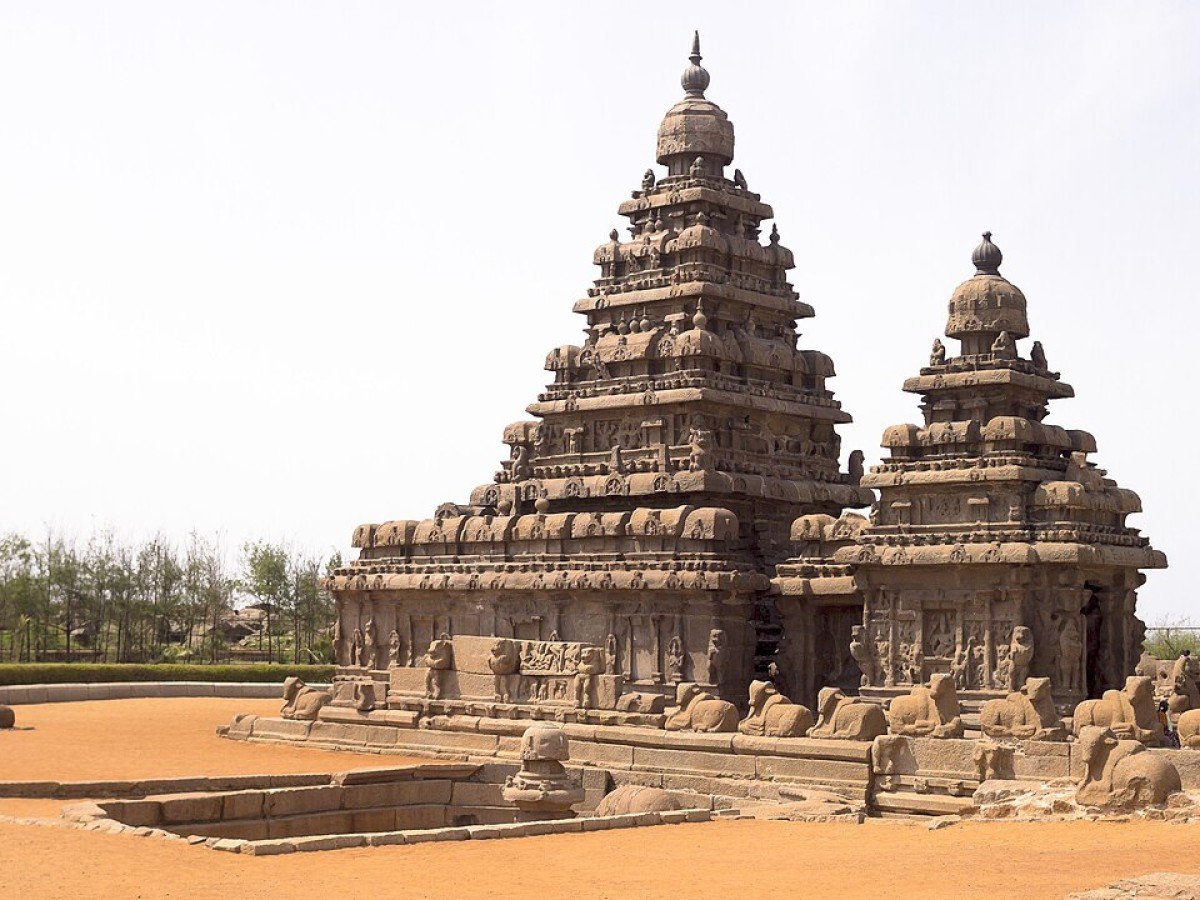
Shore Temple: Best shot during sunrise for a silhouette effect.
Arjuna's Penance: Captures the intricate details of the rock relief.
Butterball: A favorite for funny 'pushing the rock' photos. ...Shore Temple: Best shot during sunrise for a silhouette effect.
Arjuna's Penance: Captures the intricate details of the rock relief.
Butterball: A favorite for funny 'pushing the rock' photos.Photo Gallery
Things To Do
 @@Epic Carving Description:This enormous 7th-century bas-relief, often called Descent of the Ganges, is one of the world's largest open-air rock reliefs, measuring approximately 96 feet long and 43 feet high. It portrays either the sage Bhagiratha performing penance to bring the Ganges river to earth, or the Pandava warrior Arjuna performing penance to obtain the divine weapon Pashupata from Lord Shiva. The sheer scale and minute detailing of the granite carving are astonishing. The relief is bisected by a natural fissure, which Pallava sculptors utilized to depict the descent of the river, with Nagas (serpent deities) symbolizing water, a crucial element in the narrative. The artistry captures a vibrant ecosystem, showing over a hundred figures including gods, Kinnaras, Gandharvas, hunters, ascetics, and an iconic panel of large, naturalistic elephants, which many consider among the finest elephant sculptures in India. The carving is a magnificent testament to the Pallava King Narasimhavarman I's patronage of the arts, showcasing the early stages of Dravidian rock-cut temple architecture and narrative sculptural brilliance. It provides an essential window into 7th-century Hindu religious and secular life and is a core component of the UNESCO World Heritage site, reflecting profound cultural and mythological significance for India.
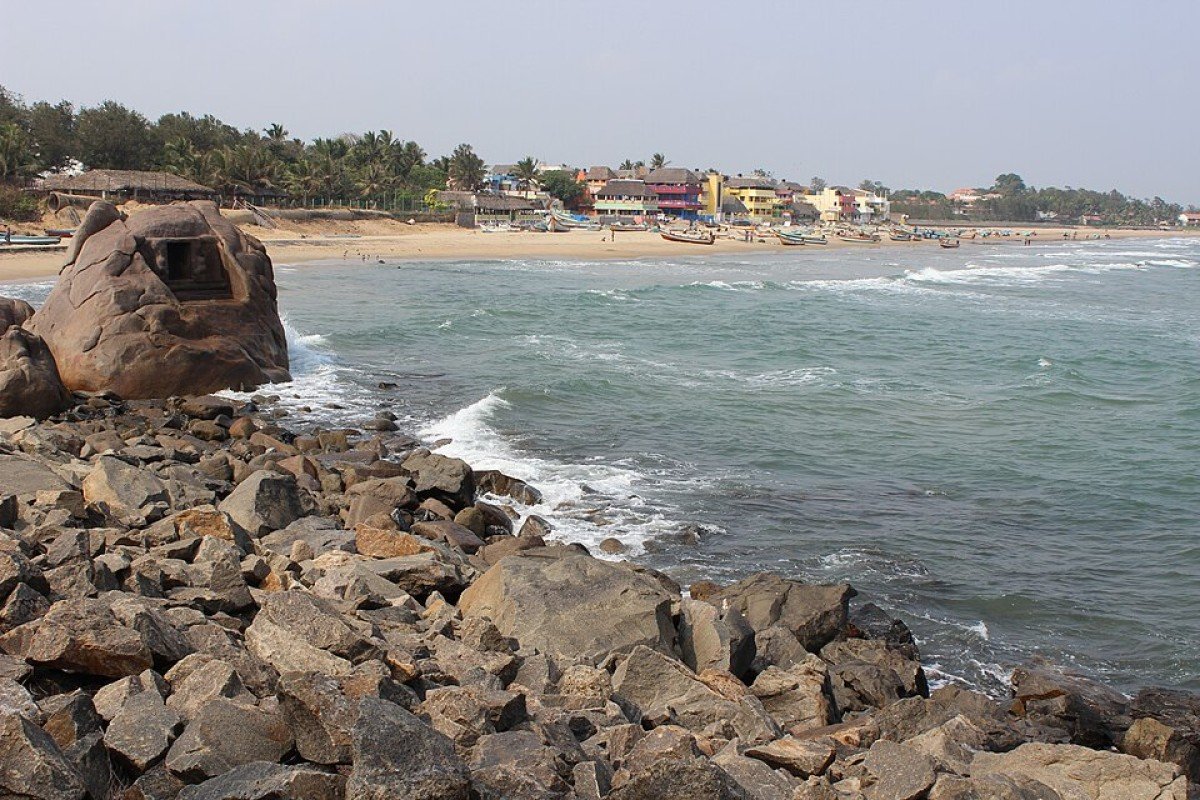
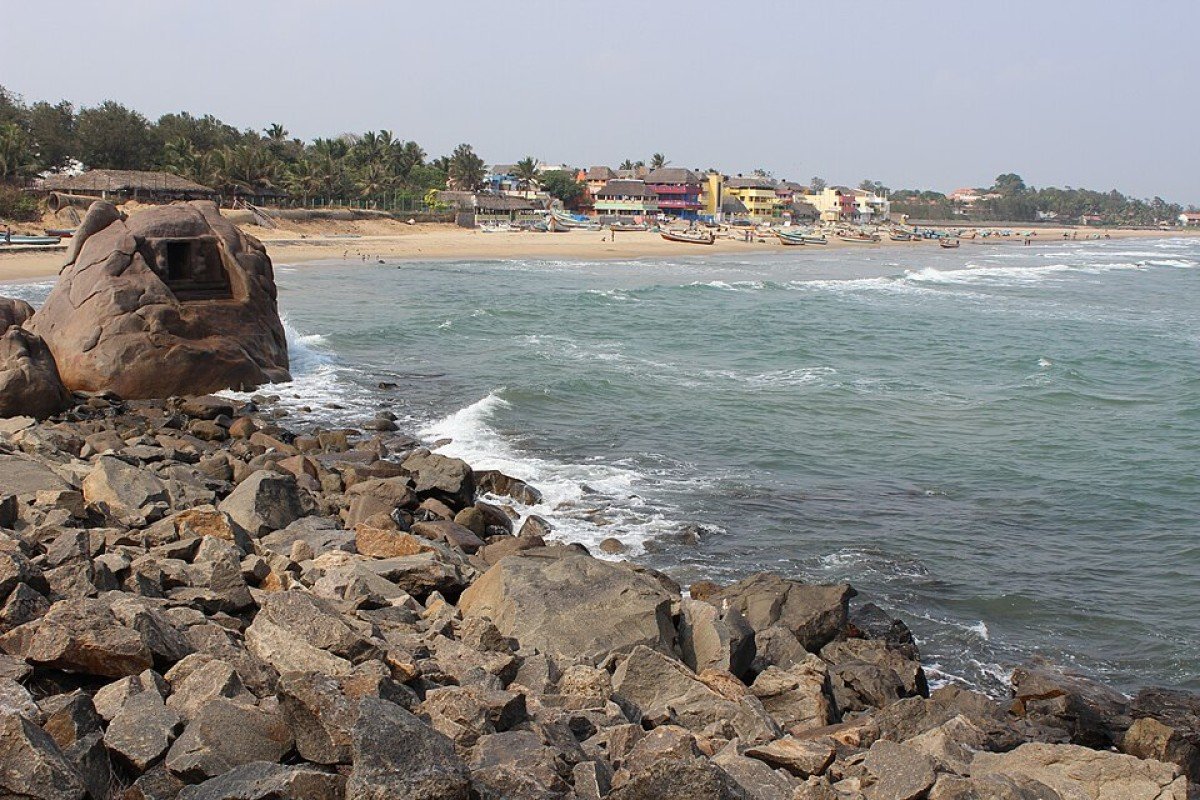
 @@ A Scenic Retreat: Tiger Cave Beach is a unique coastal destination that combines archaeological wonder with natural beauty. Located in the small village of Saluvankuppam, this beach is much quieter than the primary tourist beaches in Mahabalipuram. The shoreline is characterized by its proximity to the Tiger Cave monument, an 8th-century rock-cut temple. The beach itself features vast stretches of silver sand and is lined with casuarina trees that provide a natural canopy for picnickers. The atmosphere here is incredibly laid back, making it a favorite for those who want to read a book or simply watch the waves. The water is generally clean, though the waves can be quite vigorous at times. Visitors often enjoy the contrast between the ancient granite carvings and the modern, rhythmic pulse of the ocean. It is a popular spot for weekend travelers from Chennai who want a quick escape from the city. The beach is also a great place to observe coastal birds, especially during the early morning hours. Unlike other beaches, there is a sense of historical mystery here, as if the ancient Pallava kings once walked these very shores. The area is well-maintained by the Archaeological Survey of India (ASI), ensuring that the environment remains pristine. There are small pathways leading from the monument area directly to the water, allowing for a seamless transition from history to nature. The beach is also quite wide, providing plenty of space for children to play or for groups to gather for a sunset view. It is often considered a "local's secret" as many international tourists focus only on the main town monuments. For a traveler looking for a blend of culture, history, and seaside relaxation, this beach is an absolute must-visit during a trip to Tamil Nadu.
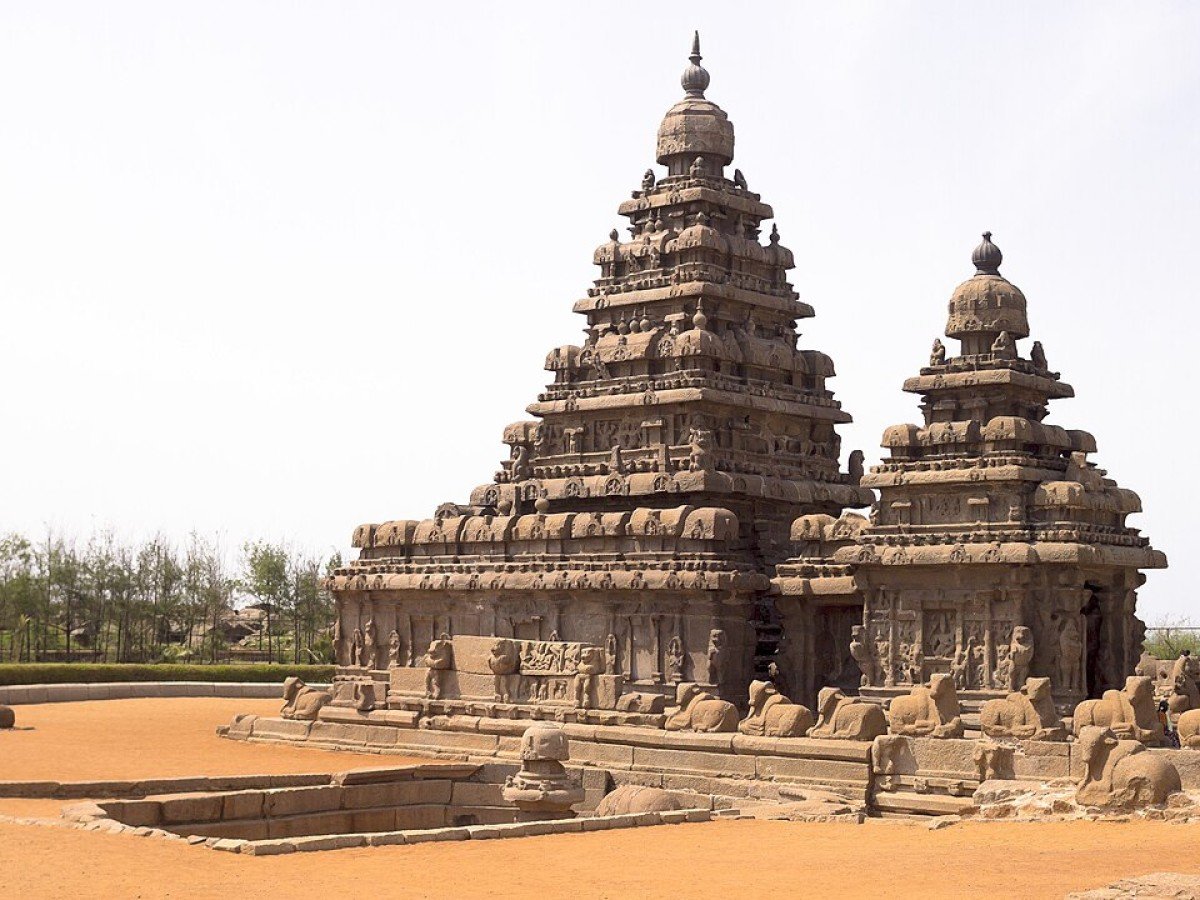
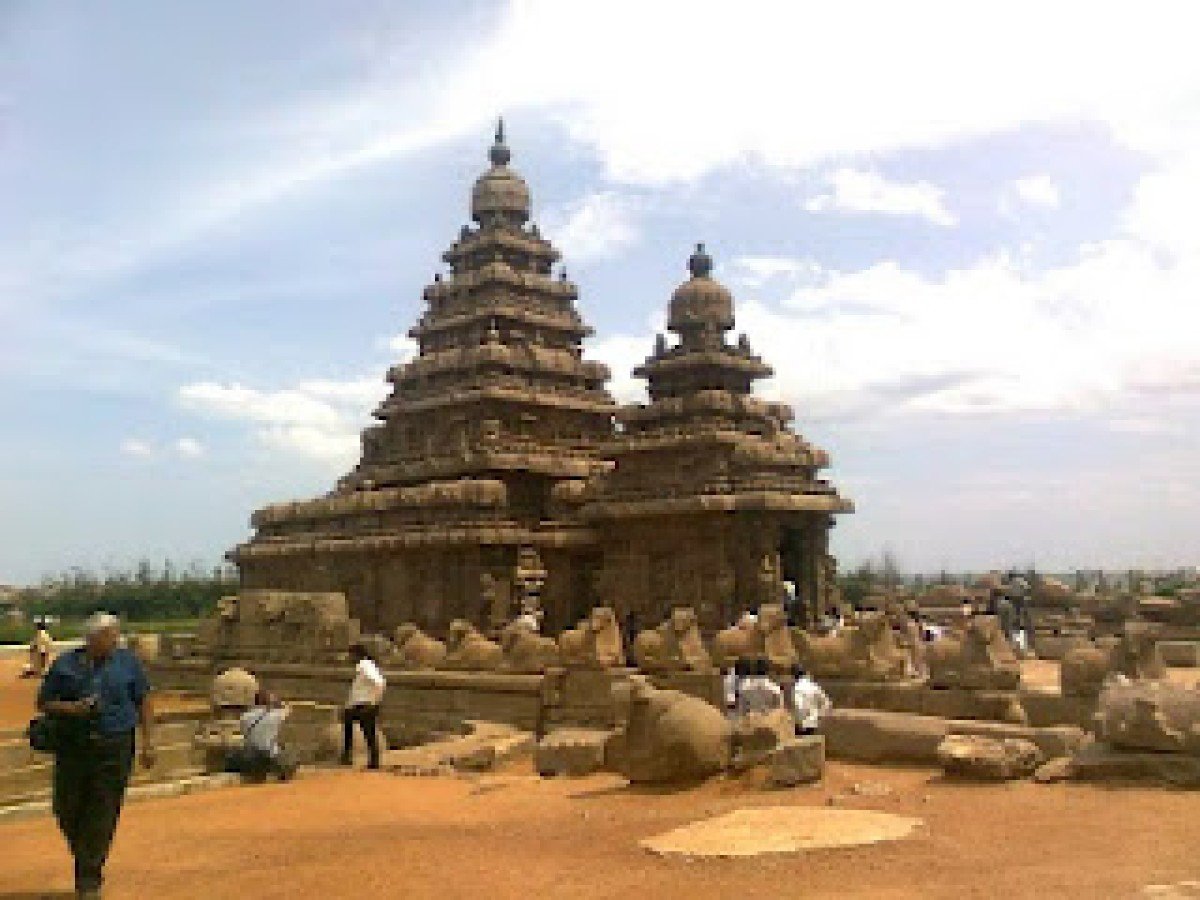
 @@Historical Context: The Temple of Seven Pagodas: The Shore Temple is arguably the most famous and iconic landmark of Mahabalipuram and the principal structural temple surviving from the Pallava period. Built in the late 7th and early 8th century AD, primarily during the reign of King Rajasimha (Narasimhavarman II), it is one of the oldest structural stone temples in South India. Before this, Pallava monuments were predominantly rock-cut caves and monolithic rathas. The temple's name, 'Shore Temple,' is derived from its unique location right on the edge of the Bay of Bengal. It is famously believed to be the sole survivor of the legendary Seven Pagodas mentioned in European travelogues, the rest of which are thought to have been submerged by the sea. This unique feature, standing against the backdrop of the sea, symbolizes the transition from the rock-cut architectural phase to the structural building phase of the Pallavas. The temple complex originally featured three shrines—two dedicated to Shiva (facing East and West) and one to Vishnu (reclining on Adisesha), reflecting the Pallava rulers' inclusive religious patronage. The temple has suffered significant erosion from the salty sea air and is now protected by a stone wall constructed by the ASI. @@Mythological Connection: The temple's historical narrative is intertwined with the myth of the submerged city, where the gods grew jealous of the city's beauty and caused a great flood. The 2004 Tsunami briefly exposed the remains of several submerged structures a few hundred meters from the coast, lending a degree of credence to the local legends and further cementing the temple's fame as a coastal wonder. The complex is now a protected UNESCO World Heritage Site.
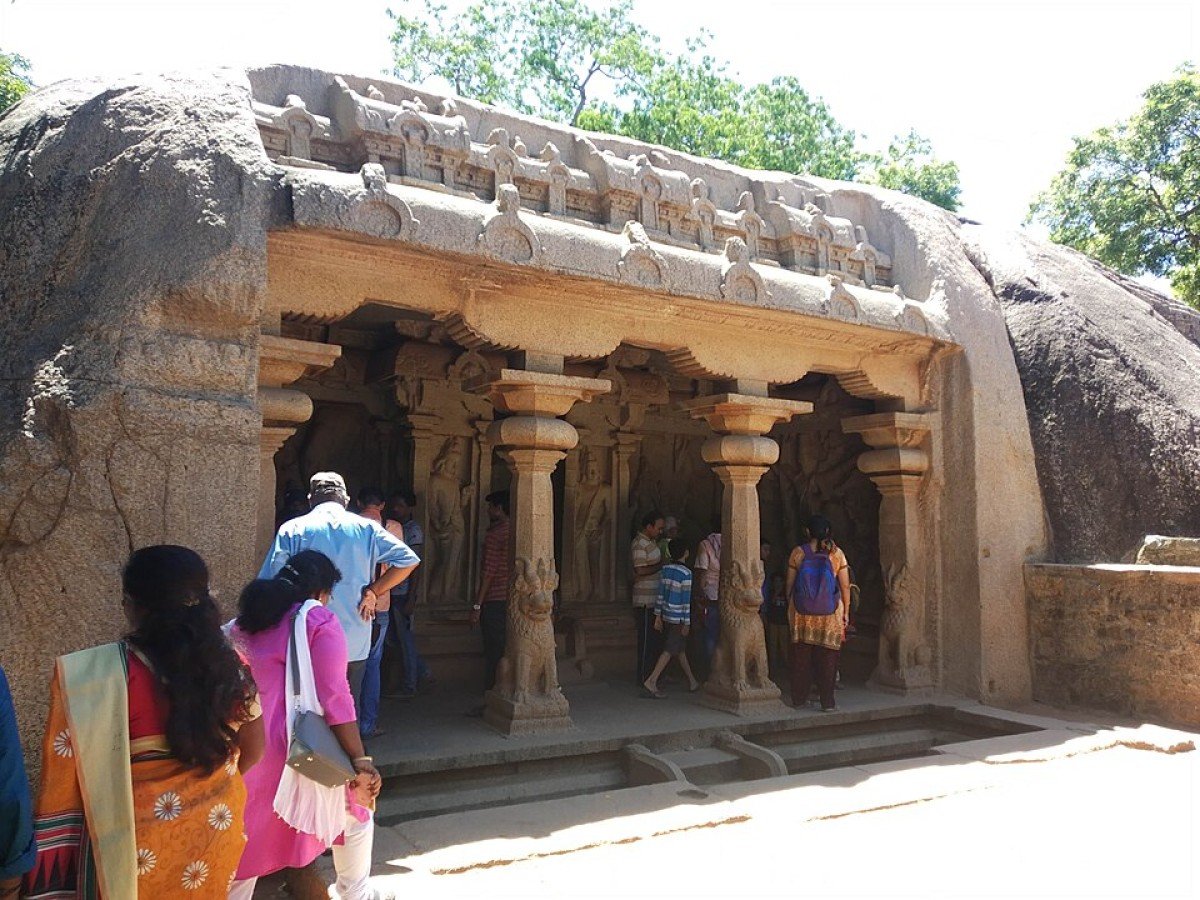
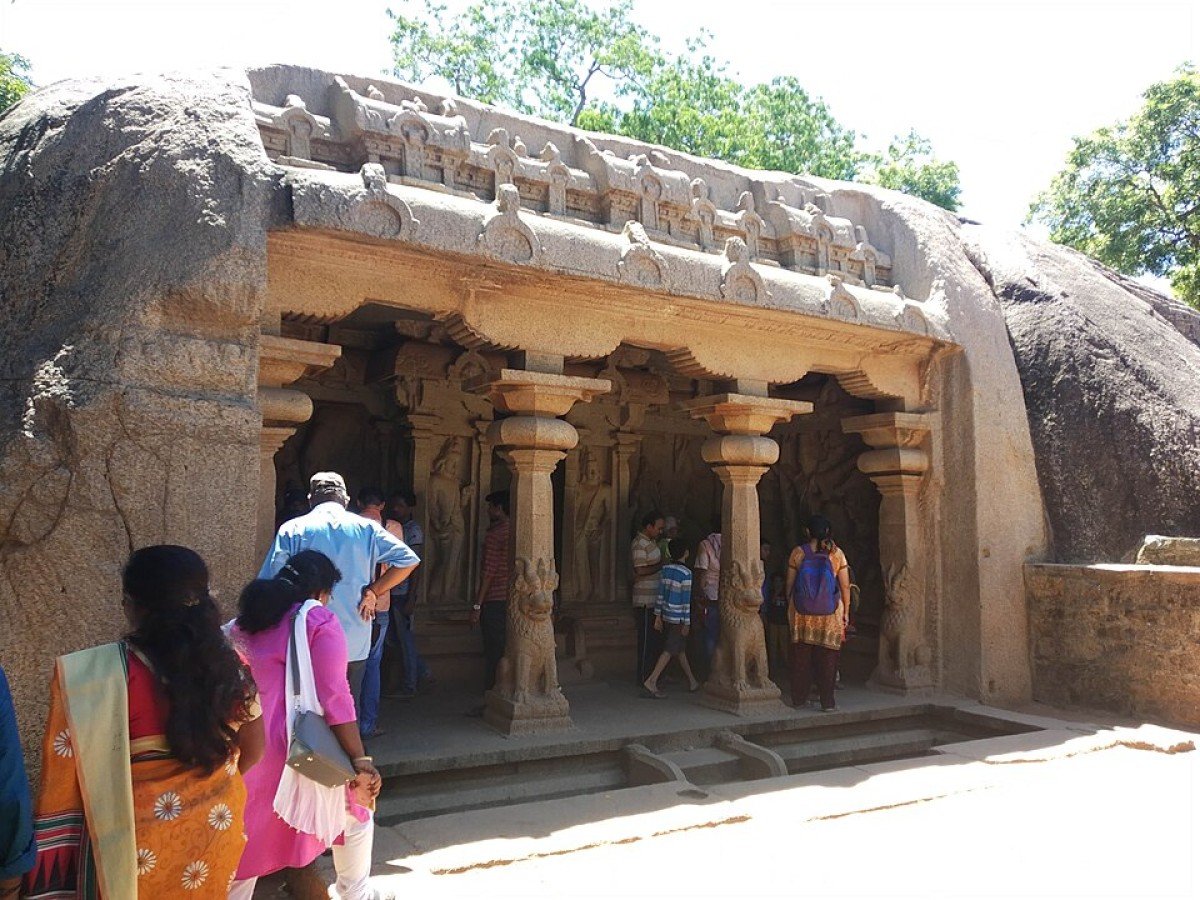
The Mahishasuramardini Cave (Mandapa) is a rock-cut cave temple from the mid-7th century Pallava period, attributed to King Narasimhavarman I (Mamalla); it is famous for its three shrines and two magnificent bas-relief panels on the lateral walls: one depicting the goddess Durga (Mahishasuramardini) battling the buffalo-demon Mahishasura, and the other showing Vishnu in his cosmic sleep (Anantasayana) on the serpent Adishesha; the central shrine originally likely held a Vishnu sculpture but now contains a Somaskanda panel (Shiva, Parvati, and Skanda), reflecting the Pallava synthesis of Shaivite and Vaishnavite traditions.
@@Historical Context: The Temple of Seven Pagodas: The Shore Temple is arguably the most famous and iconic landmark of Mahabalipuram and the principal structural temple surviving from the Pallava period. Built in the late 7th and early 8th century AD, primarily during the reign of King Rajasimha (Narasimhavarman II), it is one of the oldest structural stone temples in South India. Before this, Pallava monuments were predominantly rock-cut caves and monolithic rathas. The temple's name, 'Shore Temple,' is derived from its unique location right on the edge of the Bay of Bengal. It is famously believed to be the sole survivor of the legendary Seven Pagodas mentioned in European travelogues, the rest of which are thought to have been submerged by the sea. This unique feature, standing against the backdrop of the sea, symbolizes the transition from the rock-cut architectural phase to the structural building phase of the Pallavas. The temple complex originally featured three shrines—two dedicated to Shiva (facing East and West) and one to Vishnu (reclining on Adisesha), reflecting the Pallava rulers' inclusive religious patronage. The temple has suffered significant erosion from the salty sea air and is now protected by a stone wall constructed by the ASI. @@Mythological Connection: The temple's historical narrative is intertwined with the myth of the submerged city, where the gods grew jealous of the city's beauty and caused a great flood. The 2004 Tsunami briefly exposed the remains of several submerged structures a few hundred meters from the coast, lending a degree of credence to the local legends and further cementing the temple's fame as a coastal wonder. The complex is now a protected UNESCO World Heritage Site.
The Mahishasuramardini Cave (Mandapa) is a rock-cut cave temple from the mid-7th century Pallava period, attributed to King Narasimhavarman I (Mamalla); it is famous for its three shrines and two magnificent bas-relief panels on the lateral walls: one depicting the goddess Durga (Mahishasuramardini) battling the buffalo-demon Mahishasura, and the other showing Vishnu in his cosmic sleep (Anantasayana) on the serpent Adishesha; the central shrine originally likely held a Vishnu sculpture but now contains a Somaskanda panel (Shiva, Parvati, and Skanda), reflecting the Pallava synthesis of Shaivite and Vaishnavite traditions. @@Modern Educational Attraction:The India Seashell Museum, established by K Raja Mohamed, is a modern, privately-owned museum that proudly claims to house Asia’s largest collection of seashells, making it a unique destination in this historical town. The museum complex displays over 40,000 specimens of rare and unique seashells, marine fossils, shark teeth, and other conchological treasures sourced from all over the world. The exhibits are well-organized, offering an educational yet visually captivating journey into the world of mollusks. Beyond the main seashell exhibits, the complex often includes multiple themed attractions such as a dedicated Pearl Museum, a small Aquarium, a Dinosaur Museum (with models and fossils), and a Gem and Mineral section, catering to diverse interests. The museum aims to educate the public about marine biology and the delicate ecosystems of the ocean. It features creative sculptures made entirely from shells, including a car and a ship, showcasing the artistic possibilities of the marine environment. The museum also has a large souvenir shop, the Maya Bazaar, where visitors can purchase seashell-based artifacts, jewelry, and pearls. It stands as a significant non-archaeological attraction that complements the historical monuments of Mahabalipuram.
@@Historical Context: The Pallava Dedication to the Trinity: The Trimurti Cave Temple is a simple yet profoundly significant rock-cut cave shrine, dating back to the 7th century and built during the height of the Pallava dynasty, most likely under King Narasimhavarman I (Mamalla). Its unique importance lies in its dedication to the Hindu Holy Trinity—Brahma (The Creator), Vishnu (The Preserver), and Shiva (The Destroyer)—with all three deities given equal prominence in separate but adjoining shrines. The name 'Trimurti' literally means 'three forms,' reflecting this dedication. The cave is a quintessential example of the early Mamalla style of rock-cut architecture, which is characterized by the carving of simple halls (Mandapams) and cells (Vimanas) directly into the granite rock face. The entire monument is hewn out of a single rock, demonstrating the Pallava sculptors' mastery of converting natural rock into a sacred architectural space. The Pallava rulers' choice to dedicate a shrine to all three supreme male deities, in contrast to the later proliferation of specialized Vaishnavite or Shaivite temples, underscores their policy of religious syncretism and tolerance. The cave temple's serene and somewhat secluded position on the hillock offers a peaceful spot for visitors to appreciate the art and the spiritual balance the temple represents. @@Preservation and Legacy: The Trimurti Cave is well-preserved, though its exterior is heavily weathered. The interior carvings have survived relatively intact. It is a key piece of the UNESCO World Heritage Site and is crucial for tracing the stylistic evolution of Pallava art, acting as a precursor to the more elaborate structural temples that followed. The surrounding area is part of the archaeological park, with several other unfinished carvings nearby.
@@Modern Educational Attraction:The India Seashell Museum, established by K Raja Mohamed, is a modern, privately-owned museum that proudly claims to house Asia’s largest collection of seashells, making it a unique destination in this historical town. The museum complex displays over 40,000 specimens of rare and unique seashells, marine fossils, shark teeth, and other conchological treasures sourced from all over the world. The exhibits are well-organized, offering an educational yet visually captivating journey into the world of mollusks. Beyond the main seashell exhibits, the complex often includes multiple themed attractions such as a dedicated Pearl Museum, a small Aquarium, a Dinosaur Museum (with models and fossils), and a Gem and Mineral section, catering to diverse interests. The museum aims to educate the public about marine biology and the delicate ecosystems of the ocean. It features creative sculptures made entirely from shells, including a car and a ship, showcasing the artistic possibilities of the marine environment. The museum also has a large souvenir shop, the Maya Bazaar, where visitors can purchase seashell-based artifacts, jewelry, and pearls. It stands as a significant non-archaeological attraction that complements the historical monuments of Mahabalipuram.
@@Historical Context: The Pallava Dedication to the Trinity: The Trimurti Cave Temple is a simple yet profoundly significant rock-cut cave shrine, dating back to the 7th century and built during the height of the Pallava dynasty, most likely under King Narasimhavarman I (Mamalla). Its unique importance lies in its dedication to the Hindu Holy Trinity—Brahma (The Creator), Vishnu (The Preserver), and Shiva (The Destroyer)—with all three deities given equal prominence in separate but adjoining shrines. The name 'Trimurti' literally means 'three forms,' reflecting this dedication. The cave is a quintessential example of the early Mamalla style of rock-cut architecture, which is characterized by the carving of simple halls (Mandapams) and cells (Vimanas) directly into the granite rock face. The entire monument is hewn out of a single rock, demonstrating the Pallava sculptors' mastery of converting natural rock into a sacred architectural space. The Pallava rulers' choice to dedicate a shrine to all three supreme male deities, in contrast to the later proliferation of specialized Vaishnavite or Shaivite temples, underscores their policy of religious syncretism and tolerance. The cave temple's serene and somewhat secluded position on the hillock offers a peaceful spot for visitors to appreciate the art and the spiritual balance the temple represents. @@Preservation and Legacy: The Trimurti Cave is well-preserved, though its exterior is heavily weathered. The interior carvings have survived relatively intact. It is a key piece of the UNESCO World Heritage Site and is crucial for tracing the stylistic evolution of Pallava art, acting as a precursor to the more elaborate structural temples that followed. The surrounding area is part of the archaeological park, with several other unfinished carvings nearby. The Olakkannesvara Temple (often mistakenly called the "Old Lighthouse") is a structural temple dedicated to Lord Shiva, built in the early 8th century by the Pallava King Rajasimha (Narasimhavarman II) using cut grey granite blocks; its name means "one who has a third eye (flame eye)," referring to Lord Shiva; it is perched dramatically atop the rock hill, overlooking the Mahishasuramardini Cave below; its square plan, two-tiered superstructure, and prominent location link it directly to the architectural style of the Shore Temple complex, though it has lost its original Vimana roof structure.Show All
A UNESCO World Heritage Site, these carvings, especially the magnificent Descent of the Ganges (Arjuna's Penance), date back to the 7th-8th century Pallava period; they depict mythological tales, animals, and divine figures on massive rock faces, showcasing a high degree of artistic realism and narrative depth, particularly the detailed figures of people bathing in the river and the assembly of deities, demonstrating King Narasimhavarman I's patronage of rock-cut sculpture and the transition from cave to structural temples; the realism of the animals, like the life-size elephant, is a key highlight, offering a window into ancient Indian art and culture.
The Olakkannesvara Temple (often mistakenly called the "Old Lighthouse") is a structural temple dedicated to Lord Shiva, built in the early 8th century by the Pallava King Rajasimha (Narasimhavarman II) using cut grey granite blocks; its name means "one who has a third eye (flame eye)," referring to Lord Shiva; it is perched dramatically atop the rock hill, overlooking the Mahishasuramardini Cave below; its square plan, two-tiered superstructure, and prominent location link it directly to the architectural style of the Shore Temple complex, though it has lost its original Vimana roof structure.Show All
A UNESCO World Heritage Site, these carvings, especially the magnificent Descent of the Ganges (Arjuna's Penance), date back to the 7th-8th century Pallava period; they depict mythological tales, animals, and divine figures on massive rock faces, showcasing a high degree of artistic realism and narrative depth, particularly the detailed figures of people bathing in the river and the assembly of deities, demonstrating King Narasimhavarman I's patronage of rock-cut sculpture and the transition from cave to structural temples; the realism of the animals, like the life-size elephant, is a key highlight, offering a window into ancient Indian art and culture.Information
-
Why Famous:
Shore Temple: It is famous for its surviving structural beauty on the coastline. It has withstood the elements and the 2004 Tsunami.
Krishna's Butterball: A massive natural granite boulder perched on a slippery slope. It appears to defy gr...Shore Temple: It is famous for its surviving structural beauty on the coastline. It has withstood the elements and the 2004 Tsunami.
Krishna's Butterball: A massive natural granite boulder perched on a slippery slope. It appears to defy gravity and is a major curiosity for tourists.
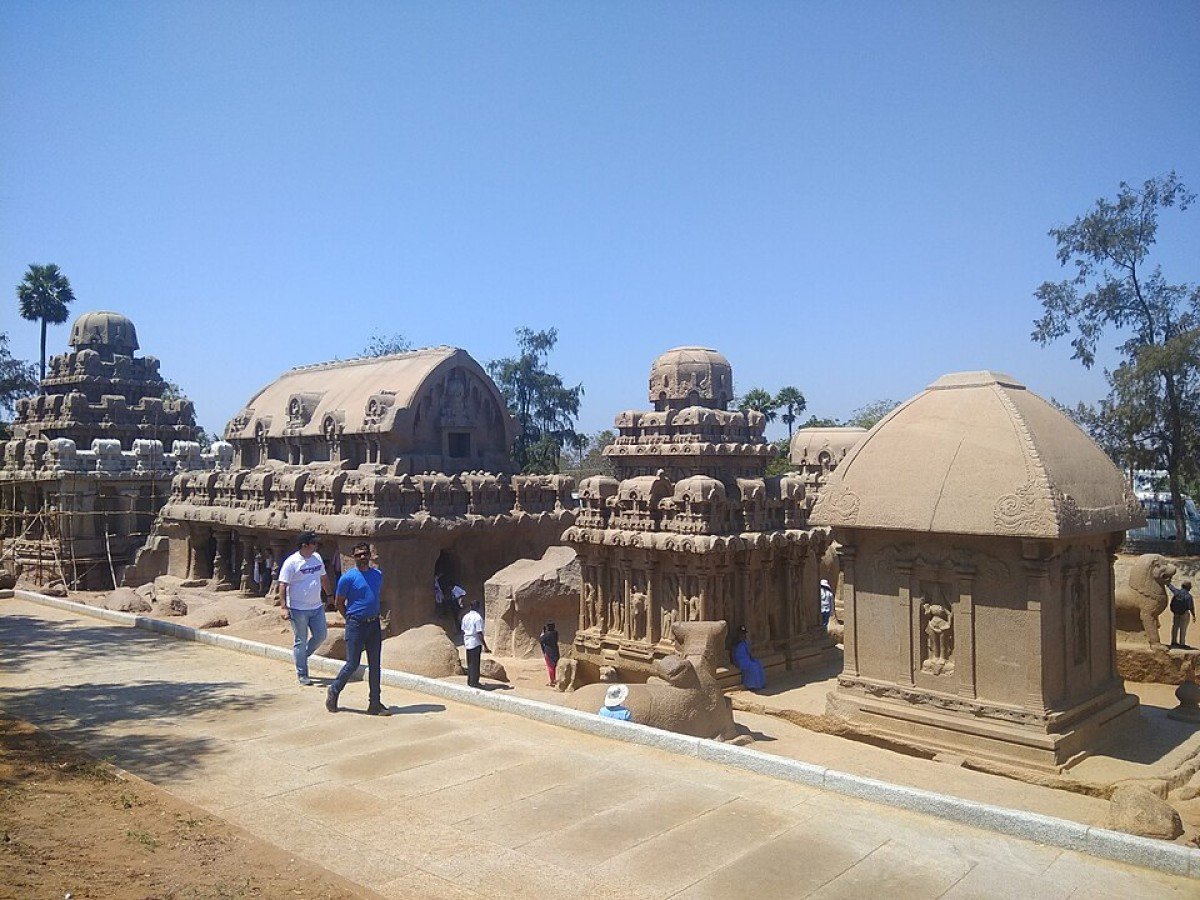
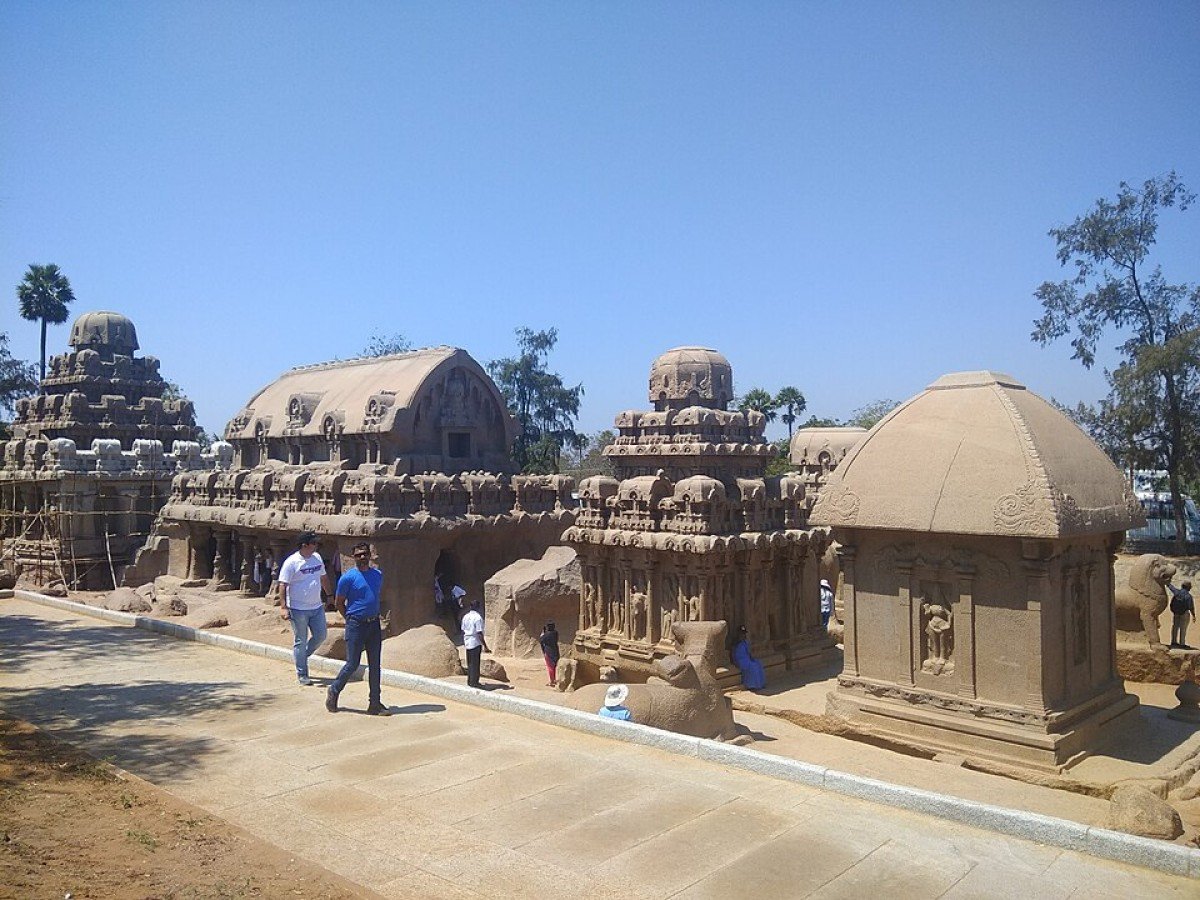
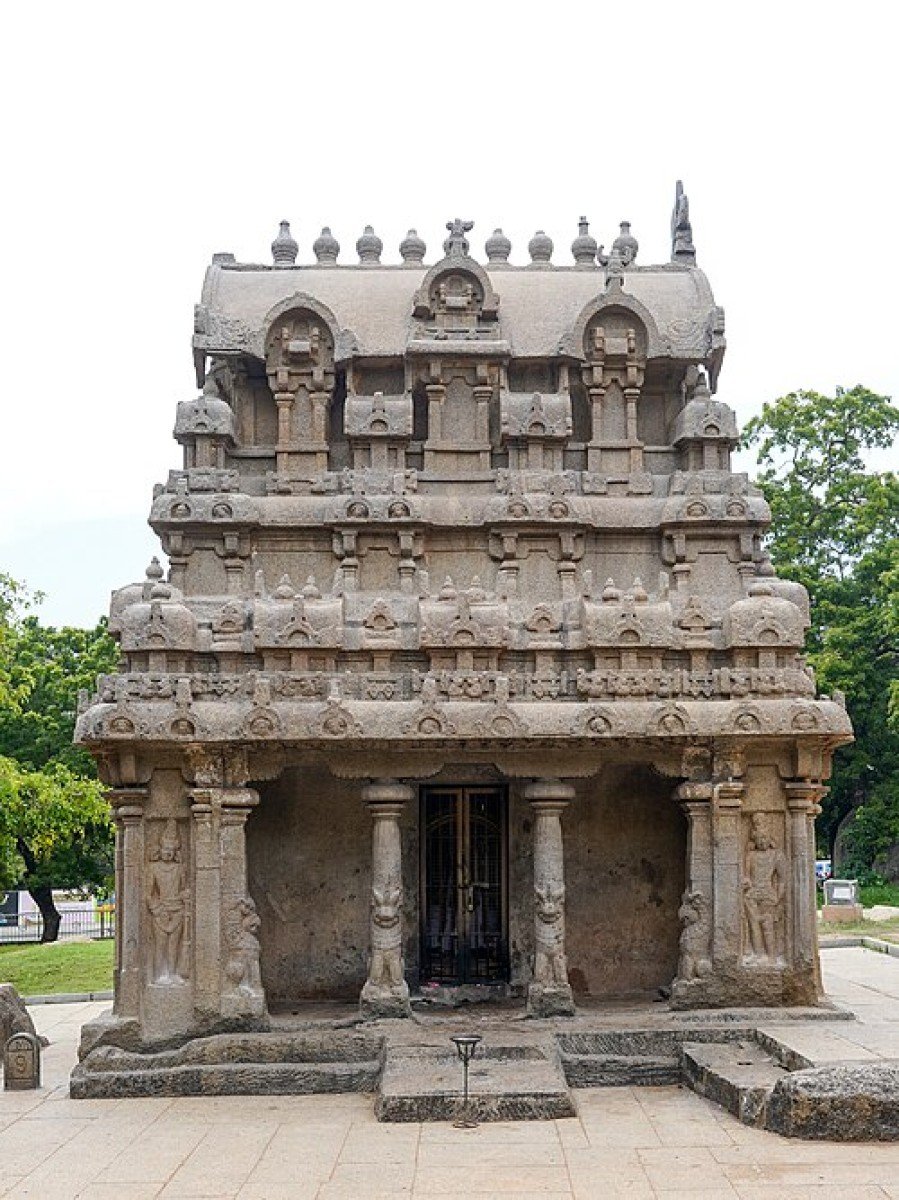
Pancha Rathas: These are famous for being architectural prototypes. They were never consecrated and were likely used as models for future temples. -
Architecture:
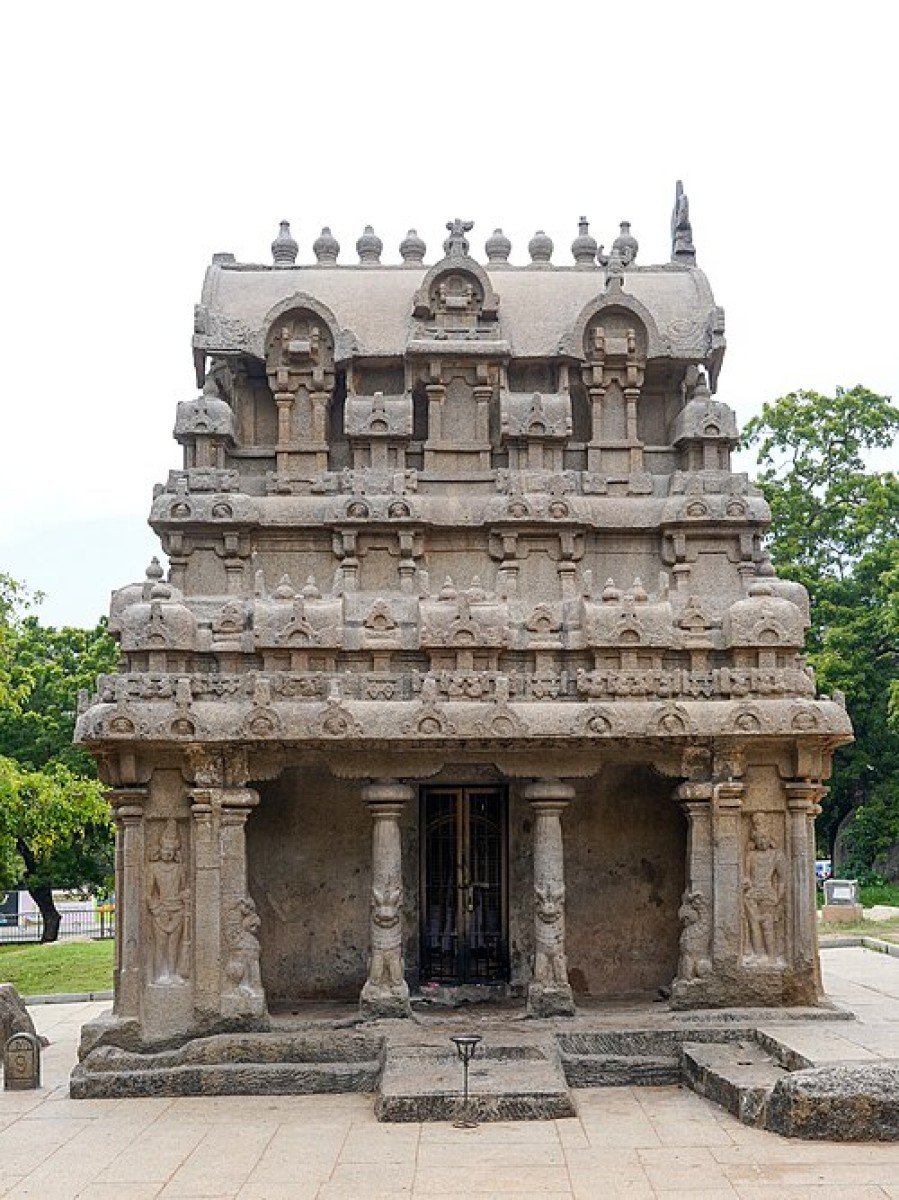
Monolithic Wonders: The Pancha Rathas are five chariot-shaped temples carved from single stones. They showcase different styles of South Indian temple architecture. Dimensions range from small shrines to large multi-story structures.
Bas-Relie...Monolithic Wonders: The Pancha Rathas are five chariot-shaped temples carved from single stones. They showcase different styles of South Indian temple architecture. Dimensions range from small shrines to large multi-story structures.
Bas-Reliefs: Arjuna's Penance is one of the world's largest open-air rock reliefs. It measures 96 feet long by 43 feet high. It depicts hundreds of figures, including life-sized elephants.
Structural Innovation: The Shore Temple is one of the oldest structural stone temples in South India. It used blocks of granite rather than being carved from a hill. Its pyramidal towers reach a height of 60 feet. -
How To Reach:
By Air: Chennai International Airport is only 55 KMS away. A taxi via the East Coast Road takes about 90 minutes.
By Train: Chengalpattu is the nearest station (29 KMS). However, most travelers arrive via Chennai Central and take a bus or ...By Air: Chennai International Airport is only 55 KMS away. A taxi via the East Coast Road takes about 90 minutes.
By Train: Chengalpattu is the nearest station (29 KMS). However, most travelers arrive via Chennai Central and take a bus or taxi.
By Road: It is perfectly connected to Chennai and Pondicherry via the ECR. State buses are frequent, cheap, and quite reliable.
Local Transport: The town is small and best explored on foot or by bicycle. Autos are available for longer distances to Tiger Cave. -
Weather and Best Time to Visit:
Winter Months: November to February is the peak season. The weather is cool and dry, perfect for walking among the stone monuments.
Early Morning: 6:00 AM to 8:30 AM is best to beat the heat and crowds. The soft morning light is also best ...Winter Months: November to February is the peak season. The weather is cool and dry, perfect for walking among the stone monuments.
Early Morning: 6:00 AM to 8:30 AM is best to beat the heat and crowds. The soft morning light is also best for seeing the carvings clearly.
Monsoon Time: October and November can be rainy but the monuments look fresh. The greenery around the rocks becomes very vibrant. -
Near Tourist Places:
Chennai City (55 KMS), Pondicherry (95 KMS), Tiger Cave (5 KMS), Crocodile Bank (14 KMS), DakshinaChitra (25 KMS), Kanchipuram (65 KMS), Covelong Beach (20 KMS), Vedanthangal Bird Sanctuary (55 KMS), Muttukadu (22 KMS), Sadras Fort (15 KMS).
Tourism Tips
-
Sun Protection: There is very little shade among the monuments. Carry an umbrella, wear a hat, and apply plenty of sunscreen.
Footwear: You will need to walk a lot on uneven terrain. Wear comfortable walking shoes or sandals that are easy ...Sun Protection: There is very little shade among the monuments. Carry an umbrella, wear a hat, and apply plenty of sunscreen.
Footwear: You will need to walk a lot on uneven terrain. Wear comfortable walking shoes or sandals that are easy to remove at temples.
Hiring Guides: Authorized guides are available at the entrance. They are essential to understand the complex stories behind the carvings.
Cash and Payments: Most ticket counters now accept digital payments. However, keep some cash for local shopping and small eateries.
Reviews
FAQs
Mahabalipuram Itineray And Cost:-
Other Places In Tamil Nadu :-
Other States In India :-
Information about New and Updated Locations() of Tamil Nadu Has Been Added :-
Card subtitle
Note:-
Information provided here in good Faith and for reference only.
Near Places
Chennai
Some quick example text to build on the card title and make up the bulk of the card's content.
Go somewhere
Chidambaram
Some quick example text to build on the card title and make up the bulk of the card's content.
Go somewhere
Coimbatore
Some quick example text to build on the card title and make up the bulk of the card's content.
Go somewhere
Courtallam
Some quick example text to build on the card title and make up the bulk of the card's content.
Go somewhere
Dindigul
Some quick example text to build on the card title and make up the bulk of the card's content.
Go somewhere
Kanchipuram
Some quick example text to build on the card title and make up the bulk of the card's content.
Go somewhere
Kanyakumari
Some quick example text to build on the card title and make up the bulk of the card's content.
Go somewhere
Karaikal
Some quick example text to build on the card title and make up the bulk of the card's content.
Go somewhere
Karaikudi
Some quick example text to build on the card title and make up the bulk of the card's content.
Go somewhere
Kodaikanal
Some quick example text to build on the card title and make up the bulk of the card's content.
Go somewhere
Kovalam
Some quick example text to build on the card title and make up the bulk of the card's content.
Go somewhere
Kumbakonam
Some quick example text to build on the card title and make up the bulk of the card's content.
Go somewhere
Madurai
Some quick example text to build on the card title and make up the bulk of the card's content.
Go somewhere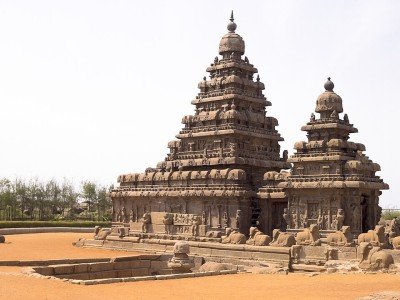
Mahabalipuram
Some quick example text to build on the card title and make up the bulk of the card's content.
Go somewhere
Masinagudi
Some quick example text to build on the card title and make up the bulk of the card's content.
Go somewhere
Nagapattinam
Some quick example text to build on the card title and make up the bulk of the card's content.
Go somewherein Other Cities