

Maharani Shri Gomati Kund
General information
-
Ideal Duration:
30 to 45 minutes (for quiet contemplation, photography, and reading the nearby historical plaques).Place Type:
Historical, Architectural, Religious, Water Body (Entry Fees:
The Maharani Shri Gomati Kund does not have a separate entry fee; the cost is included in the mandatory admission ticket for Chittorgarh Fort. The pricing structure is segmented for different categories of visitors and also includes fees for vehicles and any optional attractions.The Maharani Shri Gomati Kund does not have a separate entry fee; the cost is included in the mandatory admission ticket for Chittorgarh Fort. The pricing structure is segmented for different categories of visitors and also includes fees for vehicles and any optional attractions.
Mandatory Fort Entry Ticket (Inclusive of Kund): The entry ticket for Chittorgarh Fort covers access to all major sites within the complex, including the Gomati Kund, Vijay Stambh, Kirti Stambh, and all palaces and temples. The fee structure aims to support the maintenance of this vast UNESCO World Heritage Site.
The current charges are:
Indian Citizens (Adults): Approximately Rs.40 per person.
Foreign Nationals (Adults): Approximately Rs.600 per person (reflecting the higher maintenance and preservation costs associated with heritage sites in India and the principle of differentiated pricing). Children (Under 15): Generally, children under the age of 15 are allowed free entry, encouraging family visits to historical landmarks.
Additional Costs to Consider: While the Kund itself has no separate charge, visitors must factor in the cost of reaching the spot within the massive fort. There is often a nominal fee for bringing a car or two-wheeler inside the fort complex, typically around Rs.40 to Rs.100. For those opting for a full guided tour to fully appreciate the Kund's history, a certified Government Guide will charge an additional fee, usually between Rs.400 to Rs.800 for a full fort tour that can last 3-4 hours. Finally, the evening Light and Sound Show, which narrates the fort's history and would give context to the Kund, is a separate ticketed event, usually costing around Rs.100 to Rs.200 per person. The total outlay is minimal for such a vast and historically significant site.Timing:
The Maharani Shri Gomati Kund adheres to the general operating hours of Chittorgarh Fort, but the best time to visit is determined by the need to avoid crowds and the heat.
Regular Timings (Fort Hours): The Chittorgarh Fort is typically open to visitors from 9:00 A...The Maharani Shri Gomati Kund adheres to the general operating hours of Chittorgarh Fort, but the best time to visit is determined by the need to avoid crowds and the heat.
Regular Timings (Fort Hours): The Chittorgarh Fort is typically open to visitors from 9:00 AM to 6:00 PM daily, throughout the year. The Gomati Kund is accessible during these hours. The ticket counter generally opens by 9:00 AM, but visitors who enter early will have a more peaceful experience at the Kund. Note that access to the fort is determined by daylight hours, and the main gates are closed shortly after the closing time.
Ideal Visit Time (Best Experience): The most ideal time to visit the Gomati Kund is in the early morning, specifically between 9:00 AM and 10:30 AM, or in the late afternoon, between 4:30 PM and 6:00 PM.
Morning Visit: Visiting early offers the benefits of cooler temperatures and minimal crowds, allowing for quiet contemplation and undisturbed photography of the waterRs.s reflections. The morning light also casts beautiful, dramatic shadows on the steps and walls of the Kund.
Afternoon Visit: The late afternoon provides the stunning "golden hour" light, perfect for capturing the textures of the stone and the serene ambiance. It's the best time for photography as the light is less harsh, giving the ancient stones a warm, golden hue before the fort closes.
Time to Avoid: The period between 11:00 AM and 4:00 PM is the least ideal, as the sun is harshest, and the crowds are typically at their peak, diminishing the quiet, reflective experience that the Kund offers.
Daily Cycles and Seasonality: The Kund's appearance also changes seasonally. After the monsoon (July to September), the water level is at its fullest and the surrounding area is greener, offering a more vibrant and lush sight. In the peak winter months (November to FebruarySpecial Events:
While no single, large, globally famous annual festival is dedicated solely to the Gomati Kund itself, its connection to the fort's major commemorative event and its general spiritual function make it a site of special activities.
Jauhar Mela Connection: The most s...While no single, large, globally famous annual festival is dedicated solely to the Gomati Kund itself, its connection to the fort's major commemorative event and its general spiritual function make it a site of special activities.
Jauhar Mela Connection: The most significant event related to the history of Chittorgarh Fort is the annual Jauhar Mela, held usually in the month of March or April (Chaitra month in the Hindu calendar). This event commemorates the great sacrifices (Jauhar) of the Rajput women, including Rani Padmini, who preferred death over dishonor. As a crucial water source and a probable site for the ritualistic purification of the royal women, the Gomati Kund becomes an important, though secondary, point of reverence during this time. Local devotees and royal descendants may include the Kund in their procession or perform smaller, private puja ceremonies here to honor the ancestral spirit and the purity of the water that sustained them. The atmosphere is solemn, focused on remembrance and paying homage to the unparalleled valor of the fort's inhabitants.
Rituals and Holy Dips (Local Practice): For local Hindu and Jain devotees, the Gomati Kund is a special spot for ritualistic purity. It is considered sacred due to its age and location within the holy fortress. On auspicious days, such as Purnima (Full Moon) or days dedicated to Goddess Kali (especially during Navaratri), some visitors may perform minor ablutions or collect the water for religious purposes. This happens on a smaller, more intimate scale than the famous Gaumukh Reservoir, making it a special, less-publicized religious event. The practice of seeking a holy dip or sprinkling the head with the Kund's water is a special act of piety for those who know of its history and religious significance, connecting it to a spiritual tradition that predates modern tourism.Best Photo Spots:
The Maharani Shri Gomati Kund offers several distinct and powerful viewpoints for photography, focusing on texture, reflection, and architectural geometry. 1.
The Corner Reflection View: The best photo spot is often from one of the upper corners of the Kund, parti...The Maharani Shri Gomati Kund offers several distinct and powerful viewpoints for photography, focusing on texture, reflection, and architectural geometry. 1.
The Corner Reflection View: The best photo spot is often from one of the upper corners of the Kund, particularly the one that provides an unobstructed diagonal view across the water body towards the opposite walls. This vantage point allows for a captivating composition that captures the sheer scale of the tank. The foreground will feature the textured, weathered stone paving, leading the eye down the geometric lines of the stone steps. The still water acts as a massive natural mirror, perfectly reflecting the sky, the fortRs.s high walls, and any nearby structures. To maximize the 'reflection' effect, visit in the early morning or late afternoon when the light is softer and the water is completely undisturbed by wind. Use a polarizing filter to enhance the depth of the water and the color of the sky. 2.
The Geometric Steps Viewpoint: Stand directly above the center of one of the main staircases and point the camera downward. This angle, sometimes referred to as a top-down perspective, emphasizes the geometric pattern of the descending Ghats. The rhythm of the stone steps creates leading lines that pull the viewerRs.s eye into the dark depths of the water. This spot is perfect for showcasing the brilliant Rajput architecture of water management. The contrast between the sunlit upper steps and the shadowed lower portions offers a dramatic study in light and shadow. A wide-angle lens can be particularly effective here to exaggerate the scale and the receding lines of the steps. 3.
The Water and Sky Contrast: Find a spot on the edge where the mossy green water meets the stone walls. Focus on the sharp contrast between the vibrant blue of the Rajasthan sky (especially clear between October and March) and the deep, mysterious hue of the Kund water. This composition is less about the architecture and more about the colors and the element of water. Frame the shot to include a slice of the upper rampart walls to provide context, but let the primary focus be the juxtaposition of the ancient stone and the life-giving water, a symbol of the fort's enduring spirit. This spot works exceptionally well around noon when the sun is directly overhead, intensifying the colors.Photo Gallery
Things To Do
-
The Maharani Shri Gomati Kund and its surroundings offer a rich experience that combines history, spiritual contemplation, and architectural appreciation. 1.
Historical and Architectural Study: Spend time walking around the perimeter of the Kund. Observe the massive scale of the stone masonry. This is a primary activityRs.to appreciate the civil engineering of the 15th-16th century Rajputs. Look closely at the stone steps (Ghats) leading down to the water. Count the number of levels and imagine the water level during a severe drought or a siege. Look for any visible remnants of the water channels or inlet points that directed rainwater runoff into the tank from the upper plateau of the fort. Consider how the texture and color of the local sandstone contributes to the fortRs.s overall defensive and aesthetic character. Reflect on the strategic import...
Information
-
Why Famous:
The Maharani Shri Gomati Kund is primarily famous for its crucial role in the fort's water self-sufficiency and its connection to the fort's sacred and royal history.
Strategic Water Source: The fort's enduring fame is its ability to withstand prolonged sieges. T...The Maharani Shri Gomati Kund is primarily famous for its crucial role in the fort's water self-sufficiency and its connection to the fort's sacred and royal history.
Strategic Water Source: The fort's enduring fame is its ability to withstand prolonged sieges. The fort had numerous water bodies, and the Gomati Kund, along with the Gaumukh Reservoir, formed the lifeline for the thousands of soldiers, royalty, and common folk who took refuge within the walls. Its fame is tied to its sheer capacity to store water for years, a strategic marvel of Rajput defense planning. This large, man-made tank epitomizes the resourcefulness of the Mewar rulers, turning a high, arid hilltop into a viable capital.
Connection to Royal Women's Rituals: The prefix "Maharani Shri" solidifies its connection to the queens and royal women of Mewar. It is believed to be the site where the ranis performed their daily puja (worship) and sacred rituals. This link to the private, spiritual life of the royal ladies, particularly in a fort famed for the ultimate sacrifice (Jauhar) made by women like Rani Padmini, imbues the Kund with a strong historical and emotional resonance. Its fame is thus connected to the stories of piety, honor, and resilience of Rajput womanhood.
Architectural Testimony: Although less ornate than the palaces or temples, the sheer scale and engineering of the Kund make it famous among history and architecture enthusiasts. It is an important site for understanding the practical, defensive, and large-scale civil engineering projects undertaken by the Rajputs to ensure their survival and self-reliance against invaders. -
Architecture:
The Maharani Shri Gomati Kund is an exemplary piece of traditional Rajput water architecture, characterized by its practical yet structurally robust design. It is essentially a large, rectangular or near-square stepwell or tank (Kund) excavated into the rock of the hill or built with massive, dress...The Maharani Shri Gomati Kund is an exemplary piece of traditional Rajput water architecture, characterized by its practical yet structurally robust design. It is essentially a large, rectangular or near-square stepwell or tank (Kund) excavated into the rock of the hill or built with massive, dressed stone blocks.
Design and Dimensions: While exact dimensions can vary, such large water tanks typically span tens of meters in length and width, often reaching depths of 10 to 15 meters to maximize water storage capacity. The Kund features a series of descending steps (Ghats) on one or more sides, which allowed access to the water as the level fluctuated, a common feature in ancient Indian water architecture. These steps are functional, providing easy access for drawing water, bathing, and performing religious rituals. The use of locally sourced Vindhyan Quartzitic Sandstone, common in Chittorgarh Fort construction, provides the tank with its characteristic rugged, enduring aesthetic. The masonry is often simple and utilitarian, emphasizing stability and durability over elaborate ornamentation, which was reserved for temples and palaces.
Water Harvesting and Engineering: The primary architectural marvel lies in its water harvesting and storage engineering. The tank was strategically positioned within the fort's natural catchment area to collect maximum monsoon rainwater runoff from the plateau. The surrounding stone pavement and channels often directed water directly into the tank, preventing erosion and maximizing collection. This system showcases the sophisticated knowledge of hydrology and geology possessed by the ancient Rajput builders. The construction is entirely reliant on solid stone masonry, utilizing a dry-stone or minimal mortar technique for the massive retaining walls, a technique that allows for slight shifting without structural failure, crucial for structures holding such a vast volume of water. The tank's ability to retain water for extended periods, despite the dry climate, is a testament to the impermeability of its construction and its geological placement, making it a critical strategic asset in a siege scenario. -
How To Reach:
The Maharani Shri Gomati Kund is located inside the Chittorgarh Fort, a UNESCO World Heritage Site. Reaching it requires a journey to Chittorgarh city and then a local transfer up to and within the fort.
By Air: The nearest major airport is Maharana Pratap Airport... -
Near Tourist Places:
These places are located within or immediately near the fort complex, easily accessible from Maharani Shri Gomati Kund. Serial No. Other Place Name Distance (Approx. )
:
:
: 1 Gaumukh Reservoir 200 Meters 2 Rana Kumbha Palace 500 Meters 3 Kalika Mata Temple 800 Meters 4 Fateh Prakash Palace Museum 1. 0 KM 5 Tower of Victory (Vijay Stambh) 1. 2 KM 6 Meera Temple 1. 3 KM 7 Padmini's Palace 2. 5 KM 8 Kirti Stambh (Tower of Fame) 2. 0 KM 9 Ratan Singh Palace 3. 0 KM 10 Jain Temples (Sattis Deori Temple) 1. 5 KM
Tourism Tips
-
A visit to the Maharani Shri Gomati Kund and Chittorgarh Fort requires careful planning to ensure a comfortable, safe, and enriching historical experience.
Health & Safety: The immense size of the fort and the harsh Rajasthani climate necessitate careful health and...
Reviews
Maharani Shri Gomati Kund Tourism:-
Information about New and Updated Locations(675+) of Rajasthan Has Been Added :-
Card subtitle
Note:-
Information provided here in good Faith and for reference only.
All information and pictures will be updated soon, please keep visiting.
Near Places
Chittorgarh Fort
Some quick example text to build on the card title and make up the bulk of the card's content.
Go somewhere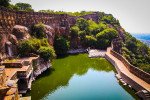
Gaumukh Kund
Some quick example text to build on the card title and make up the bulk of the card's content.
Go somewhere
Padmini's Palace
Some quick example text to build on the card title and make up the bulk of the card's content.
Go somewhere
Archeological Museum
Some quick example text to build on the card title and make up the bulk of the card's content.
Go somewhere
Bassi Wildlife Sanctuary
Some quick example text to build on the card title and make up the bulk of the card's content.
Go somewhere
Bhainsrorgarh Fort
Some quick example text to build on the card title and make up the bulk of the card's content.
Go somewhere
Bhainsrorgarh Wildlife Sanctuary
Some quick example text to build on the card title and make up the bulk of the card's content.
Go somewhere
Bhimlat Kund
Some quick example text to build on the card title and make up the bulk of the card's content.
Go somewhere
Fateh Prakash Palace
Some quick example text to build on the card title and make up the bulk of the card's content.
Go somewhere
Fateh Prakash Palace Museum
Some quick example text to build on the card title and make up the bulk of the card's content.
Go somewherein Other Cities