Mawsynram
General information
-
Ideal Duration:
1-2 DaysPlace Type:
Adventure & NatureEntry Fees:
Cave Entry: A nominal fee of INR 20 to INR 30 is charged for maintenance and lighting. This is usually managed by a local committee.
Trekking Guides: For exploring nearby caves or fossil parks, guides may charge INR 500 to INR 1000 dependin...Cave Entry: A nominal fee of INR 20 to INR 30 is charged for maintenance and lighting. This is usually managed by a local committee.
Trekking Guides: For exploring nearby caves or fossil parks, guides may charge INR 500 to INR 1000 depending on the duration.Timing:
Regular Timings: Mawjymbuin Cave is open from 8:00 AM to 5:00 PM. The village itself is best explored during daylight hours for safety.
Ideal Visit Time: For the "rainy experience," visit in June or July. For sightseeing and views, the pos...Regular Timings: Mawjymbuin Cave is open from 8:00 AM to 5:00 PM. The village itself is best explored during daylight hours for safety.
Ideal Visit Time: For the "rainy experience," visit in June or July. For sightseeing and views, the post-monsoon months of October and November are best.Special Events:
Wangala Festival: Though a Garo festival, it is celebrated by some communities with 100 drums. It marks the end of the harvest and is a time of great joy and music.
Monsoon Festival: Special events are sometimes organized in June/July to ce...Wangala Festival: Though a Garo festival, it is celebrated by some communities with 100 drums. It marks the end of the harvest and is a time of great joy and music.
Monsoon Festival: Special events are sometimes organized in June/July to celebrate the arrival of the heavy rains, showcasing local crafts and music.Best Photo Spots:
Cave Entrance: The moss-covered rocks at the entrance of Mawjymbuin provide a prehistoric look. The natural light filtering in creates a dramatic effect.
Rolling Green Plateaus: The vast green expanses under a cloudy sky are perfect for wid...Cave Entrance: The moss-covered rocks at the entrance of Mawjymbuin provide a prehistoric look. The natural light filtering in creates a dramatic effect.
Rolling Green Plateaus: The vast green expanses under a cloudy sky are perfect for wide landscape shots. The contrast between the grass and the dark clouds is striking.
Bangladesh Viewpoint: The high cliffs overlooking the plains offer a sense of infinity. Sunset here, if the clouds clear, is a once-in-a-lifetime photo opportunity.Photo Gallery
Things To Do
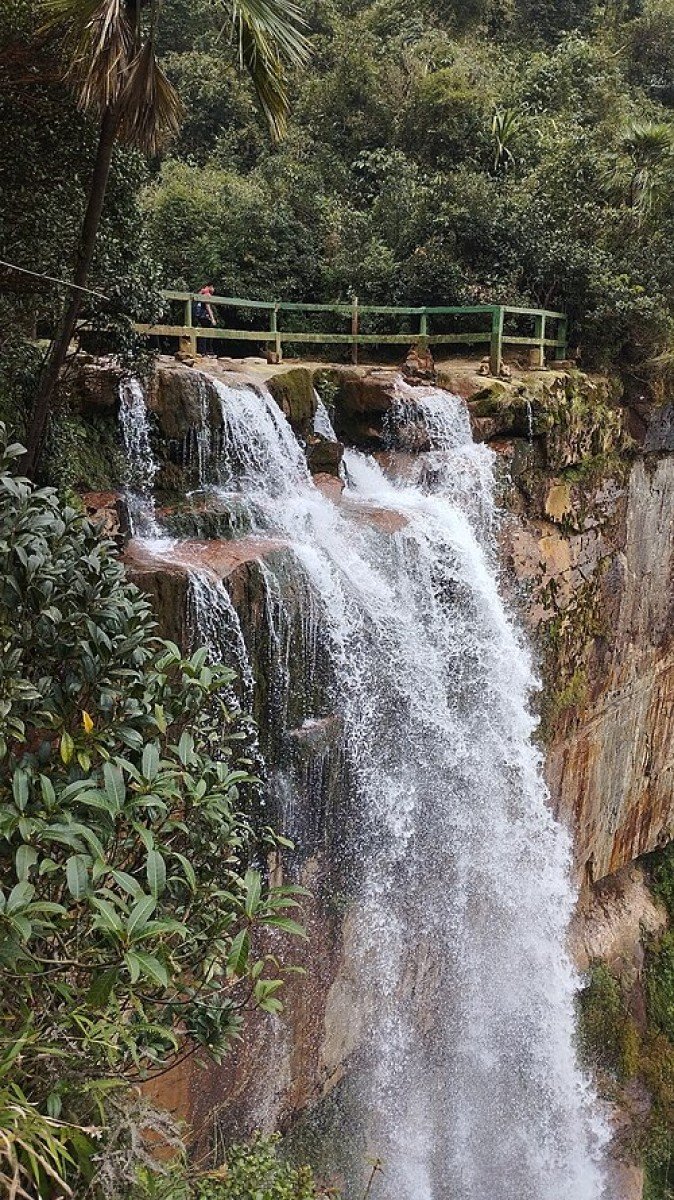
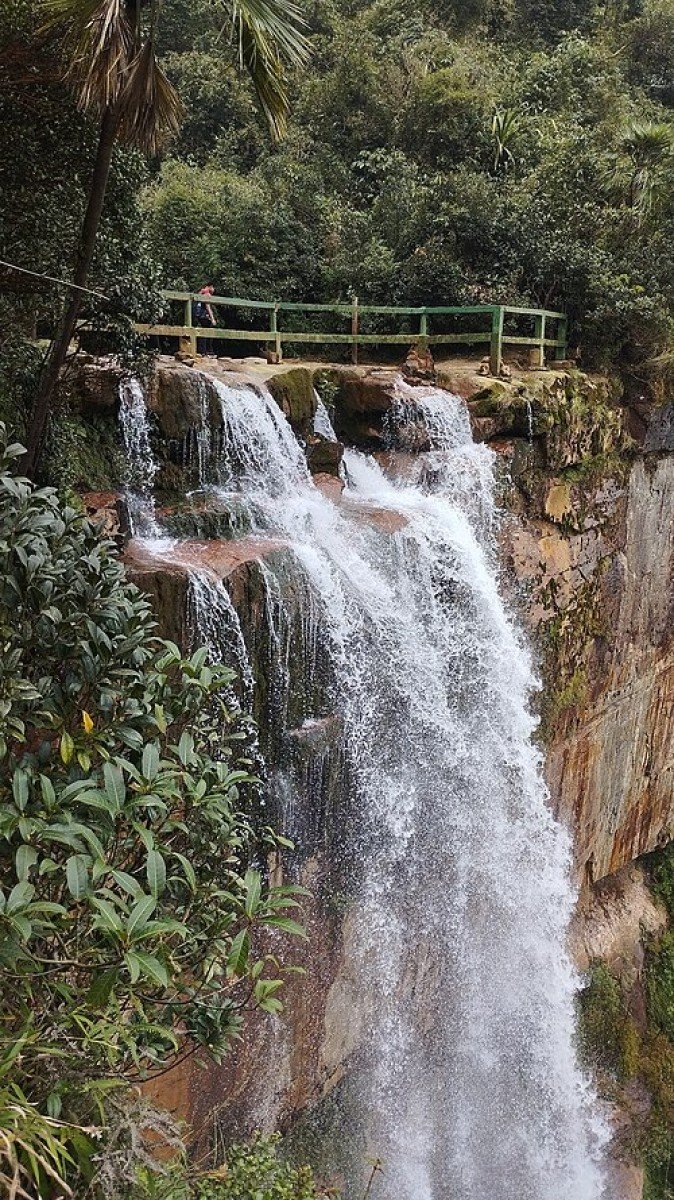
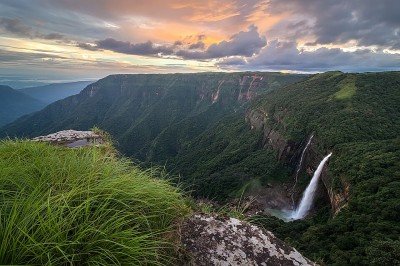 Nohkalikai Falls is the highest plunge waterfall in India, standing at a staggering height of 340 meters. It is located on the edge of the Cherrapunji plateau, a short drive from Mawsynram. The name "Nohkalikai" translates to "Jump of Ka Likai," linked to a tragic local legend about a woman named Likai who leapt off the cliff. The sight of the water falling in a single, uninterrupted stream into a deep green pool below is breathtaking. The pool's color changes from emerald green to turquoise depending on the season and lighting. Clouds often dance around the mouth of the falls, creating a mystical atmosphere. The viewpoint offers a panoramic perspective of the entire valley and the distant plains of Bangladesh. During the monsoon, the waterfall becomes a roaring giant, while in winter, it turns into a delicate white thread. There are several trekking trails nearby that lead to the edge or the bottom of the falls for the more adventurous. The surrounding area is dotted with small shops selling local spices and handicrafts. It remains an iconic symbol of the raw power of nature in Northeast India.
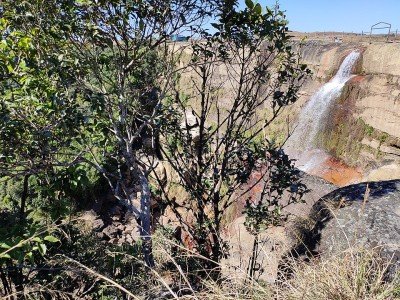 Dainthlen Falls is one of the most powerful and culturally significant waterfalls in Meghalaya. Unlike many falls where you watch from a distance, here you can walk right onto the rocky bed of the river that feeds the plunge. The falls are named after a legendary giant snake called Thlen that once terrorized the local villagers. According to Khasi folklore, the villagers finally caught and slaughtered the snake on the flat rocky surface near the waterfall to bring peace to the region. The rocks here are marked with natural indentations that locals believe are scars from that epic battle. During the monsoon, the water thunders down into a deep gorge with a deafening roar, creating a mist that blankets the entire area. In the drier months, the river recedes, revealing a moon-like landscape of carved potholes and smooth river stones. The site is vast and open, offering a sense of freedom as you explore the different tiers of the rock plateau. It is a place of both natural beauty and deep-rooted mythology, making it a must-visit for those interested in local legends. The surrounding greenery is sparse on the plateau but dense in the gorge below, creating a stark, beautiful contrast.
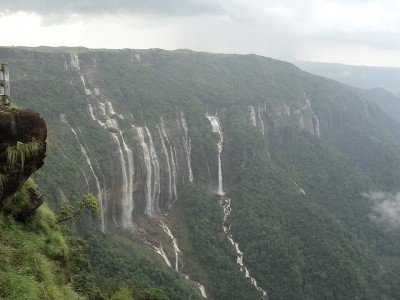 Seven Sisters Falls, also known locally as Nohsngithiang Falls, is a breathtaking seven-segmented waterfall situated in the East Khasi Hills district. It is one of the tallest and most iconic waterfalls in India, plunging from a height of 315 Meters (approx. 1,033 Feet). The name 'Seven Sisters' symbolizes the seven sister states of Northeast India: Assam, Arunachal Pradesh, Manipur, Nagaland, Mizoram, Tripura, and Meghalaya. This waterfall is unique because it is a seasonal phenomenon that comes to life with incredible force during the Monsoon season. Unlike other falls that have a single stream, this one features seven distinct segments that flow side-by-side over the limestone cliffs. The sheer scale of the fall, combined with the backdrop of lush green valleys and the vast plains of Bangladesh visible in the distance, makes it a must-visit. During the rainy season, the roar of the water can be heard from a great distance, and the mist created by the crashing water often blankets the entire viewing area. It is a spectacle of nature's power and symmetry, drawing thousands of tourists who wish to witness the raw beauty of the wettest place on earth.
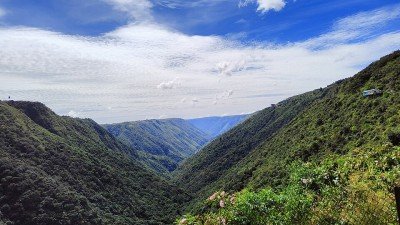 Exploring Sohra town itself is an experience in understanding the resilience of a community that lives in one of the wettest places on Earth. The town is divided into several localities, each with its own character. Lower Sohra is bustling with markets, while Upper Sohra (locally called Saitsohpen) is quieter and holds many historical landmarks. Walking through the town, you will see houses with tin roofs weighted down by heavy stones to prevent them from flying away during the fierce monsoon winds. The local culture is deeply tied to the land; you will notice small kitchen gardens everywhere. The town is also a great place to experience Khasi hospitality. Small "dhabas" or tea shops serve red tea (Sha Saw) and snacks like "Pukhlein" (fried rice flour sweets). There are several old cemeteries and monuments that date back to the 1800s, reflecting the era when the British East India Company established a station here. The town serves as a base for all surrounding attractions, but its own charm lies in its misty mornings, the sound of church bells, and the sight of locals carrying "Khoh" (conical bamboo baskets) on their backs. It is a place where time slows down, and the rhythm of life is dictated by the rain.
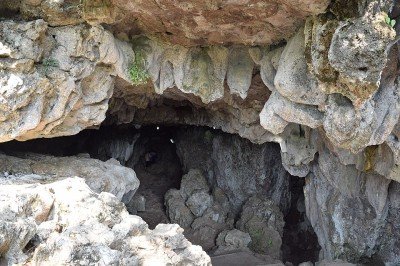 @@Ecological Feature:: The Mawsynram Pine Forest is a vast ecological zone characterized by dense stands of Khasi Pine (Pinus Khasya), which dominates the higher ridges and drier slopes surrounding the ultra-wet valley. While the valley floor is a sub-tropical broadleaf jungle, the upper slopes are marked by this unique, aromatic pine belt. The forest provides a crucial counterpoint to the village's wet environment, offering drier, firmer ground for walking and trekking. The continuous, soft rustling sound of the pine needles in the wind creates a serene, almost meditative soundscape, often competing only with the distant roar of the waterfalls. The air here is distinct—crisp, cool, and filled with the sharp, clean scent of pine resin. The forest floor is carpeted with a thick layer of brown pine needles, which, despite the heavy rain, offer a surprisingly stable and slightly drier footing compared to the mossy rocks in the valley. These forests are managed by the local community and play a vital role in providing timber and fuelwood, though they are conserved with respect to traditional beliefs. The view from within the forest, particularly when the mist rolls through, is dramatic, creating columns of dark trees swallowed by a moving fog. It provides a sanctuary for various local bird species and small mammals. The Pine Forest is a defining feature of the higher East Khasi Hills landscape, showcasing the altitudinal and ecological variations in the region.
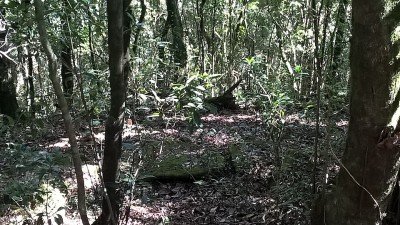 Mawphlang Sacred Forest is perhaps the most spiritually significant site in Meghalaya. For over 800 years, the local Khasi tribes have preserved this grove with a strict rule: "Nothing can be taken out of the forest." This belief is rooted in the legend of Labasa, the forest deity who takes the form of a leopard or tiger to protect the land. Anyone who removes even a pebble or a leaf is said to face divine retribution. This cultural taboo has resulted in a pristine, untouched ecosystem that serves as a genetic hub for rare plants, ancient trees, and medicinal herbs. The forest is a dense canopy of broad-leaved trees, where sunlight barely touches the ground. Moss-covered monoliths and sacrificial stones are scattered throughout the grove, marking spots where ancient rituals were performed. Walking through the forest with a local guide is a journey into the heart of Khasi philosophy, where nature is not just a resource but a living entity. The air inside is noticeably cooler and filled with a profound sense of stillness. You will see "strangler figs" wrapping around ancient oaks and a variety of carnivorous pitcher plants. The forest is also a haven for birdlife, including the rare Grey Peacock-Pheasant. It represents one of the finest examples of community-based conservation in India. Beyond the trees, the rolling grasslands of Mawphlang offer a stark and beautiful contrast. The forest is not just a collection of trees; it is a museum of living history and a sanctuary of peace that has survived the pressures of the modern world for nearly a millennium.
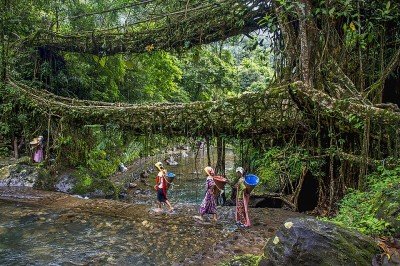 The trailhead at Tyrna village is the starting point for one of the most famous treks in the world: the journey to the Umshiang Double Decker Living Root Bridge. This is not just a walk; it is a descent into a lost world. The trail consists of approximately 3,500 concrete steps that lead down into a deep, humid valley. As you descend, the air becomes warmer and thicker, and the sounds of the modern world are replaced by the buzzing of cicadas and the rush of hidden rivers. The trek takes you through tiny Khasi hamlets where life has remained unchanged for centuries. You will cross swaying steel suspension bridges over turquoise river pools before finally reaching the village of Nongriat. The living root bridges themselves are a marvel of bio-engineering, grown by the local people by training the roots of the Ficus elastica tree across rivers. The Double Decker bridge is unique because it features two levels of living walkways, one stacked above the other. This site represents the ultimate harmony between humans and nature. The return journey is a grueling uphill climb, making the trailhead at Tyrna a place of both anticipation and exhaustion for every traveler.Show All
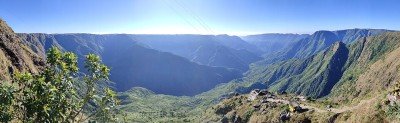 @@Dramatic Gorge:: Laitlum Canyons, whose name literally translates to 'The End of Hills' or 'The End of The World', is one of Meghalaya's most visually spectacular, yet relatively less-commercialized, natural attractions. It features a massive, deep gorge and a breathtaking panoramic view of the surrounding hills and valleys. The most defining characteristic is the steep, often sheer drop-off from the top of the canyon ridge, which is frequently draped in mist or completely swallowed by clouds. This provides an incredible sense of scale and drama. The canyon area is composed of high cliffs, deep ravines, and rugged terrain, carved by a tributary of the Umiam River over millennia. The viewpoint is a large, grassy plateau perfect for observing the dramatic landscape. The most iconic feature is the steep stairway of approximately 3,000 steps that descends into the valley to the remote Rasong Village, a route used by the villagers for their daily commute, and a symbol of their isolated, resilient life. The scenery changes drastically by the hour, from clear, expansive views to a total white-out of fog. It is a dream location for serious landscape photographers and trekkers, offering a profound sense of isolation and raw, untamed nature. The entire area is part of the East Khasi Hills plateau, characterized by its rolling grasslands and deep, hidden gorges.
Information
-
Why Famous:
World Record Rainfall: Famous globally as the wettest place on Earth. It attracts meteorologists, researchers, and adventure tourists from all over the world.
Mawjymbuin Cave: Known for its sacred stalagmite that draws both pilgrims and geo...World Record Rainfall: Famous globally as the wettest place on Earth. It attracts meteorologists, researchers, and adventure tourists from all over the world.
Mawjymbuin Cave: Known for its sacred stalagmite that draws both pilgrims and geology enthusiasts. It is a prime example of the limestone topography of Meghalaya. -
Architecture:
Cave Formations: The Mawjymbuin Cave is a natural architectural wonder made of limestone. Over thousands of years, water has carved intricate paths and pillars within the cave.
Dimension Details: The cave entrance is about 50 feet wide and ...Cave Formations: The Mawjymbuin Cave is a natural architectural wonder made of limestone. Over thousands of years, water has carved intricate paths and pillars within the cave.
Dimension Details: The cave entrance is about 50 feet wide and 15 feet high. The central stalagmite 'Shiva Linga' stands approximately 4 feet tall and is continuously bathed by water.
Rain-Proof Housing: Traditional houses use sloping roofs with a steep pitch of about 45 degrees to ensure rapid water runoff. This prevents leakages during the massive monsoons. -
How To Reach:
By Air: Umroi Airport in Shillong is about 85 KM away. Guwahati Airport is the most reliable option at 170 KM, with plenty of taxi services.
By Train: Guwahati Railway Station is the nearest railhead. The journey from the station to Mawsyn...By Air: Umroi Airport in Shillong is about 85 KM away. Guwahati Airport is the most reliable option at 170 KM, with plenty of taxi services.
By Train: Guwahati Railway Station is the nearest railhead. The journey from the station to Mawsynram takes about 5 hours by private car.
By Road: It is 65 KM from Shillong. The road is well-maintained but involves many hairpin turns. Shared taxis are available from the Bara Bazar area in Shillong.
By Local Transport: Within the village, walking is the best way to see the sights. For Mawlyngbna, you will need to hire a local taxi or use your own vehicle. -
Weather and Best Time to Visit:
Monsoon Season: June to August is for those who want to see the record-breaking rain. The waterfalls are thunderous, and the greenery is at its peak.
Dry Season: December to February is best for trekking and cave exploration as the paths ar...Monsoon Season: June to August is for those who want to see the record-breaking rain. The waterfalls are thunderous, and the greenery is at its peak.
Dry Season: December to February is best for trekking and cave exploration as the paths are dry and the skies are much clearer for long-distance views.
Shoulder Season: September and October offer a balance of some rain and better visibility. This is often considered the best time for general tourism. -
Near Tourist Places:
Mawjymbuin Cave (1 KM), Mawlyngbna (15 KM), Jakrem (45 KM), Cherrapunji (80 KM by road), Shillong (65 KM), Mawphlang (40 KM), Puriang (20 KM), Krem Puri (30 KM), Um-Khakoi Lake (16 KM), Split Rock (15 KM).
Tourism Tips
-
Health and Safety: Roads can be very slippery and prone to landslides during peak monsoon. Always check the weather forecast and travel with a local driver who knows the terrain.
Packing Essentials: High-quality waterproof gear is a must. ...Health and Safety: Roads can be very slippery and prone to landslides during peak monsoon. Always check the weather forecast and travel with a local driver who knows the terrain.
Packing Essentials: High-quality waterproof gear is a must. Bring a sturdy umbrella, rain poncho, and waterproof covers for all your cameras and phones.
Accommodation: Homestays are the best way to stay in Mawsynram. They provide a cozy environment and local home-cooked meals that are perfect for the rainy weather.
Cultural Etiquette: Respect the sanctity of the Mawjymbuin Cave. Do not touch the formations or litter inside the cave system, as it is a delicate ecosystem.
Reviews
FAQs
Mawsynram Itineray And Cost:-
Other Places In Meghalaya :-
Other States In India :-
Information about New and Updated Locations() of Meghalaya Has Been Added :-
Card subtitle
Note:-
Information provided here in good Faith and for reference only.
Near Places

Amlarem
Some quick example text to build on the card title and make up the bulk of the card's content.
Go somewhere
Baghmara
Some quick example text to build on the card title and make up the bulk of the card's content.
Go somewhere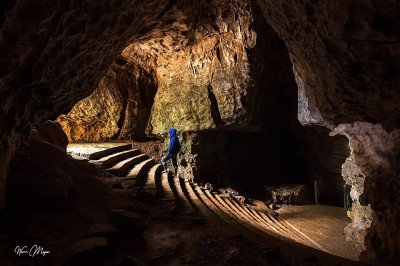
Cherrapunji
Some quick example text to build on the card title and make up the bulk of the card's content.
Go somewhere
Dawki
Some quick example text to build on the card title and make up the bulk of the card's content.
Go somewhere
Jowai
Some quick example text to build on the card title and make up the bulk of the card's content.
Go somewhere
Mairang
Some quick example text to build on the card title and make up the bulk of the card's content.
Go somewhere
Mawlynnong
Some quick example text to build on the card title and make up the bulk of the card's content.
Go somewhere
Mawryngkneng
Some quick example text to build on the card title and make up the bulk of the card's content.
Go somewhere
Mawsynram
Some quick example text to build on the card title and make up the bulk of the card's content.
Go somewhere
Nongpoh
Some quick example text to build on the card title and make up the bulk of the card's content.
Go somewhere
Pynursla
Some quick example text to build on the card title and make up the bulk of the card's content.
Go somewhere
Rongram
Some quick example text to build on the card title and make up the bulk of the card's content.
Go somewhere
Shillong
Some quick example text to build on the card title and make up the bulk of the card's content.
Go somewhere
Tura
Some quick example text to build on the card title and make up the bulk of the card's content.
Go somewhere
Umsning
Some quick example text to build on the card title and make up the bulk of the card's content.
Go somewherein Other Cities