
Omkareshwar Jyotirlinga Temple
General information
-
Ideal Duration:
2 to 3 HoursPlace Type:
Pilgrimage & Ancient TempleEntry Fees:
No Entry Fee for Darshan: There is no entry fee to visit the Omkareshwar Jyotirlinga Temple itself for darshan (worship/viewing). This is a public temple maintained by the trust.
Special Puja and Abhishek Fees: Devotees wishing to perform a...No Entry Fee for Darshan: There is no entry fee to visit the Omkareshwar Jyotirlinga Temple itself for darshan (worship/viewing). This is a public temple maintained by the trust.
Special Puja and Abhishek Fees: Devotees wishing to perform a specific Abhishekam (ritualistic bathing of the Jyotirlinga) with their own hands or a special Puja (worship) may need to pay a nominal fee to the temple priests or trust for the ritual materials and permission. These fees vary based on the ritual.
VIP/Quick Darshan Ticket: During peak pilgrimage periods (Maha Shivratri, Sawan month, Kartik Purnima), the temple trust may introduce a paid 'VIP' or 'Quick Darshan' line to manage the rush, allowing devotees to bypass the main queue, though this is not always available.
Parking and Local Tolls: Nominal parking fees apply for vehicles in the designated areas near the ghats or the bridge access points. Local body tolls may also be charged upon entry to the pilgrimage area. Beware of unauthorized people asking for 'entry fees. ' . . . (200+ words)Timing:
Regular Timings: The temple is generally open from 5:00 AM to 9:30 PM. However, there are closure periods throughout the day for Bhog (offering of food) and Shringar (decoration).
Key Aarti and Darshan Times:
Ma...Regular Timings: The temple is generally open from 5:00 AM to 9:30 PM. However, there are closure periods throughout the day for Bhog (offering of food) and Shringar (decoration).
Key Aarti and Darshan Times:
Mangal Aarti (Morning): 5:00 AM to 5:30 AM;
Madhyanha Darshan (Mid-day): 1:15 PM to 4:00 PM;
Shayan Aarti (Evening/Closing): 8:30 PM to 9:00 PM. Visitors must check the exact daily schedule as timings can change.
Ideal Visit Time: The best time to avoid the major crowds and have a peaceful darshan is immediately after the early morning Mangal Aarti (around 5:30 AM to 7:00 AM) or during the brief mid-day closure intervals for Bhog, or just before the final evening Aarti (around 4:00 PM). Sawan (July/August) month is the most crowded time of the year. . . . (200+ words)Special Events:
Maha Shivratri: The most important and grand festival, celebrated in the lunar month of Phalguna (February/March), marking the great night of Lord Shiva. The temple is decorated elaborately, special pujas are held all night, and a massive procession (Shobha Yatra) is organi...Maha Shivratri: The most important and grand festival, celebrated in the lunar month of Phalguna (February/March), marking the great night of Lord Shiva. The temple is decorated elaborately, special pujas are held all night, and a massive procession (Shobha Yatra) is organized, drawing the largest crowds of the year.
Narmada Jayanti: Celebrated in the month of Magha (January/February), this festival commemorates the birth of the holy Narmada River. Devotees take a massive holy dip, perform rituals along the ghats, and illuminate the river with thousands of earthen lamps (diyas).
Kartik Purnima: A major Hindu festival in the month of Kartik (October/November), when the crowd of pilgrims swells for a holy bath and darshan on the full moon day. Special pujas and religious discourses are common. . . . (200+ words)Best Photo Spots:
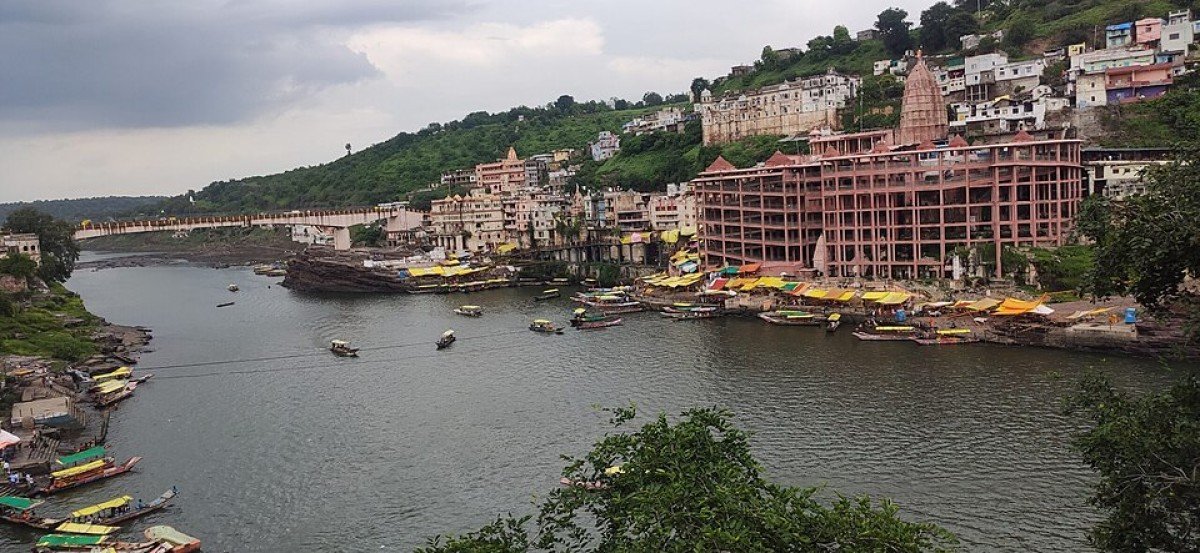
The Suspension Bridge View: The most popular photo spot is from the newly constructed hanging bridge, which offers a perfect, elevated, panoramic view of the entire Omkareshwar town, the Narmada River, the ghats, and the majestic Shikhara of the temple complex.The Suspension Bridge View: The most popular photo spot is from the newly constructed hanging bridge, which offers a perfect, elevated, panoramic view of the entire Omkareshwar town, the Narmada River, the ghats, and the majestic Shikhara of the temple complex.
The 'OM' Island Shape (Drone/Hill View): While not accessible to all, certain spots on the opposite bank or nearby hills (like the plateau near Siddhanath Temple) offer an aerial or elevated perspective to capture the island's unique and sacred 'OM' shape.
Ahilya Ghat Rituals: Capture the vibrant daily life of the pilgrimage at the Ahilya Ghat, focusing on the colorful rituals, pujas, and the sight of devotees taking a holy dip in the river, especially during sunrise.
The Sabha Mandap Pillars: The interior of the old Sabha Mandap, with its 60 elaborately carved pillars, offers a stunning architectural photo opportunity, showcasing the intricate work of the 18th-century artisans. . . . (300+ words)Photo Gallery
Things To Do
-
Perform Abhishekam and Darshan: The primary activity is to have the darshan (sacred viewing) of the self-manifested Omkareshwar Jyotirlinga and perform a Jalabhishek (offering of water and milk) and Puja to Lord Shiva. Early morning or late evening aarti is the most spiritual time.
Take a Holy Dip at the Ghats: Take a ritualistic bath in the holy Narmada River at the main Ahilya Ghat or Peshawar Ghat before entering the temple, which is believed to cleanse sins and purify the soul. Changing rooms are available nearby.
Circumambulate the Holy Island (Parikrama): Perform the Omkareshwar Parikrama—a spiritual walk of approximately 7 KMS around the entire Mandhata Island. This includes walking through the town, passing several smaller temples, and crossing the bridges, and is considered an act o...Perform Abhishekam and Darshan: The primary activity is to have the darshan (sacred viewing) of the self-manifested Omkareshwar Jyotirlinga and perform a Jalabhishek (offering of water and milk) and Puja to Lord Shiva. Early morning or late evening aarti is the most spiritual time.
Take a Holy Dip at the Ghats: Take a ritualistic bath in the holy Narmada River at the main Ahilya Ghat or Peshawar Ghat before entering the temple, which is believed to cleanse sins and purify the soul. Changing rooms are available nearby.
Circumambulate the Holy Island (Parikrama): Perform the Omkareshwar Parikrama—a spiritual walk of approximately 7 KMS around the entire Mandhata Island. This includes walking through the town, passing several smaller temples, and crossing the bridges, and is considered an act of great devotion.
Visit the Twin Shrine (Mamleshwar): Cross the bridge or take a boat to the mainland to visit the Mamleshwar Temple (Amareshwar Temple), which is considered the other half of the Omkareshwar Jyotirlinga and is essential for completing the pilgrimage.
Boat Ride on the Narmada: Hire a boat from the ghats for a scenic ride on the Narmada River, which offers a spectacular view of the 'OM' shaped island, the towering temple Shikhara, the ghats, and the hanging bridge. The boat ride can also take you to the Triveni Sangam point.
Attend the Aarti Ceremonies: Witness the grand morning Mangal Aarti and the evening Shayan Aarti, which are vibrant, musical, and highly spiritual experiences that draw large crowds of devotees.
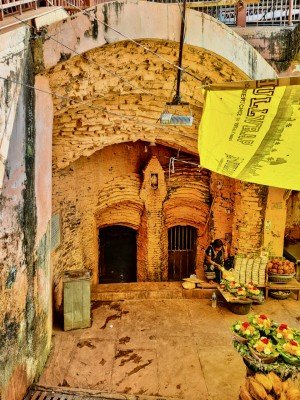
Explore the 24 Avatars Temple Group: Visit the nearby 24 Avatars Group of Temples, an archaeological site showcasing diverse Hindu and Jain temple styles, adding a historical and architectural dimension to the visit.
Shop for Souvenirs: Buy spiritual items, prasad, small idols, and local crafts from the bustling marketplace surrounding the temple complex and the ghats. . . . (700+ words)
Information
-
Why Famous:
One of the 12 Jyotirlingas: It is globally famous as one of the twelve most sacred shrines dedicated to Lord Shiva, drawing millions of pilgrims annually seeking spiritual merit and liberation.
'OM' Shape of the Island: The temple is situate...One of the 12 Jyotirlingas: It is globally famous as one of the twelve most sacred shrines dedicated to Lord Shiva, drawing millions of pilgrims annually seeking spiritual merit and liberation.
'OM' Shape of the Island: The temple is situated on Mandhata Island, which is naturally shaped like the sacred 'OM' symbol, a unique geographical and spiritual phenomenon that sets it apart.
Narmada River's Sanctity: Its location at the confluence of the Narmada and Kaveri rivers (Triveni Sangam) is considered highly auspicious. A holy dip in the Narmada before entering the temple is a sacred ritual.
Historical Patronage: The temple’s reconstruction by Maharani Ahilyabai Holkar in the 18th century is a historical fact that further cemented its status as a major devotional center.
Twin Jyotirlinga: The proximity and spiritual link to the Mamleshwar Temple on the opposite bank mean that worship at both sites is considered necessary to complete the pilgrimage. . . . (200+ words) -
Architecture:
Nagara Style with Holkar Influence: The temple exemplifies the traditional North Indian Nagara style of architecture, characterized by its towering Shikhara (spire). The structure is predominantly built of sandstone and local stone. The original structure dates back to the...Nagara Style with Holkar Influence: The temple exemplifies the traditional North Indian Nagara style of architecture, characterized by its towering Shikhara (spire). The structure is predominantly built of sandstone and local stone. The original structure dates back to the 11th century under the Paramara dynasty, but the visible temple today is largely a reconstruction from the 18th century under the Holkar rulers, specifically Rani Ahilyabai Holkar.
Mandapa and Pillars: A key feature is the Sabha Mandap (assembly hall), which is a five-story structure supported by 60 large, intricately carved stone pillars. These pillars, standing about 14 feet high, feature elaborate carvings of various deities, mythical creatures, and floral motifs, showcasing the exquisite craftsmanship of the era and the blend of Maratha-Rajput architectural styles.
Dimensions and Layout: The temple is situated on an elevated platform. The Garbhagriha (sanctum sanctorum) houses the main Omkareshwar Jyotirlinga. The overall complex includes multiple smaller shrines dedicated to other deities like Lord Ganesha and Goddess Annapurna, spread around the main structure. A newly constructed suspension bridge (hanging bridge) and the ancient Mamleshwar Setu connect the island to the mainland, adding a modern architectural element to the sacred site. The Shikhara rises high, symbolizing Mount Meru. . . . (200+ words) -
How To Reach:
By Air: The nearest major airport is Devi Ahilyabai Holkar Airport, Indore (IDR) (approx. 77 KMS). From Indore, one can easily hire a pre-paid taxi or a private cab. State and private buses are also available for the 2. 5 to 3-hour journey to Omkareshwar.By Air: The nearest major airport is Devi Ahilyabai Holkar Airport, Indore (IDR) (approx. 77 KMS). From Indore, one can easily hire a pre-paid taxi or a private cab. State and private buses are also available for the 2. 5 to 3-hour journey to Omkareshwar.
By Train: The nearest local station is Omkareshwar Road (OM) near Mortakka (approx. 12 KMS). The major rail hub is Khandwa Junction (KNW) (approx. 75 KMS), which has direct trains from major Indian cities. From both stations, taxis, auto-rickshaws, and local buses are available to the main town.
By Road: Omkareshwar is well-connected by State Highway 37. It is approximately 77 KMS from Indore, 133 KMS from Ujjain, and 75 KMS from Khandwa. Frequent state-run and private buses operate on these routes. The journey is scenic, especially as you approach the Narmada River.
By Local Transport: Once in Omkareshwar, the temple is on an island. You must cross the Narmada via either the Ghats using a local motorboat (costing a small fee) or by walking across one of the two bridges (the Hanging Bridge or the older Mamleshwar Setu) to reach the temple complex. Auto-rickshaws and shared jeeps operate for local travel and to cover the Parikrama route. . . . (400+ words) -
Weather and Best Time to Visit:
Weather Season - Winter (October to March): The ideal time. The weather is cool, dry, and pleasant, perfect for the long darshan queues, the island Parikrama, and enjoying the ghats. The air is clear, offering excellent views.
Weather Season -...Weather Season - Winter (October to March): The ideal time. The weather is cool, dry, and pleasant, perfect for the long darshan queues, the island Parikrama, and enjoying the ghats. The air is clear, offering excellent views.
Weather Season - Monsoon (July to September): Highly significant time. The entire month of Sawan sees the biggest influx of pilgrims, but the river is full and the weather is humid and wet. Travel can be slower.
Weather Season - Summer (April to June): Least recommended time. The heat is intense and scorching, especially during the day, making the outdoor walk and queues very uncomfortable. Visit only in the early morning or late evening. Part of the Day - Early Morning (5:00 AM to 7:00 AM) Best time for a quick, peaceful darshan and to participate in the Mangal Aarti. Part of the Day - Late Afternoon (4:00 PM to 6:00 PM) Good time to visit the temple after the heat and then witness the sunset from the ghats. . . . (300+ words) -
Near Tourist Places:
Mamleshwar Temple (Jyotirlinga, Across River, < 1 KM); Triveni Sangam Temple (Confluence Point, 1 KM); Ahilya Ghat (Holy Bathing Ghat, < 1 KM); 24 Avatars Group of Temples (Ancient Temples, 1 KM); Siddhanath Temple (Ancient Temple, 1. 5 KMS); Ranmukteshwar Temple (Ancient Temple, 1. 5 KMS); Gauri Somnath Temple (Ancient Temple, 2 KMS); Govinda Bhagavatpada Cave (Historic Cave, 2. 5 KMS); Kajal Rani Cave (Historic Cave, 9 KMS); Omkareshwar Dam View Point (Engineering Marvel, 12 KMS).
Tourism Tips
-
Health & Safety: Dress modestly (covering shoulders and knees) as a mark of respect for the temple. Leave shoes and leather items at the designated counter. Be cautious of pickpockets in crowded areas like the darshan queues and the main market. If you have mobility issue...Health & Safety: Dress modestly (covering shoulders and knees) as a mark of respect for the temple. Leave shoes and leather items at the designated counter. Be cautious of pickpockets in crowded areas like the darshan queues and the main market. If you have mobility issues, be prepared for many steps and uneven paths; consider hiring a palki (palanquin) or using the bridge for easier access.
Packing Essentials: Carry minimum belongings to the temple to make the darshan process faster. Small notes/change are useful for priests and local vendors. A small bottle of Narmada water is a traditional souvenir. Carry a light shawl or scarf for the cool morning or for modest covering.
Accommodation: Accommodation ranges from government-run resorts (MPT) to numerous private hotels, budget guesthouses, and Marwari Dharamshalas. Book in advance for the peak season, especially during Maha Shivratri or the month of Sawan.
Other Tips: Avoid touts and unauthorized guides; use official signage or ask temple trust staff. Bargain politely with boatmen and auto-rickshaw drivers. Do not accept prasad from unknown persons outside the temple. Visit Mamleshwar Temple on the opposite bank to complete the full spiritual pilgrimage. . . . (400+ words)
Reviews
FAQs
Omkareshwar Itineray And Cost:-
Omkareshwar Jyotirlinga Temple Tourism:-
Other Places In Omkareshwar :-
Other States In India :-
Information about New and Updated Locations() of Madhya Pradesh Has Been Added :-
Card subtitle
Note:-
Information provided here in good Faith and for reference only.
Near Places
24 Avatars Group of Temples
Some quick example text to build on the card title and make up the bulk of the card's content.
Go somewhere
Abhay Ghat
Some quick example text to build on the card title and make up the bulk of the card's content.
Go somewhere
Adi Shankaracharya Statue Site
Some quick example text to build on the card title and make up the bulk of the card's content.
Go somewhere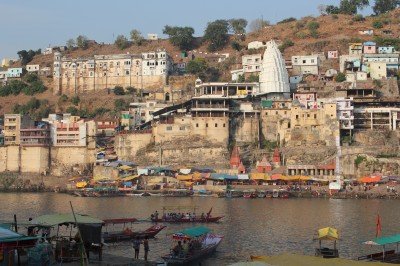
Ahilya Ghat
Some quick example text to build on the card title and make up the bulk of the card's content.
Go somewhere
Bapeshwar Temple
Some quick example text to build on the card title and make up the bulk of the card's content.
Go somewhere
Bhagwatpada Mandapam
Some quick example text to build on the card title and make up the bulk of the card's content.
Go somewhere
Brahmapuri
Some quick example text to build on the card title and make up the bulk of the card's content.
Go somewhere
Fanase Ghat
Some quick example text to build on the card title and make up the bulk of the card's content.
Go somewhere
Gauri Somnath Temple
Some quick example text to build on the card title and make up the bulk of the card's content.
Go somewhere
Gomukh Ghat
Some quick example text to build on the card title and make up the bulk of the card's content.
Go somewhere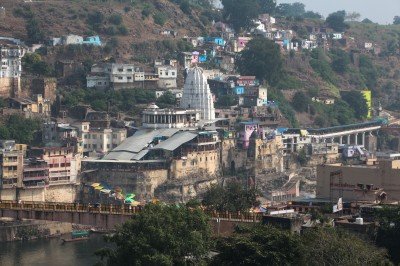
Katar Baba Aasram
Some quick example text to build on the card title and make up the bulk of the card's content.
Go somewhere
Kedareshwar Temple
Some quick example text to build on the card title and make up the bulk of the card's content.
Go somewhere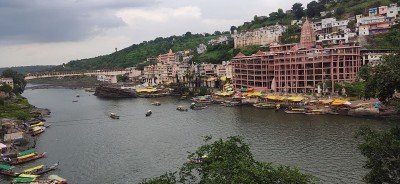
Kotitirtha Ghat
Some quick example text to build on the card title and make up the bulk of the card's content.
Go somewhere
Mamleshwar Temple
Some quick example text to build on the card title and make up the bulk of the card's content.
Go somewhere
Mandhata Palace Ruins
Some quick example text to build on the card title and make up the bulk of the card's content.
Go somewhere
Narmada Kaveri Sangam
Some quick example text to build on the card title and make up the bulk of the card's content.
Go somewherein Other Cities