Bell Metal Industry Workshop
General information
-
Ideal Duration:
1. 5 to 2. 5 hoursPlace Type:
Cultural Heritage, Cottage Industry, Artisan WorksEntry Fees:
No Formal Entry Fee Structure: The Bell Metal Industry Workshop in Kalitakuchi is not a museum or a dedicated tourist site with a ticketing counter; it is a collection of private, working cottage industry units and family businesses. Therefore, there is no formal entry fee...No Formal Entry Fee Structure: The Bell Metal Industry Workshop in Kalitakuchi is not a museum or a dedicated tourist site with a ticketing counter; it is a collection of private, working cottage industry units and family businesses. Therefore, there is no formal entry fee charged to visit the general area or to observe the work from outside the sheds. This is a common feature of traditional craft villages and open workshops in rural Assam and India.
Supporting the Artisans Through Purchase: While entry is free, visitors are strongly encouraged to support the continuation of this ancient craft and the livelihood of the artisans by purchasing authentic bell metal products. Buying an item, no matter how small, is the most meaningful way to compensate the community for the time and access they provide. The cost of a small Bati (bowl) or Taal (cymbals) will vary based on its weight, size, and the current market rate for copper and tin.
Tips and Donations (Optional): It is generally appreciated if you leave a small, voluntary donation or tip if you spend a significant amount of time observing the process, engaging the artisans in conversation, or taking numerous photographs, especially if you do not purchase a physical product. This is a gesture of respect for their time and labor. However, there is no obligation to do so.
Costs for Guided Tours: If you hire a local guide from Hajo or Guwahati to accompany you, a fee will be charged by the guide for their service, interpretation, and help with local interactions, which is highly recommended for a richer experience. This fee is separate from the workshop itself.Timing:
Regular Timings:
Artisan Working Hours: The workshops operate according to the traditional work cycle of the artisans, typically running from around 9:00 AM to 5:00 PM on most weekdays, Monday to Saturday. The process is labor-intensive and ...Regular Timings:
Artisan Working Hours: The workshops operate according to the traditional work cycle of the artisans, typically running from around 9:00 AM to 5:00 PM on most weekdays, Monday to Saturday. The process is labor-intensive and manual, relying on daylight and the community's rhythm. Work usually slows down considerably or stops during the late afternoon. It is always best to avoid visiting on Sundays or during major local festivals, as the workshops are likely to be closed. The most active working hours, especially for the high-energy hammering process, are generally between 10:00 AM and 3:00 PM.
Ideal Visit Time:
Catching the Full Process: The ideal time to visit is during the mid-morning, specifically between 10:30 AM and 1:00 PM. This timeframe often coincides with the most intense phases of the work, including the peak hammering and shaping activities, and sometimes the early stages of melting the alloy. Visiting at this time ensures you see the craft in its most dynamic state.
Seasonal Considerations: The best time of year to visit is during the winter months (November to February), as the lower ambient temperatures make the heat from the furnace and the physical exertion of the artisans more manageable, ensuring full work efficiency. During the monsoon (July to September), heavy rain can disrupt road travel and some outdoor or semi-open workshop activities, though the artisans may still be working inside their sheds.Special Events:
Artisan Skill Showcases and Festivals: While there isn't a single, fixed large-scale tourist event, the community often hosts special showcases or demonstrations during major local festivals. During Magh Bihu (mid-January) or Bohag Bihu (mid-April), the demand for tradition...Artisan Skill Showcases and Festivals: While there isn't a single, fixed large-scale tourist event, the community often hosts special showcases or demonstrations during major local festivals. During Magh Bihu (mid-January) or Bohag Bihu (mid-April), the demand for traditional bell metal items, especially for cultural rituals, increases significantly. At these times, the workshops may be more open to showing the elaborate process to visitors, demonstrating specialized techniques, or exhibiting the finest pieces. These periods offer an excellent chance to see the craft in its prime context, tied to the Assamese cultural calendar.
Visits by Dignitaries and Cultural Troupes: The workshop occasionally hosts visiting cultural groups, researchers, or government delegations interested in traditional handicrafts. When such visits are scheduled, the artisans put on a more comprehensive demonstration of their skills and heritage. Following local tourism or handicraft board announcements might help time your visit to coincide with such an organized showcase, which is a rare and enriching experience.Best Photo Spots:
The Hammering Action Shot: This is the most iconic photo spot. Focus on the artisans inside the 'Kohar Ghar' (shed) as they rhythmically strike the hot metal on the anvil. The best shots capture the intense focus on their faces, the upward arc of the heavy hammer, and the ...The Hammering Action Shot: This is the most iconic photo spot. Focus on the artisans inside the 'Kohar Ghar' (shed) as they rhythmically strike the hot metal on the anvil. The best shots capture the intense focus on their faces, the upward arc of the heavy hammer, and the dramatic, hand-beaten texture of the metal in the foreground. Use a fast shutter speed to freeze the action or a slightly slower one to convey the sense of movement and rhythm. The dark interior of the shed against the light coming from the front provides a high-contrast, dramatic setting.
The Molten Metal and Fire Glow: Photograph the Jui Xaal (furnace area) where the alloy is melted. The deep orange and red glow of the charcoal fire and the molten metal, perhaps with a silhouette of an artisan carefully tending to the furnace, creates a powerful, moody photograph. This spot is best visited slightly earlier in the day when the melting process is in full swing, offering a striking contrast of heat and shadow.
The Finished Products Display: Focus on a beautifully arranged Xorai or a stack of highly polished Kahi and Bati. These static shots should highlight the intricate hand-beaten marks, the flawless shine achieved through manual scraping, and the traditional shapes. A close-up shot of the engraved patterns or the curve of a Lota (water pot) against a traditional background showcases the artistry and detail. The texture of the hand-made item is a key element to capture.
The Artisan Portrait: A respectful portrait of an artisan at work is a memorable photo. Capture their hands holding the traditional tools or their eyes focused intently on the piece they are shaping. This helps tell the story of the craft through the people who sustain it. Always ask for permission first, and use the natural light filtering into the workspace to create a sense of depth and authenticity.Photo Gallery
Things To Do
-
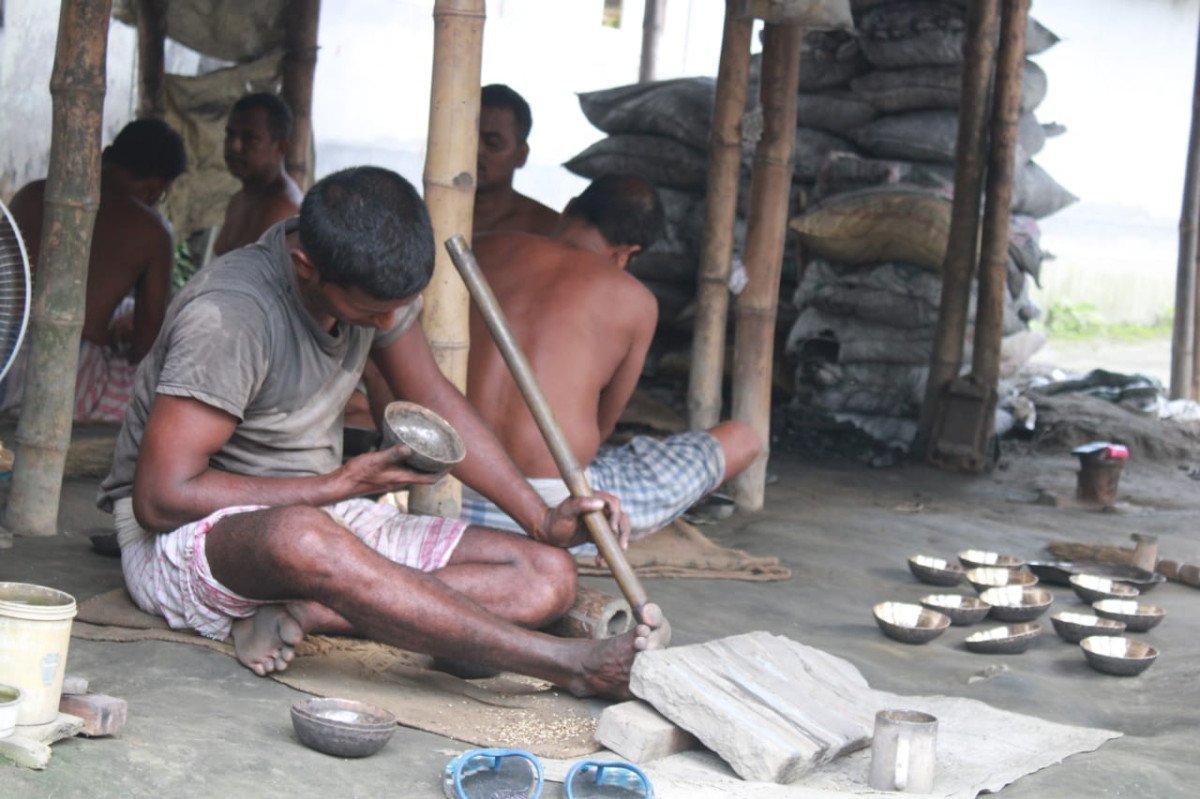
Witness the Live Crafting Process: The most important activity is to observe the artisans at work. You can stand safely outside the 'Kohar Ghar' (hammering shed) and watch the entire sequence: melting and casting the alloy (copper and tin) in the Jui Xaal (furnace), which is a spectacular sight; the repeated heating and hammering of the metal on the anvils (like balmuri), which showcases incredible physical skill and teamwork; and the final polishing and engraving of the finished products. This is an authentic, sensory experience that allows you to appreciate the sheer labor involved in making one traditional utensil.
Interact with the 'Kahar' Artisans: Engage in respectful conversation with the craftsmen, who are the 'Kahar' or 'Orja'. They are a wealth of traditional knowledge. Ask them about the tools they use (like the ...Witness the Live Crafting Process: The most important activity is to observe the artisans at work. You can stand safely outside the 'Kohar Ghar' (hammering shed) and watch the entire sequence: melting and casting the alloy (copper and tin) in the Jui Xaal (furnace), which is a spectacular sight; the repeated heating and hammering of the metal on the anvils (like balmuri), which showcases incredible physical skill and teamwork; and the final polishing and engraving of the finished products. This is an authentic, sensory experience that allows you to appreciate the sheer labor involved in making one traditional utensil.
Interact with the 'Kahar' Artisans: Engage in respectful conversation with the craftsmen, who are the 'Kahar' or 'Orja'. They are a wealth of traditional knowledge. Ask them about the tools they use (like the Khonta for scraping or the Reti for filing), the composition of the bell metal alloy, the history of their family in the trade, and the cultural significance of items like the Xorai or the Bota. Understanding their generational stories of dedication and the challenges they face in the modern market will enrich your visit significantly.
Learn About the Cultural Significance: Ask the artisans or a local guide to explain the importance of different items. For instance, learn why the Kahi Bati (dish and bowl) are essential for Assamese hospitality, how the Bhortal (cymbals) are used in Bihu dances and religious chants, and the symbolic use of the Sarai as a respectful offering. This cultural immersion adds a deep layer of context to the metal objects you see.
Purchase Authentic Bell Metal Souvenirs: The workshop area is the best place to buy authentic, handmade bell metal items directly from the producers. You can purchase items like small Batis (bowls), decorative miniature Xorai, or small musical Taal (cymbals). Buying here directly supports the artisans and helps sustain this ancient craft. Ensure you ask about the purity and composition of the metal for which these workshops are known.
Experience the Village Atmosphere: Take a short stroll around the Kalitakuchi area to absorb the atmosphere of a traditional Assamese artisan village. The rhythmic hammering from various homes creates a unique village soundscape. Observe the simple, rustic village architecture and the local way of life that revolves around this craft. This helps to contextualize the bell metal industry within the broader Assamese rural setting.
Photography of the Process and Products: The workshop environment offers fantastic photography opportunities. Capture the dramatic glow of the furnace, the focused intensity of the artisans' faces, the dynamic action of the hammering, and close-ups of the beautifully finished, hand-beaten textures of the metalware. Always ask for permission before taking close-up photos of the people or the process to show respect for their workspace.
Taste Local Assamese Snacks: Look for small, local tea stalls or vendors near the workshop. Savoring a cup of local cha (tea) and trying traditional Assamese snacks like pithas or savory items in this setting is a delightful way to complete the cultural experience.
Information
-
Why Famous:
The Preservation of a Primitive Crafting Method: The workshop is famous for rigorously adhering to the traditional, centuries-old method of crafting bell metal items. The process, known as 'Kaah Silpa', involves no complex machinery. The alloy (copper and tin) is melted, c...The Preservation of a Primitive Crafting Method: The workshop is famous for rigorously adhering to the traditional, centuries-old method of crafting bell metal items. The process, known as 'Kaah Silpa', involves no complex machinery. The alloy (copper and tin) is melted, cast into ingots, and then repeatedly heated and shaped by powerful, precise hammering. Visitors are astounded to see the entire process done manually, from the preparation of the raw metal to the final shining with a tool called the Khonta. This commitment to archaic, manual techniques, inherited through generations, is the primary reason for its fame.
Cultural and Religious Significance of Products: The items produced here, such as the Xorai (a traditional offering tray and symbol of respect) and Bhortal (large cymbals), are central to Assamese religious and social life. The use of bell metal utensils is considered auspicious in ceremonies like the Annaprasanna (baby’s first solid meal) and in serving guests, symbolizing the highest level of hospitality. The workshop is renowned as a key place where these culturally indispensable articles are still made with authenticity.
Hajo's Unique Metal Craft Tradition: While the craft is associated with Sarthebari, Hajo has its own unique lineage, particularly in the production of brass and bell metal items by the Maria community in Muslimpatty and surrounding areas like Kalitakuchi. Its fame lies in showcasing the regional variation of this craft, providing a complete picture of Assam's metalworking heritage alongside its multi-faith pilgrimage importance. The presence of these artisanal units solidifies Hajo's position as a significant cultural and commercial hub. -
Architecture:
Traditional Workshop Structure:
The 'Jui Xaal' and 'Kohar Ghar': The architecture of a traditional bell metal workshop in Kalitakuchi is fundamentally functional and rudimentary, designed to accommodate the labor-intensive, age-old process. ...Traditional Workshop Structure:
The 'Jui Xaal' and 'Kohar Ghar': The architecture of a traditional bell metal workshop in Kalitakuchi is fundamentally functional and rudimentary, designed to accommodate the labor-intensive, age-old process. The entire workshop is typically divided into two main areas: the 'Jui Xaal' (foundry or furnace area) and the 'Kohar Ghar' (the main hammering/shaping shed). The structures are often simple, built with locally sourced materials like bamboo, thatch, or tin sheets, reflecting the cottage industry's small-scale, decentralized nature. The 'Jui Xaal' houses the furnace, which uses charcoal as fuel to heat the metal. This area requires high ventilation and is usually open-sided or with large openings to manage the intense heat and smoke. The floor is earthen and has depressions or earthen sinks where the molten metal is poured.
Dimensions and Spatial Arrangement: The average size of a small workshop unit, or 'Kohar Ghar', might be approximately 15 feet by 20 feet (4. 5m×6m). This space is dedicated to the intense manual labor of hammering and shaping. The ceiling is often low to contain the noise and the working area is organized around the main anvils, known locally as balmuri, chatuli, and akue. These anvils are fixed securely into the earthen floor. The 'Kohar Ghar' is where the bell metal ingots are repeatedly heated and hammered by a team of artisans working in unison—a rhythmic, deafening process that requires precision and strength. The simplicity of the structure ensures easy access to raw materials and space for the tools like various hammers (Dulari, Gasha), pincers, and chisels. The architecture is not about aesthetic ornamentation but about efficiency for a demanding, multi-step metallurgical process, ensuring the preservation of the craft's authentic manual techniques. -
How To Reach:
By Air: The nearest major airport is Lokpriya Gopinath Bordoloi International Airport (GAU) in Guwahati, which is approximately 35-40 KMS from Hajo. This airport is well-connected to major cities across India, including Delhi, Kolkata, Mumbai, and Bangalore. From the airpo...By Air: The nearest major airport is Lokpriya Gopinath Bordoloi International Airport (GAU) in Guwahati, which is approximately 35-40 KMS from Hajo. This airport is well-connected to major cities across India, including Delhi, Kolkata, Mumbai, and Bangalore. From the airport, you can hire a pre-paid taxi or a ride-sharing service to reach Hajo. The drive to Hajo takes about 1. 5 to 2 hours, depending on traffic. Once you reach Hajo town, you will need to take a local transport option to Kalitakuchi, which is a short distance away.
By Train: The nearest major railway station is Guwahati Railway Station (GHY), which is approximately 30-35 KMS from Hajo. This station is a major hub and is connected to all parts of India. An alternative, closer station is Kamakhya Junction (KYQ), about 25-30 KMS away. From either station, you can hire a taxi or an auto-rickshaw for the journey to Hajo. You can also find state-run buses or private shared-taxi services outside the station for a more economical option. The final leg from Hajo town to Kalitakuchi requires a local conveyance.
By Road: Hajo is well-connected by road to Guwahati via NH 27 and NH 427. The distance is about 30 KMS, and the drive takes approximately 1 hour under normal conditions. State-run buses (ASTC) and private bus operators regularly run services between Guwahati and Hajo. You can also hire a private car or taxi from Guwahati. The road journey is smooth and scenic. Once in Hajo, the drive to Kalitakuchi is very short, and you will need to look for local signposts or ask for directions, as the workshop is in a village setting.
By Local Transport: Within Hajo town, the most convenient way to reach Kalitakuchi is by hiring an auto-rickshaw or a cycle rickshaw. Auto-rickshaws are readily available in the town center and at the main bus stand. It is advisable to negotiate the fare before starting the journey. The workshop area is well-known locally, so mentioning "Bell Metal Workshop" or "Kaah Silpa" in Kalitakuchi should suffice. Since the distance is short, this local transport is fast and cost-effective. -
Weather and Best Time to Visit:
By Season:
The Pleasant Winter: The period from October to March is considered the Best Time to Visit. The weather during this Winter and post-monsoon season is cool and dry, with average temperatures ranging from 10Rs.C to 25Rs.C. This pleasan...By Season:
The Pleasant Winter: The period from October to March is considered the Best Time to Visit. The weather during this Winter and post-monsoon season is cool and dry, with average temperatures ranging from 10Rs.C to 25Rs.C. This pleasant climate is ideal for walking around the village, comfortably spending time near the workshops, and witnessing the artisans at their most productive. The air is clear, offering a good overall travel experience.
The Monsoon Challenges: The Monsoon season, from June to September, should be avoided due to heavy rainfall. While the landscape is lush, the humidity is high, and the rain can disrupt travel plans and make walking around the workshops messy and uncomfortable.
By Part of the Day:
Mid-Morning to Early Afternoon: As detailed in the 'Sub Place Timings' section, the Mid-Morning (10:30 AM to 1:00 PM) is the most engaging time to visit. This is when the crucial, high-energy hammering and shaping processes are in full swing, offering the most authentic and dynamic experience. Early mornings are often reserved for preparing the raw materials, and late afternoons for finishing and polishing, which are less dramatic to witness. -
Near Tourist Places:
1.
Hayagriva Madhava Temple: (Hajo Town, approx.
5 KMS): A prominent Hindu-Buddhist pilgrimage site on Monikut Hill. 2.
Powa Mecca: (Hajo Town, approx.
6 KMS): A significant Muslim pilgrimage site on Garurachal Hill. 3.
Kedareswara Temple: (Hajo Town, approx.
7 KMS): Ancient Shiva temple atop Madanachala Hill. 4.
Kameswara Temple: (Hajo Town, approx. 6.
5 KMS): Another historical temple dedicated to Lord Shiva. 5.
Sualkuchi (Silk Village): (Town, approx.
1
5 KMS): Famous for its traditional Muga, Eri, and Pat silk weaving industry. 6.
Madan Kamdev: (Archaeological Site, approx.
20 KMS): Famous ruins of a 10th-12th century temple complex. 7.
Aswaklanta Temple: (Guwahati, approx.
30 KMS): Historic Vaishnavite temple on the bank of the Brahmaputra river. 8.
Deepor Beel: (Wetland/Bird Sanctuary, approx.
3
5 KMS): A large permanent freshwater lake and important bird habitat. 9.
Kamakhya Temple: (Guwahati, approx.
40 KMS): One of the most sacred Hindu temples, a major Shakti Peetha. 10.
Guwahati City Centre: (City, approx.
30 KMS): For museums, shopping, and urban life.
Tourism Tips
-
Health & Safety:
Respecting the Workshop Environment: The workshop environment is an industrial space with inherent safety hazards, including intense heat from the furnace, flying metal fragments during hammering, and loud noise. Visitors mu...Health & Safety:
Respecting the Workshop Environment: The workshop environment is an industrial space with inherent safety hazards, including intense heat from the furnace, flying metal fragments during hammering, and loud noise. Visitors must maintain a safe distance from the active work areas, especially the Jui Xaal (furnace). Wear closed-toe shoes for safety. The hammering can be extremely loud; if you are sensitive to noise, consider carrying earplugs. Always follow the artisans' instructions regarding where to stand and when to move.
Packing:
Essentials for the Visit: Carry a small backpack with essentials. Water is crucial, especially during the humid season. A camera or phone for photographs is a must, but remember to ask permission. Carry cash (Indian Rupees) in small denominations for purchases, as the local artisans may not accept digital payments. If visiting during winter, carry a light jacket.
Accommodation:
Staying Near the Workshop: While there are no hotels in Kalitakuchi, you can find decent accommodations and guesthouses in the main Hajo town area. For a wider range of options, from budget to luxury, it is best to stay in Guwahati, which is a little over an hour's drive away. Guwahati offers better connectivity and more varied amenities for tourists.
Other Different Topics:
Cultural Sensitivity and Purchase Etiquette: Be mindful of the fact that you are visiting a private workplace and a person's home business, not a museum exhibit. Ask permission before taking photos of the artisans or their children. When inquiring about prices, negotiate respectfully but remember that you are paying for high-quality, handcrafted, and culturally significant items—do not aggressively bargain. Your purchase directly supports the artisans' families and the preservation of the craft. Hire a local guide from Hajo or Guwahati if possible; they can translate and provide deeper insights, making your interaction more meaningful and respectful. Be prepared for dust, smoke, and loud noise.
Reviews
FAQs
Hajo Itineray And Cost:-
Bell Metal Industry Workshop Tourism:-
Information about New and Updated Locations() of Assam Has Been Added :-
Card subtitle
Note:-
Information provided here in good Faith and for reference only.
Near Places
Alaboi Hills
Some quick example text to build on the card title and make up the bulk of the card's content.
Go somewhere
Bell Metal Industry Workshop
Some quick example text to build on the card title and make up the bulk of the card's content.
Go somewhere
Dampur Pahar View
Some quick example text to build on the card title and make up the bulk of the card's content.
Go somewhere
Deva Bhavana
Some quick example text to build on the card title and make up the bulk of the card's content.
Go somewhere
Dhoparguri Satra
Some quick example text to build on the card title and make up the bulk of the card's content.
Go somewhere
Dimu
Some quick example text to build on the card title and make up the bulk of the card's content.
Go somewhere
Ganesh Bigrah Temple
Some quick example text to build on the card title and make up the bulk of the card's content.
Go somewhere
Hayagriva Madhava Temple
Some quick example text to build on the card title and make up the bulk of the card's content.
Go somewhere
Joy Durga Temple
Some quick example text to build on the card title and make up the bulk of the card's content.
Go somewhere
Kalitakuchi
Some quick example text to build on the card title and make up the bulk of the card's content.
Go somewhere
Kalitakuchi Hajo
Some quick example text to build on the card title and make up the bulk of the card's content.
Go somewhere
Kamesware Temple
Some quick example text to build on the card title and make up the bulk of the card's content.
Go somewhere
Kanai Barashi Rock Inscription
Some quick example text to build on the card title and make up the bulk of the card's content.
Go somewhere
Kaziranga National Park
Some quick example text to build on the card title and make up the bulk of the card's content.
Go somewhere
Kedareswar Temple
Some quick example text to build on the card title and make up the bulk of the card's content.
Go somewhere
Manas National Park
Some quick example text to build on the card title and make up the bulk of the card's content.
Go somewherein Other Cities