

Bishnupur
General information
-
Ideal Duration:
1 to 2 DaysPlace Type:
Heritage, Nature, & WildlifeEntry Fees:
Temple Entry: Entry to the ancient Vishnu Temple is free for all visitors, though donations for maintenance are welcomed by the authorities.
National Park Fee: Indian citizens pay around 50 per head, while foreign tourists are charged 500 pe...Temple Entry: Entry to the ancient Vishnu Temple is free for all visitors, though donations for maintenance are welcomed by the authorities.
National Park Fee: Indian citizens pay around 50 per head, while foreign tourists are charged 500 per head for entry and camera.
Boating Charges: Standard boat rides on the lake vary from 300 to 1000 depending on the duration and type of boat.
Museum Fee: The INA Memorial museum charges a nominal fee of 20 for adults and 10 for students to access the galleries.Timing:
Regular Hours: The temples and parks generally open from 9:00 AM to 5:00 PM daily, though the lake is accessible earlier for fishing.
Ideal Visit Time: Arrive at the lake by 6:00 AM to see the sunrise and active birdlife, or 4:00 PM for the ...Regular Hours: The temples and parks generally open from 9:00 AM to 5:00 PM daily, though the lake is accessible earlier for fishing.
Ideal Visit Time: Arrive at the lake by 6:00 AM to see the sunrise and active birdlife, or 4:00 PM for the sunset view.
Winter Schedule: During the winter months from November to February, the sun sets early, so outdoor activities should conclude by 4:30 PM.
National Park Timing: The best time to spot the Sangai is between 6:00 AM and 10:00 AM when they come out to graze.Special Events:
Lai Haraoba: A traditional ritual festival celebrated in May to please the local deities through graceful dance and folk music.
Sangai Festival: Held every November, this state-level event celebrates the biodiversity and culture of the regio...Lai Haraoba: A traditional ritual festival celebrated in May to please the local deities through graceful dance and folk music.
Sangai Festival: Held every November, this state-level event celebrates the biodiversity and culture of the region with grand performances and exhibitions.
Cheiraoba: The Manipuri New Year in April, where locals climb nearby hills as a ritual to signify reaching higher heights in life.
Krishna Janmashtami: Celebrated with great fervor at the Vishnu Temple, involving night-long prayers, devotional songs, and traditional floral decorations.Best Photo Spots:
Sendra Hillock: The highest point provides a dramatic panoramic shot of the circular Phumdis scattered across the blue waters of Loktak Lake.
Vishnu Temple Steps: The ancient orange-hued brickwork provides a vintage, rustic backdrop for cult...Sendra Hillock: The highest point provides a dramatic panoramic shot of the circular Phumdis scattered across the blue waters of Loktak Lake.
Vishnu Temple Steps: The ancient orange-hued brickwork provides a vintage, rustic backdrop for cultural and architectural photography during the golden hour.
Keibul Lamjao Trails: Capture the golden Sangai deer amidst the tall elephant grass, especially during the misty early morning light.
Moirang Market: A vibrant place to photograph the local life, colorful traditional attire, and the unique freshwater fish sold by local women.Photo Gallery
Things To Do
 @@History and Spiritual Significance: This revered temple, dedicated to Lord Vishnu, is one of the oldest and most significant historical and religious sites in Manipur, often linked to the reign of King Kyamba in the 15th century. It is believed to have been constructed in 1467 AD following a victory over the Shan Kingdom of Kyang. The temple's primary deity is a metal idol of Lord Vishnu gifted by the Shan King of Pong to Kyamba. This gift symbolised the strengthening of diplomatic and religious ties. The temple complex is a serene space, offering a glimpse into the early period of Vaishnavism in Manipur, predating the more widespread adoption of the faith in the 18th century. It is a crucial focal point for the local Meitei community's religious life, particularly during major festivals. Its historical narrative is deeply interwoven with the socio-political development of the Manipur valley. The site is a protected monument, maintained by the Archaeological Survey of India (ASI), preserving its unique blend of architectural styles. Visitors are drawn not just by its antiquity but also by the tranquil atmosphere and the palpable sense of history that permeates the premises, connecting them to centuries of faith and royal patronage. The temple's name, Bishnupur, literally means 'City of Vishnu', underscoring its historical importance as a religious center. (Word Count: 200/400)
 @@General Information: Toubul Area is a scenic village located on the banks of Loktak Lake, known for its lush green vegetable gardens and extensive fishing activities. It is often referred to as the "Vegetable Bowl" of Bishnupur due to the fertile soil provided by the lake's receding waters. The area offers a tranquil escape from the more commercialized parts of the lake. Visitors can see the traditional ways of fish drying and the cultivation of local crops like water chestnuts and lotus stems. The village is also home to a small population of the Rongmei tribe, adding to the cultural diversity of the region. Toubul is famous for its sunset views where the sun dips below the horizon, creating a silhouette of the distant hills and the fishermen's nets. It is an ideal spot for those who want to experience the authentic rural life of Manipur.
Moirang is a historic town in Bishnupur district, famous for its dual heritage: it is the mythical birthplace of the epic love story of Khamba and Thoibi, and it holds immense national importance as the place where the flag of the Indian National Army (INA) was first hoisted on Indian soil by Colonel Shaukat Malik on April 14, 1944. The town is a gateway to the spectacular Loktak Lake and the Keibul Lamjao National Park. It serves as a major commercial and cultural hub, blending deep spiritual tradition with a powerful chapter of modern Indian history, making it a critical destination for both history and nature lovers. :
@@Overview of the Town:: Kumbi Town is a significant, yet quiet, sub-divisional headquarters in the Bishnupur district, serving as a primary link to the less-explored southern reaches of Loktak Lake. The town is predominantly inhabited by the Meitei people and thrives on agriculture, fishing, and local trade. It is a traditional Manipuri town, largely untouched by rapid modernization, offering a genuine glimpse into the rural and sub-urban life of the state. It is famous for its proximity to large parts of the lake's phumdi network and the intricate system of fishing channels and phumsangs (floating huts). @@Local Culture and Economy:: The economy is heavily reliant on the resources from Loktak Lake. You can observe local fishermen bringing in their daily catch and the vibrant activity around the local market. The culture is deeply traditional, with local temples and Laipham (sacred groves) being important centers of community life. @@Significance as a Base:: Due to its location, it is a great starting point for travelers wanting to explore the more remote villages on the lake or for those interested in studying the unique ecology of the floating islands without the main tourist crowds of Sendra or Moirang.
@@A Site of Spiritual Significance: Chingnungkok is a place with immense cultural and religious importance to the local Meitei community, often referred to as a sacred cave or a significant hillock area near the Loktak Lake region. The term 'Ching' again refers to a hill, and 'nungkok' signifies a cave or a depression in the hill. It is not just a scenic spot but a pilgrimage site, associated with ancient Meitei spiritual beliefs and practices, often linked to the pre-Hindu indigenous religion of the region. The cave and the surrounding grove are believed to be the abode of a local deity or Umang Lai (forest deity). Pilgrims visit the site to perform traditional rituals, offer prayers, and seek blessings. The atmosphere is profoundly serene and sacred, demanding respectful conduct from all visitors. It is less commercialized than other sites, retaining an authentic, mystical charm. The natural rock formations and the quiet forest setting provide a meditative environment. It’s a powerful location that speaks to the deep, historical connection between the Meitei people and the surrounding natural landscape, where the hills and water bodies are seen as living entities and homes of the divine. (Word Count: 200/400)
Nuton Mahal, which translates to the "New Palace," is a significant historical site located within the ancient Rajbari (Royal Palace) complex in Bishnupur. This structure represents the later period of the Malla Dynasty, a time of both architectural experimentation and eventual political decline. Unlike the famous terracotta temples which are well-preserved, Nuton Mahal stands as a poignant ruin, offering a glimpse into the secular life of the royals. History suggests it was built during the 17th or 18th century, possibly as a residential wing or a pleasure palace. The ruins are characterized by thick laterite stone walls and brickwork that have weathered centuries of monsoon rains. It is surrounded by overgrown vegetation, giving it an atmospheric, "lost city" feel that appeals to history buffs and photographers. The site is a testament to the cultural synthesis of the region, where local architectural styles met influences from neighboring kingdoms. Walking through the remains of the arched doorways and courtyards, one can imagine the grandeur that once existed here, including the courtly activities and the daily lives of the kings who ruled from this seat of power. It serves as a stark contrast to the religious architecture of the town, highlighting the human and administrative aspects of the Malla reign.
Oinam is a prominent and developing town in the Bishnupur district, known for its cultural heritage, local traditions, and its role as an assembly constituency. Situated along a key transport artery, it serves as an important local hub, balancing traditional village life with modern municipal development. The town maintains a strong community identity, with many local residents adopting the town name, Oinam, as a surname, signifying their deep connection to the place. It offers visitors a glimpse into the everyday life, local politics, and quiet charm of a mid-sized Manipuri town that is both culturally rooted and gradually modernizing. :Show All
@@General Information: Toubul Area is a scenic village located on the banks of Loktak Lake, known for its lush green vegetable gardens and extensive fishing activities. It is often referred to as the "Vegetable Bowl" of Bishnupur due to the fertile soil provided by the lake's receding waters. The area offers a tranquil escape from the more commercialized parts of the lake. Visitors can see the traditional ways of fish drying and the cultivation of local crops like water chestnuts and lotus stems. The village is also home to a small population of the Rongmei tribe, adding to the cultural diversity of the region. Toubul is famous for its sunset views where the sun dips below the horizon, creating a silhouette of the distant hills and the fishermen's nets. It is an ideal spot for those who want to experience the authentic rural life of Manipur.
Moirang is a historic town in Bishnupur district, famous for its dual heritage: it is the mythical birthplace of the epic love story of Khamba and Thoibi, and it holds immense national importance as the place where the flag of the Indian National Army (INA) was first hoisted on Indian soil by Colonel Shaukat Malik on April 14, 1944. The town is a gateway to the spectacular Loktak Lake and the Keibul Lamjao National Park. It serves as a major commercial and cultural hub, blending deep spiritual tradition with a powerful chapter of modern Indian history, making it a critical destination for both history and nature lovers. :
@@Overview of the Town:: Kumbi Town is a significant, yet quiet, sub-divisional headquarters in the Bishnupur district, serving as a primary link to the less-explored southern reaches of Loktak Lake. The town is predominantly inhabited by the Meitei people and thrives on agriculture, fishing, and local trade. It is a traditional Manipuri town, largely untouched by rapid modernization, offering a genuine glimpse into the rural and sub-urban life of the state. It is famous for its proximity to large parts of the lake's phumdi network and the intricate system of fishing channels and phumsangs (floating huts). @@Local Culture and Economy:: The economy is heavily reliant on the resources from Loktak Lake. You can observe local fishermen bringing in their daily catch and the vibrant activity around the local market. The culture is deeply traditional, with local temples and Laipham (sacred groves) being important centers of community life. @@Significance as a Base:: Due to its location, it is a great starting point for travelers wanting to explore the more remote villages on the lake or for those interested in studying the unique ecology of the floating islands without the main tourist crowds of Sendra or Moirang.
@@A Site of Spiritual Significance: Chingnungkok is a place with immense cultural and religious importance to the local Meitei community, often referred to as a sacred cave or a significant hillock area near the Loktak Lake region. The term 'Ching' again refers to a hill, and 'nungkok' signifies a cave or a depression in the hill. It is not just a scenic spot but a pilgrimage site, associated with ancient Meitei spiritual beliefs and practices, often linked to the pre-Hindu indigenous religion of the region. The cave and the surrounding grove are believed to be the abode of a local deity or Umang Lai (forest deity). Pilgrims visit the site to perform traditional rituals, offer prayers, and seek blessings. The atmosphere is profoundly serene and sacred, demanding respectful conduct from all visitors. It is less commercialized than other sites, retaining an authentic, mystical charm. The natural rock formations and the quiet forest setting provide a meditative environment. It’s a powerful location that speaks to the deep, historical connection between the Meitei people and the surrounding natural landscape, where the hills and water bodies are seen as living entities and homes of the divine. (Word Count: 200/400)
Nuton Mahal, which translates to the "New Palace," is a significant historical site located within the ancient Rajbari (Royal Palace) complex in Bishnupur. This structure represents the later period of the Malla Dynasty, a time of both architectural experimentation and eventual political decline. Unlike the famous terracotta temples which are well-preserved, Nuton Mahal stands as a poignant ruin, offering a glimpse into the secular life of the royals. History suggests it was built during the 17th or 18th century, possibly as a residential wing or a pleasure palace. The ruins are characterized by thick laterite stone walls and brickwork that have weathered centuries of monsoon rains. It is surrounded by overgrown vegetation, giving it an atmospheric, "lost city" feel that appeals to history buffs and photographers. The site is a testament to the cultural synthesis of the region, where local architectural styles met influences from neighboring kingdoms. Walking through the remains of the arched doorways and courtyards, one can imagine the grandeur that once existed here, including the courtly activities and the daily lives of the kings who ruled from this seat of power. It serves as a stark contrast to the religious architecture of the town, highlighting the human and administrative aspects of the Malla reign.
Oinam is a prominent and developing town in the Bishnupur district, known for its cultural heritage, local traditions, and its role as an assembly constituency. Situated along a key transport artery, it serves as an important local hub, balancing traditional village life with modern municipal development. The town maintains a strong community identity, with many local residents adopting the town name, Oinam, as a surname, signifying their deep connection to the place. It offers visitors a glimpse into the everyday life, local politics, and quiet charm of a mid-sized Manipuri town that is both culturally rooted and gradually modernizing. :Show All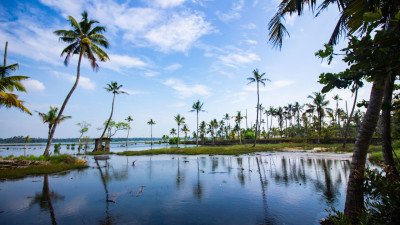 @@Overview and Unique Ecosystem:: Loktak Lake is the largest freshwater lake in Northeast India, famous globally for its unique ecosystem of floating islands called Phumdis. These phumdis are heterogeneous masses of vegetation, soil, and organic matter that have solidified into circular or elliptical islands. The lake is a lifeline for the surrounding communities, sustaining an estimated 100,000 people through fishing and agriculture. It is a designated Ramsar site. The southern part hosts the Keibul Lamjao National Park, the world's only floating national park, home to the endangered Sangai (Manipur's state animal). @@Cultural Significance:: The lake is deeply ingrained in Manipuri culture and mythology, with many folk stories and songs dedicated to its beauty and abundance. The phumsangs (floating huts) of the local fishermen are a distinctive and photogenic sight. @@Geographical Dimension:: The lake covers a vast area of approximately 287 sq. km (varying seasonally), making its sheer Dimension the dominant feature of the valley. Its beauty is best appreciated from viewpoints like Sendra Hill.
Information
-
Why Famous:
Ancient Vishnu Temple: It is home to a 15th-century temple that is one of the oldest brick structures in the state, protected by ASI.
Keibul Lamjao Park: This is the only floating national park on Earth, providing a unique habitat for the ra...Ancient Vishnu Temple: It is home to a 15th-century temple that is one of the oldest brick structures in the state, protected by ASI.
Keibul Lamjao Park: This is the only floating national park on Earth, providing a unique habitat for the rare brow-antlered Sangai deer.
Loktak Lake: Famous for its Phumdis or floating vegetable masses, it offers a landscape found nowhere else in the world for travelers.
INA Memorial: Located nearby in Moirang, it is the historic site where the Indian National Army first hoisted the tricolor on Indian soil. -
Architecture:
Temple Design: The Vishnu Temple built in 1467 exhibits a rare fusion of Chinese and Hindu architectural styles with a corbelled roof.
Dimensions: The temple is a small, square structure measuring approximately 5 meters by 5 meters with a do...Temple Design: The Vishnu Temple built in 1467 exhibits a rare fusion of Chinese and Hindu architectural styles with a corbelled roof.
Dimensions: The temple is a small, square structure measuring approximately 5 meters by 5 meters with a double-storeyed pyramidal roof.
Material Usage: It is constructed using small bricks and local stones, showcasing the early mastery of masonry in the region without modern mortar.
Pagoda Influence: The roof's unique curvature reflects the influence of the Ava (Burmese) and Chinese craftsmen who frequented the royal court. -
How To Reach:
By Air: The nearest airport is Imphal International Airport, located about 25 KM away, with regular flights from Kolkata and Delhi.
By Train: The closest major railhead is Dimapur in Nagaland, which is about 230 KM away; however, a new line...By Air: The nearest airport is Imphal International Airport, located about 25 KM away, with regular flights from Kolkata and Delhi.
By Train: The closest major railhead is Dimapur in Nagaland, which is about 230 KM away; however, a new line to Jiribam is expanding.
By Road: It is well-connected via the NH-150 (Tiddim Road). Private taxis and public buses operate frequently from the Imphal bus stand.
By Local Transport: Within the town, auto-rickshaws and cycle-rickshaws are the primary modes of transport for reaching the lake and nearby temples. -
Weather and Best Time to Visit:
Winter Season: October to March is the best time as the weather is cool and the migratory birds arrive at Loktak Lake.
Spring/Summer: April to June offers lush greenery and blooming lilies, though it can get humid during the peak afternoon h...Winter Season: October to March is the best time as the weather is cool and the migratory birds arrive at Loktak Lake.
Spring/Summer: April to June offers lush greenery and blooming lilies, though it can get humid during the peak afternoon hours.
Monsoon Season: July to September brings heavy rains which can make boat travel difficult, though the landscape becomes incredibly vibrant and green.
Time of Day: Early morning is best for wildlife spotting, while late afternoon is perfect for photography and temple visits. -
Near Tourist Places:
1. Loktak Lake (2 KM), 2. Keibul Lamjao (5 KM), 3. Moirang (12 KM), 4. Red Hill (15 KM), 5. Loukoipat (1 KM), 6. Imphal (29 KM), 7. Sendra (3 KM), 8. Phubala (8 KM), 9. Thanga (4 KM), 10. Ningthoukhong (6 KM)
Tourism Tips
-
Health and Safety: Always carry bottled water and mosquito repellent, especially when visiting the lake or forested areas to prevent malaria.
Packing Essentials: Wear comfortable walking shoes, carry a light jacket for winter mornings, and a...Health and Safety: Always carry bottled water and mosquito repellent, especially when visiting the lake or forested areas to prevent malaria.
Packing Essentials: Wear comfortable walking shoes, carry a light jacket for winter mornings, and always keep an umbrella for sudden tropical rains.
Accommodation: Stay at the Sendra Park and Resort for the best lake views, or find budget guesthouses in the main Bishnupur town.
Cultural Etiquette: Dress modestly when visiting temples and always ask for permission before photographing the local residents or their private homes.
Reviews
FAQs
Bishnupur Itineray And Cost:-
Other Places In Manipur :-
Other States In India :-
Information about New and Updated Locations() of Manipur Has Been Added :-
Card subtitle
Note:-
Information provided here in good Faith and for reference only.
Near Places
Bishnupur
Some quick example text to build on the card title and make up the bulk of the card's content.
Go somewhere
Chandel
Some quick example text to build on the card title and make up the bulk of the card's content.
Go somewhere
Churachandpur
Some quick example text to build on the card title and make up the bulk of the card's content.
Go somewhere
Ima Keithel
Some quick example text to build on the card title and make up the bulk of the card's content.
Go somewhere
Imphal
Some quick example text to build on the card title and make up the bulk of the card's content.
Go somewhere
Jiribam
Some quick example text to build on the card title and make up the bulk of the card's content.
Go somewhere
Kakching
Some quick example text to build on the card title and make up the bulk of the card's content.
Go somewhere
Kamjong
Some quick example text to build on the card title and make up the bulk of the card's content.
Go somewhere
Khongjom
Some quick example text to build on the card title and make up the bulk of the card's content.
Go somewhere
Lairok Maru
Some quick example text to build on the card title and make up the bulk of the card's content.
Go somewhere
Loukham
Some quick example text to build on the card title and make up the bulk of the card's content.
Go somewhere
Moreh
Some quick example text to build on the card title and make up the bulk of the card's content.
Go somewhere
Pherzawl
Some quick example text to build on the card title and make up the bulk of the card's content.
Go somewhere
Phumdi
Some quick example text to build on the card title and make up the bulk of the card's content.
Go somewhere
Senapati
Some quick example text to build on the card title and make up the bulk of the card's content.
Go somewhere
Tamenglong
Some quick example text to build on the card title and make up the bulk of the card's content.
Go somewherein Other Cities