

Jauhar Kund 2
General information
-
Ideal Duration:
30 minutes (A quick, respectful visit focusing on the historical significance) to 1 hour (Including time for reflection and exploring the immediate vicinity like Rana Kumbha Palace and nearby temples). 7Place Type:
Historical Monument/Sacred Memorial Site (Inside aEntry Fees:
No Separate Fee for the Kund: There is no separate entry fee specifically for the Jauhar Kund. It is located within the Chittorgarh Fort complex. The entry fee is for the fort complex itself, which is paid at the main gate (Ram Pol).
Fort Entr...No Separate Fee for the Kund: There is no separate entry fee specifically for the Jauhar Kund. It is located within the Chittorgarh Fort complex. The entry fee is for the fort complex itself, which is paid at the main gate (Ram Pol).
Fort Entry Fee Structure: The fee is subject to change but is generally structured as follows:
Indian Nationals: Approximately ext{Rs.}50 (sometimes ext{Rs.}40) per person.
Foreign Tourists: Approximately ext{Rs.}600 per person.
Vehicle Charges (Extra): There is often an additional charge for taking a private vehicle (car or auto-rickshaw) inside the vast fort complex, typically ranging from ext{Rs.}50 to ext{Rs.}100 per vehicle.
Other Costs: Visitors should also budget for hiring an authorized guide (highly recommended due to the fort's size and history) and for the separate ticket required for the evening Sound and Light Show, if they choose to attend. 14Timing:
Regular Timings: The Jauhar Kund is accessible during the operating hours of the Chittorgarh Fort. These are typically from 9:00 AM to 6:00 PM (or 9:30 AM to 6:30 PM), daily, year-round. It is best to confirm locally.
Ideal Visit Time: The...Regular Timings: The Jauhar Kund is accessible during the operating hours of the Chittorgarh Fort. These are typically from 9:00 AM to 6:00 PM (or 9:30 AM to 6:30 PM), daily, year-round. It is best to confirm locally.
Ideal Visit Time: The absolute best time to visit the kund and the fort is in the early morning (immediately after opening) or the late afternoon (around 4:00 PM onwards).
Morning Serenity: Visiting in the morning offers a quieter, more tranquil experience, allowing for personal reflection on the historical significance of the site without large crowds. The light is also softer, which is excellent for photography.
Late Afternoon Views: The late afternoon provides slightly cooler temperatures and the chance to witness the magnificent sunset over the fort, which can be seen from the ramparts near the kund's location, before the fort closes.
Avoiding Midday Heat: It is strongly advised to avoid the midday hours (11:00 AM to 3:00 PM), especially during the summer months (April to June), as the heat can be intense and make the exploration of the large, open-air fort complex extremely uncomfortable. 15Special Events:
Chittorgarh Fort Festival (Mewar Festival): The fort complex, which contains the Jauhar Kund, is the central venue for the annual Chittorgarh Fort Festival, often held in the October or November after the monsoons, or sometimes around the March/April of the Mewar calendar. ...Chittorgarh Fort Festival (Mewar Festival): The fort complex, which contains the Jauhar Kund, is the central venue for the annual Chittorgarh Fort Festival, often held in the October or November after the monsoons, or sometimes around the March/April of the Mewar calendar. This vibrant festival is a major draw for tourists.
Rajputana Heritage: The festival aims to showcase the rich, colorful, and valorous heritage of Rajputana. It features a spectacular array of cultural activities, including traditional folk dances like Ghoomar and Kalbelia, music performances, regional culinary feasts, and a grand procession where local people dress in traditional Rajput attire.
Goddess Gauri Puja: The festival is also linked to the worship of Goddess Gauri (Parvati), with women performing traditional rituals. While the Jauhar Kund itself is a solemn memorial, the festival's atmosphere provides a contrast, celebrating the enduring life, art, and spirit of the people whose ancestors were part of the fort's history.
Jauhar Mela: Historically, a Jauhar Mela (fair) was occasionally held at the fort to commemorate the brave women, though this event is less frequent or widely advertised than the main Fort Festival. It is a more solemn gathering, focusing on remembrance and respect. 12Best Photo Spots:
The Kund's Interior and Fencing: The most iconic photo is of the Jauhar Kund itself. Due to its enclosed nature, the best shots are often taken from the railings or viewing platforms looking down into the deep, often water-filled, structure. The muted stone colors and the ...The Kund's Interior and Fencing: The most iconic photo is of the Jauhar Kund itself. Due to its enclosed nature, the best shots are often taken from the railings or viewing platforms looking down into the deep, often water-filled, structure. The muted stone colors and the powerful, geometric shape make for a compelling historical photograph.
Contrast with Rana Kumbha Palace: Photographs capturing the rugged walls of the surrounding Rana Kumbha Palace ruins with the wide open sky in the background provide a sense of scale and historical context. This contrast between the ruins of daily life and the site of final sacrifice is visually striking.
Sunrise/Sunset Silhouettes: Being on the high ground of the fort, the area around the Jauhar Kund offers incredible opportunities for photographing the sunset or sunrise. Silhouetting the fort's walls and structures against the deep colors of the sky, especially during the winter months, creates dramatic and atmospheric photos.
Fortress Viewpoint: The area offers panoramic views of the city below and the vast expanse of the fort. Capture the distant structures like the Kirti Stambh or Vijay Stambh from the vantage point near the kund, using the stone walls as a foreground element to add depth. (Approx. ) 13Photo Gallery
Things To Do
-
Reflective Observation and Photography: The primary activity is a respectful visit to the site for observation and reflection. Due to the sacred and tragic nature, it encourages quiet contemplation rather than boisterous sightseeing. Photography, particularly wide-angle shots of the structure and the surrounding palace ruins, is popular. Visitors often take time to read the historical plaques and interpretive signs that explain the Jauhar tradition and the specific events of 1303 and later years.
Exploring Rana Kumbha Palace: The kund is situated within the extensive ruins of the Rana Kumbha Palace, which is a massive complex that was once home to numerous Maharajas and their queens. A visitor can spend hours wandering through the maze-like passages, courtyards, and stables of this palace. One can explore the zenana (women's...
Information
-
Why Famous:
The Legend of Rani Padmini: The primary fame of the Jauhar Kund stems from its inextricable link to the legendary queen, Rani Padmini, whose beauty and honor were said to be the catalysts for the 1303 siege by Alauddin Khilji. Her choice to lead the women in Jauhar, choos...The Legend of Rani Padmini: The primary fame of the Jauhar Kund stems from its inextricable link to the legendary queen, Rani Padmini, whose beauty and honor were said to be the catalysts for the 1303 siege by Alauddin Khilji. Her choice to lead the women in Jauhar, choosing death over dishonor, cemented the site's tragic but heroic status in Indian folklore and history. This act personifies the Rajput code of honor and has been immortalized in countless songs, poems, and modern media.
Symbol of Ultimate Sacrifice: The kund is universally recognized as a powerful symbol of ultimate sacrifice for dharma (duty) and honor. It is not famous for battle or victory, but for a profound, collective decision that reflects the non-negotiable nature of Rajput women's dignity. The site attracts historians and tourists alike who seek to understand the depth of this cultural and historical commitment to self-respect.
Witness to Three Jauhars: Its fame is amplified by the fact that it was the location for three separate Jauhars across three centuries (1303, 1534, and 1568), making it a recurring landmark in the fort's tumultuous history of sieges and defenses. Each event added another layer to its somber significance as a place where the fate of the entire royal line and its women was sealed in fire. 9 -
Architecture:
Subterranean Structure: The Jauhar Kund itself is not an elaborate architectural monument but a functional, deep, open-air subterranean space, resembling a large stepwell or a massive cistern, strategically built underground within the fortified complex of the Rana Kumbha Pa...Subterranean Structure: The Jauhar Kund itself is not an elaborate architectural monument but a functional, deep, open-air subterranean space, resembling a large stepwell or a massive cistern, strategically built underground within the fortified complex of the Rana Kumbha Palace. It was designed to contain a large pyre and the women who would perform the Jauhar, ensuring the act remained private and complete. Its design focuses on utility for the ritual rather than aesthetic grandeur.
Dimension: Although exact, verified architectural blueprints with dimensions are not widely available to tourists, the structure is large enough to have accommodated hundreds of women simultaneously. Historians estimate the dimensions of the chamber to be substantially large, possibly tens of meters across, to hold the pyre and the participants. The surrounding walls are solid stone, built into the earth beneath the palace structure.
Fortress Integration: The location is significant, being close to the women's and queen's quarters within the fort (near the Rana Kumbha Palace), allowing for a swift and protected retreat during the final moments of a siege. The access is typically through narrow, discreet passages leading from the central courtyards of the palace to the underground chamber. This integration into the palace's private chambers underscores its importance as a place of last resort for the royal women. The surrounding fort architecture is classical Rajput style, characterized by massive stone walls, robust gateways, and minimal ornamentation compared to later Mughal-influenced palaces, but the kund itself is a stark, unadorned reflection of a historical necessity. 6 -
How To Reach:
By Air: The nearest airport is Maharana Pratap Airport (UDR) in Udaipur, which is approximately 90 kilometers away. This airport is well-connected to major Indian cities like Delhi, Mumbai, and Jaipur. From Udaipur airport, visitors can easily hire a pre-booked taxi or a p... -
Near Tourist Places:
1. Rana Kumbha Palace (Adjacent to the kund, within the fort) 2. Padmini Palace (Approx. ext{1} KM, within the fort) 3. Vijay Stambh (Victory Tower) (Approx. ext{1. 5} KMs, within the fort) 4. Kirti Stambh (Tower of Fame) (Approx. ext{2} KMs, within the fort) 5. Meera Temple (Approx. ext{1. 5} KMs, within the fort) 6. Gaumukh Reservoir (Approx. ext{1} KM, within the fort) 7. Fateh Prakash Palace Museum (Approx. ext{1. 5} KMs, within the fort) 8. Kalika Mata Temple (Approx. ext{1. 5} KMs, within the fort) 9. Ratan Singh Palace (Approx. ext{2. 5} KMs, within the fort) 10. Sanwariaji Temple (Approx. ext{31} KMs, located outside the city towards Udaipur) 19
Tourism Tips
-
Health & Safety: Wear comfortable, sturdy walking shoes, as the fort complex involves uneven terrain, steep climbs, and a lot of walking. Carry plenty of drinking water, especially if visiting outside of the peak winter months. Sunscreen, a hat, and sunglasses are essentia...
Reviews
Information about New and Updated Locations(675+) of Rajasthan Has Been Added :-
Card subtitle
Note:-
Information provided here in good Faith and for reference only.
All information and pictures will be updated soon, please keep visiting.
Near Places
Chittorgarh Fort
Some quick example text to build on the card title and make up the bulk of the card's content.
Go somewhere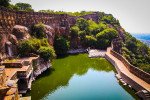
Gaumukh Kund
Some quick example text to build on the card title and make up the bulk of the card's content.
Go somewhere
Padmini's Palace
Some quick example text to build on the card title and make up the bulk of the card's content.
Go somewhere
Archeological Museum
Some quick example text to build on the card title and make up the bulk of the card's content.
Go somewhere
Bassi Wildlife Sanctuary
Some quick example text to build on the card title and make up the bulk of the card's content.
Go somewhere
Bhainsrorgarh Fort
Some quick example text to build on the card title and make up the bulk of the card's content.
Go somewhere
Bhainsrorgarh Wildlife Sanctuary
Some quick example text to build on the card title and make up the bulk of the card's content.
Go somewhere
Bhimlat Kund
Some quick example text to build on the card title and make up the bulk of the card's content.
Go somewhere
Fateh Prakash Palace
Some quick example text to build on the card title and make up the bulk of the card's content.
Go somewhere
Fateh Prakash Palace Museum
Some quick example text to build on the card title and make up the bulk of the card's content.
Go somewherein Other Cities