Kanch Mandir
General information
-
Ideal Duration:
1 to 1. 5 hoursPlace Type:
Architectural Marvel, Religious, Heritage, UniqueEntry Fees:
General Entry: Entry to the Kanch Mandir is generally Free of Cost for all visitors. The temple is run by a Jain Trust which maintains an open door policy for darshan and viewing the architectural marvel.
Photography Restrictions: Historica...General Entry: Entry to the Kanch Mandir is generally Free of Cost for all visitors. The temple is run by a Jain Trust which maintains an open door policy for darshan and viewing the architectural marvel.
Photography Restrictions: Historically, photography inside the main hall has been prohibited or strictly restricted without prior permission, especially flash photography, to prevent damage to the delicate glasswork and respect the sanctity of the sanctum. Visitors should be prepared for this and respect the signs/requests. There is no formal fee for non-commercial photography, but restrictions are the cost.
Donation: The temple operates on donations (Dan). Donation boxes are available for voluntary contributions towards the temple's maintenance and the attached Dharamshala (rest house).
Shoe Keeping: A very nominal fee (often Rs.5 or Free) may be charged by the attendant for keeping your footwear outside.Timing:
Regular Timings: The temple is typically open daily from 5:00 AM to 10:00 PM. Unlike many temples, it usually remains open throughout the afternoon, making it flexible for visitors.
Ideal Visit Time: The best time to visit is during the Ear...Regular Timings: The temple is typically open daily from 5:00 AM to 10:00 PM. Unlike many temples, it usually remains open throughout the afternoon, making it flexible for visitors.
Ideal Visit Time: The best time to visit is during the Early Morning (5:00 AM to 9:00 AM) or Late Evening (7:00 PM to 9:00 PM) when the crowds are minimal, and the atmosphere is most serene for darshan. The interplay of natural or artificial light on the glass in the morning/evening hours is also magical.
Midday Visit: Visiting during the midday (11:00 AM - 3:00 PM) is still possible but the light effects may be harsh, and the surrounding market area (Itwaria Bazar) is at its most crowded and noisy.Special Events:
Paryushan Parva: As a central Jain temple, it observes the 8-10 day holy period of Paryushan Parva (usually in August or September) with great fervor. Special sermons, communal prayers, and fasting are held, attracting a large number of local Jain devotees.Paryushan Parva: As a central Jain temple, it observes the 8-10 day holy period of Paryushan Parva (usually in August or September) with great fervor. Special sermons, communal prayers, and fasting are held, attracting a large number of local Jain devotees.
Mahavir Jayanti: The birth anniversary of Lord Mahavir (usually in March or April) is celebrated with a large procession that often either starts from or terminates at the Kanch Mandir, along with special decorations and religious activities within the temple.
New Year (Diwali): The Jain community celebrates Diwali differently, often marked by special prayers for Lord Mahavir's Nirvana. The temple is brightly illuminated and decorated for this festival, drawing devotees throughout the day.Best Photo Spots:
The Infinite Reflection: The most iconic photo spot is capturing the optical illusion created by the mirrors around the main idol. Even if close-ups of the deity are not allowed, capturing the hall with the reflections is a stunning shot.
The C...The Infinite Reflection: The most iconic photo spot is capturing the optical illusion created by the mirrors around the main idol. Even if close-ups of the deity are not allowed, capturing the hall with the reflections is a stunning shot.
The Ceiling Mosaics: The intricate, detailed glass work on the ceiling, with its kaleidoscopic patterns, is ideal for close-up artistic and abstract photography. Using a wide-angle lens can capture the full, complex pattern.
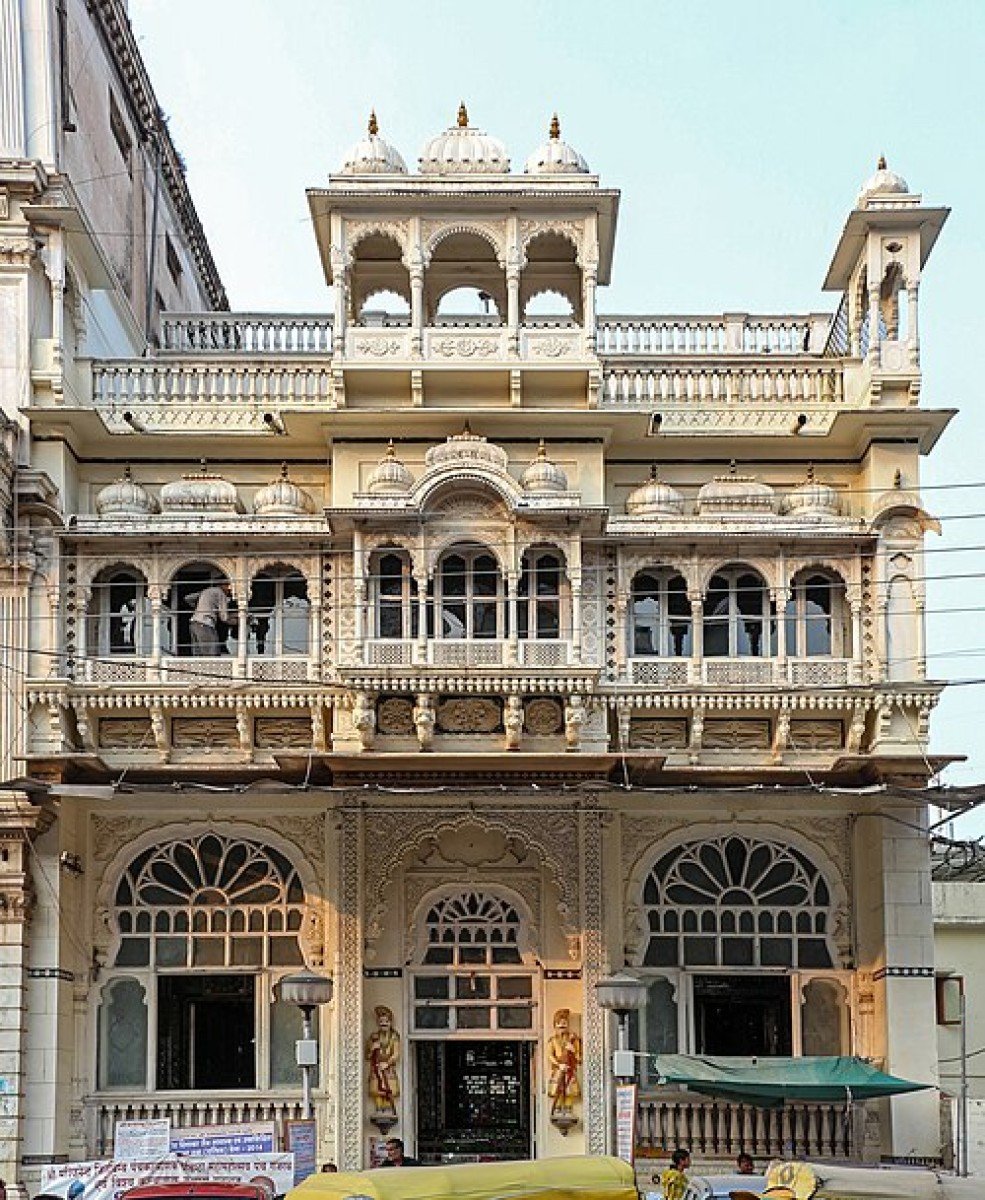
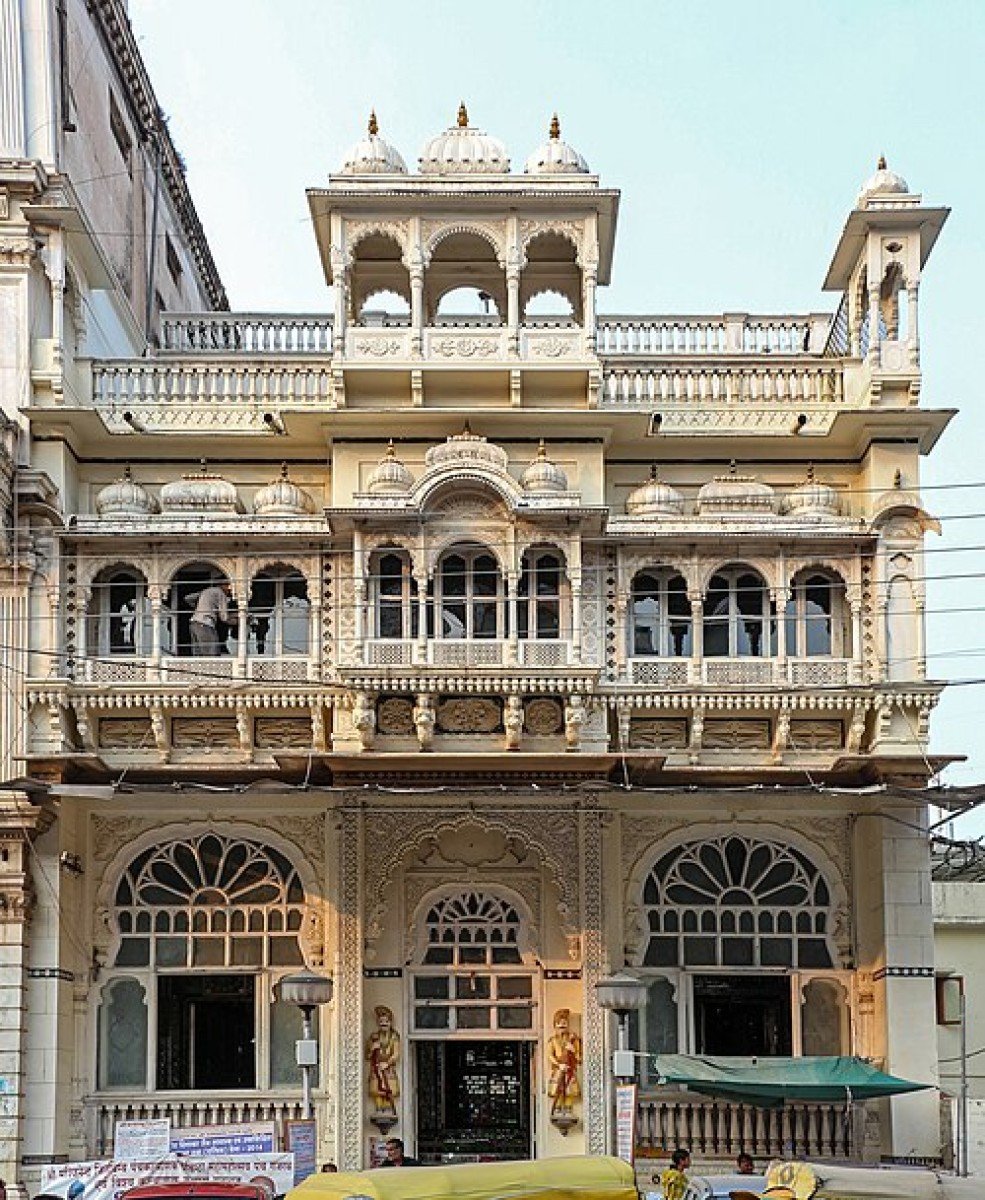
The Exterior Facade: The traditional exterior, resembling a historic Haveli (mansion) with its traditional Rajasthani style jali work and canopied balcony, makes for a great architectural photo that contrasts with the interior.
The Glass Pillars: The structural pillars completely covered in decorative glass and mirrors offer a unique texture and reflective surface to play with light and shadow in your photographs.Photo Gallery
Things To Do
-
Observe the Glass Mosaic Art: Spend a considerable amount of time closely examining the breathtaking mirror mosaics. Look for the intricate patterns, the vivid glass depictions of the Tirthankaras, and the complex narrative scenes from Jain history and philosophy on the walls and ceiling.
Experience the Infinite Reflection: Stand at the designated spot in the main hall to fully experience the illusion where the main idol seems to be replicated infinitely in the surrounding glass. This is the heart of the temple's artistic design and a must-do viewing experience.
Participate in Jain Worship: Observe the local Jain devotees performing their darshan and puja. While maintaining silence and distance, this is a profound way to understand the living traditions of the place.
Read MoreObserve the Glass Mosaic Art: Spend a considerable amount of time closely examining the breathtaking mirror mosaics. Look for the intricate patterns, the vivid glass depictions of the Tirthankaras, and the complex narrative scenes from Jain history and philosophy on the walls and ceiling.
Experience the Infinite Reflection: Stand at the designated spot in the main hall to fully experience the illusion where the main idol seems to be replicated infinitely in the surrounding glass. This is the heart of the temple's artistic design and a must-do viewing experience.
Participate in Jain Worship: Observe the local Jain devotees performing their darshan and puja. While maintaining silence and distance, this is a profound way to understand the living traditions of the place.
Photography (Where Allowed): Carefully and respectfully take photographs to capture the mesmerizing reflections (check current rules, as interior photography is sometimes restricted or requires permission). Capturing the play of light on the glass is a rewarding activity.
Meditate on the Tranquility: Despite the intricate decoration, the atmosphere is deeply spiritual and peaceful. Find a spot to sit quietly and reflect on the artistry and the spiritual symbolism of the reflections (the cycle of life/death).
Explore Itwaria Bazar: The temple is located in the bustling old city market area (Itwaria Bazar). After the temple visit, take a walk through the narrow, historic lanes to experience the traditional pulse of Indore's trade and culture.
Information
-
Why Famous:
Unique Glass Interior: Its primary fame is due to the absolutely unique and unparalleled interior, which is entirely covered in glass and mirrors. The effect of light and reflection creates a stunning, otherworldly kaleidoscope, giving it the nickname "The Glass Temple.Unique Glass Interior: Its primary fame is due to the absolutely unique and unparalleled interior, which is entirely covered in glass and mirrors. The effect of light and reflection creates a stunning, otherworldly kaleidoscope, giving it the nickname "The Glass Temple.
" Infinite Reflection of Deities: The strategic placement of mirrors around the main Tirthankara idol creates the illusion of an infinite number of identical idols stretching away in every direction. This illusion is a major spiritual and artistic highlight.
Patronage of Seth Hukumchand: The temple is a symbol of the wealth, piety, and artistic vision of its founder, Sir Seth Hukumchand Jain, a towering figure in Indore's history. It is a mandatory stop for any tourist interested in unique Indian craftsmanship. Kanch Mandir is an architectural wonder. -
Architecture:
Architectural Style:
Glass Mosaic and Mirror Work: The exterior is built in a traditional Indian medieval mansion style, primarily using white stone, but the interior is a unique example of glass mosaic architecture. The use of glass is the ...Architectural Style:
Glass Mosaic and Mirror Work: The exterior is built in a traditional Indian medieval mansion style, primarily using white stone, but the interior is a unique example of glass mosaic architecture. The use of glass is the dominant, defining feature.
Key Features: Every inch of the interior is adorned with thousands of tiny glass pieces and mirrors. The floor is also covered in small glass tiles. The main shrine features the idols of Lord Shantinatha, the 16th Tirthankara, and others, encased in glass. The ceiling is particularly intricate, creating a magical, crystalline effect.
Dimension Highlights: The temple is modest in size, which enhances the dense, intricate detailing of the work. The central Garbhagriha (sanctum sanctorum) is small, emphasizing the intimate and powerful reflection effect. The surrounding hall, though not vast, maximizes the impact of the glass work. The temple is part of a larger compound that includes the Shish Mahal (a glass mansion). -
How To Reach:
By Air: The nearest airport is Devi Ahilya Bai Holkar Airport (IDR), approximately 10 KM away. Take a taxi or ride-share service; the ride will take around 30-40 minutes depending on traffic.
By Train: The nearest major station is Indore J...By Air: The nearest airport is Devi Ahilya Bai Holkar Airport (IDR), approximately 10 KM away. Take a taxi or ride-share service; the ride will take around 30-40 minutes depending on traffic.
By Train: The nearest major station is Indore Junction (INDB), which is very close, only about 3 KM away. Being located in the central old city area, it is easily reachable by auto-rickshaw or taxi in 10-15 minutes.
By Road: Located in the busy, historic Itwaria Bazar area near the city center, the temple is easily identifiable. However, the narrow, crowded lanes of the old city make driving a large private vehicle directly to the gate difficult. Public bus routes will drop you off at a nearby major stop, from which a short auto-rickshaw ride is necessary.
By Local Transport: The best way is to take an auto-rickshaw or a ride-share (e. g. , Uber/Ola), which can navigate the narrow market streets closer to the entrance. Shared auto-rickshaws are plentiful from Rajwada or the railway station. -
Weather and Best Time to Visit:
Different Types of Seasons: Winter (October to March) is the Best Time to Visit to avoid the heat and comfortably navigate the crowded market streets outside the temple. The pleasant weather enhances the enjoyment of the intricate interior. Summer should be strictly avoide...Different Types of Seasons: Winter (October to March) is the Best Time to Visit to avoid the heat and comfortably navigate the crowded market streets outside the temple. The pleasant weather enhances the enjoyment of the intricate interior. Summer should be strictly avoided during midday.
Different Parts of the Day: The Ideal Time of Day is Early Morning or Late Evening. Early morning is quietest, allowing for peaceful observation and meditation. Late evening, when the external market bustle dies down and the internal lights are on, offers a different, enchanting reflective glow on the glass work. Plan to visit between 5:00 PM and 8:00 PM for the evening experience. -
Near Tourist Places:
Rajwada Palace (1 KM), Krishnapura Chhatris (1. 5 KM), Sarafa Bazaar (Night Food Market) (Less than 1 KM - evening only), Central Museum (2 KM), Bada Ganpati (3 KM), Gita Bhawan (4 KM), Indore Zoo (5 KM), Lal Bagh Palace (4 KM), Gommat Giri (12 KM), Khajrana Ganesh Mandir (7 KM).
Tourism Tips
-
Health & Safety: The temple is in a very crowded, historic market area. Be highly cautious of pickpockets and keep your belongings secure. The floor is made of glass and can sometimes be slippery; wear appropriate footwear and walk carefully. The temple's structure is de...Health & Safety: The temple is in a very crowded, historic market area. Be highly cautious of pickpockets and keep your belongings secure. The floor is made of glass and can sometimes be slippery; wear appropriate footwear and walk carefully. The temple's structure is delicate; do not touch the glass walls.
Packing: Dress modestly (covering shoulders and legs) as a sign of respect for the religious site. Since the temple is entirely glass, light-colored clothing is recommended as it helps in not reflecting too strongly. Carry a compact camera, but be prepared for no-flash or no-photography rules inside the main sanctum.
Accommodation: Many budget and mid-range hotels are available in the Rajwada area (within 1-2 KM) and the central Indore area, offering easy access to the temple.
Cultural Etiquette: Maintaining silence and reverence is essential. Be extremely gentle and avoid touching the glass or mirror walls. If photography is restricted, respect the rules—the glasswork is over 100 years old. Be prepared for a bustling, sometimes chaotic, walk through the market to reach the temple.
Reviews
FAQs
Indore Itineray And Cost:-
Other Places In Indore :-
Other States In India :-
Information about New and Updated Locations() of Madhya Pradesh Has Been Added :-
Card subtitle
Note:-
Information provided here in good Faith and for reference only.
Near Places

Bijasen Tekri Temple
Some quick example text to build on the card title and make up the bulk of the card's content.
Go somewhere
Chhatri Bagh
Some quick example text to build on the card title and make up the bulk of the card's content.
Go somewhere
Chidiya Bhadak Waterfall
Some quick example text to build on the card title and make up the bulk of the card's content.
Go somewhere
Crescent Water Park & Resort
Some quick example text to build on the card title and make up the bulk of the card's content.
Go somewhere
Gita Bhawan
Some quick example text to build on the card title and make up the bulk of the card's content.
Go somewhere
Gommat Giri
Some quick example text to build on the card title and make up the bulk of the card's content.
Go somewhere
Hanumantiya Island
Some quick example text to build on the card title and make up the bulk of the card's content.
Go somewhere
Indore Zoo
Some quick example text to build on the card title and make up the bulk of the card's content.
Go somewhere
ISCON Temple Indore
Some quick example text to build on the card title and make up the bulk of the card's content.
Go somewhere
Janapav Hill
Some quick example text to build on the card title and make up the bulk of the card's content.
Go somewhere
Jogi Bhadak Waterfalls
Some quick example text to build on the card title and make up the bulk of the card's content.
Go somewhere
Khajrana Ganesh Mandir
Some quick example text to build on the card title and make up the bulk of the card's content.
Go somewhere
Krishnapura Chhatris
Some quick example text to build on the card title and make up the bulk of the card's content.
Go somewhere
Ralamandal Wildlife Sanctuary
Some quick example text to build on the card title and make up the bulk of the card's content.
Go somewhere
Sardar Vallabhbhai Patel Smarak
Some quick example text to build on the card title and make up the bulk of the card's content.
Go somewherein Other Cities