Milagres Church
General information
-
Ideal Duration:
1 HourPlace Type:
Religious/Historical Site, ArchitectureEntry Fees:
General Entry and Visit: There are No Entry Fees for visiting the church or for attending mass. The church is a functional place of worship and is open to all visitors, irrespective of faith. St.
Monica Chapel Access: Access to the adjacen...General Entry and Visit: There are No Entry Fees for visiting the church or for attending mass. The church is a functional place of worship and is open to all visitors, irrespective of faith. St.
Monica Chapel Access: Access to the adjacent St. Monica Chapel, which houses the founder's tomb, is also free, though it may be closed outside of regular prayer hours.
Photography: There are No Photography Charges. Visitors are generally allowed to take pictures of the exterior. However, taking photographs inside the sanctuary during mass or prayer sessions is often prohibited or highly discouraged to maintain solemnity. Always be respectful and discreet if photographing the interior.
Donations: Small donations for the maintenance of the church, lighting, or floral arrangements are welcomed and entirely voluntary. Visitors can drop contributions in the designated boxes.
Mass Collection: During the mass, a collection is taken, which is a voluntary contribution by the congregation and is not an entry requirement for visitors.Timing:
Regular Operating Hours: The church is generally Open All Day for private prayer and reflection, but the most important times are the daily and weekend mass timings. The church compound is generally accessible from 6:00 AM to about 8:00 PM.
Dai...Regular Operating Hours: The church is generally Open All Day for private prayer and reflection, but the most important times are the daily and weekend mass timings. The church compound is generally accessible from 6:00 AM to about 8:00 PM.
Daily Mass Timings: Weekday masses are typically held in the Early Morning (e. g. , 6:00 AM, 7:00 AM) and Evening (e. g. , 6:00 PM). Check the notice board for the specific language (usually Konkani or English).
Sunday Mass Timings: Sunday has multiple masses to accommodate the large congregation, starting from 6:00 AM and continuing through the morning (7:00 AM, 8:15 AM (English), 9:30 AM (Children's Mass)), with an evening mass (5:00 PM).
The Ideal Visit Time: The Early Morning (6:00 AM to 8:00 AM) offers the quietest time to appreciate the architecture and reflect. Attending a Sunday Morning mass, particularly the one in English (8:15 AM), provides a beautiful cultural experience, though it will be crowded.Special Events:
The Annual Feast of Our Lady of Miracles: The primary special event is the annual feast day, celebrated with great enthusiasm, typically in the month of May (sometimes late April), to commemorate the church's patron. The celebration involves special high masses, processions...The Annual Feast of Our Lady of Miracles: The primary special event is the annual feast day, celebrated with great enthusiasm, typically in the month of May (sometimes late April), to commemorate the church's patron. The celebration involves special high masses, processions, and a vibrant carnival atmosphere surrounding the church grounds.
Weekly Novenas:
The church regularly holds weekly Novenas: the Novena of Our Lady of Miracles on Mondays (usually at 6:00 PM) and the St. Antony Novena on Tuesdays (multiple timings). These special prayer services are a deeply ingrained part of the local community's religious calendar and are open to all.
Christmas and Easter Celebrations: As a major Catholic center, the celebrations for Christmas (with midnight mass and spectacular cribs) and Easter (with Holy Week processions and services) are grand affairs, attracting large congregations and tourists.Best Photo Spots:
The Symmetrical Neoclassical Facade: The grand entrance and portico, with its clean lines, offers the best spot for capturing the European-influenced architecture. Frame it from the street level to get the full height and symmetry of the main structure.
Read MoreThe Symmetrical Neoclassical Facade: The grand entrance and portico, with its clean lines, offers the best spot for capturing the European-influenced architecture. Frame it from the street level to get the full height and symmetry of the main structure.
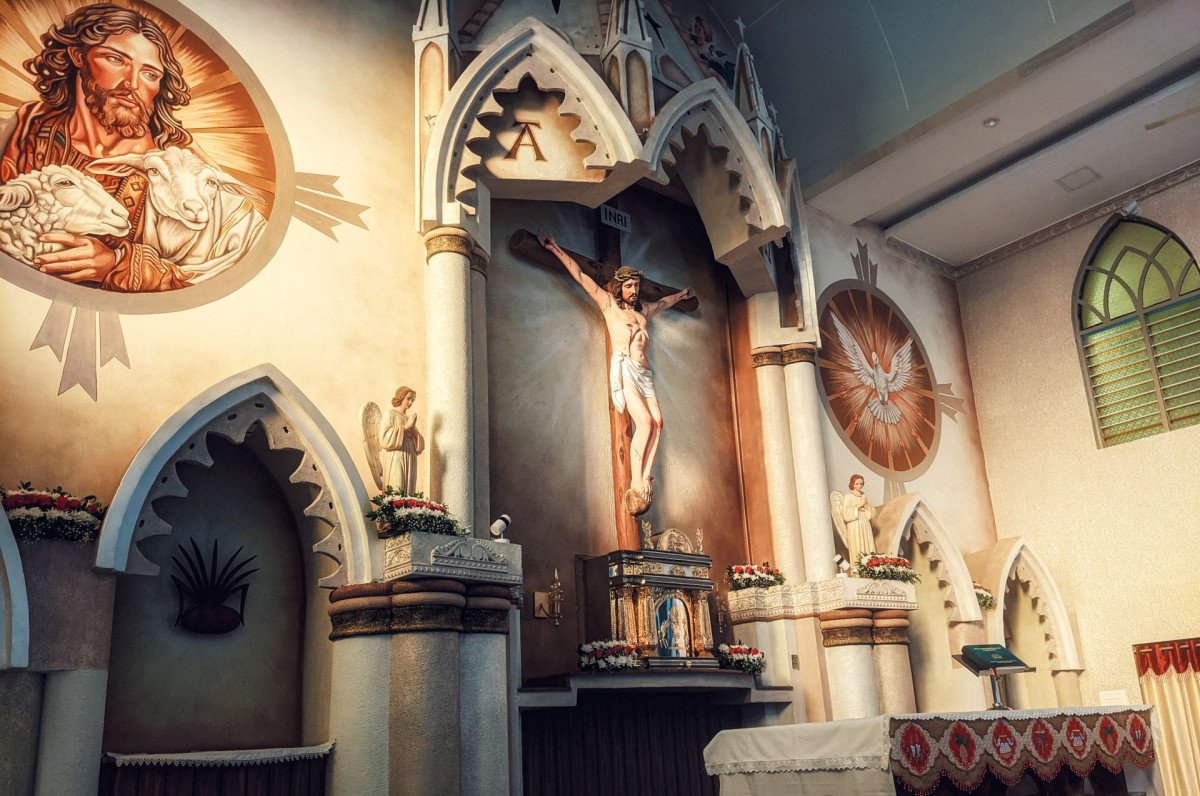
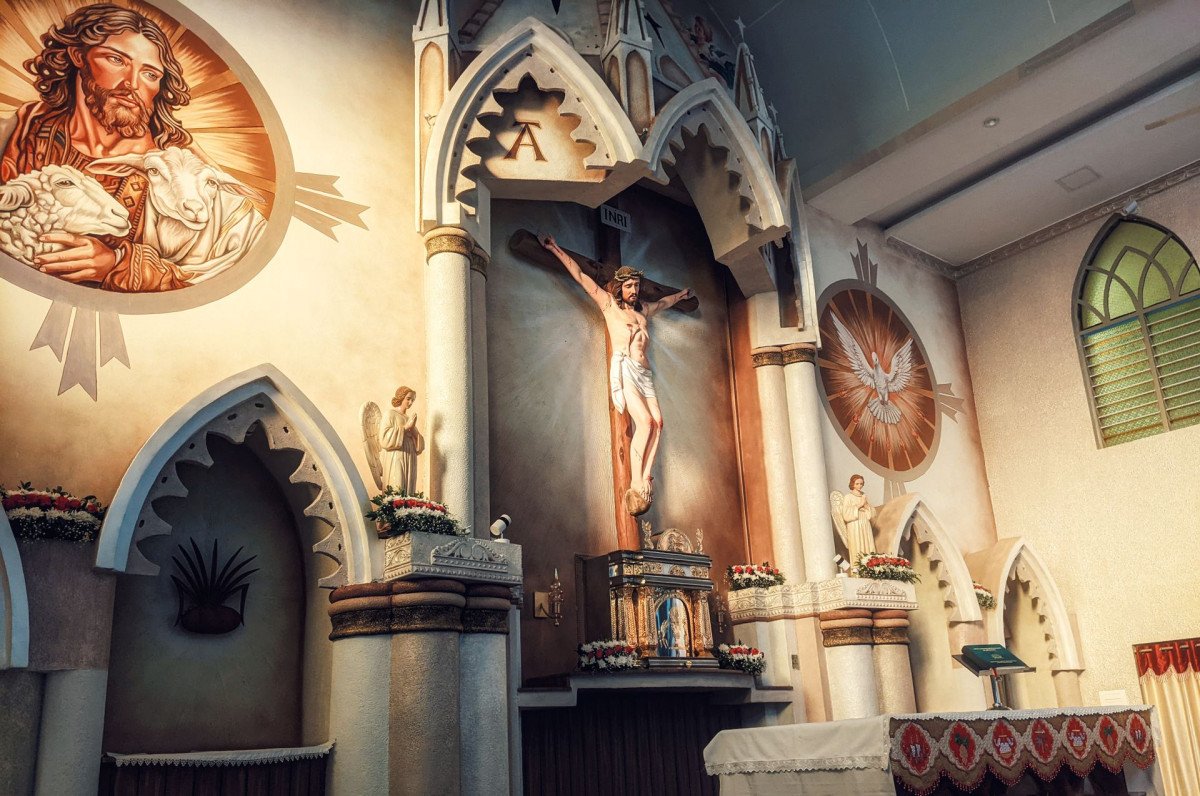
The Main Altar: The interior, with its high vaulted ceilings and the beautifully decorated main altar dedicated to the Virgin Mary, provides a majestic, well-lit photo opportunity, especially when the morning sun streams through the large windows.
(Note: always confirm interior photography is permitted).
Bishop de Castro's Tomb: The quiet, historical bronze slab marking the founder's tomb in the St. Monica Chapel is a unique, subtle photo subject that captures the church's depth of history.
Archway and Pillar Details: Focus on the architectural elements—the arched windows, the classical pillars lining the nave, and the intricate plasterwork—to capture the finer details of the church's Neoclassical design.
The Evening Glow: When illuminated in the evening, the white facade glows warmly, offering a beautiful, peaceful nighttime shot that highlights the church's prominence in the city center.Photo Gallery
Things To Do
-
Attend a Sunday Mass: Experience the spiritual life of the Mangalorean Catholic community by attending one of the several Sunday masses conducted in languages like Konkani (the local language) and English. The choir performances are often soul-stirring.
Admire the Neoclassical Architecture: Spend time appreciating the bright, airy interior, the high vaulted ceiling, and the grand, symmetrical facade. Notice the architectural details like the Corinthian-style columns and the elaborate main altar.
Visit the Tomb of Bishop Thomas de Castro: Locate the bronze-slabbed tomb of the founder in the adjacent St. Monica Chapel. This is a must for history enthusiasts to connect with the 17th-century roots of the church.
Meditation and Quiet Reflection: The church's cool,...Attend a Sunday Mass: Experience the spiritual life of the Mangalorean Catholic community by attending one of the several Sunday masses conducted in languages like Konkani (the local language) and English. The choir performances are often soul-stirring.
Admire the Neoclassical Architecture: Spend time appreciating the bright, airy interior, the high vaulted ceiling, and the grand, symmetrical facade. Notice the architectural details like the Corinthian-style columns and the elaborate main altar.
Visit the Tomb of Bishop Thomas de Castro: Locate the bronze-slabbed tomb of the founder in the adjacent St. Monica Chapel. This is a must for history enthusiasts to connect with the 17th-century roots of the church.
Meditation and Quiet Reflection: The church's cool, peaceful interiors provide an excellent sanctuary from the heat and the hustle of the city center. Light a candle, sit in a pew, and spend a few minutes in silent prayer or contemplation.
Walk through the Cemetery: Take a respectful walk through the historic cemetery to appreciate the beautiful and intricate gravestones and reflect on the community's past.
Attend the Annual Feast: Plan a visit around the Annual Feast of Our Lady of Miracles (typically in May) for a major cultural and religious spectacle involving processions, special masses, and community celebrations.
Capture the Facade: The church's facade and portico, framed by the surrounding trees, make for an excellent photograph, particularly in the soft morning light. Focus on the contrasting white paint and the clean lines of the Neoclassical design.
Information
-
Why Famous:
A Symbol of Resilience: Its fame is tied to its tumultuous history. Having been destroyed by Tipu Sultan and subsequently rebuilt multiple times, it stands as a powerful symbol of the resilience and enduring faith of the Mangalorean Catholic community.
Read MoreA Symbol of Resilience: Its fame is tied to its tumultuous history. Having been destroyed by Tipu Sultan and subsequently rebuilt multiple times, it stands as a powerful symbol of the resilience and enduring faith of the Mangalorean Catholic community.
Location in the Heart of the City: Situated in Hampankatta, the busiest and most central locality of Mangalore, the church is easily accessible and acts as a central gathering place for the Catholic populace for daily and weekly masses, making it a highly visible and functional landmark.
The Resting Place of the Founder: The church complex, specifically the St. Monica Chapel adjacent to the main building, houses the tomb of its founder, Bishop Thomas de Castro (d. 1684), lending it deep historical and religious importance as the resting place of one of the earliest spiritual leaders of the region.Architecture:
Neoclassical and European Architectural Style: The current structure, completed in 1911 (with subsequent renovations, notably in 2022), is a stunning example of Neoclassical architecture, reflecting European ecclesiastical styles brought to the coast. The facade is characte...Neoclassical and European Architectural Style: The current structure, completed in 1911 (with subsequent renovations, notably in 2022), is a stunning example of Neoclassical architecture, reflecting European ecclesiastical styles brought to the coast. The facade is characterized by clean lines, symmetrical design, and a grand entrance portico added later.
Interior Dimensions and Design: The church features a high, vaulted ceiling and a spacious nave that can accommodate a large congregation. The interiors are remarkably bright and airy. The most compelling architectural feature is the main altar, which is beautifully adorned with statues and intricate carvings, serving as a focal point. Behind the altar, the wall often features a large, majestic depiction or statue of the Virgin Mary. The church utilizes classic elements like large arched windows, Corinthian-style pillars lining the nave, and a choir loft. The adjacent cemetery contains historical graves, including a bronze slab marking the tomb of the founder, Bishop Thomas de Castro, in the St. Monica Chapel. The overall architecture is one of simple yet grand elegance, a stark contrast to the Dravidian temples of the region.How To Reach:
By Air: The nearest airport is Mangalore International Airport (IXE), approximately 12 km away. Since the church is located in the heart of the city (Hampankatta), the taxi or app-based cab ride from the airport is direct and takes about 30 minutes.
Read MoreBy Air: The nearest airport is Mangalore International Airport (IXE), approximately 12 km away. Since the church is located in the heart of the city (Hampankatta), the taxi or app-based cab ride from the airport is direct and takes about 30 minutes.
By Train: The closest major station is Mangalore Central Railway Station (MAQ), located about 2 km away. Mangalore Junction Railway Station (MAJN) is about 5 km away. An auto-rickshaw ride from MAQ will take less than 10 minutes. The church's location near Wenlock Government Hospital makes it a well-known landmark for transport.
By Road (Bus): The church is practically at the central transport hub of Hampankatta. All local city buses pass through this area, and any bus heading toward the State Bank bus terminal will drop you within a short walk of the church. This is the easiest and cheapest mode of transport from any part of Mangalore.
By Local Transport: It is best reached by auto-rickshaw or app-based cab. The location is so central that a short walk from most commercial areas like Falnir Road or K. S. Rao Road will suffice. Because of its central location, finding return transport is never an issue.Weather and Best Time to Visit:
The Post-Monsoon/Winter Season (October to March): This is the Best Time to Visit. The weather is cool, dry, and highly conducive for walking and sightseeing in the busy city center. The celebrations for Christmas and New Year also fall within this window, offering a speci...The Post-Monsoon/Winter Season (October to March): This is the Best Time to Visit. The weather is cool, dry, and highly conducive for walking and sightseeing in the busy city center. The celebrations for Christmas and New Year also fall within this window, offering a special festive atmosphere.
The Monsoon Season (June to September): Heavy rains can make walking around the city center difficult, but the church's interior is a welcome shelter. Crowds are lower, and the atmosphere is quiet and serene.
The Summer Season (April to May): This period is intensely hot and humid. Visits should be restricted to the Early Morning or Late Evening to avoid the scorching daytime sun. The annual feast often falls in May, but the weather can be a deterrent.
Different Parts of the Day: The Ideal Time is the Early Morning (6:00 AM to 8:00 AM) for a peaceful visit and to attend the morning mass, or Late Evening (5:00 PM to 7:00 PM) to attend the evening mass and see the church subtly lit up.Near Tourist Places:
Light House Hill Garden (0. 5 km) Forum Fiza Mall (0. 7 km) St. Aloysius Chapel (1 km) Mangaladevi Temple (1. 5 km) Kadri Manjunath Temple (4 km) Sultan Battery (4 km) Kudroli Gokarnath Temple (2. 5 km) Tannirbhavi Beach (8 km - via ferry/road) Panambur Beach (10 km) Mangalore Central Railway Station (2 km)Tourism Tips
-
Health & Safety: The church is in a busy commercial area, so be mindful of traffic and noise outside. The premises are safe. Always be respectful during prayer times; turn off your cell phone.
Packing Essentials: Formal/Modest Dress is al...Health & Safety: The church is in a busy commercial area, so be mindful of traffic and noise outside. The premises are safe. Always be respectful during prayer times; turn off your cell phone.
Packing Essentials: Formal/Modest Dress is always appreciated in churches, though not strictly enforced like in temples. Avoid very casual clothing like beachwear. Carry a light shawl for women if attending mass.
Accommodation Options: Since it is in the city center, there are countless hotels and lodges within a 1 km radius, offering maximum convenience for sightseeing and shopping. Look for stays in Hampankatta or Bunder areas.
Respectful Conduct: If attending a service, follow the lead of the congregation. Do not wander during mass. Treat the cemetery area with the utmost respect. If using an auto-rickshaw from the station, confirm the fare beforehand or insist on a meter.
Other Activities: Since it's in the city center, you can easily combine your visit with a trip to the nearby Forum Fiza Mall or a meal at one of the many historic restaurants in Hampankatta.
Reviews
FAQs
Mangalore Itineray And Cost:-
Information about New and Updated Locations() of Karnataka Has Been Added :-
Card subtitle
Note:-
Information provided here in good Faith and for reference only.
All information and pictures will be updated soon, please keep visiting.
Near Places

Adyar Falls
Some quick example text to build on the card title and make up the bulk of the card's content.
Go somewhere
Bahubali Gomateshwara Monolith
Some quick example text to build on the card title and make up the bulk of the card's content.
Go somewhere
Bappanadu Sri Durgaparameshwari Temple
Some quick example text to build on the card title and make up the bulk of the card's content.
Go somewhere
Kadri Hill Park
Some quick example text to build on the card title and make up the bulk of the card's content.
Go somewhere
Kadri Manjunatha Temple
Some quick example text to build on the card title and make up the bulk of the card's content.
Go somewhere
Karinja Cliff
Some quick example text to build on the card title and make up the bulk of the card's content.
Go somewhere
Kudroli Gokarnath Temple
Some quick example text to build on the card title and make up the bulk of the card's content.
Go somewhere
Mangaladevi Temple
Some quick example text to build on the card title and make up the bulk of the card's content.
Go somewhere
Milagres Church
Some quick example text to build on the card title and make up the bulk of the card's content.
Go somewhere
Mookambika Temple, Kollur
Some quick example text to build on the card title and make up the bulk of the card's content.
Go somewherein Other Cities