...

Place To Visit And Things To Do In Nashik

Maharashtra, India
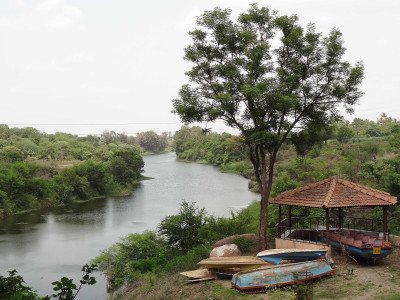
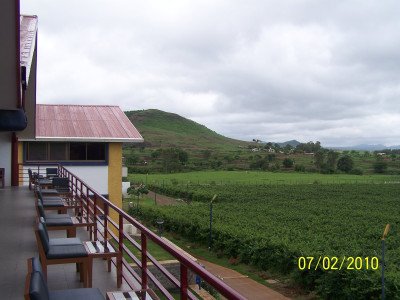
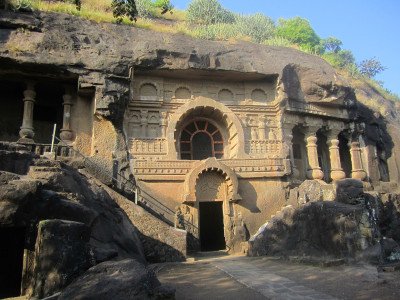
City Overview: Nashik is an ancient holy city situated on the banks of the Godavari River and is one of the four sites for the Kumbh Mela. It has evolved into a major industrial and agricultural hub, particularly famous for its vineyards. Spiritual Significance: The city is deeply connected to the H indu epic Ramayana, as Lord Rama is believed to have spent part of his exile in the Panchavati forest. It attracts millions of pilgrims who come to take a holy dip in the Ramkund. Vineyard Hub: Often called the "Napa Valley of India," Nashik produces the majority of India’s wine. The city is home to over 50 wineries, including the world-famous Sula Vineyards, offering wine-tasting tours and stays. Historical Roots: Beyond spirituality, the city boasts ancient rock-cut caves like Pandavleni, which date back to the 3rd century BC. It has been a center of trade and religion for over two millennia.

Things To Do

Card image cap
Anjaneri Hills

Anjaneri Hills is a breathtaking spiritual and adventure destination located in the Sahyadri range. Legend identifies this place as the birthplace of...
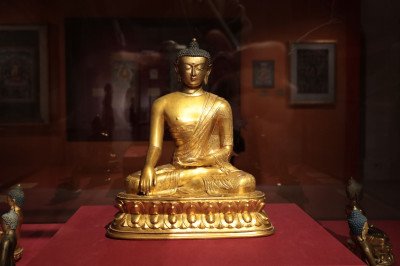
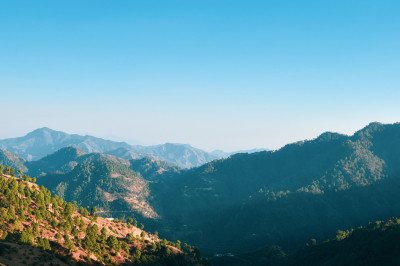
Anjaneri Hills is a breathtaking spiritual and adventure destination located in the Sahyadri range. Legend identifies this place as the birthplace of Lord Hanuman, the monkey-god. The hill is named after his mother, Anjani Mata, who performed penance here to beget a son. The trek starts from Anjaneri Village and winds through rocky terrains, lush meadows, and ancient caves. As you ascend, you encounter the Anjani Mata Temple halfway up. The plateau is vast and home to rare flora including the Cape York Lily. The summit reaches an elevation of 4,264 feet, offering a 360-degree view of the Vaitarna Dam and the Brahmagiri range. The atmosphere is charged with spiritual energy and natural beauty, making it a staple for pilgrims and trekkers alike. During the Monsoon season, the hills are covered in a thick blanket of fog and vibrant green grass, transforming the landscape into a misty wonderland. Historically, the area was significant for both Hindu and Jain communities, evidenced by the ruins found at the base. The climb involves two main plateaus; the first is relatively flat, while the second requires climbing steep rock-cut steps. The peace found at the top, near the Hanuman Temple, is incomparable to any city life. Visitors often describe the experience as a soul-stirring journey that tests physical endurance while rewarding the spirit with divine tranquility and spectacular vistas of Maharashtra. :
Card image cap
Artillery Museum (Devlali)

The Artillery Museum in Deolali is a unique and impressive museum dedicated to the rich history and evolution of artillery in the Indian Army. Deolal...

The Artillery Museum in Deolali is a unique and impressive museum dedicated to the rich history and evolution of artillery in the Indian Army. Deolali, a well-known cantonment town, has a long association with the armed forces, housing the School of Artillery. The museum provides an fascinating insight into the might and progression of Indian artillery through various eras, from ancient times to the modern age. The museum boasts an extensive collection of artillery pieces, ranging from historical cannons and mortars to modern self-propelled guns, anti-aircraft guns, and missile launchers. Many of these weapons are displayed outdoors in a vast exhibition area, allowing visitors to walk among these powerful machines and appreciate their scale and design. Each piece is accompanied by informative placards detailing its origin, specifications, and role in different conflicts. Key exhibits include: Vintage Field Guns: Cannons used during the World Wars and colonial periods. Anti-Aircraft Guns: Showcasing the evolution of air defense. Towed and Self-Propelled Howitzers: Demonstrating modern artillery capabilities. Missile Systems: Giving a glimpse into the Indian Army's strategic firepower. Beyond the hardware, the museum also houses an indoor gallery with displays of artillery uniforms, medals, historical photographs, maps, and models. These exhibits provide a deeper understanding of the human element in artillery warfare, highlighting the bravery and dedication of artillery personnel. The well-maintained grounds and the solemn atmosphere contribute to a respectful appreciation of military history. A visit to the Artillery Museum is an educational and inspiring experience, especially for those interested in military history, defense, and engineering. It's a testament to the strength and technological advancement of the Indian Army's artillery arm, making it a compelling attraction for families, students, and defense enthusiasts alike.
Card image cap
Artillery Museum

The Artillery Museum in Nashik is a prestigious institution managed by the Indian Army. It is widely recognized as the largest of its kind in Asia. L...

The Artillery Museum in Nashik is a prestigious institution managed by the Indian Army. It is widely recognized as the largest of its kind in Asia. Located within the Deolali cantonment area, the museum provides an exhaustive look into the evolution of artillery warfare. It showcases a massive collection of cannons, mortars, and sophisticated modern guns used by the Indian military over several decades. The museum was established to preserve the history of the Regiment of Artillery. Visitors can see weapons dating back to the Mughal era, the British Raj, and artifacts from major conflicts like World War I, World War II, and the Kargil War. A highlight is the AOP Aircraft and various radar systems. The museum is not just a display of weapons but a tribute to the bravery of the Indian Soldiers. The well-maintained lawns and the systematic layout of the galleries make it an educational experience for children and adults alike. It provides deep insights into how technology has changed the face of defense. The exhibits include uniforms, medals, and photographs of war heroes. For anyone interested in military history or patriotism, this museum is a must-visit. It serves as a reminder of the sacrifices made by the armed forces to protect the nation's sovereignty. The serene environment of the Deolali Camp adds to the dignity of the museum visit. :
Card image cap
Bhagur (Swatantryaveer Savarkar Smarak)

Bhagur holds a significant place in Indian history as the birthplace of Swatantryaveer Vinayak Damodar Savarkar, one of India's most prominent freedo...

Bhagur holds a significant place in Indian history as the birthplace of Swatantryaveer Vinayak Damodar Savarkar, one of India's most prominent freedom fighters, philosopher, and Hindutva ideologue. Visiting Bhagur offers a unique opportunity to connect with the life and legacy of this revolutionary figure. The primary attraction in Bhagur related to Savarkar is his ancestral home (Savarkar Wada), which has been converted into a memorial (Smarak). This humble residence now functions as a museum, preserving artifacts, photographs, and personal belongings related to Savarkar's life. Visitors can see the rooms where he lived, study his early life, and learn about his contributions to the Indian independence movement. The exhibits detail his revolutionary activities, his imprisonment in the Andaman Cellular Jail (Kalapani), his writings, and his political philosophy. The memorial serves as a poignant reminder of the sacrifices made during India's struggle for freedom. Bhagur itself is a tranquil town, surrounded by green hills and a peaceful ambiance. Beyond the Savarkar Smarak, the town also has local temples and a glimpse into rural Maharashtrian life. The atmosphere is quiet, allowing for a reflective visit. For those interested in modern Indian history, especially the revolutionary movement, Bhagur is an indispensable stop. It provides a direct connection to a figure who shaped significant political and ideological currents in 20th-century India. The visit allows for a deeper understanding of the complexities of the freedom struggle and the diverse ideologies that propelled it.
Card image cap
Bhakti Dham

Bhakti Dham is a modern and beautifully maintained temple complex that offers a serene and spiritually uplifting experience. It is a privately manage...

Bhakti Dham is a modern and beautifully maintained temple complex that offers a serene and spiritually uplifting experience. It is a privately managed complex that has been meticulously developed to provide a peaceful environment for devotion, meditation, and spiritual learning. While it may not have the ancient history of some of Nashik's older temples, its contemporary design and comprehensive facilities make it a popular destination for families and devotees seeking a clean and organized spiritual retreat. The complex typically houses various temples dedicated to different Hindu deities, often with a prominent temple for Lord Shiva or Lord Krishna. The architecture is usually modern, incorporating elements of traditional Indian temple design, often with well-kept marble or stone work. The grounds are beautifully landscaped with lush gardens, manicured lawns, and pathways that invite peaceful strolls. The entire ambiance is designed to foster a sense of tranquility and spiritual harmony. Bhakti Dham often features facilities that cater to a wide range of visitors. These might include: Meditation Halls: Spaces designated for quiet contemplation and spiritual practices. Dharma Shalas: Accommodation facilities for pilgrims. Gaushala: A cowshed housing sacred cows, reflecting Hindu reverence for cattle. Cafeterias/Annadhanam: Facilities providing vegetarian meals or snacks. Spiritual Discourses: Regular discourses or bhajans (devotional songs) that visitors can attend. The clean environment, systematic layout, and the overall peaceful atmosphere make Bhakti Dham a pleasant destination for a spiritual outing. It's particularly popular during weekends and religious festivals, attracting families who wish to spend quality time in a devout setting. It represents a contemporary approach to spiritual centers, focusing on comfort and holistic well-being alongside traditional worship.
Card image cap
Brahmagiri Mountain

Brahmagiri Mountain is one of the most sacred peaks in the Western Ghats. It is revered as the origin of the Godavari River, the second-longest river...

Brahmagiri Mountain is one of the most sacred peaks in the Western Ghats. It is revered as the origin of the Godavari River, the second-longest river in India. The name literally means "The Hill of Lord Brahma." According to mythology, the river was brought down to earth by the penance of Sage Gautama. The trek to the top involves climbing about 500 to 700 stone steps built in 1908. The mountain has five peaks representing the five faces of Lord Shiva. At the summit, there is a small shrine where the Godavari emerges from a bull's mouth (Nandi). The trek offers spectacular views of the Trimbakeshwar Temple town below. The path is surrounded by dense forests, home to monkeys and diverse birdlife. During the Monsoon, several waterfalls cascade down the slopes of Brahmagiri. Historically, the mountain was considered so holy that people avoided stepping on it, but the steps now allow pilgrims to visit the origin point. The spiritual atmosphere, combined with the mist-laden peaks of the Sahyadri, makes it a deeply moving destination. It is a part of the Trimbakeshwar Jyotirlinga pilgrimage circuit. The trek is moderately difficult and takes about 2 hours to ascend. The energy of the flowing water and the ancient rock-cut architecture of the steps create a timeless experience. :
Card image cap
Coin Museum (Indian Institute of Research in Numismatic Studies)

The Coin Museum in Nashik is a unique and fascinating institution, being the only museum in Asia dedicated entirely to numismatics (the study or coll...

The Coin Museum in Nashik is a unique and fascinating institution, being the only museum in Asia dedicated entirely to numismatics (the study or collection of currency, including coins, tokens, paper money, and related objects). Established in 1980 by the Indian Institute of Research in Numismatic Studies (IIRNS), it serves as a premier center for the study, preservation, and exhibition of India's rich monetary heritage. For history buffs, academics, and curious travelers, it offers an unparalleled journey through centuries of Indian history as told through its currency. The museum houses an extraordinary collection of coins, ranging from ancient punch-marked coins dating back to the 6th century BCE to modern currency. Visitors can trace the evolution of coinage in India through various periods: Ancient Period: Featuring coins of the Janapadas, Mauryas, Satavahanas, and various Indo-Greek and Kushan rulers. Medieval Period: Showcasing coins from the Delhi Sultanate, Mughal Empire, and various regional kingdoms like the Marathas. Colonial Period: Displaying coins issued by the British, Portuguese, and French in India. Modern Period: Including coins of independent India. Beyond just coins, the museum also exhibits artifacts related to coin production, such as dies, molds, and instruments used for minting. There are detailed charts, photographs, and historical narratives that explain the economic, political, and social conditions reflected in the currency of different eras. The institute also conducts research, publishes journals, and offers courses in numismatics and archaeology, making it a hub for scholarly activity. A visit to the Coin Museum is an insightful experience that provides a tangible link to India's past. It's a well-organized museum that offers a deep understanding of historical developments through the lens of currency, making history come alive in a unique way. It's an underrated gem that truly deserves attention for its specialized and comprehensive collection.
Card image cap
Coin Museum

@@Museum Overview:This unique museum, established in 1980, is the only one of its kind in Asia dedicated to Indian numismatics. It was recently expan...

@@Museum Overview:This unique museum, established in 1980, is the only one of its kind in Asia dedicated to Indian numismatics. It was recently expanded and renamed the Shanti-Krishna Museum of Money & History. It offers a glimpse into 2,500 years of Indian currency evolution.@@Exhibits and Collection:The vast collection includes rare coins from various dynasties like the Mauryas, Guptas, Mughals, and Holkars, spanning from the 5th century BCE to modern times. Exhibits feature molds, dies, replicas, photographs, and detailed write-ups. The museum also showcases artifacts related to natural history, archaeology, and anthropology, broadening its scope beyond just coins. Dioramas illustrating coin minting and manufacturing techniques are a major attraction.@@Historical and Educational Significance:It is a significant center for research, operating under the Indian Institute of Research in Numismatic Studies. The museum actively promotes the study of coins and hosts regular workshops. The entire experience is highly educational, detailing the economic and cultural history reflected in currency. The tranquil setting enhances the learning experience.@@Redevelopment:The museum underwent a major transformation in 2018, adding 9000 square feet to the original structure, totaling around 12,000 square feet, significantly enhancing the exhibition space and visitor facilities. The focus is on a continuous narrative journey.@@End:
Card image cap
Dadasaheb Phalke Smarak

The Dadasaheb Phalke Smarak is a memorial dedicated to Dadasaheb Phalke, reverently known as the "Father of Indian Cinema." Dhundiraj Govind Phalke, ...

The Dadasaheb Phalke Smarak is a memorial dedicated to Dadasaheb Phalke, reverently known as the "Father of Indian Cinema." Dhundiraj Govind Phalke, a native of Nashik, produced India's first full-length feature film, "Raja Harishchandra," in 1913, laying the foundation for the vast Indian film industry. This memorial serves as a tribute to his pioneering spirit and immense contribution to cinema. Spread over a sprawling 29-acre complex, the Smarak is much more than just a monument. It is designed as a multifaceted cultural and recreational center, offering something for visitors of all ages. The main attraction is a museum and gallery that showcases the life and works of Dadasaheb Phalke. Through photographs, exhibits, and historical artifacts, visitors can learn about his journey, the challenges he faced in establishing Indian cinema, and his significant achievements. The gallery provides insights into the early days of filmmaking in India. Beyond the cinematic tribute, the Smarak boasts beautifully landscaped gardens, providing a serene environment for relaxation and leisure. There is a musical fountain that puts on a captivating show in the evenings, captivating both children and adults. For younger visitors, a well-equipped children's park and a water park (seasonal) offer ample entertainment. An amphitheater within the complex often hosts cultural programs and events. The Dadasaheb Phalke Smarak is an excellent place to spend a few hours, combining a historical learning experience with recreational activities. Its proximity to the Pandavleni Caves makes it a convenient stop for a combined outing. It's a fitting tribute to a visionary who shaped the dreams of a nation through the magic of cinema, offering a unique blend of heritage, education, and entertainment.
Card image cap
Deolali Camp (Cantonment)

Deolali Camp, often simply called Deolali, is one of India's oldest and most well-known military cantonments, established by the British in the 1860s...

Deolali Camp, often simply called Deolali, is one of India's oldest and most well-known military cantonments, established by the British in the 1860s. It has a rich colonial history and continues to serve as a significant training and administrative center for the Indian Army, including the School of Artillery. The town offers a unique blend of military precision, colonial charm, and a tranquil, green environment, making it an interesting place to explore. The cantonment area is characterized by its wide, tree-lined avenues, well-maintained bungalows, and a serene, disciplined atmosphere. The disciplined nature of the military presence ensures a clean and orderly environment, a stark contrast to the bustle of typical Indian cities. While access to certain military training areas is restricted, much of the cantonment is open to visitors, offering a glimpse into military life and a pleasant, peaceful ambiance. Key attractions and features in Deolali include: Artillery Museum: (As detailed previously) A major highlight, showcasing a vast collection of artillery. Religious Sites: Deolali has several old churches, temples, and a Gurudwara, reflecting the diverse community within the cantonment. The Temple Hill is a popular spot with a cluster of temples and panoramic views. Market Area: A small, lively market caters to the needs of the military personnel and local residents. Nature: Surrounded by hills and greenery, Deolali offers opportunities for short walks and enjoying the fresh air. The phrase "going doolally" (meaning eccentric or mad) is believed to have originated from the term "Deolali," referring to British soldiers who developed tropical madness or psychological issues during their long and often lonely stays in the cantonment before being repatriated. This adds a curious historical anecdote to the place. Deolali Camp provides a different facet of Nashik's surrounding region, offering a glimpse into military heritage, colonial architecture, and a quiet, structured way of life.
Card image cap
Deolali Camp

Deolali Camp is a unique destination that blends military discipline with the serenity of a hill station. Established by the British in 1861, it is o...
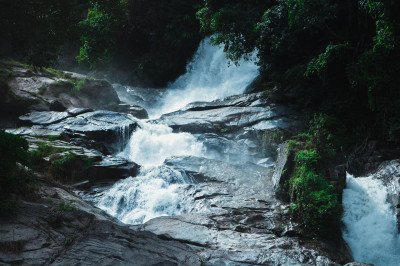
Deolali Camp is a unique destination that blends military discipline with the serenity of a hill station. Established by the British in 1861, it is one of India's oldest cantonment boards. The area is famous for its clean air and peaceful environment, earning it the reputation of a "Sanatorium" or a place for healing. Many people visit Deolali to stay in its various sanatoriums to recover from illnesses. The camp is beautifully organized with wide, tree-lined roads and old colonial bungalows. It serves as a major military hub, housing the Artillery Centre and the School of Artillery. For tourists, the vibe is drastically different from the chaotic Nashik city. The Deolali Market is a shopper's delight, known for its high-quality clothes, leather goods, and the famous Empire Bakery. The Temple Hill (Khandobachi Tekadi) offers a spiritual retreat with a stunning view of the sunset. Unlike other tourist spots, Deolali is about slow travel. It's a place to take long walks, breathe in the fresh oxygen, and enjoy the quaint cafe culture. The residential areas are lush green, and the military presence ensures everything is orderly and safe. It's a perfect weekend getaway for those looking to rejuvenate their mind and body. The historical significance of the camp is also reflected in the old churches and the Temple Hill shrine. :
Card image cap
Dudhsagar Waterfalls (Dugarwadi)

The Dudhsagar Waterfalls near Dugarwadi are a spectacular natural wonder, especially during the monsoon season, when they come alive with roaring cas...

The Dudhsagar Waterfalls near Dugarwadi are a spectacular natural wonder, especially during the monsoon season, when they come alive with roaring cascades of milky white water. Tucked away amidst dense forests and rugged hills, these falls offer a thrilling and refreshing experience for nature lovers, trekkers, and adventure enthusiasts. The name "Dudhsagar" (Sea of Milk) perfectly describes the appearance of the waterfall as the water plunges from a significant height, churning into a frothy white sheet. The falls are located in a relatively secluded area, requiring a bit of a trek through scenic terrain to reach them. The path often involves walking through lush greenery, crossing streams, and navigating rocky patches. This makes the journey to the falls as much a part of the experience as the destination itself. The monsoon season (July to October) transforms the entire landscape into a verdant paradise, with the surrounding hills covered in fresh foliage and numerous smaller streams contributing to the main waterfall's intensity. Upon reaching the falls, visitors are greeted by the powerful sight and sound of the water crashing down. The cool mist in the air, the pristine natural environment, and the sheer force of the waterfall create an awe-inspiring atmosphere. It s an ideal spot for photography, allowing one to capture the raw beauty of nature. While swimming might be risky due to the strong currents, one can certainly enjoy the refreshing spray and the breathtaking views. Dugarwadi Waterfalls are a perfect escape for those seeking an offbeat adventure and a close encounter with nature's majesty. It offers a much-needed break from urban life, providing an invigorating experience for the mind and body. It is important to exercise caution, especially during peak monsoon, and respect the natural environment.
Card image cap
Dugarwadi Waterfalls

Dugarwadi Waterfalls is a hidden natural jewel located deep within the Sahyadri forests near Trimbakeshwar. Unlike other tourist spots, Dugarwadi rem...

Dugarwadi Waterfalls is a hidden natural jewel located deep within the Sahyadri forests near Trimbakeshwar. Unlike other tourist spots, Dugarwadi remains pristine and wild. The waterfall is a spectacular sight, especially during the Monsoon, as it thunders down from a height of over 450 feet into a deep green valley. To reach the falls, one must drive to Sapgon and then embark on a 2 KM trek through dense woods and rocky paths. The walk itself is an adventure, surrounded by lush vegetation and the sounds of nature. The air is incredibly fresh, and the mist from the waterfall can be felt from a distance. There are no safety railings or commercial developments, making it a "raw" nature experience. Visitors are advised to be extremely cautious during heavy rains as the water levels can rise suddenly. The view of the water plummeting into the abyss, surrounded by vertical green cliffs, is a sight that stays with you forever. It is an ideal spot for those who want to escape the digital world and connect with the raw power of the earth. The valley is also home to diverse wildlife and rare bird species. Because of its remote location, it is less crowded than other waterfalls in Maharashtra, offering a sense of solitude and peace that is hard to find elsewhere. :
Card image cap
Gangapur Dam and Backwaters

Gangapur Dam is not only a crucial engineering marvel but also a picturesque natural attraction, offering a tranquil escape from the urban hustle of ...

Gangapur Dam is not only a crucial engineering marvel but also a picturesque natural attraction, offering a tranquil escape from the urban hustle of Nashik. Built in 1965 across the sacred Godavari River, it is notable for being one of the first earthen dams in Maharashtra and is considered one of Asia's longest earthen dams. Its primary purpose is to supply water for irrigation and drinking to Nashik city and surrounding agricultural areas, but its vast backwaters have transformed it into a popular spot for leisure and recreation. The dam's expansive backwaters create a stunning reservoir that resembles a large lake, offering breathtaking panoramic views, especially during sunrise and sunset. The calm waters and the surrounding green landscape, particularly lush during and after the monsoon, make it an ideal spot for nature lovers, photographers, and those seeking peaceful contemplation. Various activities are available around the dam and its backwaters. Boating is a popular pastime, allowing visitors to enjoy the serene waters and the scenic beauty from a different perspective. Several private operators offer different types of boat rides. The area is also popular for picnics, with designated spots and open spaces where families and friends can relax amidst nature. For birdwatchers, the backwaters attract various migratory and resident bird species, especially during the winter months, making it a good spot for ornithology. The region around Gangapur Dam has also witnessed the growth of wine tourism, with many prominent vineyards like Sula Vineyards located in close proximity. This allows visitors to combine a relaxing natural experience with a sophisticated wine-tasting tour. Gangapur Dam offers a perfect blend of natural beauty, recreational activities, and an appreciation for essential infrastructure, making it a refreshing and enjoyable destination for a day trip.
Card image cap
Gangapur Dam

@@Historical Construction and Purpose:Constructed between 1946 and 1965 on the Godavari River (at the confluence with the Kashyapi river), Gangapur D...
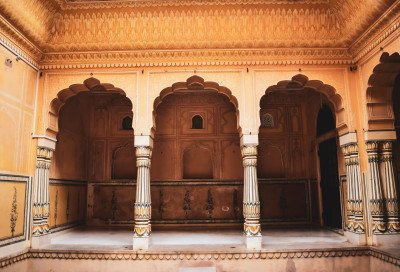
@@Historical Construction and Purpose:Constructed between 1946 and 1965 on the Godavari River (at the confluence with the Kashyapi river), Gangapur Dam holds historical significance as the first major earthen dam in Maharashtra. Its primary purpose was to address the crucial irrigation and drinking water needs of Nashik and its surrounding districts, especially following periods of drought. It has been instrumental in supporting local agriculture and the region's industrial growth, including the Nashik Thermal Power Station.@@Engineering Marvel:The dam is an impressive engineering feat, notable for being one of Asia's longest earthen dams. The design was based on the principles of Terzaghi's soil mechanics, a significant detail for engineering enthusiasts. The structure includes a core of impervious soil to reduce seepage and a unique emergency spillway (length 325 meters) designed to protect the dam body, though it has never been used.@@Dimensions and Capacity:The dam boasts an impressive length of 3,902 meters (3.811 KMS) and a height of 36.59 meters. It manages water flow through nine radial gates. While its original storage capacity was higher (5.5 TMC), it was later increased to 7.2 TMC and has been affected by siltation over the years.@@Nature and Recreation:Beyond its functional role, the dam and its backwaters have created a rich ecosystem. The reservoir is a picturesque spot, serving as a haven for various bird species, particularly migratory birds during the winter months, and is surrounded by lush vineyards and orchards, making it a popular nature and recreation spot.@@End:
Card image cap
Godavari Ghats (Ramkund & Surrounding Ghats)

The Godavari Ghats represent the spiritual lifeline of Nashik, forming a series of steps and platforms leading down to the sacred Godavari River. Amo...

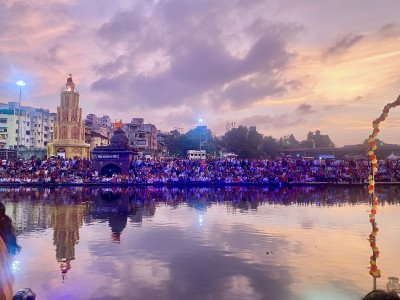
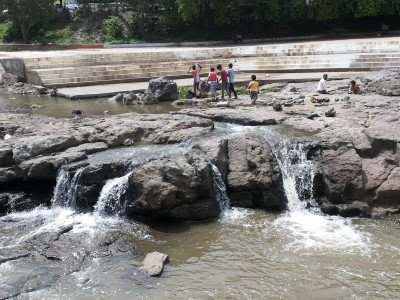
The Godavari Ghats represent the spiritual lifeline of Nashik, forming a series of steps and platforms leading down to the sacred Godavari River. Among these, Ramkund is the most revered and historically significant bathing ghat. According to Hindu mythology, Lord Rama himself bathed here during his exile, endowing the waters with immense sanctity. For pilgrims, taking a holy dip in the cool waters of Ramkund is considered a purifying ritual that cleanses sins and brings spiritual merit. The ghats are a constant hub of activity, especially in the mornings and evenings. Devotees perform rituals, offer prayers to the rising or setting sun, and immerse themselves in the river. You can witness various traditional ceremonies, including 'pind daan' (offerings to ancestors), and listen to the chanting of mantras and devotional hymns. The air is often filled with the fragrance of incense and flowers offered to the river. Ramkund is also the central point for the Simhastha Kumbh Mela, a massive pilgrimage that occurs every 12 years. During this auspicious event, millions of pilgrims gather at Ramkund to take a holy dip at a specific astrological alignment, making it one of the largest peaceful gatherings in the world. Even on regular days, the spiritual energy of the ghats is palpable. Beyond Ramkund, the surrounding ghats extend along the Godavari, offering picturesque views and quieter spots for reflection. The architecture of the ghats often features ornate carvings and sturdy stone construction, reflecting centuries of religious patronage. The river itself is dotted with small boats, and the banks are lined with traditional shops selling religious items, flowers, and offerings. A visit to the Godavari Ghats provides an authentic and immersive experience of Hindu spiritual life, offering a unique blend of devotion, tradition, and serene natural beauty. It's a place where the ancient soul of Nashik truly comes alive.
Card image cap
Gondeshwar Temple

Gondeshwar Temple is a magnificent example of Hemadpanthi style architecture, dating back to the 12th or 13th century, built during the Yadava dynast...

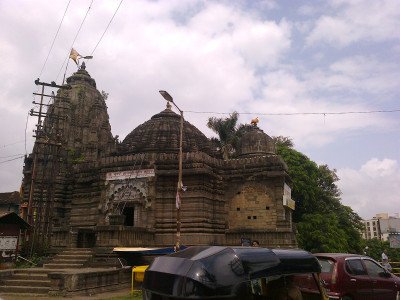
Gondeshwar Temple is a magnificent example of Hemadpanthi style architecture, dating back to the 12th or 13th century, built during the Yadava dynasty. This beautifully preserved black stone temple complex is dedicated to Lord Shiva, though it also houses shrines for other deities, including Vishnu, Surya (Sun God), Devi (Goddess), and Ganapati. Its historical and architectural significance makes it a prominent landmark in the Nashik region. The temple's architecture is characterized by its intricate carvings, exquisite sculptures, and a distinctive stellate (star-shaped) ground plan. The entire complex is built of basalt stone, which has stood the test of time remarkably well. The main Shiva temple features a large Nandi mandapa (pavilion for Nandi, Shiva's bull vehicle), a sabha mandapa (assembly hall), and a sanctum (garbhagriha) housing the Shiva lingam. The exterior walls are adorned with beautifully carved deities, celestial beings, human figures, and intricate patterns. One of the most striking features of Gondeshwar Temple is its harmonious blend of different religious deities within a single complex, showcasing the religious tolerance and syncretism of the period. Each subsidiary shrine is also a masterpiece of intricate carving. The temple stands as a testament to the skilled artisans and the rich artistic traditions of the Yadava period. Despite its age, the details on the sculptures, from the facial expressions of the deities to the intricate jewelry, are still remarkably clear. The peaceful surroundings of Sinnar village add to the serene ambiance of the temple. It's a place where one can spend hours admiring the craftsmanship, soaking in the historical aura, and experiencing a sense of timeless devotion. Gondeshwar Temple is a true architectural gem, offering a captivating glimpse into medieval Indian art and religious practices.
Card image cap
Harihar Fort

Harihar Fort, also known as Harshgad, is an ancient hill fort situated in the Trimbakeshwar mountain range. It is world-renowned for its thrilling ro...

Harihar Fort, also known as Harshgad, is an ancient hill fort situated in the Trimbakeshwar mountain range. It is world-renowned for its thrilling rock-cut steps that are inclined at a nearly 80-degree angle, earning it the nickname "Staircase to Heaven." Historically, the fort was built during the Yadava dynasty between the 9th and 14th centuries to safeguard the trade route through the Gonda Ghat. It later passed through the hands of the Bahmani Sultanate, the Mughals, and finally the Marathas before being captured by the British in 1818. The fort is perched at an elevation of 3,676 feet above sea level on a unique triangular prism-shaped rock. The climb is considered moderate to difficult due to the verticality of the steps, which have small notches for hand grips carved into the stone. Once at the summit, the plateau offers breathtaking panoramic views of the Sahyadri range, including nearby peaks like Anjaneri, Brahmagiri, and Utwad. The top houses a small temple of Lord Hanuman, a cave, and several water cisterns that were used for storage. This destination is a bucket-list item for adventure seekers and history buffs alike, providing a perfect blend of adrenaline and heritage. The sheer engineering of the staircase remains a mystery and a marvel of ancient Indian masonry.
Card image cap
Jain Mandir

@@The Tirth and Dedication:The Jain Mandir in Nashik is a significant modern pilgrimage center, also officially known as Shri Dharmachakra Prabhav Te...

@@The Tirth and Dedication:The Jain Mandir in Nashik is a significant modern pilgrimage center, also officially known as Shri Dharmachakra Prabhav Teerth. It was established under the inspiration of Acharya Sri Jag Vallabh Surishwaraji Maharaj Saheb. The primary deity is the statue of Shri Mantradhiraj Parshwanath Bhagwan. The temple complex is a serene and meticulously clean place, offering a respite for spiritual seekers.@@Structure and Deities:The temple is a massive three-storey structure. The ground floor houses a Pravachan Hall for sermons and meditations. The first floor is dedicated to Choumukhji (four-faced idol), and the third floor is dedicated to Ashtapadji. A major highlight is the imposing 12-ton idol of the 24th Jain Tirthankar, made of Panchdhatu (five metals), which is a key object of veneration. The complex also features idols of other Jain saints.@@Architectural Significance:The temple is often described as a stunning and captivating architectural marvel, notable for its use of pink sandstone and imported white marbles, distinguishing it from older, traditional temples. The temple serves as a replica of two highly revered Jain pilgrimage sites: Sri Shatrunjay Tirth and Sri Sametshikaji Tirth, allowing devotees unable to travel there to gain similar religious merit.@@Facilities and Atmosphere:The vast complex includes amenities for visitors and pilgrims, such as paid accommodation (Dharamshala), clean washrooms, and food services at affordable prices. The well-maintained surroundings and picturesque landscapes contribute to the peaceful and serene atmosphere, ideal for contemplation and prayer.@@End:
Card image cap
Kalaram Temple

@@Religious Significance and Deity:The Kalaram Temple is one of the most important Hindu temples in Nashik, dedicated to Lord Rama. The name is deriv...

@@Religious Significance and Deity:The Kalaram Temple is one of the most important Hindu temples in Nashik, dedicated to Lord Rama. The name is derived from the main deity, a striking idol of Lord Rama made of black stone (Kala meaning black, Ram meaning Rama). The sanctum also houses black stone idols of Sita and Lakshmana. An idol of Lord Hanuman also stands facing the main deities.@@Historical Background:The present temple was constructed between 1788 and 1792 by Sardar Rangarao Odhekar, a nobleman of the Maratha Empire, who is said to have discovered the idol submerged in the Godavari River after a divine vision. The site is believed to be the exact spot where Lord Rama resided during his 14-year exile as mentioned in the epic Ramayana.@@The Satyagraha Movement:Beyond its religious history, the temple holds a crucial place in India's social history. In 1930, Dr. B.R. Ambedkar led a landmark Satyagraha at this temple, demanding equal entry rights for Dalits, which became a pivotal moment in the fight against caste discrimination and for social reform in India. This event adds immense socio-historical importance to the site.@@Architectural Grandeur:The temple is a breathtaking example of Hemadpanthi architecture, constructed entirely from black basalt stone. Its immense scale, standing 70 feet high, and its rich, detailed craftsmanship attract devotees and architecture enthusiasts alike. The complex is spread over nearly 70,000 square feet and is enclosed by a 17-foot high wall.@@End:
Card image cap
Kapileshwara Temple

@@Deity and Legend:The Kapileshwara Temple is an ancient and highly revered shrine dedicated to Lord Shiva in the form of a Shivlingam. The temple is...

@@Deity and Legend:The Kapileshwara Temple is an ancient and highly revered shrine dedicated to Lord Shiva in the form of a Shivlingam. The temple is unique in Hindu mythology because it does not have an idol of Nandi, the bull and vehicle of Lord Shiva, facing the sanctum, a feature almost universally present in Shiva temples. Legend states that Lord Shiva once accidentally committed the sin of Gohatya (cow-killing) and was advised by Nandi to take a holy dip in Ramkund to atone for the sin. Since Nandi served as his Guru (teacher) for penance, Shiva considered him his guru, and thus the tradition of having no Nandi in front of a Guru was followed here.@@Historical Context and Reconstruction:While some architectural fragments suggest an original structure dating back to the 11th century CE, the present temple structure is believed to have been renovated and built by local rulers or King Devadutta around the 14th century CE during the Gajapati rule. It stands as one of Nashik's oldest temples. It was reportedly demolished by Muslim invaders and later rebuilt.@@Spiritual Significance:The temple is considered a sacred place where Lord Shiva performed Jaap (chanting) after cleansing his sin in Ramkund. It draws millions of devotees, especially on Mondays and during Maha Shivaratri. It plays a central role in the rituals performed at Ramkund and is a key satellite temple in the Panchavati area.@@Architecture and Environment:The temple structure is magnificently constructed, offering a peaceful environment right on the banks of the Godavari River. The environment enhances the spiritual aura, making it a perfect spot for devotion and meditation. It is an active "living temple" managed by a trust.@@End:
Card image cap
Main Temple of Lord Rama (Kalaram Temple)

The Kalaram Temple is one of the most significant and iconic temples in Nashik, forming the spiritual heart of the city's Panchavati region. Dedicate...

The Kalaram Temple is one of the most significant and iconic temples in Nashik, forming the spiritual heart of the city's Panchavati region. Dedicated to Lord Rama, Goddess Sita, and Lakshmana, the temple derives its unique name from the black stone (kala) used to carve the principal idols, giving it the name "Kalaram" (Black Rama). This striking black stone idol of Lord Rama stands approximately 2 feet tall, captivating devotees with its divine presence. The temple's construction is a magnificent example of ancient Indian architecture. Built during the Peshwa period in 1792 by Sardar Rangrao Odhekar, it is a grand edifice entirely crafted from black basalt stone. It took 12 years and 2000 workers to complete its construction, a testament to its scale and intricate design. The temple features 14 steps, symbolizing the 14 years of Lord Rama's exile, leading to the main prayer hall. The spire of the temple is approximately 70 feet high, adding to its imposing structure. The temple complex is surrounded by high walls, and within its premises, there are also smaller shrines dedicated to Lord Vitthal and Lord Hanuman. The courtyard is spacious, allowing for large gatherings of devotees. The carvings on the temple walls depict various mythological scenes from the Ramayana and other Hindu scriptures, showcasing the artistic and religious narratives of the era. The continuous chanting of hymns and devotional songs fills the air, creating a deeply spiritual and sacred atmosphere. Kalaram Temple is also historically significant for its association with the Dalit entry movement led by Dr. B.R. Ambedkar in 1930, where he spearheaded a satyagraha to demand the right of Dalits to enter the temple. This movement was a pivotal moment in India's social reform history. Today, the Kalaram Temple stands as a symbol of both devotion and social progress, drawing pilgrims from all walks of life and remaining a central figure in Nashik's spiritual and cultural landscape.
Card image cap
Muktidham Temple

@@Concept and Dedication:Muktidham (meaning 'Abode of Salvation') is a magnificent modern Hindu temple complex inaugurated in 1971. It is dedicated t...

@@Concept and Dedication:Muktidham (meaning 'Abode of Salvation') is a magnificent modern Hindu temple complex inaugurated in 1971. It is dedicated to various Hindu gods and goddesses, but its central concept is to provide replicas of the Twelve Jyotirlingas and the four sacred Dhamas (pilgrimage sites) of India. The idea is that visiting these replicas grants the spiritual merit of visiting the original, distant shrines.@@Architecture and Material:The entire complex is constructed with gleaming white Makrana marble imported from Rajasthan, crafted by skilled Rajasthani sculptors. The clean, bright white appearance is a major attraction. The design, with its cave-like structure for the Jyotirlingas, is aesthetically pleasing and spiritually evocative.@@Key Features:The main attraction is the set of 12 Jyotirlinga replicas, all built to the exact dimension of the originals and officially sanctified by sending them to their respective pilgrimage centers. There is also a dedicated temple for Lord Krishna whose walls are adorned with beautiful paintings depicting scenes from the Mahabharata and Krishna Leela by the renowned painter Raghubir Mulgaonkar. Uniquely, the eighteen chapters of the Bhagavad Gita are inscribed on the walls of the temple complex.@@Other Deities and Facilities:The complex also houses idols of all major Hindu deities, including Rama, Sita, Lakshman, Hanuman, Vishnu, Laxmi, Durga, and Ganesha. The campus includes a Dharamshala (Bhakt Niwas) that can accommodate hundreds of pilgrims, making it a comprehensive religious center.@@End:
Card image cap
Myanmar Gate

The Myanmar Gate serves as the magnificent entrance to the Dhamma Giri Vipassana Meditation Centre in Igatpuri. This gate is a replica of a tradition...

The Myanmar Gate serves as the magnificent entrance to the Dhamma Giri Vipassana Meditation Centre in Igatpuri. This gate is a replica of a traditional Burmese pagoda entrance and stands as a symbol of the deep connection between India and Myanmar regarding the preservation of Vipassana meditation. The centre itself was founded by S.N. Goenka and is one of the world's largest meditation centers. The gate is adorned with intricate gold-colored carvings and traditional motifs that transport visitors to a different cultural landscape. While the inner meditation cells are reserved for serious practitioners, the gate and the surrounding public garden are open to tourists. The atmosphere here is exceptionally serene, surrounded by the lush green hills of the Western Ghats. It serves as a spiritual beacon, inviting people from all faiths to learn the art of living through silence. The architecture is a tribute to the "Golden Land" of Myanmar, which protected the Dhamma for centuries. Visitors often feel a sense of profound calm just by standing near the gate. It has become an iconic landmark of the Nashik region, representing global peace and harmony. The site is especially beautiful during the rainy season when the golden gate contrasts with the misty green mountains.
Card image cap
Nandur Madhmeshwar Bird Sanctuary

Often referred to as the "Bharatpur of Maharashtra" by ornithologists like Dr. Salim Ali, Nandur Madhmeshwar Bird Sanctuary is a vital wetland ecosys...

Often referred to as the "Bharatpur of Maharashtra" by ornithologists like Dr. Salim Ali, Nandur Madhmeshwar Bird Sanctuary is a vital wetland ecosystem and a paradise for birdwatchers and nature enthusiasts. Established in 1950, this sanctuary is formed by the backwaters of the Nandur Madhmeshwar Dam, built across the Godavari River. The resulting shallow water bodies, marshlands, and riparian forests create an ideal habitat for a staggering diversity of avian species, both resident and migratory. Spanning over 1765 hectares, the sanctuary is recognized as a Ramsar site, underscoring its international importance for wetland conservation. It boasts over 265 species of birds, including a significant number of migratory birds that flock here from Europe, Central Asia, and Siberia during the winter months (October to March). Visitors can spot a wide array of colorful birds such as flamingos, storks (painted, open-billed, woolly-necked), various species of ducks (common pochard, pintail), geese, egrets, herons, ibises, spoonbills, sandpipers, and many more. Endangered species like the Eastern Imperial Eagle and various vultures also find refuge here. The sanctuary offers four watchtowers strategically placed to provide excellent vantage points for bird observation and photography. Boating facilities are also available, allowing visitors to glide through the calm waters for a closer look at the aquatic life and birds. Beyond birds, the sanctuary is home to 536 species of aquatic and terrestrial plants, eight mammal species (including leopards, barking deer, wild boars), 24 freshwater fish species, and 41 butterfly species, contributing to its rich biodiversity. Nandur Madhmeshwar is not just about birdwatching; it's an immersive nature experience. A nature interpretation center offers informative displays on the sanctuary's flora and fauna. Seasonal events, photography contests, and expert-guided bird-watching expeditions are often organized. It s a perfect escape for anyone seeking tranquility, natural beauty, and a chance to witness the incredible avian diversity of Maharashtra.
Card image cap
Nandur Madhmeshwar

Nandur Madhmeshwar Bird Sanctuary is a sprawling wetland ecosystem often referred to as the "Bharatpur of Maharashtra." It was formed by the construc...

Nandur Madhmeshwar Bird Sanctuary is a sprawling wetland ecosystem often referred to as the "Bharatpur of Maharashtra." It was formed by the construction of the Nandur Madhmeshwar Dam at the confluence of the Godavari and Kadwa rivers. In 2020, it was designated as Maharashtra's first Ramsar site, recognizing its international importance. The sanctuary covers an area of over 1,700 hectares and is a haven for over 230 species of birds, including migratory visitors from Siberia and Europe. During the winter months, the wetlands are filled with the vibrant colors and calls of Flamingos, Pelicans, Cranes, and Storks. The sanctuary also supports a variety of fish and mammals like Leopards and Fishing Cats. The ecosystem is a mix of lakes, marshes, and evergreen forests, providing a perfect habitat for biodiversity. The Forest Department has developed watchtowers and nature trails to facilitate bird watching without disturbing the wildlife. It is an educational and refreshing retreat for nature lovers, students, and photographers. The tranquil water body reflecting the morning sun creates a magical atmosphere that is hard to find in the city. The sanctuary plays a vital role in local water conservation and serves as a natural filter for the river system.
Card image cap
Nashik City Centre Mall

@@Establishment and Function:The Nashik City Centre Mall was founded in 2005 and has since become the premier shopping, dining, and entertainment des...

@@Establishment and Function:The Nashik City Centre Mall was founded in 2005 and has since become the premier shopping, dining, and entertainment destination in the city, operating as a one-stop complex. It was acquired by Yatra Capital in 2007. It caters to a wide demographic, offering a blend of high-end brands, local outlets, diverse food options, and family entertainment.@@Shopping Experience:The mall houses a wide array of retail outlets, including major national and international fashion, lifestyle, and electronics brands. It's the go-to place for high-street fashion, silver ornaments (for which Nashik is famous), and a variety of consumer goods, offering a modern, air-conditioned shopping environment that contrasts with the traditional bazaars of Nashik.@@Food and Dining:A significant part of the mall is dedicated to food and beverage options, featuring a large Food Court offering various cuisines (Indian, Chinese, Continental, etc.) and several standalone fine-dining restaurants and cafes, catering to all tastes and budgets.@@Entertainment and Leisure:The mall provides essential leisure facilities, including a multiplex cinema with multiple screens, providing the latest movie releases. It also features a dedicated gaming/entertainment zone for children and families. The mall serves as a modern meeting place and a break from the spiritual and historical tourism that defines the rest of Nashik. It is a major venue for local events and promotions.@@End:
Card image cap
Navshya Ganapati Temple

Navshya Ganapati Temple is a revered and ancient temple dedicated to Lord Ganesha, holding significant historical and religious importance for the pe...

Navshya Ganapati Temple is a revered and ancient temple dedicated to Lord Ganesha, holding significant historical and religious importance for the people of Nashik. The temple dates back approximately 300 to 400 years and was built during the Peshwa dynasty. Legend has it that the temple was constructed by Raghobadada Peshwa and his wife Anandibai in 1774 AD, and the village itself was named Anandvalli after Anandibai on the day their son Vinayak was born. The name "Navshya Ganapati" is derived from the Marathi word "Navas," which means a vow or a wish. It is widely believed that Lord Ganesha residing in this temple grants the wishes of his devotees, making it a particularly "Jagrut Devasthan" (a powerful, awakened deity) among locals. This belief draws a continuous stream of devotees who come to offer prayers, seek blessings, and express gratitude for their fulfilled desires. The temple's architecture is reflective of the traditional Marathi temple style, often featuring intricate carvings and a serene ambiance. The idol of Lord Ganesha is central to the temple, depicted in a beautiful and appealing form, inspiring deep devotion. The temple's location on the banks of the Godavari River adds to its tranquil charm, offering picturesque views and a peaceful environment for meditation and prayer. The sound of the river flowing gently nearby enhances the spiritual experience. Visiting Navshya Ganapati Temple provides an opportunity to delve into the local religious customs and practices of Nashik. It s a place where you can feel the pulse of the community's faith and witness the deep reverence held for Lord Ganesha. The temple is well-maintained, and despite its ancient origins, it remains a vibrant center of worship, embodying the historical and spiritual legacy of the Peshwa era in Nashik.
Card image cap
Origin of Godavari

The Brahmagiri Hill is the revered origin of the Godavari River, the longest river in Peninsular India. According to Hindu mythology, Sage Gautama pe...

The Brahmagiri Hill is the revered origin of the Godavari River, the longest river in Peninsular India. According to Hindu mythology, Sage Gautama performed penance here to bring the river Ganga to earth to cleanse his sins, which resulted in the river being known as Gautami or Dakshin Ganga. The trek to the top involves climbing about 750 to 1,000 stone steps. At the peak, there is a small shrine where water trickles from the roots of an ancient tree, marking the symbolic birth of the river. From here, the water flows underground and reappears at Gangadwar and eventually at the Kushavarta tank in the main Trimbakeshwar town. The hill is considered to be the physical form of Lord Shiva. The trek offers stunning views of the Vaitarna Dam and the surrounding Sahyadri peaks. The air at the top is thin and cool, often filled with mist during the monsoon. The path is lined with small caves where sages used to meditate. It is not just a geographical site but a deep spiritual journey for millions of pilgrims. The proximity to the Trimbakeshwar Jyotirlinga temple makes it a primary stop for those on a religious tour. The hill is also home to a variety of medicinal herbs and rare plants.
Card image cap
Panchavati

@@Ramayana Significance:Panchavati holds immense spiritual and historical significance as it is the very place where Lord Rama, Goddess Sita, and Lor...
@@Ramayana Significance:Panchavati holds immense spiritual and historical significance as it is the very place where Lord Rama, Goddess Sita, and Lord Lakshmana spent a significant part of their 14-year exile in the Dandaka forest, as recounted in the Hindu epic Ramayana. This association makes it one of the holiest sites in India for Hindus.@@Key Pilgrimage Sites:The entire zone is a constellation of major pilgrimage spots. The most important is Ramkund, a sacred tank in the Godavari riverbed where Lord Rama is believed to have bathed, and which is the central site for the holy bath (Shahi Snan) during the Kumbh Mela. Other key sites include the Kalaram Temple, Kapileshwara Temple, Sita Gufa, Ganga Godavari Temple, and Tapovan.@@Spiritual and Cultural Role:Panchavati is the living spiritual, religious, and cultural heart of Nashik. The constant stream of pilgrims performing rituals, offering prayers, and taking holy dips in Ramkund creates a vibrant, intense atmosphere of devotion. Due to the multitude of temples, Nashik is often referred to as the "Banaras of Western India."@@The Five Banyan Trees:The name Panchavati literally means 'A garden of five banyan trees' (Pancha = five, Vati = banyan tree). The area today has several old and lofty banyan trees, believed to be the descendants or successors of the original five sacred trees that gave the area its name and provided shelter to the exiled deities and sages.@@End:
Show All

Note:-

Information provided here in good Faith and for reference only.

All information and pictures will be updated soon, please keep visiting.

Near Places

...
Ajanta Caves

Some quick example text to build on the card title and make up the bulk of the card's content.

Go somewhere
...
Alibag

Some quick example text to build on the card title and make up the bulk of the card's content.

Go somewhere
...
Alibaug

Some quick example text to build on the card title and make up the bulk of the card's content.

Go somewhere
...
Amravati

Some quick example text to build on the card title and make up the bulk of the card's content.

Go somewhere
...
Aurangabad

Some quick example text to build on the card title and make up the bulk of the card's content.

Go somewhere
...
Bhandardara

Some quick example text to build on the card title and make up the bulk of the card's content.

Go somewhere
...
Diveagar

Some quick example text to build on the card title and make up the bulk of the card's content.

Go somewhere
...
Ganpatipule

Some quick example text to build on the card title and make up the bulk of the card's content.

Go somewhere
...
Karjat

Some quick example text to build on the card title and make up the bulk of the card's content.

Go somewhere
...
Khandala

Some quick example text to build on the card title and make up the bulk of the card's content.

Go somewhere
in Other Cities