Smritivan
General information
-
Ideal Duration:
3 to 4 Hours (Museum + Memorial Walk)Place Type:
National Memorial / Interactive Museum / EcologicaEntry Fees:
Smritivan General Entry: The entry fee to the general Smritivan Memorial grounds is typically a minimal charge, around Rs.20 per person, applicable after the early morning hours. However, the memorial grounds are often free during the early morning (5:00 AM to 9:00 AM) for ex...Smritivan General Entry: The entry fee to the general Smritivan Memorial grounds is typically a minimal charge, around Rs.20 per person, applicable after the early morning hours. However, the memorial grounds are often free during the early morning (5:00 AM to 9:00 AM) for exercise and quiet contemplation.
Museum Ticket: The main, state-of-the-art Smritivan Earthquake Museum has a separate, more substantial entry fee. For adults (12+ years), the fee is approximately Rs.300. Children and college students have a reduced fee (Rs.100 to Rs.150 with ID card). Foreign nationals have a significantly higher fee (approx. Rs.1,000), reflecting the site's status as a major national heritage project.
Parking and Camera Fees: Visitors must pay for parking (nominal fees for two-wheelers, cars, and buses). There are typically no separate fees for still photography for personal use, but commercial photography is strictly controlled.
Purpose of Fee: The fees are critical for the immense running costs of the technologically advanced museum, the maintenance of the vast 470-acre ecological complex, and the continuous preservation of the memorial's plaques. :Timing:
Smritivan Regular Timings: The main Smritivan Memorial grounds are open early and late, typically from 5:00 AM until 11:00 PM, allowing for early morning walks and late-night viewing. However, the modern, high-tech Smritivan Earthquake Museum has more restricted hours, usua...Smritivan Regular Timings: The main Smritivan Memorial grounds are open early and late, typically from 5:00 AM until 11:00 PM, allowing for early morning walks and late-night viewing. However, the modern, high-tech Smritivan Earthquake Museum has more restricted hours, usually from 11:00 AM until 7:00 PM. The complex is generally closed on Mondays.
Ideal Visit Time: The ideal visit strategy is to arrive for the museum opening at 11:00 AM, spending the peak heat of the day indoors. In the late afternoon (4:00 PM to 7:00 PM), after exiting the museum, visitors can walk the hill to the Sun-Point and the check-dams, timing their arrival at the top for the beautiful sunset over Bhuj and the vast Kutch landscape.
Day Closure: Note the all-day closure on Mondays. The best weather for the hill walk is during the mild winter months (October to March), while the internal museum is a welcome escape during the summer heat. :Special Events:
Earthquake Anniversary (January 26): The most solemn and significant special event is the annual commemoration of the devastating 2001 earthquake on January 26. Though the main public event is often city-wide, the Smritivan complex is a central site for remembrance, with special services, tribute c...Earthquake Anniversary (January 26): The most solemn and significant special event is the annual commemoration of the devastating 2001 earthquake on January 26. Though the main public event is often city-wide, the Smritivan complex is a central site for remembrance, with special services, tribute ceremonies, and gatherings of victims' families and dignitaries to honor the lives lost.
National Commemorations: Due to its status as a national memorial and its inauguration by the Prime Minister, the complex may host national events on days of political or historical significance, such as Independence Day (August 15) or Republic Day (January 26), with flag-hoisting ceremonies and special security arrangements.
Rann Utsav Connection: During the internationally famous Rann Utsav (from November to February), Smritivan is a highlighted destination on tourist itineraries, leading to special late-night viewing opportunities and increased cultural programming focused on the resilience of Kutch. :Best Photo Spots:
The Museum Facade and Entrance: Photograph the striking, modern architecture of the main museum entrance, with its bold, angular lines that symbolize the destructive force of the earthquake and the subsequent rebirth. This is the main visual icon of the site.The Museum Facade and Entrance: Photograph the striking, modern architecture of the main museum entrance, with its bold, angular lines that symbolize the destructive force of the earthquake and the subsequent rebirth. This is the main visual icon of the site.
The Name Plaques on the Dams: For a powerful, meaningful photograph, capture a close-up of the name plaques embedded in the stone of the 50 check-dams. Frame a single plaque or a row of them, focusing on the names to personalize the scale of the tragedy and resilience.
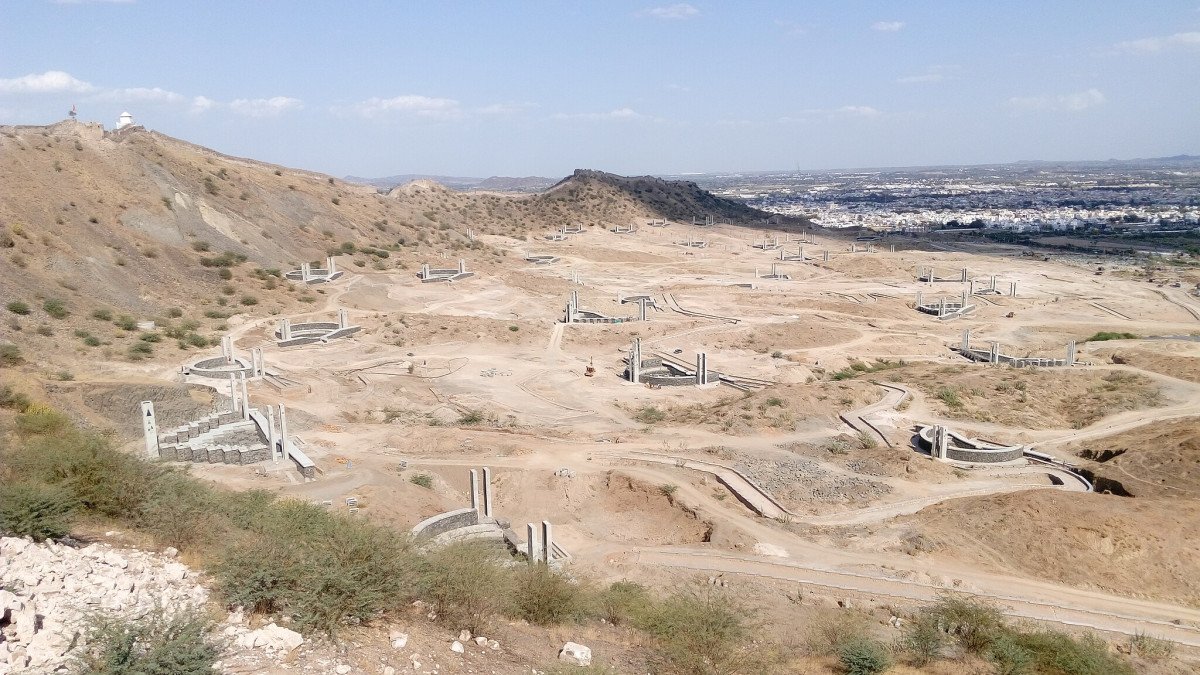
The Sun-Point Panorama: The entire complex and the city of Bhuj can be captured from the viewing deck of the Sun-Point. This is the essential spot for wide-angle panoramic photographs of the vast landscape.
The Renewal Garden: Photograph the contrast between the dry, rugged terrain of the Bhujiyo Dungar (Hill) and the newly planted, growing Forest of Memories, symbolizing the ecological theme of regeneration and hope.
The Digital Flame: Inside the Renew gallery (if permitted), a long-exposure shot of the digital light rising to form the unified flame on the ceiling creates a stunning, abstract, and deeply emotional photo, capturing the essence of the memorial's purpose. :Photo Gallery
Things To Do
-
The Museum Experience: Spend the majority of your time inside the state-of-the-art, 7-block museum. The galleries are interactive and immersive, requiring several hours. Activities include watching the informative films, engaging with the science exhibits on earthquakes, viewing the artifacts related to the region's history, and learning about the massive rebuilding efforts post-2001.
The Renew Experience: Participate in the emotional Renew gallery, where visitors can light a digital flame in memory of the victims via touch panels. This activity provides a deeply moving and personal connection to the purpose of the memorial.
The Check-Dam Walk: Embark on a pilgrimage walk up the Bhujiyo Dungar (Hill) to see the 50 check-dams. As you walk, pause at the reservoirs to read the names of the nearl...
Information
-
Why Famous:
India's Largest Memorial: Smritivan holds the distinction of being the largest modern memorial and museum complex in India, built to commemorate the victims of the 2001 earthquake. Its monumental scale and national importance make it highly famous.
Read MoreIndia's Largest Memorial: Smritivan holds the distinction of being the largest modern memorial and museum complex in India, built to commemorate the victims of the 2001 earthquake. Its monumental scale and national importance make it highly famous.
Symbol of Regeneration: The entire project, covering 470 acres and incorporating the planting of a new forest and the construction of water check-dams, is a celebrated symbol of ecological regeneration and the unconquerable spirit of the people of Kutch.
Interactive Museum: The state-of-the-art museum, with its seven thematic blocks and immersive, interactive exhibits, is famous for its educational value and its dramatic, high-tech retelling of the earthquake's story and the region's history, setting a new standard for memorial museums in the country. It is promoted heavily by Gujarat Tourism. :Architecture:
Modern Monumentalism: The Smritivan complex is a massive, modern architectural undertaking spread over 470 acres on a hill.
Dimensions: The museum component alone spans 11,500 square meters. The architecture is an example of modern, large-s...Modern Monumentalism: The Smritivan complex is a massive, modern architectural undertaking spread over 470 acres on a hill.
Dimensions: The museum component alone spans 11,500 square meters. The architecture is an example of modern, large-scale memorial design, using rugged, durable materials like local stone and concrete to signify permanence and resilience.
Thematic Design: A key architectural feature is the integration of 50 check-dams, which are not only structural for water conservation but also serve as the physical memorial, with the victims' names inscribed on plaques set into the stone. The museum blocks are designed to be interactive and immersive, contrasting the heavy, natural elements of the memorial with sophisticated, high-tech interiors. The entire layout, including the Sun-Point, is designed to be a pilgrimage path that leads visitors through stages of grief, reflection, and ultimately, regeneration, a concept physically symbolized by the man-made forest growing on the hill. :How To Reach:
By Air: Bhuj Airport (BHJ) is about 8 to 10 KMS from Smritivan on Bhujiyo Dungar (Hill). The hill is a very famous landmark, and a pre-paid taxi or auto-rickshaw from the airport will reach the site in about 30 to 35 minutes. The road is well-paved, but the final ascent up...Near Tourist Places:
1.
Bhujia Hill/Fort (< 500 meters): Historic fort on the same hill. 2. Hamirsar Lake (Approx.
4 KMS): Central man-made lake. 3. Prag Mahal (Approx. 4.
5 KMS): Gothic palace. 4. Aina Mahal (Approx. 4.
5 KMS): Palace of Mirrors. 5. Kutch Museum (Approx. 4.
5 KMS): Historical and cultural museum. 6. Ramkund Stepwell (Approx.
5 KMS): Ancient stepwell. 7. Chhatedi Bhuj (Approx. 5.
5 KMS): Royal cenotaphs. 8. Sharad Baug Palace (Approx.
6 KMS): Royal garden and museum. 9. Swaminarayan Temple (New) (Approx. 6.
5 KMS): Modern marble temple. 10. Hira Laxmi Memorial (Approx.
7 KMS): Craft museum. 11. Tapkeshwari Temple (Approx.
9 KMS): Cave temple.Tourism Tips
-
Health & safety:
Hill Walk Fitness: The walk up Bhujiyo Dungar (Hill) to the memorial and Sun-Point is moderately strenuous. Pace yourself and wear comfortable walking shoes.
Stay Hydrated: It is crucial to ...
Reviews
Information about New and Updated Locations(862+) of Gujarat Has Been Added :-
Card subtitle
Note:-
Information provided here in good Faith and for reference only.
All information and pictures will be updated soon, please keep visiting.
Near Places
Aina Mahal
Some quick example text to build on the card title and make up the bulk of the card's content.
Go somewhere
Bhartiya Sanskruti Darshan Museum
Some quick example text to build on the card title and make up the bulk of the card's content.
Go somewhere
Bhujia Fort
Some quick example text to build on the card title and make up the bulk of the card's content.
Go somewhere
Bhujia Hill & Fort
Some quick example text to build on the card title and make up the bulk of the card's content.
Go somewhere
Bhujodi Handicraft Village
Some quick example text to build on the card title and make up the bulk of the card's content.
Go somewhere
Chhatardi
Some quick example text to build on the card title and make up the bulk of the card's content.
Go somewhere
Chhatedi
Some quick example text to build on the card title and make up the bulk of the card's content.
Go somewhere
Darbar Gadh
Some quick example text to build on the card title and make up the bulk of the card's content.
Go somewhere
Great Rann of Kutch
Some quick example text to build on the card title and make up the bulk of the card's content.
Go somewhere
Hamirsar Lake
Some quick example text to build on the card title and make up the bulk of the card's content.
Go somewherein Other Cities